New Book | Slavery and the British Country House
From English Heritage, with free download (admirably!) available:
Madge Dresser and Andrew Hann, eds., Slavery and the British Country House (English Heritage, 2013), 180 pages, ISBN: 978-1848020641, £50. Available for free download at English Heritage»
 The British country house has long been regarded as the jewel in the nation’s heritage crown. But the country house is also an expression of wealth and power, and as scholars reconsider the nation’s colonial past, new questions are being posed about these great houses and their links to Atlantic slavery.
This book, authored by a range of academics and heritage professionals, grew out of a 2009 conference on Slavery and the British Country House: Mapping the Current Research organised by English Heritage in partnership with the University of the West of England, the National Trust and the Economic History Society. It asks what links might be established between the wealth derived from slavery and the British country house and what implications such links should have for the way such properties are represented to the public today.
Lavishly illustrated and based on the latest scholarship, this wide-ranging and innovative volume provides in-depth examinations of individual houses, regional studies and critical reconsiderations of existing heritage sites, including two studies specially commissioned by English Heritage and one sponsored by the National Trust.
In order to improve access to this research, a complete copy of the text is free to download from English Heritage.
◊ ◊ ◊ ◊ ◊
C O N T E N T S
Foreword
List of contributors
Acknowledgements
Notes on measurements
Introduction
1. Nicholas Draper, Slave ownership and the British country house: the records of the Slave Compensation Commission as evidence
2. Madge Dresser, Slavery and West Country houses
3. Jane Longmore, Rural retreats: Liverpool slave traders and their country houses
4. Roger H. Leech, Lodges, garden houses and villas: the urban periphery in the early modern Atlantic world
5. Simon D. Smith, Slavery’s heritage footprint: links between British country houses and St Vincent, 1814–34
6. Nuala Zahedieh, An open elite? Colonial commerce, the country house and the case of Sir Gilbert Heathcote and Normanton Hall
7. Sheryllynne Haggerty and Susanne Seymour, Property, power and authority: the implicit and explicit slavery connections of Bolsover Castle and Brodsworth Hall in the 18th century
8. Laurence Brown, Atlantic slavery and classical culture at Marble Hill and Northington Grange
9. Victoria Perry, Slavery and the sublime: the Atlantic trade, landscape aesthetics and tourism
10. Natalie Zacek, West Indian echoes: Dodington House, the Codrington family and the Caribbean heritage
11. Caroline Bressey, Contesting the political legacy of slavery in England’s country houses: a case study of Kenwood House and Osborne House
12. Cliff Pereira, Representing the East and West India links to the British country house: the London borough of Bexley and the wider heritage picture
13. Rob Mitchell and Shawn Sobers, Reinterpretation: the representation of perspectives on slave trade history using creative media
Notes
Index
Fellowships | American Art and Visual Culture at the Smithsonian
Smithsonian American Art Museum Research Fellowships
Washington, D.C.
Applications due by 15 January 2014
The Smithsonian American Art Museum and its Renwick Gallery invite applications for research fellowships in art and visual culture of the United States. A variety of predoctoral, postdoctoral, and senior fellowships are available. Fellowships are residential and support independent and dissertation research. The stipend for a one-year fellowship is $30,000 for predoctoral fellows or $45,000 for senior and postdoctoral fellows, plus generous research and travel allowances. The standard term of residency is twelve months, but terms as short as three months will be considered; stipends are prorated for periods of less than twelve months. Deadline: January 15, 2014. Contact: Amelia Goerlitz, Fellowship Office, American Art Museum, AmericanArtFellowships@si.edu. For more information and a link to the online application for the Smithsonian Institution Fellowship Program, please visit our website. Applicants should propose a primary advisor from the Smithsonian American Art Museum to be eligible for a fellowship at this unit.
Study Day | Autour de Rose Bertin: Les marchands de mode à Paris
From the study day programme:
Autour de Rose Bertin : Les marchands de mode à Paris
Hôtel Rohan-Soubise, Paris, 17 December 2013

◊ ◊ ◊ ◊ ◊
Les commémorations nationales 2013 rendent hommage à Rose Bertin, pionnière de la mode. Organisée dans le cadre du comité des célébrations nationales, une journée d’étude « Autour de Rose Bertin, les marchands de mode à Paris » aura lieu le mardi 17 décembre 2013 dans l’hôtel Rohan-Soubise, 61 rue des Francs-Bourgeois à Paris. Cette manifestation est organisée par Michelle Sapori, historienne et biographe de Rose Bertin, et Corinne Thépaut-Cabasset, historienne de la mode.
Rose Bertin est notamment connue pour les liens privilégiés qu’elle entretenait avec la reine Marie-Antoinette, et le rôle qu’elle a joué dans l’invention du métier de styliste de la garderobe royale. Mais Rose Bertin est surtout devenue une figure historique emblématique de l’univers de la mode et du luxe, qu’elle contribua à créer et dans lequel elle innova dès le milieu du 18e siècle.
C’est autour de cette personnalité que s’organise la journée d’étude, avec les interventions de spécialistes internationaux, conservateurs et historiens de la mode du 18e au 21e siècle, reprenant tour à tour l’invention d’un métier, les outils, matériaux et les lieux marchands, et se concentrant sur quelques hommes et femmes qui ont fait de cette activité professionnelle un véritable atelier de création et un outil de négoce efficace.
La langue du colloque est le Français. Inscription préalable obligatoire, dans la limite des places disponibles.
Participation de 10€. Les pré inscriptions peuvent être faites par courriel sur la triple adresse :
michellesapori@hotmail.fr ; c_thepaut@hotmail.com ; rduperray78@gmail.com.
P R O G R A M M E
13h30 Accueil et café
14h15 Ornements et agréments : faire la mode au 18e siècle
Johannes Pietsch (historien du costume, Bayerisches Nationalmuseum Münich)
14h45 Soieries françaises, matière première des marchands de modes 1747–1789
Lesley E. Miller (conservateur en chef, département Textile et Mode, Victoria & Albert Museum Londres)
15h15 La boutique de mode au 18e siècle : Le mannequin de Mlle de Saint-Quentin, rue Saint-Honoré à Paris
Corinne Thépaut-Cabasset (chercheur, HERA/V&A Fashioning the Early Modern: Creativity and Innovation in Europe 1500–1800)
15h45 Avant Rose Bertin, La Duchapt …
Michelle Sapori (historienne et biographe de Rose Bertin)
16h15 De Rose Bertin à Christian Dior : de la marchande de modes à la maison de couture
Florence Müller (historienne et commissaire des expositions Yves Saint-Laurent, et Christian Dior)
16h45 Clôture de la journée par la présentation d’un portrait inédit au pastel de Rose Bertin
Une élégante simplicité : un portrait de Rose Bertin par Joseph Boze
Barbara Lasic (attachée de conservation, Galeries Européennes 1600–1800, Victoria & Albert Museum Londres)
17h30 Pièce musicale pour violoncelle baroque donnée par l’association Jeunes Talents
Exhibition | Napoleon’s Three Sisters in Italy
Now on view in Paris (with thanks to Hélène Bremer for noting it) . . .
Les Soeurs de Napoléon: Trois Destins Italiens
Musée Marmottan Monet, Paris, 3 October 2013 — 26 January 2014
Curated by Maria Teresa Caracciolo
 Le musée Marmottan Monet consacre, du 3 octobre 2013 au 26 janvier 2014, une exposition exceptionnelle et inédite à Elisa, Pauline et Caroline, soeurs de Napoléon Ier, princesses et reines d’Italie. Grâce à des prêts d’exception provenant des plus grands musées d’Europe et des collections des descendants de la famille, italiens et français, 140 oeuvres sont réunies pour recréer l’univers prestigieux de la vie privée et publique des soeurs Bonaparte. Leurs trois destins hors du commun sont présentés pour la première fois, de leur genèse dans le Paris consulaire à leurs règnes italiens sous l’Empire.
Tableaux, sculptures, mobilier, accessoires, bijoux et parures de cour matérialisent sous nos yeux les destins extraordinaires d’Elisa (1777–1820), princesse de Piombino et de Lucques, puis grande-duchesse de Toscane, de Pauline (1780–1825) épouse du prince romain Camille Borghèse et de Caroline (1782–1839), mariée au général Joachim Murat et qui régna avec lui sur Naples avec un faste inégalé : trois femmes, trois personnalités différentes, l’une primant par la beauté, les deux autres par l’énergie, le charme et l’intelligence. Elles ont été les témoins privilégiés et les actrices de leur époque.
Autour de l’événement-charnière du sacre de Napoléon renaissent à la fois l’intime : leurs rôles de mères et d’épouses, comme l’officiel : leurs vies de princesses et reines d’Italie, dans les cours de Florence, Rome et Naples qui feront des trois soeurs des symboles de l’Europe en construction.
Cette exposition qui bénéficie de l’engouement remarquable de nombreuses institutions, collections particulières et musées prestigieux voit le jour aujourd’hui dans l’écrin idéal du musée Marmottan Monet, coeur de l’univers de Paul Marmottan (1856–1932) son fondateur, collectionneur passionné par le Premier Empire. Sont réunies, entre autres, des pièces des musées nationaux des châteaux de Versailles, Fontainebleau, Malmaison, du musée Fesch d’Ajaccio, du musée Fabre de Montpellier, de l’Ambassade de Grande-Bretagne à Paris, du Musée de l’armée, de celui de la Légion d’honneur, des Fondations Napoléon et Dosne-Thiers, du Musée des Beaux-Arts de Liège, du Palazzo Pitti de Florence, du Museo Napoleonico, du Museo Praz, des Musei di Arte Medievale e Moderna de Rome, des musées de Turin, Naples, Lucques, Caserte et de l’Ile d’Elbe, sans omettre les fonds propres de la bibliothèque Marmottan et du musée Marmottan Monet.
◊ ◊ ◊ ◊ ◊
The catalogue, in French and English, is published by Hazan:
Maria Teresa Caracciolo, ed., Les soeurs de Napoléon: Trois Destins Italiens (Paris: Hazan, 2013), 216 pages, ISBN: 978-2754107112, 29€.
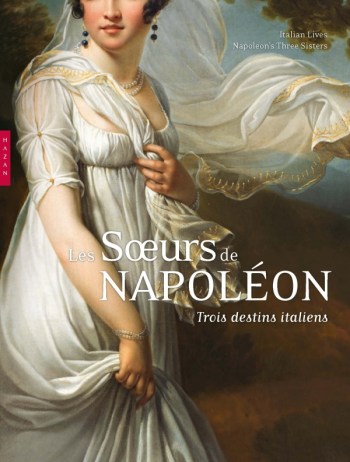 Exposition « Les sœurs de Napoléon. Trois destins italiens », au musée Marmottan Monet à Paris, du 03 octobre 2013 au 02 février 2014. Les sœurs de Napoléon Ier, Élisa, Pauline et Caroline, eurent toutes trois un destin italien : la première fut élevée par son frère au rang de princesse de Lucques, puis de grande-duchesse de Toscane, représentante de l’Empereur en Italie. La deuxième épousa un prince romain, Camille Borghèse, et vécut avec lui entre Paris et Rome, en s’attirant dans les deux villes le titre de reine de la beauté. Enfin la cadette, mariée au général Joachim Murat, régna avec lui sur Naples avec un faste inégalé. L’exposition évoque les trois destins des sœurs Bonaparte, forgés dans le Paris consulaire et brillamment parachevés en Italie sous l’Empire. Comme les autres membres de la famille Bonaparte, les sœurs de Napoléon appréciaient les belles résidences et pratiquèrent un mécénat éclairé. A Paris et en Italie, elles laissèrent la marque de leur passage par la création de décors, de peintures, de sculptures et d’objets d’art. La grande-duchesse de Toscane et la reine de Naples stimulèrent la production des manufactures de leurs Etats et encouragèrent dans leurs cours le théâtre, la musique et les arts de la mode, en menant en Italie une politique de conquête pacifique, la conquête par la culture et les idées. L’exposition réunit des portraits des trois sœurs, seules ou en groupe, avec leurs familles et leurs amis, dans les lieux où elles vécurent et qui furent métamorphosés par leur goût. Elle rassemble des œuvres d’art créées sous leur impulsion, des objets et des accessoires de leur vie quotidienne, des bijoux qui relevaient leurs somptueuses tenues de cour. Ces œuvres sont aujourd’hui partagées entre les plus grands musées d’Europe et les collections des descendants de la famille, italiens et français. Leur réunion dans les salles de l’ancien hôtel de Paul Marmottan, devenu musée Marmottan Monet, ressuscite une page d’histoire et la splendeur d’une époque. Elle nous fait entrer dans la vie privée d’une famille qui partagea le destin exceptionnel de l’empereur Napoléon Ier. Version bilngue français/anglais.
Commissaire de l’exposition et auteur du catalogue, Maria Teresa Caracciolo est Historienne de l’art, chargée de recherche au CNRS, spécialiste de la peinture européenne du XVIIIe et du XIXe siècle et des relations franco-italiennes sous la Révolution et l’Empire. Elle est l’auteur, parmi d’autres ouvrages, de Giuseppe Cades (1750–1799) et la Rome de son temps (Paris, Arthena, 1992, ouvrage issu d’une thèse de doctorat); du Romantisme (Citadelles et Mazenod, 2013); du catalogue de l’exposition Jean-Baptiste Wicar: Ritratti della famiglia Bonaparte (Roma, Museo Napoleonico-Napoli, Museo Diego Aragona Pignatelli Cortes, 2004); et du catalogue de l’exposition Lucien Bonaparte (1775–1840): un homme libre, (Ajaccio, Musée Fesch, 2010).
Call for Papers | Perceptions of Pregnancy
From the conference website:
Perceptions of Pregnancy: From the Medieval to the Modern
University of Hertfordshire, 16 – 18 July 2014
Proposals due by 1 February 2014
This three-day conference aims to bring together scholars working across a range of disciplines, time periods and global perspectives to examine perceptions of pregnancy throughout history. Papers are welcomed on a range of issues, including, but not limited to:
· Pregnancy, including the pregnant body and the experience of pregnancy
· Unlawful pregnancy, including rape, incest and sexual abuse
· Fertility and infertility, including IVF, miscarriage and still-birth
· Abortion and contraception, including pro-life and pro-choice debate
· Parenthood, single parenthood, and infanticide
Potential themes for discussion are:
· Magic, ritual and religion
· Technology and medicine
· Gender, including male involvement and experiences
· Government policy and politics
· Work life, domesticity and childcare
The keynote speakers will be Professor Joanne Bailey (Oxford Brooks Univeristy) and Dr Elaine Farrell (Queen’s University Belfast). 300-word proposals for twenty-minute papers should be sent to the conference organisers by 1 February 2014. We welcome postgraduate papers. Informal enquiries can be directed to Dr Jennifer Evans (j.evans5@herts.ac.uk) and Dr Ciara Meehan (c.meehan2@herts.ac.uk).
New Book | Exhibiting Englishness: John Boydell’s Shakespeare Gallery
From Yale UP:
Rosie Dias, Exhibiting Englishness: John Boydell’s Shakespeare Gallery and the Formation of a National Aesthetic (London: The Paul Mellon Centre for Studies in British Art, 2013), 288 pages, ISBN: 978-0300196689, $85.
 In the late 18th century, as a wave of English nationalism swept the country, the printseller John Boydell set out to create an ambitious exhibition space, one devoted to promoting and fostering a distinctly English style of history painting. With its very name, the Shakespeare Gallery signaled to Londoners that the artworks on display shared an undisputed quality and a national spirit. Exhibiting Englishness explores the responses of key artists of the period to Boydell’s venture and sheds new light on the gallery’s role in the larger context of British art.
Tracking the shift away from academic and Continental European styles of history painting, the book analyzes the works of such artists as Joshua Reynolds, Henry Fuseli, James Northcote, Robert Smirke, Thomas Banks, and William Hamilton, laying out their diverse ways of expressing notions of individualism, humor, eccentricity, and naturalism. Exhibiting Englishness also argues that Boydell’s gallery radically redefined the dynamics of display and cultural aesthetics at that time, shaping both
an English school of painting and modern exhibition
practices.
Rosie Dias is associate professor in the history of art at
the University of Warwick.
Exhibition | Strange and Wondrous: Prints of India
From the exhibition press release:
Strange and Wondrous: Prints of India From the Robert J. Del Bontà Collection
Smithsonian’s Arthur M. Sackler Gallery, Washington, D.C., 19 October 2013 — 5 January 2014
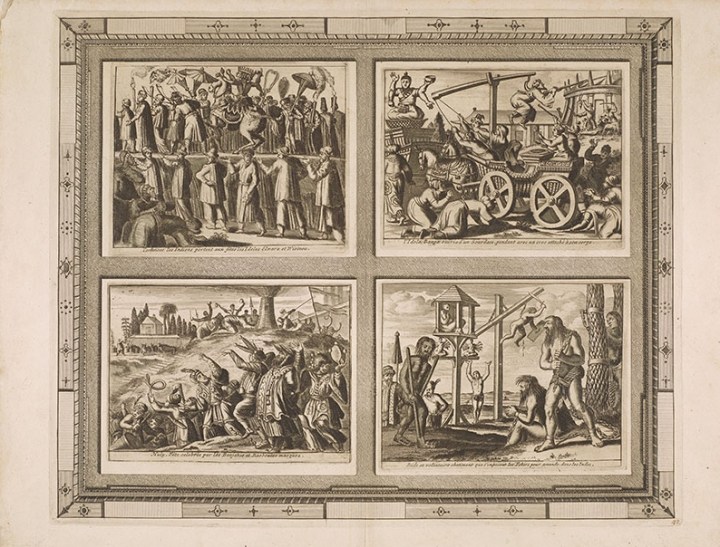
Four Scenes from India. After Jacob van Meurs (ca. 1619–before 1680). Copperplate engraving with etching on paper. From a French copy of Pieter van der Aa (1659–1733), La Galerie Agréable du Monde (The Pleasurable Gallery of the World),vol. 19: Persia, Mogol, Chine, Tartaria (Leyden: Pieter van der Aa, ca. 1725). Robert J. Del Bontà collection, E1431.
◊ ◊ ◊ ◊ ◊
Strange and Wondrous: Prints of India From the Robert J. Del Bontà Collection, on view at the Smithsonian’s Arthur M. Sackler Gallery, presents 50 printed works that trace European and American documentation of Indian ascetics, deities and religious ceremony.
As global travel boomed from the 16th to the 20th century, Europeans and Americans became increasingly fascinated with Indian culture. Merchants, missionaries and soldiers alike documented their encounters in India and foreign lands through detailed texts and illustrations. These accounts—regularly edited, amended and reprinted in publications as varied as atlases, trading cards, memoirs and magazines—became the paradigm for all that Europeans and Americans found strange, exotic, repulsive or remarkable in India.

“Hindoo devottees of the Gosannee & Jetty tribes,” James Shury, after James Forbes (1749–1819). Drawn by James Forbes, 1780, and published by White, Cochrane & Co., June 1812. Engraving with etching on paper. From an English copy of James Forbes, Oriental Memoirs, vol. 2 (London: Richard Bentley, 1834).
Created using a wide variety of techniques, such as engraving, aquatint, lithography and photogravure, these prints demonstrate how perceptions of Indian culture shifted through the centuries, from the European Enlightenment to the period of colonial expansion and into modernity.
“As a collector, Del Bontà not only pays immense attention to the subjects that captivated Europeans and Americans, but also to the multiple versions of popular prints as they travelled across countries, languages and time,” said Holly Shaffer, guest curator and Yale University doctoral candidate. “His collection allows scholars to trace how Europeans and Americans learned about India, and reminds us to always question the ‘truth-value’ of images that often have a very long train to their visual history.”
The spread of images represented in Strange and Wondrous led to broader knowledge and interest in Indian culture—but also to the creation and proliferation of negative stereotypes. Ascetics, or religious figures (often termed “yogis and “fakirs”), with their otherworldly, naked appearance and austere practices, were depicted as supernatural beings, devout penitents, militants, tricksters and beggars. Religious ceremonies, such as swinging from hooks (charak puja), were often interpreted in a Christian framework, rather than a Hindu one, leading to misconceptions of devotees as sinners and fanatics. Deities such as the Hindu god Shiva were cataloged as lovers and drug users feeding generalizations of India as a sensual, spiritual land.
American publications added another layer of satire to their interpretation of exotic cultural practices. A 1943 cover of the Saturday Evening Post illustrated by Norman Rockwell shows the beloved World War II character Willie Gillis outwitting an Indian ascetic with the children’s game “cat’s cradle,” a visual pun of the infamous “Indian rope trick.” Here an American GI has duped the once-powerful Indian yogi, and while it is perhaps a nod to American soldiers’ wily abilities during wartime, the stereotype of India remains intact.
Strange and Wondrous will be on view in conjunction with Yoga: The Art of Transformation—the world’s first exhibition on the art of yoga—also at the Sackler Gallery.
The 50 works on view in Strange and Wondrous are part of Del Bontà’s bequest of 100 printed works to the Freer and Sackler archives. The collection will be a resource for scholars and educators to evaluate and understand early European and American perspectives of Indian culture through print. Del Bontà—a polymath scholar, curator, collector and jeweler—began to collect prints related to India while completing his doctorate in South Asian art history at the University of Michigan in the 1970s. His extensive collection includes more than 2,000 loose prints and thousands more bound within books, spanning genres from Indian calendar prints, ephemera, painting and sculpture to British Raj-era publications and subjects such as ornament, flora and fauna, Indian ascetics, deities and religious ceremony.
Exhibition | Yoga: The Art of Transformation
From the exhibition press release:
Yoga: The Art of Transformation
Smithsonian’s Arthur M. Sackler Gallery, Washington, D.C., 19 October 2013 — 26 January 2014
San Francisco Asian Art Museum, 21 February — 25 May 2014
Cleveland Museum of Art, 22 June — 7 September 2014

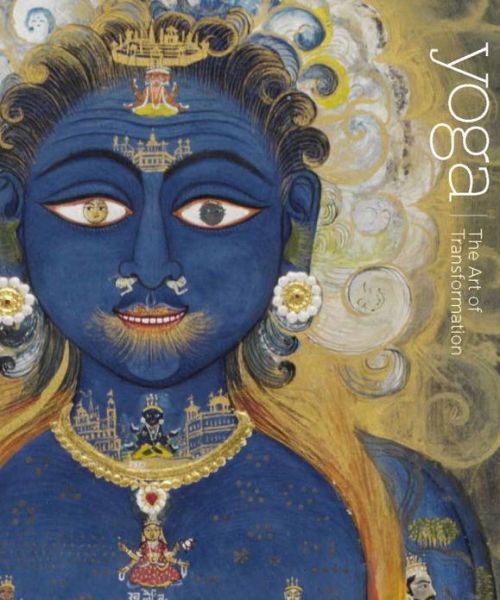
Krishna Vishvarupa (detail), ca. 1740. India, Himachal Pradesh, Bilaspur. Collection of Catherine and Ralph Benkaim.
◊ ◊ ◊ ◊ ◊
Yoga: The Art of Transformation, the first exhibition about the visual history of yoga explores yoga’s rich diversity and historical transformations during the past 2,000 years.
On view through January 26, 2014, The Art of Transformation examines yoga’s fascinating meanings and histories through more than 130 objects from 25 museums and private collections in India, Europe and the U.S. Highlights include three monumental stone yogini goddesses from a 10th-century south Indian temple, reunited for the first time, 10 folios from the first illustrated compilation of asanas (yogic postures) making their U.S. debut, and a Thomas Edison film, Hindoo Fakir (1906), the first movie produced about India.
“This exhibition looks at yoga’s ancient roots, and how people have been trying to master body and spirit for millennia,” said Julian Raby, The Dame Jillian Sackler Director of the Arthur M. Sackler Gallery and Freer Gallery of Art. “By applying new scholarship to both rarely seen artworks and recognized masterpieces, we’re able to shed light on practices that evolved over time—from yoga’s ancient origins to its more modern emergence in India, which set the stage for today’s global phenomenon.
 A free public festival, Diwali and the Art of Yoga, Saturday, October 26, will mark both the opening of the exhibition and Diwali, the Indian festival of lights. Visitors can discover exhibition highlights through spotlight tours, play games from across Asia, attempt intricate rangoli (rice powder) drawings and make their own yoga-inspired art in hands-on workshops. Indian classical musician K. Sridhar will demonstrate the yoga of sound, and storyteller Louise Omoto Kessel will share tales of Indian deities. Free yoga classes will be offered throughout, and the day will conclude with a traditional lamp-lighting ceremony and a classical Indian music concert.
In conjunction with The Art of Transformation, the Freer and Sackler galleries will also host Yoga and Visual Culture, a free interdisciplinary symposium for scholars and yoga enthusiasts November 21–23. Seventeen scholars from a range of disciplines will present cutting-edge research on diverse aspects of yoga’s visual culture, organized around such topics as “Yoga and Place” and “Yoga and Print Culture.” A full schedule and registration is available at asia.si.edu/events/yoga-symposium/.
Yoga classes in the galleries will be offered through “Art in Context,” an interactive 90-minute workshop combining tours of the exhibition with the practice of yoga. Led by a teaching team of a museum docent and guest yoga teachers, the workshops will be held on Wednesdays and Sundays throughout the exhibition, with special sessions offered for ages 50-plus, teens and families. Advance registration is required, and visitors can find a full schedule at asia.si.edu/events/workshops.asp.
These programs are made possible in part due to the Smithsonian’s first major crowdfunding campaign, “Together We’re One.” Launched in May 2013, the campaign raised more than $174,000 over 6 weeks to support public programs, yoga classes in the galleries, and an exhibition catalogue, as well as the behind—the—scenes aspects of the exhibition. Campaign donors and exhibition ambassadors, called “Yoga Messengers,” are invited to be special guests during the October 26 “Art of Yoga” festival, and will be featured in exhibition signage.
Following its Washington, D.C., debut, The Art of Transformation will travel to the San Francisco Asian Art Museum and the Cleveland Museum of Art.
Support for the exhibition is provided by the Friends of the Freer|Sackler, Whole Foods Market, Art Mentor Foundation Lucerne, the Alec Baldwin Foundation, the Ebrahimi Family Foundation, IndiaTourism, Catherine Glynn Benkaim, media partner Yoga Journal, and “Together We’re One” donors.
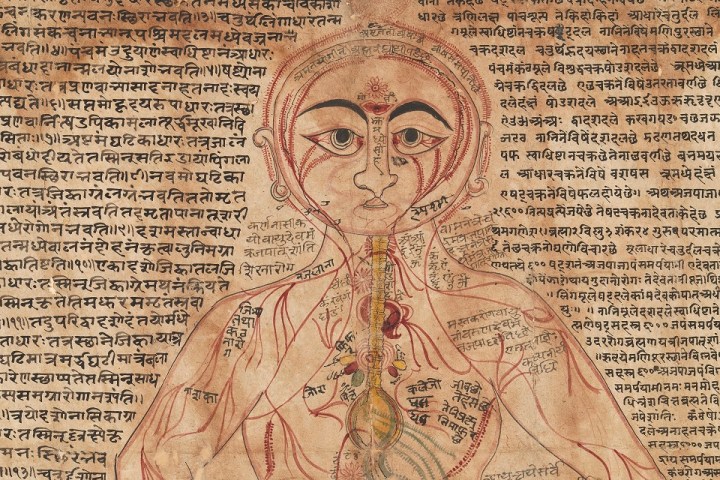
Anatomical Body, 18th century, India, Gujarat (Wellcome Library, London, Asian Collections, MS Indic Delta 74).
◊ ◊ ◊ ◊ ◊
Debra Diamond, ed., Yoga: The Art of Transformation (Washington, D.C.: Smithsonian Books, 2013), 360 pages, ISBN-13: 978-1588344595, $55.
An exploration of yoga’s meanings and transformations over time; the discipline’s goals of spiritual enlightenment, worldly power, and health and well-being; and the beauty and profundity of Indian art.
Debra Diamond is Associate curator of South and Southeast Asian art, Freer Gallery of Art and Arthur M. Sackler Gallery. Her exhibition catalogue for Garden and Cosmos (fall 2008) received two major awards for scholarship: the College Art Association’s Alfred H. Barr award and the Smithsonian Secretary’s Award for Research. She has published on yoga imagery, new methods in Indian art history, contemporary Asian art, and various aspects of the Freer|Sackler collections.
Lecture | Diplomacy and Decoration in France and Siam
From The New School:
Meredith Martin | Mirror Reflections: Diplomacy and Decoration in France and Siam, 1680 / 1860s
Parsons The New School for Design, New York, 25 October 2013

◊ ◊ ◊ ◊ ◊
Friday October 25, 2013 at 6:15 PM
Glass Corner (Room E206), Parsons East Building
25 East 13th Street, 2nd Floor, NYC
This talk given by Meredith Martin, associate professor of Art History at New York University, explores the circulation, use, and interior display of images and art objects associated with diplomatic missions that traveled between France and Siam (Thailand) in the 1680s and 1860s. In analyzing these two different but related episodes of diplomatic and cross-cultural exchange, Martin will show how art and architectural display were crucial to articulating the political and commercial aims of each power as well as how those aims were interpreted by French and Siamese audiences.
Meredith Martin received her M.A. and Ph.D. from Harvard University and her B.A. from Princeton. She is the author of Dairy Queens: The Politics of Pastoral Architecture from Catherine de’ Medici to Marie-Antoinette (Harvard University Press, 2011), and a co-editor of Architectural Space in Eighteenth-Century Europe: Constructing Identities and Interiors (Ashgate, 2010). Martin has published numerous articles, essays, and reviews on 18th and 19th century French architectural history and decoration as well as contemporary art. Her current project focuses on art, diplomacy, and intercultural encounter in France from the reign of Louis XIV to the era of Napoleon.
INSIDE (hi) STORIES is a Histories & Theories series, curated by design historian Sarah Lichtman, assistant professor of Art and Design Studies in the School of Art and Design History and Theory, and architectural historian Ioanna Theocharopoulou, assistant professor of Interior Design in the School of Instructed Environments.
Call for Papers | Tuscan Painting in the Eighteenth Century
Predella: Journal of Visual Arts | June 2014 Issue: Tuscan Painting in the Eighteenth Century
Proposals due by 15 December 2013
The Predella issue scheduled for June 2014 (no. 35) will be dedicated to Tuscan painting in the eighteenth century. It will be edited by Emanuele Pellegrini and Stefano Renzoni. This issue aims to bring new contributions on the activity of Tuscan painters in their homeland and abroad, and at the same time to shed light on foreign painters active in Tuscany throughout the Settecento. Furthermore, this Predella monograph intends to offer new evidences on less studied topics, both individual artists (like Luigi Garzi, Vincenzo Meucci, Giovanni Battista Tempesti), and general problems (the relationships of Tuscan artists with other capital cities like Rome or Venice, the diffusion of ‘popular painting’). Proposals of no more than 300 words should be submitted, with a cover letter or a 2 page CV, by December 15, 2013 to the attention of Emanuele Pellegrini and Stefano Renzoni to the following email address: emanuele.pellegrini@unive.it. Selected papers will be announced by January 15, 2014.










 Enfilade
leave a comment