Re-Released Title | American Indians in British Art, 1700–1840
While the book appeared in hardback in 2005, a paperback edition (priced extraordinarily enough at just $22) was published earlier this year by the University of Oklahoma Press:
Stephanie Pratt, American Indians in British Art, 1700–1840 (Norman: University of Oklahoma Press, 2013), 240 pages, ISBN: 978-00806142005, $22.
 Ask anyone the world over to identify a figure in buckskins with a feather bonnet, and the answer will be “Indian.” Many works of art produced by non-Native artists have reflected such a limited viewpoint. In American Indians in British Art, 1700–1840, Stephanie Pratt explores for the first time an artistic tradition that avoided simplification and that instead portrayed Native peoples in a surprisingly complex light.
During the eighteenth century, the British allied themselves with Indian tribes to counter the American colonial rebellion. In response, British artists produced a large volume of work focusing on American Indians. Although these works depicted their subjects as either noble or ignoble savages, they also represented Indians as active participants in contemporary society.
Pratt places artistic works in historical context and traces a movement away from abstraction, where Indians were symbols rather than actual people, to representational art, which portrayed Indians as actors on the colonial stage. But Pratt also argues that to view these images as mere illustrations of historical events or individuals would be reductive. As works of art they contain formal characteristics and ideological content that diminish their documentary value.
Colloquium | Choosing Paris: Large Museum Donations
From Paris Musées:
Choisir Paris: Les grandes donations aux musées de la Ville de Paris
Institut national d’histoire de l’art et Petit Palais, Paris, 11–12 October 2013
L’Institut national d’histoire de l’art organise en collaboration avec Paris Musées un colloque intitulé Choisir Paris: Les grandes donations aux musées de la Ville de Paris. Il aura lieu le vendredi 11 octobre à l’Inha et le samedi 12 octobre au Petit Palais.
La Ville de Paris est l’un des premiers collectionneurs de France. Ses quatorze musées, réunis depuis 2013 au sein de l’établissement public Paris Musées conservent une part importante de ce patrimoine. Nées de l’intérêt porté par la Ville à sa propre mémoire et à sa vie artistique, ces collections sont aussi le fruit du rapport passionné que de nombreux amateurs et collectionneurs ont entretenu avec la capitale, qu’ils ont choisie pour conserver leurs trésors patiemment assemblés. Ce « choix de Paris » répond à des motifs qui, pour divers qu’ils soient, font sens et écrivent une manière d’histoire de l’art. Hommage aux donateurs, ce colloque se donne pour objectif de mieux faire connaître cette histoire, d’éclairer la genèse des collections des musées de la Ville de Paris et de témoigner de l’actualité de la recherche sur les grandes donations qui les ont enrichis. Il témoigne aussi du souhait de Paris Musées de renforcer la recherche au sein de
ses différentes activités.
◊ ◊ ◊ ◊ ◊
V E N D R E D I , 1 1 O C T O B R E 2 0 1 3
Institut national d’histoire de l’art – Salle Vasari
9.00 Accueil des participants
9.30 Ouverture du colloque par Antoinette Le Normand-Romain (directeur général de l’INHA) et Delphine Levy (directrice générale de Paris Musées)
9.45 Introduction : La formation des musées de la ville de Paris et le développement de l’administration des Beaux-Arts. Georges Brunel (conservateur général du patrimoine honoraire)
Matinée présidée par Pascal Griener (professeur à l’Université de Neuchâtel) À l’origine des musées de la Ville de Paris
10.45 Carnavalet, une collection à l’origine de plusieurs musées. Jean-Marc Léri (conservateur général,directeur du musée Carnavalet, de la crypte archéologique et des Catacombes)
11.15 Pause
11.30 Jules Cousin et la création du musée Carnavalet. Thierry Sarmant (conservateur en chef, musée Carnavalet)
11.50 Le comte de Liesville, collectionneur. Jean-Marie Bruson (conservateur général, musée Carnavalet)
12.15 Débat et questions. Bilan de la matinée par Pascal Griener Après-midi présidée par Chantal Georgel (conseiller scientifique à l’INHA) Les donations fondatrices de musées
14.30 Quand donner c’est créer. Paul Meurice et la Maison de Victor Hugo. Gérard Audinet (conservateur général, directeur des Maisons de Victor Hugo, Paris/Guernesey)
14.50 La collection Cognacq, entre legs et dispersion. Benjamin Couilleaux (conservateur, musée Cognacq-Jay)
15.10 A l’origine du musée Bourdelle : 1949, une donation fondatrice. Amélie Simier (conservateur en chef, directrice des musées Bourdelle et Zadkine)
15.30 Débat et questions
16.15 Pause
16.30 La donation Valentine Prax, fondatrice du musée Zadkine. Véronique Gautherin (responsable des collections du musée Zadkine)
16.40 Le legs de la famille Jean Moulin. Christine Levisse-Touzé (conservateur en chef, directrice du musée du général Leclerc de Hauteclocque et de la Libération de Paris – musée Jean Moulin)
17.00 Débat et questions. Bilan de l’après-midi par Chantal Georgel
S A M E D I , 1 2 O C T O B R E 2 0 1 3
Petit Palais, Auditorium
9.00 Accueil des participants
9.30 Ouverture de la journée par Christophe Leribault (conservateur général, directeur du musée du Petit
Palais)
Matinée présidée par François-René Martin(professeur à l’École nationale supérieure des Beaux-Arts) Donations décisives et Donations complémentaires
9.40 La collection des frères Dutuit. Deux vies, un musée. José de Los Llanos (conservateur en chef, directeur du musée des Beaux-arts de Bordeaux) et Paulette Hornby (conservateur en chef, musée du Petit Palais)
10.00 La Société de l’histoire du costume et le Palais Galliera. Pascale Gorguet-Ballesteros (conservateur en chef, Palais Galliera) et Marie Bonin (étudiante chercheuse), avec la collaboration de Charlotte Piot (responsable du service de conservation-restauration, Palais Galliera)
10.20 Débat et questions
10.40 Pause
11.10 Le legs Girardin ou la collection d’un amateur. Sophie Krebs (conservateur en chef, musée d’Art moderne de la Ville de Paris)
11.25 « Témoigner de l’effort de nos sculpteurs modernes » : Henry Lapauze et l’acquisition de fonds d’atelier au Petit Palais. Cécilie Champy (conservateur, musée du Petit Palais)
11.45 Débat et questions. Bilan de la matinée par François-René Martin
Après-midi présidée par Jean-Marc Léri (directeur du musée Carnavalet)
Fin de la session : Donations décisives et Donations complémentaires
14.30 Le fonds Théophile Gautier de la Maison de Balzac. Candice Brunerie (chargée des collections et de la communication de la Maison de Balzac)
14.50 Les Donations de peintures chinoises, anciennes et contemporaines, au musée Cernuschi. Maël Bellec (conservateur, musée Cernuschi)
15.10 Pause
15.30 La donation de la garde-robe d’Alice Alleaume au Palais Galliera. Sophie Grossiord (conservateur général, Palais Galliera)
15.50 « Il n’y a pas de beauté exquise sans une certaine étrangeté. » La singularité de la donation Michael Werner. Julia Garimorth (conservateur, musée d’Art moderne de la Ville de Paris)
16.10 Débat et questions. Bilan de l’après-midi par Jean-Marc Léri
16.35 Bilan et conclusions générales du colloque par Dominique Poulot (professeur, université de Paris 1 Panthéon-Sorbonne)
17.30 Cocktail
Call for Papers | Eighteenth-Century Hospitalities
From IU:
Eighteenth-Century Hospitalities | The Bloomington Eighteenth-Century Studies Workshop
The Center for Eighteenth-Century Studies at Indiana University, Bloomington, 14–16 May 2014
Proposals due by 13 January 2014
An enduring controversy in eighteenth-century studies—how to interpret the death of Captain Cook—turns on questions of stranger and self, hostility and hospitality. Canonical eighteenth-century European texts defined hospitality as something individuals, states, and institutions extended to strangers. (“Hospitality,” wrote Kant, “means the right of a stranger not to be treated as an enemy when he arrives in the land of another.”) Other cultures understood the workings of hospitality, hostility, and the stranger in different fashions, however. Natives of North America, for instance, organized their worlds in terms of kinship, fictive and otherwise, which structured lines of peace and conflict. If for Kant, hospitality was a technique for managing hostility (for preventing strangers from becoming enemies), this was not always the case. When incommensurable hospitalities clashed, hostility could easily arise.
We invite scholars to reflect on the ways that hospitality and self-stranger relations were thought, negotiated, represented, imagined, and lived across the eighteenth century. Questions to be addressed might include everything from how and why different categorizations of stranger-ness arose to daily practices of hospitable interaction. What conceptual, social, legal, etc. arrangements regulated the ways that those seen as socially distinct (the strangers) inhabited one’s own or an alien space?
We welcome papers on topics ranging from forced confinement (e.g., captivity, quarantine, servitude, ghettoization) and the eighteenth-century hospitality industry (coffee shops, restaurants, hospitals, etc.) to ideas and models of refuge, asylum, sanctuary, and contact. Evidence might be found in ethnographies and travelogues (fictional or factual, pictorial or textual) but also in novels, private correspondence, international treaties, etiquette manuals, or works of architecture. Cross- or interdisciplinary approaches are especially welcome.
During the Workshop, we will discuss 4–6 pre-circulated papers each day and have an occasional lecture. Expanded abstracts of papers will be published in the Center’s The Workshop, along with discussion transcripts.
The application deadline is January 13, 2014. Please send a paper proposal (1–2 pages) and current brief CV (3 pages, max) to Dr. Barbara Truesdell, Weatherly Hall North, room 122, Bloomington, IN 47405; 812–855–2856, voltaire@indiana.edu. We will acknowledge all submissions within a fortnight: if you do not receive an acknowledgment by January 27, 2014, please contact Barbara Truesdell or the Center’s Director, Professor Rebecca L. Spang (rlspang@indiana.edu).
Exhibition | High Spirits: The Comic Art of Thomas Rowlandson
Press release from The Royal Collection:
High Spirits: The Comic Art of Thomas Rowlandson
The Queen’s Gallery, Palace of Holyroodhouse, Edinburgh, 22 November 2013 — 2 March 2014
The Holburne Museum, Bath, 27 September 2014 — 8 February 2015
The Queen’s Gallery, Buckingham Palace, London, 13 November 2015 — 14 February 2016
![High Spirits lead crop 810584-lpr[1]_0](https://enfilade18thc.com/wp-content/uploads/2013/07/high-spirits-lead-crop-810584-lpr1_0.jpg?w=720&h=257)
◊ ◊ ◊ ◊ ◊
The absurdities of fashion, the perils of love, political machinations and royal intrigue were the daily subject-matter of Thomas Rowlandson (1757–1827), one of the wittiest and most popular caricaturists of Georgian Britain. Blunt, sometimes bawdy and often irreverent, his work offers a new perspective on an era best known through the novels of Jane Austen. Along with his contemporaries, James Gillray, James Sayers and the Cruikshank family, Rowlandson shaped the visual comedy of the period, and his colourful prints and drawings are as amusing today as when they were first produced some 200 years ago.
Rowlandson made his name poking fun at politicians, foreign enemies and even members of the royal family. Despite this, it was the young George, Prince of Wales (1762–1830), later George IV, who began the collection of around 1,000 caricature prints by Rowlandson in the Royal Collection today. Around 100 works by Rowlandson will go on display in High Spirits: The Comic Art of Thomas Rowlandson at The Queen’s Gallery, Palace of Holyroodhouse in November. The exhibition will explore Rowlandson’s life and art, and the perhaps surprising popularity of his work with George IV, and with Queen Victoria and Prince Albert.
Thomas Rowlandson studied at the Royal Academy Schools, sponsored by a wealthy aunt. A keen draughtsman, he developed a talent for portraiture and an ability to capture likeness in a couple of strokes of the pen. This skill was combined with a lively sense of humour and an eye for the absurd, and he soon found work designing and making comical prints for London publishers. In a life that would itself make an appropriate subject for satire, Rowlandson gambled and drank away his inheritance, staving off poverty through hard work and an enviable talent.
Satirical printmaking was a venerable tradition in Georgian Britain, where freedom of the press had long been exploited by artists. Satirical prints were collected by the fashionable elite and pasted into albums, on to walls and decorative screens, and laughed over at dinner parties and in coffee houses. George IV shared the taste for collecting prints, even though the royal family often found themselves the subject of the joke, and in extreme cases the butt of attacks on their lifestyle and affairs. Conversely, while George IV was collecting caricatures, he was also attempting to suppress and censor prints that showed him in a bad light, caught in a never-ending game of cat-and-mouse with inventive and mischievous printmakers.
Few of the leading political personalities of the day escaped Rowlandson’s scrutiny. The artist turned his pen on Napoleon, the licentious politician Charles James Fox and the ambitious William Pitt the Younger. In The Two Kings of Terror, Napoleon and Death sit face to face on the battlefield after Napoleon’s defeat at Leipzig in 1813. London high society too was the focus of many of Rowlandson’s caricatures. The glamorous and scandalous Georgiana, Duchess of Devonshire, who it was claimed had traded kisses for votes in the cut-throat Westminster election of 1784, is shown kissing a butcher in The Devonshire, or Most Approved Method of Securing Votes.
Other highlights of the exhibition include Dr Convex and Lady Concave, which pokes fun at two very different characters; Money Lenders, thought to be the earliest satire on the Prince of Wales’s increasingly large debts; and Sketches at – an Oratorio!, showing Rowlandson’s talent for capturing human faces and expressions. In A York Address to the Whale. Caught lately off Gravesend, the Duke of York thanks a 23 metre-long whale for distracting attention from accusations that his mistress was paid by army officers for securing their promotions from the Duke, as well as her threats to publish their love letters.
Rowlandson produced a number of highly finished watercolours, and two of his largest and most important works in this medium will be on display. The exhibition also includes a number of the artist’s landscapes, which, although never intended as satire, are infused with the humour that permeates all of Rowlandson’s work.
◊ ◊ ◊ ◊ ◊
Kate Heard, High Spirits: The Comic Art of Thomas Rowlandson (London: Royal Collection, 2013), 272 pages, ISBN: 978-1905686766, £16.
 Portly squires and young dandies. Jane Austenesque heroines and their gruesome chaperones. Dashing young officers and corrupt politicians. The keenly observant satires by English caricaturist Thomas Rowlandson (1757–1827) make clear his sharp eye for current affairs as well as his appreciation of the humour in everyday life.
High Spirits brings together nearly one hundred comic works by Rowlandson, with subjects spanning the entire range of English society. Full-colour illustrations are accompanied by new archival research on both the works and their royal collectors, from George IV to Queen Victoria and Prince Albert.
Kate Heard is Curator of Prints and Drawings, Royal Collection Trust. She is the co-author of The Northern Renaissance: Dürer to Holbein (2011) and is Deputy Editor of the Journal of the History of Collections.
Exhibition | Renaissance and Baroque Bronzes from the Hill Collection
From The Frick:
Renaissance and Baroque Bronzes from the Hill Collection
The Frick Collection, New York, 28 January — 15 June 2014
Curated by Denise Allen
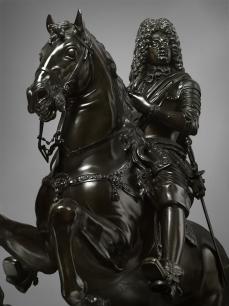
Giuseppe Piamontini, Prince Ferdinando di Cosimo III on Horseback, ca. 1695, bronze, 25 inches (62.5 cm), The Collection of Mr. and Mrs. J. Tomilson Hill
The Frick Collection will be the only venue for the first public exhibition of this private collection devoted to the bronze figurative statuette. The nearly forty sculptures included in the show are of exceptional quality and span the fifteenth through the eighteenth century, exemplifying the genre from its beginnings in Renaissance Italy to its dissemination across the artistic centers of Europe.
The Hill Collection is distinguished by rare, autograph masterpieces by Italian sculptors such as Andrea Riccio, Giambologna, and Giuseppe Piamontini. Its holding of works by the Giambologna school evokes the splendor of the late Renaissance courts, while the richness of the international Baroque is represented by Alessandro Algardi’s religious sculptures and by a remarkable assemblage of seventeenth- and eighteenth-century French bronzes in the classical mode. The Hill Collection reveals the range of artistry, invention, and technical refinement characteristic of sculptures created when the tradition of the European statuette was at its height. The exhibition is accompanied by an illustrated scholarly catalogue edited by Patricia Wengraf with
contributions by Claudia Kryza-Gersch, Dimitrios Zikos, and Denise Allen,
organizing curator of the exhibition at The Frick Collection.
◊ ◊ ◊ ◊ ◊
Patricia Wengraf, ed., Renaissance and Baroque Bronzes from the Hill Collection (London: Paul Holberton Publishing, 2014), 384 pages, ISBN: 978-1907372636, $125.
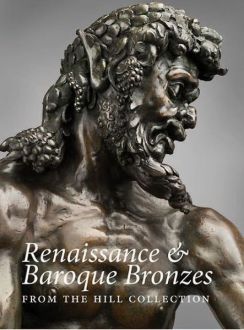 This richly illustrated and beautifully produced scholarly catalog of the superlative collection of Renaissance and Baroque bronze figurative statuettes from the Hill Collection, accompanies an exhibition of the collection at The Frick Collection, New York opening late January 2014. Spanning the 15th through the 18th century, the sculptures presented are of exceptional quality and exemplify the bronze statue or statuette from its beginnings in Renaissance Italy to its dissemination across the artistic centers of Europe.
The Hill Collection is distinguished by rare, autograph masterpieces by Italian sculptors such as Andrea Riccio and Giambologna, and has the most important collection of Baroque bronzes by Giuseppe Piamontini in the world. Its holding of works by the Giambologna school – the strongest found in any single collection, with the sole exception of the Museo Nazionale del Bargello, Florence – evokes the splendor of the late Renaissance courts, while the richness of the international Baroque is represented by religious sculptures by Alessandro Algardi, northern bronzes by Adriaen de Vries and Hubert Gerhard, and a remarkable assemblage of French 17th- and early 18th-century bronzes in the classical mode, by Barthelemy Prieur and from the circle of Ponce Jacquiot. The Hill Collection reveals the range of artistry, invention and technical refinement characteristic of sculptures created when the tradition of the European statuette was at its height.The catalog includes detailed biographies of each of the artists represented and is introduced with essays by the distinguished authors.
Patricia Wengraf is one of the world’s leading dealers in bronzes, sculpture and works of art, and in her particular specialty, bronzes of the 15th-18th centuries, her knowledge and connoisseurship are of world repute. Denise Allen is Curator of Renaissance Paintings and Sculpture at The Frick Collection. Claudia Kryza-Gersch is Curator of Renaissance Sculpture at the Kunsthistorisches Museum, Vienna. Dimitrios Zikos is Curator at the Museo Nazionale del Bargello in Florence. Rupert Harris is the leading conservator of metalwork and sculpture in the UK.
Fashioning Identities: Types, Customs, and Dress in a Global Context
From the conference website:
Fashioning Identities: Types, Customs, and Dress in a Global Context
Hunter College, City University of New York, 17–19 October 2013
 Pictorial imagery of local types, traditions, and dress has a long history. From costume books and street criers to travel albums and Hispanic costumbrismo, such representations captured people and daily life in a purportedly realistic manner, often emphasizing specificity over universal themes. Popular types, customs, and dress served as both sources of national pride and exotic spectacles of regional traditions. These depictions of local color often valued certain practices, regions, or types over others and were directed to native and foreign audiences alike. They came to have a global reach, serving as authoritative vehicles to disseminate values and beliefs about an individual place or people and cementing imperial ambitions, political ties, and economic networks. This symposium will explore the nuanced and complex ways in which such representations of peoples, places, and cultures—sometimes viewed as portraying a static or conservative vision—simultaneously engaged with the increasingly industrialized and global world.
T H U R S D A Y , 1 7 O C T O B E R 2 0 1 3
7:00 pm, Kossack Lecture Hall, Hunter North 1527
Keynote Address: Natalia Majluf (Director of the Museo de Arte de Lima), Materiality: José Gil de Castro and the Portraiture of Things
F R I D A Y , 1 8 O C T O B E R 2 0 1 3
Ida K. Lang Recital Hall, Hunter North 424
9:30–11:15 Ethnographies
Heather A. Hughes (University of Pennsylvania), Good Habits, Bad Habits: The Global Order in Robert Vaughan’s Months
Mariana Françozo (Leiden University and the National Museum of Ethnology, The Netherlands), Early Modern Comparative Ethnography: The ‘Locke Drawings’ Collection and the Representation of Indigenous Peoples in Global Perspective, c. 1680–1750
Deborah Dorotinsky (Instituto de Investigaciones Estéticas, UNAM, Mexico City), It Is Written in Their Faces: Seri Women and Facial Painting in Photography
11:15 Coffee
11:30–1:00 Intersections of Tradition & Modernity
Vanesa Rodríguez-Galindo (UNED, Madrid), Contemporary Customs in Late Nineteenth-Century Madrid: Points of Convergence between the Popular and the Modern in the Illustrated and Comical Press
Lynda Klich (Hunter College, CUNY), Circulating Indigenism in Mauricio Yáñez’s Postcards from Mexico
Denise Birkhofer (Allen Memorial Art Museum, Oberlin College), Enrique Díaz’s Parade of Progress: Fashioning a Streamlined Mexican Future
1:00–3:00 Lunch
3:00–5:00 Exoticism & Empire
Matthew Keagle (Bard Graduate Center), Uniform Schemas: The Abstraction of Dress and The Unity of Uniforms
Elisabeth Fraser (University of South Florida), The Ottoman Costume Album and Inclusive Empire: Louis Dupré in Ottoman Greece
Victoria L. Rovine (University of Florida), Fashion at the Intersection of French and African Colonial Cultures
S A T U R D A Y , 1 9 O C T O B E R 20 1 3
Ida K. Lang Recital Hall, Hunter North 424
9:30–11:00 Gender Anxieties
Ann Jones (Smith College), Merchandising Gender: Women’s Dress and Women’s Duties in Two Sixteenth-Century Costume Books, Jost Amman’s Frauenzimmer/Gynaeceum and Cesare Vecellio’s Habiti antichi et moderni (1590 and 1598)
Leyla Belkaïd (University of Lyon), A Stylistic Change and Its Pictorial Representation: The Algiers Dress in Western Imagery
Maya Jiménez (Kingsborough Community College, CUNY), The Myth of the Bahiana in Nineteenth-Century Photography
11:00 Coffee
11:30–1:00 Social & Civic Life
Eugenia Paulicelli (Queens College and The Graduate Center, CUNY), Performing Dress: Love, Politics and “venezianità” in Giacomo Franco’s Habiti d’huomini et donne venetiane
Sarah Buck (Florida State University), Les Costumes grotesques (c. 1695): Prints and Professional Habits in the ancien régime
Emily Morgan (Iowa State University), ‘True Types of the London Poor’: Street Life in London‘s Transitional Typology
1:00–3:00 Lunch
3:00–5:00 Masquerade & Appropriation
Ashley Bruckbauer (University of North Carolina at Chapel Hill), Playing the Ambassador and the ‘Other’: Cultural Cross-dressing and French Foreign Policy in the Eighteenth and Early-Nineteenth Centuries
Tara Zanardi (Hunter College, CUNY), The Mantón de Manila at the Crossroads of Identity
Teresa Eckmann (University of Texas at San Antonio), Playing the Devil’s Advocate with a Twist: Julio Galán and Lo mexicano
Charlene Lau (York University), Sartorial Remembrance: Bernhard Willhelm and Tirolean Folk Dress
New Book | From Still Life to the Screen
From Yale UP:
Joseph Monteyne, From Still Life to the Screen: Print Culture, Display, and the Materiality of the Image in Eighteenth-Century London (London: Paul Mellon Centre for Studies in British Art, 2013), 292 pages, ISBN: 978-0300196351, $85.
 From Still Life to the Screen explores the print culture of 18th-century London, focusing on the correspondences between images and consumer objects. In his lively and insightful text, Joseph Monteyne considers such themes as the display of objects in still lifes and markets, the connoisseur’s fetishistic gaze, and the fusion of body and ornament in satires of fashion. The desire for goods emerged in tandem with modern notions of identity, in which things were seen to mirror and symbolize the self. Prints, particularly graphic satires by such artists as Matthew and Mary Darly, James Gillray, William Hogarth, Thomas Rowlandson, and Paul Sandby, were actively involved in this shift. Many of these images play with the boundaries between the animate and the inanimate, self and thing. They also reveal the recurring motif of image display, whether on screens, by magic lanterns, or in “raree-shows” and print-shop windows. The author links this motif to new conceptions of the self, specifically through the penetration of spectacle into
everyday experience.
Joseph Monteyne is associate professor in the history
of art at the University of British Columbia.
Fellowships | Winterthur Museum Research Fellowship Program
Winterthur Museum Research Fellowship Program, 2014–15
Applications due by 15 January 2014
Winterthur Museum, Garden & Library announces its Research Fellowship Program for 2014–15, consisting of short- and long-term fellowships open to academic, independent, and museum scholars, to support advanced study of American art, culture, and history.
Fellowships include NEH, dissertation, and short-term fellowships. Fellows have full access to library collections of more than 87,000 volumes and one-half million manuscripts and images, searchable online at winterthur.org. Fellows may conduct object-based research in the museum’s collections of 90,000 artifacts and artworks made or used in America to 1860.
Applications are due January 15, 2014. For more details and to apply, visit the website or e-mail Rosemary Krill at rkrill@winterthur.org.
Call for Articles | Constructions of the Exotic
Constructions of the Exotic in Europe and North America, 18th–21st Centuries
Special Issue of Material Culture Review
Manuscripts due by 15 December 2013
Material Culture Review solicits articles for a special issue on the theme of constructing the exotic. We are looking for articles that examine the question of how a person, an object or a work of art comes to be seen as exotic. How is ‘foreignness’ constructed? How is one culture appropriated and domesticated by another?
The goal here is not to show the constructed nature of the concept of the exotic. Rather, papers should emphasize the processes by which something is made exotic, including the stories that surround an object, the ways in which an object is exhibited, and how the representation of an object affects whether or not it is perceived as foreign. We invite papers that examine exoticization and domestication in relation to territory and place, agency and identity – papers that examine not only what is exoticized but also who does the exoticizing and how they do it. We are particularly interested in analyses of the exotic in Europe and North America that are grounded in social and political contexts.
Proposed Research Topics
1. Representation
The first topic has to do with representations that blur the border between documentation and fiction, realism and exoticism. How do certain items construct certain identities? For example, how do Indian clothing, Chinese dishes, and tobacco accessories contribute to the identity of those who wear or use them? How are these objects used in the art world, in the theatre, or in people’s homes? How do 18th-century engravings used to illustrate stories of voyages, as well as more ‘scientific’ representations (photographs, museums, etc.) produced at the beginning of the 19th century, construct the exotic? Papers on this topic will look at what actually makes something appear exotic, what increases or decreases the ‘foreign’ quality in the eyes of the maker and consumer.
2. Display
The second topic pays attention to the material culture, words, and gestures surrounding objects – to displays that make them look exotic or, on the contrary, domestic. Here, it is important to examine how the objects are displayed in their place of purchase, in people’s homes, and in museums. How are they exhibited? What physical context (furniture, frames, light) is used to present them? What words are used to describe them? Do these things qualify the objects as exotic or, rather, do they underemphasize their ‘foreign’ quality?
3. Materiality
Once the things are acquired, how are they repaired, reformed, or recomposed? What kind of material trans-formations do these imported, re-territorialized objects undergo? It may be through a process of hybridization with other artifacts. Exoticization can also happen through a process of integration: a fragment inserted into a piece of furniture can alter the entire object. However, exoticism is reinforced, for example, in the bronze or silver rings on an Asian vase. We encourage papers that study the process of fragmentation, extension, and the use of specific materials (precious and tropical wood, stone, metal, etc.) in the creation of ‘exotic’ objects.
Articles should be 20–30 double-spaced pages, including endnotes. In addition, we encourage the submission of
· research reports (10–20 pages, including endnotes)
· exhibition reviews (10–15 pages, including endnotes)
· research notes (5–10 pages)
· book reviews (notes and comments less than 5 pages) on this theme
Articles are expected in English or French. Please submit manuscripts by December 15, 2013 to Noémie Etienne at ne477@nyu.edu.
New Book | Guide to the Sculpture in the Mansion House
From Paul Holberton Publishing:
Julius Bryant, ‘Magnificent Marble Statues’: A Guide to the Sculpture in the Mansion House (London: Paul Holberton Publishing, 2013), 144 pages, ISBN: 978-1907372551, £20.
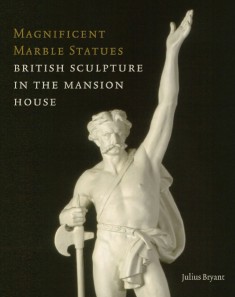 The Mansion House, the palatial city residence of the Lord Mayor of London, is home to one of the capital’s finest collections of British sculpture from the 18th and 19th centuries. Forming part of the spectacular setting for official functions, as well as the background to busy offices and the home of the Lord Mayor and his family, the sculpture ranges from handsome chimneypieces and elaborate stuccowork wall decorations to heroic single statues of figures from British literature and history.
Described by the architectural historian Nicolaus Pevsner as “magnificent marble statues,” the sculptures are almost unknown to the general public. Their significance, however, is much greater than as an example of the changing fortunes of Victorian sculpture and of the fluctuating attitudes of the Corporation of London to art patronage. Taken as a whole, the sheer range and variety is exceptional. After the monuments in Westminster Abbey and St Paul’s Cathedral and the galleries of the Victoria and Albert Museum, Mansion House presents the most extensive permanent exhibition of British sculpture in London. It differs from these rival collections in the range of its sculpture, from Palladian chimneypieces carved by City stonemasons and virtuoso Rococo plasterwork by anonymous stuccadors to heroic ideal statues made to rival the greatest works from antiquity and the Renaissance.
The time has come for a fresh appreciation of these “magnificent marble statues.” The first book on the sculpture ever published, this beautifully illustrated study reveals the subjects of the sculptures, the stories behind the commissions and the importance of the artists themselves. New photography highlights the qualities of the individual sculptures in their historic settings. A unique insight to the challenges and delights of living, working and raising a family in Mansion House is given in an introductory essay by the Lady Mayoress, Clare Gifford. The sculptures and architecture are described by Julius Bryant, Keeper of Word and Image at the Victoria and Albert Museum. This beautifully produced new handbook provides a companion volume to The Harold Samuel Collection, Dutch and Flemish Pictures at the Mansion House (Paul Holberton Publishing, 2012) by Michael Hall and Clare Gifford.










 Enfilade
leave a comment