New Acquisition | Getty Acquires Runge’s ‘Times of Day’
Press release (23 May 2013) from The Getty:
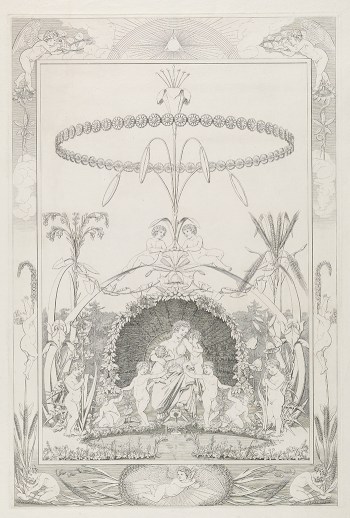
Philipp Otto Runge, Day, from Times of Day, 1805. Printmakers: E.G. Krüger and J. A Darnstedt. Etching and engraving
(Los Angeles: The Getty Research Institute)
The Getty Research Institute (GRI) announced today the acquisition of a rare first edition, Times of Day by Philip Otto Runge (1777–1810). Published in 1805, this suite of four prints representing Morning, Evening, Day, and Night is widely recognized as a monument of German Romantic art.
“This remarkable set of engravings is a radical, personal expression from one of the leaders of the German Romantic movement,” said Thomas W. Gaehtgens, director of the Getty Research Institute. “It is a landmark addition to the Getty Research Institute’s important prints collection.”
Runge, along with Caspar David Friedrich (1774–1840), was one of the leading painters and theorists of the German Romantic movement. He rejected the tradition of academic painting in favor of art that symbolically expressed the essential harmony of nature, humanity, and the divine. The complex iconography of Times of Day, which is very detailed, is meant to express the coming and departing of light—dawn, daytime, dusk, and darkness—and at the same time represents the organic process of conception, growth, decay and death.
“The elegance and purity of these images stands the test of time, expressing universal themes with grace and boldness,” said Louis Marchesano, curator of prints and drawings at the Getty Research Institute. “In his own time, Runge was praised and collected by important cultural figures such as Johann Wolfgang von Goethe.”
From 1802 until his untimely death in 1810 at the age of 33, Runge worked obsessively on these images, carefully articulating every aspect of their compositions and frames. Early in the planning stages, he made four large outline drawings in preparation for the four final images.
This first, small edition of the four engravings, published in 1805, reflects the delicacy of Runge’s carefully constructed preparatory drawings. Although the artist approved the production of a second, significantly larger edition, his original intent was not commercial. Runge shared his first edition with other artists and writers in order to disseminate his new artistic ideas and to announce his plans to create a large painting cycle based upon the designs. Those paintings were never completed; thus the prints are an important record of the artist’s goals.
The prints are now part of the GRI’s Special Collections, which comprise rare and unique collections in art history and visual culture from around the world, including more than 27,000 prints ranging from the Renaissance to the present.
At Christie’s | The Exceptional Sale
Press release (22 May 2013) from Christie’s:
The Exceptional Sale (#1140)
Christie’s, London, 4 July 2013

George II Silver Coffee-Pot, Mark of Paul de Lamerie, 1738. 10 3/4 in. (27.3 cm.) high. The arms are those of Lequesne impaling Knight, for Sir John Lequesne (1687-1741) and his wife Mary, née Knight, whom he married in 1738. Estimate: £3.5 million – 4.5 million. Photo: Christie’s Images Ltd 2013.
With an estimated 1.6 billion cups of coffee being consumed worldwide each day, Christie’s London presents the most important coffee-pot ever to come to the market in The Exceptional Sale (#1140) on 4 July 2013 (estimate: £3.5 million – 4.5 million). This Rococo masterpiece by Paul de Lamerie (1688–1751) – the greatest silversmith working in Britain in the eighteenth century – is expected to become the most valuable piece of English silver ever to be sold at auction. The George II silver coffee-pot was created in 1738, for a successful merchant. This exceptional piece of craftsmanship has recently been the centerpiece of the British Silver exhibition at The Metropolitan Museum in New York.
Lamerie’s works have been prized above all others for the last two hundred and fifty years. He was apprenticed to his fellow Huguenot Pierre Platel in 1703, becoming free of his master in 1711. Within six years he was described as the King’s Silversmith. This coffee-pot is the masterpiece of de Lamerie’s highly developed Rococo period and is a tour-de-force of design and execution.
The coffee pot was commissioned by London based trader and fellow Huguenot Sir John Lequesne. As a child, Lequesne came to Britain as a refugee with his younger brother, fleeing Rouen like so many of his fellow Protestants. It was arranged by their father that they would lodge with a Spanish merchant in London; the brothers would never see their father again, he died tragically from an illness after having been imprisoned for his beliefs. The Lequesne brothers prospered; John became free of the Grocers’ Company and David the Salters’ Company. They later set up business together trading with the West Indies. John not only became an Alderman of the City but was also a director of the Bank of England, and was knighted by King George II in 1737. A successful marriage, bringing a dowry of £20,000, and an equally successful career enabled him to commission this most magnificent of coffee-pots from the greatest silversmith of the day. The coffee-pot, inspired by French forms and conceived in the new French Rococo style, speaks of his ancestry. Its presence in the ownership of a successful merchant epitomises the vibrancy of eighteenth-century trade in London.
The first London coffee house was opened in 1652 by a member the English Levant company which traded with Turkey. Pasqua Roseé had served in Smyrna (now Izmir) and had acquired a taste for the dark stimulant drink. Coffee’s many virtues, both real and imagined, were extolled by printed handbills; they also warned of a sleepless night if consumed too late. Each coffee house had its own particular clientele, some were literary, some political, others concerned with shipping and others finance. From the coffee house came the Gentleman’s Clubs and City institutions such as the insurance market Lloyds of London. These unofficial meeting places were disapproved of by the establishment; King Charles II tried to censure them in 1675 to no avail.
By the eighteenth century the practice had acquired polite acceptance and coffee was being consumed at home from silver and porcelain pots. It was usually served black and from long spouted vessels. There was also a fashion for taking it in the Turkish manner, with large quantities of sugar syrup used in the preparation. Contemporary accounts survive for ‘Turky Coffee Pots’ with short spouts, as used by Lamerie for the present coffee pot; the short spout meant viscous liquid flowed freely.
Summer Reading Idea | The Stockholm Octavo
From Harper Collins:
Karen Englemann, The Stockholm Octavo: A Novel (New York: Ecco, 2012), 432 pages, ISBN: 978-0061995347, $27.
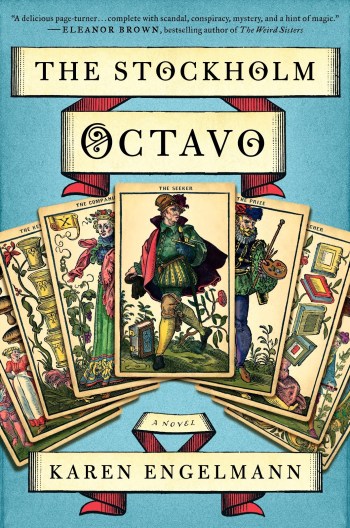 Life is close to perfect for Emil Larsson, a self-satisfied bureaucrat in 1791 Stockholm. He is a true man of The Town—drinker, card player, and contented bachelor. Until one evening, when Mrs. Sophia Sparrow, proprietor of an exclusive gaming parlor and fortune teller, shares with him a vision she has had—a golden path that will lead to love and connection for Emil. She offers to lay an Octavo for him, a spread of cards that augur the eight individuals who can help him realize this vision—if he can find them. Emil begins his search, intrigued by the puzzle of his Octavo and the good fortune Mrs. Sparrow’s vision portends. But when Mrs. Sparrow wins a mysterious folding fan in a card game, the Octavo’s deeper powers are revealed. No longer just a game of the heart, collecting his Eight is now crucial to pulling his country back from the crumbling precipice of rebellion and chaos. Set against the luminous backdrop of late 18th-century Stockholm, as the winds of revolution rage through the great capitals of Europe, The Stockholm Octavo brings together a collection of characters both fictional and historical whose lives tangle in political conspiracy, love, and magic in a breathtaking debut that will leave readers spellbound.
◊ ◊ ◊ ◊ ◊
From Ron Charles’s review (4 December 2012) for The Washington Post:
Engelmann lived in Sweden for almost 10 years and worked as an art director for Ikea, which you might see reflected in her story’s careful attention to design. No sepia tones for these 200-year-old scenes. Every room here vibrates with color. Even a relatively modest shop, for instance, “was painted in broad horizontal stripes of cheery lemon and cream, and the white crown moldings were like sculpted meringue oozing against the ceiling.” And Engelmann is just as captivating with the gorgeous outfits these people don to entertain and impress one another at a time when clothing was a strict marker of class and status. The antique etchings sprinkled throughout these pages are a nice touch, too . . .
Exhibition | Living in Style: Five Centuries of Interior Design
From The Met:
Living in Style: Five Centuries of Interior Design from the Collection of Drawings and Prints
The Metropolitan Museum of Art, New York, 18 June – 8 September 2013

Jean Démosthène Dugourc, Wall Elevation of a Salon, ca. 1780. Pen and ink and watercolor; sheet: 9 x 6 3/4 inches (New York: Metropolitan Museum of Art)
Interior design is often thought of as a modern, post-industrial concept, but sculpting our domestic environment became an art form in its own right much earlier. Renowned and highly paid artists from a wide array of disciplines were often involved in the creation and manipulation of living spaces that would meet or even exceed the wishes of their patrons.
Made singlehandedly or by an interpreter in various stages of the manufacturing process, many features of artists’ designs have been captured on paper. This exhibition combines drawings, prints, and objects from all over Europe and the United States as they were collected by the Metropolitan Museum over a period of more than a hundred years. It highlights the ingenuity, beauty, and wit often found in designs for the decorative arts, and follows the dynamic development of shapes, ornaments, and materials alternately governed by issues of comfort, theory, and aesthetics.
At Mallett | Great English Furniture
As noted at ArtDaily (the brochure from Mallett is available as a PDF here) . . .
Great English Furniture
Mallett, London, 21 May — 1 June 2013
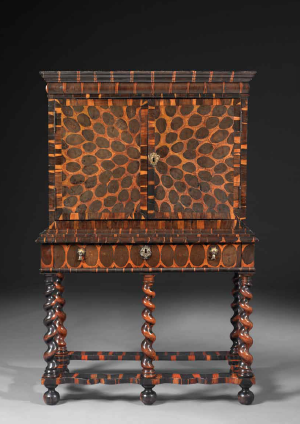 A major exhibition of English furniture which has been in important American private collections for many years is to be held by Mallett, one of the world’s leading antique dealers, at Ely House, 37 Dover Street, London W1 from 21 May to 1 June 2013. Great English Furniture will celebrate the skills of some of the best furniture makers in history and also provide an opportunity for collectors to buy pieces which have not been on the market for at least a quarter of a century.
Highlights of the exhibition will include a magnificent Master’s Chair, probably made for an anti-French society in the 18th century and one of only two known examples, an exceptional giltwood trophy attributed to Sefferin Nelson and made for the Prince Regent’s opulent home at Carlton House in London, a rare William and Mary cocus wood cabinet and an elaborately carved Chippendale period carved giltwood mirror. The majority of the pieces in the exhibition are 18th century and have been sourced by Mallett from private collections in the United States.
 One of the most fascinating pieces in the exhibition is a rare George II Master’s Chair, almost certainly made for the Anti-Gallican Society, founded in 1745 when Britain and France were at war. “For our Country,” the motto of the Society, is inlaid on the imposing walnut armchair, which is almost six feet high. It would have been made ca. 1750 for use in a dining club of the Anti-Gallican Society, which aimed to deter what it called “the insidious arts of the French nation.” Like many 18th-century clubs, its members combined the pursuit of convivial pleasure with promoting a cause – in this case opposing French influence and Anglo-French trade. The chair has broad sloping shoulders ornamented with carved and gilt acanthus and scroll-shaped terminals. The arms end in finely carved lions’ masks. The only other such chair known is in the collection of Temple Newsam, the great country house near Leeds. The price of this rare and historic chair will be in the region of £125,000.
Another highlight of the Mallett exhibition with a fascinating history is an exceptional giltwood trophy, representing the victory of peace over war, attributed to Sefferin Nelson ca. 1795. Nelson worked at Carlton House, the London residence of the Prince Regent, later George IV, as a carver gilder and frame maker. Henry Holland, the architect who turned the house into a palatial home for the heir to the throne, designed a set of giltwood trophies for the throne room at Carlton House. He commissioned them from the famous marchand-mercier Dominique Daguerre, who had the order completed by Nelson. Four of these trophies are now in the throne room at Buckingham Palace, where most of the contents of Carlton House were taken after the latter’s demolition in 1825. These are of the same dimensions and decorated with similar carvings and motifs to the one in the exhibition at Mallett. It will be priced in excess of £100,000.
Great English Furniture will also include a very rare William and Mary cocus wood cabinet on a stand, made in England ca. 1700. This oyster-veneered cabinet has a rectangular top above a moulded cornice and a pair of doors enclosing a fitted interior. Inside are two drawers around a central door with a row of pigeonholes on top. The whole piece stands on barley-twist turned legs joined by a waved stretcher and ending in bun feet. The cabinet will be on sale for more than £100,000.
A fine Chippendale period carved giltwood mirror will be another highlight of the exhibition. The elaborately carved mirror of Rococo design, made in England ca. 1765, has a central cartouche with foliate C-scrolls and bell flowers, elaborately pierced with an unusual double-layered cresting, flanked by hoho birds. This will also be priced in excess of £100,000. A fine Queen Anne double back walnut settee of rich colour and patination made in England ca. 1720 and a rare late 17th-century William and Mary desk decorated with ‘seaweed’ marquetry inlay, primarily in holly, are among the many other magnificent examples of furnituremakers’ art in the exhibition. Both will be on sale for a price in the region of £50,000.
Note (added 13 July 2013): The Master’s Chair sold at Masterpiece London (27 June — 3 July 2013) , as reported here»
Conference | Collecting Nature
From the program for the Collecting Nature conference:
Collecting Nature
Kloster Irsee, Swabia, Germany, 24-27 May 2013
Organized by Sylvia Heudecker and Andrea Gáldy
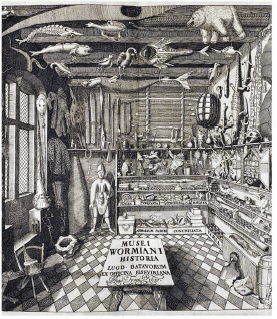 Research in the history of collecting has often focused on collections of works of art and artefacts, even though the mediaeval and early modern kunst- and wunderkammern harboured both artificialia and naturalia from their very inception. In fact, some of the keenest collectors of art and antiquities, such as Cosimo I de’ Medici or the Saxon electors, were particularly renowned for their interest in the natural sciences, including geography, botany, and zoology. What started as a mass of curiosities – e.g. prepared animals, skeletons, minerals, and metal ore – soon was transformed into an insatiable quest for knowledge that was furthermore fanned by the age of exploration and the exploitation of far-away countries. Papers in this conference will focus on the intersection between the history of collecting and the history of science, while not forgetting the monastic or courtly context of provenance and display.
Irsee is a particularly interesting venue for in the eighteenth century Pater Eugen Dobler had set up a much admired bird cabinet. Although no trace of this cabinet remains, the room itself still exists and will be used for the conference’s academic sessions. International scholars will be presenting, the conference language is English.
◊ ◊ ◊ ◊ ◊
F R I D A Y , 2 4 M A Y 2 0 1 3
6.00 Evening reception plus short introduction to the conference
Susanne Formanek (Institut für Kultur- und Geistesgeschichte Asiens, Vienna), Collecting and Displaying Nature in Early Modern Japan
7.30 Dinner
S A T U R D A Y 2 5 M A Y 2 0 1 3
9.00 Andrea Gáldy and Sylvia Heudecker, Welcome
‘Naturalia’ and ‘Sculpture’ after Nature
9.15
• Rachel King (Pinakothek und Nationalmuseum, Munich), Collecting Nature within Nature: Animal Inclusions in Amber in Early Modern Collections
• Lisa Skogh (Stockholms Universitet), Bergwerke and Handsteine in the Royal Swedish Collections, 1654–1720
• Discussion
10.30 Coffee / Tea
11.00
• Angelica Groom (The Open University, Milton Keynes), Animal Collecting at the Medici Court in Florence: Real, Stuffed and Painted Beasts as Evidence of Shifting Values in the Display and Conceptualisation of the Zoological ‘Other’
• Virginie Spenlé (Kunstkammer Georg Laue, Munich), Casting from Nature: Wenzel Jamnitzer’s Metal Works for
Kunst- and Wunderkammern
• Discussion
12.30 Lunch
Nature and Naturalia Indoors
2.00
• Marcell Sebők (Central European University, Budapest), Wonders on the Walls: Visual Presentations and Displaying Nature and Knowledge in Early Modern Private Collections
• Giada Damen (Princeton University), Collecting and Cataloguing Art and Nature in a Venetian Palazzo
• Discussion
3.30 Coffee / Tea
4.00
• Ivo Raband (Universität Bern), An Archducal Collection in Brussels: Archduke Ernest of Austria and His Collecting Ambitions
• Shep Krech III (Brown University, Providence), Catesby’s Birds
• Discussion
7.00 Dinner
S U N D A Y , 2 6 M A Y 2 0 1 3
9.00 Optional tour of Kloster Irsee
10.15 Optional Roman Catholic Mass
The Display of Naturalia: Libraries and Wunderkammern
11.15
• Barbara Tramelli (Max-Planck-Institut für Wissenschaftsgeschichte), Nature and Grotesques: Pirro Visconti Borromeo and the Collection in His Villa of Lainate
• Inga Elmqvist Söderlund (Museum of the History of Science, Oxford University), Scientific Instruments in the Ideal Early Modern Library
• Discussion
12.30 Lunch
2.00
• Miriam H. Kirch (University of North Alabama, Florence), A Princely Plant Collector in Renaissance Germany
• Joy Kearney (Radboud Universiteit Nijmegen), Ornithology in the Dutch Golden Age: Captured Specimens and the Collecting of Exotica
• Discussion
3.30 Break
4.00
• Iordan Avramov (Bulgarian Academy of Sciences, Sofia), The Correspondence of Henry Oldenburg and Circulation of Objects at the Early Royal Society of London, 1660–1677
• Anne Harbers (University of Sydney), Carl Linnaeus and the Natural History Collections of Lovisa Ulrika of Sweden at Drottningholm Palace
• Discussion
5.00 Coffee / Tea
5.30 Keynote Speech — Dornith Doherty (University of North Texas, Denton), Archiving Eden
7.00 Dinner
M O N D A Y , 2 7 M A Y 2 0 1 3
Visit to the Südsee Museum, Obergünzburg and Kloster St Ottilien (Missions Museum) with lunch at the St Ottilien Biergarten
T U E S D A Y , 2 8 M A Y 2 0 1 3
Tour of the Museum of the Abbey Ottobeuren in the morning
Peale’s Portrait of Washington Sells for Record Price
With this posting on auction results, I would remind readers that we’re keeping up with past and upcoming auctions on HECAA’s Pinterest boards. -CH
◊ ◊ ◊ ◊ ◊
Press release from Heritage Auctions:

Rembrandt Peale, Portrait of George Washington, ca. 1856, oil on canvas, 36 x 29 inches
Rembrandt Peale’s iconic portrait of U.S. President George Washington — created in the artist’s lifelong quest to paint the most recognizable image of the ‘Father of the United States’ — realized a new world record for a porthole portrait by the artist when it sold for $662,500 to lead Heritage Auctions’ two-day, $4.5+ million American art events in Dallas. The May 10-11 events spanned American Indian art, Texas, Western and California Art and masterpieces of fine American art. The auction sold 88 percent by lot and 93 percent by value and pushed three artists’ records past $500,000.
Peale’s portrait of Washington was presented with his equally iconic portrait of Martha Washington, which reached $158,500. . . .
The full press release is available here»
The Frick Announces Loans from Horace Wood Brock
Press release (14 May 2013) from The Frick Collection:
![Mounted Vase, c. 1786–88, Royal Manufactory of Sèvres, hard-paste porcelain with gilt-bronze mounts attributed to Pierre-Philippe Thomire (1751–1843); Horace Wood Brock Collection; photo: Michael Bodycomb. More Information: http://www.artdaily.com/index.asp?int_sec=2&int_new=62577#.UZOed7YzKA8[/url] Copyright © artdaily.org](https://enfilade18thc.com/wp-content/uploads/2013/05/screen-shot-2013-05-15-at-10-49-30-am.png?w=720)
Mounted Vase, ca. 1786–88, Royal Manufactory of Sèvres, hard-paste
porcelain with gilt-bronze mounts attributed to Pierre-Philippe Thomire;
Horace Wood Brock Collection. Photo: Michael Bodycomb
◊ ◊ ◊ ◊ ◊
The Frick Collection announced the extended loan of several important decorative arts objects from Horace Wood Brock, one of America’s most remarkable collectors. Over the last three decades, he has assembled an enviable collection of French and English decorative arts dating from 1675 to 1820, as well as paintings and Old Master drawings. Dr. Brock has also been a generous lender of works of art, loaning objects to the J. Paul Getty Museum in Los Angeles and the Museum of Fine Arts, Boston, and now to the Frick. Five French clocks from his collection are featured in the current special exhibition Precision and Splendor: Clocks and Watches at The Frick Collection, which opened in the Portico Gallery in January and will remain on view until February 2014. In addition to Dr. Brock’s clocks, four important pieces of French eighteenth-century decorative arts from his private collection are now on view in the Frick’s permanent collection galleries, where they can be enjoyed by museum visitors for the next several years. They are a secrétaire by Royal cabinetmaker Jean-Henri Riesener, a longcase clock by Balthazar Lieutaud, and two rare Sèvres porcelain vases. The exhibition of clocks and watches as well as the placement of the four additional loans in the galleries has been coordinated by the Frick’s Associate Curator of Decorative Arts, Charlotte Vignon.
The impressive longcase regulator clock displayed in the East Vestibule near the museum’s Entrance Hall was made in Paris around 1750−55, when the fashion for rococo design was at its peak. A perfect example of this highly decorative style, the clock’s shape avoids straight lines in favor of a fanciful play of curves and counter-curves, adorned by heavy gilt-bronze mounts that call to mind the branches of a tree. Although the mounts take their inspiration from nature, they are not representational but rather a pure fantasy of the rococo style. The clock is topped by the winged figure of Time, made by an unknown craftsman. The figure holds a scythe in one hand and an hourglass in the other as reminders of man’s mortality. The case was made by Balthazar Lieutaud, who became a master cabinetmaker in 1749, only a few years before creating this piece. About a decade later, in 1767, he executed a longcase clock that was purchased by Henry Clay Frick in 1915 and is now displayed at the foot of the Grand Staircase. It was made in the newly fashionable neoclassical style, which evolved in response to the extravagance of the rococo. This later clock is crowned by a gilt-bronze group representing Apollo riding his chariot, made by the bronzemaker Philippe Caffiéri.

Potpourri Vase and Cover, ca. 1763–70, Royal Manufactory of Sèvres, painted and gilded soft-paste porcelain with gilt-bronze mounts, ca. 1785; Horace Wood Brock Collection. Photo: Michael Bodycomb.
The exquisite soft-paste potpourri vase on view in the Fragonard Room was made by the Royal Manufactory of Sèvres around 1763–70. Its gilt-bronze mounts were added later, around 1785. The vase is topped by a finial composed of a cluster of berries nestled inside an acanthus-leaf cup. The support— which incorporates goats’ heads with elaborately curved horns—recalls the Athénienne, a type of pedestal table that was fashionable during the late eighteenth century in France and was loosely based on ancient models. The pierced metal band that separates the bowl of the vase from its cover suggests that it might have been designed to hold potpourri, a fragrant mixture of dried flowers and spices that perfumed the air of aristocratic residences during the eighteenth century. With its references to classical antiquity, it also could have been intended to evoke an incense burner, although it is unlikely that it would have been used in this way. The pendant to Dr. Brock’s vase is in the collection of Queen Elizabeth II.
A second vase made at the Royal Manufactory of Sèvres and lent by Dr. Brock is illustrated above. Between 1786 and 1788, the Sèvres manufactory produced a dozen round and oval vases in dark blue hard-paste porcelain that were fitted with gilt-bronze mounts attributed to the renowned bronzemaker Pierre Philippe Thomire. The oval version was commissioned in November of 1786 by Dominique Daguerre, the preeminent Parisian marchand-mercier (merchant of luxury goods) of the period, and thus was referred to in the factory’s records as a “vase Daguerre ovale.” The vase exemplifies the highly sophisticated luxury items produced in France on the eve of the revolution. The symmetry of the vase recalls ancient models, as do its gilt-bronze mounts, which are in the shape of acanthus and laurel leaves, pine cones, and palmettes.
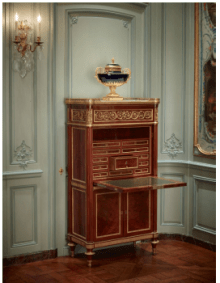
Secrétaire à abbatant, ca. 1785, by Jean-Henri Riesener, oak veneered with mahogany, gilt-bronze mounts, marble, leather writing surface; Horace Wood Brock Collection. Photo: Michael Bodycomb
The vase is displayed in the Boucher Room atop a secrétaire à abbatant, also from Dr. Brock’s collection. The French word secrétaire derives from secret, or secrecy. Such pieces were created to secure private documents. When opened, the fall-front panel provides a leather-covered writing surface and reveals twelve interior drawers of varying sizes and shapes. The lower part of the cabinet (concealed by two doors) provides extra storage, as does the large drawer above the fall-front panel. The desk was made around 1785 by Jean-Henri Riesener, who was appointed cabinetmaker to the king in 1774, the year Louis XVI acceded to the throne. In 1784, when the crown was attempting to reduce its expenditures, Riesener was replaced by a younger (and less expensive) cabinetmaker. Around this time his style changed, shifting away from furniture decorated with marquetry in colorful, exotic woods to veneered mahogany as seen in this secrétaire. Although this change was probably motivated by an effort to eliminate the labor-intensive marquetry work, it also reflected the new taste for simpler furniture that had been inspired by English models. Dr. Brock’s secrétaire epitomizes Riesener’s latest style. The splendid yet sober mahogany veneer panels are adorned with gilt-bronze mounts inspired by classical architecture: a frieze of scrolled acanthus leaves decorates the large drawer above the fall-front panel while a less ornate frieze of smaller acanthus leaves frames the desk’s side and front panels. The result is an elegant, perfectly symmetrical, and harmonious piece of furniture. (more…)
Reviewed | Taking Time: ‘Chardin’s Boy Building a House of Cards’
Recently added to caa.reviews:
Juliet Carey, with essays by Pauline Prévost-Marcilhacy, Pierre Rosenberg and Katie Scott, Taking Time: “Chardin’s Boy Building a House of Cards” and Other Paintings (London: Paul Holberton Publishing, 2012), 160 pages, ISBN: 978-1907372339, £30.
Reviewed by Paula Rea Radisich, Department of Art and Art History, Whittier College; posted 16 May 2013.
‘Taking Time: Chardin’s “Boy Building a House of Cards” and Other Paintings’ is the catalogue accompanying an exhibition mounted at Waddesdon Manor, the country house in Buckinghamshire, England, built in the nineteenth century for Baron Ferdinand de Rothschild. Today the manor is run jointly by the National Trust and a charitable Rothschild Family Trust headed by Jacob Rothschild, 4th Lord Rothschild. In 2007, the trust purchased Jean-Siméon Chardin’s ‘Boy Building a House of Cards’ (1735). ‘Taking Time’ celebrates the arrival of Chardin’s painting to Waddesdon Manor, where it joins another famous genre painting by Chardin, ‘Girl with a Shuttlecock’ (1737), on loan from the Rothschild Collection, Paris.
As Lord Rothschild notes in his foreword to the catalogue, this is the first time Waddesdon has organized an exhibition consisting of loans from other countries. The curatorial premise of the show was to display the Waddesdon ‘House of Cards’ with Chardin’s other versions of the same subject belonging to the Louvre, the National Gallery in London, and the National Gallery of Art in Washington, DC. . . .
The full review is available here» (CAA membership required)
Call for Papers | Eighteenth-Century Fiction
The editors of Eighteenth-Century Fiction are interested in publishing occasional ‘image essays’ and welcome proposals. These pieces are often shorter than the average ECF research article, with some latitude for essay-like musings. Image essays complement the expanded mandate of Eighteenth-Century Fiction, which includes various media and cultural studies and provides ECF readers with examples of the editors’ very broad definition of ‘fiction’. Ideas and proposals can be submitted to ecf@mcmaster.ca.
Examples of past ECF image essays can be found here:
• Frank Felsenstein, “Unravelling Ann Mills: Some Notes on Gender Construction and Naval Heroism,” Eighteenth-Century Fiction 19.1 (2006), here»
• Maximillian E. Novak, “The Cave and the Grotto: Realist Form and Robinson Crusoe’s Imagined Interiors” Eighteenth-Century Fiction 20.3 (2008). here»
• and most of the recent special issue, Gestes admirables, ou la culture visuelle de l’imprimé, Eighteenth-Century Fiction 23.4 (2011).










 Enfilade
leave a comment