Conference | Itineraries of Artistic Mobility in Europe and Asia
From the Freie Universität Berlin:
The Itineraries of Art Topographies of Artistic Mobility in Europe and Asia, 1500-1900
Museen Dahlem and Freie Universität, Berlin 23-25 May 2013
Annual conference of the DFG Research Unit 1703 Transcultural Negotiations in the Ambits of Art: Comparative Perspectives on Historical Contexts and Contemporary Constellations. Organized by Project Area B Transgressive Itineraries and Transcultural Aesthetics of Artistic Exchange in cooperation with the DFG Research Project Landscape, Canon and Intermediality in Chinese Painting of the 1930s and 1940s.
The conference discusses the interaction between routes as channels of communication and as modes of artistic experience in Europe and Asia. While recent scholarship has devoted attention to the economic and political historiographies of road-systems, this conference will focus on routes as stimuli of cultural transfer and artistic production. Addressing interactive overland and maritime networks as itineraries of contact and catalysts of artistic exchange will underscore the cultural agency of routes and interconnections. Framed in the historiography of longue durée, routes may be addressed as trajectories that cut across culturally determined geographies and periodizations. The conference concentrates on the sixteenth through nineteenth centuries and thereby foregrounds a period characterized by the unprecedented expansion and transformation of pre-existent route-networks. In the wake of the first global circumnavigation in 1522, the connection of overland-roads and maritime routes triggered new dynamics of transcontinental entanglements.
The conference aims at parallel perspectives on both Western Europe and East Asia, geographical regions that imagined each other as ›natural‹ terminus points of the ancient Eurasian trade networks. Consequently, new combinations of transcontinental telluric and nautical routes profoundly affected such predominant cultural topographies and symbolic paradigms. The rise of Asian and European port cities as nodes of maritime systems and prosperous cultural contact zones, often at the expense of inland metropoles, bespeaks this fundamental shift. By the end of the nineteenth century this process entered its end-stages; it is hardly coincidental that in this period, marked by colonialism and nationalism, some of the most enduring narratives of pre-modern routes evolved. To relate the proliferation of routes in the Early Modern era to art and artistic practices is also to engage with not only the actual translocation of persons, animals and objects, but with protocols and mechanisms of control and constraint. Furthermore, it is crucial to pose the question of how the visual arts in diverse historical and cultural contexts contributed to the fabrication of collective imaginations about routes past and present, as well as long-distance journeys. Parallel enquiries of practices and tropes of artistic mobility in Western Europe and East Asia enable the reconsideration of previously separate research in the agency of routes pursued at the intersection of the histories of art, cross-cultural transfer and entanglement.
◊ ◊ ◊ ◊ ◊
T H U R S D A Y , 2 3 M A Y 2 0 1 3
18:00 Gregor Stemmrich (Berlin), Opening
18:15 Karin Gludovatz (Berlin), Joachim Rees (Berlin), Introduction
18:30 Christian Kravagna (Vienna), When Routes Entered Culture: Histories and Politics of Transcultural Thinking
F R I D A Y , 2 4 M A Y 2 0 1 3
9:30 Klaas Ruitenbeek (Museum für Asiatische Kunst, SMB), Welcome Remarks
Art/Histories of Routes – A Transcultural Paradigm?
9:45 Joachim Rees (Berlin), Introduction
10:00 Monica Juneja (Heidelberg), Tracking the Routes of Vision in Early Modern Eurasia
11:00 Michael North (Greifswald), Tracking European and Chinese Objects of Art in the Indian Ocean, 17th
and 18th Centuries
12:00 Lunch Break
13:30 Eugene Wang (Cambridge, MA), Why was there no Chinese Painting of Marco Polo? The Limits of
Itinerancy-Themed Art Historical Inquiry
14:30 Melanie Trede (Heidelberg), Sea Routes to the Mainland: Identity Politics and the Formation of a Cultural Memory in Japanese Pictorial Narratives
15:30 Coffee Break
Symbolic Itineraries and Topographies – Framing Roads and Routes
16:00 Juliane Noth (Berlin), Introduction
16:15 Evelyn Reitz (Berlin), Transcultural Ballast. Netherlandish Tiles as Vehicles of Exchange
17:15 Sophie Annette Kranen (Berlin), The Historicity of the Route in the Atlas of James Cook’s Third Voyage
S A T U R D A Y , 2 5 M A Y 2 0 1 3
10:00 Elizabeth J. Kindall (St. Paul), Geo-Narrative in Seventeenth-Century China
11:00 Julia Orell (Zürich), The River as Personal Itinerary and Painting Lineage: Ten Thousand Miles along the Yangzi in Late Ming and Early Qing China
12:00 Lunch Break
Crossroads, Hubs and Centers – Art Forms of Interaction
13:30 Evelyn Reitz (Berlin), Introduction
13:45 Jessica Stewart (Munich), Accommodating Exotica, Incorporating Strangers: Displacement, Domestication and the Antwerp Market
14:45 Joachim Rees (Berlin), Nora Usanov-Geißler (Berlin), Harboring Expectations: The Littoral as Contact Zone in the Visual Arts of Japan and the Netherlands, ca. 1570-1630
15:45 Coffee Break
16:15 Yu-Chih Lai (Taipei), Court and Cultural Exchanges: A Study of the Album of Birds Produced at the Qing Qianlong Court
17:15 Ulrike Boskamp (Berlin), Art, Topography and Identity in a Military Hub: Representing the Portsmouth Area in the Revolutionary and Napoleonic Wars
Walpole Library Fellowships for 2013-14
The Lewis Walpole Library is delighted to announce the recipients of fellowship and travel grant awards for the 2013-2014 academic year.
Lewis Walpole Library-ASECS Fellows
Kevin Bourque (Southwestern University), Seriality, Singularity, and Celebrity: Pictures in Motion from 1680 to 1810
Wolfgang Brückle (Inst. für Kunstgeschichte, Zurich), Displays for Medieval Art in Eighteenth-Century Collections: Twickenham and Beyond
Huw Davies (King’s College London), The Rise of British Military Power, 1750–1850
Eoin Devlin (University of Cambridge,) Anglo-European Sociability, Diplomacy, and Cultural Exchange, c. 1680–1770
Carlos Fernández Pérez (Museo Nacional de Bellas Artas, La Habana, Cuba), Learning British Art through Multimedia
Amanda E. Herbert (Christopher Newport University), Spa: Faith, Health, and Politics in Early-Modern Britain
Roger W. Eddy Fellow
Michael Printy (Wesleyan University), Hogarth’s German Enlightenment
Charles J. Cole Fellow
Thierry Rigogne (Fordham University), Café Culture and the Birth of Modernity: The French Coffeehouse in History, 1660–1800
George B. Cooper Fellows
Matthew Risling (University of Toronto), Burlesque Natural Philosophers: Negative Representations of Science and Scientists in the Eighteenth Century
Amy Torbert (University of Delaware), Going Places: The Material and Imaginary Geographies of Prints in the Atlantic World, 1770–1840
Cynthia Wall (University of Virginia), The Impress of the Invisible
Claude Willan (Stanford University), Hostile Takeover: The Tory Seizure of Eighteenth-Century Literary History
Anne Wohlcke (California State Polytechnic University, Pomona), Musical Work and Commemoration in the Eighteenth-Century British World
Travel Grant Recipients
Paul Davis (Princeton University), Making Peace with the Past: British Historical Culture, 1730–1776
Taylor Spence (Monash University), The Transplantation of the Culture of the Commons into the Eighteenth-Century Colonies from Great Britain
Call for Papers | Bringing Art into Being in the Early Modern Period
Fifth Early Modern Symposium
Work in Progress: Bringing Art into Being in the Early Modern Period
The Courtauld Institute of Art, London, 26 October 2013
Organised by Anya Matthews and Giulia Martina Weston
Proposals due by 21 June 2013
Complex narratives spanning months, years or even decades exist behind the single bracketed date attached to artworks to indicate their moment of execution or completion. This one-day symposium will explore the ‘ante-natal’ development of early modern art from its conception to its ‘quickening’ and eventual birth. The process fascinated contemporary theorists and continues to raise questions for modern art historians. For example, when was an artistic project considered finished or unfinished? What terms were used to indicate the various stages of bringing an artwork into being, and what implications did these terms have for authorship and authenticity? The creation of art is not the work of a moment or achieved at a single stroke; it involves a series of transpositions from idea to study or plan, from sketch to painting, from plan to building and so on. How did early modern art reflect on the process of its own making?
We invite 20-minute papers considering artistic ‘work in progress’ in the early modern period (c.1550-1800): (more…)
New Book | Painters and Paintings in the Early American South
From Yale UP:
Carolyn J. Weekley, Painters and Paintings in the Early American South (New Haven: Yale University Press, 2013), 448 pages, ISBN: 978-0300190762, $75.
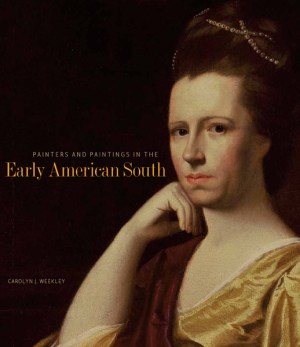 This beautifully illustrated volume presents the complex ways in which the lives of artists, clients, and sitters were interconnected in the early American South. During this period, paintings included not only portraits, but also seascapes, landscapes, and pictures made by explorers and naturalists.
The first comprehensive study of this subject, Painters and Paintings in the Early American South draws upon materials including diaries, correspondence, and newspapers in order to explore the stylistic trends of the period and the lives of the sitters, as gentility spread from the wealthiest southerners to the middle class. Featuring works by John Singleton Copley, Charles Willson Peale, and Benjamin West, among many others, this important book examines the training and status of painters, the distinction between fine art and the mechanical arts, the popularity of portraiture, and the nature of clientele between 1540 and 1790, providing a new, critical understanding of the history of art in the American South.
Carolyn J. Weekley is Juli Grainger Curator at the Colonial Williamsburg Foundation. She is co-author of Treasures of American Folk Art: From the Abby Aldrich Rockefeller Folk Art Center and The Kingdoms of Edward Hicks.
◊ ◊ ◊ ◊ ◊
Note (added 27 July 2013) — The book accompanies a major exhibition of more than 80 works created in or for the South between 1735 and 1800, on view at the DeWitt Wallace Decorative Arts Museum in Colonial Wiliamsburg from 23 March 2013 until 7 September 2014. The press release is available here.
Alan and Simone Hartman Galleries Open at Boston’s MFA
Press release from Boston’s MFA:
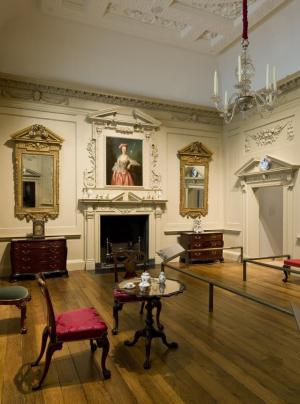 Two 18th-century period rooms from Great Britain have been reinstalled at the Museum of Fine Arts, Boston, as part of a suite of galleries. The Alan and Simone Hartman Galleries comprise the Newland House Drawing Room, Hamilton Palace Dining Room, and British Art 1560–1830. They showcase nearly every facet of British art—paintings, furniture, silver, ceramics, and works on paper—including the Alan and Simone Hartman Collection of English silver, with superb examples made in London by Huguenot craftsmen between 1680 and 1760. The drawing room from Newland House, a manor house in Gloucestershire, England, was acquired by the MFA in 1931 and was last on view at the Museum in the 1970s. The dining room from Hamilton Palace, the vast residence of the Dukes of Hamilton just outside of Glasgow, Scotland, was acquired by the MFA in 1924. It was installed in 1928, but was dismantled during the past decade due to the construction of the adjacent Art of the Americas Wing, which debuted in November 2010. The three adjacent Hartman Galleries are located on Level 2 of the Museum’s Art of Europe wing. Concurrent to their opening, the MFA has unveiled its new Art of the Netherlands in the 17th Century Gallery (the renovation of this gallery was made possible by Rose-Marie and Eijk van Otterloo) and the renovated Leo and Phyllis Beranek Gallery, which together showcase more than 100 works. (more…)
Call for Papers | 2014 Society of Architectural Historians, Austin
From SAH:
Society of Architectural Historians 67th Annual Conference
Austin, Texas, 9-13 April 2014
Proposals due by 1 June 2013
The Society of Architectural Historians is now accepting abstracts for its 67th Annual Conference in Austin, TX, April 9-13, 2014. Please submit abstracts no later than June 1st for one of the 31 thematic sessions or open sessions. Sessions have been selected to cover topics across all time periods and architectural styles. SAH encourages submissions from architectural, landscape, and urban historians; museum curators; preservationists; independent scholars; architects; and members of partner organizations.
Please submit abstracts of no more than 300 words no later than June 1st for one of the 31 thematic sessions. There will also be open sessions for those whose research does not match any of the themed sessions.
◊ ◊ ◊ ◊ ◊
An example of one of the thematic sessions:
The Elusive Gothic in the Long 18th Century
Chairs: Sylvia Shorto, American University of Beirut, ss56@aub.edu.lb; and Zirwat Chowdhury, Clark Memorial Library, UCLA, zirwat@u.northwestern.edu
By the later 18th century, Gothic architecture had already called attention to its own alterity. Western opinions as to its possible Eastern origins were mixed: British academician Thomas Sandby’s lectures disputed Sir Christopher Wren’s earlier genealogy of the Gothic, whilst the painter William Hodges embraced and furthered the position in his Dissertation on the Prototypes of Architecture, Hindoo, Moorish, and Gothic (1786). Meanwhile, antiquarians were busy reconfiguring the Gothic canon with localised studies, new designs and restoration. Later, in the mid-19th century, John Ruskin and his followers would champion a nostalgic and value-laden way of thinking about a past which privileged things made locally and by hand, resulting in the separation between pre-modern and modern, architecture and vernacular building, design and workmanship: false dichotomies that would become cemented in a Modernist historiography of architecture. There were no such artificial distinctions in the manifold awareness of the late 18th-century Gothic.
As a way of registering alternative histories at this transitional stage to industrial making, this session will explore the heterogeneity of the Gothic in Britain and Europe, in their expanding imperial territories, and in contemporary non-Western empires during the long 18th century. While we invite papers that use the Gothic to widen the current discourse on the handmade, topics might also address, but are not limited to, shifts in the antiquarian imagination; revolutionary aesthetics; notions of decay and decline; the peripatetic Gothic; nascent architectural preservation in Europe and its empires; and the material relationships between neoclassicism and Gothic. We especially welcome submissions that address non-European interlocutors of Gothic styles, and that incorporate the use of painting and other visual media in furthering understanding of the topic.
Exhibition | Disegno & Couleur: Dessins italiens et français
From L’Officiel Galleries & Musées:
Disegno & Couleur: Dessins italiens et français du XVIe au XVIIIe siècle
Bonnefantenmuseum, Maastricht, 27 November 2012 — 17 February 2013
Musée des Beaux-arts, Tours, 16 March — 27 May 2013
Musées Royaux des Beaux-arts de Belgique, Brussels, October 2013 — January 2014
 L’exposition présentée par le musée des Beaux-Arts de Tours réunit 75 dessins italiens et français réalisés du XVIe au XVIIIe siècle et appartenant aux musées royaux des Beaux-Arts de Belgique, à Bruxelles.
Certaines de ces œuvres n’ont jamais été présentées en France et proviennent de la prestigieuse collection Jean de Grez (1837-1910), offerte à l’état belge en 1911. Ces dessins ont été créés à Florence, à Bologne, à Rome, à Venise et ont permis la réalisation de grands projets comme le Palazzo Vecchio à Florence.
Vous pourrez également découvrir des feuilles d’artistes français rendues à Jean Cousin, Claude Déruet, Laurent de La Hyre, Eustache Lesueur, Charles Le Brun, Antoine Watteau, Joseph Benoit Suvée.
◊ ◊ ◊ ◊ ◊
From ArtBooks.com:
Stefaan Hautekeete, ed., Disegno & Couleur: Dessins italiens et français du XVIe au XVIIIe siècle (Milan: Silvana Edoriale, 2012), 256 pages, ISBN: 978-8836623716, $65.
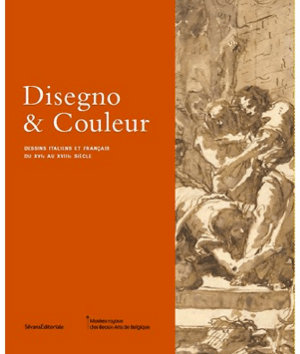 Les Musées royaux des Beaux-Arts de Belgique organisent depuis 2001 d’importantes expositions de dessins autour des chefs-d’œuvre de leur collection : Dessins de Rembrandt et ses élèves en 2005, Dessins du Siècle d’or hollandais en 2007. La troisième manifestation réunira les plus belles feuilles françaises et italiennes du XVIe au XVIIIe siècle, provenant essentiellement de la prestigieuse collection Jean de Grez (Breda, 1837- Bruxelles, 1910) donnée à l’Etat belge en 1911.
Le musée des Beaux-Arts de Tours, première institution française à être associée à ces projets, réunira les plus belles feuilles françaises et italiennes du XVIe au XVIIIe siècle, provenant essentiellement de la prestigieuse collection Jean de Grez (Breda, 1837- Bruxelles, 1910) donnée à l’Etat belge en 1911. Le public tourangeau découvrira 75 feuilles exceptionnelles d’artistes italiens qui ont participé à la décoration de grands projets de décoration à Florence (Palazzo Vecchio), à Rome (salles du Vatican), à Venise….tels que Paolo Farinati, Giovanni Stradano, Frederico Zuccaro, Giovanni Lorenzo Bernini, dit Le Bernin, Tiepolo…. ainsi qu’une sélection française opérée par Pierre Rosenberg, où seront présents les grands noms de la peinture, Jean Cousin, Claude Déruet, Eustache Lesueur, Charles Le Brun, Antoine Watteau… A cette occasion, une vingtaine de dessins français et italiens de la collection du musée de Tours seront confrontés à ces œuvres, notamment ceux de François Boucher, Louis-François Cassas, Jean Cousin, Jacques-Louis David, Prospero Fontana, Augustin-Alphonse Gaudar de Laverdine, Claude Vignons, mais aussi les nouvelles découvertes : Baglione, Bolzoni..
New Book | The Wallace Collection Catalogues: Gold Boxes
From Paul Holberton:
Charles Truman, The Wallace Collection: Catalogue of Gold Boxes (London: Paul Holberton, 2013), 352 pages, ISBN: 978-0900785948, £100.
 The 18th-century gold snuffbox was the ultimate fashion accessory – beautifully made, exquisitely carved and very expensive, and, like fashion, its form and ornament changed according to the taste of the time. The skills of the goldsmith, the enameller, the lapidary and the miniaturist combined to form a piece – always different – for the most discerning clientele that Europe has ever known.
The Wallace Collection has some of the finest, and certainly some of the most famous, gold boxes in the world. Paris was the centre of taste in the 18th century and the collection contains a remarkable group of boxes by the greatest goldsmiths of the period: Jean Ducrollay, Pierre-François Drais and Louis Roucel. Somewhat surprisingly the Wallace Collection, which is noted for its French works or art, has some very important German boxes by Jean-Guillaume-Georges Kruger of Berlin, Johann Christian Neuber of
Dresden and Ignatius Peter Krafft of Hanau.
Charles Truman, who has catalogued the collection of gold boxes, is one of the leading authorities on the subject. In this book he discusses the history of snuff-taking and the development, manufacture and collecting of gold boxes, with a particular emphasis on the design sources from which the craftsmen repsonsible for these wonderful works of art took their inspiration. These 99 pieces in the catalogue represent a brilliant cross-section of the products of the European goldsmith from approximately 100 years from the late 1730s. This book will prove invaluable to collectors, academics and students interested in the 18th century.
Call for Papers | The Sites of Opera
From Calenda (published 17 April 2013) and Le Blog de l’ApAhAu (with thanks to Pierre-Henri Biger). . .
Les lieux de l’opéra (XVIIe-XXIe siècle)
Opéra-comique, Paris, 21-23 November 2013
Proposals due by 15 May 2013
Alors que l’on observe depuis plusieurs années un rapprochement entre musicologues et historiens pour aborder la dimension spatiale et sociale des lieux de musique, les lieux de l’opéra n’ont guère fait l’objet d’une approche interdisciplinaire. Observés sous un angle unique, le plus souvent celui de l’architecture monumentale occupant une place à part dans l’espace urbain, ces lieux de spectacle méritent pourtant d’être abordés de façon plurielle. Ils doivent faire l’objet d’une réflexion prenant en compte la complexité des problématiques liées à ces espaces particuliers, qui sont eux-mêmes multiples. Destinés à accueillir des manifestations liant musique et théâtre, ils se prêtent également au jeu de la sociabilité aristocratique dans un premier temps, puis bourgeoise et, dans une certaine mesure, populaire. Intrinsèquement liés à la ville, ces lieux peuvent aussi être ceux offerts par une villa vénitienne, un manoir anglais ou un théâtre de verdure, reconsidérant l’image d’un espace perçu a priori comme essentiellement urbain. De même, si l’opéra est une forme lyrique traditionnellement représentée dans des lieux clos, de nombreuses expériences ont montré, dès le xviie siècle, qu’il pouvait s’épanouir en plein air, ce qui pose la question des rapports entre forme musicale et lieu d’exécution. Une étude des lieux de l’opéra permettra également de mener une réflexion sur la mutation des pratiques culturelles et sociales de la musique entre les XVIIe et XXe siècles, mutation en partie liée à la transformation des espaces qui hébergent et structurent l’activité musicale. (more…)
Exhibition | Trapani Coral
From the exhibition:
I Grandi Capolavori del Corallo: I Coralli di Trapani del XVII e XVIII Secolo
Fondazione Puglisi Cosentino, Catania, Sicily, 3 March — 5 May 2013
Museo Pepoli, Trapani, Sicily, 18 May — 30 June 2013
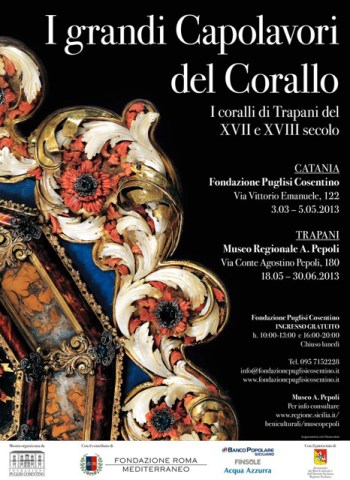 Il Museo Pepoli di Trapani ospiterà una grande mostra sui coralli trapanesi realizzati dai maestri artigiani della citt siciliana tra il XVII e XVIII secolo. Simbolo della bellezza e perfezione del creato, materia prima con l’oro per meravigliosi oggetti di culto, arredi sacri e profani, il corallo al centro di una grande mostra. Esposti per la prima volta capolavori provenienti da collezioni pubbliche e private che testimoniano come la lavorazione di questo straordinario materiale, in Sicilia e in particolare a Trapani, sia assurta a vera e propria arte.
In mostra oltre 120 preziosi manufatti di inestimabile valore selezionati con grande attenzione: gioielli e arredi sacri (calici, ostensori, crocifissi, reliquiari, rosari e presepi) e ancora calamai, saliere e raffinatissimi elementi darredo come specchiere, cornici, tavoli da gioco, scrigni e monumentali stipi destinati a case principesche e regge.
Si tratta di oggetti di grande valore artistico, realizzati con materiali pregiati per essere donati, tra il 500 e il 600, a principi e regnanti. Naturalia e Mirabilia erano esposti nelle Wunderkammer settecentesche, le cos dette stanze delle meraviglie, dove lappassionato collezionista raccoglieva oggetti della natura arricchendoli con materiali preziosi finemente cesellati in base allestro dellartista, filigrana d oro e d argento, splendidi oggetti destinati al godimento di pochi eletti nelle proprie dimore, piccoli musei ante litteram.
◊ ◊ ◊ ◊ ◊
From ArtBooks.com:
Valeria Patrizia Li Vigni Tusa, Maria Concetta Di Natale, Vincenzo Abbate, I grandi capolavori del Corallo: I coralli di Trapani del XVII e XVIII secolo (Milan: Silvana, 2013), 192 pages, ISBN: 978-8836625888, $65.
 Il catalogo presenta ai lettori una rassegna di capolavori in corallo provenienti dalla Sicilia, regione dove la realizzazione di meravigliosi manufatti in questo materiale ha raggiunto nei secoli l’apice della bellezza e della maestria artigianale. Il corallo ha visto fiorire intorno a sè infinite credenze popolari, legate soprattutto alla sua forma e al suo intenso colore: carico di valenze apotropaiche, usato in passato anche in medicina, il corallo è soprattutto simbolo della bellezza e perfezione del Creato e per questo divenne la materia prima, insieme con l’oro, per la produzione di meravigliosi oggetti di culto e arredi sacri. Fra le opere qui documentate, tutte realizzate con il corallo raccolto a Trapani, lungo i fondali delle Egadi e intorno all’isola di Tabarca, spiccano sia gioielli, sia ostensori, crocifissi, reliquari, presepi, nonché elementi di raffinato arredo: specchiere, tavoli da gioco, cornici, scrigni, fino a monumentali trumeaux destinati a case principesche. Queste opere testimoniano la ricchezza e la qualità di alcune collezioni considerate fondamentali nel settore, ovvero quelle della Banca di Novara, del Museo Pepoli di Trapani, della Fondazione Whitaker e del Museo Diocesano di Monreale, qui documentate insieme a singoli pezzi di inestimabile valore apparteneti a raccolte private italiane e straniere.










 Enfilade
leave a comment