In the Fall 2012 Issue of ‘American Art’
Ethan W. Lasser, “Selling Silver: The Business of Copley’s Paul Revere,” American Art 26 (Fall 2012): 26-43.
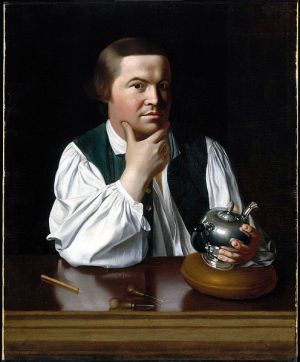
John Singleton Copley, Paul Revere, 1768. Oil on canvas, Museum of Fine Arts, Boston, Gift of Joseph W., William B., and Edward H. R. Revere (Photo: Wikimedia Commons)
. . . Few examples of colonial American painting have been studied as extensively as Copley’s Paul Revere. Scholars have argued that the portrait depicts Revere in his workshop as he pauses while engraving a silver teapot and have proposed a range of explanations to account for this subject matter. They have analyzed Copley’s sources, searched for (and ultimately uncovered little) information about the commission of the portrait, and speculated about the connection between the painting and Revere’s radical politics[note 2]. But interpreters have yet to consider seriously the connection between the portrait and the increasingly dire state of Revere’s financial affairs. Though Copley depicted the silversmith plying his trade, the bottom-line realities of this trade have been left out of the story of this iconic painting [p. 27]. . . .
My interpretation will draw on two different types of evidence. First is the portrait itself. Paul Revere is a far richer and more singular work than past scholars have acknowledged. While many writers have discussed the subject matter of the painting, few have seriously explored the portrait’s exceptional
composition. . . .
Since this is an image of a craftsman that emphasizes artisanal practice, questions about the processes of making, raising, and decorating silver teapots will also figure centrally in my account. In the period when Copley painted Paul Revere, elites grew increasingly interested in and familiar with artisanal materials and techniques [p. 28]. . . .
In proposing Paul Revere as such a strategic image, my argument locates the portrait within a broader field of eighteenth-century painting that functioned to promote the wares of particular retailers and artisans. This field includes genre paintings like Jean-Antoine Watteau’s iconic Shop Sign [p. 29] . . .
The full article is available here (J-Stor subscription required)
Call for Papers | Traces of Early America
Traces of Early America: An Interdisciplinary Graduate Student Conference
The McNeil Center for Early American Studies, University of Pennsylvania, 26-28 September 2013
Proposals due by 15 March 2013
Scholars encounter early America through its traces, the vestiges and fragments left behind. And in reconstructing the fleeting and ephemeral, scholars also attempt to trace early American encounters. This conference will bring together graduate students from a wide variety of disciplines to explore the various meanings of traces—as material objects, cultural representations, and academic practices. Papers might consider how people deliberately and unwittingly left traces as they moved through space and time; what traces or remnants of the past get privileged while others are marginalized or occluded; how written, visual, and other texts are both material objects and traces of lives and experiences; and where we look for the traces of different communities and conflicts in early America. More generally, papers might address tracing as a method of historical inquiry, one that both uncovers and constitutes objects and archives, as well as the methodological traces that have reconfigured early American studies, such as Atlantic history, diaspora studies, hemispheric studies, and circum-Caribbean and Latin American studies.
We welcome applicants from a wide variety of disciplines—among them history, literature, gender studies, ethnic studies, anthropology, archeology, geography, art history, material culture, religious studies, and political science—whose work deals with the histories and cultures of North American and the Atlantic world before 1850. Applicants should email their proposals to mceas.traces.2013@gmail.com by March 15, 2013. Proposals should include an abstract of no more than 250 words along with a one-page c.v. Paper presentations should be no more than 20 minutes. Limited financial support is available for participants’ travel expenses. Decisions will be announced by May 15, 2013.
Any conference-related questions can be directed to: mceas.traces.2013@gmail.com.
Call for Papers | London and the Emergence of a European Art Market
London and the Emergence of a European Art Market, c. 1780-1820
The National Gallery, London, 21-22 June 2013
Proposals due by 15 February 2013
The French Revolution and the ensuing Napoleonic Wars with occupations of Italy, Spain and the Low Countries, instigated a sweeping redistribution of art. At the same time, the Papacy’s loss of temporal power undermined the enforcement of export laws in the Papal States. This convergence of events ensured that large volumes of paintings—often entire collections, from European monasteries, churches, and private palaces—were widely dispersed via auction and private treaty sales in a true diaspora of art. Current scholarship posits that amidst these large-scale market transformations London emerged as the new hub of the international art trade, replacing Paris. The well-known example of the move of the Orléans collection to London, where it was sold through various private treaty transactions and a series of auctions between 1798 and 1802, is often considered a pars pro toto for the British assumption of power on the international art market.
While some studies have begun to address the velocity and scale of this redistribution, little has been done to analyze the dynamic networks of agents who provided the infrastructure for the circulation of art works and sales information throughout Europe. Economist Neil de Marchi recently pointed out that the financial market linking crucial centers such as Amsterdam, London, and Paris has been studied in depth, but comparable research into the “mechanism of the painting trade and the extent to which it was integrated across those centers has barely begun.” This conference aspires to tackle this issue by convening scholars and experts from a range of disciplines to discuss broad research questions such as: Did the long-term effects of the political turmoil in France alter the existing personal and professional networks of dealers and connoisseurs? What would have been the motivations to ship art works to foreign market places? How integrated was the European art market around 1800, or were there still relatively independent local markets? Was there an implied hierarchy of metropolitan markets or were conditions too volatile and fluid for fixed patterns to emerge?
Given the vast amount of historical evidence now available to scholars, we have the capacity to address these micro and macro developments in innovative ways. Over the last two years the National Gallery, London, and the Getty Research Institute, Los Angeles, have collaborated on a project to research, transcribe, and index auction catalogues published in Great Britain between 1780 and 1800. By January 2013, almost 100,000 new sales records from c. 1,200 catalogues will be published online, via the Getty Provenance Index® databases. This will add significantly and strategically to the already extant data-pool of approximately half a million records from British, French, German, Dutch, Belgian, and Scandinavian Sales, spanning the period of c. 1780 to 1820.
One of the main objectives of this international conference is to work towards a methodological synergy of art historical case studies and data-driven socioeconomic analysis in order to understand better the mechanisms of the international art trade at this pivotal period as well as the long-term implications for the history of collecting, the establishment of museums, and the formation of the discipline of art history.
Topics for consideration include, but are not limited to:
• A R T W O R K S Cross-border traffic of objects (cultural transfers, customs regulations, arbitrage, etc.) and its effect on the formation of private and public collections.
• A G E N T S Market integration throughout Europe (national/transnational dealer networks, centre and periphery, impact of revolution and war, etc.)
• I N F O R M A T I O N Auction catalogues as economic tool and literary genre (classification systems, lot sequence, transparency, connoisseurship, etc.)
• V A L U E S Idea of art as an investment (different national canons and currencies, growth of investment-minded collectors, ascendancy of the banker as a key player, price manipulation, etc.)
Please send proposals for papers (to last 30 minutes) of no more than 250 words by 15 February 2013 to either/both:
Susanna Avery-Quash
Research Curator in the History of Collecting and Display
The National Gallery, London
susanna.avery-quash@ng-london.org.uk
Christian Huemer
Managing Editor, Project for the Study of Collecting and Provenance
The Getty Research Institute, Los Angeles
chuemer@getty.edu
Fellowship | Newberry-Kress in European Art and Art History
From The Newberry:
Newberry-Kress Fellowship in European Art and Art History
The Newberry Library, Chicago
Applications due by 15 January 2013
This fellowship offers support for PhD candidates or postdoctoral scholars; qualified applicants must be working on a European art history project covering the period prior to 1830.
The Newberry houses a variety of European art and the history of art and architecture within its collection. Most of these works relate to subject areas for which the library’s holdings are particularly strong. Particular collection strengths include medieval manuscripts; post-1500 European manuscripts; book illustrations; printing and book arts; calligraphy; maps, views, and topographical prints; caricatures and cartoons; and printed books and serials relating to the field of art history.
The total stipend for this fellowship is $2,500 for one month in residence. Please visit The Newberry website for more information.
Exhibition | Canova: The Sign of the Glory
I’ve long admired Lucy Vivante’s blog Vivante Drawings. I rarely reference the site here simply because entries tend to address the sixteenth and seventeenth centuries. But Enfilade readers may be interested in Vivante’s coverage of the Canova exhibition now on display in Rome (another description in English is available here). I include the exhibition press release (4 December 2012) below.
◊ ◊ ◊ ◊ ◊
Canova, Il Segno della Gloria: Disegni, Dipinti e Sculture
Museo di Roma Palazzo Braschi, 5 December 2012 — 7 April 2013
Curated by Giuliana Ericani
 Sarà il Museo di Roma Palazzo Braschi ad ospitare dal 5 dicembre 2012 al 7 aprile 2013 la mostra Canova. Il segno della gloria. Disegni, dipinti e sculture. I 79 disegni sono stati selezionati dai 1800 circa che costituiscono la più grande raccolta al mondo di disegni di un artista, donata a metà Ottocento all’appena inaugurato Museo Civico di Bassano da Giambattista Sartori Canova, fratellastro dell’artista ed erede universale. I disegni sono accompagnati da 15 acqueforti delle opere realizzate, 6 modelli originali in gesso, da 4 tempere, un dipinto ad olio, due terrecotte e due marmi che consentono di visualizzare il passaggio dalla fase ideativa alla realizzazione dell’opera. Una scelta che offre un quadro storico ineguagliabile dell’Europa tra Settecento ed Ottocento, chiarendo il ruolo di Canova come primo artista della modernità.
 Una mostra – promossa da Roma Capitale, Assessorato alle Politiche Culturali e Centro Storico – Sovraintendenza ai Beni Culturali e dal Comune di Bassano del Grappa con la cura di Giuliana Ericani, Direttrice del Museo Biblioteca Archivio di Bassano del Grappa e organizzata da Metamorfosi e Zètema Progetto Cultura – che affronta per la prima volta lo studio del disegno di Canova da due punti di vista: quello stilistico, affrontando le sue caratteristiche e il rapporto con gli artisti contemporanei e quello di prima idea per l’opera realizzata. Metamorfosi, nel suo lavoro di qualità di affiancamento di prestigiose istituzioni culturali, con questa mostra inizia una collaborazione con Museo Civico di Bassano del Grappa, volto a valorizzare lo straordinario patrimonio culturale lì conservato.
Una prima sezione della mostra seleziona dall’intera produzione grafica di Antonio Canova fogli che raccontano perfettamente la varietà del suo segno e dei metodi di progettazione. Partendo poi dal disegno, l’esposizione individua due principali percorsi di lettura dell’opera canoviana: il rapporto con la scultura antica delle collezioni romane e con i personaggi storici e della cultura del suo tempo. Qui sarà possibile ammirare i disegni per i monumenti e le sculture di Clemente XIV, Napoleone Bonaparte, Maria Luisa d’Asburgo, Maria Cristina d’Austria, Carlo III e Ferdinando I di Borbone, George Washington, Vittorio Alfieri, Orazio Nelson, e Paolina Borghese Bonaparte e opere commissionate da Giorgio IV re d’Inghilterra e Joséphine de Beauharnais Bonaparte. In questa sezione sono accostate le incisioni fatte eseguire da Canova per offrire l’immagine dell’opera realizzata ed alcune opere, cinque bozzetti in gesso e in terracotta e due dipinti, parte integrante dell’iter della realizzazione. Completano e arricchiscono la mostra i disegni per tre importanti opere realizzate, la Venere Italica, il Creugante e Damosseno per Pio VII e l’Ercole e Lica per il banchiere Torlonia.
 Canova “solea gittare in carta il suo pensiero con pochi e semplicissimi tratti, che più volte ritoccava e modificava”: nelle parole dello storico dell’arte Leopoldo Cicognara si misura l’urgenza della trasposizione del pensiero e dell’immagine sulla carta e la funzione personale e segreta di questi segni, indice di una modernità esistenziale e di prassi esecutiva che crea continuamente sorpresa e meraviglia in chi vi si accosta. Nel 1858 il bassanese Gian Jacopo Ferrazzi, nel commemorare il donatore sottolineava la grande eredità canoviana del Museo di Bassano e il ruolo che il disegno aveva avuto nell’iter realizzativo delle sue sculture: “Noi siamo gli avventurati possessori della storia del suo pensiero.” Ed è proprio l’identificazione del disegno con il pensiero che viene ripetutamente riproposta dalle fonti contemporanee. “Pensieri delineati a lapis,” la sintetica ma efficace descrizione dei disegni dell’illustre fratello da parte di Giambattista Sartori, interpreta i tratti canoviani come la prima fase dell’ ”invenzione” e consente di seguire attraverso la loro lettura tutte le fasi della nascita delle opere. Il ruolo del disegno nella sua opera è segnalato dal suo biografo, Melchior Missirini (1824) come pari allo scalpello, quali “istrumenti che guidano all’immortalità.”
Un fondo, quello bassanese, costituito da 10 grandi album e 8 taccuini non omogenei nella struttura, comprendenti fogli di differenti dimensioni, da più di 500 ad una decina di millimetri, disegni finiti di accademia e schizzi di getto, progetti interi e parziali per bassorilievi in gesso e grandi sculture a tutto tondo.
Il disegno come “pensiero” dell’opera realizzata ma anche come “ricordo” di esperienze di vita, di studio e di lavoro, si trasforma nella mostra in strumento percomprendere la complessità della personalità e dell’opera di questo grande scultore veneto, che si formò nelle terre della sua nascita per affermarsi poi nella culla della scultura classica e barocca, a Roma, in un periodo storico di grandi cambiamenti che introduce all’Età moderna.
◊ ◊ ◊ ◊ ◊
From Palombi Editori:
Catalogue: Giuliana Ericani and Francesco Leone, Canova, Il Segno della Gloria: Disegni, Dipinti e Sculture (Rome: Palombi Editori, 2012), 288 pages, ISBN: 978-8860604897, €29.
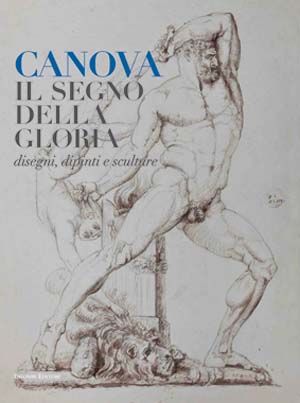 Dall’ispirazione all’opera. é un percorso sulle tracce dell’idea quello della mostra dedicata ad Antonio Canova. Viaggio nell’intuizione estetica del genio e nella sua realizzazione, ma anche nella percezione che di quelle stesse concretizzazioni ha poi il genio stesso, a lavoro finito. Questione di studio prima, di documentazione poi. Nel mezzo, l’emozione dell’opera. L’esposizione capitolina dunque punta l’attenzione sulla “costruzione” delle opere da parte di Canova, attraverso disegni, modelletti in terracotta, calchi e modelli originali in gesso, dipinti, marmi e acqueforti, selezione d’eccellenza nella ricchissima raccolta di disegni – circa 1800 – che tra il 1849 e il 1857 fu oggetto di una donazione da parte del fratellastro dell’artista, Giovan Battista Sartori Canova.
Call for Articles | The Discourses of Anger
Brill’s series seems to define the early modern period as ca. 1450/1500 to ca. 1700. Still, for those of you working at the turn of the seventeenth and eighteenth centuries, this might be relevant. . .
◊ ◊ ◊ ◊ ◊
The Discourses of Anger in the Early Modern Period
Edited by Karl A.E. Enenkel and Anita Traninger
Proposals due by 1 March 2013
 Intersections is a peer-reviewed series on interdisciplinary topics in Early Modern Studies published by Brill (Leiden/Boston). Contributions may come from any of the disciplines within the humanities, such as history, art history, literary history, book history, church history, social history, cultural history, and history of ideas. Each volume focuses on a single theme and consists of essays that explore new perspectives on the subject of study. The series aims to open up new areas of research on early modern culture and to address issues of interest to a wide range of disciplines.
We are inviting proposals for contributions to a volume on discourses of anger in the Early Modern Period to be published in the series Intersections. The volume will be edited by Karl A.E. Enenkel (Münster University) and Anita Traninger (Freie Universität Berlin).
Emotion, the perceived counterpoint to reason, has received intense attention in the humanities and the social sciences in recent decades. Anger, however, has traditionally been conceived as pertaining to both reason and passion, since it involves complex mechanisms of rational judgment of social situations but is at the same time characterized by untamed/violent emotional repercussions. Aristotle held that anger was the morally justified seeking of revenge following the incurrence of a slight. Being thus conceived of as a social emotion, anger has since been construed as being composed of sadness and hope, as involving social and moral categories, and as mediating between the past and the future.
Even though anger is characterized as a just reaction to social misdemeanor, it has not been acknowledged universally as a socially beneficial reaction. The Stoics insisted that it was necessary to suppress it at the first showing of angry symptoms in order to achieve freedom from the disturbance of emotions which forms the basis of the good life; Christianity, where Stoic views were adopted very early on, found it difficult to reconcile the idea of anger as the just reaction of a virtuous man with its ideals of passivity.
In the Early Modern period, this already ambiguous conception was complicated by a changing intellectual framework. The Early Modern period sees long-term shifts between traditional systems of thought: a mounting criticism of Aristotelianism, a forceful contestation of Scholasticism, the factioning of religious belief and the emergence of contesting theologies along with moral canons, the rediscovery and transformative appropriation of Stoic and Sceptic doctrines, to name but a few. We are interested in how the notion of anger is informed by these developments.
Despite the recent surge in research on the history of emotions, there is no comprehensive, interdisciplinary account of notions of anger in the early modern period. There is a host of studies on ‘ancient anger’, and the Middle Ages have also received due attention, but the early modern period has been neglected in this regard, despite a wealth of sources and despite the fact that wide-spread speculation about the emotions in general emerged in Early Modern times.
Thus in our volume, we ask contributors to discuss the fate of anger with a view to the tensions between these developments. Contributors to the volume are invited to trace the framing of anger in various discourses in the Early Modern period, including theology, philosophy, literature, medicine, law, political theory, and the arts, as well as
to account for changes in the discourses of anger in this era. We would like to see discussions of anger as a contested field, one that is goverened and defined in various ways by various discourses which may nevertheless converge in literary and non-literary texts, images, religious practice, scholarly debates, etc. (more…)
December 2012 Issue of the ‘Oxford Art Journal’
In the current issue of the Oxford Art Journal:
Clare Walcot, “Hogarth’s The South Sea Scheme and the Topography of Speculative Finance,” Oxford Art Journal 35 (December 2012): 413-32.
 William Hogarth’s elaborate graphic satire The South Sea Scheme (1721) stages a moral tale of speculation run riot and a capital in thrall to ‘mony’s magick power’. Published in response to the failure of the eponymous scheme, Hogarth offers a satirical commentary on all forms of government-sanctioned speculation and illicit gambling. The scene is set in an imagined topography comprised of London landmarks, public buildings and temporary structures; places of authority, commerce and finance. His rearrangement of the Monument to the Great Fire and Guildhall brings into conjunction sites of cultural memory, which allude to the tense relationship between City and Crown during the post-Restoration period and rebuilding of the capital after 1666. Hogarth draws on the links these sites have with the theatre of the street, in the form of popular protest and pageantry, as it appeared on the ground and on paper. This essay examines the spectacular use of urban space and how it shaped Hogarth’s early graphic satire, as well as continental imports adapted to a London market, such as Bernard Baron’s (after Bernard Picart) A Monument Dedicated to Posterity (1721), often taken to be the model for The South Sea Scheme.
Clare Walcot’s research interests focus on financial innovation in the eighteenth century and its impact on the visual arts, and develop out of her PhD thesis entitled ‘Figuring Finance: London’s New Financial World and the Iconography of Speculation, c. 1689–1763’ (University of Warwick, 2003).
Call for Papers | Financial Crisis of 1720 and John Law’s Legacy
From Le Blog de l’ApAhAu:
Le Système de Law: Représentations, discours et fantasmes du XVIIIe siècle à nos jours
Université de Montpellier 3, IRCL, 4-5 October 2012
Proposals due by 15 July 2013
Dans les périodes de bulles et de crises financières, John Law et son système sont volontiers évoqués dans le discours médiatique en tant que paradigme et exemple historique de l’une des premières crises financières d’origine spéculative. Les références ou allusions qui y sont faites n’examinent cependant pas les spécificités d’une bulle qui ne fut pas uniquement française mais concerna également l’Angleterre et la Hollande, les pays d’Europe les plus engagés dans l’émergence d’un capitalisme financier au XVIIIe siècle.
A partir des pistes ouvertes par Paul Harsin qui donne une édition des oeuvres complètes de John Law en 1934 (ainsi qu’une première édition des écrits de Dutot, proche collaborateur de Law) et de l’ouvrage d’Edgar Faure (La Banqueroute de Law, 17 juillet 1720, Paris, Gallimard, 1977), historiens et historiens de l’économie ont délimité les différentes étapes et analysé l’enchaînement des faits qui conduisirent à une banqueroute de la première banque royale et à l’instauration d’une durable méfiance à l’égard de la finance et de la forme fiduciaire de l’argent. Si ces recherches ont permis d’établir une chronologie et de faire la lumière sur de nombreux aspects du Système (comme l’ont fait par exemple les recherches récentes de l’historien Antoin Murphy sur des écrits inédits de Nicolas Dutot), peu d’analyses ont pris en compte l’événement dans sa transversalité et sa globalité. Les spécialistes de littérature ont également bien identifié les allusions aux événements de 1720, de manière ponctuelle sous la forme de représentations plus ou moins allégorisées (comme dans les Lettres Persanes de Montesquieu) ou de manière plus diffuse en tant qu’effets sur la représentation de l’argent et des transactions par exemple (voir Martial Poirson, Spectacle et économie à l’âge classique, Garnier, 2011). En 2006, deux articles portant sur les représentations de la banqueroute de Law ont été publiés par des spécialistes de littérature qui s’emploient chacun à élaborer une lecture croisée des événements de l’histoire économique et des fictions qui leur sont contemporaines : Yves Citton procède à une relecture d’un texte de Jean-François Melon, un proche collaborateur de John Law, Mamhoud le Gasnévide, qui raconte sous une forme allégorique les événements financiers survenus sous la Régence (« Les comptes merveilleux de la finance : confiance et fiction chez Jean-François Melon », Fééries n°2, 2005-2006) ; Erik Leborgne s’attache à dégager les fantasmes sous-tendant les représentations de l’argent et de la spéculation dans des textes contemporains des événements (« Le Régent et le système de Law vus par Melon, Montesquieu, Prévost et Lesage »,Féeries n°3, 2006). Se situant dans le prolongement de ces travaux, le présent projet entend renforcer l’interdisciplinarité des approches du phénomène et faire le point sur ce qui peut être considéré comme un événement traumatique et structurant de la France moderne, en suggérant trois orientations non limitatives : (more…)
Latest Updates to the William Blake Archive
The William Blake Archive is pleased to announce the publication of an electronic edition of five of Blake’s tempera paintings on biblical subjects, eleven of his water color illustrations to the Bible, and one of his large color printed drawings, Hecate, or The Night of Enitharmon’s Joy. These works have been added to groups previously published. In addition, we have republished all the biblical temperas and water colors to add illustration descriptions and make their designs and inscriptions fully searchable.

William Blake, The Great Red Dragon and the Woman Clothed with the Sun, © Brooklyn Museum
The Bible had an enormous influence on Blake’s work as both artist and poet. His tempera paintings and water colors of biblical subjects, mostly created for his patron Thomas Butts beginning in 1799, are among Blake’s most important responses to that text. The tempera paintings now published are based on passages in the New Testament concerning the life of Jesus and his family. We are particularly pleased to include Christ Raising Jairus’s Daughter, a well preserved but little known work recently acquired by the Mead Art Museum of Amherst College. The new group of water colors ranges from Numbers (Moses Striking the Rock) to two of Blake’s most powerful explorations of the apocalyptic sublime, The Great Red Dragon and the Woman Clothed with the Sun andThe Number of the Beast is 666, both based on Revelation. The Great Red Dragon from the Brooklyn Museum has received a good deal of contemporary attention because of its central role in Thomas Harris’s bestselling 1981 novel, Red Dragon, and the films of 1986 and 2002 based on it. The Archive now includes twenty-four tempera paintings and sixty-four water colors based on the Bible. All of Blake’s extant water color illustrations to Revelation are available.
The publication of Hecate from the National Gallery of Scotland completes our presentation of Blake’s large color printed drawings, considered by some to be his greatest achievements as a pictorial artist. The Archive now contains all thirty traced impressions of the twelve subjects portrayed in the large color prints.
This publication includes works from several collections not previously represented in the Archive. Accordingly, we are also publishing Blake collection lists for the Brooklyn Museum, Mead Art Museum (Amherst College), National Gallery of Scotland, Rhode Island School of Design Museum of Art, and Rosenbach Museum and Library. These lists include all original works by Blake in their respective collections, not just those published in the Archive.
With this publication we have also implemented a technical improvement that reflects the Archive’s commitment to open-source digital humanities principles. By clicking on the “View XML Source File” link on Electronic Edition Information pages, users can now view the XML source code for any work in the Archive.
As always, the William Blake Archive is a free site, imposing no access restrictions and charging no subscription fees. The site is made possible by the University of North Carolina at Chapel Hill with the University of Rochester, the continuing support of the Library of Congress, and the cooperation of the international array of libraries and museums that have generously given us permission to reproduce works from their collections in the Archive.
Morris Eaves, Robert N. Essick, and Joseph Viscomi, editors
Ashley Reed, project manager, William Shaw, technical editor
The William Blake Archive
Forthcoming | The Politics of the Provisional
From Penn State UP:
Richard Taws, The Politics of the Provisional: Art and Ephemera in Revolutionary France (University Park: Penn State University Press, 2013), 232 pages, ISBN: 978-0271054186.
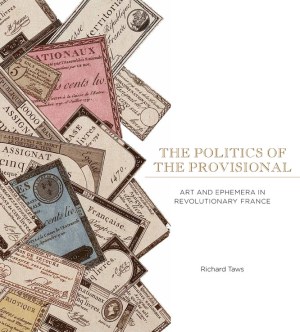 In revolutionary France, materiality was not easily achieved. The turmoil of war, shortages, and frequent changes in political authority meant that few large-scale artworks or permanent monuments to the Revolution’s memory were completed. On the contrary, as this book argues, visual practice in revolutionary France was characterized by the production and circulation of a range of transitional, provisional, ephemeral, and half-made images and objects. Addressing this mass of images conventionally ignored in art-historical accounts of the period, The Politics of the Provisional contends that widely distributed, ephemeral, or “in-between” images and objects were at the heart of contemporary debates on the nature of political authenticity and historical memory. Provisionality had a politics, and it signified less the failure of the Revolution’s attempts to historicize itself than a tactical awareness of the need to continue
the Revolution’s work.
Richard Taws is Lecturer in the History of Art, University College London. (more…)










 Enfilade
leave a comment