November 2011 Issue of ‘Art History’
Eighteenth-century offerings from the November 2011 issue:
Andrei Pop, “Sympathetic Spectators: Henry Fuseli’s Nightmare and Emma Hamilton’s Attitudes,” Art History 34.5 (November 2011): 934-57.
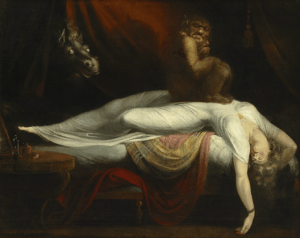
Henry Fuseli, "The Nightmare," 1781, exhibited in 1782 at the Royal Academy of London (Detroit Institute of Arts)
Abstract: Henry Fuseli’s painting The Nightmare (1782), unusual in the artist’s oeuvre and in the painting of its time as the public visualization of a private mental state, can be made sense of in light of late eighteenth-century practices and theories of privacy and of the agency that minds can exert on the world on on each other. By comparison with another dream-like performance, Emma Hamilton’s Attitudes, and informed by David Hume’s theory of sympathy, which was designed to explain the social communicability of mental states, a reading of The Nightmare emerges which shows that it did not aim to make visible dream imagery, but to induce spectators to have or feel as if they had an analogous experience. The painting is thus typical of the formative stage of a modern understanding of public life as a contingent
association of private lives.
Andrei Pop studied art history at Stanford and Harvard Universities and is a postdoctoral fellow at the Universität Berlin. The present essay is part of Neopaganism, a book in progress on the cultural politics of classicism. His article on Fuseli and tragedy will appear in the March 2012 Art Bulletin. His translation, together with Mechtild Widrich, of Karl Rosenkranz’s Aesthetics of Ugliness (1853) is forthcoming.
◊ ◊ ◊ ◊ ◊
Steven Adams, “Amateurs and Revolutionaries in Eighteenth-century France,” Art History 34.5 (November 2011): 1042-46.
 Review of Charlotte Guichard, Les Amateurs d’art à Paris au XVIII siècle (Paris: Champ Vallon, 2008); Laura Auricchio, Adélaïde Labille-Guiard: Artist in the Age of Revolution (Los Angeles: Getty Publications, 2009); and Rolf Reichardt and Hubertus Kohle, Visualizing the Revolution: Politics and the Pictorial Arts in Late Eighteenth-century France (London: Reaktion Books, 2008).
◊ ◊ ◊ ◊ ◊
Marion Endt-Jones, “Commemorative Reconsiderations,” Art History 34.5 (November 2011): 1053-56.
 Review of Diana Donald and Jane Munro, eds., Endless Forms: Charles Darwin, Natural Science, and the Visual Arts (New Haven and London: Yale Center for British Art, 2009); and Andrew Graciano, ed., Visualizing the Unseen: Imagining the Unknown, Perfecting the Natural: Art and Science in the 18th and 19th Centuries (Newcastle: Cambridge Scholars Publishing, 2008).
◊ ◊ ◊ ◊ ◊
Editor’s Note: At February’s CAA meeting in Los Angeles, there is an entire session, sponsored by the Midwest Art History Society, on the subject of The Nightmare. -CH.
Icons of the Midwest: Henry Fuseli’s Nightmare
Wednesday, 22 February, 12:30–2:00
Chairs: Laura Gelfand (Utah State University) and Judith Mann (Saint Louis Art Museum)
• Salvador Salort-Pons (Detroit Institute of the Arts), Living with Fuseli’s Nightmare
• Beth S. Wright (University of Texas at Arlington), ‘As I Was Perpetually Haunted by These
Ideas’: Fuseli’s Influence on Mary Shelley’s Mathilda and Frankenstein
• Scott Bukatman (Stanford University), Dreams, Fiends, and Dream Screens
Early Registration for CAA Ends Friday
Early registration for CAA’s 100th Annual Conference, taking place February 22–25, 2012, in Los Angeles, ends this Friday, December 16, 2011. To secure the lowest rates, register for the conference and book your travel accommodations today!

Call for Papers: Two Study Days on Montfaucon
As noted at Le Blog de l’ApAhAu:
L’Antiquité expliquée et représentée en figures de Montfaucon : genèse et réception
Bibliothèque Carré d’Art de Nîmes, 12 October 2012
Médiathèque du Grand Narbonne, 22 March 2013
Proposals due 15 April 2012
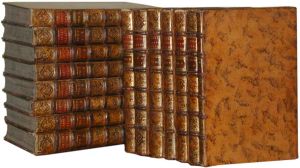
This second edition of Montfaucon's "L’Antiquité expliquée et représentée en figures" is available from the Manhattan Rare Book Company for $13,000. Click on the photo for more information and images from the plates.
La publication à Paris en 1719 des 10 volumes de L’Antiquité expliquée et représentée en figuresa constitué un véritable événement éditorial, avec un chiffre de tirage imposant au regard de l’histoire du livre, et plus particulièrement du livre illustré – dans sa version finale, augmentée de 5 volumes de suppléments, l’ouvrage intègre plus de 1300 planches reproduisant œuvres d’art, monnaies, objets et monuments de l’Antiquité. Ce succès en concrétise un autre : celui, intellectuel, du long travail de collecte et d’érudition mené par le bénédictin dom Bernard de Montfaucon pour rassembler dans un monumental « musée de papier » les connaissances de l’époque sur l’Antiquité.
 La place remarquable occupée par cette « histoire visuelle » dans l’évolution de l’antiquarisme et de ses réseaux en Europe est indiscutable : au xviiie siècle comme au xixe encore, nombreux sont ceux qui citent le languedocien Montfaucon et s’y réfèrent, explicitement ou implicitement, pour construire et étayer leur propre regard sur le passé, soit au travers d’une filiation soit en se démarquant de leur modèle. Dans le même temps, l’influence de l’ouvrage déborde le champ de l’histoire, infléchi par les deux disciplines émergentes de l’archéologie et de l’histoire de l’art, pour s’exercer aussi dans le domaine littéraire, une part de son rayonnement aujourd’hui encore sous-estimée.
Les deux journées d’études envisagées se donnent pour objectif de réévaluer la place de l’œuvre de Montfaucon dans l’histoire des idées et des savoirs, à la croisée des champs de l’histoire, de l’archéologie, de l’histoire de l’art et de la littérature ; elles proposent de mener une réflexion sur la genèse et les réceptions de l’AERF depuis sa parution. La première de ces deux journées, qui portera sur l’élaboration et la publication de l’œuvre, se déroulera à la Bibliothèque Carré d’Art de Nîmes le vendredi 12 octobre 2012 : il s’agira de contextualiser l’entreprise de Montfaucon en clarifiant son arrière-plan intellectuel (vie culturelle, littéraire et savante au début du xviiie siècle ; Montfaucon et la congrégation de Saint-Maur ; sources et références de l’AERF) et en examinant l’ouvrage en lui-même (intentions, genre, démarche scientifique, méthodes à l’œuvre, représentation véhiculée de l’Antiquité). La seconde de ces journées, qui s’intéressera aux réceptions, jusqu’à nos jours, de l’AERF, se déroulera à la Médiathèque du Grand Narbonne le vendredi 22 mars 2013 : y seront précisées les influences directes ou obliques de l’œuvre sur des ouvrages et/ou démarches ultérieures, à partir d’une réévaluation de son audience (public visé/public réel, réception critique, « autorité » de l’auteur, etc.).
Les propositions de contribution (300 mots environ) sont à adresser avant le 15 avril 2012 à Véronique Krings, Université de Toulouse, PLH ERASME (vkrings@mail.com) et Magali Soulatges, Université d’Avignon, IRCL Montpellier III (magali.soulatges@univ-avignon.fr).
Le souci de favoriser une approche pluridisciplinaire du sujet (par les historiens, archéologues, historiens de l’art et littéraires) guidera le choix des communications retenues.
Call for Articles: Eating Together
I’m afraid there’s not much time for this one, but interesting enough that I wanted to pass it along. -CH.
Special Issue of Museums & Social Issues on Eating Together
Articles or Prospectuses due by 20 December 2011

Hanoverian Table Setting (Photo from M. Ford Creech Antiques, click on the image to visit the site)
The deadline is approaching for submitting articles or reviews for the next issue of the journal Museums & Social Issues (published by Left Coast Press, Inc). Tentatively titled Eating Together, the issue will examine the intersection of museum practice and access to and changing traditions associated with food. We would like to highlight programing and exhibits exploring food access, eating practices, sustainability, preservation of heritage seeds, traditional cuisines, culinary science and other creative uses of food. We are also interested in articles from outside the museum field, dealing with research, theory or innovative projects that connect people and communities to practices of eating.
Please submit full articles (ideal) or well developed prospectuses to http://mc.manuscriptcentral.com:80/msi by December 20, 2011. For more information, contact the editor at MSIuw@uw.edu or Morriss8@uw.edu.
Stefania Van Dyke
Museum Studies & Practice
Left Coast Press, Inc.
museums@lcoastpress.com
1787 U.S. Coin Fetches $7.4 Million
From CoinWeek (12 December 2011) . . .
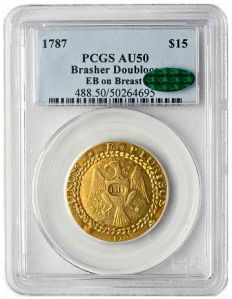 Blanchard and Company places world’s most valuable gold coin – the Brasher Doubloon for a record $7.395 million . . .
This rare numismatic treasure is considered America’s first and most important gold coin. It was purchased from John Albanese, founder of Certified Acceptance Corp. (CAC), and the transaction is the single highest price ever paid for a coin in a private transaction. It is truly unique as there is only one known example. . .
The Brasher Doubloon with the punch on the breast was minted in 1787 by Ephraim Brasher, a silversmith and goldsmith in New York City, and it contained $15 worth of gold at the time of its minting. Brasher made a small number of gold coins that historians today believe were intended for public circulation. . . .
The full article is available here»
Additional coverage is available at The Daily Mail.
HBA Publication Grant
Historians of British Art Publication Grant
Proposals due by 15 January 2012
The Historians of British Art (HBA) invites applications for its 2012 publication grant. The society will award up to $750 to offset publication costs for a book manuscript in the field of British art or visual culture that has been accepted by a publisher. Applicants must be current members of HBA. To apply, send a 500-word project description, publication information (name of journal or press and projected publication date), budget, and CV to Renate Dohmen, Prize Committee Chair, HBA, brd4231@louisiana.edu.
Exhibition: French Drawings in Grenoble

Jean-François-Pierre Peyron, “Curius Denatus refusant les présents
des ambassadeurs Samnites,” XVIIIe siècle, Musée de Grenoble
◊ ◊ ◊ ◊ ◊
Currently on display at the Musée de Grenoble, as noted by Hélène Bremer . . .
L’idée et la ligne – Dessins français
Musée de Grenoble, 5 November 2011 — 12 February 2012
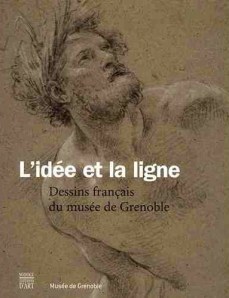 Après la présentation de ses plus belles feuilles italiennes, le musée de Grenoble met en valeur son extraordinaire fonds de dessins français. De la Renaissance à la fin du XVIIIe siècle, les plus grands artistes répondent présents. Nicolo dell’Abate, appelé pour travailler à Fontainebleau, offre une introduction magistrale à un parcours graphique qui puise ses sources en Italie. Laurent de la Hyre, Simon Vouet, Philippe de Champaigne, Patel, Charles Mellin, Charles Alphonse Dufresnoy ou François Perrier illustrent brillament les tendances d’une école française qui s’affirme et prend peu à peu son indépendance face à l’Italie. Le Brun, Noël Coypel, Jean-Baptiste de Champaigne, Louis de Boulogne et Charles de la Fosse poursuivent les avancées sous Louis XIV. La partie la plus riche et paradoxalement la moins connue de cette collection concerne le XVIIIe siècle : Boucher, Pierre ou Huber Robert viennent marquer le triomphe de la couleur et de la nature. Feuillet après feuillet, un pan entier de l’histoire de l’art française se dessine
sous nos yeux.
◊ ◊ ◊ ◊ ◊
Catalogue: Guillaume Kazerouni, Barbara Brejon de Lavergnée, Jérôme Delaplanche and Pierre Rosenberg, L’idée et la ligne: Dessins français du musée de Grenoble, XVIe-XVIIIe siècle (Paris: Somogy éditions d’art, 2011), 240 pages, ISBN: 9782757204818, €35.
At Sotheby’s: Zoffany and Joseph Wright
Press release from Sotheby’s:
Old Master & British Paintings Evening Sale, L11036
Sotheby’s, London, 7 December 2011

Johann Zoffany, The Garden at Hampton House
with Mr. and Mrs. David Garrick Taking Tea, 1762.
◊ ◊ ◊ ◊ ◊
Sotheby’s London Old Master & British Paintings Evening Sale realised a total of £20,074,500/ $31,364,399/ €23,437,051, comfortably within the pre-sale estimate of £17.6 – 24.2 million. The top lot of the sale was a pair of paintings by Johann Zoffany – the most important works by the artist to appear on the market in recent years – The Garden at Hampton House, with Mr and Mrs David Garrick Taking Tea and The Shakespeare Temple at Hampton House, which fetched £6,761,250/$10,563,777/ €7,893,784 (pre-sale estimate of £6-8 million). . . .
◊ ◊ ◊ ◊ ◊
Characterizing the auction as “a little subdued,” Bendor Grosvenor reports at Art History News that the two paintings were acquired by the Garrick Club:
The buyer was the Garrick Club, and the pictures will hang alongside their pre-eminent collection of theatrical portraits, including numerous Zoffanys. This is splendid news for the preservation of English heritage, for there was a risk the pictures could have been sold overseas. . . .
◊ ◊ ◊ ◊ ◊
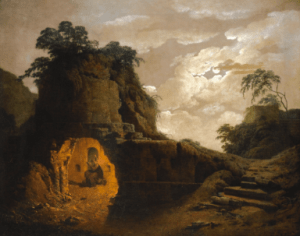 Also up for sale was Joseph Wright’s 1779 painting Virgil’s Tomb by Moonlight (Lot 37). Estimated to sell for £600,000-800,000, it roughly doubled that, fetching just under £1.5 million.
To be sure, along with these British highlights, the evening belonged to Jan Steen, whose Interior with Figures Playing Cards at a Table established a new auction record for the artist. At £4.8 million, it was a strong price, though still toward the low end of the estimate (£4.5-6million).
More information on the painting is available at Art Daily.org.
◊ ◊ ◊ ◊ ◊
For more information on the pair of paintings by Zoffany, see the original announcement from Sotheby’s (5 September 2011). From the press release:
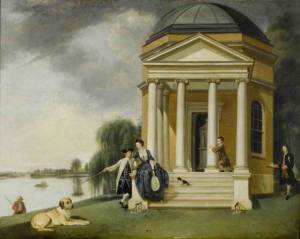 Sotheby’s announced the sale of the two most important works by Johann Zoffany to appear on the market in recent years. Both commissioned by David Garrick, Britain’s greatest actor, they depict him with his family and friends in the garden of his house on the banks of the river Thames at Hampton. Painted in 1762 they have only appeared once on the open market, when they were sold in 1823 from Garrick’s estate, and have descended in the family of a distinguished private collection ever since. From 2007 until 2010 the paintings hung together on loan at Tate Britain, in London, and have been requested as highlights for the forthcoming retrospective of Zoffany’s work at the Royal Academy later this year. They will be offered together as part of Sotheby’s Old Master & British Paintings Evening Sale on 7th December 2011 with an estimate of £6-8 million. (more…)
Exhibition: Boxes and Objets de Vertu
From the Cognacq-Jay, as noted by Hélène Bremer . . .
Boîtes en or et objets de vertu
Cognacq-Jay Museum, Paris, 21 December 2011 — 6 May 2012
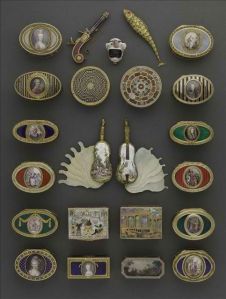 A l’occasion de la parution du Catalogue raisonné des Boîtes en or et objet de vertu, le musée Cognacq-Jay expose cet hiver sa riche collection de boîtes, tabatières, étuis, boîtes à rouge, à mouches, nécessaires de toilette, à écrire… Avec 240 objets, celle-ci est l’une des plus importantes des musées français.
Chefs-d’œuvre de l’orfèvrerie, en or, enrichis de pierres dures ou précieuses, d’émail, de porcelaine, d’ivoire ou de nacre. . . étaient dès le XVIIIe siècle l’objet d’orgueil et de convoitise Leur forme était parfois étrange, prenant l’apparence d’un dromadaire, d’un tatou, d’une jambe, d’une tête, d’un violoncelle. . . Leur usage, participant aux rituels de la vie quotidienne, témoigne des pratiques de la sociabilité au Siècle des Lumières : le tabac, les modes cosmétiques, le jeu. . .
L’exposition mettra exceptionnellement en lumière cette collection, au moyen d’une scénographie originale et surprenante, et en réunissant autour de ces
objets des dessins, des gravures pour mieux comprendre leurs secrets de
fabrication et leur usage.
◊ ◊ ◊ ◊ ◊
Catalogue: Objets de Vertus, Boites, Tabatieres, Etuis et Necessaires Collections D’Orfevrerie (Paris: Paris Musées, 2011), ISBN: 9782759601813, €44.
New Acqusitions at LACMA: Baratta’s ‘Wealth’ and ‘Prudence’

Giovanni Baratta (1640-1747), Pair of Allegorical Figures – "Wealth" and "Prudence," ca. 1703-08, photo © 2011 Museum Associates/LACMA
Press release from LACMA:
The Los Angeles County Museum of Art has acquired two life-size allegorical figure statues by the late Florentine Baroque master, Giovanni Baratta (1640–1747). The rediscovery of these sculptures, Wealth and Prudence, has been recognized as a major contribution to the study of early eighteenth-century Florentine art. The works are generous gifts to the museum by long-time benefactor, The Ahmanson Foundation, which has contributed extensively to the development of LACMA’s collection of European Painting and Sculpture over the last forty years. The sculptures are on view on the third floor of the Ahmanson Building, in the recently reinstalled European galleries.
Originally part of one of the artist’s most illustrious commissions, the works are noted for their refined elegance. The sculptures were commissioned by Niccolò Maria Giugni (1672-1717) for the gallery in his Palazzo on the Via degli Alfani in Florence. Facing one another at either end of the gallery, they were part of an elaborate iconographic scheme intended to glorify the Medici family and celebrate the Giugni family’s allegiance to the Medici. The choice of Wealth and Prudence was particularly appropriate to illustrate the joint virtues of the families, as some members of the Giugni family had advised the Medici in various aspects of their governance. (more…)










 Enfilade
leave a comment