9th Annual Ricciardi Prize from Master Drawings
From Master Drawings:
Ninth Annual Ricciardi Prize from Master Drawings
Submissions due by 15 November 2026
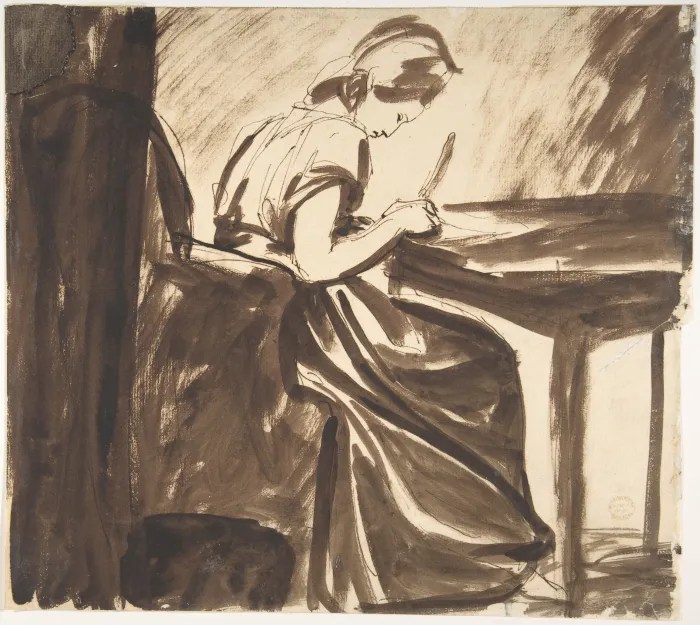
George Romney, Lady Seated at a Table (recto); pen and brown ink, brush and brown wash (NY: The Metropolitan Museum of Art, 11.66.3).
Master Drawings is now accepting submissions for the 9th Annual Ricciardi Prize of $5000. The award is given for the best new and unpublished article on a drawing topic (of any period) by a scholar under the age of 40. Candidates are also eligible for a $1000 runner-up prize and publication. Prize winners are eligible for reimbursement of costs associated with obtaining image publication permissions. They will be invited to present their research at a symposium held during Master Drawings Week in New York (January 2027). Information about essay requirements and how to apply can be found here. Information about past winners and finalists is available here.
The average length is between 2500 and 3750 words, with five to twenty illustrations. Submissions should be no longer than 7500 words and have no more than 75 footnotes. All submissions must be in article form, following the format of the journal. Please refer to our Submission Guidelines for additional information. We will not consider submissions of seminar papers, dissertation chapters, or other written material that has not been adapted into the format of a journal article. Written material that has been previously published, or is scheduled for future publication, will not be eligible. Articles may be submitted in any language. Please be sure to include a 100-word abstract outlining the scope of your article with your submission.
New Film | The Testament of Ann Lee
◊ ◊ ◊ ◊ ◊
From Searchlight Pictures:
The Testament of Ann Lee, directed by Mona Fastvold, written by Mona Fastvold and Brady Corbet, starring Amanda Seyfried as Ann Lee, the 18th-century founding leader of the Shakers, 2025, 137 minutes.
Reviewing the film for The New York Times, Alissa Wikinson describes it as a “singular, astonishing, otherworldly biographical musical about the founder and spiritual leader of the Shakers.” She goes on: “That’s a lot of adjectives, I know, but I can’t pick one to remove—and even those don’t quite capture how unusual and terrific this movie is. That it may not be to everyone’s taste, or to yours, feels almost besides the point. When an artist takes a swing this colossal and stays true to their vision in every way, the resulting work deserves respect, and is always worth seeing.”
The full review is available here»
Exhibition | Drawn to Venice
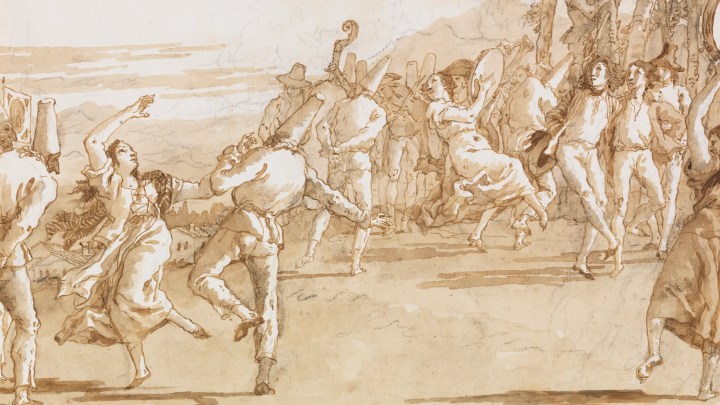
Giovanni Domenico Tiepolo, La Furlana (The Friulian Dance), detail, no. 31 from the series Divertimento per li regazzi (Entertainment for Children), ca. 1790–1800, pen and brown ink and brown wash over black chalk, 35 × 47 cm (Fine Arts Museums of San Francisco, 1967.17.133).
◊ ◊ ◊ ◊ ◊
Now on view in San Francisco:
Drawn to Venice
Legion of Honor, Fine Arts Museums of San Francisco, 24 January — 2 August 2026
Spanning the Renaissance to the Rococo period, this exhibition celebrates the vitality and originality of the arts in Venice and the Veneto region through more than 30 drawings and prints. In the 16th century, Venice became a thriving artistic center rivaling Rome and Florence. Patronage fostered creative competition among family workshops, such as the Bassano and Tintoretto families. After a period of decline, Venice experienced a second golden age in the 18th century. This was illustrated with dazzling bravura by humorous scenes from contemporary life by Giovanni Battista Tiepolo (1696–1770) and his son Giovanni Domenico Tiepolo (1726–1804), as well as alluring portraits by Rosalba Carriera (1673–1757). Glistening maritime views by Francesco Guardi (1712–1793) and Canaletto (1697–1768) crystallized the imagery of the Venetian landscape for centuries to come. From landscapes and figure studies to designs for sumptuous decorations, the works presented in this exhibition offer a fresh look at this memorable place in history and art.
This exhibition is designed in dialogue with Monet and Venice, on view from 21 March until 26 July 2026 at the de Young.
New Book | Thy Will Be Done: George Washington’s Legacy of Slavery
Forthcoming from UNC Press:
John Garrison Marks, Thy Will Be Done: George Washington’s Legacy of Slavery and the Fight for American Memory (Chapel Hill: The University of North Carolina Press, 2026), 304 pages, ISBN: 978-1469693521, $35.
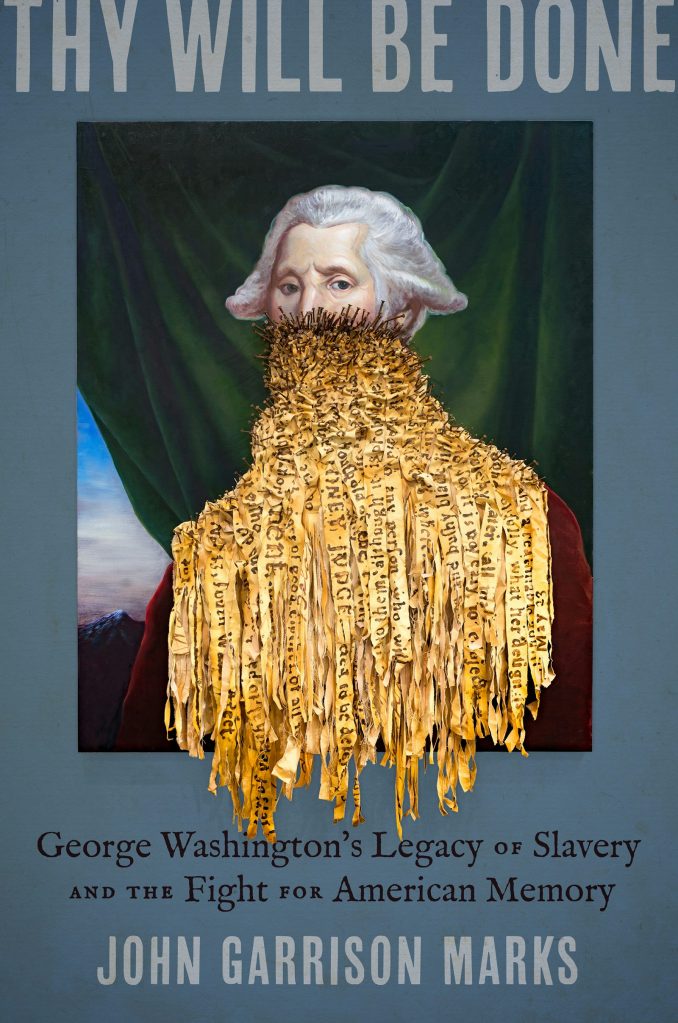 How should we remember George Washington’s entanglement in slavery? Americans have argued over that question for nearly 250 years. More than any other Founding Father, Washington’s ties to slavery have vexed us. He enslaved more people than any of his fellow founders, yet he was the only one of them to emancipate the people he held in bondage. Since his death, Americans have grappled with this contradiction, shaping and reshaping our collective memory of Washington and slavery—along with our understanding of the nation.
In Thy Will Be Done, historian John Garrison Marks tells the story of Americans’ long, fraught struggle to come to terms with Washington’s legacy of slavery. He traces how politicians, abolitionists, educators, activists, Washington’s former slaves and their descendants, and others have remembered, forgotten, and manipulated slavery’s place in Washington’s story, and how they have wielded versions of that story in the political and cultural fights of their time. Marks shows how generational struggles over our collective memory of Washington and slavery have always been part of a bigger conversation about defining the United States and its people. As debates about the founders’ participation in the system of slavery continue to roil public discourse, Marks shows with new clarity that Americans have never collectively reconciled Washington’s conflicted legacy. By truly grappling with Washington’s role as enslaver and emancipator, we may come to better understand the nation and ourselves.
John Garrison Marks is a historian, writer, and author of Black Freedom in the Age of Slavery.
New Book | Bernardo de Gálvez
The first edition appeared in 2018; the paperback edition was just released from UNC Press:
Gonzalo Quintero Saravia, Bernardo de Gálvez: Spanish Hero of the American Revolution (Chapel Hill: The University of North Carolina Press, 2026), 616 pages, ISBN: 978-1469696126, $38.
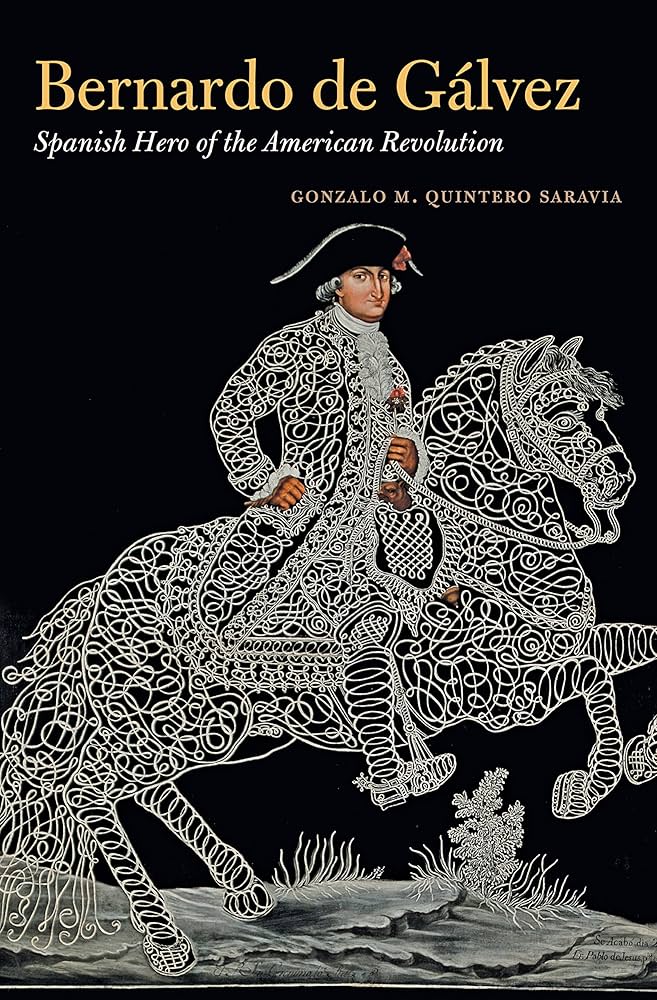 Although Spain was never a formal ally of the United States during the American Revolution, its entry into the war definitively tipped the balance against Britain. Led by Bernardo de Gálvez, supreme commander of the Spanish forces in North America, their military campaigns against British settlements on the Mississippi River—and later against Mobile and Pensacola—were crucial in preventing Britain from concentrating all its North American military and naval forces on the fight against George Washington’s Continental army. In this first comprehensive biography of Gálvez (1746–1786), Gonzalo M. Quintero Saravia assesses the commander’s considerable historical impact and expands our understanding of Spain’s contribution to the war.
A man of both empire and the Enlightenment, as viceroy of New Spain (1785–86), Gálvez was also pivotal in the design and implementation of Spanish colonial reforms, which included the reorganization of Spain’s Northern Frontier that brought peace to the region for the duration of the Spanish presence in North America. Extensively researched through Spanish, Mexican, and US archives, Quintero Saravia’s portrait of Gálvez reveals him as central to the histories of the Revolution and late eighteenth-century America and offers a reinterpretation of the international factors involved in the American War for Independence.
Gonzalo M. Quintero Saravia, SJD, PhD, is the author of several books on eighteenth-century Spanish American history and a former fellow at the Weatherhead Center for International Affairs at Harvard University.
Call for Articles | A Passion for Porcelain
From the Call for Papers:
A Passion for Porcelain: Volume in Honour of Dame Rosalind Savill
The French Porcelain Society Journal, Volume 11
Proposals due by 1 April 2026; completed articles will be due by 1 October 2026
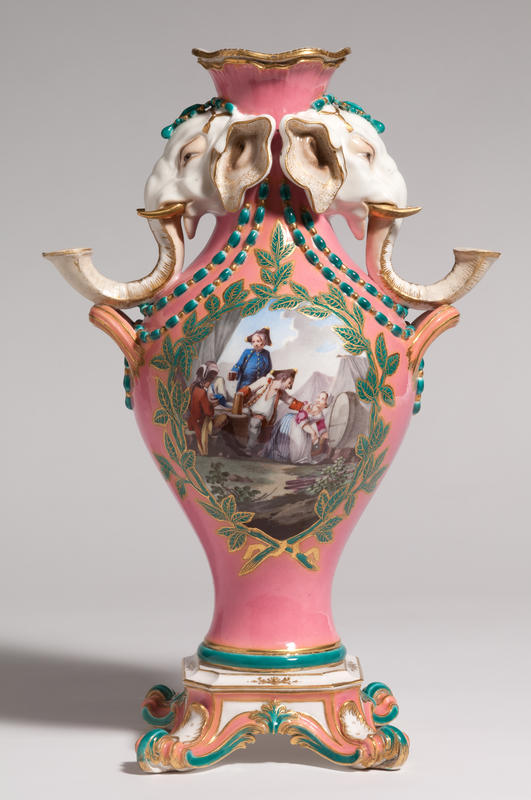
Vase à têtes d’éléphant, Sèvres Porcelain Manufactory, ca. 1760, purchased by Louis XV in December 1760 (Waddesdon Manor, no. 3013; photo by Mike Fear).
The French Porcelain Society Journal is the leading academic, peer-reviewed English-language publication on European ceramics and their histories, illustrated in full colour. After celebrating its 40th anniversary in 2024 with the publication of an issue focused on the work of twentieth-century scholars, collectors, and dealers who have contributed to advancing the study of European ceramics, the French Porcelain Society would like to honour the life and work of Dame Rosalind Savill (1951–2024), who served as President of the Society for 24 years, from 1999 until 2023. Dame Rosalind (‘Ros’) Savill was a leading expert in the production of the Vincennes/Sèvres factory during the eighteenth century and on Madame de Pompadour, one of the factory’s most prominent clients and advocates. Her internationally acclaimed research was published in The Wallace Collection Catalogue of Sèvres Porcelain (1988)—the institution that she directed from 1992 until 2011—and in the more recent Everyday Rococo: Madame de Pompadour and Sèvres Porcelain (2021), as well as in articles and contributions to other books, catalogues, academic journals, and specialist publications such as The Burlington Magazine. Ros’s indefatigable thirst for knowledge was illustrated by her interest in other topics beyond that of French eighteenth-century porcelain, from music, horticulture and birds, to furniture and arms and armour. Above all, Ros’s passion for ceramics was communicated in any conversation with her, be it in front of a museum display or around the dinner table. The next issue of The French Porcelain Society Journal wants to commemorate that passion for European ceramics with contributions that can range from object-focused case studies to articles with an academic or historiographic approach to the subject.
Topics for consideration may include but are not limited to the following:
• Insights into the production of porcelain at the Vincennes/Sèvres factory and stories relating to its personnel, agents, and collectors during the eighteenth and nineteenth centuries
• New research on specific objects or groups of objects within the remit of European ceramics, with a particular interest in French eighteenth-century faience and porcelain productions
• Contributions to the study of European ceramic factories, their histories, establishment, running and, if appropriate, disappearance
• Research on collectors of European ceramics
Submissions in the first instance should be a summary of no more than 400 words, with a brief description of the argument, a historiography, and a note of the research tools and sources used. Articles must be original; we do not accept modified versions of articles published elsewhere electronically or in print. Please include a brief biography. Articles will be peer reviewed by the editorial board and the FPS Committee of academic and museum specialists. Submissions should be between 3,000 and 6,000 words in length excluding endnotes and a house style sheet will be provided. Up to 15 high-resolution images per article will be accepted. Authors are responsible for obtaining copyright clearance. Please send abstracts as an email attachment to the FPS Journal Editorial Board (fpsjournal@gmail.com) by 1 April 2026. If your abstract is accepted, articles and images will be due by 1 October 2026. Publication is provisional on satisfactory peer review.
Exhibition | Johan Tobias Sergel: Fantasy and Reality
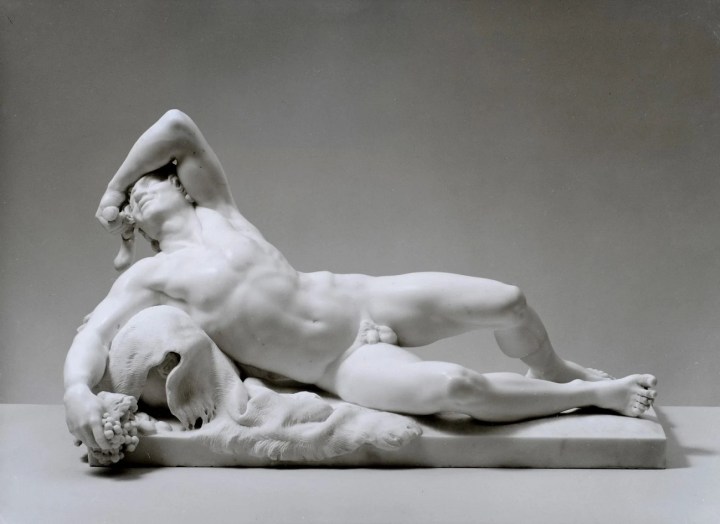
Johan Tobias Sergel, The Faun, 1774, marble, 46 × 46 × 84 cm
(Nationalmuseum, NMSk 357; photo by Viktor Fordell)
◊ ◊ ◊ ◊ ◊
From the Swedish Nationalmuseum in Stockholm, as noted at ArtNet:
Johan Tobias Sergel: Fantasy and Reality / Fantasi och Verklighet
Nationalmuseum Stockholm, 19 February — 9 August 2026
The Morgan Library & Museum, New York, 30 October 2026 — 31 January 2027
Curated by Daniel Prytz
In spring and summer 2026, Nationalmuseum will present a major exhibition on sculptor and draughtsman Johan Tobias Sergel (1740–1814) Sergel was a central figure in Swedish art during the late 18th century and is also considered one of the most important sculptors of his time on an international scale.
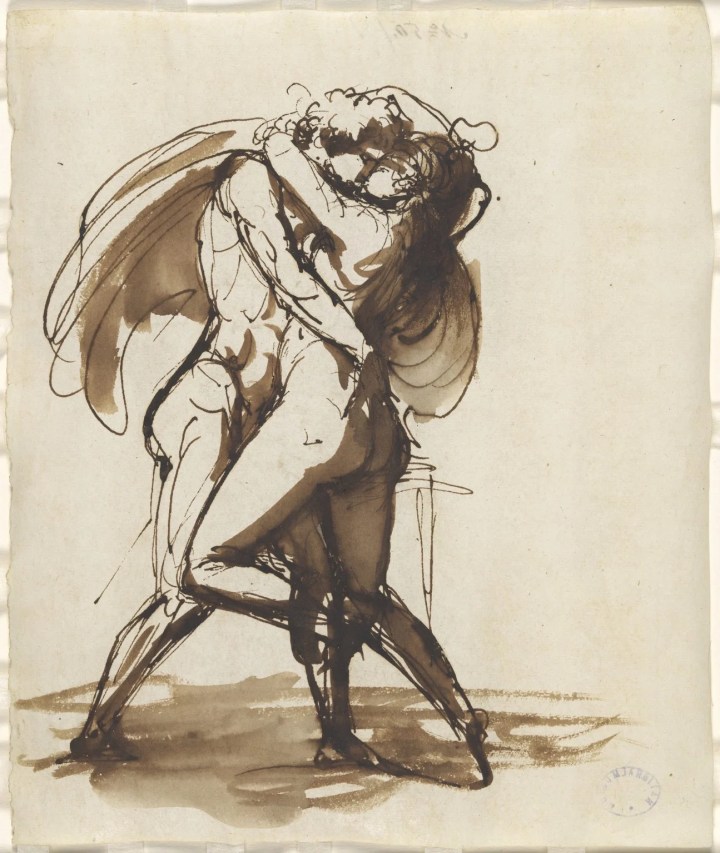
Johan Tobias Sergel, Passionate Lovers (Hetsigt kärlekspar), pen and brown ink with brown wash on paper, 21 × 18 cm (Stockholm: Nationalmuseum, NMH A 45/1970; photo by Cecilia Heisser).
The exhibition offers a comprehensive view of Sergel’s life and art—from his early years in Stockholm in the 1760s, through his extended study trips to France and Italy, to his commissions for King Gustav III upon his return to Stockholm. One of the goals of the exhibition is to place Sergel’s life and work in a broader cultural and historical context. His relationships with leading Swedish cultural personalities and political authorities of the time are given significant attention, and his career is portrayed against the backdrop of life in 18th-century Stockholm, Paris, and Rome. Sergel maintained an extensive international network, and the exhibition highlights how important these connections were to his artistic development. In addition to his close friend, the Danish painter Nicolai Abraham Abildgaard, his circle of friends included renowned artists from the British Isles such as Henry Fuseli, Thomas Banks, Alexander Runciman, and James Barry.
A major focus is placed on Sergel’s more personal and private drawings. He left behind a large number of works depicting everyday life, family, friends, and erotic scenes—images that reveal the man behind the monumental sculptures: an artist who viewed his contemporaries with both sharp insight and warmth. Nationalmuseum holds an extensive collection of works by Sergel, which forms the foundation of the exhibition.
Johan Tobias Sergel: Fantasy and Reality is curated by Daniel Prytz. A smaller version of the exhibition, organized by John Marciari, will be shown in autumn 2026 at The Morgan Library & Museum in New York.
From The Morgan:
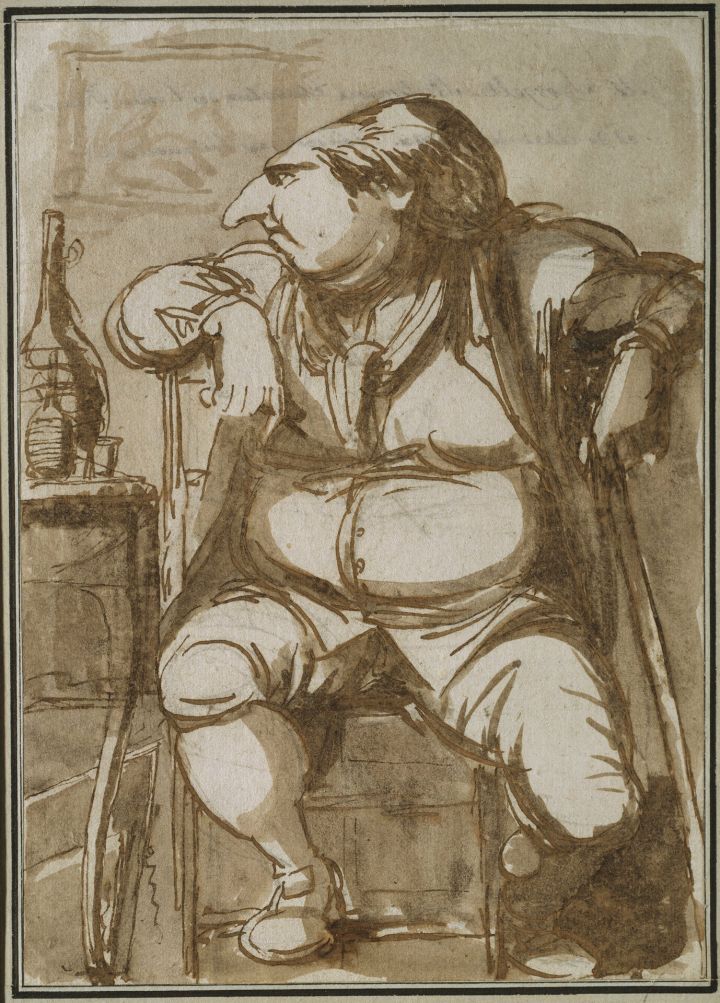
Johan Tobias Sergel, Self Portrait with a Bottle of Wine in Rome (Självporträtt vid en flaska vin i Rom), ink and graphite drawing, 22 × 16 cm (Stockholm: Nationalmuseum, NMH 280/1891).
This exhibition—the first dedicated to Sergel outside Europe—will feature a selection of the artist’s drawings alongside sculptural works in terracotta, marble, and plaster. Trained initially in Stockholm, Sergel spent time in Paris and, more importantly, over a decade in Rome, where his associates included a dazzling international circle of artists and patrons. Sergel’s sculpture was an important model for a generation of Neoclassical artists, but the artist’s personality is most evident in the drawings that constitute a virtual diary of his life, often in caricature. An extensive corpus of self-portraits will be joined by scores of surviving sheets that explore his artistic friendships, his relationship with King Gustav III and other figures at the court in Stockholm, and his common-law marriage to Anna Rella Hellström. Sergel’s late drawings, made when he was in poor health and in a state of depression, have been compared to those of Francisco Goya. Although Sergel’s career spanned artistic movements from Rococo to Neoclassicism to Romanticism, he also seems at times a modern figure, one whose life can offer a rich story to contemporary audiences.
Exhibition | Badin: Beyond Surface and Mask
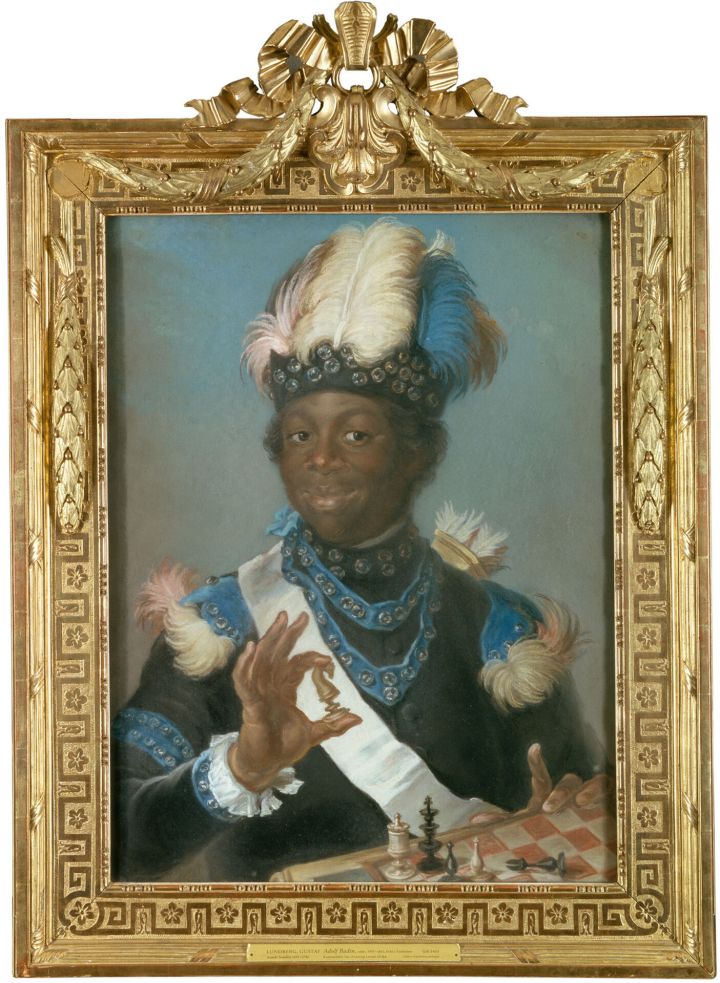
Gustaf Lundberg, Portrait of Adolph Ludvig Gustav Fredrik Albert Couschi, known as Badin, First Footman, Court Secretary, and Titular Assessor, 1775, pastel (Stockholm, Nationalmuseum, NMGrh 1455).
From the Swedish Nationalmuseum in Stockholm:
Badin: Beyond Surface and Mask
Nationalmuseum, 19 February – 9 August 2026
Running alongside and partially integrated with the exhibition on artist Johan Tobias Sergel, Nationalmuseum presents a smaller-scale exhibition about Adolf Ludvig Gustav Fredrik Albrecht Couschi, also known as Badin (ca.1747–1822).
Badin is thought to have been born in 1747, seven years after Sergel, as a slave on the island of Saint Croix, a Danish colony in the Caribbean. He was later taken to Europe, where he was eventually presented as a ‘gift’ to Sweden’s Queen Lovisa Ulrika. The exhibition seeks to create a nuanced and multifaceted understanding of how a person of African descent rose to become a significant figure in Swedish society of the time.
Nationalmuseum has commissioned a new film about Badin by artist Salad Hilowle that will appear in the exhibition.
Exhibition | Longing: Painting from the Pahari Kingdoms
From the press release (3 December 2025) for the exhibition:
Longing: Painting from the Pahari Kingdoms of the Northwest Himalayas
Cincinnati Art Museum, 6 February — 7 June 2026
Curated by Ainsley Cameron
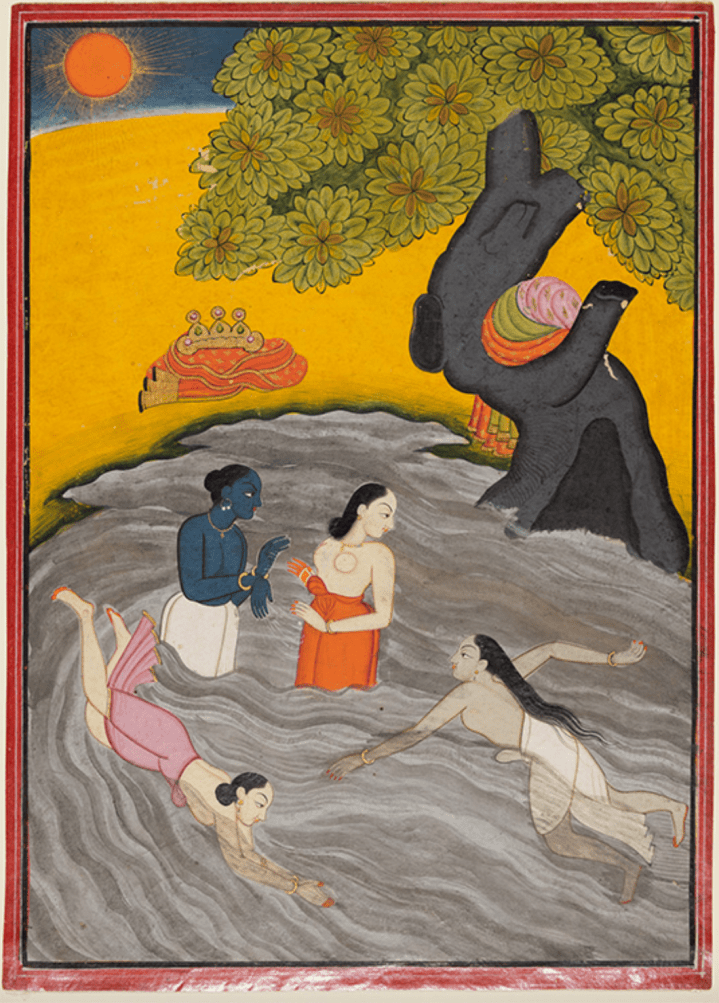
Krishna Playing with the Gopis in the Yamuna River, ca. 1770, India, Himachal Pradesh, Nurpur, opaque watercolor and gold on paper, (Cleveland Museum of Art, purchase and partial gift from the Catherine and Ralph Benkaim Collection and Millikin Purchase Fund, 2018.118).
Featuring more than 40 works of art, Longing: Painting from the Pahari Kingdoms of the Northwest Himalayas will present colorful court paintings from present-day India dating between the 17th and 19th centuries. Practicing unique techniques, artists produced these small, portable paintings primarily for royal, noble, and priestly patronage. The paintings were often given as gifts between regional nobility, families, and political allies creating large networks of artistic exchange.
Influenced by the region’s culture and politics, the artworks portray longing in several ways: through paintings of devotees who long to connect with the divine, through individuals and couples who yearn for romance, and through rulers and noblemen who longed to be at the center of political control. The exhibition encourages visitors to experience art as multisensory. Select paintings will be paired with scent or touch opportunities, while others are paired with musical soundscapes, to heighten the works’ bhava (emotion or mood) and encourage multiple ways to physically, intellectually, and emotionally connect with the art.
“This exhibition explores paintings through the lens of a shared human emotion,” reflects Ainsley M. Cameron, PhD, Curator of South Asian Art, Islamic Art & Antiquities at CAM. “Through color, form, and composition, paintings that portray devotional and cultural values, amorous alliance, or political gain also reveal an emotive force reflective of the region in which they were produced. I’m excited to share the vibrant painting histories of the Pahari region with Cincinnati audiences, to encourage our visitors to actively participate in their museum experience, to interact with art in multiple ways, and to forge new connections with the works on display.”
Longing is part of a larger research project connecting the South Asian art collections at the Cincinnati Art Museum, the Cleveland Museum of Art (CMA), and the National Museum of Asian Art (NMAA) in Washington, DC. Alongside scholars based in India, curators from these three museums are working collaboratively to research, publish, and display works from the Catherine Glynn Benkaim and Ralph Benkaim Collection. Beginning in April 2026, the CMA and the NMAA will also present exhibitions of paintings from the Pahari kingdoms. These three distinct thematic exhibitions are presented in the publication Pahari Paintings: Art and Stories, a lavishly illustrated volume that foregrounds recent research in paintings from this mountainous region. Published by the Cleveland Museum of Art and Yale University Press, the volume celebrates both the Benkaim Collection and this cross-institutional collaboration.
Sonya Rhie Mace, Sarang Sharma, and Vijay Sharma, eds., Pahari Paintings: Art and Stories (New Haven: Yale University Press, 2026), 368 pages, ISBN: 978-0300286489, $65. With contributions by Catherine Glynn Benkaim, Ainsley Cameron, Debra Diamond, and Vrinda Agrawal
Exhibition | Of the Hills: Pahari Paintings
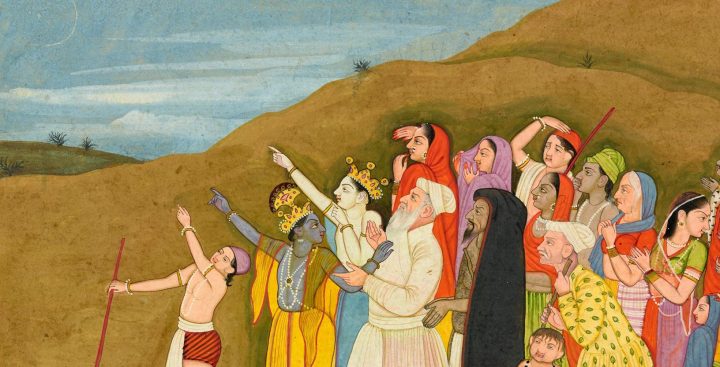
Attributed to an artist from the generation (ca. 1725–ca. 1785) after Nainsukh and Manaku, Krishna and His Family Admire a Solar Eclipse, from a Bhagavata Purana (Ancient Tales of the Lord), canto 10.82 (detail); India, Himachal Pradesh state, 1775–80; opaque watercolor on paper (Washington DC: National Museum of Asian Art, Smithsonian Institution, Freer Collection, Purchase from the Catherine and Ralph Benkaim Collection—Charles Lang Freer Endowment, F2017.13.5).
◊ ◊ ◊ ◊ ◊
Opening this spring at the National Museum of Asian Art:
Of the Hills: Pahari Paintings from India’s Himalayan Kingdoms
National Museum of Asian Art, Washington DC, 18 April — 26 July 2026
Curated by Debra Diamond
The tallest mountains on earth rise from the plains of northern India in a series of steep hills, snowy peaks, and narrow valleys. From the same Himalayan region arose some of the world’s most beautiful—yet least understood—works of art. Discover the extraordinary beauty and unique history of paintings made for Hindu kings in India’s Pahari (hill) region between the 1620s and 1830s. Pahari artists worked in radically different styles ranging from lyrical and naturalistic to boldly colored and abstracted. Of the Hills: Pahari Paintings from India’s Himalayan Kingdoms illuminates new scholarship on the collaborative artist communities in which most painters worked. Learn about the political, cultural, and religious contexts of these forty-eight exquisite works, and look closely to enter a world of fine detail that delights and astounds.
The exhibition celebrates the remarkable collection of Pahari paintings the museum acquired from renowned art historian Catherine Glynn Benkaim and Ralph Benkaim. Some of these artworks have never been exhibited publicly before. We’ve brought these rare pieces into conversation with our historic collections and paintings on loan from the Cleveland Museum of Art. Of the Hills is accompanied by the major publication Pahari Paintings: Art and Stories and runs concurrently with Pahari exhibitions at the Cleveland Museum of Art and the Cincinnati Art Museum.
Sonya Rhie Mace, Sarang Sharma, and Vijay Sharma, eds., Pahari Paintings: Art and Stories (New Haven: Yale University Press, 2026), 368 pages, ISBN: 978-0300286489, $65. With contributions by Catherine Glynn Benkaim, Ainsley Cameron, Debra Diamond, and Vrinda Agrawal










 Enfilade
leave a comment