Canaletto Exhibition in London and D.C.
Press release from the National Gallery in London:
Venice: Canaletto and His Rivals
National Gallery, London, 13 October 2010 — 16 January 2011
National Gallery, Washington D.C., 20 February — 30 May 2011
 This exhibition presents the finest assembly of Venetian views, by Canaletto and all the major practitioners of the genre, to be held since the much-celebrated display in Venice in 1967. Remarkably, considering the dominant role of British patronage in this art form, Venice: Canaletto and His Rivals is also the first exhibition of its kind to be organised in the UK.

Canaletto, "The Stonemason's Yard," 1727-28 (London: National Gallery)
Bringing together approximately 55 major loans from public and private collections of the UK, Europe and North America, the exhibition highlights the rich variety of Venetian view painting, representing Canaletto alongside major rivals such as Luca Carlevarijs, Gaspar van Witell, Michele Marieschi, Bernardo Bellotto, and Francesco Guardi. Also represented are less well-known painters such as Antonio Joli, Pietro Bellotti, Francesco Tironi and Giambattista Cimaroli, each responding to the market driven largely by the British Grand Tour.
Featured works span the 18th century, from the first accurately datable Venetian view by Luca Carlevarijs in 1703 to the death of Francesco Guardi in 1793 and Napoleon’s invasion and the fall of the Republic in 1797.
 In each room, major works by Canaletto are juxtaposed by those of his rivals and associates, to demonstrate their different approaches to the same or similar views of the city. The exhibition features many of Canaletto’s greatest masterpieces, including The Riva degli Schiavoni, looking West, 1736 (Sir John Soane’s Museum, London), The Stonemason’s Yard, 1727–28 (The National Gallery, London), and four of the finest works from the Royal Collection. A catalogue edited by Charles Beddington will accompany the exhibition (ISBN-13: 9781857094183), $50.
◊ ◊ ◊ ◊ ◊
For additional coverage, see the posting at Artdaily.org (16 June 2010).
European Architectural History Network
European Architectural History Network Conference
Brussels, 31 May — 3 June 2012
Proposals due by 19 December 2010
For those interested in architectural history and are based in Europe, do check out the European Architectural History Network, a sister counterpart to the more established Society of Architectural Historians. EAHN recently held its first international conference in Guimaraes, Portugal, and its second international conference will be in Brussels, Belgium on 31 May to 3 June 2012. One of the useful features of their website includes a searchable database of conferences, workshops, and seminars categorized by date, keyword, and country.
EAHN Mission Statement
The European Architectural History Network supports research and education by providing a public forum for the dissemination of knowledge about the histories of architecture. Based in Europe, it serves architectural historians and scholars in allied fields without restriction on their areas of study. The network seeks to overcome limitations imposed by national boundaries and institutional conventions through pursuit of the following aims:
- increasing the visibility of the discipline among scholars and the public
- promoting scholarly excellence and innovation
- fostering inclusive, transnational, interdisciplinary, and multicultural approaches to the history of the built environment
- encouraging communication among the disciplines that study space
- facilitating the open exchange of research results
- providing a clearinghouse for information related to the discipline
Skin this Summer (exhibition and conference at the Wellcome)
The Wellcome Collection in London currently hosts an exhibition on Skin that includes various anatomical images from the eighteenth century (and a fine online component). Next week, there will be a symposium on the topic of Skin Exposed. While the latter is far-ranging in period and approach, it does raise the question of what a conference focused entirely on skin in the eighteenth-century might look like.
Skin
Wellcome Collection, London, 10 June — 26 September 2010

A suspended lower arm from which the skin and fatty layer has been removed to reveal the muscles. Next to it is a knife and a surgical instrument case with its lid. Gérard de Lairesse after Govard Bidloo and William Cowper, 1739 (Wellcome Library)
The Skin exhibition invites you to re-evaluate the largest and probably most overlooked human organ. We consider the changing importance of skin, from anatomical thought in the 16th century through to contemporary artistic exploration. Covering four themes (Objects, Marks, Impressions and Afterlives), Skin takes a philosophical approach. It begins by looking at the skin as a frontier between the inside and the outside of the body. Early anatomists saw it as having little value and sought to flay it to reveal the workings of the body beneath.
The exhibition then moves to look at the skin as a living document: with tattoos, scars, wrinkles or various pathologies, our skin tells a story of our life so far. Finally, the skin is considered as a sensory organ of touch and as a delicate threshold between life and death.
Skin Lab, which features artistic responses to cutting-edge research and technological developments in skin science from the mid-20th century onwards, will complement the exhibition.
◊ ◊ ◊ ◊ ◊
Symposium — Skin: Exposed
Wellcome Collection, London, 16-17 July 2010
 Nudity is an intimate state, perceived differently across times and cultures. For some it is a taboo, for others something to be celebrated. Join us for this special two-part ‘skin-posium’ to explore nakedness in all its guises.
Friday: Literary reading, 19.00-21.00
Bask in words of literary masterminds Milton, Keats, Tennyson and others. The evening includes a drinks reception so you can get to know your fellow guests.
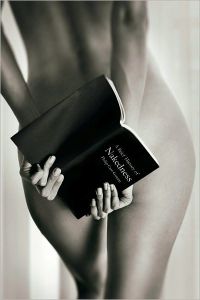
Philip Carr-Gomm, "A Brief History of Nakedness" (May 2010), $30
Saturday: Talks and discussions, 10.30-17.00
Experts from the worlds of history of art, evolutionary science and more will explore how bare skin is understood in different cultures, how nudity makes us feel and how our ancestors evolved to reveal their bare skin in the first place.
Our multidisciplinary speakers include ‘Skin’ curator Javier Moscoso; fashion historian Rebecca Arnold; geneticist Walter Bodmer; historian of art Jill Burke; author of A Brief History of Nakedness, Philip Carr-Gomm; human geographer Glenn Smith; and anthropologist and film-maker Michael Yorke. Friday evening is curated by Steven Connor, author of The Book of Skin.
Tickets must be booked in advance. £30 full price/£20 concession for both days, including drinks on Friday evening and lunch, tea and coffee on Saturday. Please call 020 7611 2222 to book.
Recently Reviewed: Books on Houdon, Tiepolo, and the Dilettanti
 It’s been exciting to see the recent expansion of The Art History Newsletter, as Jon Lackman has been joined by a number of contributors. On July 5th, Lackman himself reports on catching up on “The Glorious 18th Century,” with pieces from The New York Review of Books: Willibald Sauerländer on the Houdon exhibition at Montpellier (April 8 issue) and Ingrid Rowland on Roberto Calasso’s Tiepolo Pink (March 11 issue).
Meanwhile the June 24 issue of the London Review of Books includes a review of Jason Kelly’s book The Society of Dilettanti: Archaeology and Identity in the British Enlightenment by Rosemary Hill.
Later this Year: Exhibition on Johann Christian Wentzinger
Freiburg Baroque: Johann Christian Wentzinger und seine Zeit
Augustinermuseum, Freiburg, 27 November 2010 — 6 March 2011
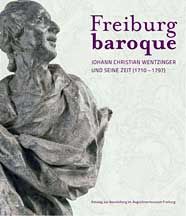
ISBN: 9783422070394, $53.50 (available in December 2010)
This exhibition at the Augustinermuseum in Freiburg, commemorates the 300th birthday of Johann Christian Wentzinger (1710-1797). A Baroque sculptor, painter and architect, Wentzinger may be counted among the most important eighteenth-century artists in southern Germany.
◊ ◊ ◊ ◊ ◊
A full description (in German) of the artist and the upcoming exhibition from the Badische Zeitung is available here»
Call for Papers: Conference in Melbourne
14th Australasian David Nichol Smith Seminar in Eighteenth-Century Studies
Melbourne, 4-8 July 2011
Proposals due by 1 November 2010
The David Nichol Smith Seminar in Eighteenth-Century Studies is a long-running quadrennial conference. Over the years, it has spawned many influential publications. We hope our 14th seminar will be the same. Inaugurated and supported by the National Library of Australia, the Nicol Smith is the major Australasian showcase for inter-disciplinary professional and academic discussion on eighteenth-century studies. The conference attracts scholars across all the Humanities’ disciplines of history, literature, art history, and musicology, studies of material culture and anthropology and archaeology. The conference embraces every aspect of life, politics and culture during the ‘Long Eighteenth Century’, circa 1688 to 1815.
Venues: National Gallery of Victoria, State Library of Victoria, Conference Centre (city-based)
The 14th quadrennial David Nichol Smith Seminar in Eighteenth-Century Studies, to be held in Melbourne city centre on 4 to 8 July 2011, will focus on realms of power, privilege and ideas, and on themes of leisure, material culture and sociability in Europe’s long eighteenth century. We are interested in Europe’s Easts and Wests, Norths and Souths, and in effects on places far beyond. We welcome papers exploring any site of interaction in and between Europe’s private and public spheres: those outside in villas or villages, on estates, or thronging the streets of cities, or those inside in the new spaces of sociability like the lobby, salon, studio, boudoir, club, coffee house and promenade-pleasure garden. This long-established interdisciplinary seminar based in Australasia has a distinguished history, producing select publications: books of essays and special issues of international journals. Your convenors intend to continue this tradition.
- Town and Country: Villa, Palace and Town House
- Environment, Land Management and Ecology
- Antiquaries: The Discovery of the Past
- Coffee, Coffee Houses: New Tastes and Social Spaces
- Sensibilities and Sociabilitiés: Lived and Literary
- Spectacles: Art, Music, Theatre — Performed and
- Ephemeral
- Display: at Court or in a public sphere
- Europe and Asia
- Representation and Self-Representation: Portraiture, Dress and Toilette
- Reason, Un-Reason and Romanticism
- Domination, Slavery and Empire: Global & European Impacts
- The Rise of the Individual: Monarchies under Stress
- The Marginalised: Itinerants, Roma and Prostitutes
- Cosmopolitanisms and Nationalisms
- The Enlightenment and the Pacific
- Opera and Theatre in Europe in the Long Eighteenth Century
- Letter-Writing, the Novel and Poetry in Europe in the Long Eighteenth Century
- Spirituality and Space: Islamic and Christian Architecture in Europe in the Eighteenth Century
The conference committee seeks submissions of papers. Please use the online Abstract form for your submissions. Abstracts should be between 200-300 words in length. Convenors: Dr Adrian Jones OAM (adrian.jones@latrobe.edu.au) and Dr Lisa Beaven (l.beaven@latrobe.edu.au).
The London Town House
From Apollo Magazine:
Rachel Stewart, The Town House in Georgian London (New Haven: Yale University Press, 2009), ISBN 9780300152777, $65.
Reviewed by Conor Lucey, the editor of Irish Architectural and Decorative Studies.
On 16 May 1775, a notice in The Public Advertiser advised its readers that ‘the Right Hon. the Earl Temple is again much indisposed with an inflammatory Disorder in his Bowels, at his house in Pall Mall’. As a means of identifying the singular association between Britain’s aristocracy and their London residences, this very public announcement of the Earl Temple’s unfortunate medical circumstances, and the crucial specificity of location, represents a decisive example of the significance of West End property within the Georgian social arena. Deftly synthesising such illuminating anecdotal evidence with documentary fact, Rachel Stewart’s study of the 18th-century London town house provides valuable new description and interpretive analysis of this representative building type.
Critical of how architectural historiographies have underestimated both the practical and conceptual importance of town residences for the owner/occupier, Stewart’s narrative sets out to examine and, indeed, complicate the role, function and meaning of the city dwelling for those ‘who may have had some choice as to whether or not to take a town house, rather than the London-based middling classes whose town home was their principal and most often sole residence’. . . .
The full review can be found here»
Call for Papers: Feminist Art History Conference
First Annual Feminist Art History Conference
American University, Washington D.C., 5-6 November 2010
Proposals due by 1 August 2010
“Continuing the Legacy: Honoring the Work of Norma Broude and Mary D. Garrard”
Keynote Speaker: Friday, 5 November 2010, 6pm
Dr. Anna Chave, Professor (Graduate School, City University of New York)
Sponsored by the Art History Program, Department of Art, College of Arts and Sciences at American University.
Conference is free and open to the public; sessions and keynote will be held at the Katzen Art Center on AU’s campus. Please submit one-page proposals on any topic of feminist interest in art history and/or visual studies with a current curriculum vita by August 1, 2010. Accepted proposals will be notified by August 31, 2010.
Email proposals and CVs to all committee members: nbroude@american.edu, mgarrar@american.edu, hlanga@american.edu, butler@american.edu
Forthcoming Title
William H. Truettner, Painting Indians and Building Empires in North America, 1710–1840 (Berkeley: University of California Press, 2010), 160 pages, ISBN: 9780520266315, $39.95, £27.95 (available in August)
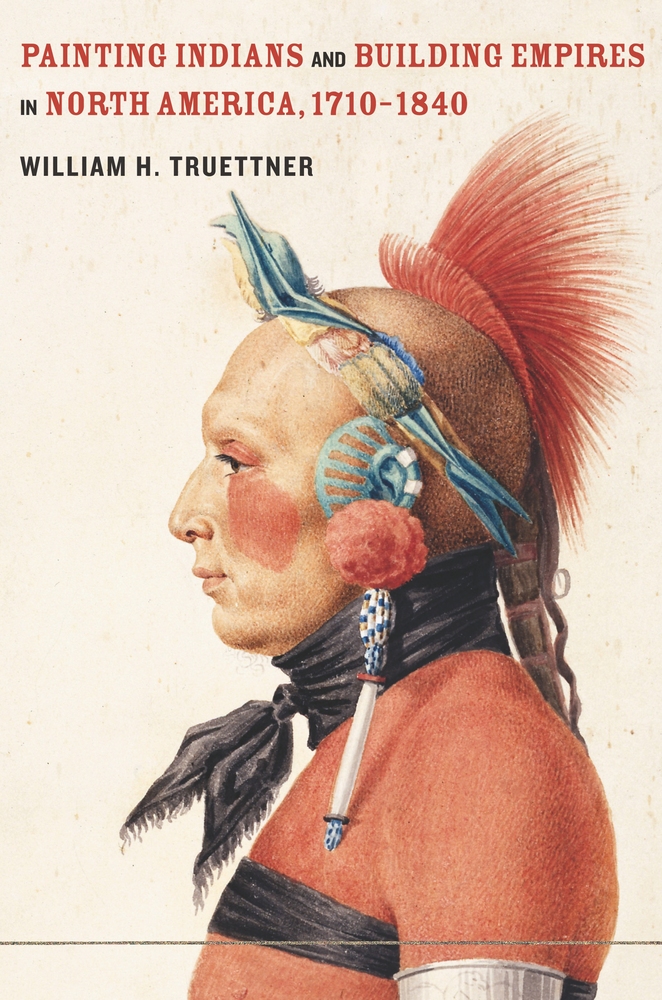 Shortly after the first encounters between the Europeans who first explored and settled North America and the indigenous people, the Europeans began a visual record of their neighbors. Fascinated by these New World inhabitants, Euro-American artists expanded this enterprise, slowly at first but with increasing momentum in the years before and especially after the American Revolution. By the mid-nineteenth century, as this study reveals, a remarkable survey of Indian life in North America east of the Rocky Mountains had been compiled. Yet the purpose of these images has never been fully explored. Were they simply a historical record of the young nation moving westward—of native peoples seen at the end of their heyday, when their tribal homelands were slowly being overrun by white settlers? Or did images of Indian life fulfill other objectives for those who commissioned or painted them? In this book William H. Truettner argues that these images often discreetly encouraged efforts, first by the British and them by the Americans, to expand white hegemony across North America. Truettner’s informed, accessible readings of paintings by artists such as Benjamin West, Gilbert Stuart, Charles Bird King, and George Catlin relate these images to social and political events of the time and tell us much about how North American tribes would fare as they fought to survive during the second half of the nineteenth century.
Happy July 4th!
As noted at ArtDaily.org:

Fair copy of the Declaration of Independence in Thomas Jefferson's hand, 1776 (New York Public Library)
One of The New York Public Library’s greatest treasures, a full-text version of the Declaration of Independence handwritten by Thomas Jefferson will be on view through July 31 at The New York Public Library’s Stephen A. Schwarzman Building in the Sue and Edgar Wachenheim III Gallery. The display will be open for a special viewing over the Independence Day weekend, Sunday, July 4 through Monday, July 5. The exhibition also includes early printings of the Declaration as well as a letter from Benjamin Franklin to George Washington mentioning that the Declaration was being drafted. . . .
In the days immediately following ratification on July 4, 1776, Jefferson made several copies of the text that had been submitted to the Continental Congress, underlining the passages to which changes had been made. Jefferson was distressed by the alterations made, most notably the removal of his lengthy condemnation of slavery. The Library’s copy is one of two known to survive intact. It is shown together with the first Philadelphia printing and the first New York printing of the final version issued by Congress. These versions are complemented by the earliest newspaper printings; the second
official version ordered by Congress, published by a woman printer in Baltimore.
Regular exhibition hours are Monday, Thursday, Friday, and Saturday, from 11 a.m. to 6 p.m.; Tuesday and Wednesday from 11 a.m. to 7:30 p.m. There will be a special viewing of The Declaration of Independence exhibition only from Sunday through Monday, July 4 through July 5, from 1 p.m. to 5:00 p.m. (all other Library exhibitions, collections, and services will be unavailable).
◊ ◊ ◊ ◊ ◊
There’s also an informative online component of the exhibition, available here»










 Enfilade
1 comment