Call for Papers | New Scholars Session at CAA, 2014
In addition to the session organized by Kevin Chua ‘After the Secular: Art and Religion in the Eighteenth Century’, HECAA will be represented at next year’s CAA conference with a ‘New Scholars Session’ chaired by Kristel Smentek. Information on additional panels related to the eighteenth century is available here» -CH
◊ ◊ ◊ ◊ ◊
102nd Annual Conference of the College Art Association
Chicago, 12-15 February 2014
Proposals due by 13 May 2013 (extended from 6 May)
Historians of Eighteenth-Century Art and Architecture
New Scholars Session
Kristel Smentek, Massachusetts Institute of Technology, smentek@mit.edu
The Historians of Eighteenth-Century Art and Architecture (HECAA) invite paper proposals from advanced doctoral students and recent PhDs that present innovative approaches to the interpretation of the art, architecture, and material culture of the global eighteenth century. Presenters selected for this session are expected to become members of HECAA before the conference.
Call for Papers | NEASECS 2013, New Haven
From the conference website:
Northeast American Society for Eighteenth Century Studies Conference | The Ends of War
Yale University, New Haven, 3-6 October 2013
Proposals due by 3 May 2013

Joseph Wright of Derby, The Dead Soldier, ca. 1789
(Yale Center for British Art, Paul Mellon Collection)
◊ ◊ ◊ ◊ ◊
Yale University is pleased to host the 2013 Annual Meeting of the Northeast American Society for Eighteenth Century Studies, an event it last hosted in 1993. Home to Sterling Memorial Library, the Beinecke Rare Book and Manuscript Library, the Lewis Walpole Library (in nearby Farmington), the Cushing/Whitney Medical Library, the Yale Center for British Art, and the Yale University Art Gallery, and host institution for The Papers of Benjamin Franklin, The Works of Jonathan Edwards, the Yale Editions of the Private Papers of James Boswell, and the Yale Indian Papers Project, Yale has longstanding traditions in eighteenth-century studies across the disciplines. The Beinecke, which in 2013 is celebrating its 50th anniversary, will host the conference’s welcome reception.
2013 marks the 300th anniversary of the Treaty of Utrecht, signed in April 1713, formally ending the War of the Spanish Succession, and the 250th anniversary of the Treaty of Paris, ending the Seven Years War, known in its colonial North American theater as the French and Indian War. What are The Ends of War? The phrase here reflects the elusive Johnsonian sense in the quotation on the home page, above, implying both cessation, but also paradoxically what lives on after formal cessation, as well as the deeper, more troubling sense of “ends” as aims, purposes, intentions, and perhaps unintended consequences. Do wars end, or end anything? Beyond the massive geo-cultural realignments that followed especially from the global conflicts of 1757–1763, what are the social, literary, aesthetic, and artistic consequences of war and its ends? And what did and do these ends look like at the other ends of the earth, non European, non North American? We welcome papers on any aspect of these and other related questions. In keeping with NEASECS traditions, panels and papers addressing elements of the long eighteenth century not directly related to the conference theme are also welcome.
Proposals for panels should be submitted to the Program Committee at neasecs2013@yale.edu by May 3, 2013. Panel proposals will be listed on this website on a rolling basis, as received and approved, through the Spring. Paper proposals should be sent directly to the panel organizers at the addresses they provide. The conference welcomes traditional panels of three 20-minute papers (with chair, and respondent if desired), as well as roundtables, sessions on Teaching Approaches, State-of-the-Field debates, or other sessions with variously innovative formats. Individual papers on topics not addressed in the proposed panels may be sent directly to the Program Committee, which will try to accommodate them in thematically grouped sessions. Please submit them by June 30, 2013.
For a current list of panel proposals, click here. It will download as a separate word file.
Panel organizers should notify panelists of acceptance or otherwise by June 30, 2013, and submit completed panels, noting AV or any other special requirements, to the Program Committee, at neasecs2013@yale.edu, by July 15, 2013. The conference program will be posted on the conference website in August.
New Book | Suffering and Sentiment in Romantic Military Art
Due out in June from Ashgate:
Philip Shaw, Suffering and Sentiment in Romantic Military Art (Aldershot: Ashgate, 2013), 260 pages, ISBN: 978-0754664925, $105.
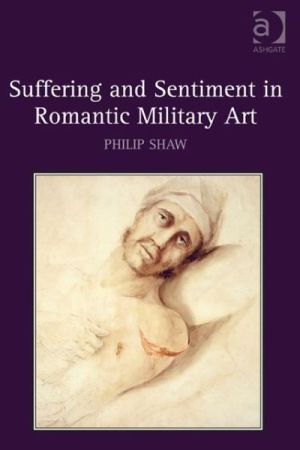 In a moving intervention into Romantic-era depictions of the dead and wounded, Philip Shaw’s timely study directs our gaze to the neglected figure of the common soldier. How suffering and sentiment were portrayed in a variety of visual and verbal media is Shaw’s particular concern, as he examines a wide range of print and visual media, from paintings to sketches to political prose and anti-war poetry, and from writings on culture and aesthetics to graphic satires and early photographs.
Whilst classical portraiture and history painting certainly conspired with official ideologies to deflect attention from the true costs of war, other works of art, literary as well as visual, proffered representations that countered the view that suffering on and off the battlefield is noble or heroic. Shaw uncovers a history of changing attitudes towards suffering, from mid-eighteenth century ambivalence to late eighteenth- and early nineteenth-century concepts of moral sentiment. Thus, Shaw’s story is one of how images of death and wounding facilitated and queried these shifts in the perception of war, qualifying as well as consolidating ideas of individual and national unanimity. Informed by readings of the letters and journals of serving soldiers, surgeons’ notebooks and sketches, and the writings of peace and war agitators, Shaw’s study shows how an attention to the depiction of suffering and the development of ‘liberal’ sentiment enables a reconfiguring of historical and theoretical notions of the body as a site of pain and as a locus of violent national imaginings.
Contents: Introduction; Seeing through tears I; Seeing through tears II; ‘Complicated woe’: British military art of the 1790s; All the news that’s fit to paint; Disgusting objects; images of wounding in the aftermath of war; Conclusion; Bibliography; Index.
Philip Shaw is Professor of Romantic Studies in the School of English at the University of Leicester, UK. His publications include Waterloo and the Romantic Imagination (2002) and, as editor, Romantic Wars: Studies in Culture and Conflict, 1793-1822 (2000).
Forthcoming Book | Roman Fever
Schedule for June release from Yale UP:
Richard Wrigley, Roman Fever: Influence, Infection, and the Image of Rome, 1700-1870 (New Haven: Yale University Press, 2013), 330 pages, ISBN: 978-0300190212, $75.
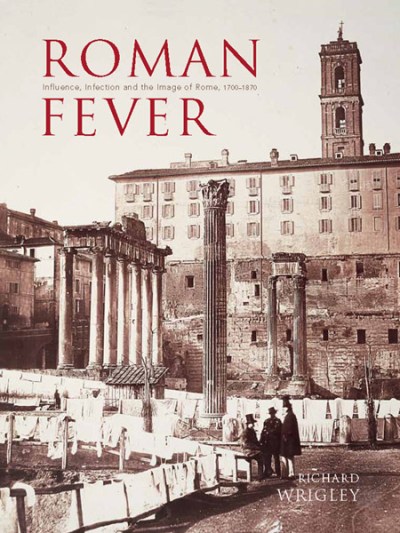 During the 18th and 19th centuries, artists and travellers were lured to Rome, the home of civilized values and artistic beauty. But the history of visiting Rome had a pathological side—not only crisis and disorientation but repulsion at its filth and stink. Rome’s air was considered to contain a chronic source of disease. This book argues that “bad air” (mal’aria) is a neglected aspect of thinking about the city’s history and as a destination for artists, visitors, and Romans both ancient and modern. These problems interfered with exploring Rome, its art and architecture, and representing its landscape. Atmospheric contamination made plein air painting and investigating antique ruins challenging activities.
Roman Fever invites an original and alternative perspective on the city and its countryside, revisiting the history of Rome in terms of ideas about climate and the role of the environment. Beautifully illustrated with unfamiliar images, it focuses on the interplay between enthusiasm and inspiration, and debilitation and mortality, all an integral part of discovering and engaging with the Eternal City’s landscape.
Richard Wrigley is professor of art history at the University of Nottingham.
Call for Papers | Cleveland Symposium for Graduate Students
39th Annual Cleveland Symposium | Splendor: Exploring Value in the History of Art
Cleveland Museum of Art, 11 October 2013
Proposals due by 1 June 2013
The 39th Annual Cleveland Symposium, to be held at the Cleveland Museum of Art on October 11, 2013, invites graduate submissions examining the theme of splendor in the visual arts. This symposium aims to explore how works of art are elevated to become objects that are prized or venerated. Specifically, in discussing the value afforded a work, we seek to further understand its historical context, materiality, visibility, agenda, and cultural significance, whether through the object’s physicality or representational function. The grandeur and renown of a work can also manifest itself through its associations, patrons, and/or esteemed artists. Possible topics might include:
– Material value of object(s), attributed upon creation or retroactively
– The use of costly or precious mediums and components
– Public, private, royal, and civic commissions
– Decorative arts
– Reliquaries and other objects with religious functions
– Artist markets and trade
– Depictions of important political or religious events
– Pomp, pageantry, and ceremony
– Gifts, personal or diplomatic
We welcome submissions from art history and architecture graduate students in all stages of their studies and from all fields and geographic regions, ranging from ancient through contemporary art. We will also consider papers from a wide range of methodologies and approaches. A monetary prize will be awarded to the speaker who presents the most innovative research in the most successfully delivered paper. To be considered, please send a 250-word abstract, recent CV, graduate level, and contact information to clevelandsymposium@gmail.com by June 1, 2013.
New Title | The Oglethorpe Plan
From the University of Virginia Press:
Thomas D. Wilson, The Oglethorpe Plan: Enlightenment Design in Savannah and Beyond (Charlottesville: University of Virginia Press, 2012), 272 pages, ISBN 978-0813932903, $35.

ISBN 978-0813932903
The statesman and reformer James Oglethorpe was a significant figure in the philosophical and political landscape of eighteenth-century British America. His social contributions—all informed by Enlightenment ideals—included prison reform, the founding of the Georgia colony on behalf of the “worthy poor,” and stirring the founders of the abolitionist movement. He also developed the famous ward design for the city of Savannah, a design that became one of the most important planning innovations in American history. Multilayered and connecting the urban core to peripheral garden and farm lots, the Oglethorpe Plan was intended by its author to both exhibit and foster his utopian ideas of agrarian equality.
In his new book, the professional planner Thomas D. Wilson reconsiders the Oglethorpe Plan, revealing that Oglethorpe was a more dynamic force in urban planning than has generally been supposed. In essence, claims Wilson, the Oglethorpe Plan offers a portrait of the Enlightenment, and embodies all of the major themes of that era, including science, humanism, and secularism. The vibrancy of the ideas behind its conception invites an exploration of the plan’s enduring qualities. In addition to surveying historical context and intellectual origins, this book aims to rescue Oglethorpe’s work from its relegation to the status of a living museum in a revered historic district, and to demonstrate instead how modern-day town planners might employ its principles. Unique in its exclusive focus on the topic and written in a clear and readable style, The Oglethorpe Plan explores this design as a bridge between New Urbanism and other more naturally evolving and socially engaged modes of urban development.
Call for Papers | The Eighteenth-Century Gothick
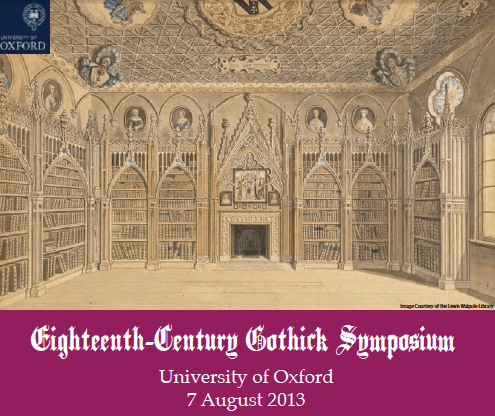
The Eighteenth-Century Gothick Symposium
University of Oxford, 7 August 2013
Proposals due by 31 May 2013
The Gothick Revival in eighteenth-century Britain is a multi-faceted phenomenon, simultaneously liminal and mainstream, historical and modern, whimsical and serious. This one-day symposium seeks to explore the revival’s many dimensions. Proposals are invited for 20-minute papers that address any aspect of the Gothic revival, and may include:
 • art
• art
• architecture
• interiors
• furniture
• antiquarianism
• history
• literature
• medievalism
• patronage
• politics
• restoration
• sexuality
Please email 250-word proposals to the symposium organisers, Oliver Cox and Peter Lindfield by 31 May 2013 at 18thCenturyGothick@gmail.com.
Symposium | Strategies of the Interior
From the flyer for the upcoming symposium related to the University of Bern’s Interior project:
Strategies of the Interior: Anachronisms, Discontinuities, Narratives
University of Bern and Villa Mettlen, Muri bei Bern, 16-17 May 2013
Registration due by 26 April 2013
Concept and coordination: Christine Göttler, Peter Schneemann, and Tabea Schindler
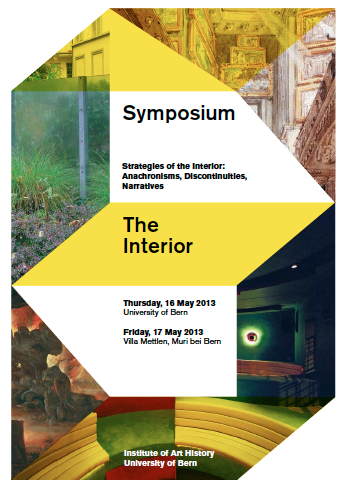 This workshop is part of the activities of the Bern based SNSF Sinergia project The Interior: Art, Space, and Performance (Early Modern to Postmodern). It aims to provide a forum for exploring strategies and notions of the interior in diverse cultural contexts. Among the topics of focus are interiors as sites or signifiers of social, cultural, and religious interactions; narratives generated and stimulated by inhabited interiors; and the construction of interior spaces that refer to, represent and recreate different origins, experiences, and identities. Papers address the permeability and ambiguity of interior spaces, experienced as oscillating between private and public as well as between interior and exterior worlds. Attendance is free of charge but due to limited seats, registration is required until 26 April 2013. Contact: Michèle Seehafer, Project Assistant, michele.seehafer@ikg.unibe.ch. For more information please visit our project website.
◊ ◊ ◊ ◊ ◊
T H U R S D A Y , 1 6 M A Y 2 0 1 3
University of Bern
6:15 Keynote Lecture: Reindert Falkenburg (New York University Abu Dhabi), “Hieronymus Bosch, Diableries, and ‘Faulty Vision’” (keynote lecture)
F R I D A Y , 1 7 M A Y 20 1 3
Villa Mettlen
9:00 Registration
9:15 Welcome and Introduction: Christine Göttler and Peter J. Schneemann
Anachronisms: Spaces as Sites or Signifiers
Chaired by Tabea Schindler
9:30 Nick Kaye (University of Exeter), “The Outside [Is] The Inside”
10:30 Pascal Griener (University of Neuchâtel), “Raptures in Ruptures: The Representation of Periods through Rooms in the Crystal Palace at Sydenham (London), 1854–1870”
11:30 Coffee and Tea
Narratives: The Construction and Representation of Space
Chaired by Peter J. Schneemann
11:45 Beate Söntgen (Leuphana University of Lüneburg), “Chardin: Interiority – Interaction – Communication”
12:45 Lunch
14:00 Michael Lüthy (Freie Universität Berlin), “The Room at the End of History: Marcel Duchamp in the Philadelphia Museum of Art”
15:00 Coffee and Tea
Discontinuities: The Animation and Stimulation of Space
Chaired by Christine Göttler
15:15 Caroline Van Eck (Leiden University), “‘To roll back the current of time to show glorious visions of the past’: The Period Rooms of William Beckford and Sir John Soane”
16:15 Ursula Frohne (University of Cologne), “Shared Spaces: Collective Experience and Receptive Modes inside Cinematographic Environments”
17:15 Final Discussion
Exhibition | Young James Boswell in London, 1762–63
From The Lewis Walpole Library:
‘In the Midst of the Jovial Crowd’: Young James Boswell in London, 1762–1763
The Lewis Walpole Library, April — mid-October 2013
Curated by James Caudle, The Associate Editor, Boswell Editions
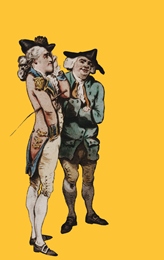 In autumn 1762, the ambitious, clever, jovial, and bumptious twenty-two-year-old Scotsman James Boswell traveled south from Edinburgh to London to seek his fortune in the capital. In his lively journal, he recorded his extraordinarily action-packed eight months there, and his efforts to become a permanent Londoner.
London in the Sixties (the 1760s) was a thrilling place, full of pleasures and dangers, wisdom and folly, high life and low life. This exhibition aspires to place visitors ‘in the midst of the jovial crowd’ in which young James Boswell felt so alive and happy. Prints by Hogarth and Rowlandson and others, and rare books and ballads, will bring to life the current events, everyday social life, and personalities celebrated in Boswell’s London Journal, unpublished until 1950, but now one of the best-loved works of eighteenth-century life-writing.
Things: Material Culture at Cambridge, Easter 2013
Programming from CRASSH at the University of Cambridge:
Things: Material Cultures of the Long Eighteen Century
Centre for Research in the Arts, Social Sciences and Humanities (CRASSH), Cambridge, ongoing series
The seminar meets alternate Tuesdays 12.30-2.30pm in the Seminar Room, Alison Richard Building, West Road. Please note that there will not be sandwiches served this term, so the seminar will start promptly at 12.30. You are welcome to join the speakers for lunch afterwards.
 The early-modern period was the age of ‘stuff.’ Public production, collection, display and consumption of objects grew in influence, popularity, and scale. The form, function, and use of objects, ranging from scientific and musical instruments to weaponry and furnishings were influenced by distinct and changing features of the period. Early-modern knowledge was not divided into strict disciplines, in fact practice across what we now see as academic boundaries was essential to material creation. This seminar series uses an approach based on objects to encourage us to consider the unity of ideas of this period, to emphasise the lived human experience of technology and art, and the global dimension of material culture. We will build on our success discussing the long eighteenth century in 2012-13 to look at the interdisciplinary thinking through which early modern material culture was conceived, adding an attention to the question of what a ‘thing’ is, to gain new perspectives on the period through its artefacts.
Each seminar will feature two talks each
considering a way of thinking about objects.
30 April 2013 — Printed Things
Sean Roberts (University of Southern California) and Elizabeth Upper (UL Munby Fellow)
14 May 2013 — Paper, Making, Things
Elaine Leong (Max Planck Institute, Berlin) and Helen Smith (University of York)
28 May 2013 — Handling Things
Melanie Vandenbrouck (National Maritime Museum), Felicity Powell (Artist), and Ben Carpenter (University of Wolverhampton)
11 June 2013 — Painted Things
Matthew Hunter (McGill University) and Mark Hallett (Paul Mellon Centre)
Visit the external blog or subscribe to the group mailing list.










 Enfilade
leave a comment