New Book | Bluestockings Displayed
From Cambridge UP:
Elizabeth Eger, ed., Bluestockings Displayed: Portraiture, Performance and Patronage, 1730–1830 (New York: Cambridge University Press, 2013), 323 pages, ISBN: 978-0521768801, £60.
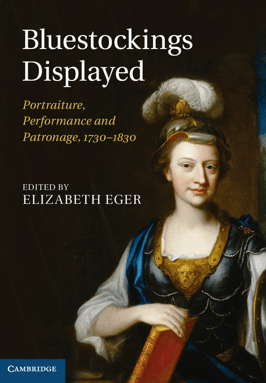 The conversation parties of the bluestockings, held to debate contemporary ideas in eighteenth-century Britain, were vital in encouraging female artistic achievement. The bluestockings promoted links between learning and virtue in the public imagination, inventing a new kind of informal sociability that combined the life of the senses with that of the mind. This collection of essays, by leading scholars in the fields of literature, history and art history, provides an interdisciplinary treatment of bluestocking culture in eighteenth-century Britain. It is the first academic volume to concentrate on the rich visual and material culture that surrounded and supported the bluestocking project, from formal portraits and sculptures to commercially reproduced prints. By the early twentieth century, the term ‘bluestocking’ came to signify a dull and dowdy intellectual woman, but the original bluestockings inhabited a world in which brilliance was valued at every level and women were encouraged to shine and even dazzle.
Elizabeth Eger is Reader in Eighteenth-Century Literature at King’s
College London.
◊ ◊ ◊ ◊ ◊
C O N T E N T S
Introduction, Elizabeth Eger
I. Portraits
1. Romantic bluestockings: From muses to matrons, Anne Mellor
2. ‘To dazzle let the vain design’: Alexander Pope’s portrait gallery, or, the impossibility of brilliant women, Emma Clery
3. Virtue, patriotism and female scholarship in bluestocking portraiture, Clare Barlow
4. Anne Seymour Damer: A sculptor of ‘republican perfection’, Alison Yarrington
5. The blues gone grey: Portraits of bluestocking women in old age, Devoney Looser
II. Performance
6. Sacred love: Eliza Linley’s voice Joseph Roach
7. The learned female soprano Susan Staves
8. Roles and role models: Montagu, Siddons, Lady Macbeth Shearer West
9. Hester Thrale: ‘What trace of the wit?’ Felicity A. Nussbaum
III. Patronage and Networks
10. Reading practices in Elizabeth Montagu’s epistolary network of the 1750s, Markman Ellis
11. The queen of the blues, the bluestocking queen, and bluestocking masculinity, Clarissa Campbell Orr
12. Luck be a lady: Patronage and professionalism for women writers in the 1790s, Harriet Guest
Reworking the Family Portraits of Schloss Grafenstein
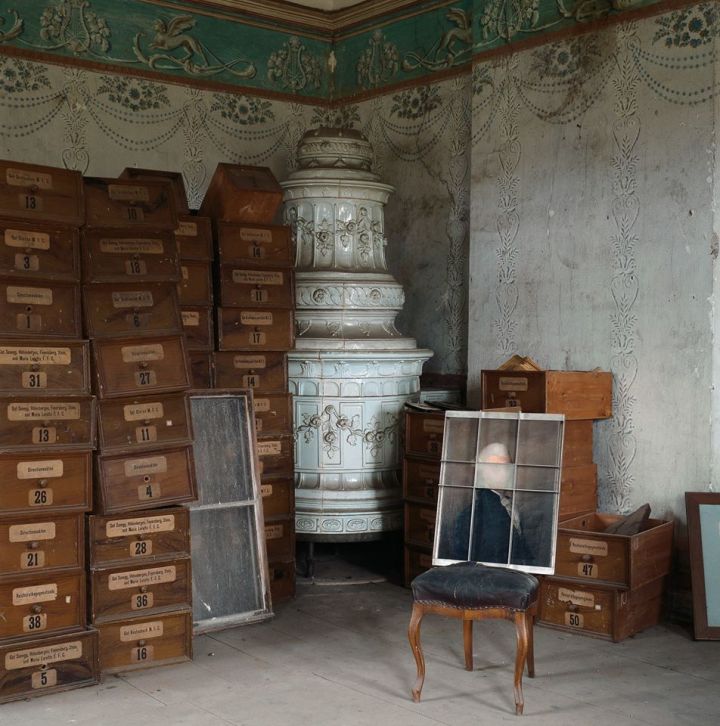
In this sitting room, drawers painted with faux bois woodgrain and labelled with family estates are from the denuded archive shelves in the next room. On the chair is an unsigned oil portrait of Count Vinzenz Ferrerius Orsini-Rosenberg (1722–1794), an ancestor of Count Ferdinand used as the basis for a new work by Armin Guerino, titled 20130630-001. Photography by Fritz von der Schulenburg.
◊ ◊ ◊ ◊ ◊
This instance of recycling eighteenth-century source material for subsequent artistic production might fall somewhere between the collages of James Northcote (the subject of an exhibition this fall at the YCBA) and the work of Ai Weiwei (I’m thinking, for example, of Painted Vases). The article mentions an exhibition, but I could find nothing about it online and don’t know if it’s already happened or might still take place. –CH
From WoI’s Facebook page and the print edition of the article:
Michael Huey, “Relative Freedom,” The World of Interiors (August 2014): 70–79.
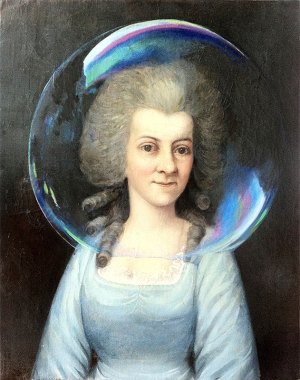
Original: Artist, Date, Sitter unknown, 69 x 55 cm. Revision: Alina Kunitsyna, Mlle Sphæræ, 2013
Seeking works of art to fill newly renovated living quarters, Austrian count Ferdinand Orsini-Rosenberg turned to the 90-odd ancestral portraits deteriorating in his ruined schloss next door. But instead of merely dusting off his forebears’ likenesses, he gave a crew of contemporary artists free rein to ‘refresh’ the originals.
Ferdinand Orsini-Rosenberg, second son of the late Prince Heinrich, presides over about 1,500 state square meters of what is basically storage space in the form of Schloss Grafenstein, the Carinthian palace built by his seventh great-grandfather and enlarged a century later—around 1730—by his fifth. Grafenstein, with is impressive facade and ruined interior, makes up part of his title and much of his patrimony, and in this way he is bound to it for life. At times the attachment is akin to being chained to a cadaver, and he is often sleepless as a result. “If an earthquake reduced it to rubble overnight,” he says, “I would thank God.” . . .
After an initial phase of consolidation [of family portraits], during which a local historian aided him in sorting, photographing, identifying and documenting the paintings, he assembled (with curatorial guidance) a group of 35 artists to whom they would be offered as raw material. Each artist would be allowed to select a single portrait to use as the basis for a new work—no strings attached and with a modest fee for the commission. The results would be gathered together for a summer exhibition in the colonnaded inner courtyard at Grafenstein and later hung in Ferdinand’s rooms in the granary. . . .
While his courageous, uncompromising idea did lead to a few crass and brazenly ruthless results, it also gave rise, at the other end of the spectrum, to a handful of marvels—works both highly moving and of considerable aesthetic relevance by Alina Kunitsyna, Armin Guerino, Manfred Bockelmann, Helmut Grill, Johanes Zechner, Siegfried Zaworka and Alex Amann among others. . .
A regular contributor to The World of Interiors, Michael Huey, as an artist himself interested in issues of archives and loss, is an interesting part of the story.
Exhibition | Picture Talking: James Northcote and the Fables
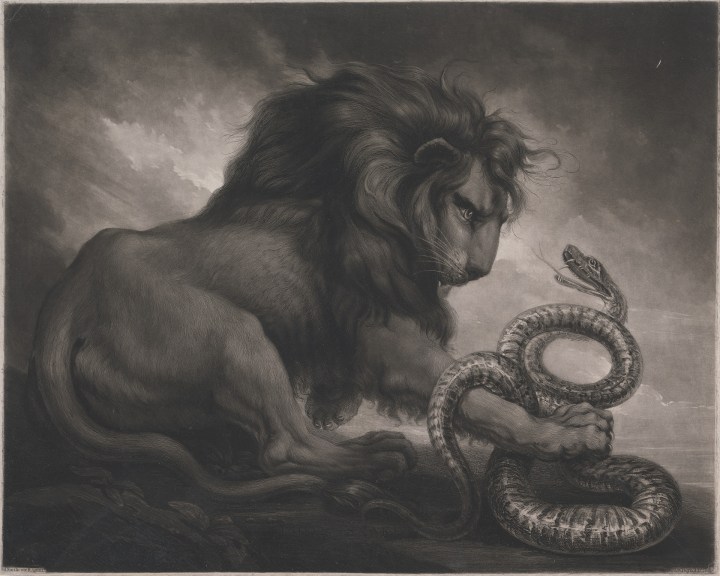
Samuel William Reynolds, after James Northcote, Lion and Snake (detail), 1799, mixed method engraving (New Haven: Yale Center for British Art, Paul Mellon Collection)
◊ ◊ ◊ ◊ ◊
The prints Northcote used in the collages date from the eighteenth century. Press release from the YCBA:
Picture Talking: James Northcote and the Fables
Yale Center for British Art, New Haven, 2 October — 14 December 2014
Curated by Mark Ledbury and A. Cassandra Albinson
The first exhibition solely dedicated to James Northcote’s art and career, Picture Talking: James Northcote and the Fables will present a fascinating look at one of Britain’s most imaginative and eccentric painters.

William Daniell, after George Dance, James Northcote, between 1798 and 1819, graphite and red chalk on medium, slightly textured, cream wove paper mounted on moderately thick, moderately textured, beige laid paper (New Haven: Yale Center for British Art, Paul Mellon Collection)
Northcote (1746–1831) has been remembered primarily as a memoirist, a writer on art and artists, and a conversationalist whose strong opinions on diverse topics were often repeated in print. A pupil of Sir Joshua Reynolds, the first president of the Royal Academy, Northcote enjoyed a popular reputation in his time for painting portraits of historical subjects, scenes from Shakespeare’s plays, and animals. This subsequently was overshadowed by his prominence as a source of information on his contemporaries. This exhibition, drawn exclusively from the rich holdings of the Yale Center for British Art, will redress that imbalance by presenting an array of Northcote’s art: paintings, drawings, prints, and, at its center, a practically unknown manuscript for Northcote’s One Hundred Fables, Original and Selected (1828).
Northcote wrote and illustrated these fables for adults during the last twenty years of his life. They convey moral lessons, often with themes comparing the similarities of humans to animals. Using techniques well ahead of his time, Northcote created collaged illustrations for the Fables by cutting humans, other animals, and background details from his collection of historical engravings, then reassembling them into chimerical scenes. This exhibition will explore the translation of Northcote’s highly original designs from collages to their ultimate form as wood engravings for two series of Fables, the first published in 1828, the second, posthumously, in 1833. The wood engravings provided simplified, but highly popular, interpretations of the original fables for mass production and consumption. Picture Talking will consider the questions of originality versus pastiche and image versus text through careful consideration of Northcote’s art. It will argue that in his earlier work as a history painter and print designer, Northcote worked through the process of borrowing and collage. Thus, the fables represent a culmination of his career.
Picture Talking: James Northcote and the Fables has been organized by the Yale Center for British Art. The co-curators are Mark Ledbury (Power Professor of Art History and Visual Culture and Director of the Power Institute at the University of Sydney) and A. Cassandra Albinson (Curator of Paintings and Sculpture at the Yale Center for British Art).
Opening Lecture
Mark Ledbury | Inspiration and Eccentricity: The Ups and Downs of James Northcote
Yale Center for British Art, New Haven, 1 October 2014, 5:30
◊ ◊ ◊ ◊ ◊
From Yale UP:
Mark Ledbury, James Northcote, History Painting, and the Fables (New Haven: Yale Center for British Art, 2014), 256 pages, ISBN: 978-0300208139, $65.
 The artistic accomplishments of James Northcote (1746–1831) have tended to be overshadowed by his role as a biographer of Joshua Reynolds, first president of the Royal Academy of Arts, with whom Northcote apprenticed. Here, Mark Ledbury constructs a very different image of Northcote: that of a prolific member of the Royal Academy and an active participant in the cultural and political circles of the Romantic era, as well as a portrait and history painter in his own right. This book focuses on Northcote’s One Hundred Fables (1828), a masterpiece of wood engraving, and the unconventional, collaged manuscripts for the volume. The Fables, extensively published here for the first time, were an early experiment in what is now a familiar multimedia practice. Idiosyncratic, personal, and visionary, One Hundred Fables serves as a lens through which to examine Northcote’s long, complex, and fruitful artistic career.
Mark Ledbury is Power Professor of Art History and director of the Power Institute at the University of Sydney.
Call for Papers | 2015 Wallace Seminars on Collections and Collecting
From The Wallace:
2015 Wallace Collection Seminars on the History of Collections and Collecting
The Wallace Collection, London, 4th Monday of the Month
Proposals due by 30 September 2014
The seminar series has been established as part of the Wallace Collection’s commitment to the research and study of the history of collections and collecting, especially in the eighteenth and nineteenth centuries in Paris and London. In 2015, as in previous years, we plan to organise a series of around 10 seminars. We are keen to encourage contributions covering all aspects of the history of collecting, including:
• Formation and dispersal of collections
• Dealers, auctioneers and the art market
• Collectors
• Museums
• Inventory work
• Research resources
The seminars, which are normally held on the 4th Monday of every month during the calendar year, act as a forum for the presentation and discussion of new research into the history of collecting. Seminars are open to curators, academics, historians, archivists and all those with an interest in the subject. Papers are generally 45–60 minutes long and all the seminars take place at the Wallace Collection between 5.30 and 7pm. If interested, please send a brief text (500–750 words), including a brief CV and an indication of which month you free to speak at, by 30 September 2014. For more information and to submit a proposal, please contact collections@wallacecollection.org.
Research Grant | The Andrew Wyld Research Support Grant
From The Paul Mellon Centre:
The Andrew Wyld Research Grant for the Study of Works on Paper
Applications due by 15 September 2014
The Paul Mellon Centre for Studies in British Art is delighted to announce that it will administer a new category of award from September 2014 on behalf of the Andrew Wyld Fund.
Andrew Wyld was a well-known and much respected London art dealer, specialising in eighteenth and nineteenth-century British watercolours. After his death in 2011, a group of friends and family decided to set up a fund in his memory; its aim is to enable students to do exactly as he did, namely to look at, and judge, works of art on paper for themselves. Andrew Wyld Research Support Grants of up to £2,000 will be offered annually to gradute, doctoral and undergraduate students (undertaking dissertation research) working in the field of British works of art on paper of the eighteenth and nineteenth centuries. Grants may be used towards expenses incurred in visiting prints and drawings collections, galleries, museums, sale rooms and other institutions for the purpose of studying British works of art on paper.
More information is available here and at The Paul Mellon Centre.
Reviewed | Judith Bonner on ‘The Coast and the Sea’
Linda S. Ferber, The Coast and the Sea: Marine and Maritime Art in America (New York and London: New-York Historical Society in association with D. Giles Limited, 2014), 104 pages, ISBN 978-1907804311, $30 / £20.
Reviewed for Enfilade by Judith H. Bonner
 The New-York Historical Society, that city’s oldest museum, is celebrating its recent reopening after its lengthy renovation with a traveling exhibition and accompanying catalogue by Linda S. Ferber.1 The exhibition features more than 60 artworks and artifacts, primarily paintings, including portraits, genre scenes, and marine and maritime scenes. Overall, the images document the development of the New York area with its harbor and its close relationship with the Atlantic Ocean, the great maritime highway for trade and immigration.
Works selected for the exhibition have their origins in the eighteenth century, beginning in 1728 and ending in 1904. Maritime-related artifacts include a vintage spyglass, scrimshaw, snuff boxes, and an 1816 silver presentation soup tureen commemorating acts of bravery during the War of 1812. The provenance of each artwork documents the development of the New-York Historical Society, as well as the city’s art collectors, their tastes, and their interests.
The exhibition features work by artists whose names are familiar, as well as those who are unfamiliar. The painters include Thomas Birch, Thomas Buttersworth, Carlton Theodore Chapman, Thomas Cole, Jasper Francis Cropsey, Julian Oliver Davidson, Mauritz Frederick Hendrick De Haas, James Guy Evans, Robert Havell Jr., John Frederick Kensett, Rembrandt Peale, Francis Augustus Silva, and John Vanderlyn.
Several artists had nautical experience that informed their art in subject, rigging, and construction of the vessels. Buttersworth served in the British navy, while De Haas held an artist’s commission in the Dutch navy. James Guy Evans possibly served in the American navy. Chapman ran away to sea as a teenager; and Davidson sailed the globe, making sketches that provided visual sources for many years. Evident in these artists’ works is their understanding of the action of waves and atmospheric effects over the seas at different times of the day or season.
The marine subjects include frigates engaged in famous sea battles, working vessels and bustling port scenes, marine recreation scenes, portraits of heroic sea captains, and pioneering merchants. Marine scenes focus on recreation, shipwrecks, disasters, and military encounters, particularly those in the War of 1812 and Civil War. The exhibition spreads its reach down the East Coast, swinging farther south to the Battle of Mobile Bay in the Gulf of Mexico and the Battle of Port Hudson up the Mississippi River about 100 miles above New Orleans.
Portraitists range from eighteenth-century painter John Wollaston to early nineteenth-century painters John Vanderlyn and Rembrandt Peale, the latter of whom executed a portrait of naval hero Commodore Stephen Decatur in dress uniform and set against a dramatic stormy sky. Wollaston’s circa-1750 portrait of wealthy colonial merchant-shipbuilder Captain John Waddell, who owned a fleet of ships, sets the stage for the succession of ships’ portraits seen throughout the catalogue. Early portraits include personages having distinguished careers or an association with maritime enterprises. The sitter is often shown near an open window through which one views a conventionalized seascape or harbor scene with masted vessels. Other sitters are shown with maps, globes, compass, a spyglass, or other maritime instruments.
The catalogue is well researched and documented with a select bibliography. Explanations of the marine scenes are succinct yet vivid; the prose is fluid and often poetic. Ferber distinguishes between marine scenes—which focus on the pure seascape, its coast and environs—and maritime paintings. The latter, Ferber explains, emphasize human activity and other enterprises on shore or at sea. Her knowledge of nautical terminology and national history is evident throughout. She traces visual conventions from their development in seventeenth-century Holland, their passage into the British school of marine painting, and subsequent introduction into English colonies in the New World.
Ferber consistently places artworks within a broader historical context and, when appropriate, within a cultural narrative. Brief biographical sketches of artists trace their artistic development within the maritime tradition. Ferber discusses allegorical themes in paintings, as well as the effect that nostalgic longing for historically simpler times had upon the proliferation and re-creation of popular scenes celebrating heroic national victories and spirited naval encounters.
The book invites readers to the repeated examination of the images, some of which, like those illustrating the America’s Cup, are iconic. Truly memorable is a painting by Howard Pyle, A Privateersman Ashore (1893), shown in historically correct clothing and accouterments. The privateer stands near the Battery and Castle Clinton at the time of the War of 1812, posed and preening, with smoke from his cigar curling upward from the corner of his mouth as townspeople in the distance look toward him with disdain. The latter is a comment about the disapprobation citizens held for such freebooters, who preyed upon British ships.
Closing this maritime jaunt through history are two paintings. The first, by Andrew Meyer, shows President Grover Cleveland reviewing a naval parade in New York Harbor as the setting for opening ceremonies of Chicago’s Columbian Exposition in 1893, with the Statue of Liberty clearly visible, as though she also stands in review of the parade. Lastly, in 1904 Chapman portrays the Great East River Bridge (now Brooklyn Bridge) over the East River, celebrating New York’s location on the rim of the Atlantic, the gateway to America.
1. Venues for exhibition include: The Society of the Four Arts, Palm Beach, Florida (25 January — 9 March 2014); The Baker Museum of Art, Naples, Florida (19 April — 6 July 2014); Portland Museum of Art, Portland, Maine (January — May 2015); The Mattatuck Museum, Waterbury, Connecticut (6 June — 13 September 2015); and The New York State Museum, Albany, New York (24 October 2015 — 22 February 2016).
◊ ◊ ◊ ◊ ◊
Judith H. Bonner is Senior Curator and Curator of Art at The Historic New Orleans Collection.
Call for Panels, Papers, and Posters | ISECS 2015, Rotterdam
From the Call for Papers:
14th International Congress for Eighteenth-Century Studies (ISECS 2015)
Rotterdam, 26–31 July 2015
Proposals due by 1 September 2014 (Panel Sessions) / 12 January 2015 (Individual Papers and Posters)
The Congress of the International Society for Eighteenth-Century Studies (ISECS) is the world’s largest meeting of specialists on all aspects of the eighteenth century, and takes place every four years. Recent ISECS conferences have been held in Dublin (1999), Los Angeles (2003), Montpellier (2007) and Graz (2011). The 14th ISECS Congress will be organized in Rotterdam, the Netherlands, from 26 to 31 July 2015. It is organized by the Dutch-Belgian Society of Eighteenth-Century Studies (DBSECS – Werkgroep 18e Eeuw) and is hosted by the Erasmus University Rotterdam on Campus Woudestein. We can welcome more than one thousand participants.
The theme of the 14th ISECS Congress is Opening Markets: Trade and Commerce in the 18th Century. The program will include theme-related keynote lectures and sessions, as well as panels and round tables on all topics related to the long eighteenth century (1670–1830). The conference will also facilitate poster presentations. We are looking forward to inspiring lectures, debates and presentations on the conference theme and on all issues regarding the Age of Enlightenment and Sensibility.
Online registration is now open for:
• Submission of proposals for panel sessions and round table sessions. The online Call for Panels is open from February 2014 until September 1, 2014.
• Submission of proposals for individual papers or poster presentations. The online Call for individual Papers & Posters is open from June 2014 until January 12, 2015.
• Pre-registration: You can e-mail the organizers (info@isecs2015.com) a request for pre-registration. By pre-registering, you subscribe to a newsletter that will keep you regularly informed about the organization of the ISECS 2015 Congress, including planned sessions, round tables and other meetings. The online Registration for the ISECS 2015 Congress will open from September 1, 2014 until April 30, 2015.
Don’t hesitate to distribute this call among interested colleagues and networks! If you have any questions in the meantime, please contact the local host committee via info@isecs2015.com or visit the conference website. ISECS 2015 is open to all persons interested in topics and issues having to do with the long eighteenth century and the Age of Enlightenment. Membership of an ISECS constituent or affiliated organization is not necessary for registration. The online Registration for the Early Career Eighteenth-Century Scholar Seminar will open in September 2014.
◊ ◊ ◊ ◊ ◊
Instructions for Panel Session Submissions
Proposals due by 1 September 2014
The ISECS 2015 Committee invites those interested to organize thematic meetings in the program of the Conference to submit proposals for panel sessions and round tables. The submission of proposals for panels will be open until September 1, 2014. Panel organizers are requested to complete the online form. Organizers are asked to supply information about the theme of the proposed panel and the panel members along with an abstract of their contribution to the panel meeting. Panels have a duration of one and a half hours, and should consist of 3–4 speakers (depending on the amount of discussion time the panel organizer wants to provide). It is also possible to submit a panel suggestion without concrete panelists or partly filled with panelists. In the coming months, we will present a list with panels accepting proposals on our website. Open panels will also be promoted through our newsletter.
◊ ◊ ◊ ◊ ◊
Instructions for Individual Paper Proposals
Proposals due by 12 January 2015
The submission of proposals for papers is open until January 12, 2015. Participants in the ISECS 2015 Congress can submit one proposal for an individual paper. In the menu available through the website, you will find a dropdown box with submitted panels that are open for paper submissions. Here, you can indicate which panel your paper could be part of. Paper proposals are reviewed by the scientific committee and by the panel organizers. The ISECS 2015 Scientific Committee is responsible for organizing the panels in which the papers and posters will be presented. Only registered participants can present individual papers and posters. Participants who intend to submit more than one paper proposal are requested to contact the organizers of the ISECS 2015 Conference (info@isecs2015.com).
◊ ◊ ◊ ◊ ◊
Instructions for Poster Proposals
Proposals due by 12 January 2015
Are you involved in an interesting project or in an area of work that you would like to discuss with or show to other Conference attendees? Why not present your work in the ISECS Poster Sessions? Your topic could be described on a printed poster or by photographs, graphics and pieces of text that you attach to the presentation panel. Posters in both English and French are welcome. Presenters of posters will be expected to be present on Tuesday, Wednesday and Thursday, 28–30 July, in order to explain their posters and to hand out any leaflets, or other information materials they have available for viewers. Each presenter can therefore only present one poster. Any organization that submits more than one application should indicate a priority to their submissions.
It is important that applicants describe how they intend to illustrate the project in the poster format. The poster has to be an experience in itself for the one who looks at it and should show awareness of the poster format. Special consideration will be given to ensure that a variety of topics and geographical/cultural range will be represented. The deadline is January 12, 2015. After the deadline, applications will no longer be accepted.
A jury representing the ISECS Organizing Committee will review all submissions and at the Conference they will select the winner of the ISECS Poster Award 2015 based on the criteria below. The topic of the poster should:
• Look lively, interesting and/or inspiring
• Lend itself to a poster session and not be too abstract
• Present new ideas
• Be clearly explained
• Not duplicate another poster, nor have the same presenter as another poster
• A presenter must be present during the poster session to explain the poster to viewers
• Have a relationship to the theme of the 2015 ISECS Conference
• Describe a project that is ongoing or near completion rather than one not yet started
For useful tips and tricks on how to design a poster, see this guide by Aimee Roundtree.
Exhibition | Christophe-Paul de Robien and the Age of Libertinism
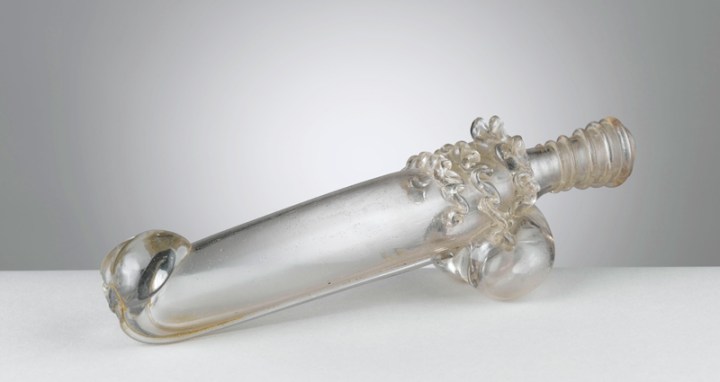
Phallus of blown glass.
From the Musée des Beaux-Arts de Rennes:
Cabinet de Curiosités: Le Temps des Libertinages
Musée des Beaux-Arts de Rennes, 13 June 2014 — 4 January 2015
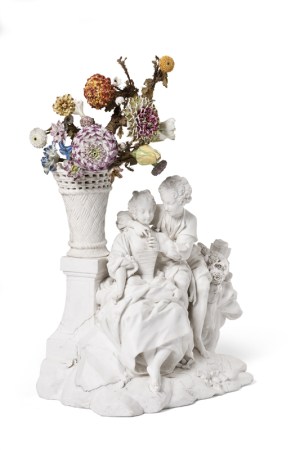
Vincennes Porcelain Manufactory, Le Flûteur
(The Flute Lesson), ca. 1752–53
(Paris: Musée National de la Céramique de Sèvres)
Christophe-Paul de Robien (1698–1756) possédait dans son cabinet douze objets érotiques dont certains qualifiés d’obscènes dans les inventaires. Il s’agit là de peu de chose pour en faire un érotomane, mais c’est plus que ce que possédait Caylus ou Calvet à la même époque.
Cette exposition accompagnant la réouverture du cabinet de curiosités tentera de remettre dans son contexte les objets érotiques de Robien à partir d’autres objets qui lui sont contemporains : des raretés venues de Guimet, du Louvre et des Arts décoratifs délimiteront les contours d’un érotisme longtemps occulté parmi les collections d’amateurs que la seconde moitié du XVIIIème polarisera entre bon gout et vulgarité.
◊ ◊ ◊ ◊ ◊
Sandra Dufils provides a summary here»
Jean-Baptiste Gandon provides a summary here»
Information on Christophe-Paul de Robien’s collection generally is available here»
And finally, the museum’s website provides this impressively extensive bibliography on eroticism, sexuality, and libertinism
(as a PDF File).
New Book | The Self-Portrait: A Cultural History
From Thames & Hudson:
James Hall, The Self-Portrait: A Cultural History (London: Thames & Hudson, 2014), 288 pages, ISBN 978-0500239100, £25.
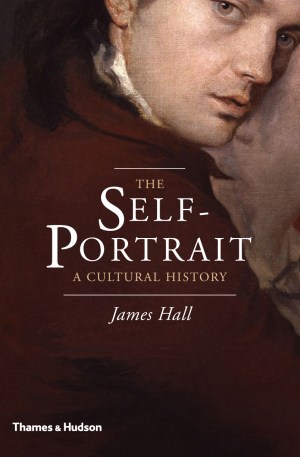 In this broad cultural survey, art historian and critic James Hall brilliantly maps the history of self-portraiture, from the earliest myths of Narcissus to the prolific self-image-making of contemporary artists.
His intelligent and vivid account shows how artists’ depictions of themselves have been part of a continuing tradition that reaches back for centuries. Along the way he reveals the importance of the medieval ‘mirror craze’; the explosion of the genre during the Renaissance; the confessional self-portraits of Titian and Michelangelo; the role of biography for serial self-portraitists such as Courbet and van Gogh; themes of sex and genius in works by Munch, Bonnard and Modersohn-Becker; and the latest developments of the genre in the era of globalization.
The full range of self-portraits is covered here, from comic and caricature self-portraits to ‘invented’ or imaginary ones, as well as key collections of self-portraiture such as that of the Medici in Florence. Throughout, Hall asks why—and when—artists have chosen to make self-portraits, and looks deeply into the worlds and mindsets of the artists who have created them.
Comprehensive and beautifully illustrated, the book features the work of a wide range of artists including Alberti, Caravaggio, Courbet, Dürer, Emin, Gauguin, Giotto, Goya, Kahlo, Koons, Magritte, Mantegna, Picasso, Raphael, Rembrandt and Warhol. Offering a rich and lively history, The Self-Portrait is an essential read for all those interested in this most enduringly popular and humane of art forms.
James Hall is an art critic and historian whose previous books include The World as Sculpture: The Changing Status of Sculpture from the Renaissance to the Present Day; Michelangelo and the Reinvention of the Human Body; Coffee with Michelangelo; and The Sinister Side: How Left-Right Symbolism Shaped Western Art.
Exhibition | Figures of Empire: Slavery and Portraiture
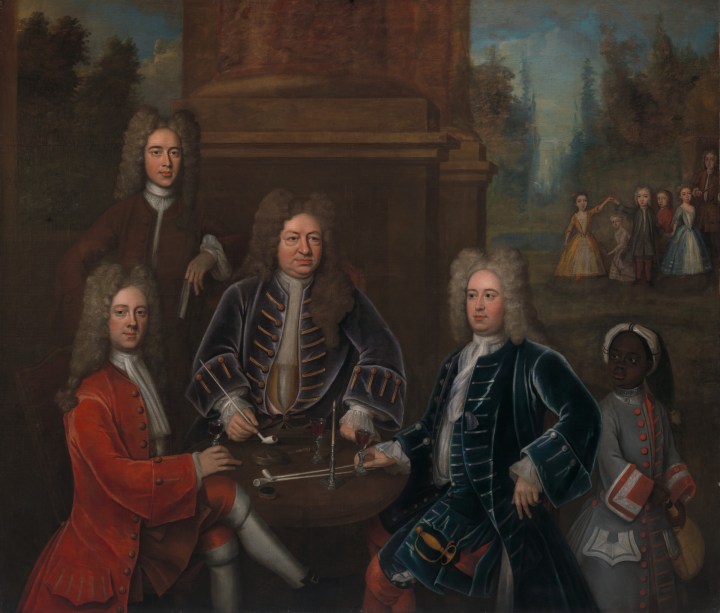
Artist unknown, Elihu Yale, the 2nd Duke of Devonshire, Lord James Cavendish, Mr. Tunstal, and an Enslaved Servant, ca. 1708, oil on canvas (New Haven: Yale Center for British Art, Gift of the 11th Duke of Devonshire)
◊ ◊ ◊ ◊ ◊
Press release from the YCBA:
Figures of Empire: Slavery and Portraiture in Eighteenth-Century Atlantic Britain
Yale Center for British Art, New Haven, 2 October 2014 — 14 December 2014
Curated by Esther Chadwick, Meredith Gamer, and Cyra Levenson
This October, the Yale Center for British Art will shed new
light on representations of slavery in Britain through more than sixty paintings, sculptures, prints, drawings, and decorative objects. Figures of Empire: Slavery and Portraiture in Eighteenth-Century Atlantic Britain will examine the ways in which portraiture reflected the perceptions, attitudes, and contradictions of slavery at the time.

Sir Joshua Reynolds, Charles Stanhope, 3rd Earl of Harrington, 1782 (New Haven: Yale Center for British Art)
The rise of the British Empire during the eighteenth century, fueled by enslaved labor on plantations in the Caribbean and the mainland of North America, contributed to a period of economic and cultural growth. It also brought unprecedented numbers of Africans and people of African descent, both enslaved and free, to Britain. Figures of Empire explores the impact of these developments on the most popular artistic genre of the time: the portrait.
In eighteenth-century Britain, portraits were a principal means of self- representation. Sitters conveyed information about themselves in a variety of ways—through clothing, setting, props, and, often, in relation to subordinate figures, such as servants or slaves. In many cases, these figures were modeled after life; however, in the eighteenth century, they were rarely regarded as subjects in their own right. By contrast, this exhibition challenges us to consider all of the figures depicted within a given portrait as individuals with histories and as ‘figures of empire’—as people whose lives were shaped by British imperialism and the institution of transatlantic slavery. Figures of Empire asks us to think again about what exactly a portrait is and how the answer to this question might change over time.
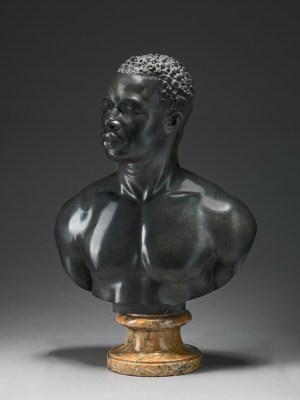
Studio of Francis Harwood, Bust of a Man, ca. 1758, black limestone on yellow marble socle (New Haven: Yale Center for British Art, Paul Mellon Collection)
The exhibition opens with a selection of early eighteenth-century portraits, maps, and sculptures that trace Britain’s expanding commercial empire and engagement with the institution of transatlantic slavery. Anchoring this display is an important and rarely exhibited group portrait that includes Elihu Yale, the founding benefactor of Yale University, along with an enslaved servant. The next section focuses on the role and representation of slavery in a number of mid-century portraits and conversation pieces, including William Hogarth’s Portrait of a Family (ca. 1735) and Francis Harwood’s remarkable sculpted Bust of a Man (1758). The exhibition continues with an exploration of imagery produced within the context of abolitionism later in the century, examining the particular impact of the antislavery movement on the practice of Britain’s leading portraitist, Sir Joshua Reynolds. Finally, the exhibition concludes by highlighting a number of cases in which portraiture became a means for some of African birth and descent who crossed the Atlantic aboard slave ships to forge new identities as both black and British.
The exhibition presents the portraits and their historical context through a wide range of media and art forms. Selected primarily from the Center’s holdings, the display also will be enriched by loans from other Yale collections, and from the National Gallery of Canada, Ottawa.
Figures of Empire takes its place in a new body of scholarship and critical engagement with the legacy of slavery, including the recent high-profile films Twelve Years a Slave (2013) and Belle (2014). It also expands upon conversations begun by prior scholarly publications and exhibitions at the Center, most significantly Art and Emancipation in Jamaica: Isaac Mendes Belisario and his Worlds (2007). While Art and Emancipation focused on slavery in British colonial Jamaica, this exhibition will turn its sights to Britain.
The exhibition includes a series of interviews with academic and curatorial scholars, as well as artists, to help place the works of art in a contemporary context. The interviews will be presented as part of an interactive presentation, accessible in the exhibition and on the Center’s website. In addition, a series of related programs, including lectures, exhibitions, a conference, and a film screening, is taking place across Yale University. Highlights include a pendant exhibition entitled Prospects of Empire: Slavery and Ecology in Atlantic Britain at the Lewis Walpole Library, and a major international conference planned in partnership with The Gilder Lehrman Center for the Study of Slavery, Resistance, and Abolition, entitled Visualizing Slavery and British Culture in the Eighteenth Century.
Figures of Empire has been organized by the Center and curated by Esther Chadwick and Meredith Gamer, PhD candidates in the history of art at Yale University, and Cyra Levenson, Associate Curator of Education at the Yale Center for British Art.
◊ ◊ ◊ ◊ ◊
Figures of Empire: Opening Panel Discussion
Yale Center for British Art, New Haven, 8 October 2014, 5:30
A conversation with Tim Barringer, Paul Mellon Professor of the History of Art, Yale University; Kobena Mercer, Professor, History of Art and African American Studies, Yale University; and Titus Kaphar, artist.










 Enfilade
leave a comment