Exhibition | China: Through the Looking Glass
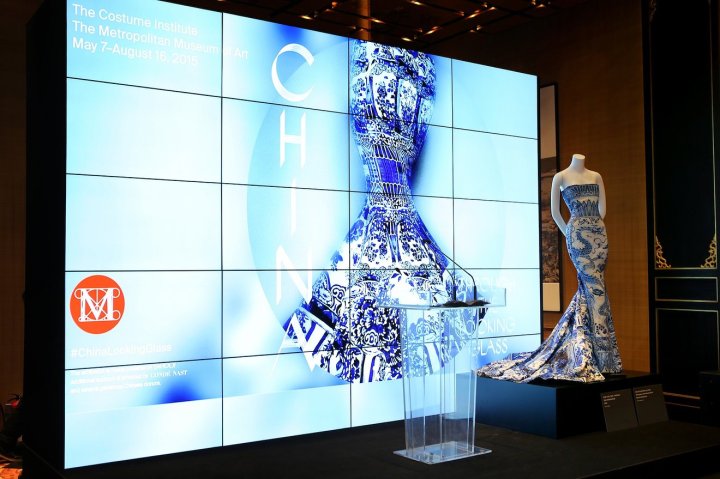
Evening dress by Roberto Cavalli, 2005
Photo: The Metropolitan Museum of Art
◊ ◊ ◊ ◊ ◊
Press release (23 December 2014) from The Met:
China: Through the Looking Glass
The Metropolitan Museum of Art, New York City, 7 May — 16 August 2015
Curated by Andrew Bolton with Harold Koda, Maxwell Hearn, Denise Patry Leidy, and Zhixin Jason Sun
The Costume Institute’s spring 2015 exhibition, China: Through the Looking Glass, will be on view at The Metropolitan Museum of Art from May 7 through August 16, 2015 (preceded on May 4 by The Costume Institute Benefit). Presented in the Museum’s Chinese Galleries and Anna Wintour Costume Center, the exhibition will explore how China has fueled the fashionable imagination for centuries, resulting in highly creative distortions of cultural realities and mythologies. In this collaboration between The Costume Institute and the Department of Asian Art, high fashion will be juxtaposed with Chinese costumes, paintings, porcelains, and other art, as well as films, to reveal enchanting reflections of Chinese imagery.
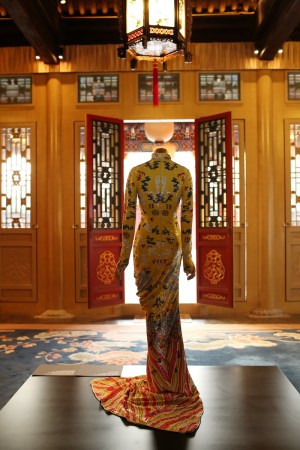
Yves Saint Laurent by Tom Ford, 2004
Photo: Courtesy of The Metropolitan Museum of A
“I am excited about this partnership between these two forward-thinking departments which will undoubtedly reveal provocative new insights into the West’s fascination with China,” said Thomas P. Campbell, Director and CEO of the Met. “The artistic direction of acclaimed filmmaker Wong Kar Wai will take visitors on a cinematic journey through our galleries, where high fashion will be shown alongside masterworks of Chinese art.”
In celebration of the exhibition opening, the Museum’s Costume Institute Benefit will take place on Monday, May 4, 2015. Silas Chou will serve as Honorary Chair. The evening’s co-chairs will be Jennifer Lawrence, Gong Li, Marissa Mayer, Wendi Murdoch, and Anna Wintour. This event is The Costume Institute’s main source of annual funding for exhibitions, publications, acquisitions, and capital improvements.
“From the earliest period of European contact with China in the 16th century, the West has been enchanted with enigmatic objects and imagery from the East, providing inspiration for fashion designers from Paul Poiret to Yves Saint Laurent, whose fashions are infused at every turn with romance, nostalgia, and make-believe,” said Andrew Bolton, Curator in The Costume Institute. “Through the looking glass of fashion, designers conjoin disparate stylistic references into a fantastic pastiche of Chinese aesthetic and cultural traditions.”
Exhibition Overview

Chanel by Karl Lagerfeld, 1984
Photo: The Metropolitan Museum of Art
This is The Costume Institute’s first collaboration with another curatorial department since AngloMania: Tradition and Transgression in British Fashion in 2006, a partnership with the Department of European Sculpture and Decorative Arts. China: Through the Looking Glass will feature more than 130 examples of haute couture and avant-garde ready-to-wear alongside masterpieces of Chinese art. Filmic representations of China will be incorporated to reveal how our visions of China are shaped by narratives that draw upon popular culture, and to recognize the importance of cinema as a medium through which we understand Chinese history.
The Anna Wintour Costume Center’s Lizzie and Jonathan Tisch Gallery will present a series of ‘mirrored reflections’ through time and space, focusing on Imperial China; the Republic of China, especially Shanghai in the 1920s, 1930s and 1940s; and the People’s Republic of China. These reflections, as well as others in the exhibition, will be illustrated with scenes from films by such groundbreaking Chinese directors as Zhang Yimou, Chen Kaige, Ang Lee, and Wong Kar Wai. Distinct vignettes will be devoted to ‘women of style’, including Oei Huilan (the former Madame Wellington Koo), Soong May-Ling (Madame Chiang Kai-shek), and Empress Dowager Cixi.
Directly above the Anna Wintour Costume Center, the Chinese Galleries on the second floor will showcase fashion from the 1700s to the present, juxtaposed with decorative arts from Imperial China, including jade, lacquer, cloisonné, and blue-and-white porcelain, mostly drawn from the Met’s collection. The Astor Court will feature a thematic vignette dedicated to Chinese opera, focusing on the celebrated performer Mei Lanfang, who inspired John Galliano’s spring 2003 Christian Dior Haute Couture Collection, ensembles from which will be showcased alongside Mr. Mei’s original opera costumes.
Designers in the exhibition will include Giorgio Armani, Vitaldi Babani, Cristobal Balenciaga, Sarah Burton for Alexander McQueen, Callot Soeurs, Roberto Cavalli, Coco Chanel, Christian Dior, Domenico Dolce and Stefano Gabbana, Peter Dundas for Emilio Pucci, Tom Ford for Yves Saint Laurent, John Galliano for Christian Dior, Jean Paul Gaultier, Valentino Garavani, Nicolas Ghesquière for Balenciaga, Maria Grazia Chiuri and Pierpaolo Picciolo for Valentino, Craig Green, Madame Grès, Ground-Zero, Guo Pei, Adrian Hailwood, Marc Jacobs for Louis Vuitton, Charles James, Charles Jourdan, Mary Katrantzou, Karl Lagerfeld for Chanel, Jeanne Lanvin, Ralph Lauren, Judith Leiber, Ma Ke, Mainbocher, Martin Margiela, Alexander McQueen, Alexander McQueen for Givenchy, Missoni, Edward Molyneux, Kate and Laura Mulleavy, Dries van Noten, Jean Patou, Paul Poiret, Oscar de la Renta for Balmain, Ralph Rucci, Yves Saint Laurent, Paul Smith, Anna Sui, Vivienne Tam, Isabel Toledo, Giambattista Valli, Vivienne Westwood, Jason Wu, Laurence Xu, and others.
The exhibition, a collaboration between The Costume Institute and the Department of Asian Art, coincides with the Museum’s year-long centennial celebration of the Asian Art Department, which was created as a separate curatorial department in 1915. China: Through the Looking Glass is organized by Andrew Bolton, Curator, with the support of Harold Koda, Curator in Charge, both of The Costume Institute. Additional support is provided by Maxwell Hearn, Douglas Dillon Chairman; Denise Patry Leidy, Curator; and Zhixin Jason Sun, Curator, all of the Department of Asian Art.
Internationally renowned filmmaker Wong Kar Wai will be the exhibition’s artistic director working with his longtime collaborator William Chang, who will supervise styling. Nathan Crowley will serve as production designer for the exhibition-he has worked on three previous Costume Institute exhibitions including Superheroes: Fashion and Fantasy (2008), American Woman: Fashioning a National Identity (2010), and Schiaparelli and Prada: Impossible Conversations (2012). The design for the 2015 Costume Institute Gala Benefit will be created by Wong Kar Wai and William Chang with 59 Productions, and Raul Avila, who has produced the Benefit décor since 2007.
“William Chang and I are pleased to be working in collaboration with The Costume Institute and the Asian Art Department of The Metropolitan Museum of Art on this exciting cross-cultural show,” said Wong. “Historically, there have been many cases of being ‘lost in translation’–with good and revealing results. As Chinese filmmakers we hope to create a show that is an Empire of Signs–filled with meaning for both East and West to discover and decipher.”
The exhibition is made possible by Yahoo. Additional support is provided by Condé Nast and several generous Chinese donors.
◊ ◊ ◊ ◊ ◊
The accompanying publication will be distributed by Yale UP:
Andrew Bolton, with Adam Geczy, Maxwell K. Hearn, Homay King, Harold Koda, Mei Mei Rado, Wong Kar Wai, and John Galliano, with photography by Platon, China: Through the Looking Glass (New York: The Metropolitan Museum of Art, 2015), 256 pages, ISBN: 978-0300211122, $45.
For centuries, China’s export arts—jade, silks, porcelains, and, more recently, cinema—have fueled Western fantasies of an exotic East and served as enduring sources of inspiration for fashion. This stunning publication explores the influence of Chinese aesthetics on designers, including Giorgio Armani, Christian Dior, Jean Paul Gaultier, Karl Lagerfeld, Ralph Lauren, Alexander McQueen, and Yves Saint Laurent. Drawing upon Chinese decorative arts, cinema, and costume—notably imperial court robes, the close-fitting cheongsam, and the unisex Mao suit—their designs are fantastical pastiches of anachronistic motifs. As in the game of “telephone,” the process of cultural translation transforms the source material into ingeniously original fashions that are products solely of the designers’ imaginations.
In a similar way, contemporary Chinese film directors render fanciful, highly stylized evocations of various epochs in China’s history—demonstrating that China’s imagery is equally seductive to artists in the East and further inspiring today’s designers. Juxtaposing modern fashions and film stills with their forebears in fine and decorative arts and historical dress, this book reveals the rich and ongoing creative dialogue between East and West, past and present.
Andrew Bolton is curator in the Costume Institute, The Metropolitan Museum of Art.
Call for Papers | The Baroque in Light of the Cold War
From H-ArtHist:
Baroque for a Wide Public: Popular Media and Their
Constructions of the Epoch on Both Sides of the Iron Curtain
Barock für ein breites Publikum. Konstruktionen der Epoche
in populären Medien diesseits und jenseits des Eisernen Vorhangs
Humboldt University Berlin, 11–13 June 2015
Proposals due by 15 February 2015
Organised by Prof. Dr. Michaela Marek, Chair of Art History of Eastern Europe at the Institute of Art and Visual History of Humboldt University Berlin
Histories of art and artists have found a mass public, especially since the 1950s, with the rise of magazines and illustrated books, radio, fictional and documentary films as well as large photo and art exhibitions. Intended for a broad public, they allow to detect the ideas of art and cultural heritage, and connected to that, interpretive models of historic developments in the tension of traditional historic interpretations and current interests. Nevertheless, the significance of pop-cultural art histories (Doris Berger) has not yet been researched thoroughly—particularly by comparative studies—against the background of the competing systems.
This is particularly obvious when forms of communicating art historical knowledge on earlier epochs like the Baroque are studied. While its construction as an epoch of absolutism and of Counter-Reformation initially rather strained its perception in state socialism, exhibitions in Austria advertised the Baroque as a national style serving identity policies (Andreas Nierhaus).
The question is what meanings were attached to the term ‘Baroque’. How were art works and buildings of the 17th and 18th centuries—a time characterised by a Europe-wide circulating of creative ideas—presented in exhibitions, illustrated books, films, travel guides, object-related brochures, school books or in literature on local history? How did predominant national paradigms of art historiography find expression in them, how the existence of the ‘Iron Curtain’? What concepts of historiography were constructed in these media, what images of the epoch were outlined? Did the exhibitions and popular literature differ regarding the intended domestic or foreign public? What were the (new) focuses, evaluations, symbolic charges and attributions to integrate or exclude ‘precarious’ monuments? What relation existed between academic and popular art histories, for which not rarely leading members of the discipline had a share of the responsibility? What role played international exchange and cooperation in the Cold War, as e. g. regarding travelling exhibitions? And which influence did current social incidents and developments exert on the communication of Baroque art in the countries in question during the decades of the division of Europe?
The aim of the symposium as well as of the research project Asymmetrische Kunstgeschichte? Erforschung und Vermittlung ‘prekärer’ Denkmälerbestände im Kalten Krieg (Asymmetrical Art History? Research and Communication of ‘Precarious’ Monuments in the Cold War) in the frame of which the conference will take place is to fathom comparative approaches to art histories and their popularizations as an East-Western intertwined history of discourse. In this context, the focus will be intentionally not the preservation of the objects, but the concepts expressed in texts and images of this period of art between ideological role models and creative interpretation.
Please send us a proposal (one A4-page maximum) of your (unpublished) contribution of 20 minutes as well as a short CV by 15 February, 2015. Conference languages are German and English.
Contact addresses for papers and queries:
Prof. Dr. Michaela Marek, michaela.marek@culture.hu-berlin.de
Eva Pluharová-Grigiene, pluharova@culture.hu-berlin.de
Renata Choinka, choinka@hu-berlin.de
Rijksmuseum Research Fellowship Programme, 2015–16
From the Rijksmuseum:
The Rijksmuseum Research Fellowship Programme, 2015–16
Applications due by 15 March 2015
The Rijksmuseum operates a research fellowship programme for outstanding candidates working on the art and history of the Low Countries whose principal concern is object-based research.
The Rijksmuseum houses the world’s largest collection of Dutch artistic and historical treasures, and the most complete library on Dutch art. The museum re-opened its doors to the public in April 2013 following a ten-year renovation that completely transformed the institution. For the first time in its history, the paintings, sculpture, decorative arts and historical artefacts are being shown together in a chronological display. This innovative curatorial approach presents the public with an overview of the art and history of the Netherlands from the Middle Ages to the twentieth century.
The aim of the Rijksmuseum Research Fellowship Programme is to train a new generation of museum professionals: inquisitive object-based specialists who will further develop understanding of Netherlandish art and history for the future. The focus of research should relate to the Rijksmuseum’s collection, and may encompass any of its varied holdings, including Netherlandish paintings, sculpture, decorative arts, prints, drawings, photography and historical artefacts. The purpose of the programme is to enable doctoral candidates to base part of their research at the Rijksmuseum and to encourage the understanding of Netherlandish art and history by offering students and scholars access to the museum’s collections, library, conservation laboratories and curatorial expertise. Partnership and collaboration is at the heart of these fellowships, which provide support for the museum and its research priorities, as well as its academic and non-academic partners.
For the 2015–16 academic year, candidates may apply for the following fellowships:
• Andrew W. Mellon Fellowship
• DSM-JLL Fellowship
• JLL-DSM Fellowship
• Johan Huizinga Fellowship
• Manfred & Hanna Heiting Fellowship
The closing date for all applications is 15 March 2015, at 6:00 pm (Amsterdam time/CET). No applications will be accepted after this deadline. All applications must be submitted online and in English. Applications or related materials delivered via email, postal mail, or in person will not be accepted. Selection will take place in April 2015. Applicants will be notified by 1 May 2015. All fellowships will start in September 2015. Further information and application forms are available here.
Exhibition | Goya: The Portraits
Looking ahead to the fall at The National Gallery in London:
Goya: The Portraits
The National Gallery, London, 7 October 2015 — 10 January 2016
Curated by Xavier Bray

Francisco de Goya, Self Portrait in His Studio, 1793–95 (Madrid: Museo de la Real Academia de Bellas Artes de San Fernando)
Francisco de Goya (1746–1828) is one of Spain’s most celebrated artists. He was considered a supremely gifted portrait painter and an excellent social commentator who took the genre of portraiture to new heights through his ability to reveal the psychology of his sitter. This landmark exhibition—the first ever focusing solely on his portraits—will re-appraise Goya’s genius as a portraitist and provide a penetrating insight into both public and private aspects of his life. It will explore Goya’s ambitions and development as a painter, and his innovative and unconventional approach to portraiture which often broke traditional boundaries.
The exhibition will trace Goya’s career from his early beginnings at the court of Charles III in Madrid to his appointment as First Court Painter to Charles IV, through the difficult period under Joseph Bonaparte and then Ferdinand VII, which nevertheless saw some of his finest work, and then his final years in France. By bringing together more than 50 of his most outstanding portraits from around the world, including drawings and miniatures, and organising them in a chronological and thematic sequence, the show will enable viewers to engage for the first time with the full range of Goya’s technical, stylistic and psychological development as a portraitist.
◊ ◊ ◊ ◊ ◊
Note (added 4 August 2015) — The full press release is available here.
The catalogue is distributed by Yale UP:
Xavier Bray, with Manuela Mena Marqués and Thomas Gayford, Goya: The Portraits (London: The National Gallery, 2015), 272 pages, ISBN: 978-1857095739, $60.
 Francisco de Goya y Lucientes (1746–1828) was one of the greatest portraitists of his time. The first large-scale book devoted to the topic, this handsome volume features portraits that shed light on Goya and his subjects, as well as on the politically turbulent and culturally dynamic era in which they lived. Whether portraying royalty, philosophers, military men, or friends, these works are memorable both for the insight they provide into the relationship between artist and sitter, and for their penetrating psychological depth.
Xavier Bray traces Goya’s career from his beginnings at the Madrid court of Charles III to his final years in Bordeaux, played out against the backdrop of war with France and the social, political, and cultural shift of the Enlightenment. More than 60 remarkable portraits, including drawings and miniatures, reveal the full range of Goya’s technical and stylistic achievements, while also depicting sitters with a previously unparalleled humanity. His break with traditional, late-18th-century conventions allowed him to achieve a new modernity in portraiture that paved the way for artists such as Matisse and Picasso.
Xavier Bray is chief curator at Dulwich Picture Gallery. Manuela Mena Marqués is chief curator of 18th-century paintings at the Museo del Prado, Madrid. Thomas Gayford is a former research assistant at Dulwich Picture Gallery.
New Book | 1715: La France et la Monde
From Perrin:
Thierry Sarmant, 1715: La France et la Monde (Paris: Éditions Perrin, 2014), 400 pages, ISBN: 978-2262033316, 24€.
 Versailles, 1 er septembre 1715. Après une longue agonie, Louis XIV s’éteint “comme une chandelle que l’on souffle”. Ainsi finit le “Grand Siècle” (XVIIe) et commence le “siècle des Lumières” (XVIIIe). À ces expressions est d’ordinaire attachée l’idée d’une prépondérance française, politique et militaire d’abord, culturelle et intellectuelle ensuite. Qu’en est-il réellement ?
En observant les relations que tisse la France avec le monde, en questionnant sa place et son rôle autour de l’année charnière 1715, Thierry Sarmant éclaire l’un des phénomènes les plus saisissants de l’histoire humaine : l’essor de l’Occident vers une hégémonie mondiale. Alors que la question du déclin de la France et de l’Europe est omniprésente, quoi de plus pertinent que de s’interroger sur les ressorts cachés de l’expansion et du déclin ? C’est le pari de ce livre, qui entraine le lecteur de Versailles à Moscou, d’Istanbul à Stockholm et de Pékin à Delhi.
Archiviste-paléographe, Docteur habilité de l’université de Paris-I, Thierry Sarmant est conservateur en chef au musée Carnavalet. Historien de l’Ancien Régime, il a publié en dernier lieu Régner et gouverner : Louis XIV et ses ministres (en collaboration, 2010) et Louis XIV. Homme et roi (2012).
CAA 2015, New York
103rd Annual Conference of the College Art Association
New York Hilton Midtown, 11–14 February 2015
 The 2015 College Art Association conference takes place in New York, February 11–14, at the New York Hilton Midtown (1335 Avenue of the Americas).
An ASECS session on materiality, chaired by Kristel Smentek and Michael Yonan, is scheduled for Friday at 12:30; and a HECAA session in honor of Donald Posner, chaired by Andria Derstine and Rena Hoisington, is slated for Saturday at 12:30. As 90-minute panels, both are free and open to the public with no conference registration required.
This year there’s also a HECAA reception scheduled for Thursday, from 5:30 to 7:00 in the Lincoln Suite on the fourth floor of the Hilton. With a cash bar, it’s an open invitation; so please bring friends (and, as with the lunch sessions, attendance requires neither CAA membership nor conference registration).
Other sessions that may be of interest for dixhuitièmistes are also listed. A full schedule of panels is available here»
◊ ◊ ◊ ◊ ◊
Historians of Eighteenth-Century Art and Architecture
Donald Posner and the Study of Seventeenth- and Eighteenth-Century French and Italian Art
Saturday, 14 February, 12:30–2:00, Sutton Parlor North
Chairs: Andria Derstine, Allen Memorial Art Museum, Oberlin College; Rena M. Hoisington, The Baltimore Museum of Art
- A Return to Loreto: Guido Reni, Caravaggio, and Donald Posner
Rachel McGarry, Minneapolis Institute of Arts - The Portrait d’apparat after Rigaud: Iconographical and Ideological Variations in Images of Louis XV and Marie Leszczynska, ca. 1723–1747
Todd L. Larkin, Montana State University - Nicolas Lancret: Île de France or Île de Cythère?
Mary Tavener Holmes, independent scholar - Giambattista Tiepolo’s Two Designs for the Triumph of Hercules
William Barcham, independent scholar
◊ ◊ ◊ ◊ ◊
American Society for Eighteenth-Century Studies
The Materiality of Art and Experience in the Eighteenth Century
Friday, 13 February, 12:30–2:00, Beekman Parlor
Chairs: Kristel Smentek, Massachusetts Institute of Technology; Michael E. Yonan, University of Missouri–Columbia
- Other-Worldly Encounters: Materiality and Religious Experience
Hannah Williams, University of Oxford - ‘Neither Antique nor Gothic’: The Uncertainty of Sèvres Porcelain
Susan Michele Wager, Columbia University - A Visual Material Turn
Anne Higonnet, Barnard College
◊ ◊ ◊ ◊ ◊
O T H E R S E S S I O N S R E L A T E D T O T H E 1 8 T H C E N T U R Y
Original Copies: Art and the Practice of Copying
Wednesday, 11 February, 9:30–12:00, Sutton Parlor South
Chair: Stephanie Porras, Tulane University
- ‘A Miracle of a Copy’: Original Reproductions and Authentic Copies in the Holbein Dispute
Lena Bader, German Centre for the History of Art in Paris (DFK) - Producing Reproducibility: John Flaxman’s Designs between Classicism and Commerce
Brigid von Preussen, Columbia University - ‘The Duplication of Genius’: Domenico Brucciani (1815–80) and the Authorship and Agency of Plaster Casts, Rebecca Jayne Wade, Henry Moore Institute
- Remaking the Readymade: Marcel Duchamp and Man Ray’s Editioned Replicas
Adina Tamar Kamien-Kazhdan, The Israel Museum, Jerusalem - On Originality: Photography vs. Glass Painting in Twentieth-Century Senegal
Giulia Paoletti, Columbia University
◊ ◊ ◊ ◊ ◊
The Global History of Design and Material Culture
Thursday, 12 February, 9:30–12:00, Sutton Parlor North
Chair: Paul Stirton, Bard Graduate Center
- Writing and Editing the New History of Design: Decorative Arts and Material Culture 1400–2000
Patricia Anne Kirkham, Bard Graduate Center - Writing a World History of Design: What I Have Learned
Victor Margolin, University of Illinois at Chicago - Design Worlds: National Design Histories in an Age of Globalization
Grace Lees-Maffei, University of Hertfordshire; Kjetil Fallan, University of Oslo - A Global History of Design: Assembling Fragments
Daniel J. Huppatz, Swinburne University - The Canon and Beyond: A Proposal for Teaching the History of Modern Design
David Raizman, Drexel University
◊ ◊ ◊ ◊ ◊
Unfolding the Enlightenment
Thursday, 12 February, 9:30–12:00, Beekman Parlor
Chairs: Alyce Mahon, University of Cambridge; Nebahat Avcioglu, Hunter College, City University of New York
- William Hogarth’s ‘Bathos’ and the End of Beauty
Thomas R. Beachdel, The Graduate Center, City University of New York - Embodied Cognition: Vitalism and Neoclassical Fashion
Amelia F. Rauser, Franklin & Marshall College - Enlightenment Thought and the Visual Arts in Qajar Iran
Maryam D. Ekhtiar, The Metropolitan Museum of Art - Producing Monsters: Eric Avery’s Prints, The Sleep of Reason from Behind and Chimera
Rena M. Hoisington, The Baltimore Museum of Art - Ordnung und Reinlichkeit
Stefaan Vervoort, Ghent University
◊ ◊ ◊ ◊ ◊
Historians of British Art
Home Subjects: Domestic Space and the Arts in Britain, 1753–1900
Thursday, 12 February, 12:30–2:00, Rendezvous Trianon
Chairs: Morna O’Neill, Wake Forest University; Anne Nellis Richter, American University
- Astonishing Moderation: Robert Lord Clive at Claremont
Stephen M. Caffey, Texas A&M University - Housing the Art of the Nation: The Home as Museum in Gustav F. Waagen’s Treasures of Art in Great Britain
Emilie Oléron Evans, Queen Mary University of London - ‘An Alien in the Decorative Community’: The Problem of Pictures in British Domestic Advice Literature
Nicholas Tromans, Watts Gallery - Discussant: Melinda R. McCurdy, The Huntington Library, Art Collections and Botanical Garden
◊ ◊ ◊ ◊ ◊
Association for Latin American Art
Emerging Scholars of Latin American Art
Thursday, 12 February, 12:30–2:00, Regent Parlor
Chair: Margaret Jackson, University of New Mexico
- Filling the Lacuna: The Guatemalan Black Christ and New Spanish Art History
Elena FitzPatrick Sifford, Louisiana State University - The Queen of Heaven and the Prince of Angels: Saintly Rivalry in Colonial Mexico
Aubrey Hobart, University of California, Santa Cruz - Violence and Virtue in the Northern Provinces of New Spain: The Politics of Franciscan Martyr Portraits during the Period of Bourbon Reforms
Emmanuel Ortega Rodríguez, University of New Mexico
◊ ◊ ◊ ◊ ◊
The Meaning of Prices in the History of Art
Thursday, 12 February, 2:30–5:00, Regent Parlor
Chairs: Christian Huemer, Getty Research Institute; Hans J. Van Miegroet, Duke University
- Prices for Paintings and Buyer Preferences in Eighteenth-Century Paris
Hilary Coe Cronheim, Duke University; Sandra van Ginhoven, Duke University - Market Valuation of Provenance: An Analysis of Collections Sold at Drouot between 1911 and 1925
Géraldine David, Université Libre de Bruxelles; Kim Oosterlinck, Université Libre de Bruxelles - The Dutch Art Market during the Second World War: A New Art Price Index Using Hedonic Regression
Jeroen Euwe, Université Libre de Bruxelles - The ‘Bildung’ of the American Collector
Titia E. Hulst, Institute of Fine Arts, New York University - Transmission of Value through Prices: Competition and Value Formation on the Art Market
Viktor Oliver Lorincz, Université Paris 1 Pantheon–Sorbonne and ELTE Budapest
◊ ◊ ◊ ◊ ◊
Artistic Exchange between the Spanish and British Empires, 1550–1900
Friday, 13 February, 9:30–12:00, Madison Suite
Chairs: Michael Brown, San Diego Museum of Art; Niria E. Leyva-Gutierrez, Long Island University, Post
- Medical Astrology in the Codex Mexicanus, from Britain to Spain to New Spain
Lori B. Diel, Texas Christian University - British Export Goods and Material Culture in Eighteenth-Century Spanish America
James Middleton, independent scholar - Learning from Las Palmas: Spanish Architectural Influence in the British Empire
George Alexander Bremner, University of Edinburgh
◊ ◊ ◊ ◊ ◊
The Art of Travel: People and Things in Motion in the Early Modern Mediterranean
Friday, 13 February, 9:30–12:00, Regent Parlor
Chair: Elisabeth Fraser, University of South Florida
- Spolia and Souvenirs: Refashioning Ottoman Tents in Early Modern Poland
Ashley M. Dimmig, University of Michigan - Redeeming the Redeemer: Religious Images and Captivity between Spain and North Africa
Daniel Hershenzon, University of Connecticut - The Sun King at Sea: Maritime Art and Slavery in the Seventeenth-Century Mediterranean
Gillian Weiss, Case Western Reserve University; Meredith S. Martin, New York University - Collecting Carthage: Thomas Reade as Cultural Intermediary for the Tunisian Elite
Ridha Moumni, Aix–Marseille University - The Photographic Mediterranean: Circulation and Mobility in Nineteenth-Century Photography
Michele A. Hannoosh, University of Michigan
◊ ◊ ◊ ◊ ◊
The Double-Sided Object in the Renaissance
Friday, 13 February, 9:30–12:00, Rendezvous Trianon
Chair: Shira Brisman, University of Wisconsin
- Dealing Honestly with Two-Faced Paintings: Thinking the Paragone Beyond Deception
Christopher J. Nygren, University of Pennsylvania - The Other Side of the Mirror
Diane Bodart, Columbia University - Verso vs. Versa
Maria H. Loh, University College London - Equivalence: Acts of Weighing in the Renaissance
Allison Stielau, Yale University - Double-Take: The Renaissance Print in Eighteenth-Century Germany
Gabriella K. Szalay, Columbia University
◊ ◊ ◊ ◊ ◊
American Society for Eighteenth-Century Studies
The Materiality of Art and Experience in the Eighteenth Century
Friday, 13 February, 12:30–2:00, Beekman Parlor
Chairs: Kristel Smentek, Massachusetts Institute of Technology; Michael E. Yonan, University of Missouri–Columbia
- Other-Worldly Encounters: Materiality and Religious Experience
Hannah Williams, University of Oxford - ‘Neither Antique nor Gothic’: The Uncertainty of Sèvres Porcelain
Susan Michele Wager, Columbia University - A Visual Material Turn
Anne Higonnet, Barnard College
◊ ◊ ◊ ◊ ◊
Global Baroques: Shared Artistic Sensibilities in the Seventeenth and Eighteenth Centuries
Friday, 13 February, 2:30–5:00, Sutton Parlor North
Chair: Ünver Rüstem, University of Cambridge
- The Tree of Life and the World of Wonder: South Asian ‘Ajā’ib Imagery as Baroque Grotesque
Sylvia Houghteling, Yale University - Images of Exotic Animals between East and West: The Case of an Eighteenth-Century Korean Folding Screen
Rangsook Yoon, Cornell Fine Arts Museum, Rollins College - An Imperial Chinese Baroque at Yuanming Yuan
Greg M. Thomas, University of Hong Kong - A Slippery Surface: The Global Aesthetic of Blue-and-White at the Shrine of Sunan Gunung Jati, Java
Marsely L. Kehoe, Columbia University - Discussant: Ünver Rüstem, University of Cambridge
◊ ◊ ◊ ◊ ◊
White People: The Image of the European in Nonwestern Art during the Age of Exploration, 1400–1750
Friday, 13 February, 2:30–5:00, Gramercy A
Chairs: James Harper, University of Oregon; Philip Scher, University of Oregon
- The Auspicious Other: ‘White People’ on Sri Lankan Ivories
Sujatha Arundathi Meegama, Nanyang Technological University - Perfect Nobodies: Representations of Europeans in the Imperial Illustrations of Tributaries
Daniel Greenberg, Yale University - Cusco School Defense of the Eucharist Paintings: A Tribute to Tinku
Annick Marcela Benavides, Museo Pedro di Osma - Intimate Foreigners: Miniature Painting of Awadh, 1650–1770
Natalia Angela Di Pietrantonio, Cornell University
◊ ◊ ◊ ◊ ◊
Historians of Eighteenth-Century Art and Architecture
Donald Posner and the Study of Seventeenth- and Eighteenth-Century French and Italian Art
Saturday, 14 February, 12:30–2:00, Sutton Parlor North
Chairs: Andria Derstine, Allen Memorial Art Museum, Oberlin College; Rena M. Hoisington, The Baltimore Museum of Art
- A Return to Loreto: Guido Reni, Caravaggio, and Donald Posner
Rachel McGarry, Minneapolis Institute of Arts - The Portrait d’apparat after Rigaud: Iconographical and Ideological Variations in Images of Louis XV and Marie Leszczynska, ca. 1723–1747
Todd L. Larkin, Montana State University - Nicolas Lancret: Île de France or Île de Cythère?
Mary Tavener Holmes, independent scholar - Giambattista Tiepolo’s Two Designs for the Triumph of Hercules
William Barcham, independent scholar
Exhibition | Hungarian Treasure: Silver from the Salgo Collection
Press release (24 November 2014) from The Met:
Hungarian Treasure: Silver from the Nicolas M. Salgo Collection
The Metropolitan Museum of Art, New York, 6 April — 4 October 2015
Curated by by Wolfram Koeppe
 Nicolas M. Salgo (1915–2005), a Hungarian native and former United States ambassador to Budapest, was fascinated by the art of the goldsmith in Hungarian culture and formed his own “treasury” by collecting pieces that are individual and unique. Hungarian Treasure: Silver from the Nicolas M. Salgo Collection will celebrate the gift to The Metropolitan Museum of Art of the major part of the silver collection assembled by this focused collector over three decades.
This large collection of silver—about 120 pieces, most dating from the 15th to the late 18th century—comprises a variety of types with especially refined appearance and high levels of craftsmanship, representing Hungarian silver at its best. The earliest works in the Salgo collection are medieval: seven objects, including two rare chalices with mastered filigree enameling. The intriguing shapes, inventive decoration, and historical importance of the objects, products of once-prosperous local aristocratic dynasties, make this ensemble exceptional. As a result of this generous gift, the Metropolitan Museum is now the only museum outside Hungary to possess such an array of sumptuous goldsmiths’ work from the region.
The rich natural resources and a flourishing mining system in what it is today Hungary and Romania (including the major parts of Transylvania and the so-called Siebenbürgen area) attracted artisans from all over Europe who created decorative objects with what was to become a characteristic opulence. Because the Balkans and the neighboring dominions were a major battlefield between the West and the Ottomans for centuries, few of these objects have survived. Those that have endured—many of which are included in this exhibition—offer a fascinating look into the techniques and abilities of this distinct interpretation of Renaissance and Baroque ornamentation.
The abundant deposits of silver ore in the region sparked the development of an active goldsmith community, the forerunners of which were mainly masters of German origin who were working under the strong influence of the German-speaking cultural area. Many of these craftsmen and workers emigrated from Saxony, which at that time was one of Europe’s main mining centers. In addition to German styles, the shape and ornamentation of the objects typically show an Ottoman influence, since this region was regularly occupied by the Ottoman Empire. The ornate embellishment on many of the pieces is derived from contemporary prints, textiles (such as lace), and other luxury goods that were sought-after all over Europe.
Comparative material culled from other areas of the Metropolitan Museum’s collection—including the Arms and Armor Department, the Costume Institute, and the Robert Lehman Collection— will also be on view in the exhibition to illustrate the multi-regional, wide-ranging influence on Hungarian silver during this period.
Hungarian Treasure: Silver from the Nicolas M. Salgo Collection is organized by Wolfram Koeppe, the Marina Kellen French Curator in the Metropolitan Museum’s Department of European Sculpture and Decorative Arts. The exhibition will be accompanied by an extensive web feature on the Museum’s website, including a scholarly essay on the subject of Hungarian goldsmiths’ work, a history of the collection and its collector, and catalogue entries. This online feature is made possible by the Salgo Trust for Education, New York.
Exhibition | A Passion for Jade: Heber Bishop and His Collection
Press release (22 November 2014) from The Met:
A Passion for Jade: Heber Bishop and His Collection
The Metropolitan Museum of Art, New York, 14 March 2015 — 8 May 2016
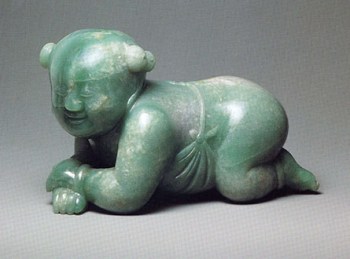 An installation of some 100 precious carvings in Chinese and Mogul jade and other hardstones, collected by Heber R. Bishop, will go on view at The Metropolitan Museum of Art beginning March 14. Featuring various types of objects—from containers for everyday use and pendants to ornaments intended for an emperor’s desk—A Passion for Jade: Heber Bishop and His Collection will illustrate the wide range of the lapidary’s repertoire.
An industrialist and entrepreneur, Mr. Bishop was an active patron of the arts and a Trustee of the Metropolitan Museum during its formative years. In the late 19th century, he assembled a collection of more than a thousand pieces of jade and other hardstones from China and elsewhere, and in 1902, he bequeathed the collection to the Museum.
Dating from Han dynasty (221–207 B.C.) to the 20th century, the objects on view in the installation will be selected entirely from the Museum’s collection. They will include outstanding Qing-dynasty (1644–1911) examples that are representative of the sophisticated art of Chinese lapidaries, as well as highly accomplished works by Mogul Indian jade carvers that provided an exotic inspiration to their Chinese counterparts. Also on display will be a set of Chinese lapidary tools and illustrations of jade workshops in China.
New Book | Le Luxe, les Lumières et la Révolution
From Les Éditions Champ Vallon:
Audrey Provost, Le Luxe, les Lumières et la Révolution (Seyssel: Éditions Champ Vallon, 2014), 272 pages, ISBN: 978-2876739796, 25€.
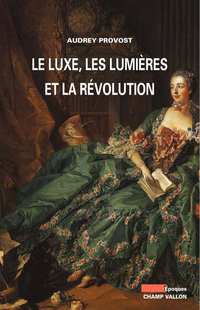 De sa réhabilitation par Voltaire dans son scandaleux poème du Mondain à son utilisation dans les pamphlets prérévolutionaires, le luxe est l’un des sujets les plus brûlants, les plus débattus du siècle des Lumières. D’innombrables auteurs, petits ou grands, se sont interrogés sur cet objet futile et sulfureux qui leur permet de parler de tout : des arts et des sciences, des femmes et de la confusion sociale, du bonheur et des inégalités, du progrès ou du déclin de l’esprit humain.
Alors que la monarchie a cessé d’édicter des lois somptuaires, alors que le discours de l’Église est marginalisé, des écrivains s’érigent en juges, en avocats et en législateurs de la « culture des apparences ». Ce faisant, ils s’adressent à l’opinion publique et proclament haut et fort les nouveaux pouvoirs de l’écriture : l’affrontement autour du luxe met en jeu les compétences et la légitimité des hommes de lettres à fixer des valeurs communes, en concurrence directe avec le pouvoir royal.
Au cœur de cette effervescence polémique, nous croisons les figures attachantes de ces petits polygraphes, ces « Rousseau des ruisseaux » qui tentent de prendre place dans la République des lettres ; nous faisons connaissance du « serial publicateur » que fut le chevalier du Coudray ; nous apprenons comment écrire un livre sur le luxe, à la manière d’un Rabelleau ; nous suivons la lutte entre Butel-Dumont et ses contradicteurs pour changer le sens du mot, et inventer des adjectifs et des étymologies transformées en autant de munitions dans cette guerre de libelles et de pamphlets.
À la fin des années 1780, les fastes de la monarchie ont cessé d’éblouir et le luxe de Marie-Antoinette, « l’Autrichienne » est devenu, sous la plume acérée des pamphlétaires, une arme politique redoutable, car ce débat foisonnant a aussi contribué au changement de culture politique qui mène à la Révolution.
Née en 1970, ancienne élève de l’ENS (Ulm), Audrey Provost est agrégée d’histoire.
◊ ◊ ◊ ◊ ◊
From its vindication in Voltaire’s scandalous poem Le Mondain, to its strategic use in pre-revolutionary pamphlets, luxury figures as the subject of some of the most heated debates of the eighteenth century. Innumerable authors, canonical and non, raised questions about this frivolous and yet fiery topic that allowed them to speak about everything and anything: of the arts and sciences, of women and social confusion, of happiness and inequality, of the progress or decline of the human spirit.
As the monarchy stopped issuing sumptuary laws, as the Church’s discourse was marginalized, writers presented themselves as judges, defenders, and legislators of the “culture of appearances.” In the process they addressed themselves to public opinion, and loudly proclaimed the new powers of writing: indeed, the debates about luxury put into play the competence and legitimacy of men of letters as they established a common set of values in a direct challenge of royal authority.
At the heart of these polemics, we find the touching figures of small polygraphs, those “Rousseau des ruisseaux” who tried to establish a place for themselves in the Republic of Letters. We meet a “serial publisher” in the figure of the chevalier du Coudray; we learn how to write a book on luxury according to Rabelleau; we follow the competition between Butel-Dumont and his opponents as they sought to change the meaning of the word “luxury,” and to invent adjectives and etymologies that became ammunition in this war of libels and pamphlets.
At the end of the 1780s, the fasts of the monarchy ceased to dazzle, and the luxury of Marie-Antoinette the “Austrian” became a considerable political weapon under the pen of pamphleteers. The ensuing debate contributed to a change in political culture, which eventually would lead to the Revolution.
The Future of Flaxman’s Adoration of the Magi?

John Flaxman, The Adoration of the Magi,
marble, 9 x 17 inches (228 by 430 mm), ca. 1792–94
◊ ◊ ◊ ◊ ◊
Press release (6 November 2014) from the Arts Council of England:
Culture Minister Ed Vaizey has placed a temporary export bar on a marble relief by John Flaxman, the renowned sculptor who in his youth served as a modeller for Josiah Wedgwood. The sculpture depicts the Adoration of the Magi: the three kings kneeling before the seated Virgin and Child. It will be exported overseas unless money can be found to match the asking price of £800,000.
The rectangular marble slab, carved in low relief, depicts the Virgin seated on the ground holding the Christ child on her lap. Before them kneel the three Magi. The relief panel, of exceptional quality, has been attributed to the renowned British artist John Flaxman. The composition closely corresponds with a slightly larger plaster version by the artist at Sir John Soane’s Museum, as well as two pen, ink and wash drawings, one of which is currently at the British Museum. This remarkable sculpture seems extraordinarily modern, doubtless because of the relative lack of surface ornament, and the simplicity and purity of its composition. It also presents an unusual subject within Flaxman’s oeuvre, in that it is neither a portrait nor a mythological composition, but taken from the New Testament.
The Minister has deferred granting an export licence for the piece following a recommendation by the Reviewing Committee on the Export of Works of Art and Objects of Cultural Interest, (RCEWA) administered by Arts Council England. The Committee made their recommendation on the grounds that the marble relief is of outstanding significance for the study of neo-classical sculpture and Flaxman’s role within its development.
Culture Minister Ed Vaizey said: “John Flaxman was one of the most influential British artists of the early nineteenth century, who worked for Josiah Wedgwood and was held in esteem around the world. This piece is a wonderful example of English neo-classical sculpture and I sincerely hope that efforts can be made to raise funds for a matching offer to keep the painting in the UK.”
Chairman of the RCEWA Sir Hayden Phillips said: “I am sure that many people will find, as I do, that this superbly crafted relief is of such direct and simple beauty that it offers its viewer a scene of compelling charm.”
The decision on the export licence application for the marble relief will be deferred for a period ending at midnight on 5 February 2015. This period may be extended until 5 May 2015 if a serious intention to raise funds to purchase the piece is made at the recommended price of £800,000.
◊ ◊ ◊ ◊ ◊
Note: The relief was exhibited in connection with the display Gainsborough and the Landscape of Refinement (Lowell Libson at Mitchell-Innes & Nash, New York, 24 January — 1 February 2014).










 Enfilade
leave a comment