Exhibition | Wicked Wit: Darly’s Comic Prints
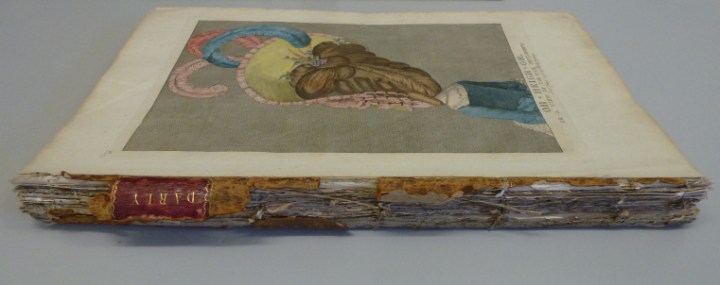
Album of Darly prints in the Chester Beatty Collection (Wep 0494), with its much deteriorated eighteenth-century binding, as photographed in the Library’s conservation studio in 2015. More information is available at the Chester Beatty Conservation Blog.
◊ ◊ ◊ ◊ ◊
Now on view at the Chester Beatty Library:
Wicked Wit: Darly’s Comic Prints
Chester Beatty Library, Dublin Castle, Dublin, 11 September 2015 — 14 February 2016
Curated by Jill Unkel
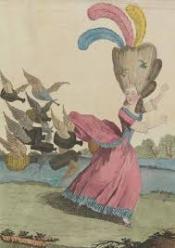 Drawing on the Library’s own collections, this exhibition features over 100 hand-coloured, eighteenth-century etchings by the husband and wife team, Mary and Matthew Darly. From the time of their marriage, they worked in tandem designing, engraving and publishing prints using the signature, MD or MDarly.
This printer-publisher team produced well over 500 comic images of Caricatures, Macaronies, and Characters from no. 39 Strand (London) between 1770 and 1780. At the height of their fame, carriages lined the streets so their occupants could titter at the images on display in Darly’s Comic Exhibitions, held every spring from 1773 to 1778. By the end of the decade, they had become so popular that their publications were available throughout Great Britain and Ireland, Europe and even America. The name Darly became synonymous with the humorous images they produced.
◊ ◊ ◊ ◊ ◊
The catalogue is available for purchase through the Beatty Library’s shop:
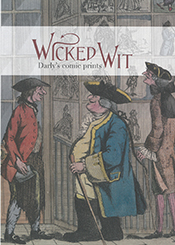 Jill Unkel, Wicked Wit: Darly’s Comic Prints (Dublin: Chester Beatty Library, 2015), 80 pages, ISBN: 978-0957399822, 20€.
This fully illustrated catalogue is divided into a number of themes and opens with a general introduction to Mary and Matthew Darly. It then examines more specifically their comic prints, publications, and exhibitions. This is followed by a more detailed exploration of the various subjects presented in their comic images: stereotyped characters (and their relation to theatre), caricatures of notable contemporaries, satires of the dress of young macaroni (akin to a dandy or fop) men and their feathered-feminine counterparts, and finally the impolitical satires related to the war with the American Colonies.










 Enfilade
leave a comment