Capability Brown Festival 2016 Marks Designer’s 300th Birthday

Blenheim Palace
◊ ◊ ◊ ◊ ◊
Press release for the Festival, which includes events throughout the year:
Capability Brown Festival 2016
The Capability Brown Festival 2016 is the first-ever nationwide celebration of the work of Lancelot ‘Capability’ Brown (1716–1783). It marks the 300th anniversary of his birth in August 1716. The Festival unites 19 partner organisations, in the UK’s largest festival of its kind to date. It is funded with a grant from the Heritage Lottery Fund, with additional match funding, and funding in kind, from the Festival’s partners and supporters. The Festival is managed by the Landscape Institute.
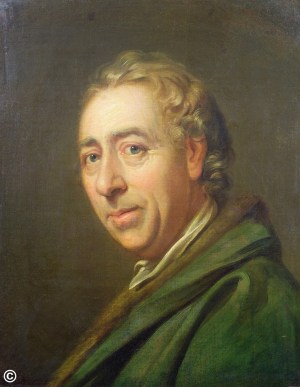
Richard Cosway, Portrait of Lancelot ‘Capability’ Brown, ca.1770–75 (Private Collection/Bridgeman Images)
The Festival has two key strands. The first is about increasing audiences and public access to the sites Brown worked or advised on. People will be able to explore and engage with Brown’s legacy landscapes, features and houses. The Festival will encourage as many Brown sites as possible to open in 2016, including those not ordinarily open to the public, and will support site owners and guardians in interpreting their landscapes for visitors. The second strand of the project is to discover more about Brown’s work and how he created his amazing landscapes and management systems with the tools available in the eighteenth century. Researchers, volunteers, independent groups and individuals, universities and sites themselves are being encouraged to undertake research projects on Brown and his work. This will be collated and shared through exhibitions, websites, social media and a range of events.
The Capability Brown Festival 2016 will
• Celebrate Capability Brown as an artist and landscape designer
• Encourage an increased number of people and a more diverse audience to visit, learn about and enjoy Brown’s landscapes
• Commission a range of interesting and innovative projects to encourage sites and people to get involved across the country
• Encourage a greater appreciation of our designed landscape heritage.
 To achieve this the Festival project team will
• Offer a comprehensive programme of support to owners of Brown sites, aiming to open as many as possible during Festival year, including those not normally open to the public
• Develop a network of hub sites across England to support and engage the Brown sites in their area or region
• Work with sites, with a special focus on those in urban areas and those commissioned to run projects, to bring Brown to new audiences
• Interpret all or as many sites as possible, using research by volunteers who will be trained and supported by the Festival
• Use media, PR, partner and central communication opportunities to promote understanding of Brown’s art and design influence
• Stimulate new research, and create a definitive record of Brown sites
• Ensure that the Festival’s findings, research and learning resources are accessible to as many people as possible, and share learning as it develops through a programme of regional seminars
• Engage volunteers in all aspects of the 2016 celebrations.
Lancelot ‘Capability’ Brown changed the face of eighteenth-century England, designing country estates and mansions, moving hills and making flowing lakes and serpentine rivers. Brown was baptised on 30 August 1716 at Kirkharle, Northumberland, the fifth of the six children of William Brown, a yeoman farmer and Ursula, née Hall, who had worked in the big house on the Kirkharle estate. He went to the village school at Cambo, and then began work as a gardener at Kirkharle, leaving in 1739. In 1741 he reached Stowe, Buckinghamshire where he rapidly assumed responsibility for the execution of both architectural and landscaping works in the famous garden. It was at Stowe in 1744 that Brown married Bridget Wayet, with whom he eventually had nine children. While at Stowe, Brown also began working as an independent designer and contractor and in autumn 1751, shortly after Cobham’s death, he was able to move with his family to the Mall, Hammersmith, the market garden area of London. His nickname of ‘Capability’ is thought to have come from his describing landscapes as having ‘great capabilities’.
Brown’s style derived from the two practical principles of comfort and elegance. On the one hand there was a determination that everything should work, and that a landscape should provide for every need of the great house. On the other his landscapes had to cohere and look elegant. While his designs have great variety, they also appear seamless owing to his use of the sunk fence or ‘ha-ha’ to confuse the eye into believing that different pieces of parkland, though managed and stocked quite differently, were one. His expansive lakes, at different levels and apparently unconnected, formed a single body of water as if a river through the landscape, that like the parkland itself, ran on indefinitely. This effortless coherence is taken for granted today in a way that was predicted in his obituary: ‘where he is the happiest man he will be least remembered, so closely did he copy nature his works will be mistaken’.
Brown offered a number of different services to his clients: for a round number of guineas, he could provide a survey and plans for buildings and landscape, and leave his client to execute his proposal; more frequently he provided a foreman to oversee the work, which would be carried out by labour recruited from the estate. Even in 1753, when he opened his account with Drummond’s Bank, Brown was employing four foremen and by the end of the decade he had over twenty foremen on his books. Finally, he could oversee and refine the work himself, usually by means of visits for a certain number of days each year. He also practiced architecture, and during the 1750s contributed to several country houses, including Burghley House, Blenheim, Chatsworth and Harewood. However, his architecture played second fiddle to his ‘place-making’. In 1764 he was appointed to the gardens of Hampton Court, Richmond and St James’s, and he then moved to Wilderness House, Hampton Court.
Brown had suffered from asthma all his life, and his habit of the constant travel, together with his practice of not always charging for work (he would sometimes allow his client to determine the value of what he had done and seems frequently to have submitted plans and surveys without a bill), did affect both his health and finances. He continued to work and travel however until his sudden collapse and death on February 6th, 1783. He died at his daughter Bridget Holland’s house in London, but was buried at Fenstanton, in Cambridgeshire, the only place he is known to have owned property and where he became Lord of the Manor.
Brown is best remembered for landscape on an immense scale, constructing not only gardens and parkland, but planting woods and building farms linked by carriage drives, or ‘ridings’, many miles from the main house. Although his work is continually reassessed, every landscape gardener and landscape architect since, both in Britain and across the developed world, has been influenced in one way or another by Brown. Over two centuries have passed since his death, but such are the enduring qualities of his work that over 150 of the 260 or so landscapes with which he is associated remain worth seeing today. The images that Brown created are as deeply embedded in the English character as the paintings of Turner and the poetry of Wordsworth.
Founding Partners
The Landscape Institute
The National Trust
The Historic Houses Association (HHA)
English Heritage
Historic England
VisitEngland
The National Garden Scheme
The Gardens Trust
Kolab
The National Association of Decorative & Fine Arts Societies (NADFAS)
VisitBritain
Parks & Gardens UK
Festival Partners
Blenheim Palace
The Royal Horticultural Society
Bridgeman Images
The Embroiderers’ Guild
Festival Supporter
The Georgian Group
Festival Funder
Heritage Lottery Fund
New Book | The Philip Johnson Glass House: An Architect in the Garden
From Rizzoli (for anyone thinking about where Capability Brown’s ideas lead in the twentieth century) . . .
Maureen Cassidy-Geiger, with a foreword by Charles A. Birnbaum and photography by Peter Aaron, The Philip Johnson Glass House: An Architect in the Garden (New York: Skira Rizzoli, 2016), 224 pages, ISBN: 978-0847848362, $55.
 The first authoritative book on the history of the Glass House property—Philip Johnson’s fifty-year project of iconic modernist design, encompassing the remarkable buildings, landscape, and follies. From its completion in 1949 to the present day, Philip Johnson’s Glass House has drawn cognoscenti and the curious from around the world to New Canaan, Connecticut, to experience what might be the most photographed modernist residence in America. The property—an architectural playground on forty-seven acres with eleven Johnsonian follies dating from 1949 to 1995—is an icon of twentieth-century architectural and landscape design. The book chronicles how Philip Johnson and David Whitney, the architect and the plantsman, lived on the property for decades and used the landscape as an ever-changing canvas for their designs—the result of a unique synthesis of influences and ideas from across history and geography. New research reveals Johnson’s and Whitney’s interaction with the landscape and the evolution of the site from a five-acre parcel to a world-renowned gentlemanly estate for modern times. The Philip Johnson Glass House—beautifully illustrated with vintage and commissioned photography—will be a must-have for connoisseurs of architecture, landscape design, photography, and social history.
Maureen Cassidy-Geiger is an internationally recognized curator, scholar, and educator with expertise in European decorative arts, gardens, photography, and the history of architecture.
Charles A. Birnbaum, FASLA FAAR, is president and CEO of the Cultural Landscape Foundation in Washington, D.C.
New Book | The Secret Life of the Georgian Garden
Forthcoming from I. B. Tauris:
Kate Felus, with a foreword by Roy Strong, The Secret Life of the Georgian Garden: Beautiful Objects and Agreeable Retreats (London: I. B. Tauris, 2016), 240 pages, ISBN: 978-1784535728, $28 / £18.
 Georgian landscape gardens are among the most visited and enjoyed of the UK’s historical treasures. The Georgian garden has also been hailed as the greatest British contribution to European Art, seen as a beautiful composition created from grass, trees and water—a landscape for contemplation. But scratch below the surface and history reveals these gardens were a lot less serene and, in places, a great deal more scandalous. Beautifully illustrated in colour and black and white, this book is about the daily life of the Georgian garden. It reveals its previously untold secrets from early morning rides through to evening amorous liaisons. It explains how by the eighteenth century there was a desire to escape the busy country house where privacy was at a premium and how these gardens evolved aesthetically, with modestly-sized, far-flung temples and other eye-catchers, to cater for escape and solitude as well as food, drink, music and fireworks. Its publication coincides with the 2016 tercentenary of the birth of Lancelot ‘Capability’ Brown, arguably Britain’s greatest ever landscape gardener, and the book is uniquely positioned to put Brown’s work into its social context.
Kate Felus is a garden historian and historic landscape consultant. She researches designed landscapes of all periods, specializing particularly in eighteenth- and early nineteenth-century parks and gardens.
Call for Papers | Décor and Architecture
From H-ArtHist:
Décor and Architecture in the 17th and 18th Centuries:
Between Adherence and Autonomy / Entre union et séparation des arts
University of Lausanne, 24–25 November 2016
Proposals due by 30 May 2016
During the early modern period, décor was considered to be one of the most fundamental elements of architecture. Thanks to décor, architecture could elevate itself beyond simple masonry and claim a superior status. Décor was thus defined as a necessary prerequisite for architecture, rather than a marginal component. However, despite its privileged status, many authors mistrusted it, fearing the harmful effect which an uncontrollable proliferation of ornament would surely have on architecture. This conference aims to question how the relations between decor and architecture were defined and implemented in Europe in the 17th and 18th centuries.
Our perception of these relations has often been informed by teleological approaches: indeed, the radical ideas conveyed by certain 20th-century texts, which define décor as an unnecessary bi-product of architecture, have acted as a distorting prism. History of art, for its part, has often separated décor-related studies from architecture-related ones, suggesting a de facto rupture between these fields and potentially biasing our understanding of the artistic production of the early modern period by reducing its scope. As various case studies have shown, the conditions to which the invention of a décor was subjected varied greatly from one building to another. The architects’ prerogatives differed according to the circumstances and constraints imposed on them: while some were largely involved in the invention of the décor, others delegated its conception to artists or workmen.
The following questions—as well as many other similar ones—may be used as a framework for the presentations:
• The term ‘décor’ defines a vast field with no distinct boundaries, potentially covering everything from sculptures, stucco work, paintings, panelling, mirrors and furniture to architectural orders. How did theorists, artists, connoisseurs and patrons define the relations between décor and architecture? In what circumstances was it felt that décor had exceeded its mandate and thus presented a threat to architecture? Were all excesses systematically condemned?
To this discussion of theory can be added several practice-related questions:
• Who was in charge of the invention of a décor and what consequences could a possible sharing of tasks have on the architectural project? To what extent were theoretical principles implemented on the building site? Case studies focusing on architects, artists or workmen could question their part in the creation of a décor.
Finally, historiography raises its own issues:
• How have the discourses developed in the 17th and 18th centuries been understood and interpreted in later times? How has the reception of these discourses biased our perception of the relations between décor and architecture in the 17th and 18th centuries?
Paper proposals which exceed the set chronological limits may be taken into account by the scientific board, if they shed pertinent light on the questions raised in the conference. Papers will be 30 to 40 minutes long, followed by 15- to 20-minute discussions. Paper proposals of up to 300 words—accompanied by a brief résumé and list of publications—should be sent to Matthieu Lett (matthieu.lett@unil.ch) and Carl Magnusson (carl.magnusson@unil.ch) before 30th May 2016.
Organisers
Matthieu LETT (université de Lausanne, université Paris Ouest Nanterre La Défense)
Carl MAGNUSSON (université de Lausanne, The Courtauld Institute of Art)
Scientific Committee
Marianne COJANNOT-LE BLANC (université Paris Ouest Nanterre La Défense)
Alexandre GADY (université Paris-Sorbonne)
Dave LÜTHI (université de Lausanne)
Christian MICHEL (université de Lausanne)
Werner OECHSLIN (Eidgenössische Technische Hochschule Zürich)
Antoine PICON (Harvard University)
Katie SCOTT (The Courtauld Institute of Art)
Snite Museum Acquires Early Portrait of Josephine de Beauharnais
Among the recent acquisitions at the Snite Museum of Art, University of Notre Dame:

Michel Garnier, Portrait of Josephine de Beauharnais, 1790, oil on mahogany panel, 12.75 x 10.5 inches (Snite Museum of Art, University of Notre Dame; gift of Michael and Susie McLoughlin, 2015.079)
This unusual portrait of Josephine de Beauharnais (1763–1814), the future wife of Napoleon Bonaparte and empress of France, joins depictions of other political figures in the Snite Museum’s collections. This may be the earliest known portrait of the young socialite, probably commissioned by her first husband Alexandre de Beauharnais.
Josephine was born to a plantation owner on the island of Martinique and married the governor’s son, who served as an officer in both the American Revolution and the French Revolutionary Army, in 1779. Running afoul of Robespierre, both Alexandre and Josephine were imprisoned during the Reign of Terror; Josephine alone escaped the guillotine. The widow with two children married Napoleon in 1796 but bore him no children. Concerned for the succession of the throne, Napoleon divorced her in 1809.
Painted on the occasion of the Fête de la Federation (the anniversary of the fall of the Bastille on July 14), the artist shows Josephine in an oval, à l’antique (in profile) against a fairly simple background dressed in a fashionable red, white, and blue ensemble that suggests her solidarity with the revolutionaries. During the festivities, she and her husband represented the Island of Martinique, signaled by her exotic headgear described as à la créole. Seventy years later this work served as a model for another painting made by the artist Hector Viger who used it as a source for his fictionalized scene of Josephine and their two children visiting Alexandre in the Luxembourg prison.
Exhibition | Gravelot: Designing Georgian Britain
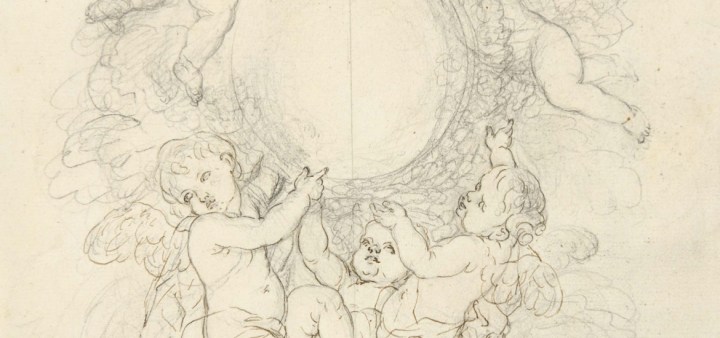
Now on view at Gainsborough House:
Gravelot: Designing Georgian Britain
Gainsborough’s House, Sudbury, Suffolk, 27 February — 5 June 2016
Hubert-François Bourguignon, better known as Gravelot, was one of the most influential designers of the eighteenth century. Born in Paris in 1699, he studied in Rome before returning to the French capital and working under the painter François Boucher. In 1732 he emigrated to London, where he remained until 1745. During this period he played a central role in introducing Rococo style into British art and design and was drawing master to the young Thomas Gainsborough RA.
This exhibition draws upon the impressive body of work by Gravelot in the Gainsborough’s House permanent collection. It showcases his extraordinary versatility as a draughtsman, which the eighteenth-century commentator on art George Vertue described as “a great and fruitful genius for designs.” The prints and drawings that feature in the display demonstrate Gravelot’s ability to operate across a variety of categories, producing work for a wide array of media: from book illustrations, graphic satire and printed ephemera, to snuff boxes, walking canes, silverware, medals and other forms of material culture. They also reveal the diverse sources from which Gravelot derived inspiration: from contemporary life and politics, to the natural world, historical narratives and classical literature.
Exhibition | Jannis Kounellis at Monnaie de Paris
From the Monnaie de Paris:
Jannis Kounellis
Monnaie de Paris, 11 March — 30 April 2016
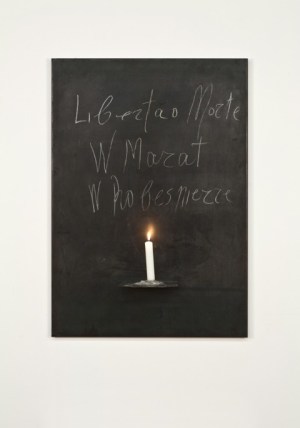
Jannis Kounellis, Libertà o Morte. W Marat W Robespierre, 1969.
At Monnaie de Paris (the Paris Mint), Jannis Kounellis has composed a dramatic sculpture throughout the thousand square metres of the 18th-century exhibition rooms of this Palace beside the Seine. Eminently present, concrete, irreducible, the new exhibition by Kounellis imposes a direct experience on visitors, without intermediaries.
“I come to Paris empty-handed, like an old painter.” This is what Kounellis said a few months ago in response to the invitation by Monnaie de Paris, which hosts this figure of contemporary art, at the origin of the Arte povera movement. As a painter, Kounellis designed his exhibition at Monnaie de Paris as a fresco. He had already, in 1972, crossed the boundaries of painting with Da inventare sul posto, a work accompanied by a dancer and a violinist.
In the 18th-century Monnaie de Paris salons, the paintings are staged through an installation of metal trestles. This army of cold metal will captivate visitors with its size and the contrast with the architecture and décor of the Palace: columns, marble, ornaments, gilt…
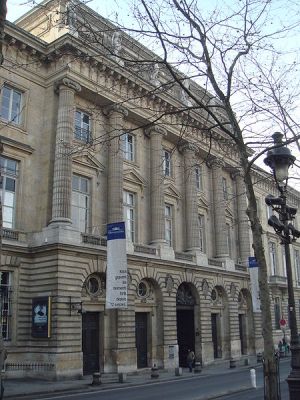
Jacques-Denis Antoine, Hôtel de la Monnaie, 1767–75
(Photo: Wikimedia Commons)
Jannis Kounellis offers a true experience to visitors. He had already positioned living energy alive, animal or human, at the centre of his work with the incomparable 12 live horses in 1969. But also in Nabucco in 1970 or quarters of hanging meat, or the Stommeln Pullheim Synagogue exhibition where fish evolved into a plate threatened with a knife in 1991.
Kounellis is inspired by Monnaie de Paris, the oldest company in the world and part of the heart of the last factory in Paris where know-how and industry intermingle to create his ‘new project’. The artist appeals to the visitor and raises the question of how a work is produced. It is in the technique, in the craft of the workshops, in the intuitive use of shapes and at the modelling stage that the artist’s project for Monnaie de Paris is born. The work Libertà o Morte. W Marat W Robespierre, 1969 will be presented in the exhibition as well as Da inventare sul posto which will echo the beating heart of the coin presses of Monnaie de Paris, embodying the strength, the rhythm, the orchestration.
A special public program will be performed by Etel Adnan with poetry and musical sessions on 17 March and 28 April at 7pm. Transmitted live on RAM Radioartemobile and broadcast on the Monnaie de Paris website, these rendez-vous will form part of a unique selection of radio archives.
Christophe Beaux, Jannis Kounellis, and Chiara Parisi, Jannis Kounellis (Berlin: Hatje Cantz, 2016), 64 pages, ISBN 978-3775741590, 30€. In French and English.
Conference | Keeping History Above Water

◊ ◊ ◊ ◊ ◊
One centerpiece of this upcoming conference on rising sea levels and historic preservation will be the NRF’s 74 Bridge Street Probe, a case study of possible mitigation adaptations for the ca. 1728 Christopher Townsend House and the surrounding colonial-era ‘Point’ neighborhood, which sits perilously close to mean sea level, and in which NRF owns about a dozen other eighteenth-century houses. From the conference website:
Keeping History Above Water: Sea Level Rise and Historic Preservation
Newport, Rhode Island, 10-13 April 2016
Keeping History Above Water will be one of the first national conversations to focus on the increasing and varied risks posed by sea level rise to historic coastal communities and their built environments. This is not a conference about climate change, but about what preservationists, engineers, city planners, legislators, insurers, historic home owners and other decision makers need to know about climate change—sea level rise in particular—and what can be done to protect historic buildings, landscapes and neighborhoods from the increasing threat of inundation.
Over four days, specialists from across the United States and abroad will share experiences, examine risks, and debate solutions with an emphasis on case studies and real world applications. Keeping History Above Water will approach sea level rise from a multi-disciplinary perspective in order to develop practical approaches to mitigation, protective adaptation, and general resilience.
For anyone concerned with preserving historic coastal communities, Keeping History Above Water offers an opportunity to hear from leaders in the field, participate in workshops on practical solutions, tour threatened areas and structures in Newport and its environs, and simply connect over this area of shared concern.
The Newport Restoration Foundation
Founded as a not-for-profit institution in 1968 by Doris Duke, the Newport Restoration Foundation (NRF) preserves, maintains, and interprets the early architectural heritage of Aquidneck Island and the fine and decorative art collections of Doris Duke. Since its founding, NRF has restored and preserved more than 80 eighteenth- and early nineteenth-century buildings, 74 of which are currently rented as private residences to tenant stewards and maintained by a full-time crew of carpenters and painters. This is one of the largest collections of period architecture owned by a single organization anywhere in the United States. More importantly, the majority of these structures are being lived in and used as they have for more than three centuries, making them an enduring and defining feature of the historic architectural fabric of Newport and a source of great pride for the community.
As a leader in the preservation of early American architecture, the NRF is well positioned to provide a forum for the exchange of information across disciplinary boundaries for collaborative problem solving in the areas of most critical concern to the field of historic preservation today.
Conference Partners
National Trust for Historic Preservation
Preserve Rhode Island
Roger Williams University
Salve Regina University
URI’s Coastal Resource Center
Union of Concerned Scientists
Call for Papers | Seeing Through? The Materiality of Dioramas
From H-ArtHist:
Seeing Through? The Materiality of Dioramas, 1560–2010
University of Bern, 1–2 December 2016
Proposals due by 31 May 2016
Dioramas are at the crossroads of artistic and scientific practices. They bring together artists, scientists, and collectors, thus providing an opportunity to reflect on the polyvalence of these actors and the definition of their expertise. In 1822, Louis Daguerre coined the term ‘diorama’ when describing his theater. The word diorama means literally ‘seeing through’. In accordance with this etymology, dioramas embody a sense of transparency and life-likeness. In addition to providing theatrical and visual experiences, dioramas are multidimensional installations that incorporate paintings, objects, stuffed animals or mannequins. Habitat groups mixing taxidermy and painted backgrounds were designed for natural history museums, while anthropological dioramas were disseminated all over Europe during the second half of the nineteenth century. They were usually life-sized and site specific, but they could also be reduced to maquettes.
To date, these installations have been studied by scholars from various disciplines, mainly as side topics. Media historians have considered them primarily as proto-cinematic, whereas within the fields of anthropology, museum studies and postcolonial studies, they are generally analyzed as displays that reflect political taxonomies and stereotyped representations.
However, dioramas are not merely images or displays: they are also physical objects made of multiple materials, such as plaster, wood, paper, paint, glass, fur, wax, and metal. The discipline of art history thus provides us with the opportunity to approach the materiality of these installations. Indeed, dioramas are composite and hybrid things, created through cultural interaction and physical encounter. Multiple hands as well as various visions are involved in the process of their creation—and later on, during their conservation. Dioramas therefore allow for the study of contact zones and material exchanges between private and public spheres, as well as between Western and non-Western contexts. Finally, dioramas as objects of study within the field of art history enable us to address values such as authenticity and realism in various contexts.
Part 1 A Genealogy, 1560–1822
This session will explore the diorama’s prehistory before its ‘invention’ by Daguerre, starting with objects, installations, and machinery created for churches and theaters between the sixteenth and eighteenth centuries. Three-dimensional installations, such as groups gathering natural history specimen (taxidermic animals, skeletons) will be of greatest interest. Presentations may focus on wax museums, and more broadly on hyperrealistic figures that were displayed in groups and used for entertainment as well as for pedagogical or medical purposes. Early forms of panoramas, and diaphanoramas will also be of primary importance, such as the creations of the Swiss landscape painter Franz Niklaus König, first exhibited in Bern in 1811.
Part 2 Dioramania, 1822–1970
The second session will consider the numerous dioramas created during the nineteenth and twentieth centuries. Habitat Groups and anthropological dioramas became very popular in international fairs and museums until the mid-twentieth century. They were common in both Western and non-Western cultures, and were especially prominent in the Middle East. In some cases, dioramas were intended to represent national identities and in others, they became forms of resistance used, for instance, by African-American or Native American communities. The contributions to this section may explore the creation of specific sets of installations in fairs, museums, and public space, as well as the politics of dioramas.
Part 3 Re-appropriation, 1970–2010
As of the 1970s, state-sponsored museums created displays of traditional craftsmanship through life-size dioramas, such as the Dubai Museum or the Jewels and Costume Museum in Amman. Native American community centers, such as The Mashantucket Pequot Museum in Connecticut, have been using life-size dioramas since the late 1990s. They are also being reinterpreted by contemporary artists, as shown, for example, in the photographs of Hiroshi Sugimoto. In that perspective, the re-exhibition of dioramas would be a topic of interest. Finally, writing the history of dioramas today might also be a way to reframe the creation of artistic movements such at Surrealism or Dada, as well as the work of such artists as Marcel Duchamp, Edward Kienholz, and Joseph Cornel, by filling in important gaps in the history of art, and the history of installations.
Submissions
An abstract of approximately 500 words and a brief CV should be sent to Noémie Etienne (netienne@getty.edu) and Nadia Radwan (nadia.radwan@ikg.unibe.ch) by May 31. Responses will be given by June 30. The colloquium will be held in English.
New Book | The Empress of Art: Catherine the Great
From Pegasus Books:
Susan Jaques, The Empress of Art: Catherine the Great and the Transformation of Russia (New York: Pegasus Books, 2016), 384 pages, ISBN: 978-1605989723, $21.
 Ruthless and passionate, Catherine the Great is singularly responsible for amassing one of the most awe-inspiring collections of art in the world and turning St. Petersburg in to a world wonder. The Empress of Art brings to life the creation of this captivating woman’s greatest legacy.
An art-oriented biography of the mighty Catherine the Great, who rose from seemingly innocuous beginnings to become one of the most powerful people in the world. A German princess who married a decadent and lazy Russian prince, Catherine mobilized support amongst the Russian nobles, playing off of her husband’s increasing corruption and abuse of power. She then staged a coup that ended with him being strangled with his own scarf in the halls of the palace, and she being crowned the Empress of Russia.
Intelligent and determined, Catherine modeled herself off of her grandfather in-law, Peter the Great, and sought to further modernize and westernize Russia. She believed that the best way to do this was through a ravenous acquisition of art, which Catherine often used as a form of diplomacy with other powers throughout Europe. She was a self-proclaimed “glutton for art” and she would be responsible for the creation of the Hermitage, one of the largest museums in the world, second only to the Louvre. Catherine also spearheaded the further expansion of St. Petersburg, and the magnificent architectural wonder the city became is largely her doing. There are few women in history more fascinating than Catherine the Great, and for the first time, Susan Jaques brings her to life through the prism of art.
Susan Jaques is a journalist specializing in art. She holds a BA in history from Stanford University and an MBA from UCLA. She is the author of A Love for the Beautiful: Discovering America’s Hidden Art Museums and lives in Los Angeles, where she’s a gallery docent at the J. Paul Getty Museum.










 Enfilade
leave a comment