New Book | Life in the Country House in Georgian Ireland
From Yale UP:
Patricia McCarthy, Life in the Country House in Georgian Ireland (London: The Paul Mellon Centre for Studies in British Art, 2016), 272 pages, ISBN: 978-0300218862, £45 / $75.
 For aristocrats and gentry in 18th-century Ireland, the townhouses and country estates they resided in were carefully constructed to accommodate their cultivated lifestyles. Based on new research from Irish national collections and correspondence culled from papers in private keeping, this publication provides a vivid and engaging look at the various ways in which families tailored their homes to their personal needs and preferences. Halls were designed in order to simultaneously support a variety of activities, including dining, music, and games, while closed porches allowed visitors to arrive fully protected from the country’s harsh weather. These grand houses were arranged in accordance with their residents’ daily procedures, demonstrating a distinction between public and private spaces, and even keeping in mind the roles and arrangements of the servants in their purposeful layouts. With careful consideration given to both the practicality of everyday routine and the occasional special event, this book illustrates how the lives and residential structures of these aristocrats were inextricably woven together.
Patricia McCarthy is an independent architectural historian based in Dublin.
◊ ◊ ◊ ◊ ◊
C O N T E N T S
Introduction
1 Approaching and Arriving
2 Crossing the Threshold
3 Dining
4 Public Rooms
5 Family Spaces
6 Servants and Privacy
Notes
List of Inventories
Glossary
Index
Acknowledgments
Call for Papers | Art and War
From H-ArtHist:
Art and War: New Perspectives
The Frick Collection, New York, 16 September 2016
Proposals due by 16 June 2016
The Frick Collection is pleased to invite submissions for Art and War, a symposium that will accompany the special exhibition Watteau’s Soldiers: Scenes of Military Life in Eighteenth-Century France. On view from July 12 to October 2, 2016, the exhibition presents a selection of Jean-Antoine Watteau’s little-known drawings and paintings of military life. In these works, Watteau eschews martial glory in favor of depicting more mundane aspects of life on the front: fatigue, boredom, simple diversions. Prompted by Watteau’s singular vision of war, The Frick Collection solicits 25-minute papers that consider the relationship between art and war in ways both direct and oblique, across all media, geographic regions, and time periods. We welcome a range of approaches that engage critically with the historical and theoretical problems posed by the relationship between art and war.
Questions to be addressed include, but are not limited to
• What representational pressures and aesthetic challenges has war created?
• Where have artists located themselves in, away from, or after ‘the fight’?
• How can art convey the experience of war—not only the violence of battle, but also its impact on everyday life?
• How has art glorified, condemned, or otherwise commented on war?
• What can we learn from examining this relationship in an age of perpetual war?
Please send a 250-word abstract and CV by Thursday, June 16, 2016, to Caitlin Henningsen (henningsen@frick.org) and Aaron Wile (wile@frick.org). Proposals from emerging scholars are particularly encouraged.
Call for Papers | HECAA Session at UAAC, 2016
Thanks again to Christina Smylitopoulos, HECAA is scheduled to be represented at this year’s UAAC Conference! Details and a full list of panels (65 in all) are available here»
◊ ◊ ◊ ◊ ◊
Universities Art Association of Canada / l’association d’art des universités du Canada
Université du Québec, Montréal, 27–30 October 2016
Proposals due by 24 June 2016
HECAA Open Session (Historians of Eighteenth-Century Art and Architecture)
The objective of this society is to stimulate, foster, and disseminate knowledge of all aspects of visual culture in the long eighteenth century. This HECAA open session welcomes papers that examine any aspect of art and visual culture from the 1680s to the 1830s. Special consideration will be given to proposals that demonstrate innovation in theoretical and/or methodological approaches. Please email proposals for 20-minute papers to Dr. Christina Smylitopoulos (University of Guelph), csmylito@uoguelph.ca.
New Book | Agents of Space
This collection of essays grew out of HECAA-sponsored panels at conferences of the Universities Art Association of Canada. From Cambridge Scholars Publishing:
Christina Smylitopoulos, ed., Agents of Space: Eighteenth-Century Art, Architecture, and Visual Culture (Newcastle upon Tyne: Cambridge Scholars Publishing, 2016), 238 pages, ISBN: 978-1443888837, £48.
 In the last twenty-five years, the concept of space has emerged as a productive lens through which historians of the long eighteenth century can examine the varied and mutable issues at play in the creation and reception of objects, images, spectacles, and the built environment. This collection of essays investigates the potentialities afforded by space in eighteenth-century art and visual culture. Rather than being defined by a particular school of art or the type of space invoked, it invites global difference and reflects scholarly engagement in the eighteenth-century artistic phenomena of Italy, Mexico, and India, as well as Britain and France in immediate, imperial, and transnational contexts. The contributions here share an emphasis on agency, which in this context means the way in which objects, artists, architects, and patrons (in their many guises) have attempted to negotiate various artistic, political, philosophical, and socio-economic values through creating, reflecting, appropriating, denying, or reimagining space.
Divided into two sections, the chapters in the first part, “Memory,” examine specific episodes of eighteenth-century art and visual culture that are acts of remembering, or a result of such action, or objects used to persuade through reminding. In these essays, space’s agency—whether understood as real, theoretical, or imagined—is harnessed by recalling past cultures so as to assert and reassert identities that are also bound by limiting factors, including class, religion, artistic methodology, and materiality. The chapters in the second section, “Reform,” demonstrate memory’s perseverance in eighteenth-century attempts to strike off in new directions, and consider more concrete and purposeful cases of reaching toward the future. In this section, the capacity of space to inform the development, growth, and even transformation of this period is emphasized, revealing an interest in the incremental or radical reform of politics, psychological states, artistic eminence, and colonial/imperial identities.
This book invites a broader geographical scope to studies of space and underscores the ways in which agency can be productive to multifarious lines of artistic, cultural, and historical inquiry.
Christina Smylitopoulos is Assistant Professor of Art History in the School of Fine Art and Music at the University of Guelph. Prior to her position at Guelph, Smylitopoulos was a Postdoctoral Research Associate at the Yale Center for British Art, a Social Science and Humanities Research Council of Canada Doctoral Fellow and a Paul Mellon Centre for Studies in British Art Junior Fellow.
◊ ◊ ◊ ◊ ◊
C O N T E N T S
List of Illustrations
Acknowledgements
Michael Yonan, Preface
Christina Smylitopoulos, Introduction—Discursivity: Space, Agency, and Eighteenth-Century Art, Architecture, and Visual Culture
Part I: Memory
1 Joan Coutu, On Being There: The Significance of Place and the Grand Tour for Britons in the Eighteenth Century
2 Elizabeth Nogan Ranieri, Sacred Space and Imagery: The Basilica of San Domenico Maggiore’s Eighteenth-Century Sacristy
3 Barbara Tetti, The Space Between the Banks of the Tevere River: Carlo Marchionni’s Drawings of Three Roman Bridges
4 Kristin Campbell, “The Proprietor exerts his utmost Care…”: The Commercial and Commemorative Fates and Fortunes of John Boydell’s Houghton Gallery Project
Part II: Reform
5 Paul Holmquist, Tying the Seductive Powers of Art to the Innate Rights of Man: The Architect as Legislator in the Ideal City of Chaux
6 Ji Eun You, Draping the Republic: Fabric Furnishings in Interior Spaces during the French Revolution
7 Diana Cheng, Lord Chesterfield’s Boudoir: A Room Without the Sulks
8 Alena Robin, Voices from the Archives: Phelipe Chacón, José de Ibarra, Nicolás Enríquez, and The Painter’s Profession in Mexico City in 1735
9 Sutapa Dutta, Agents of an Epistemological Space: Education and the Civilizing Mission in Early Colonial Bengal
Contributors
Index
Exhibition | Madame de Pompadour: Patron and Printmaker
◊ ◊ ◊ ◊ ◊
Press release (16 February 2016) from The Walters
Madame de Pompadour: Patron and Printmaker
The Walters Art Museum, Baltimore, 28 February — 29 May 2016
Curated by Susan Wager
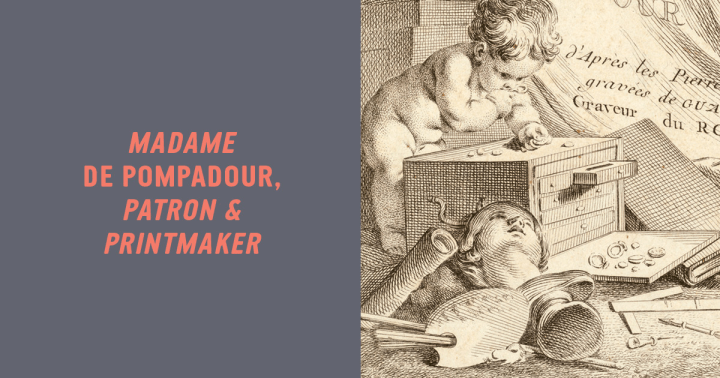
Madame de Pompadour (1721–1764) is known for being the influential mistress of King Louis XV of France and an enthusiastic patron of the arts, but few know that she was also a printmaker. An unexpected finding in the Rare Books Collection of the Walters Art Museum uncovered an extremely rare first-edition set of etchings she created in the early 1750s. Her intellectual and artistic prowess are highlighted in the exhibition Madame de Pompadour, Patron and Printmaker.
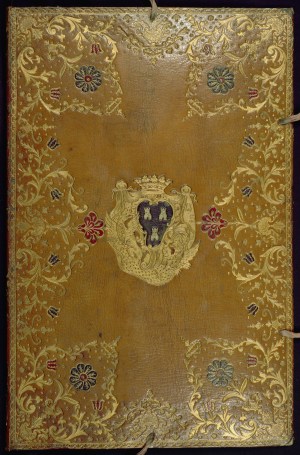
Suite of Prints Engraved by Madame the Marquise de Pompadour after the Carved Gems of Jacques Guay, ca. 1755 (Baltimore: The Walters Art Museum/Ariel Tabritha/Kimber Wiegand)
On display are seven selections from the Suite of Prints Engraved by Madame the Marquise de Pompadour after the Carved Gems of Jacques Guay. Museum founder Henry Walters acquired the Suite in 1895 from a Parisian book dealer. The set comprises more than 50 detailed etchings of gems carved with diverse images, including portraits of the crown prince and the royal mistress’s spaniel, Bébé. About 20 of these rare first-edition sets were produced around 1755, and the copy at the Walters is the only complete set to survive.
Complementing the selection of prints are 18 objects that touch on aspects of Pompadour’s wide-ranging patronage. Over time, she accumulated paintings, sculpture, porcelain, tapestries, metalwork, and other sumptuous objects for her many personal residences. Included are works she likely owned, such as two pairs of Sèvres vases and a pair of French-mounted Asian porcelains.
“The works on view show that she was thinking about these objects and images in a very sophisticated way,” says Susan Wager, curator of the exhibition. “I hope that comes through when visitors see her prints and the objects that she was drawn to as a collector.”
Formerly the Andrew W. Mellon postdoctoral curatorial fellow in the Department of 18th- and 19th-Century Art, Wager discovered the volume after an object listed in the museum’s database as a late posthumous edition caught her eye. The etchings had remained unrecognized for more than a century. The Suite is contained in an 18th-century leather portfolio emblazoned with Pompadour’s coat of arms and, unlike other editions, contains a handwritten table of contents.
Susan Stamberg reported on the exhibition for NPR’s Morning Edition on 10 May 2016 (the site includes additional images). Details of the discovery will be published by Wager in a forthcoming article for The Burlington Magazine.
Call for Papers | Understanding Material Loss
From the conference website:
Understanding Material Loss across Time and Space
University of Birmingham, 17–18 February 2017
Proposals due by 14 October 2016
 Understanding Material Loss across Time and Space is an innovative conference that will take place in 2017 at the University of Birmingham. Kate Smith, who works as Lecturer in Eighteenth-Century History, is organizing the conference to complement her current research on loss, lost property, and the making of modern Britain. Rather than focus solely on modern Britain, however, the conference seeks to consider the methodological and historical insights that might be revealed by utilizing loss as significant analytical framework across time and space, particularly when examining the material world.
Archaeologists, anthropologists, philosophers, literary scholars, sociologists and historians have increasingly come to understand the material world as an active and shaping force. Nevertheless, while significant, such studies have consistently privileged material presence as the basis for understanding how and why the material world has played an increasingly important role in the lives of humans. In contrast, Understanding Material Loss suggests that instances of absence, as much as presence, provide important means of understanding how and why the material world has shaped human life and historical processes.
Speculative and exploratory in nature, Understanding Material Loss asserts that in a period marked by ecological destruction, but also economic austerity, large scale migration, and increasing resource scarcity, it is important that historians work to better understand the ways in which humans have responded to material loss in the past and how such responses have shaped change. Understanding Material Loss asks: how have humans historically responded to material loss and how has this shaped historical processes? The conference will bring together a range of scholars in an effort more to begin to explore and frame a problem, than provide definitive answers.
Confirmed keynote speakers include
• Pamela Smith, History, Columbia
• Simon Werrett, Science and Technology Studies, UCL
• Maya Jasanoff, History, Harvard
• Jonathan Lamb, English, Vanderbilt
• Anthony Bale, English and Humanities, Birkbeck
• Astrid Swenson, Politics and History, Brunel
Understanding Material Loss seeks to uncover the multiple practices and institutions that emerged in response to different forms of material loss in the past and asks, how has loss shaped (and been shaped by) processes of acquisition, possession, stability, abundance and permanence? By doing so it seeks to gauge the extent to which ‘loss’ can be used as an organizing framework of study across different disciplines and subfields. Understanding Material Loss seeks papers from across a variety of time periods and geographies. Although open and speculative in nature, this conference will focus on three broad topics within the wider rubric of loss, in order to facilitate meaningful conversations and exchanges.
Using Materials
• How has the ‘loss’ of particular materials affected scientific practice, manufacturing, architectural design or development in the past?
• How have humans responded to the partial loss or decay of materials?
• How have ‘lost’ skills or knowledge affected the use of materials?
• How have humans re-appropriated or recycled seemingly damaged or obsolete materials?
Possessing Objects
• How have humans sought to maintain and mark the ownership of objects?
• How has the loss of possessions and property affected human mobility and constructions of identity?
• How have communities historically responded to the loss of particular objects? When and why have they sought to stave off the loss of things?
• Where, when and how have cultures of repair flourished?
• How has the loss of possessions and property (or the potential for loss) affected processes of production, consumption or financial stability?
Inhabiting Sites and Spaces
• When and why have particular sites or buildings been understood as destroyed or obsolete?
• How have past societies responded to the loss of particular sites?
• When and how have landscapes been actively purged of symbols and sites?
• How have past societies worked to rebuild or reclaim particular sites?
• What strategies did past societies develop to ensure the resilience of certain structures?
If you are interested in participating in the conference, please send proposals (250 words max per paper) for papers and panels to conference organizer Kate Smith (k.smith@bham.ac.uk) by Friday 14 October 2016. Papers should not exceed 20 minutes. Roundtable panels featuring 5–6 papers of 10 minutes each or other innovative formats are encouraged.
Thanks to Past & Present and the University of Birmingham for their generous support for the conference.
Call for Session Proposals | ASECS 2017, Minneapolis
Panel proposals are due this weekend:
2017 American Society for Eighteenth-Century Studies Conference
Minneapolis, 30 March — 2 April 2017
Session Proposals due by 15 May 2016
Proposals for panels at the at the 48th annual meeting of the American Society for Eighteenth-Century Studies, to take place in Minneapolis, are now being accepted. Please complete the form (available as a Word document) and email it to asecs@wfu.edu.
Please note that in accordance with the Handbook on the Annual Meeting, III. The Conduct and Procedures of Seminars [i.e. Sessions]; E. No person may present more than one paper at a single annual meeting or appear more than twice on the program excluding participants in plenary sessions and winners of the Innovative Course Design Competition. This means that in addition to presenting a paper, a person may also serve as either a session chair, a respondent, OR a panel discussant. A person who does not present a paper may serve in no more than two of these other capacities. It is not permitted for a session chair to present a paper in his/ her own session.
Please note also that in order to hold down the number of concurrent sessions, which has increased considerably over the last decade, the Executive Board has decided that requests for double sessions will no longer be entertained.
As a reminder, ASECS caucuses continue to be guaranteed two sessions and affiliate societies one session; regional societies are no longer guaranteed a session on the program unless they are meeting jointly with ASECS when it is in their region. Like individual members, affiliate societies, regional societies, and caucuses are encouraged to submit session proposals to be considered by the Program Committee.
Lecture | Amelia Smith on the Art Collections at Longford Castle
From the flyer for this evening’s lecture:
Amelia Smith, Art in the Archives: Insights into the
18th-Century Art Collections at Longford Castle, Wiltshire
Wiltshire and Swindon History Centre, Chippenham, 12 May 2016
Longford Castle, an Elizabethan country house situated near Salisbury in Wiltshire and owned by the Earls of Radnor, has been home to an art collection of national significance since the eighteenth century. The recent donation of the family papers to the Wiltshire and Swindon History Centre has enabled this important archive (reference 1946) to be studied for the first time. This talk will tell the story of the formation of the art collection, highlighting key documents from the archive, such as inventories, account books and letters, contextualising them alongside pictures from Longford itself.
Thursday, 12 May 2016, 7:00pm, at Wiltshire and Swindon History Centre. While the talk is free, it is essential to book a ticket in advance, from localstudies@wiltshire.gov.uk (or tel 01249 705500), to avoid disappointment. Tickets will be allocated on a first come, first served, basis.
Amelia Smith is writing a PhD on “Patronage, Acquisition and Display: Contextualising the Art Collections of Longford Castle during the Long Eighteenth Century,” a collaborative project between the National Gallery and Birkbeck, University of London. Her research draws upon the previously untapped archival material on Longford now housed at the Wiltshire and Swindon History Centre.
Exhibition | Turner and Color

J.M.W. Turner, Bonneville, Savoy with Mont Blanc, exhibited at the Royal Academy, 1803, oil on canvas, 92.1 x 123.2 cm (Dallas Museum of Art)
◊ ◊ ◊ ◊ ◊
Press release (via Art Daily) for the exhibition:
Turner et la couleur
Centre d’Art de l’Hôtel de Caumont, Aix-en-Provence, 4 May — 18 September 2016
Turner Contemporary, Margate, 8 October 2016 — 8 January 2017
Following the success of the exhibitions, Canaletto—Rome, London, Venice and The Collections of the Prince of Liechtenstein, the Hôtel de Caumont Centre d’Art in Aix-en-Provence presents a new exhibition, paying tribute to the work of Joseph Mallord William Turner (1775–1851), undoubtedly one of the most iconic English painters of the 19th century. The exhibition entitled Turner and Colour was organized in partnership with the Turner Contemporary of Margate (England) and benefits from the remarkable generosity of the Tate Gallery London, which provided over thirty of the masterpieces bequeathed by the artist to the British nation. With over 120 watercolours, gouaches and oils on display coming from some of the most prestigious English and international museums—the Royal Academy of London, the Ashmolean Museum of Oxford, and the Dallas Museum of Art, among others—this exhibition also provides the public with an opportunity to discover previously unseen works coming from private collections, as well as some ensembles of watercolours shown together for the first time.
With its emphasis on colour—the very essence of Turner’s creation—the exhibition invites visitors to rediscover the life and work of this great artist from a perspective that had gone unexplored in most of the major retrospectives devoted to the artist to date. In an exhibit organized by chronology, theme and geography, the public can follow the evolutions in Turner’s palette.
The first canvases and watercolours show how the young self-taught painter explored the work of the great colourists of the past, from Rembrandt to Poussin and from Titian to Claude Lorrain, before perfecting a uniquely personal technique thanks to his keen observation of natural phenomena and their endless chromatic variations, painted from life, in the open air.
One of the rooms of the exhibition space recreates the atmosphere of the artist’s studio, allowing the public to gain a greater insight into his way of working through the palettes, pigments and tools on display. Turner’s interest for scientific and philosophical theories on colour, from Newton to Goethe, is evident in this room, as well as his avant-gardist use of pigments and unusual techniques. While his bold experimentation resulted in harsh criticism from his contemporaries, it also earned him the admiration of some of the greatest art connoisseurs of the time.
A large section of the exhibition is devoted to the artist’s travels throughout Europe and illustrates the variety and lyricism of his golden sunsets, his seascapes in hues of blue, and the remarkable landscapes that are typical of his oeuvre. If Venice proved to be an ideal subject, thanks to the luminous reflections of the water in the lagoon, Provence was no less fascinating for the artist. Attracted by the warm light and the blue skies of the region, he immortalized his landscapes in an ensemble of watercolours and sketches which find, deservedly so, an important place in this exhibition in Aix-en-Provence.
From the delicate tones that colour the sketches executed during his travels to the powerful hues that fill some of the most famous of his later canvases, colour in Turner’s work reveals, from room to room of the exhibition space, the public and private face of this controversial artist, who was at once a mysterious figure and an adventure-loving explorer. The public will be struck by the qualities of this prodigious colourist and talented connoisseur of the visual and emotional effects of colour, to the extent that Claude Monet once described him as knowing “how to paint with his eyes open.” The major impact of his oeuvre on later generations of artists cannot be contested and indeed would have an influence, some decades later, on the Impressionist movement.
Focusing on the painter’s widespread travels, part of the exhibition however is also devoted to the time Turner spent in Margate, on the Kent coast in England. Towards the end of his life, Turner would spend much time in this small coastal village, attracted by the unique quality of its light. In Margate, Turner created some of his most beautiful pictorial experiments, and it is here that the exhibition can be seen from 8 October 2016 to 8 January 2017 at the Turner Contemporary.
Key figures of the exhibition
• 133 items exhibited, including 19 oil paintings, 99 watercolours and works on paper, 1 portrait, and 1 caricature of Turner, as well as archives, books, and painting materials once belonging to the artist
• 36 works lent by the Tate Gallery, London
Exhibition | Yinka Shonibare MBE

Yinka Shonibare MBE, The British Library. Courtesy the artist and Stephen Friedman Gallery, London, Co-commissioned by HOUSE 2014 and Brighton Festival, Photographer: Jonathan Bassett.
◊ ◊ ◊ ◊ ◊
Now on view at Turner Contemporary:
Yinka Shonibare MBE
Turner Contemporary, Margate, 22 March — 30 October 2016
As part of the 14-18 NOW programme of World War 1 Centenary Art commissions, Turner Contemporary’s Sunley Gallery is transformed by two major works by leading contemporary artist Yinka Shonibare MBE. Coinciding with the gallery’s fifth anniversary, Shonibare’s powerful work explores themes of conflict, empire and migration in the centenary year of The Battle of the Somme, poignantly shown at Turner Contemporary against the dramatic backdrop of the North Sea.
Co-commissioned by Turner Contemporary and 14-18 NOW, Shonibare’s newest sculptural work End of Empire explores how alliances forged in the First World War changed British society forever, and continue to affect us today. The new work features two figures dressed in the artist’s signature bright and patterned fabrics; their globe-heads highlighting the countries involved in the First World War. Seated on a Victorian see-saw, the entire work slowly pivots in the gallery space, offering a metaphor for dialogue, balance and conflict, while symbolising the possibility of compromise and resolution between two opposing forces.
Presented alongside this new commission is Shonibare’s The British Library, a colourful work, celebrating and questioning how immigration has contributed to the British culture that we live in today. Shelves of books covered in colourful wax fabric fill the Sunley Gallery, their spines bearing the names of immigrants who have enriched British society. From T.S. Eliot and Hans Holbein to Zaha Hadid, The British Library reminds us that the displacement of communities by global war has consequences that inform our lives and attitudes today.
Accompanying the exhibition, Shonibare discussed his exhibition and artistic practice in conversation broadcaster and journalist Kirsty Lang, with writer and broadcaster Barnaby Phillips, and SOAS Lecturer in International Relations Dr Meera Sabaratnam at Turner Contemporary on Tuesday 22 March at 6.30pm. End of Empire is co-commissioned by 14-18 NOW and Turner Contemporary The British Library was a HOUSE 2014 and Brighton Festival co-commission.










 Enfilade
leave a comment