New Book | Empire Style: The Hôtel de Beauharnais in Paris
From Rizzoli:
Ulrich Leben and Jörg Ebeling, with photographs by Francis Hammond, Empire Style: The Hôtel de Beauharnais in Paris (Paris: Flammarion, 2016), 348 pages, ISBN: 978-2080202727, $135.
 This monograph dedicated to the most spectacular example of Parisian First Empire interior architecture retraces the history of the building and the lives of its residents. The Hôtel de Beauharnais, constructed in 1713, gained renown during the Consulate period. In 1803, Josephine Bonaparte acquired the property for her son, Eugène de Beauharnais, and had the building renovated and decorated at great expense. At the fall of the Napoleonic Empire, it was sold to the King of Prussia and became an embassy during the nineteenth century. With its unique Consulate and Empire decor, the palace is an invaluable specimen of Parisian interior architecture.The result of more than ten years of research and restoration work, this book recounts three centuries of European political history through the lives of the Hôtel’s successive owners.
Ulrich Leben is the consultant for furniture and interiors restoration at Beauharnais. Jorg Ebeling is director of research at the Centre Allemand d’Histoire de l’Art and renovation consultant at Beauharnais. Francis Hammond’s photographs have appeared in numerous books including Historic Houses of Paris and Private Houses of France.
Exhibition | Maria Theresa: Strategist – Mother – Reformer
A preview of a series of exhibitions opening next spring in Vienna:
Maria Theresa: Strategist – Mother – Reformer
300 Jahre Maria Theresia: Strategin – Mutter – Reformerin
Vienna, 15 March – 29 November 2017
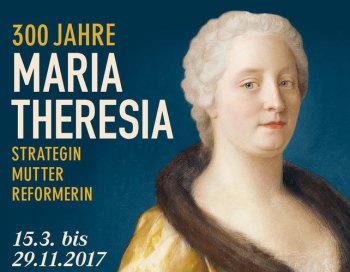 To mark the third centenary of the birth of Maria Theresa, on 13 March 2017 a major exhibition will be launched exploring the life and influence of one of the most important rulers in European history.
Maria Theresa’s reign lasted for forty years, from 1740 to 1780. After a turbulent period at the beginning of her rule, the Habsburg monarchy entered a golden age. In the fields of state administration and foreign policy, Maria Theresa, the daughter of Charles VI, enacted measures that were to have a decisive influence on the further development of the monarchy. Although the monarch had a sceptical attitude towards the ideals of the Enlightenment, this epoch is still seen as a period of reform in which the Habsburg lands underwent a distinct process of modernization.
Under Maria Theresa courtly pomp and ceremony reached a final zenith before the sober-mindedness of the Josephine era that followed and the fall of the ancien régime in the French Revolution.
The idealization of Maria Theresa as the great ‘mother of the nation’ was a phenomenon that started well before her death. Thanks to her sixteen children she became a symbolic figurehead during her own lifetime. The exhibition examines the image of Maria Theresa as a family person and explores the often very complicated relationships between the individual members of the family.
The dark sides of this forceful monarch are also explored. Her intolerance towards other faiths, the creation of the mythic figure of Maria Theresa and her transformation into a positive figure of identification for the Habsburg dynasty are all subjected to critical examination.
This major jubilee exhibition is being mounted by Schloss Schönbrunn Kultur- und Betriebsges.m.b.H. in cooperation with KHM-Museumsverband. Various aspects of the monarch’s life and work will be explored at four different venues:
Family and Legacy
Vienna Imperial Furniture Collection (Hofmobiliendepot)
In the ‘Hofmobilieninspektion’, an institution founded by Maria Theresa in 1747 to administer the court holdings of furniture, the exhibition examines the family circle, the personal destinies and the dynastic marriage policy pursued by Maria Theresa together with the legacy of her status as a mythic figure that continued long after her death.
Alliances and Enmities
Schloss Hof
Around 1775 Maria Theresa had a dower apartment furnished for herself at Schloss Hof, her country residence in Lower Austria. On the piano nobile of the palace the exhibition deals with her initial difficulties in establishing her rule, wars and peace agreements, losses and gains of territory as well as Maria Theresa’s powerful creative political will.
Modernization and Reforms
Schloss Niederweiden
Also located in the Marchfeld region of Lower Austria, the small and intimate Schloss Niederweiden was used for hunting parties and celebrations. At this exhibition venue the focus will be on the major domestic reforms enacted by Maria Theresa that were to change the state substantially.
Women Power and Joie de Vivre
Imperial Carriage Museum (Kaiserliche Wagenburg)
At the Imperial Carriage Museum, the focus will be on Maria Theresa’s projection of her own image, caught as she was between the sometimes conflicting priorities of her identity as a woman and the ‘masculinity’ of her power as a ruler. Ornate coaches, liveries, uniforms and gowns will recreate the resplendence of formal court occasions and exuberant festivities.
Call for Nominations | Eldredge Book Prize
2017 Charles C. Eldredge Prize
Nominations due by 1 December 2016
The Smithsonian American Art Museum is now accepting nominations for the 2017 Charles C. Eldredge Prize. Single-author books devoted to any aspect of the visual arts of the United States and published in the three previous calendar years are eligible. To nominate a book, send a letter (not to exceed one page in length) explaining the work’s significance to the field of American art history and discussing the quality of the author’s scholarship and methodology. Nominations by authors or publishers for their own books will not be considered. The deadline for nominations is December 1, 2016. Please send them to: The Charles C. Eldredge Prize, Research and Scholars Center, Smithsonian American Art Museum, P.O. Box 37012, MRC 970, Washington, D.C. 20013-7012. Nominations will also be accepted by email: eldredge@si.edu or fax: (202) 633-8373.
New Book | Satire, Prints and Theatricality in the French Revolution
From the Voltaire Foundation:
Claire Trévien, Satire, Prints and Theatricality in the French Revolution (Oxford: Oxford University Studies in the Enlightenment, 2016), 280 pages, ISBN: 978-0729411875, £65 / €80 / $92.
 The Revolutionary era was a period of radical change in France that dissolved traditional boundaries of privilege, and a time when creative experimentation flourished. As performance and theatrical language became an integral part of the French Revolution, its metaphors seeped into genres beyond the stage. Claire Trevien traces the ways in which theatrical activity influenced Revolutionary print culture, particularly its satirical prints, and considers how these became an arena for performance in their own right.
Following an account of the historical and social contexts of Revolutionary printmaking, the author analyses over 50 works, incorporating scenes such as street singers and fairground performers, unsanctioned Revolutionary events, and the representation of Revolutionary characters in hell. Through analysing these depictions as an ensemble, focusing on style, vocabulary, and metaphor, Claire Trévien shows how prints were a potent vehicle for capturing and communicating partisan messages across the political spectrum. In spite of the intervening centuries, these prints still retain the power to evoke the Revolution like no other source material.
Claire Trévien is a cultural historian who completed her AHRC-funded CDA doctorate at the University of Warwick in conjunction with Waddesdon Manor. She is the author of two poetry collections: The Shipwrecked House and Astéronymes.
◊ ◊ ◊ ◊ ◊
C O N T E N T S
List of illustrations
List of abbreviations
1 Introduction: The Other Stage of the French Revolution
Revolutionary Prints: A Brief Historiography
Theatricality and Prints
2 Singing the Scene: Chansons and Images in Prints
The Case of Bonvalet (1788–89)
The Aftershocks of 1789
Multiple Voices (1791–92)
Songs and Martyrdom (1793–94)
Epilogue
3 Le Monde à l’envers: The Carnivalesque in Prints
The Commedia dell’Arte in Revolutionary prints
Individual Actors
Epilogue
4 The Spectacle of Science: Illusion in Prints
Charlatanism and Theatricality (1784–95)
Spellbound Ccience (1789–90)
Spectator and Performer (1791–92)
Science as a Propaganda tool (1794)
Epilogue
5 Théâtre de l’ombre: Visions of Afterlife in Prints
Setting the Stage
Executing Theatre
Lighting Shadows
Epilogue
6 Conclusion
Bibliography
Index
Research Project | Sir Hans Sloane’s Catalogues
From the project announcement:
Enlightenment Architectures: Sir Hans Sloane’s Catalogues of His Collections
Leverhulme Trust Research Project, Autumn 2016 — 30 September 2019
Applications due by 31 October 2016
We are delighted to be able to announce the inception of Enlightenment Architectures: Sir Hans Sloane’s Catalogues of His Collections, a new research project based at the British Museum in collaboration with the Department of Information Studies at University College London. Enlightenment Architectures will start on 3 October 2016 and will run for three years until 30 September 2019.
The project has received generous funding from the Leverhulme Trust in the form of a Research Project Grant totalling £332,552 awarded to the British Museum, where Dr Kim Sloan is the Principal Investigator. The Co-Investigator on the project is Dr Julianne Nyhan and the Senior Research Assistant is Dr Martha Fleming. The grant will also accommodate two Post Doctoral Research Assistantships and one Doctoral Studentship. The call for applications for the PDRA positions are live now on the British Museum jobs website. The call for applications for the Doctoral Studentship will appear shortly on the University College London jobs website.
The objective of Enlightenment Architectures: Sir Hans Sloane’s Catalogues of His Collections is to understand the intellectual structures of Sloane’s own manuscript catalogues of his collections and with them the origins of the Enlightenment disciplines and information management practices they helped to shape. The project will employ a pioneering interdisciplinary combination of curatorial, traditional humanities and Digital Humanities research to examine Sloane’s catalogues which reveal the way in which he and his contemporaries collected, organised and classified the world, through their descriptions, cross-references and codes. The project will draw on the research framework that emerged from the 2012 AHRC-funded Sloane’s Treasures workshops, and findings will make significant contributions to histories of information science, histories of collections, and philosophy of knowledge, and will benefit a wide range of other disciplines as well.
Six manuscript catalogues created from 1680 to 1753 and selected from across the three institutions now holding Sloane’s materials—the British Museum, the British Library, and the Natural History Museum—will be transcribed and closely analysed by the interdisciplinary research team with the assistance of curatorial support from those three institutions. Regular workshops between curators, humanities researchers, and digital humanities practitioners will produce a deeper understanding of the structure and content of the catalogues. This will be disseminated through
• scholarly publications and conference contributions
• focused workshops and a project website
• a prototype linked data ontology for use in digital analysis of early modern collections
We look forward to communicating with you about our work, and welcome contributions from the wide-ranging scholarly communities whose disciplines will participate in and benefit from this research. We ask you to assist us in disseminating the announcements for the two Post Doctoral Research Associateships and the Doctoral Studentship and would ask you to alert colleagues and students who are eligible and appropriate to apply. As this is a Leverhulme Grant, the Doctoral Studentship is open to the EU as well as to UK applicants. The Research Associateships are open to international applicants.
With very best regards,
Dr Kim Sloan and Dr Julianne Nyhan
Partners
The British Museum
University College London Centre for Digital Humanities
Project Team
Kim Sloan is Curator of British Drawings and Watercolours before 1880 and the Francis Finlay Curator of the Enlightenment Gallery at the British Museum.
Julianne Nyhan is Senior Lecturer (Associate Professor) in Digital Information Studies at UCL’s Department of Information Studies.
Martha Fleming is a specialist in collections-based research and an historian of science.
Exhibition | Brest: Port of Liberty
Now on view at the National Maritime Museum in Brest:
Brest: Port of Liberty at the Time of American Independence
Brest: Port de la Liberté au temps de l’indépendance américaine
Musée National de la Marine, Brest, 30 June 2016 — 30 April 2017
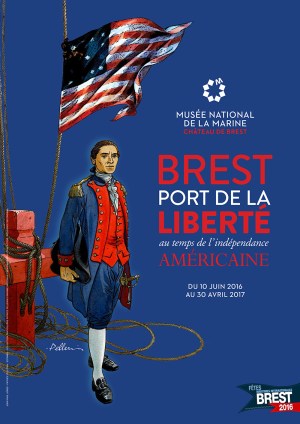 In the context of the 240th anniversary of American independence, the naval museum in Brest presents its new exhibition Brest: Harbor of Liberty at the Time of the American Revolution. Upstream of the centenary celebrations of the American landing in Brest in 1917, this exhibition recalls the strong ties between France and the United States. It traces the commitment of Louis XVI’s France in the war between the North American colonies and Britain from 1775 to 1783 and highlights the strategic role played then by the port of Brest.
In February 1778 the Scottish privateer John Paul Jones arrived in Brest. He was the first officer of the American Navy in which young Louis XVI entrusted a ship. France had to engage with the colonial side in the struggle against the British crown. The freedom of the young American nation was preparing on the banks of the Penfeld . . . The exhibition, indoor and outdoor, the discovery of the port city and the major role of Brest in the American war in the late Enlightenment.
Commissioner
Jean-Yves Besselièvre, Administrateur du musée national de la Marine à Brest
Lénaïg L’Aot-Lombart, Adjointe chargée de médiation
Scientific advice
Alain Boulaire, docteur d’État en histoire, Olivier Corre, docteur en histoire
Marjolaine Mourot, Conservateur en chef du patrimoine, chef du service Conservation au Musée national de la Marine
Exhibition | Views of the Grand Tour from The Hermitage

From the exhibition website:
Città del Grand Tour dall’Ermitage e Paesaggi Apuani da Collezioni Italiane
Fondazione Giorgio Conti, Palazzo Cucchiari, Carrara, 9 July — 23 October 2016
Curated by Sergej Androsov and Massimo Bertozzi
For centuries, knowing Italy—its extraordinary artistic heritage and millennial civilisation, as well as the nature and human qualities of a beautiful and complicated country—was a significant part of the cultural development of the elite class of all Europe. The Voyage of Italy was an experience to have at least once in a lifetime for the youth of the most important European families, both the noble ones and the rising trade and financial ones, between the very end of the 17th century and the first half of the 19th. The voyage became a true and authentic mania for all the classes that could afford it.
The Grand Tour was more than a simple touristic journey: it was a period of extraordinary development in contact with exceptional history and culture. Every European cultured man from that age dreamt to do at least one trip to Italy, for the signs of the classic past, both Greek’s and Roman’s, for the wonderful bucolic landscapes and to appreciate a kind of happy-go-lucky way of living, in which the daily challenges were tempered by an infinity of festivals and parties and countless occasions for entertainment and show. Rome was the favourite destination, but the voyage pace—both outward and the return—was set by the stops, longer and shorter ones, in the main cities scattered along the route, with mandatory deviations to Venice, Florence, and Naples.

Hubert Robert, View of the Colosseum (St Petersburg: The Hermitage Museum).
An important role, for choosing both the routes and what to see and keep in the memory, was played by scholars, art dealers, and painters who were able to produce images, not only for monuments, but also for the events which characterised the voyage of Italy, for each traveller personally.
For this exhibition, some traditional Grand Tour views have been assembled as a gallery of ‘portraits’ of places, imagination, and memory. Thus, they do not pay attention to the appearance of the Italian landscape only, but also to the nature of the men who have built that landscape. These views can nurture those psychological sensations that the Italy image gives to the Italians’ character, especially abroad and at least in the mind of those people who could see it only once, but who wanted to remember it forever.
So, some other painting are together with the ones of some Grand Tour ‘pioneers’, such as the Flemish Jan Miel and Hendrik Frans van Lint, the Dutch Johannes Lingelbach, the German Philipp Hackert, the French Hubert Robert, true and authentic reference points of the foreign groups visiting Rome or Naples, across the various ages. These painting are by a wide rank of Italian landscape painters, from Giovanni Paolo Panini to Ippolito Caffi, from Giulio Carlini to Angelo Inganni, to arrive at the naturalist turning point by Giovanni Fontanesi.
Included are the most appreciated Italian postcards: from The Arch of Titus by Hendrik Frans van Lint to The Colosseum by Hubert Robert, from View of the Bay of Baiae by Carlo Bonavia to View of Rome, with Castel Sant’Angelo by Ippolito Caffi, from The Grand Canal by Antonio de Pian to the Piazza del Duomo (Milan Cathedral Square) by Angelo Inganni.
Also represented are the peculiarities of the local traditions and the strange Italian way of life: The Charlatan by Jan Miel, the chaotic Market Square by Johannes Lingelbach; and also the celebration, from the lavish one in front of the Palazzo del Quirinale by Antonio Cioci, to the noisy Venice Carnival, in the Concert in the Gondola by Friedrich Paul Nerly, and the private party which they seem to prepare to in The Tolstoy Family in Venice by Giulio Carlini.
But Rome was still the capital of Christianity and here it is the allusive Saint Paul’s Sermon, in the Ruins of Ancient Rome, by Giovanni Paolo Panini; and also the people and visionary devotion of the Prayer to the Virgin Mary by Joseph Severn or the cozy and composed one of In the Church of S. Maria della Pace by Anselmo Gianfanti.
Next to the classic views of the Grand Tour, the exhibition places a section on the ‘discovery’ of the Apuan landscape, with artworks from the Museo Civico of Reggio Emilia, Archivio di Stato di Massa, Provincia di Massa-Carrara and private collections, to represent one of the many pleasant places for which Italy has always been considered as the garden of Europe. A territory whose nature suggested strong emotions to the ancient travellers, from Petrarch to Michel de Montaigne, comes to the attention of modern travellers, thanks to the view of its mountains, shaping the far or close horizon of a large area, from Florence to Lucca and Pisa, in addition to the coast of Liguria or the northern part of the Tyrrhenian Sea, from Lerici with its Poets’ Bay to Livorno. In conclusion, an attractive landscape not only for travellers, but also for the people visiting the art cities nearby or the coast.
The first views of the Apuan territory must be attributed to foreign travellers staying nearby, like the English Admiral William Paget or his fellow countrywoman Elisabeth Fanshawe, or the Swiss painter and writer Julie Goldenberger who settled down here and also spent her last years in Carrara. But there are also ones from professional painters, such as Saverio Salvioni from Massa, who painted for a long time the wide panoramas of the Carrara quarry at the beginning of the 19th century, or Giovanni Fontanesi from Emilia who, showing the interest for the territory images, dedicated a great deal of his output to the Ligurian-Apuan landscapes. The exhibition path ends with the painting Michelangelo Quarries of Carrara Marbles (1860–1865) by Antonio Puccinelli. It represents the perfect summary of the work of an artist loyal to the Purism of his masters (Bezzuoli and Minardi) while telling the ‘history painting’, but who adheres to a new way of looking at the sentimental suggestion of the landscape, in the Apuan area.
Sergej Androsov and Massimo Bertozzi, Citta del Grand Tour dall’Ermitage e Paesaggi Spuani da Collezioni Italiane (Carrara: Fondazione Giorgio Conti, 2016), 131 pages, $59.










 Enfilade
leave a comment