New Book | The Art of Philosophy: Visual Thinking in Europe
From Princeton UP:
Susanna Berger, The Art of Philosophy: Visual Thinking in Europe from the Late Renaissance to the Early Enlightenment (Princeton: Princeton University Press, 2017), 352 pages, ISBN: 978 06911 72279, $65 / £55.
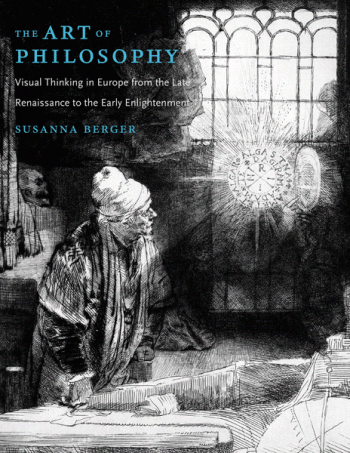 Delving into the intersections between artistic images and philosophical knowledge in Europe from the late sixteenth to the early eighteenth centuries, The Art of Philosophy shows that the making and study of visual art functioned as important methods of philosophical thinking and instruction. From frontispieces of books to monumental prints created by philosophers in collaboration with renowned artists, Susanna Berger examines visual representations of philosophy and overturns prevailing assumptions about the limited function of the visual in European intellectual history.
Rather than merely illustrating already existing philosophical concepts, visual images generated new knowledge for both Aristotelian thinkers and anti-Aristotelians, such as Descartes and Hobbes. Printmaking and drawing played a decisive role in discoveries that led to a move away from the authority of Aristotle in the seventeenth century. Berger interprets visual art from printed books, student lecture notebooks, alba amicorum (friendship albums), broadsides, and paintings, and examines the work of such artists as Pietro Testa, Léonard Gaultier, Abraham Bosse, Dürer, and Rembrandt. In particular, she focuses on the rise and decline of the ‘plural image’, a genre that was popular among early modern philosophers. Plural images brought multiple images together on the same page, often in order to visualize systems of logic, metaphysics, natural philosophy, or moral philosophy. Featuring previously unpublished prints and drawings from the early modern period and lavish gatefolds, The Art of Philosophy reveals the essential connections between visual commentary and philosophical thought.
Susanna Berger is assistant professor of art history at the University of Southern California.
C O N T E N T S
Acknowledgments
Abbreviations
Introduction
1 Apin’s Cabinet of Printed Curiosities
2 Thinking through Plural Images of Logic
3 The Visible Order of Student Lecture Notebooks
4 Visual Thinking in Logic Notebooks and Alba amicorum
5 The Generation of Art as the Generation of Philosophy
Appendix 1 Catalogue of Surviving Impressions of Philosophical Plural Images
Appendix 2 Transcriptions of the Texts Inscribed onto Philosophical Plural Images
Notes
Bibliography
Index
Illustration Credits
Symposium | Bouchardon and His Contemporaries
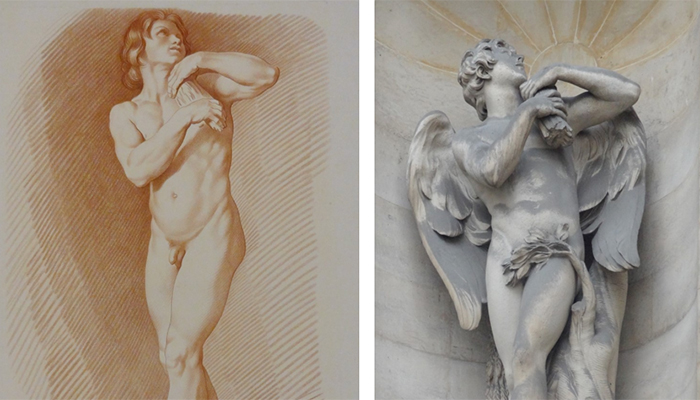
Left: Gilles Demarteau after Edme Bouchardon, Model Posing for ‘The Genius of Summer’, ca. 1740s–50s (Los Angeles: Getty Research Institute, 2015.PR.58). Right: Edme Bouchardon, The Genius of Summer, 1745 (Paris: Grenelle Fountain).
◊ ◊ ◊ ◊ ◊
Bouchardon and His Contemporaries
The Getty Center, Los Angeles, 2 April 2017
In parallel with the exhibition Bouchardon: Royal Artist of the Enlightenment (on view at the Getty Center until 2 April), this symposium explores the relationships Bouchardon had with his contemporaries (artists, patrons, and connoisseurs) and investigates the diffusion and reception of his oeuvre. Admission to this event is free, but a ticket is required to attend. More information is available here.
Participants
Malcolm Baker, University of California, Riverside
Anne-Lise Desmas, J. Paul Getty Museum
Peter Fuhring, Fondation Custodia
Thomas W. Gaehtgens, Getty Research Institute
Edouard Kopp, Harvard Art Museums
Monique Kornell, University of California, Los Angeles
Ewa Lajer-Burcharth, Harvard University
Louis Marchesano, Getty Research Institute
Guilhem Scherf, Musée du Louvre
Katie Scott, The Courtauld Institute of Art
Kristel Smentek, Massachusetts Institute of Technology
Perrin Stein, The Metropolitan Museum of Art
Juliette Trey, Musée du Louvre
Annual Workshop of the Women’s Studies Group, 1558–1837
From the Women’s Studies Group website:
Annual Workshop of the Women’s Studies Group, 1558–1837
The Fruitful Body: Gender and Image
The Foundling Museum, London, 6 May 2017
The Women’s Studies Group, 1558–1837 annual workshop takes place every spring at The Foundling Museum in London. A distinguished invited speaker provides the keynote in the morning, followed by discussion and lunch; in the afternoon, participants each give a 5-minute presentation on a subject relevant to the theme of the keynote, followed by discussion. Previous speakers have included Jacqueline Labbe of the University of Sheffield and Laura Gowing of King’s College London. This year’s speaker is Karen Hearn of University College London, presenting “Women, Agency, and Fertility in Early Modern British Portraits.”
Cost (including lunch and refreshments): £18 (WSG members), £15 (students/unwaged), £22 (non-WSG members). To register, please complete the registration form available here. All attendees should bring a 5-minute presentation, from any discipline and any period covered by the Group, exploring the workshop theme. Topics might include
• caricature
• texts
• novels
• conduct manuals
• medicine
• philosophy
• motherhood
• women artists
New Book | ‘Drawing on Copper’: The Basire Family
From the newsletter of the Society of Antiquaries of London, Salon 379 (7 February 2017) . . .
Richard Goddard, ‘Drawing on Copper’: The Basire Family of Copper-Plate Engravers and their Works (Maastricht, 2017), 332 pages, ISBN: 978 946159 5911.
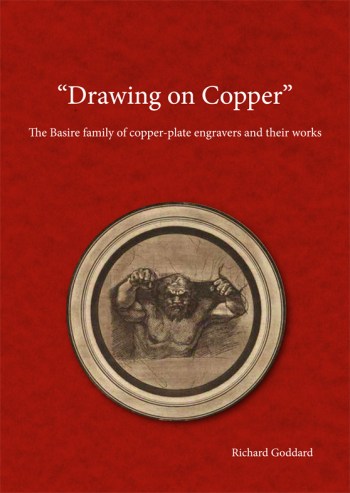
Julian Pooley FSA writes with news of a book about copper-plate engraving. Four generations of the Basire family of skilled printmakers, draughtsmen, and engravers, spanning 1730–1883, were celebrated for their skill in drawing, on copper and stone, accurate representations of monuments and antiquities. Their pictures can be found throughout Archaeologia, Vetusta Monumenta, and many of the most celebrated works of 18th- and 19th-century topography and antiquarianism (James Basire, 1730–1802, was engraver to the Society of Antiquaries for 20 years). Richard Goddard, a descendent of the Basire family, has published a meticulously researched and beautifully written study of their careers, interests and influence called ‘Drawing on Copper’: The Basire Family of Copper-Plate Engravers and their Works. It is beautifully illustrated by over 70 plates, says Pooley, and has six chapters assessing the medium of engraving and careers of successive members of the Basire family. Details can be found on the author’s website, where a PDF of the book can be downloaded.
Call for Papers | Kings and Queens 6
From The Royal Studies Network:
Kings and Queens 6: In the Shadow of the Throne
Madrid, 12–15 September 2017
Proposals due by 30 March 2017
The Kings & Queens conference series will travel to Madrid in 2017 for its sixth edition. On this occasion, we aim to connect scholars across the world whose research focuses on topics related to royal history, diplomacy, art history, political history, biographical studies, or any other issues included in the scope of royal studies. In particular, this edition of the Kings and Queens congress will focus on the secondary members of royal families, such as siblings, spouses, cousins, as well as the people closest to the king, like lovers, favourites, members of the royal entourage, etc. We especially invite studies related to figures with family ties to a monarch who were not kings or queens in their own right but had a significant influence in spheres such as international politics, the court, the arts, the society, or dynastic strategies during their time—with the objective of obtaining a better understanding of figures who are usually in the shadow of the throne. All kind of topics related to these issues will be welcomed, from diverse chronological periods and parts of the world. In the potential topics for papers or panels we may include, but are not limited to, the following:
• Biographical, dynastical, and political studies of different members of the royal families who were not kings or queens on their own right
• Power, role, and importance of different people close to the monarch, like favorites, lovers, relatives with military, diplomatic or dynastic posts, ambassadors or diverse members of their entourage
• The relationship between power and art; patronage, collecting, and diplomatic exchanges
• Monarchy, high nobility, and the representation of status, power, and influence through art, culture, and image
• The importance of the dynasty and the ‘dynastic mirror’
• Informal power, royal favour, and disfavour
Proposals should include a title, institutional affiliation, an abstract of around 500 words, and a one-page CV. In the case of panels, the proposal should include a maximum of three different papers accompanied by the same information required for individual proposals along with the name, affiliation, and one-page CV of the sponsor (if they are not presenting a paper in the same panel). All the proposals should be submitted by March 30, 2017, to Kq6Madrid@gmail.com. Please remember that English will be the official language of the congress.
Also, we are pleased to announce that we offer 20 bursaries for young researchers to help them with the costs. Those interested in said bursaries should write to the aforementioned email to obtain more details about them and what they cover. Those who want to apply must send us the title of the proposal, an abstract of around 500 words, institutional affiliation, a one-page CV, and one-page report focusing on why this congress is relevant for them and how their research could improve the field of royal studies.
At Auction | Fourteen Lots of Porcelain from the ‘Geldermalsen’

Diane KW, The Geldermalsen Triptych: The Harvest, The Catastrophe, The Politics, 2013; found Chinese porcelain shards with digital ceramic transfers (Groninger Museum). The large basin shards in this triptych work recount their history from the order and production of decorated porcelain pieces (The Harvest), to the shipwreck (The Catastrophe) and loss of the porcelain, to the storm of controversy after the sale of the salvaged pieces (The Politics). The triptych was part of the exhibition At World’s End—The Story of a Shipwreck: Works by Diane KW (Honolulu Museum of Art, January — April 2014).
◊ ◊ ◊ ◊ ◊
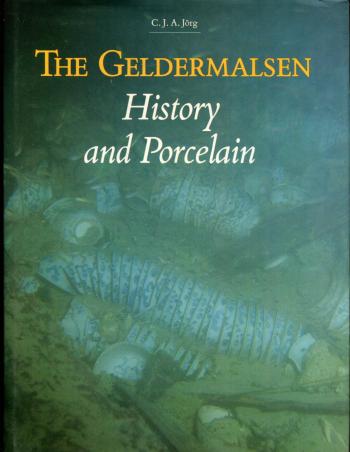 An upcoming auction in Atlanta recalls a 1752 shipwreck, a 1986 auction and monograph, a 1992 article, a 2014 exhibition, and lots of questions about looted artifacts. There’s a measure of wry tragedy in the fact that this week’s sale takes place at Great Gatsby’s Auction Gallery. In a Borgesian universe, one might imagine a litany of items with similarly dubious histories on offer at the gallery. Please, someone write that story! It would make for a fabulous reading at a HECAA luncheon. Or maybe it would work as a theme for structuring a conference panel. Wanted: proposals with rapacious villains, international stakes, ethical quandaries, and plenty of misinformation (‘alternative facts’ to use the current jargon), all as reception history for material that is of genuine scholarly significance. –Craig Hanson
George L. Miller, “The Second Destruction of the Geldermalsen,” Historical Archaeology 26 (1992): 124–31.
Abstract: This review of C. J. A. Jörg’s book on the Chinese porcelain from the Dutch East India Company ship Geldermalsen, which sank in 1752 [The Geldermalsen: History and Porcelain (Groningen: Kemper Publisher, 1986)], addresses some broader questions involved in the destruction of shipwreck sites for commercial profit. These questions grew out of the issue of what relationship scholars should have with those who destroy sites and acquire objects from them. The first part of the article is a review of Jorg’s book, followed by a commentary on the problems that collecting from looted sites raise.
◊ ◊ ◊ ◊ ◊
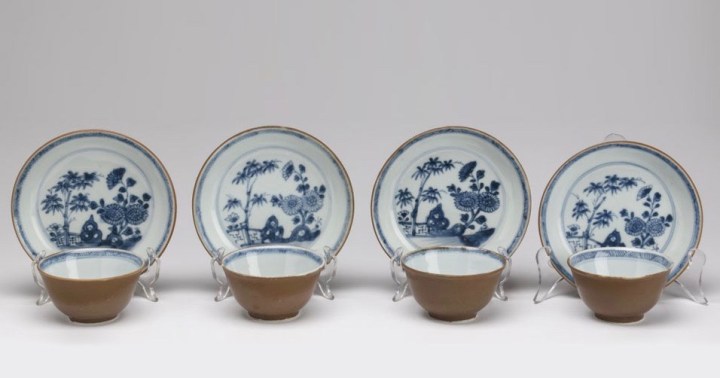
Blue and white porcelain cups and saucers recovered from the shipwrecked Geldermalsen in 1985
(Great Gatsby’s Auction Gallery, Atlanta)
◊ ◊ ◊ ◊ ◊
From the auction press release, via Art Daily (5 February 2017). . .
When the Geldermalsen ship crashed into a reef and sank in the South China Sea during its return journey to the Netherlands in January of 1752, it claimed the lives of eighty crew members who went down with the vessel’s precious cargo of tea, textiles, gold, silk, lacquer, and porcelain. As part of the fleet of the powerful Dutch East India Company commissioned for the Zeeland division, the loss of the mighty Geldermalsen hardly went unnoticed.
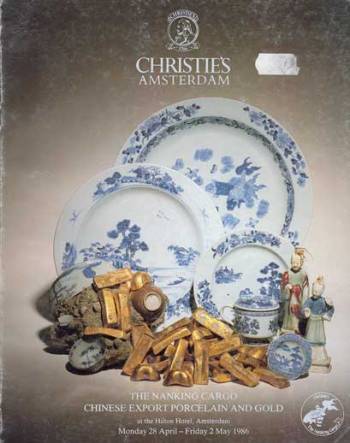
The press release mistakenly dates the Christie’s auction to 1985. While the catalogue was released in December of 1985, the auction itself took place in April and May 1986. Image from a 2011 article on Hatcher from China.org.cn.
Over two hundred years later, a successful salvage expert named Captain Michael Hatcher would excavate the ship and its contents, giving new understanding of eighteenth-century trade demands and the rise of porcelain’s availability. Great Gatsby’s Auction Gallery will offer fourteen lots of blue and white porcelain from this incredible salvage from the personal collection of one of the expedition’s private backers. The auction is slated for February 10, 11, and 12, with 11am start times all three days, online and in the firm’s Atlanta gallery at 5180 Peachtree Boulevard.
Hatcher, along with his partner Max de Rham, a marine geophysicist, led a successful team of divers who unearthed the precious bounty that would catapult its already famous hunter into superstardom. ‘The Nanking Cargo’, as it became known by its sale at Christie’s Amsterdam in April of 1985 [sic], contained a massive trove of the aforementioned blue and white porcelain, which was originally potted in China’s Jiangzi province bound for European markets. The sheer scope of this find shed light on the true nature of the market’s demands, as traditional experts had always believed the records kept by the DEIC [Dutch East India Company, or VOC] had exaggerated their shipments of porcelain. Safely protected underwater by the tea loosely packed in wooden crates, the porcelain in the Nanking Cargo represented the range of influence eastern artisans had over western tastes during the eighteen century.
Hatcher and his team had the untouched archives of the DEIC in Holland to thank for locating the whereabouts of this famous—and suspicious wreck. Due to the nature of the disaster—in well chartered waters by one of the world’s most esteemed shipping companies—the DEIC spent weeks interrogating the survivors who had made it to present-day Jakarta on two open boats. Not only was an entire cargo worth of precious porcelain and trade goods missing, but so was the gold, at first believed to be hidden by the survivors. With such detailed records on hand, Hatcher would embark on months of searching, believing his efforts to be worthless until they unearthed the treasure from a three foot layer of silt and coral.
The excitement generated by the find was evident during the first frenzied days of the cargo’s namesake auction at Christie’s Amsterdam. International interest—both financial and historical—had taken hold and this caught the attention of the Chinese government, who tried unsuccessfully to bring the porcelain back to its country of origin. Maritime salvage laws permitted the cargo to go across the auction block, where it broke numerous records and raised a staggering $20 million USD.
Fellowships | Bard Graduate Center, 2017–18
From the Bard Graduate Center:
BGC Visiting Fellowships, 2017–18: What Is Distance?
Bard Graduate Center, New York
Applications due by 1 March 2017 [extended from 1 November 2016]
Bard Graduate Center invites scholars from university, museum, and independent backgrounds with a PhD or equivalent professional experience to apply for non-stipendiary visiting fellowships, to be held during the 2017–18 academic year. The theme for this period is “What is distance?” Applicants are asked to address in a cover letter how their projected work will bear on this question. Bard Graduate Center Visiting Fellowships, which are intended for scholars who have already secured means of funding, provide scholars with workspace in the Bard Graduate Center Research Center and enable them to be a part of our dynamic scholarly community in New York. Eligible disciplines and fields of study include—but are not limited to—art history, architecture and design history, economic and cultural history, history of technology, philosophy, anthropology, and archaeology. Visiting Fellowships may be awarded for anywhere from one month to the full academic year.
Bard Graduate Center is a graduate research institute devoted to the study of the decorative arts, design history, and material culture, drawing on methodologies and approaches from art history, economic and cultural history, history of technology, philosophy, anthropology, and archaeology. It offers MA and PhD degrees, possesses a specialized library of 60,000 volumes exclusive of serials, and publishes the journals West 86th: A Journal of Decorative Arts, Design History, and Material Culture and Source: Notes in the History of Art, the book series Cultural Histories of the Material World (all with the University of Chicago Press), and the catalogues that accompany the exhibitions it presents every year in its gallery (with Yale University Press). Over 50 research seminars, lectures, and symposia are scheduled annually and are live-streamed around the world on Bard Graduate Center’s YouTube channel.
To apply, please submit the following materials electronically, via email to fellowships@bgc.bard.edu, in a single PDF file: (1) cover letter explaining why Bard Graduate Center is an appropriate research affiliation and how your work bears on the question “What is distance?” Please also indicate your preferred length and dates of the fellowship; (2) 150-word abstract of project; (3) detailed project description; (4) CV; (5) publication or academic writing sample of approximately 20–30 pages; (6) names and contact information for two references. Letters of recommendation are not required. All materials must be received by March 1, 2017. Incomplete or late applications will not be considered.
We do not reimburse fellows for travel, relocation, housing, or visa-related costs in connection with this fellowship award. Fellowships are awarded without regard to race, color, gender, religion, national origin, sexual orientation, age, or disability. Please direct questions to the Visiting Fellowship Committee via email (fellowships@bgc.bard.edu) and see our Frequently Asked Questions page.
New Book | Art and Celebrity
From Penn State University Press:
Heather McPherson, Art and Celebrity in the Age of Reynolds and Siddons (University Park: The Pennsylvania State University Press, 2017), 272 pages, ISBN: 978 0271 074078, $90.
 In this volume, Heather McPherson examines the connections among portraiture, theater, the visual arts, and fame to shed light on the emergence of modern celebrity culture in eighteenth-century England. Popular actors in Georgian London, such as David Garrick, Sarah Siddons, and John Philip Kemble, gave larger-than-life performances at Drury Lane and Covent Garden; their offstage personalities garnered as much attention through portraits painted by leading artists, sensational stories in the press, and often-vicious caricatures. Likewise, artists such as Joshua Reynolds and Thomas Lawrence figured prominently outside their studios—in polite society and the emerging public sphere. McPherson considers this increasing interest in theatrical and artistic celebrities and explores the ways in which aesthetics, cultural politics, and consumption combined during this period to form a media-driven celebrity culture that is surprisingly similar to celebrity obsessions in the world today.
This richly researched study draws on a wide variety of period sources, from newspaper reviews and satirical pamphlets to caricatures and paintings by Reynolds and Lawrence as well as Thomas Gainsborough, George Romney, and Angelica Kauffman. These transport the reader to eighteenth-century London and the dynamic venues where art and celebrity converged with culture and commerce. Interweaving art history, history of performance, and cultural studies, Art and Celebrity in the Age of Reynolds and Siddons offers important insights into the intersecting worlds of artist and actor, studio and stage, high art and popular visual culture.
Heather McPherson is Professor of Art History at the University of Alabama at Birmingham.
C O N T E N T S
List of Illustrations
Acknowledgments
Introduction: Studio and Stage in the Age of Reynolds and Siddons
1 Garrick, Reynolds, and the Apotheosis of Performance
2 Portraiture, Public Display, and the Politics of Representation
3 Staging Celebrity: Siddons and Tragic Pallor
4 Targeting Celebrity: Caricature and Cultural Politics
5 Artistic Afterlives and the Historiography of Fame
Notes
Selected Bibliography
Index
Michael Twitty Named Williamsburg’s First ‘Revolutionary in Residence’
Press release (20 January 2017) from Colonial Williamsburg:
Michael Twitty Launches Williamsburg’s ‘Revolutionaries in Residence’ Program

Michael Twitty at work in the Peyton Randolph House kitchen in the Historic Area of Colonial Williamsburg (Photo: Joe Straw).
Acclaimed culinary historian, author, interpreter and Afroculinaria blogger Michael Twitty launches Colonial Williamsburg’s new Revolutionaries in Residence program, in which Virginia’s 18th-century capital hosts modern-day innovators to engage the nation with fresh perspectives that capture the spirit and relevance of its founding era. As part of the Revolutionaries in Residence program, Twitty delivers Colonial Williamsburg’s inaugural REV Talk at 5:30pm on February 11, 2017. The event, in which he shares insights and fields audience questions, coincides with Colonial Williamsburg Black History Month 2017 programs including the Films of Faith and Freedom series and original live dramatic programming like Journey to Redemption, all at the Kimball Theatre in Merchants Square. During Revolutionary City visits through February, Twitty is also scheduled to provide demonstrations and training for Historic Foodways staff and historical interpreters, to engage guests, and to collaborate with Colonial Williamsburg’s hospitality team on authentic new culinary offerings in the Historic Taverns and at Traditions Restaurant in the Williamsburg Lodge.
“Colonial Williamsburg explores the events and ideas of the 18th century that continue to define our lives and challenge us today,” said Colonial Williamsburg President and CEO Mitchell B. Reiss. “With the Revolutionaries in Residence program, we engage thinkers who question convention and capture the disruptive spirit of America’s founding generation. I can think of no one better suited to begin that journey than Michael Twitty, who illuminates huge aspects of our shared history that too often have been overlooked.”
Twitty’s work takes him throughout the country to preserve, prepare and promote African-American foodways along with the culinary traditions of Africa, the African diaspora and the American South. His past projects include a presentation with the Center for the Study of Southern Culture and the Southern Foodways Alliance, and as a 2016 TED fellow he delivered the TED Talk “Gastronomy and the Social Justice Reality of Food.” He is the author of The Cooking Gene: A Journey through African-American Culinary History in the Old South, scheduled for release later this year by HarperCollins.
“Colonial Williamsburg has been a part of my life for almost four decades. I hope my presence will attract a wider audience to the pleasures of lifelong learning, exploring our past and moving forward into the future with purposeful vision,” Twitty said. “As we approach the incredible 400th year anniversary of African arrival in mainland British America, there needs to be a homecoming of all African Americans to this very sacred place. The Historic Triangle has incredible stories to tell and Colonial Williamsburg is at its heart and I’m excited to help illuminate those stories.”
The Revolutionaries in Residence program is generously sponsored by The Grainger Foundation of Lake Forest, Illinois.
Other events to mark Black History Month include the reopening of the Historic Area’s newly renovated African-American Religion exhibit on Nassau Street, programs including A Gathering of Hair and the ongoing exhibit A Century of African-American Quilts at the Abby Aldrich Rockefeller Folk Art Museum.
Highlights of the Films of Faith and Freedom series include Golden Globe winner Moonlight and Golden Globe nominee Loving as well as the Virginia premiere of the documentary Maya Angelou: And Still I Rise at 7pm on February 10 before its national broadcast premiere on PBS. Also in February, Colonial Williamsburg continues its partnership with the city’s historic First Baptist Church at 727 Scotland St., which again calls on the community and nation to ring the congregation’s restored Freedom Bell for justice, peace and healing.
◊ ◊ ◊ ◊ ◊
Here’s a recent video addressing the history of okra, which Twitty made with John Townsend (of Jas. Townsend and Son) at George Mason’s Gunston Hall Plantation in Virginia. Twitty’s book The Cooking Gene: A Journey through African-American Culinary History in the Old South is scheduled for August publication from Harper Collins.
Acquisitions at Williamsburg Highlight African American Experiences
Press release (31 January 2017) from Colonial Williamsburg:
With its mission to tell America’s enduring story through its material culture, the Art Museums of Colonial Williamsburg has actively diversified its collections over recent years and has bolstered efforts to increase its holdings of African-American works of art and artifacts. In the past six months, the Art Museums have acquired by purchase, gift, or loan several significant pieces that further this goal.
“Colonial Williamsburg has long believed that art and artifacts speak loudly about the people, places, and events of the past. Because we strive to tell the broader American story, it is important that we continue to seek out those objects that speak to the African-American experience during the colonial and early national periods. These newly acquired works address that mission handsomely,” said Ronald L. Hurst, the foundation’s Carlisle Humelsine Chief curator and vice president for collections, conservation, and museums.

Cesar Chelor, A ‘plow plane’ (Colonial Williamsburg Foundation).
While it is noteworthy to discuss individual objects that a museum acquires, it is especially so when an entire collection joins its existing holdings. Such is the case with one recent acquisition. The Art Museums have just received the country’s most extensive collection of pre-Revolutionary woodworking planes made by African-American artisan Cesar Chelor. Prior to receiving his freedom, Chelor was owned by the earliest documented American plane maker, Francis Nicholson (1683–1753) of Wrentham, Massachusetts, and eventually became his apprentice. Chelor later became a plane maker in his own right as did Nicholson’s son John. Upon the elder Nicholson’s death, he willed Chelor his freedom, 10 acres of land and the tools and materials to continue his work on his own, thus making him the earliest known African-American tool maker in North America. Of the more than 700 Chelor and Nicholson planes known to exist, the Colonial Williamsburg collection now owns more than one third of them. This new group of almost 250 planes was amassed over several decades by the late David V. Englund of Seattle; it was Englund’s longtime vision that his collection should go to Colonial Williamsburg where the tools could be shared and studied. The example illustrated here, called a ‘plow plane’ for its resemblance to the farming tool, was perfect for cutting long grooves in a board. Since the handy wooden adjusting screws first appeared in New England, these became known as ‘Yankee plow’ planes.
“The Englund collection encompasses the spectrum of woodworking planes crafted by the first dynasty of truly American tool-makers,” said Erik Goldstein, senior curator of mechanical arts and numismatics. “Spanning the middle quarters of the 18th century, it is highlighted by the products of Caesar Chelor, Francis Nicholson’s manumitted slave, and latter free tradesman. This unique assemblage of colonial planes will serve as a core of Colonial Williamsburg’s woodworking tool collection.”

Peter Bentzon, pair of silver teaspons, marked ‘P. BENTZON’., made in either Philadelphia or St. Croix between 1815 and 1830 (Colonial Williamsburg Foundation).
Another exceedingly rare addition to the Art Museums’ collections this month is this pair of silver teaspoons marked by Peter Bentzon, examples from the less than two dozen known objects bearing his touchmarks (of either his initials or ‘P. BENTZON’, as seen here). Bentzon, a free man of color, was born about 1783 in the Danish West Indies (now the United States Virgin Islands) to a mother of African and European descent and a Norwegian father. Trained as a silversmith in Philadelphia, he worked both there and in St. Croix, moving several times between these locations prior to his death sometime after 1850. These two teaspoons were made in either Philadelphia or St. Croix between 1815 and 1830.
“Few objects survive to bear testament to the work of enslaved and free people of color as silversmiths in early America. We are very pleased to share these spoons as examples of the diversity of craftsmanship on these shores,” said Janine E. Skerry, senior curator of metals.
Another exciting addition to the collections is this pale pink silk drawstring workbag made in 1827 by the Birmingham (England) Female Society for the Relief of British Negro Slaves. English and American women of the day carried workbags as a fashionable accessory to hold their pocketbooks, handkerchiefs, and even keys.
While often embroidered with floral motifs, this workbag takes a more political and moral conviction. The Female Society for the Relief of British Negro Slaves, established on April 8, 1825, produced literature, printed albums, purses, and workbags for sale to help raise awareness of the cruelty toward enslaved Africans and to provide money for their relief. Identical objects and literature crossed the Atlantic and helped to fuel the American abolitionist movement.

Pink silk work bag, made in England in 1827 by the Birmingham Female Society for the Relief of British Negro Slaves (Colonial Williamsburg Foundation).
The workbag’s central roundel is printed with a copper plate image of a slave kneeling and chained to the ground. The foreground shows a group of slaves being whipped by their master. The reverse is also printed, but with a stanza from William Cowper’s poem on slavery printed in The Task in 1784. The stanza reads:
Thus man devotes his brother, and destroys;
And worse than all, and most to be deplored,
As human nature’s broadest, foulest blot,
Chains him, and tasks him, and exacts his sweat.
With stripes, that mercy, with a bleeding heart,
Weeps when she sees inflicted on a beast.
“This small work bag shows the very active role that Female Societies took in working towards the abolition of slavery during the nineteenth-century. While many fancy workbags survive from this time period, these politically and morally charged women’s accessories are seldom found and make this piece a unique acquisition to the Colonial Williamsburg’s collection,” said Neal Hurst, associate curator of costumes and textiles.
From roughly the same time period as the workbag, comes another extraordinary acquisition: a signed, ash-glazed stoneware storage jar made in 1849 by the enslaved African American potter, David Drake, often known as ‘Dave’, who worked for various owners in the Edgefield district of South Carolina for more than 50 years. This is the first signed piece of Drake pottery to join the collection. At a time when it was illegal for slaves to be literate, David Drake not only signed many of his pieces but also was known to inscribe verses on them. Although this jar, which stands almost 17 inches in height and includes distinctive features, such as five incised punctuates to indicate its five-gallon capacity, does not include any of Drake’s poetry, it is, however, signed ‘Mr. Miles Dave’ and dated October 15, 1849. Miles refers to Lewis J. Miles, who owned David Drake from about 1840 to 1843 and again from 1849 until Emancipation.
“The work of David Drake is important for many reasons: It speaks to the role enslaved labor played in the manufacture of utilitarian wares in 19th-century South Carolina; it helps to illuminate some of the complexities of that system; and most of all it gives us a glimpse into the life of this man and the world he inhabited,” said Suzanne Findlen Hood, curator of ceramics and glass. “This storage jar relates directly to the attributed, but unsigned example that has been in the collection since the 1930s and will allow us to more fully interpret the life and work of David Drake.”
Although Drake’s stoneware vessels were made for strictly functional purposes, often for storing large amounts of food, they were refined works of art in their own right. To make some of these containers, he combined turning and coiling techniques in which he turned the bottom portion of the pot on a wheel and then coiled clay ropes around the top of its walls. This enabled him to create vessels of remarkable height and diameter.
In 2016, A Century of African-American Quilts opened in the Abby Aldrich Rockefeller Folk Art Museum to great acclaim and features twelve quilts created by African-American quilt makers in the years following the abolition of slavery (from the 1870s to approximately 1990), half of which had never before been exhibited. By generous loan, this colorful variation on the typical ‘schoolhouse’ pattern joins the exhibition, which remains on view through April 2018. According to family tradition, Margaret Carr (b. ca. 1909), an African-American school teacher in Rogersville, Tennessee, made the quilt or inherited it from her mother, Lema Carr, between 1940 and 1960. The quilt features eight houses facing each other on either side of a central vertical band. Shiny synthetic fabrics in bright solid colors create the houses, each of which is further embellished with charming embroidered flowers around the foundations and bordering the windows, doors and rooflines.
“Margaret Carr’s quilt is a wonderful addition to the exhibition of African-American quilts. The charming ‘schoolhouse’ pattern seems especially appropriate for a woman who was a teacher,” said Linda Baumgarten, senior curator of textiles and costumes. “We are indebted to collector and scholar Mary Jo Case for lending us this bold and colorful example of Tennessee quiltmaking.”
As the Art Museums of Colonial Williamsburg continue to acquire important pieces to its collections, the priority will remain to expand the scope of them to reflect the cultural diversity of our country both past and present.










 Enfilade
leave a comment