Call for Papers | Portraiture and Biography

Left: James Boswell by William Daniell, after George Dance, published 10 April 1802 (28 April 1793), NPG D12117; right: Samuel Johnson by Thomas Trotter, published by George Kearsley, published 1782, NPG D13814.
◊ ◊ ◊ ◊ ◊
From the Paul Mellon Centre:
Portraiture and Biography
London 29–30 November 2018
Proposals due by 1 February 2018
An international conference sponsored jointly by the Paul Mellon Centre for Studies in British Art and the National Portrait Gallery.
Biography has always haunted the study of portraiture. Although in recent decades art-historians may have developed a healthy skepticism for the intuitive practice of interpreting portraits with straightforward reference to what is known about the lives of their subjects, the temptation to do so remains strong. Moreover, such is the art-form’s seductive power that even nowadays scholars can still struggle to resist the allure of reading the image of a face as the index of character or mind, and as a corollary, of gauging a portraitist’s mastery in terms of his or her ability to plumb the depths of a sitter’s psyche. These tendencies often appear in their most untrammelled form in analyses of artists’ likenesses of themselves, or of their most intimate acquaintances. Hence the occasion of a major exhibition devoted to Thomas Gainsborough’s portraits of himself and his relations, to be held at the National Portrait Gallery from 22 November 2018 until 23 February 2019, offers a particularly opportune moment to stage a related conference, where critical consideration will be given to the role(s) that the biographical archive might play in portraiture studies going forward.
With the aim of generating a lively and thought-provoking discussion, we would welcome papers that consider portraiture’s fraught relationship with biography without restrictions of time or place, and from the vantage-point of a wide range of disciplines; some of the most interesting recent art-historical work has drawn upon anthropology, microhistory, and material culture studies, for example, though our ambition is to include contributions from across the broadest possible methodological spectrum. Although we would welcome case studies dealing with particular artists or sitters, each proposal should supply clear evidence of a commitment to open up broader questions pertinent to the conference’s overarching theme.
In addition to coinciding with Gainsborough’s Family Album, the conference will take place at a key moment for the National Portrait Gallery, as it develops plans for a major refurbishment of its spaces and the first comprehensive re-presentation of its collection. There could hardly be a better opportunity for colleagues from across the field to think about the role of portraiture in evoking a nation’s history, and to help shape the development and interpretation of the new displays.
Abstracts (of no more than 500 words) for 20-minute papers should be submitted by email to efleming@paul-mellon-centre.ac.uk by 5pm on 1st February 2018. We welcome applications from emerging and established scholars. Please also include a short professional biography.
Organizing Committee: David H Solkin, Lucy Peltz, Mark Hallett, and Sarah Victoria Turner
Exhibition | Painted in Mexico, 1700–1790: Pinxit Mexici
Press relese (5 July 2017) from LACMA:
Painted in Mexico / Pintado en México, 1700–1790: Pinxit Mexici
Fomento Cultural Banamex, Mexico City, 29 June — 15 October 2017
Los Angeles County Museum of Art, 19 November 2017 — 18 March 2018
The Metropolitan Museum of Art, New York, 24 April — 22 July 2018
Curated by Ilona Katzew with Jaime Cuadriello, Paula Mues Orts, and Luisa Elena Alcalá
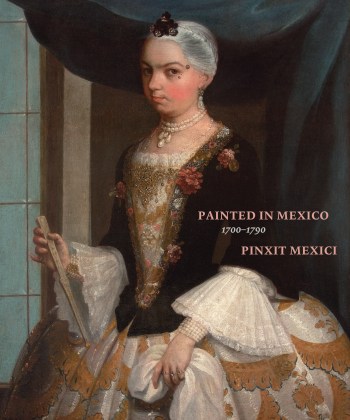
The Los Angeles County Museum of Art presents Painted in Mexico, 1700–1790: Pinxit Mexici, the first major exhibition to reposition the history of 18th-century Mexican painting, a vibrant period marked by major stylistic changes and the invention of compelling new iconographies. Co-organized by LACMA and Fomento Cultural Banamex, A.C. in Mexico City, this exhibition foregrounds the connections between Mexican painting and transatlantic artistic trends while emphasizing Mexican painting’s internal developments and remarkable pictorial output. More than 100 paintings are presented in the exhibition, many on view for the first time and restored for this exhibition.
Painted in Mexico, 1700–1790: Pinxit Mexici is curated by Ilona Katzew, curator and department head of Latin American art at LACMA, with guest co-curators Jaime Cuadriello, Universidad Nacional Autónoma de México, and Paula Mues Orts, Escuela Nacional de Conservación, Restauración y Museografía, both of Mexico City, and Luisa Elena Alcalá, Universidad Autónoma de Madrid of Spain. The exhibition is presented as part of the Getty’s Pacific Standard Time: LA/LA initiative and is one of a handful of historical exhibitions focusing on the legacy of Latin American art before the 20th century.
“This is truly a once-in-a-lifetime undertaking of an engrossing chapter in art history,” said Michael Govan, LACMA CEO and Wallis Annenberg Director. “Over the last six years, the co-curators have traveled all over Mexico to uncover new materials; many restored specially for the exhibition and photographed for the first time. This is a groundbreaking reassessment of the field, and we are proud to be at the forefront of this important undertaking and advancing new scholarship.”
Ilona Katzew, project director and a noted expert in the field, stated, “The 18th century is a particularly rich period in the history of Mexican art, which has not yet received its due attention. In organizing this exhibition, we hope to open up a vista on a sophisticated and innovative body of work, one that is contextually rich and highly rewarding to look at and study, and share our collective enthusiasm for this fascinating chapter of global art history.”
In the 16th century, European artists immigrated to Mexico to decorate newly established churches and complete artistic commissions. Some of these artists and their families formed workshops in Mexico that endured for several generations. By the 17th century, a new generation of artists born in the Americas began to develop their own pictorial styles that reflected the changing cultural climate as well as the desires of their patrons, both religious and secular. The 18th century ushered in a period of artistic splendor as local schools of painting were consolidated, new iconographies were invented, and artists began to group themselves into academies.
During the 18th century, painters were increasingly asked to create mural-size paintings to cover the walls of sacristies, choirs, and university halls, among other spaces. The same artists produced portraits, casta paintings (depictions of racially mixed families), painted folding screens, and finely rendered devotional imagery, attesting to their extraordinary versatility. The volume of work produced by the four generations of Mexican artists that spanned the 18th century is virtually unmatched elsewhere in the vast Hispanic world.
Painters also became more aware of their own contributions, largely owing to the sizable number of pictures that were exported to Europe, throughout Spanish America, and within the viceroyalty itself. This awareness led many educated painters not only to sign their works and emphasize their authorship but also to make explicit references to Mexico as their place of origin through the Latin phrase Pinxit Mexici (Painted in Mexico). This expression eloquently encapsulates the painters’ pride in their own tradition and their connection to larger, transatlantic trends.
The exhibition combines a chronological and thematic approach, and includes seven major sections:
Great Masters introduces the works of some of the leading painters of the day around which others congregated; the notion of a local tradition and intergenerational ties is emphasized. Since the 16th century, educated painters in Mexico City had organized themselves in guilds. By the 18th century, their most distinguished members (some of whom descended from long lines of illustrious painters) also established informal academies. The academy organized by the brothers Juan and Nicolás Rodríguez Juárez around 1722, for example, evidences the artists’ growing interest in revitalizing their art.
Master Story Tellers and the Art of Expression illustrates how works were designed to convey complex stories. Conceived as series, these works decorated the interiors of churches, convents, colleges, and other public spaces, where they became activated through their particular arrangement, including as part of altarpiece-ensembles. During the 18th century narrative painting underwent a resurgence, which is evident in its more organic and idealized (and at times idyllic) sensibility. The artist’s increasing interest in emphasizing domestic interiors and details of everyday life helped to establish a more intimate connection with the viewer.
Noble Pursuits and the Academy explores the efforts of artists throughout the 18th century to form art academies. The introduction of academic principles in Mexico is generally connected with the arrival of Jerónimo Antonio Gil from Spain and the establishment of Mexico’s Royal Academy of San Carlos in 1783. This perspective has overlooked the earlier trajectory of local artists, who long sought to have painting recognized as a noble, as opposed to a mechanical art. In the 18th century painters organized several independent academies (c. 1722, 1754, and 1768), where they actively engaged in discussions about the theory and practice of their art. They also attempted to elevate the status of painting by writing and referencing art treatises, by equating their task with that of the supreme creator, and refashioning their image through their self-portraits.
Paintings of the Land brings together a compelling group of works representing local subjects. The expression “paintings of the land” (pinturas de la tierra) recurs often in contemporary panegyric literature and artistic inventories to describe works unique to Mexico—either made there or representing aspects of life in Mexico. Many of the works included in this section, such as vedute (large-scale paintings of a cityscape or vista), casta paintings (depictions of racially mixed families), folding screens with fête gallant scenes (amorous figures in pastoral settings), and depictions of Indian weddings, are peppered with colorful local elements. The works brilliantly exemplify how Mexican painting could simultaneously fulfill artistic, political, and documentary purposes.
The Power of Portraiture illustrates the various modalities of the portrait genre. In the 18th century, Mexico saw an upsurge in portraiture associated with the economic growth of the viceroyalty, and different social groups, particularly within urban contexts, commissioned artists to paint their likenesses. In a hierarchical society such as New Spain, which placed a premium on nobility of birth, piety, wealth, titles, and merits, portraiture had the power to convey both corporate and personal messages. Through portraiture people could fashion and refashion their identities and project them onto society. Portraiture also fulfilled a genealogical role, designed to preserve the memory of families and institutions—religious and secular. Dress and other attributes became an essential part of the genre.
The Allegorical World looks at a highly inventive group of works that became prevalent in the 18th century. Often commissioned by ecclesiastical orders to instruct in issues of faith, allegorical images are fascinating manifestations of a culture that relied increasingly on its own visual metaphors. These images became particularly popular, in part, because of the versatility of allegorical language that could express many things simultaneously. Allegorical paintings can be broadly divided into four categories: guides to inner spirituality for nuns and monks within cloistered life, teaching or mnemonic tools to aid in the practice of piety, symbols that promoted local devotions, and commentaries to extol (or even criticize) figures of power. Some allegories were conceived as large- scale paintings that covered the walls of different institutions and religious spaces, while many smaller ones were designed to awaken piety within the context of cells and oratories.
Imagining the Sacred features a stunning selection of paintings that copied holy effigies, many considered miraculous. Copying holy images became part of a long tradition that engaged the best painters of the day. Although most subjects were universal, sacred painting saw significant developments in 18th-century Mexico. Painters updated age-old formulas: the resulting richness of themes, pictorial approaches, and devotional complexity is noteworthy. The most visible public images were large paintings representing specific sculptures that were known for performing miracles. Intimate devotional experience was more commonly channeled through smaller paintings, many on copper, in which painters demonstrated great precision and skill. These works reflect the extent to which art, belief, and society were inextricably connected.
Painters in the Exhibition
Juan Francisco de Aguilera (Spain [?], active Mexico, first quarter of the 18th century) Manuel de Arellano (Mexico, 1662–1722)
Ignacio María Barreda (Mexico, c. 1754–1800)
Ignacio Berben (Guadalajara, 1733–c. 1814)
Miguel Cabrera (Mexico, c. 1715–1768)
Francisco Clapera (Spain, 1746–1810, active Peru and Mexico)
Nicolás Correa (Mexico, 1657–c. 1708)
Nicolás Enríquez (Mexico, 1704–c.1790)
Rafael Joaquín Gutiérrez (Mexico, c. 1750–1792)
Fray Miguel de Herrera (San Cristóbal de la Laguna, Canary Islands, 1696–c. 1789, active Mexico)
José de Ibarra (Mexico, 1685–1756)
Andrés López (Mexico, 1727–1807)
Francisco Martínez (Mexico, 1687–1758)
Manuel Montes y Balcázar (Guadalajara, active, c. 1727–1760)
Juan Patricio Morlete Ruiz (Mexico, 1713–1772)
José de Páez (Mexico, 1721–c. 1790)
Rafael Ximeno y Planes (Spain, 1759–1825, active Mexico)
Pascual Pérez (Puebla, d. 1721)
Juan Rodríguez Juárez (Mexico, 1675–1728)
Nicolás Rodríguez Juárez (Mexico, 1677–1734)
Antonio de Torres (Mexico, 1667–1731)
Francisco Antonio Vallejo (Mexico, 1722–1785)
Miguel Jerónimo Zendejas (Puebla, 1720–1815)
José Joaquín de la Vega (Mexico, active second half of the 18th century)
International Scholar’s Day
February 2018
An international scholar’s day will be co-organized with the University of California, Los Angeles (UCLA), enabling established and junior scholars to present new research. Given the extensive restoration undertaken for the exhibition, part of the event will be dedicated to presentations by leading conservators from Mexico, the United States, and Europe, who will discuss the techniques, materials, and pictorial processes employed by Mexican painters, and their wider art historical implications.
Ilona Katzew, ed., with contributions from Ilona Katzew, Luisa Elena Alcalá, Jaime Cuadriello, Ronda Kasl, and Paula Mues Orts, Painted in Mexico, 1700–1790: Pinxit Mexici (New York: Prestel, 2017), 512 pages, ISBN: 978 379135 6778, $85.
Painted in Mexico, 1700–1790: Pinxit Mexici is accompanied by a groundbreaking catalogue that offers the first in-depth assessment of 18th-century Mexican painting, making accessible an extraordinary body of images, alongside compelling new scholarship. The volume is edited by Ilona Katzew with contributions by the exhibition co-curators Luisa Elena Alcalá, Jaime Cuadriello, Ilona Katzew, and Paula Mues Orts. Exquisitely illustrated with newly commissioned photography of never-before-published artworks, the book includes fascinating essays on a number of themes, such as the tradition and innovation of Mexican painting, the mobility of pictures within and outside the viceroyalty, the political role of images, and the emphasis on ornamentation. Rounding out this volume are over 130 catalogue entries that offer new and authoritative interpretations. The book is published by LACMA and Fomento Cultural Banamex, A.C., and DelMonico Books, Prestel. A Spanish edition is also available.
Catalogue cover image: Juan Patricio Morlete Ruiz, Mexico, 1713–1772, Portrait of Doña Tomasa Durán López de Cárdenas (Retrato de Doña Tomasa Durán López de Cárdenas), ca. 1762, Galería Coloniart. Collection of Felipe Siegel, Anna and Andrés Siegel, Mexico City.
New Book | Art, Commerce, and Colonialism, 1600–1800
From Manchester UP:
Emma Barker, ed., Art, Commerce, and Colonialism, 1600–1800 (Manchester: Manchester University Press, 2017), 200 pages, ISBN: 978 15261 22926, £18 / $35.
 The book examines how increasing engagement with the rest of the world transformed European art, architecture and design. It considers how commercial activity and colonial ventures gave rise to new and diverse forms of visual and material culture across the globe. Drawing on a wide range of recent scholarship, it offers a new perspective that challenges Eurocentric approaches.
Emma Barker is Senior Lecturer in Art History at The Open University.
C O N T E N T S
Introduction, Emma Barker
1 From Iberia to the Americas: Hispanic Art of the Colonial Era, Piers Baker-Bates
2 The Golden Age Revisited: Dutch Art in Global Perspective, Emma Barker
3 Creative Interactions: Chinoiserie in Eighteenth-Century Britain, Clare Taylor
4 Transatlantic Architecture: Classicism, Colonialism, and Race, Elizabeth McKellar
Conclusion, Emma Barker
Index
New Book | The Sun King’s Atlantic
From Brill:
Jutta Wimmler, The Sun King’s Atlantic: Drugs, Demons, and Dyestuffs in the Atlantic World, 1640–1730 (Leiden: Brill, 2017), 230 pages, ISBN: 9789004336070, 80€ / $93.
 In The Sun King’s Atlantic, Jutta Wimmler reveals the many surprising ways in which the Atlantic world channeled cultural developments during the age of the Sun King. Although hardly visible for contemporaries at the time, Africa and America were omnipresent throughout early modern France: in the textile industry, pharmaceutics, medicine, scientific methods, religious discourse, and court theatre. The book moves beyond typical plantation crops and the slave trade to illustrate how a focus on Europe challenges us to rethink the place of Africa in the early modern world.
Jutta Wimmler, Ph.D. (2011), University of Graz (Austria), is a researcher and lecturer at the European University Viadrina, Germany. She has published several articles about Africa’s impact on Europe, most recently in the Journal of Religion in Africa.
C O N T E N T S
1 Introduction
2 Sugar and Slaves? French Atlantic Trade before 1730
3 The Fashionable Atlantic: Innovation and Consumption
4 Body Matters: Remedies, Foodstuffs and Cosmetics
5 The Iatrochemical Advantage: Methods for an Expanding World
6 Perfect French Subjects: Staging the Atlantic World
7 Devils and Martyrs: Religious Concepts Travel the Globe
8 Epilogue
New Book | The Image of the Black in African and Asian Art
From Harvard UP:
David Bindman, Suzanne Preston Blier, Henry Louis Gates, Jr., eds., The Image of the Black in African and Asian Art (Cambridge, MA: Belknap Press, 2017), 456 pages, ISBN: 9780674504394, $95 / £70 / €85.
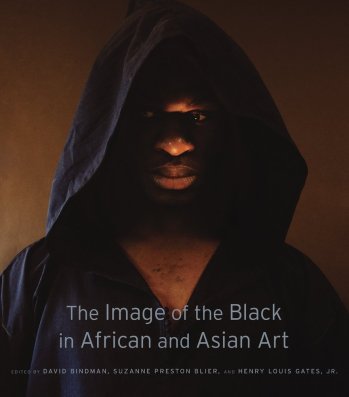 The Image of the Black in African and Asian Art asks how the black figure was depicted by artists from the non-Western world. Beginning with ancient Egypt—positioned properly as part of African history—this volume focuses on the figure of the black as rendered by artists from Africa, East Asia, and the Indian subcontinent. The aesthetic traditions illustrated here are as diverse as the political and social histories of these regions. From Igbo Mbari sculptures to modern photography from Mali, from Indian miniatures to Japanese prints, African and Asian artists portrayed the black body in ways distinct from the European tradition, even as they engaged with Western art through the colonial encounter and the forces of globalization.
This volume complements the vision of art patrons Dominique and Jean de Menil who, during the 1960s, founded an image archive to collect the ways that people of African descent have been represented in Western art from the ancient world to modern times. A half‐century later, Harvard University Press and the Hutchins Center for African and African American Research completed the historic publication of The Image of the Black in Western Art—ten books in total—beginning with Egyptian antiquities and concluding with images that span the twentieth century. The Image of the Black in African and Asian Art reinvigorates the de Menil family’s original mission and reorients the study of the black body with a new focus on Africa and Asia.
David Bindman is Emeritus Professor of the History of Art at University College London.
Suzanne Preston Blier is Allen Whitehill Clowes Professor of Fine Arts and Professor of African and African American Studies at Harvard University.
Henry Louis Gates, Jr., is Alphonse Fletcher University Professor and the Director of the W. E. B. Du Bois Research Institute at the Hutchins Center for African and African American Research at Harvard University.
C O N T E N T S
Preface, David Bindman, Suzanne Preston Blier, and Henry Louis Gates, Jr.
Acknowledgments
Introduction, David Bindman
I. Africa
1 Images of Africans by and of Themselves: Historical and Comparative Factors, Suzanne Preston Blier
2 The Body in African Art, Kristina Van Dyke
3 Masquerade in Sub-Saharan Africa, John Picton
4 The Image of the Black in Early African Photography, Christraud M. Geary
5 The Image of the Black in Modern and Contemporary African Art, Steven Nelson
II. Asia
6 The Image of the Black in Islamic Art: The Case of Painting, Robert Hillenbrand
7 The Image of the Black in India, John McLeod and Kenneth X. Robbins
8 The Image of the Black in Chinese Art, Don J. Wyatt
9 The Image of the Black in Japanese Art: From the Beginnings to 1850, Timon Screech
10 The Image of the Black in Japanese Art: Nineteenth Century to the Present Day, Alicia Volk
Notes
Illustrations
Index
Exhibition | Gods in Color: Polychromy in the Ancient World
From the Fine Arts Museums of San Francisco:
Gods in Color: Polychromy in the Ancient World
Bunte Götter: Die Farbigkeit antiker Skulptur
Glyptothek, Munich, 2003
Liebieghaus Sculpture Collection, Frankfurt am Main, 2008
Legion of Honor Museum, San Francisco, 28 October 2017 — 7 January 2018

Reconstruction (A1) of the so-called Chios kore from the Akropolis in Athens, 2012. Copy of the original: Athens, ca.500 BCE. Crystalline acrylic glass, with applied pigments in tempera. Liebieghaus Skulpturensammlung, Polychromy Research Project, Frankfurt am Main, acquired in 2016 as gift from U. Koch-Brinkmann and V. Brinkmann (Fine Arts Museums of San Francisco).
Gods in Color: Polychromy in the Ancient World will offer an astonishing look at Classical sculpture swathed in their original vibrant colors questioning the perception of an all-white ‘classical’ ideal. Ancient sculpture and architecture from Greece and Rome will be revealed as intended—garishly colorful, richly ornamented, and full of life—along with original sculpture from the Near East, Egypt, Greece, and Rome against the backdrop of the Legion of Honor’s neoclassical building.
To find out more about the exhibition, explore this digital offering from the Liebieghaus in Frankfurt:
In the eighteenth century there was already considerable debate about the extent to which ancient architecture and sculptures were painted. Two centuries later technical investigations with ultraviolet light and glancing light are providing new evidence about ancient polychromy. Investigations carried out in Munich’s Glyptothek in the 1960s resulted in important findings. In the 1980s a group of researchers associated with the archaeologist Volkmar von Graeve studied the polychromy of ancient works of art with the help of modern technological aids. At the time, Vinzenz Brinkmann was a member of von Graeve’s team. Later, as head of the Liebieghaus’s Department of Antiquities, he brought the research subject to Frankfurt.
By now the original painting of hundreds of Greek and Roman artworks around the world has been studied. Thanks to the development of new investigative methods, scholars have meanwhile been able to provide an increasingly precise sense of the kind and extent of the painting. Over the course of centuries of damage owing to wars or weathering it was lost. Even though only scant traces of pigment and scoring have survived, they can provide valuable information. Our newly won understanding of the original polychromy leads in many cases to surprising discoveries!
From FAMSF Publications:
Vinzenz Brinkmann, Renée Dreyfus, and Ulrike Koch-Brinkmann, eds., Gods in Color: Polychromy in the Ancient World (New York: Prestel, 2017), 192 pages, ISBN: 978 379135 7072, $40.
 Although not widely known, antiquities were colored to dazzling and powerful effect. Polychromy—the painting of objects in a variety of hues—was a regular feature of the sculpture and architecture of most ancient cultures, especially in Egypt, Mesopotamia, the Aegean, Greece, and Rome. When such works began to be rediscovered in the eighteenth century after prolonged exposure to the elements, their colored surfaces were often so faded that later sculptors evoked classicism by leaving white marble and bronze surfaces unadorned.
Published on the occasion of an exhibition at the Legion of Honor in San Francisco, Gods in Color: Polychromy in the Ancient World reintroduces the unexpected effect of these bright pigments. Through reconstructions of well-known sculptural works dating from Bronze Age Greece to Imperial Rome, readers can see firsthand how these objects would have appeared when they were first created. Complementing these reconstructions are many fine examples of original antiquities, many with surviving polychromy, from ancient Greece and Rome and beyond to Egypt and the Near East. Rounding out these offerings are breathtaking watercolors of Greece’s landscapes and monuments painted in 1805 and 1806 by English antiquarian Edward Dodwell and Italian artist Simone Pomardi.
This handsome volume features six essays alongside catalogue entries that describe the cultural contexts of the ancient works and the modern technological methods to uncover their original coloration. Vinzenz Brinkmann and Ulrike Koch-Brinkmann offer a history of the research and scholarship of polychromy since the eighteenth century; with Heinrich Piening, they also describe the pigments and techniques used. Renée Dreyfus discusses polychrome examples from Egypt and the Near East to demonstrate the strong influences these cultures left on the classical world. Oliver Primavesi recounts the dilemma of eighteenth-century German archaeologist Johann Joachim Winckelmann, who at once celebrated the “pure” form of classical Greek and Roman sculpture but became increasingly aware that such works were originally colored and ornamented. John Camp describes the Greek tour of Dodwell and Pomardi as they depicted classical monuments, some of which still retained their original color.
An enduring scholarly record, Gods in Color reveals how ancient sculpture is incomplete without color. White or monochrome sculpture, an inherited notion of the classical ideal, would have been as strange to the ancients as these color reconstructions might seem to us today.
• Vinzenz Brinkmann is head of the department of antiquities at the Liebieghaus Sculpture Collection, Frankfurt and professor of classical archaeology at Goethe University, Frankfurt.
• Renée Dreyfus is curator in charge of ancient art and interpretation at the Fine Arts Museums of San Francisco.
• Ulrike Koch-Brinkmann is an archaeologist of classical antiquity based in Frankfurt. She is also assistant lecturer of classical archaeology at Georg August University in Göttingen.
• John Camp is the Stavros Niarchos Foundation Professor of Classics at Randolph-Macon College in Ashland, Virginia and the director of the Agora excavations in Athens.
• Martin Chapman is curator in charge of European decorative arts and sculpture at the Fine Arts Museums of San Francisco.
• Louise Chu is associate curator of ancient art and interpretation at the Fine Arts Museums of San Francisco.
• Jens Daehner is associate curator of antiquities at the J. Paul Getty Museum in Los Angeles.
• Jonathan Elias is an Egyptologist and the director of the Akhmim Mummy Studies Consortium.
• Kenneth Lapatin is curator of antiquities at the J. Paul Getty Museum in Los Angeles.
• Rebecca Levitan is a PhD student in the history of art department at the University of California, Berkeley.
• Heinrich Piening heads the department of restoration and conservation, furniture and art objects of wood, at the Bavarian Department of State-Owned Palaces, Gardens, and Lakes in Germany.
• Oliver Primavesi is professor of Greek philology and philosophy at the Ludwig-Maximilian University in Munich. In 2007 he was a recipient of the Gottfried Wilhelm Leibniz Prize, an important research award given by the German Research Foundation.
• Andrew Stewart is Nicholas C. Petris Professor of Greek Studies and professor of ancient Mediterranean art and archaeology at the University of California at Berkeley and curator of Mediterranean archaeology at UCB’s Phoebe A. Hearst Museum of Anthropology.
Call for Papers | Ephemeral Exhibition Spaces, 1750–1918
From H-ArtHist:
Ephemeral Exhibition Spaces, 1750–1918
Geneva, 16–17 March 2018
Proposals due by 1 December 2017
During the last decades of the Ancien Régime and throughout the long nineteenth century, people in Europe marveled at absent worlds or past events that were reenacted visually or mentally in a variety of ephemeral exhibition spaces, like temporal museums, exhibits, (private) cabinets and, most strikingly, panoramic theaters and dioramic constructions. The latter installations or decors visually imitated reality, rather than represent it, like art would do, and with their illusory optical effects they were very popular with the big audience. They were however also criticised by those who stressed the imaginative, mental nature of vivification against forms of visual mimicry. From the very outset, reenactment in these spaces comes forward as an ambiguous, multifaceted and conflictive strategy.
In the new public and private spaces of the nineteenth century, ephemeral exhibition spaces or spaces with an exhibitional dimension par excellence fitted more encompassing epistemological and experiential strategies of reenactment. Within a wide scope of cultural practices, they provided new spatial frameworks of understanding and experiencing reality, of imagining, of identification and control. It is however still a matter of debate how the epistemological, visual and experiential dimensions of reenactment interrelated, conflicted and coincided in these spaces. Reenactment in ephemeral exhibition spaces was caught between visual and mental strategies, between material tangibility and imagination. Reenactment in these spaces was also at the same time a tool of (scientific) knowledge and of subjective experience. Imagination could in this context strongly relate to the sensation of the uncanny, to aesthetic rapture, to (ideological and political) identification and to personal memory or even, in particular cases, to solipsist isolation. These spaces, finally, precisely because of their exhibitional nature, are also revealing of a dynamic of control, of voyeurism, of a problematic dealing with otherness, difference and absence, of people, of cultures or of the past.
Our symposium intends to discuss a wide variety of ephemeral exhibition spaces or spaces with a distinctively exhibitional dimension, such as for example dépôts, derelict gardens, ruins, boudoirs, museums, exhibits, private interiors, cabinets, antique stores… against a broad cultural background and treated from various interdisciplinary angles within the humanities, including cultural history, history of art, literary studies and comparative literature, intellectual history, material culture studies, museum studies and others.
We particularly, but certainly not exclusively, welcome papers, either in English or in French, on the following topics:
• Ambiguous, multifunctional, liminal or hybrid spaces, in-between spaces, spaces between public and private uses, as well as the cultural practices they are connected with
• Imagery spaces, for example in written or visual sources (literature, catalogues, guides, travel literature, letters, art, images etc.) or material spaces that are able to stage the role of the imaginary in the construction of cultural practices
• Mediating spaces that worked as catalysts for interaction and interrelation between a number of cate- gories such as gender and social classes
There is no registration fee for the conference. Final papers, either in French or English, will be published in an edited volume with a reputable editor. Proposals (maximum 250 words) should be sent to Camilla Murgia (camilla.murgia@unige.ch) and Dominique Bauer (dominique.bauer@kuleuven.be) by December 1, 2017. Those who submitted their proposal will be notified of their acceptance by December 20.
Conveners: Dr. Camilla Murgia (University of Geneva) and Prof. Dominique Bauer (Catholic University of Leuven)
Exhibition | Turner in Surrey

J.M.W. Turner, Thomson’s Aeolian Harp, 1809
(Manchester Art Gallery)
◊ ◊ ◊ ◊ ◊
Opening this month at The Lightbox:
Turner in Surrey
The Lightbox, Woking, Surrey, 18 November 2017 — 4 March 2018
For the first time ever, this exhibition explores J.M.W. Turner’s work produced on his various travels, stops, and periods of residence on the Thames, Wey Navigation and in the county of Surrey, prior to the London boundary changes of 1889.
It will explore how Turner retreated into nature, capturing both the beauty of the landscape and its rustic elegance. Open air sketches highlighting his swiftness of hand and the changing effects of nature will sit alongside finished works, completed in the studio. Combining pencil and oil sketches, finished oils and watercolours, the exhibition will feature Newark Abbey on the Wey and View of Richmond Hill and Bridge from Tate, and Thomson’s Aeolian Harp from Manchester Art Gallery. The exhibition will also give a rare opportunity to see personal possessions of the artist—his fishing rod, travelling watercolour box, and watercolour palette—from The Royal Academy of Arts.
Exhibition | Napoleon: Images of the Legend
From the Châteaux de Versailles:
Napoleon: Images of the Legend
Arras Musée des Beaux-Arts, 7 October 2017 — 4 November 2018
Curated by Frédéric Lacaille and Marie-Lys Marguerite
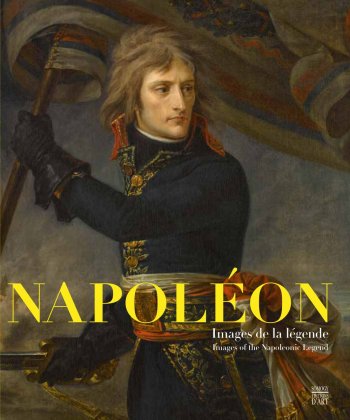 The exhibition will present a large selection of the Napoleonic collection from the palaces of Versailles and Trianon, which is the world’s largest on the subject. Visitors will be able to discover the history of Napoleon in chronological order, from General Bonaparte to the fallen Emperor.
The exhibition will also throw the spotlight on the Emperor’s close circle (family, important officers, imperial Court) and the Parisian and international societies of the time (artists, scholars, foreign sovereigns etc.) It will show how, from very early on, Napoleon wanted to write his own legend for posterity by commissioning multiple paintings commemorating key moments of his life. Paintings, sculptures, and furniture will reveal the wealth and quality of artistic production at the time and will lead visitors in the footsteps of Napoleon Bonaparte, whose unique destiny forever.
The exhibition is part of a partnership project between three major institutions: the region Hauts-de-France, the town of Arras, and the Palace of Versailles. This large-scale partnership was established in 2011, allowing collections from Versailles to be displayed in Arras. Major event-exhibitions are held alongside educational and cultural work in order to allow as many people as possible to discover the history and heritage of the Palace of Versailles.
The exhibition is curated by Frédéric Lacaille, Curator in charge of 19th-century paintings at the Musée National des Châteaux de Versailles et de Trianon, and Marie-Lys Marguerite, Director of Arras Musée des Beaux-Arts.
Frédéric Lacaille, ed., Napoléon: Images de la Légende (Paris: éditions Somogy, 2017), 280 pages, ISBN: 978 27572 12929, 28€.
Exhibition | Dancing with Death
From the Blanton:
Dancing with Death
Blanton Museum of Art, the University of Texas at Austin, 2 September — 26 November 2017
Organized by Elizabeth Welch
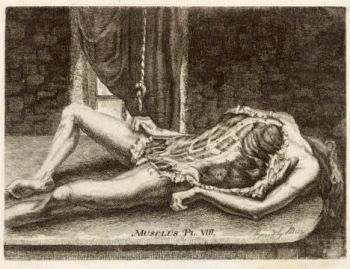
John Bell, Reclining Male Cadaver, from Anatomy of the Bones, Muscles, and Joints, by John Bell, 1794, engraving and etching (Austin: Blanton Museum of Art, The Karen G. and Dr. Elgin W. Ware, Jr. Collection, 2000.4).
By the year 1500, a new genre of visual and literary culture was thriving in Europe: the dance of death or danse macabre. Dancing with Death will feature works on paper spanning from the fifteenth to the twentieth centuries that highlight this visual tradition of bringing death to life. By animating death and transforming a state of being into a character, Europeans both poked fun of and meditated on mortality. This exhibition highlights both sides of the macabre coin: fear of death and fun in life.
Organized by Elizabeth Welch, Andrew W. Mellon Curatorial Fellow in Prints, Drawings, and European Paintings, Blanton Museum of Art










 Enfilade
leave a comment