Call for Papers | Early Modern Privacy: Notions, Spaces, Implications
From the Call for Papers:
Early Modern Privacy: Notions, Spaces, Implications
Royal Danish Academy of Science and Letters, Copenhagen, 9–10 April 2019
Proposals due by 2 December 2018

Pieter Bruegel the Younger, Visit to the Farmhouse, c.1620–30, oil on panel, 37 × 49 cm (Bath: The Holburne Museum).
The Danish National Research Foundation Centre for Privacy Studies (PRIVACY) at the University of Copenhagen invites applications for its inaugural conference. Our goal is to provide an opportunity to discuss and re-examine source material in order to understand practices, spaces, and ideas of privacy and related concepts that emerged in the early modern period across historical disciplines. We welcome (interdisciplinary) considerations of practice and performances of privacy and its opposites, as well as analyses of terminology, vocabulary, and languages, for example, in sources mentioning words using the prefix priv-.
Confirmed Keynote Speakers
• Willem Frijhoff (Erasmus University of Rotterdam)
• Hélène Merlin-Kajman (Université Sorbonne Nouvelle Paris 3)
• Mia Korpiola (University of Turku)
• Maarten Delbeke (ETH Zurich)
We invite colleagues working within any field of Early Modern studies to submit proposals for papers in English of 20 minutes duration. Please upload paper title, an abstract of no more than 300 words, and a concise CV via PRIVACYs website no later than Sunday, 2 December 2018. Abstracts and CVs should be in English. A limited number of travel bursaries are available on a need basis; submit your travel bursary application with an estimated budget alongside your materials at the link above. For further information, please email privacy@teol.ku.dk. A final program from the conference will be published in early January.
Suggested Topics
• Legal and religious definitions of private and public
• Individuality and subjectivity in relation to private and public spaces
• The emergence of the modern home and life-cycle inside and outside a (house-)hold
• Vagrancy, poverty and homelessness
• Education and access to knowledge
• Confidentiality, gossip, secrecy and surveillance within communities
• Sexual normativity and deviance from sexual norms
• Confessional spaces
• Interior and exterior design and life
• Public and private politics
Organizing Committee
Michaël Green, Natália da Silva Perez, Anna Katharina Becker, Fredrik Torisson
Call for Papers | Antiquarian ‘Science’ in the Scholarly Society
From the Call for Papers:
Antiquarian ‘Science’ in the Scholarly Society
Society of Antiquaries of London, Burlington House, 1–2 April 2019
Proposals due by 30 November 2018
This is workshop two of the AHRC International Networking Grant: Collective Wisdom: Collecting in the Early Modern Academy led by Anna Marie Roos (Lincoln) and Vera Keller (Oregon).
We will explore how ‘antiquarian science’ informed collecting in the early modern scholarly academy, as many members of these societies like astronomer Martin Folkes (1690–1754) also were connoisseurs and antiquaries. Folkes was Newton’s protégé, President of both the Royal Society and Society of Antiquaries of London, and he even tried to unite the two societies as they had many common members and goals.
In this workshop we will ask (inter alia):
What was the relationship between archaeological fieldwork or antiquarianism and learned travel or the Grand Tour? What does collecting on tour say about the manner and scale of personal and institutional contacts between London and the scientific world of the Continent? What tools of natural philosophy were utilised to understand buildings and artefacts? What were the implications of the collecting of ethnographic objects for political dominance and Empire?
A working session using sources from the Society of Antiquaries Library and Museum will also be part of the programme. The Society’s library is Britain’s oldest major research library for archaeology, architectural history, decorative arts (especially medieval), material culture and the historic environment. It contains books, archives, manuscripts, prints and drawings. Its accredited museum collection—which was formed before the introduction of public museums and galleries in the mid-18th century—contains prehistoric, classical and medieval antiquities, seal matrices and impressions, and paintings.
Speakers include Philip Beeley (Oxford), Dominik Collet (Heidelberg), Dustin Frazier-Wood (Roehampton), Stephanie Moser (Southhampton), Cesare Pastorino (Berlin), Anna Marie Roos (Lincoln), Edwin Rose (Cambridge), Kim Sloan (British Museum), Alexander Wragge-Morley (UCL), Elizabeth Yale (Iowa)
We welcome papers of 25 minutes duration from established and early career scholars on the themes above. Please send an abstract of 200 words to Anna Marie Roos (aroos@lincoln.ac.uk) by 30 November 2018.
New Book | The Art Market in Rome
From Brill:
Paolo Coen, ed., The Art Market in Rome in the Eighteenth Century: A Study on the Social History of Art (Leiden: Brill, 2018), 234 pages, ISBN: 978-9004388154, 105€ / $121.
 Recent interest in the economic aspects of the history of art have taken traditional studies into new areas of enquiry. Going well beyond provenances or prices of individual objects, our understanding of the arts has been advanced by research into the demands, intermediaries, and clients in the market. Eighteenth-century Rome offers a privileged view of such activities, given the continuity of remarkable investments by the local ruling class, combined with the decisive impact of external agents, largely linked to the Grand Tour. This book, the result of collaboration between international specialists, brings back into the spotlight protagonists, facts, and dynamics that have remained unexplored for many years.
Paolo Coen (PhD, 2001) is Professor of Art History and Museum Studies at the University of Teramo. He has published monographs, essays, and articles on the Roman ‘art system’, which span from the seventeenth to early nineteenth century.
C O N T E N T S
• Paolo Coen, The Art Market in Rome in the Eighteenth Century: A Study in the Modern ‘Social History’ of Art
• Peter Burke, The Social Histories of Art
• Renata Ago, The Value of a Work of Art: Minor Collections and Display
• Patrizia Cavazzini, Marketing Strategies and the Creation of Taste in Seventeenth-Century Rome
• Raffaella Morselli, Jan Meyssens’ 1649 Portfolio of Artists: The Conception and Composition of the Book Image de divers hommes d’esprit sublime (and the Inclusion of Three Italian Painters)
• Valter Curzi, Moral Subjects and Exempla Virtutis at the Start of the Eighteenth Century: Art and Politics in England, Rome and Venice
• Giovanna Perini Folesani, Sir Joshua Reynolds in Rome, 1750–1752: The Debut of an Artist, an Art Collector, or an Art Dealer?
• Paolo Coen, Brownlow Cecil, Ninth Earl of Exeter, Thomas Jenkins, and Nicolas Mosman: Origins, Functions, and Aesthetic Guidelines of a Great Drawing Collection in Eighteenth-Century Rome, Now at the British Museum
• Brian Allen, The Capture of the Westmorland and the Purchase of Art in Rome in the 1770s
• Daniela Gallo, Economic and Scholarly Appraisal of Ancient Marbles in Late Eighteenth-Century Rome
• Maria Teresa Caracciolo, Jean-Baptiste Wicar in Rome (1784–1834): Fifty Years of Purchases, Sales, and Appraisals of Works of Art
Exhibition | Secret Tiepolo
Seven frescoes by Giandomenico Tiepolo are on public view for the first time in Vicenza:
Secret Tiepolo / Tiepolo Segreto
Palladio Museum, Vicenza, 3 November 2017 — 31 December 2018
Curated by Guido Beltramini and Fabrizio Magani
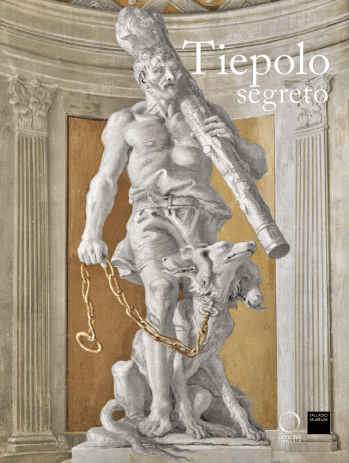 Sette straordinari affreschi di Giandomenico Tiepolo (1727–1804) da oltre cinquant’anni anni erano conservati nelle residenze dei proprietari che coraggiosamente li salvarono dalle distruzioni belliche. Oggi gli eredi, convinti dell’opportunità di un godimento pubblico di tali capolavori, li hanno destinati al Palladio Museum. Ad essi viene dedicata una mostra, realizzata grazie alle competenze e alla collaborazione della Soprintendenza di Verona diretta da Fabrizio Magani, che la cura insieme al direttore del Palladio Museum, Guido Beltramini.
In questa vicenda s’intrecciano più storie. Quella della straordinaria arte dei Tiepolo, in grado di trasformare dalla radice la tradizione frescante veneta. Quella della difesa del patrimonio artistico negli anni cupi della seconda guerra mondiale. Ma esiste una terza storia che lega in modo indissolubile gli affreschi di Palazzo Valmarana Franco agli studi palladiani: essi infatti sono realizzati due decenni dopo la straordinaria decorazione di Villa Valmarana ai Nani, per il figlio del committente, Gaetano Valmarana. Nella dimora suburbana a poca distanza dalla Rotonda palladiana, per il padre Giustino Valmarana, i Tiepolo celebrano la naturalezza di una vita ‘moralizzata’ in campagna. Vent’anni dopo, in città, a poca distanza dal Teatro Olimpico, il registro è completamente diverso: Tiepolo concepisce per il figlio una riedizione in pittura della magnificente scena del teatro all’antica di Palladio adottando non più il registro lieve e scherzoso della vita agreste ma il linguaggio aulico, monocromo ma nondimeno guizzante, della vicina architettura palladiana.
“Siamo orgogliosi di poter contribuire alla cultura della nostra città—dichiarano Camillo e Giovanni Franco, proprietari degli affreschi—con una parte della storia della nostra famiglia.” Fu fra l’altro Fausto Franco, zio dei generosi proprietari e Soprintendente ai Monumenti, a seguire il salvataggio degli affreschi di famiglia nel 1945. Dieci anni dopo lo stesso Franco, insieme—fra gli altri—a Rodolfo Pallucchini, Anthony Blunt, Rudolf Wittkower e André Chastel, fu fra i tredici fondatori del primo Consiglio scientifico del Centro palladiano, coordinato da Renato Cevese.
Tiepolo Segreto (Vicenza, Palladium Museum, 2018), 80 pages, ISBN: 978-8899765781, 17€.
Call for Papers | Rome and Lisbon in the 18th Century
From the Call for Papers:
Rome and Lisbon in the 18th Century: Music, Visual Arts, and Cultural Transfers
National Library of Portugal, Lisbon, 28–29 March 2019
Proposals due by 10 January 2019

Jean Ranc, Portrait of John (João) V, King of Portugal, 1729, oil on canvas, 109 × 91 cm (Madrid: The Prado).
Political, diplomatic, cultural, and artistic relations—including music and the visual arts—between Rome and Lisbon in the 18th century have, at different times, aroused the interest of several scholars. However, these research fields have often been approached in parallel paths within the traditions of each of the disciplines, without establishing in most cases a true dialogue between the different areas of knowledge and disregarding cross-cutting issues. On the other hand, the study of artistic relations and cultural transfers presupposes an in-depth and up-to-date view of the historical and social context of each city in their own peculiarities. This international conference intends to promote new approaches to the history of music and the arts through multidisciplinary dialogue involving different points of view. We invite researchers at any stage of their career, with backgrounds ranging from different fields (such as political, economic, cultural and art history, musicology, literature, and philosophy, among others) to send us a proposal.
We encourage submissions on the following topics, but other related issues might also be considered:
• Politics and diplomacy
• Arts, music, and diplomacy
• Royal, aristocratic, and cardinalic patronage
• Circulation of people between Rome and Lisbon (in political, religious, scientific, intellectual, and artistic spheres)
• Portuguese in Rome and Italians in Lisbon
• Foreign communities in Rome
• Circulation of musical repertoires, works of art, books, or scientific instruments
• Formal and informal training of musicians and artists
• Professional careers in the field of visual and performing arts
• Artistic, intellectual and sociability networks
• Spaces and institutions linked to music and the arts
• Stylistic issues and performance practices
Scholars are invited to submit proposals for individual papers with a maximum length of 20 minutes, as well as thematic panels with three or four communications (maximum duration: 1h30). Proposals should be submitted in English but presentations in Portuguese, Spanish, French, and Italian are also accepted. Please include complete contact information (name, email, and phone number), institutional affiliation, an abstract (300 words maximum), and a brief biographical note (150 words max). Proposals should be submitted no later than 10 January 2019, and sent to romeandlisbon@gmail.com.
Parallel with the symposium, the National Library of Lisbon will host the exhibition From the Tagus to the Tiber: Portuguese Musicians and Artists in 18th-Century Rome, curated by Pilar Diez del Corral and Cristina Fernandes.
Organization
• Research group ‘Historical and Cultural Studies in Music’ from INET-md, Instituto de Etnomusicologia – Centro de Estudos em Música e Dança, Faculdade de Ciências Sociais e Humanas da Universidade Nova de Lisboa (NOVA FCSH)
• Department of Art History, Universidad Nacional de Educación a Distancia (UNED), Madrid
Board of Directors
• Pilar Diez del Corral Corredoira
• Cristina Fernandes
Scientific Committee
• Manuel Carlos de Brito (NOVA FCSH, Lisboa)
• Elisa Camboni (Accademia Nazionale di San Luca, Roma)
• Pilar Diez del Corral Corredoira (UNED, Madrid)
• Cristina Fernandes (INET-md, NOVA FCSH, Lisboa)
• Anne-Madeleine Goulet (CNRS, Projecto Performart-Roma)
• Teresa Leonor M. Vale (ARTIS, Universidade de Lisboa)
• Rui Vieira Nery (INET-md, NOVA FCSH/Fundação Gulbenkian, Lisboa)
Exhibition | Luxury in Silk: Fashion in the 18th Century
From the GNM:
Luxury in Silk: Fashion in the 18th Century / Luxus in Seide: Mode des 18. Jahrhunderts
Germanisches Nationalmuseum, Nuremberg, 5 July 2018 — 6 January 2019

Sacque (sack-back gown or robe à la française), ca. 1760 (Nuremberg: Germanisches Nationalmuseum).
In 2017, the GNM was able to acquire a remarkable object: a one-piece silk dress from the period around 1760 with a hooped skirt from about the same time. The colours of the silk fabric are extremely well-preserved; the pale blue background with the colourful flower decoration has hardly faded at all—which is extremely rare in textiles from this period.
But what did one wear with a dress of this kind? In the exhibition, splendid jewellery, accessories, and ‘fancies’ such as headpieces and collars, fans and gloves, silk stockings and shoes complete the picture of a lady ‘à la mode’. Contemporary portrayals and excerpts from historical literature also give a deep insight into the enormous skill that went into making such elaborate clothing and accessories. With around 100 items on display, the exhibition offers a fascinating insight into luxury clothing of the 18th century and also examines various issues within historical textile and clothing research.
New Book | Georgian Jewellery, 1714–1830
First published in 2007, this book was reprinted this fall by ACC Art Books:
Ginny Redington Dawes with Olivia Collings, Georgian Jewellery, 1714–1830 (New York: ACC Art Books, 2018), 192 pages, ISBN: 978-1851499212, $85.
 Georgian Jewellery is a celebration of the style and excellence of the eighteenth century and of the ingenuity that produced such a wealth of fabulous jewelry. Heavy academic tomes have already been written about the period, but this book examines it in a more colorful and accessible way. The book aims to show that Georgian jewelry is not only the stuff of museums and safe boxes, but that it can be worn as elegantly and fashionably today as it was 200 years ago.
Much disparate information about the jewelry has been gathered together and the period is brought alive by portraits and character sketches of famous Georgians in their finery, fashion tips, gossip, and some rather outrageous cartoons of the time, as well as fascinating recently discovered facts. With information on how to identify, buy and repair pieces, this sumptuously illustrated volume contains the largest single catalogue of eighteenth-century jewelry.
Ginny Redington Dawes, a life-long collector of antique jewelry, has written two previous books on the subject: The Bakelite Jewellery Book and Victorian Jewellery. Staff writer for MGM Screengems Music, she is also a successful composer; she wrote the book, music and lyrics for the off-Broadway show The Talk of the Town and has won a CLEO award for music for advertising.
Olivia Collings became fascinated by the seventeenth-century alchemist and jeweler Christopher Pinchbeck at an early age and bought her first piece of antique jewelry aged seven. She trained in an exclusive Bond Street antique jewellery shop before starting her own business in 1975 and has continued learning about and dealing in Georgian jewellery ever since. She is now an independent jewelry consultant.
Call for Papers | World-Making, 1500–1800
From the Early Modern Center at the University of California, Santa Barbara:
World-Making, 1500–1800
University of California, Santa Barbara, 22–23 February 2019
Proposals due by 7 December 2018 (extended from 20 November 2018)

Frans II Francken, Allégorie de l’Occasion, detail, 1628 (Musée d’art et d’archéologie du Périgord).
The Early Modern Center at the University of California, Santa Barbara invites proposals for our annual conference, World-Making, 1500–1800, to be held on February 22 and 23, 2019. We are happy to announce our two keynote speakers: Su Fang Ng (Clifford A. Cutchins III Professor and Associate Professor of English, Virginia Tech) and Daniel O’Quinn (Professor in the School of English and Theatre Studies, University of Guelph).
Worldmaking, 1500–1800 will explore the ways in which worlds—large and small, local and global, conjectural and experiential—were conceived and created in early modern England. We invite conversations that address and interrogate the concept of ‘world’ broadly construed, as well as conversations that attend to the ‘making’ of worlds in social, institutional, and political frames and by and through various media. How is a world—or the world—represented, portrayed, and evoked? How do such representations, portrayals, and evocations create worlds? What are the possible interactions between fictive world-making and lived experiences of the world?
Topics for panels and roundtables may include, but are not limited to
• the global early modern
• worldmakers
• gender, sexuality, trans, and queer studies in the global early modern
• critical race studies
• global mobilities
• travel narratives / narratives of exploration
• mapping and making
• worlds of writing and print
• global media and technology
• translation and mediation
• currency, capital, and trade
• fictive worlds and their makers
• religious worlds
• utopias, dystopias, apocalypses, and imagined futures
• creating and representing worlds on stage
• early modern embodiment and the body’s relation to world
• worlds shaped by affect, emotions, and mind
• the phenomenal world and ‘world’ in phenomenology
• historiography
• making and conjuring worlds of the archive
We invite abstracts of 150 to 200 words and a one-page CV to be sent to emcfellow@gmail.com by December 7, 2018. We envision and invite both twenty-minute panel presentations and ten-minute roundtable presentations; we will also consider complete panel or roundtable proposals. If you have further questions, please feel free to contact the conference organizer, Unita Ahdifard, at emcfellow@gmail.com.
Exhibition | Museo del Prado, 1819–2019: A Place of Memory
Now on view at the Prado:
Museo del Prado, 1819–2019: A Place of Memory / Un lugar de memoria
Museo Nacional del Prado, Madrid, 19 November 2018 — 10 March 2019
Curated by Javier Portús

Francisco de Goya y Lucientes, Portrait of José Álvarez de Toledo, Marquis of Villafranca and Duke of Alba, 1795, oil on canvas (Madrid: Museo Nacional del Prado).
This exhibition launches the extensive programme organised by the Prado to mark the 200th anniversary of its foundation. It offers a survey of the museum’s history, focusing on the dialogue between the museum and society; heritage policies in Spain; the trends that have guided the growth of the museum’s collection; and its transformation into a place that has allowed Spanish and foreign writers, intellectuals, and artists to reflect on the country’s past and its collective identity.
Organised around the art and documentary collections at the Prado (both visual and sound archives), which shall be exhibited alongside works by artists who have come into contact with the museum over the last two centuries, the exhibition presents a total of 168 original works, 34 from different Spanish and foreign institutions, together with a variety of complementary materials including documents, maps, pictures, photographs, and audiovisual installations.
Call for Papers | Cultural Transfer and Competition: German Courts
From the Call for Papers, which includes the full French version:
Konkurrenzkultur und Kulturtransfer: Höfische Repräsentationsstrategien im Alten Reich, 1650–1800
Transfert culturel et culture de concurrence: Stratégies de représentation des cours de l’ancien Empire germanique, 1650–1800
Westfälische Wilhelms-Universität Münster, 30 September — 4 October 2019
Proposals due by 6 January 2019
Veranstaltet vom Institut für Kunstgeschichte der Westfälischen Wilhelms-Universität Münster in Zusammenarbeit mit der École Pratique des Hautes Études, PSL (Équipe HISTARA 7347), Paris, und dem LWL-Museumsamt für Westfalen in Münster
Das Forschungsatelier widmet sich höfischen Repräsentationsstrategien im Alten Reich von 1650-1800. Es richtet sich an internationale Nachwuchswissenschaftler*innen, die zur europäischen Hofkunst arbeiten. Dabei liegt der Fokus auf der Konkurrenzsituation der Reichsfürsten und dem vor diesem Hintergrund erfolgten Kulturtransfer zwischen Deutschland und Frankreich.
Angesichts der jeweils spezifischen Situation der einzelnen deutschen Höfe konnten französische Kunstformen nur bedingt modellhaft wirken, waren jedoch wegen ihrer künstlerischen Qualität und Aktualität in höchstem Maße attraktiv. Deshalb wurden bestimmte Elemente aufgegriffen und für die eigenen Strukturen fruchtbar gemacht. Die interhöfische Konkurrenzsituation im Alten Reich potenzierte diesen Vorgang und förderte zugleich – so die grundlegende These – innovative künstlerische Lösungen. Die hierbei wirksamen Mechanismen, Agenten, Produkte, aber auch die entstehenden Konflikte, Brüche und Widerstände stehen im Blickpunkt des deutsch-französischen Forschungsateliers.
Dem stellt sich die Situation im zentralistisch regierten Frankreich entgegen: Welche Konkurrenzen sind hier festzustellen? Wie präsentiert sich der Adel im Verhältnis zum König? Unterscheiden sich die Repräsentationsstrategien von jenen im Alten Reich und welche Modelle lassen sich im europäischen Vergleich ausmachen? Gerade im Vergleich mit der Machtstruktur der französischen Monarchie und anderer europäischer Hofkulturen werden die Dynamiken der Konkurrenzsituation deutscher Höfe umso plastischer – und umgekehrt. Aktuelle Tendenzen der Residenzforschung aufgreifend, widmen wir uns nicht nur den Paraderäumen, sondern auch den Rückzugsorten, um zu einem umfassenderen Verständnis von Herrschaftsrepräsentation zu gelangen. Zu dieser Ganzheitlichkeit gehört auch die Vielgestalt der Medien: Berücksichtigung finden neben Architektur und Raumausstattungen jeglicher Art (wandfeste Teile und Mobiliar, Innenräume sowie Gartenkunst), Porträtkultur, Sammlungen oder ephemere Kunstformen (Feste, Aufführungen, Tafelkultur) usw. Mit dem LWL-Museumsamt für Westfalen als Partnerinstitution erweitert sich der wissenschaftliche Austausch um eine praktische Komponente durch die direkte Einbindung verschiedener musealer Einrichtungen. Museumsvertreter*innen übernehmen die Moderation bestimmter Sektionen bzw. empfangen uns in ihren jeweiligen Wirkungsstätten. Die Umsetzung universitärer Forschung im Museumsbetrieb wird so gezielt in die Diskussion eingebunden.
Das fünftägige Forschungsatelier wird finanziell unterstützt durch die Deutsch-Französische Hochschule. Es richtet sich an Nachwuchswissenschaftler*innen, die an einer deutschen oder französischen Institution eine Promotion oder eine Habilitation im Bereich der kunsthistorischen Forschung zur Hofkultur anstreben oder ein Postdoc-Projekt zu dieser Thematik durchführen (die Promotion darf nicht länger als vier Jahre zurückliegen). Insgesamt sind 18 Plätze zu besetzen. Die ausgewählten Teilnehmer*innen halten jeweils einen dreißigminütigen Vortrag aus dem Bereich ihrer Forschungen im oben beschriebenen Themenspektrum, woran sich jeweils eine fünfzehnminütige Diskussion anschließen wird. Wir bitten um die Einreichung Ihrer Bewerbung (ein einziges pdf-Dokument!) bis zum 6. Januar 2019 an kristina.deutsch@uni-muenster.de. Einzureichen sind ein tabellarischer Lebenslauf mit Publikationsliste und ein kurzes Exposé (max. 3000 Zeichen inkl. Leerzeichen) über das geplante Referat. Die Auswahl erfolgt nach wissenschaftlicher Qualifikation und Eignung des Themas.
Leitung
Prof. Dr. Eva-Bettina Krems (WWU Münster); Prof. Dr. Sabine Frommel (EPHE, Paris)
Organisation
Dr. Kristina Deutsch (WWU Münster); Dr. Ute-Christina Koch (LWL-Museumsamt für Westfalen, Münster/ Service muséal du LWL pour la Westphalie, Münster)










 Enfilade
leave a comment