Summer School Program | Three Exhibitions at The Prado
From H-ArtHist:
Escuela de Verano: Tres exposiciones temporales en el Prado, Concepción y organización
Museo Nacional del Prado, Madrid, 8–10 July 2019
Applications due by 24 May 2019
La Escuela de Verano del Museo del Prado es una nueva iniciativa académica de la Escuela del Prado cuyo objetivo principal es abarcar aquellos aspectos de la formación de jóvenes historiadores del arte, futuros conservadores y gestores de museos que las Universidades no pueden cubrir con su programación y que solo se pueden abordar desde una institución como el Prado. Los cursos profundizarán en diversos temas relacionados con el Museo del Prado, sus colecciones, la museografía y la museología, y en distintos aspectos relativos a la gestión de esta gran institución museística, desde la investigación a la exposición de obras de arte o a la conservación de sus colecciones.
Coincidiendo con el Bicentenario del Museo y partiendo de tres de las grandes exposiciones temporales organizadas por el Prado en 2019: Fra Angelico y los inicios del Renacimiento en Florencia; Velázquez, Rembrandt, Vermeer. Miradas afines; y Solo la voluntad me sobra. Dibujos de Goya, el objetivo de esta edición de la Escuela de Verano es acercar a los alumnos al proceso de creación de una exposición desde el momento mismo de su concepción. Esta edición de la Escuela estará dirigida por José Manuel Matilla (Jefe del Área de Dibujos y Estampas del MNP ) y Alejandro Vergara (Jefe del Área de Pintura Flamenca y Escuelas del Norte (hasta 1700) del MNP ). Los alumnos tendrán la oportunidad de recibir la información directamente de los profesionales de distintas disciplinas involucrados en el proceso de una exposición –diseñadores, restauradores, coordinadores de exposición, …- y de poder aprender a través del contacto directo con las obras de arte. El reducido número de alumnos permitirá un contacto directo con el claustro de profesores, y a la vez lograr una participación activa en un ambiente dinámico de recíproca colaboración entre profesores y alumnos.
La Escuela de Verano se desarrollará durante tres días consecutivos, en sesiones que combinarán clases teóricas y clases prácticas que consistirán en visitas a diversos espacios del Museo del Prado como las Salas de Exposiciones Temporales y Permanente, los Talleres de Restauración y los Almacenes de obras de arte, o el Gabinete de Dibujos y Estampas, entre otros.
La Escuela de Verano es una actividad gratuita gracias a la colaboración de la Fundación Banco Sabadell. El plazo de inscripción es de 30 de abril al 24 de mayo de 2019. El número máximo de alumnos admitidos en la Escuela de Verano será de 30 (en dos grupos de 15 participantes por grupo). Los aspirantes no deben superar los 30 años y deben estar en el último año del grado o ser estudiantes de postgrado. No se admitirán candidatos que posean una nota media inferior a notable en el grado. Consultas: escuela.prado@museodelprado.es.
Exhibition | Solo la voluntad me sobra: Drawings by Goya
Opening this fall at The Prado:
Solo la voluntad me sobra: Dibujos de Goya
Museo Nacional del Prado, Madrid, 19 November 2019 — 16 February 2020
Curated by José Manuel Matilla and Manuela Mena
 This exhibition is the result of the research undertaken for the publication of a new catalogue raisonné of Goya’s drawings, as a result of the collaboration agreement signed in 2014 between the Fundación Botín and the Museo del Prado. Since the publication of Gassier’s catalogue in 1973 the number of drawings attributed to Goya has changed, giving rise to the need for a new catalogue raisonné which updates the enormous body of information accumulated over the course of two centuries of literature on this subject.
The exhibition will bring together more than 100 drawings by Goya from the Prado’s own collections and from public and private ones around the world. It will be presented as a chronological survey of his work that includes drawings from throughout his career, ranging from the Italian Sketchbook to the Bordeaux Albums. It will also offer an up-to-date vision of the ideas that recurrently appear in Goya’s work, revealing the ongoing and long-lasting relevance of his thinking. The exhibition is curated by José Manuel Matilla (Museo Nacional del Prado Senior Curator Drawings and Prints) and Manuela Mena (Museo del Prado Senior Curator Eighteenth-Century Painting).
Exhibition | The Master of Paper: Spanish Drawing Books

Opening this fall at The Prado:
The Master of Paper: Spanish Drawing Books of the 17th and 18th Centuries
El maestro de papel: Cartillas españolas para aprender a dibujar de los siglos XVII y XVIII
Museo Nacional del Prado, Madrid, 15 October 2019 — 2 February 2020
Curated by José Manuel Matilla and María Luisa Cuenca
This exhibition will place particular emphasis on Spanish drawing manuals of the 17th and 18th centuries, locating them in their international context. Although few in number they are particularly important, not just because they rapidly reflected this new tradition in art but also because they are notably from the outset for their distinctive Spanish and on occasions innovative character, as well as for the presence of unique elements that denote their national origin. Notable among Spanish artists in this field are Pedro de Villafranca y Malagón and prior to him, José de Ribera. Also notable are the manuals by José García Hidalgo, Friar Matías de Irala and José López Enguídanos.
The exhibition is curated by José Manuel Matilla, Museo Nacional del Prado Senior Curator Drawings and Prints and María Luisa Cuenca, Head of Library, Archive and Documentation Department at Museo Nacional del Prado.
Colonial Williamsburg Acquires Rare 1780 Map
Press release (7 May 2019) from Colonial Williamsburg:

A Map of South Carolina and a Part of Georgia…, published by William Faden (1750–1836) after William Gerard De Brahm (1718–ca. 1799) after Thomas Jeffreys (ca. 1710–1771), London, 1780; black and white line engraving with period hand color on laid paper, in two sheets: top sheet 28 × 48 inches, bottom sheet 28 × 48 inches (Colonial Williamsburg Foundation, Museum Purchase, 2019-59, A&B).
The Colonial Williamsburg Foundation has recently acquired a very rare copy of A Map of South Carolina and a Part of Georgia published in 1780 by William Faden based on a 1757 version made by the cartographers William Gerard De Brahm and published by Thomas Jefferys. Although other copies are known to exist, this example, which is in pristine condition with vibrant original color, is the first known to have become available in several decades. The large-scale map (about 4½ feet tall by 4 feet wide) is a significantly revised version of the 1757 document by De Brahm, and when paired with this earlier version of the map (a copy already exists in the Colonial Williamsburg collection) the two maps tell a compelling story. Together they show a visual comparison about the extent to which the South Carolinians and Georgians settled the western frontiers of their colonies during the period between the French and Indian War and the American Revolution.
“Colonial Williamsburg collects objects such as the Faden map not only for their inherent beauty, but for their intrinsic value as documents of past peoples, places, and events,” said Ronald L. Hurst, the Foundation’s Carlisle H. Humelsine Chief Curator and Vice President for Collections, Conservation, and Museums. “Remarkably well preserved, the Faden map will be used with other cartographic documents and three-dimensional objects to illustrate the movement of cultural groups from the seacoast to the southern backcountry on the eve of the Revolution.”
To best understand why this map is so extraordinary beyond its scarcity, one needs to first understand who made it, how it was originally intended for use and how it came to be revised over time, beginning with the original 1757 version. The story begins with the map’s cartographer, William Gerard De Brahm (1717–1798). Born in southern Germany, he served as a military engineer in the Bavarian army until 1748 and thereafter was expelled from Bavaria for renouncing his Catholic faith in favor of Protestantism. With the encouragement of the Bishop of Augsburg, Samuel Urlsperger, he led a group of 156 German Protestants to settle in the Salzberger community of Ebenezer, Georgia, in 1751. Shortly after his arrival, his skills as a trained surveyor and engineer were recognized in both Georgia and South Carolina, and by 1752 De Brahm was selected by Governor James Glen of South Carolina to design and construct a system of fortifications for Charleston. Two years later, De Brahm was appointed Surveyor General of South Carolina. Realizing that there would be a war with France, the British Board of Trade requested that each colony supply maps of their topographical surveys, the resulting map depicted geography that was vastly superior to any previous map of the region.
De Brahm used his training as an engineer to create a map that aimed to assist colonists in settling the vast wilderness of the region. He meticulously and scientifically represented details, such as settlements, land quality, climate, coastlines, waterways, and the suitability of soil for agricultural growth. The map delineates plantation landscapes belonging to European settlers, while the cartouche depicts the enslaved Africans who would be forced to work the land. Native Americans’ lands in the interior of the Colonies are mentioned sporadically, but much of the map was left blank, suggesting endless possibilities for European settlement. Once all the information was compiled, De Brahm sent the map to the Board of Trade in England, which then approved it and commissioned cartographer, engraver, and map seller Thomas Jeffreys, who served as Geographer to King George III, to publish it. The resulting map, published in London on October 20, 1757 (during the French and Indian War), illustrates the progress as well as the potential of the area.
The second version of the map was published at the height of the Revolution. By 1778, the British had taken Savannah, and in April 1780, once Charleston fell to the British, the focus of the war shifted to the Southern Colonies. Given the contemporary interest in the region, Thomas Jeffreys’s successor, William Faden, altered the 1757 copperplates with updated information on the region, publishing it in June 1780. The revisions were so major that some scholars consider the result to be virtually a new map. This new version included county names, roadways, new place names, and settlements across the entire map, revealing the amount of new information that was gathered over a span of less than 20 years during a time when Britain was focused on expanding and populating its empire in North America and the backcountry of South Carolina was opened up for English settlement. The alterations were largely based on the surveys gathered by John Stuart, the Superintendent of Indian Affairs for the Southern District from the 1760s to his death in 1779. Stuart frequently complained to royal officials in Britain that he lacked accurate maps of the backcountry to conduct his work, which frequently involved boundary disputes between Native Americans and settlers. He provided his findings to the Board of Trade, who, in turn, hired Faden to publish the updated version. The 1780 edition of the map reflects the westward movement of the population.
“De Brahm’s map of South Carolina and Georgia was viewed in the period, as it is today, as a remarkable achievement of eighteenth-century cartography,” said Katie McKinney, Colonial Williamsburg’s assistant curator of maps and prints. “The blank space on the 1757 map is one of its most striking features, which never aimed to detail the backcountry landscape. It makes sense that when looking to publish a map on the region that Faden would use De Brahm’s map as a template to incorporate new information about these Southern colonies. Compared to the earlier version, this map will allow us to better interpret the westward movement of people and objects in the region throughout the eighteenth century.”
The Georgetown Precinct reflects the extensive revisions made to the 1757 map on the 1780 map. The original map primarily illustrated topography and land use as evidenced by the detail, whereas the 1780 map focused on roadways, waterways, landowners and settlement. The 1780 map shows the intricate rivers and streams that made up the Pee Dee River. Georgetown Precinct thrived financially in the eighteenth century as home to some of the wealthiest indigo and rice planting operations in the low country, which relied on the work of enslaved laborers.
The Art Museums of Colonial Williamsburg remain open during construction of an entirely donor-funded $41.7 million expansion. Additional information about the Art Museums and Colonial Williamsburg is available online.
Call for Papers | Public Good(s)
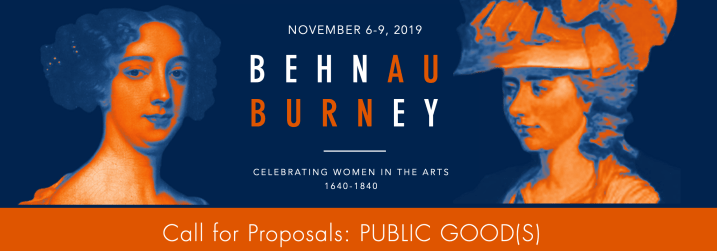
Public Good(s)
Biennial Conference of the Aphra Behn Society and the Frances Burney Society
Caroline Marshall Draughon Center for Arts & Humanities, Auburn University, 5–9 November 2019
Proposals due by 15 May 2019
Auburn University College of Liberal Arts will host the biennial joint meeting of the Aphra Behn and Frances Burney Societies November 5–9, 2019 at the Caroline Marshall Draughon Center for Arts & Humanities, located at historic Pebble Hill in Auburn, Alabama. In the spirit of the College’s work supporting humanities outreach to the public, we seek papers, roundtables, and workshops that engage with the idea of public good(s). As Behn and Burney both knew, public action is both vital and fraught, and working towards a better world can take many forms. We seek presentations and workshops that engage with the questions around public engagement and advocacy, historically and practically.
• How do we share what we know about the long tradition of women’s work in the arts in new ways to new audiences?
• What strategies do we have when faced with apathy or even hostility?
• How do the lives and work of women from the long eighteenth-century (1660–1840) speak to our current concerns?
• How do we grapple with misinformation, archival absences, and other challenges?
• Most importantly and most urgently: how do we decolonize the study of women writers and artists in keeping with the principles of #BIPOC18, #Bigger6 and #LitPOC values?
Formats
• Individual Papers: Traditional (12–15 minute) papers, to be delivered on panels.
• Roundtables: Groups of 4–5 speakers, each speaking for no more than 5 minutes, on a shared topic. Roundtable organizers are encouraged to solicit contributors publicly prior to submission, and to contact the organizers if they would like assistance.
• Workshops: Dedicated small (12 person) room will be set aside from workshops introducing interested attendees to a new method of research, teaching, or outreach. Participants will sign up at registration, and every attempt will be made to ensure that, and materials will be available after the conference. Leaders are sought for sessions on journal article submission, starting a digital project, new pedagogical techniques, managing a social media presence, outreach projects, and the like.
Keynote address by Dr. Patricia Matthew (Montclair State University), Thursday, 7 November 2019
More information is available here»
Exhibition | Hogarth: Cruelty and Humor
Press release for the exhibition:
Hogarth: Cruelty and Humor
The Morgan Library & Museum, New York, 24 May — 22 September 2019
Curated by Jennifer Tonkovich
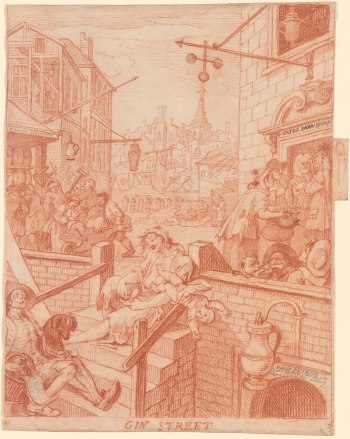
William Hogarth, Gin Street, 1750–51, red chalk, some graphite, on paper, incised with stylus (New York: The Morgan Library & Museum, purchased by Pierpont Morgan in 1909).
The Morgan Library & Museum announces a new exhibition of satirical drawings and prints by renowned artist William Hogarth (1697–1764). Best known for his humorous political commentary, Hogarth’s work engaged a broad audience and agitated for legislative and social change. His intricate drawings and richly anecdotal scenes depict the ills and injustices of eighteenth-century urban life, exploring the connections between violence, crime, alcohol abuse, and cruelty to animals. He hoped his graphic work would amuse, shock, and ultimately edify his audience. Hogarth: Cruelty and Humor tells the story of Hogarth’s iconic images and the social realities of life in Georgian London that inspired him to advocate for reform through popular works of art. It is the first show at the Morgan devoted to this artist, whose style was so influential in British art that the word ‘Hogarthian’ remains a recognizable way of describing works of satire.
Featuring over twenty works, the show investigates Hogarth’s creative process and examines his embrace of humor, highlighting the Morgan’s exceptional cache of preparatory drawings for his two most acclaimed print series from 1751: Beer Street and Gin Lane, and The Stages of Cruelty. Hogarth’s prints documenting the dangerous impact of the gin craze, Beer Street and Gin Lane, generated popular support for the 1751 Gin Act and other reform efforts, while the Stages of Cruelty reflects the growing anxiety about episodes of human brutality in London. Included in the show are the only other two known studies related to the Stages of Cruelty; these works reveal the complex generative process of the series. Also on view are drawings from The Royal Collection Trust that represent Hogarth’s first and last forays into satire.
Fiercely independent, Hogarth was driven to innovate in order to elevate the status of British art, creating new genres and modes of expression in his painting, printmaking, and drawing. His compositions are rich with narrative detail. It was his adoption of such ‘low’ subjects, no less than his use of humor, that led him to struggle to be taken seriously throughout his career.
“William Hogarth’s works should be enjoyed for their artistry, humor, and activism, and as such hold a special place in our drawings and prints collection,” said Colin B. Bailey, director of the museum. “The artist was a keen observer of his city, and his visual anecdotes were a brilliant means of communicating to a wider public.”
“Looking closely at Hogarth’s passion for socially relevant subjects reveals the challenges he faced in being known as a satirical artist,” said Jennifer Tonkovich, Eugene and Clare Thaw Curator of Drawings and Prints. “I think our current appetite for satire allows us to appreciate Hogarth’s tremendous intelligence and ambition in constructing narratives that he hoped would change the world around him.”
S E L E C T E D P R O G R A M M I N G
Laurel Peterson, Crafting Cruelty: Hogarth’s Innovative Drawing Methods
Tuesday, June 18, noon
William Hogarth achieved substantial artistic and commercial success in his lifetime, both as a printmaker and as a painter. Despite his enduring fame, Hogarth’s drawings are today little known and rarely studied. Laurel Peterson, Moore Curatorial Fellow in the Department of Drawings and Prints, will offer new insights into Hogarth’s practice as a draftsman, shedding light on the evolution of his drawing style and the role played by drawings in the development of his most iconic satirical prints. Co-sponsored by the Sir John Soane’s Museum Foundation.
Hogarth’s Gin Craze Festival
Friday, July 19, 6:00pm
Join us for an evening of revelry inspired by the Gin Craze of the 1750s! Enjoy gin-inspired bites and craft cocktails at Morgan Café and curatorial gallery talks at 6:00 and 7:30pm in the exhibition Hogarth: Cruelty and Humor. At 7:00pm we will screen the 1946 film Bedlam, which was inspired by William Hogarth’s A Rake’s Progress.
Bedlam, directed by Mark Robson (1946, 79 minutes)
Friday, July 19, 7:00pm
In 1760s London, an actress campaigns to reform a horrific hospital for the insane, but instead finds herself committed to the institution by the corrupt head of the asylum. Starring Boris Karloff and Anna Lee, Bedlam was the last in a series of stylish horror films produced by Val Lewton for RKO Radio Pictures.
Meredith Gamer, Hogarth: Cruelty and Crime
Thursday, 12 September, 6:30pm
Meredith Gamer, Assistant Professor of Art History at Columbia University, will explore the origins, evolution, and multi-layered meanings of William Hogarth’s The Four Stages of Cruelty (1751). A tale of neglect and abuse, murder and punishment, the series was—by eighteenth-century standards—one of Hogarth’s ‘lowest’ works. Paradoxically, however, it is also one of his most ambitious, for it aims to combat some of our most basic human frailties through the medium of art. Co-sponsored by the Sir John Soane’s Museum Foundation.
Summer School | Rethinking the Baroque
From H-ArtHist:
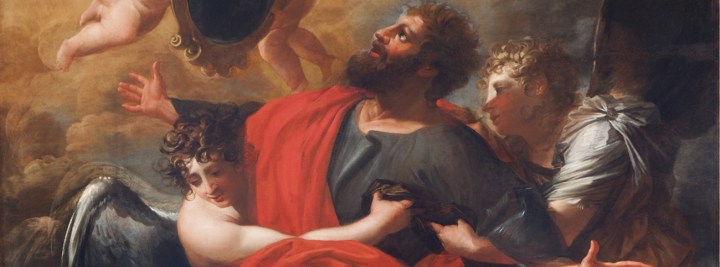
Summer School | Rethinking the Baroque (Seventeenth and Eighteenth Centuries), New Historical and Critical Perspectives
Turin, 2–7 September 2019
Applications due by 31 May 2019
The Fondazione 1563 invites scholars who are younger than 40; active in the disciplines of history, art history, architecture, and literature; and who hold a PhD, a certificate of specialization, a 2nd-level master’s, or are enrolled in the second year of such study courses to apply to participate in the Summer School Rethinking the Baroque (XVII and XVIII Centuries): New Historical and Critical Perspectives. Candidates need to have a knowledge of Italian and English corresponding at least to a level B2. The courses of the Summer School will all be taught in Italian.
Participation in the Summer School is free. The Foundation will also cover the costs of the living expenses (accommodation and food) for the period running from the night of September 1 to the night of September 6 included, as identified by the Foundation. In addition, the Foundation will cover the costs of the guided tours, the transfer from/to the venue of the school. Travel expenses to and from Torino are, however, not covered by the Foundation.
Candidates must apply through the specific application form found here by 5.00pm of 31 May 2019. Candidates must upload their CV and an abstract of current or ongoing research. The research should present new critical perspectives relevant to the subject of the Summer School.
The Summer School will take place from September 2 to September 7, 2019 at the historical residency ‘Vigna di Madama Reale’, Strada Comunale San Vito Revigliasco 65, 10133 (Torino), or in a different venue in Torino that will be established by the Foundation.
The Summer School will address periods and turning points of cultural production in the field of art, architecture, literature, music, theatre, and history in Europe in the XVII and XVIII centuries, and it will further develop the critical reflection on the studies dedicated to the Baroque and its chronology.
The Summer School will be structured as follows:
• Lectures by experts in different disciplines, including Professor Franco Benigno (Professor of Modern History at the Scuola Normale Superiore, Pisa) and Professor Ingrid Rowland (Department of History, University of Notre Dame).
• Discussions in small seminar groups on cross-disciplinary issues related to historical criticism and methodologies, conducted with the support of scholars who won the scholarships of the Baroque.
Study Programme at the Foundation in the years 2013–17
• Formative sessions on digital humanities and digital tools applied to research
• Occasions to present and discuss participants’ research
• A presentation of the exhibition Roma, Torino, Parigi 1680–1750, a product of the project Antico e Moderno: Roma, Torino, Parigi 1680–1750, curated by Michela di Macco and Giuseppe Dardanello and developed by the Foundation. The exhibition will be on view at Venaria Reale in Spring 2020
• Guided tours to key art historical places in Torino, with particular attention to the Royal Museums and their collections
During the Summer School—and particularly during the workshop sessions—participants will have the opportunity to exchange critical and methodological points of view on the research they submitted when they applied for the summer school. The outcomes of these sessions might be included in papers for a future collective publication in an electronic version with ISBN, at the Foundation’s expense. A certificate of participation from the Foundation will be provided at the end of the Summer School.
More information is available here»
New Book | The Hand that Rocked the Cradle
Distributed in the US and Canada by The University of Chicago Press:
Sue Laurence, The Hand that Rocked the Cradle: The Art of Birth and Infancy (London: Unicorn Publishing, 2019), 192 pages, ISBN: 978-1911604556, $30.
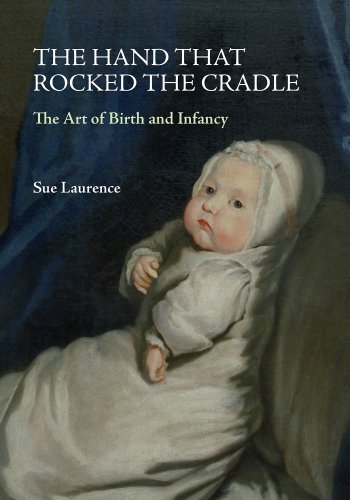 Throughout the history of art, artists have been drawn to images of birth and infancy. After all, who doesn’t want to look at a baby? This book uses that bounty of imagery to offer a fresh perspective on the history of birth and the early years of life through a rich array of images and objects, including paintings, prints, sculptures, metalwork, jewelry, textiles, ceramics, furniture, and woodwork—as well as images from medical and social history collections.
Exploring a long chronological scope, from around 1300 to the turn of the twentieth century, Sue Laurence provides insight into the enduring nature of many traditions and experiences related to childhood and infancy—many of which we tend to assume are of recent vintage, but turn out, when examined closely, to have roots in the medieval era. Packed with beautiful images, and offering surprising new interpretations and contextualization, The Hand That Rocked the Cradle is a treasure trove for any lover of art—or doting parent.
Sue Laurence has served as Head of the V&A Museum of Childhood, where she created many innovative exhibitions as well as securing significant acquisitions. She has also been head of interpretation at the National Archives and a curator at the Florence Nightingale Museum.
Steven Parissien Named Palace House Chief Executive
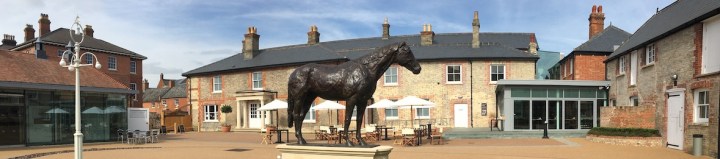
Press release (via ArtDaily). . .
Palace House, The National Heritage Centre for Horseracing and Sporting Art, in Newmarket, announced the appointment of Professor Steven Parissien as its new Chief Executive. Parissien will assume the role in June 2019, taking over from Chris Garibaldi, who is stepping down in order to embark on full-time research at the University of Cambridge.
Beginning in 2010, Garibaldi delivered the ambitious £19m project to create a national gallery of British sporting art—alongside a new national horseracing museum—in the palace that Charles II originally built for himself in Newmarket, Suffolk. In its first year (2016), Palace House attracted around 30,000 visitors, was short-listed for the Art Fund Museum of the Year in 2017, and in 2018 became an Arts Council National Portfolio Organisation.
 Parissien was Director (and subsequently Chief Executive and Artistic Director) of Compton Verney Art Gallery and Park in Warwickshire from 2009 to November 2018. Since then he has completed a project as a directorial consultant at the Bata Museum in Toronto, Canada. Under his leadership, Compton Verney saw its visitor numbers soar, whilst the historic manor house and Lancelot ‘Capability’ Brown landscape were extensively restored. Parissien also introduced a series of critically-acclaimed and hugely popular exhibitions including Turner and Constable (2013), Canaletto in Britain (2015), Britain in the Fifties (2016), and Whistler and Nature (2018). Parissien introduced a number of commercial initiatives, including a lucrative wedding and corporate hire business. At the same time, Compton Verney’s Education and Learning team developed extensive relations with local schools, children’s centres, care homes, and other organisations—enabling under-engaged and under-represented groups to access high-quality artistic experiences on their doorstep. Parissien was also instrumental in building partnerships with museums, galleries, and arts organisations across the UK, whilst also forging strong links with some of the country’s most respected higher education institutions, most notably the Universities of Oxford (whose partnership enabled the re-launch of the Victorian Women’s Library in 2017), Warwick, and Coventry. The latter awarded Parissien a Visiting Professorship in 2015.
Announcing the appointment of his successor, Mr. Garibaldi said: “It has been a true privilege to lead the organisation over the nine years of my tenure, and I am extremely proud of what has been achieved over that time by the incredibly dedicated team at Palace House. It has been an honour to have been part of such an exciting project. I am delighted to be handing over to Professor Parissien whose outstanding work at Compton Verney is well known and makes him, in my opinion, the perfect choice. I couldn’t be more pleased that the Board has recruited Steven to take Palace House through the next stage of its extraordinary history and I wish him every success in his new post.”
Rachel Hood, Chair of Trustees said: “I would like to take this opportunity to reiterate the Trustees’ and my sincere thanks for the tremendous job that Chris has done to produce such a brilliant Museum and we all wish him well on his return to academia. We are absolutely thrilled to have recruited Professor Parissien as our new Chief Executive. We looked far and wide for a suitable candidate and are immensely pleased to have persuaded Steven to return from Canada to take forward our ambitions for the organisation.”
Commenting on his appointment Professor Parissien said: “I am absolutely delighted to be returning to the UK and taking over the reins from Chris at Palace House. They have achieved a vast amount as an organisation over the past nine years with him at the helm, and I am incredibly excited to be bringing my experiences at Compton Verney and in the wider museum sector to help lead them in their—and indeed my—ambitions and plans for the future and growth of Palace House, The National Heritage Centre for Horseracing and Sporting Art.”
At Christie’s | Asian Art
Press release (via Art Daily) . . .
Art d’Asie (Sale 17457)
Christie’s, Paris, 12 June 2019
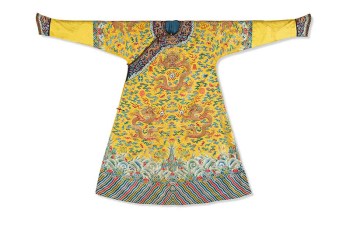
Imperial embroidered silk robe dating from the end of the Qianlong period (1736–1795). Estimate: €80,000–120,000.
On 12 June, Christie’s Paris will present its Asian Art sale (17457), which will offer high quality items, including a large range of works of art coming from European private collections.
The section dedicated to China will offer a beautiful white jade and rust ‘double-gourd’ vase. Dating from the Qianlong period (1736–1795), named for the sixth emperor of the Qing dynasty, this vase is meticulously carved and stands on a delicate circular foot. It is adorned with a double handled decorated with bats flying among clouds; the upper and lower parts are respectively embellished with the characters ‘da’ and ‘ji’, thus forming the term ‘da ji’, which means ‘great luck’. The neck is flanked with two handles holding a mobile ring with a bat carved in relief with outstretched wings holding a lingzhi (auspicious mushroom). The decoration of this remarkable object comprises promising symbols such as its double-gourd shape, associated with prosperity and abundance (estimate: €150,000–200,000).
The sale will also offer an imperial vase made of cloisonné enamel of striking beauty from the Kangxi period (1662–1722). Baluster-shaped, resting on a flared foot decorated with archaic chilong, the whole is enhanced with crenelated ridges in gilt-bronze. The body is decorated with stylized lotus, as well as the foot and the neck. The latter is highlighted by three gilt-bronze ram heads and chiseled nails intersected with banana leaves (estimate: €70,000–90,000).
Asian art lovers will have the chance to acquire an exceptional imperial embroidered silk robe dating from the end of the Qianlong period and the early Jiaqing period (1796–1820). The embroideries adorning this item are extremely delicate, as evidenced by the nine ‘five-claw’ dragons in the pursuit of the flaming pearl represented in gold and silver threads. In addition, the subtle shades of colors and the stylized clouds evoking ruyi heads are shown in multi-colour threads. The whole is embroidered on a bright yellow background, above a terrestrial diagram which emerges from tumultuous waves below which appears a large band of lishui, echoed on the sleeves as well. The neck is highlighted by a border embroidered with dragons on a black background (estimate: €80,000–120,000).
Coming from a French private collection, a celadon-glazed vase with molded decoration with a Qianlong impressed six-character seal mark will also be offered at auction. The body is magnified with molded decoration of blooming peonies among elegantly arranged foliage leaves. Separated by a band of ruyi and a band of stylized flowers, the tubular neck is embellished with petals and foliage (estimate: €100,000–150,000).
Other highlights include a superb zitan cabinet from the Qianlong period. This cabinet is composed of two very finely worked door panels. Four dragons, in pursuit of the inflamed pearl, seem to fly on a background of stylized clouds evoking ruyi heads. The gilt-bronze hinges are finely incised with dragons also represented on a background of clouds; the central fitting is decorated with stylized ‘shou’ characters and two small mobile plates adorned with bats (estimate: €120,000–150,000).
The section dedicated to Japan will offer a stunning samurai armor dating from the second half of the Edo period, at the end of the 18th century. Two coats of arms are visible, one representing the character ‘ue’, the other figuring an oxalis (katabami) flower probably belonging to the Sakai clan. The armor also includes an eboshi style helmet topped by two wakidate in the shape of lacquered wood horns. The frontal ornament depicts the sun in gilded wood. The breastplate is made of yokohagi-dô natural iron while its upper front and back parts as well as the shoulders are covered with brass inlaid of gold hira zogan decorated with coat of arms and foliages (estimate: €20,000–30,000).
Finally, the Asian Art department will be pleased to present, in its next sale, a rock crystal deer from the former personal collection of Coco Chanel. Executed during the Qing dynasty, the statuette represents a seating deer with its head turned to the right, holding a branch of lingzhi in its mouth (estimate: €2,000–3,000). Presented under a glass protection, the auspicious animal symbolizing longevity has adorned the coffee table of Coco Chanel’s suite at the Ritz Hotel for years.










 Enfilade
leave a comment