Conserving Beckford’s Tower in Bath
From the press release (via Art Daily) . . .

Henry Goodridge, Beckford’s Tower, 1827. The tower stand 154 feet tall.
Bath Preservation Trust has announced that architects Thomas Ford & Partners and quantity surveyors Stenning & Co have been appointed to lead the design work for the £3.3 million ‘Our Tower’ project. The plan, funded by Historic England and The National Lottery Heritage Fund, will address urgent repair and conservation works required to the almost 200-year-old Grade I listed Beckford’s Tower, which stands above the UNESCO World Heritage Site of Bath. Beckford’s Tower and Museum is the world’s only museum dedicated to William Beckford (1760–1844).
Beckford was a colourful and controversial character. At just 10-years old he inherited his father’s fortune, which included the Fonthill estate and several sugar plantations in Jamaica. His wealth gave him the freedom to pursue his interests in art, architecture, writing, and music. In 1782, Beckford undertook a Grand Tour that inspired his travel writing and passion for collecting, which continued throughout his life—especially when exiled to Europe for ten years following the exposure of his relationship with William Courtenay in 1784.
In 1826 Beckford commissioned an extraordinary landscape back home in Bath: a garden between his Lansdown Crescent home and the retreat now known as Beckford’s Tower, where he could escape from the city within the natural environment. The Tower was created to house his library and art collection, and every day he would ride up from his home, accompanied by his pack of spaniels. This expanse became known as Beckford’s Ride, a mile of interlinked gardens.
Beckford’s Tower stands in an exposed location, and—like many historic buildings—almost two centuries of exposure to weather, pollution, and the challenges of climate change threaten the fabric of the building. There is now an urgent need for repair and conservation, particularly to address water ingress at high level within the belvedere and lantern. Beckford’s Tower was added to the Historic England ‘Heritage at Risk’ Register in October 2019.
‘Our Tower’ will bring new parts of the tower into use, and upgrade services and visitor infrastructure. BPT will also use the project as an opportunity to develop the visitor experience, engage wider audiences, and reconnect the Tower with its lost landscape, through new experiences, interpretation, and access. A development grant awarded by the National Lottery Heritage Fund is also enabling Bath Preservation Trust to re-examine the way in which they share the story of William Beckford’s links to the transatlantic slave trade [a glimpse of that work is available here.]
The project is scheduled to complete in winter 2023.
London based conservation architects Thomas Ford & Partners are led by Clive England, who brings over 30 years’ experience to the project. Clive is Surveyor of the Fabric to Ely Cathedral, and Cathedral Architect to Sheffield Cathedral. Stenning & Co—who are located in Bath—are led by Quantity Surveyor Adrian Stenning. Experts and specialists in building conservation work, Adrian has worked extensively with organisations including the Landmark Trust and the National Trust.
BPT Capital Works Director Simon Butler said: “We are delighted to welcome Thomas Ford & Partners and Stenning & Co to the project. Both bring huge conservation experience to this nationally important building, and we look forward to securing an exciting new future for this Bath landmark.”
Clive England said: “We are delighted to be involved with BPT’s ‘Our Tower’ project. Beckford’s Tower is a unique building, in a spectacular setting, with a fascinating history—exactly the type of project that every conservation architect dreams about!”
Adrian Stenning said: “I am very pleased to continue my relationship with the Bath Preservation Trust and in particular Beckford’s Tower with which I have been involved for over 20 years. I look forward to this opportunity to not just repair the Tower, but to also open up and show its story for a wider audience.”
Securing the Design team is just the start of this project, with urgent fundraising now needed to ensure vital conservation work to the building and landscape takes place, to ensure today’s visitors and future generations can continue to explore and enjoy this iconic Bath landmark.
Call for Articles | Colnaghi Studies Journal
From ArtHist.net:
Colnaghi Studies Journal
Articles due by 18 October 2021
Colnaghi Studies Journal is currently accepting submissions for future volumes. Articles should highlight new discoveries or current research relating to important artworks produced in—or as a direct response to—the European tradition, in the periods from Antiquity to the mid-nineteenth century. The journal welcomes articles relating to a variety of objects, including paintings, sculptures, drawings, prints, decorative arts, and textiles, as well as the history of their collection and conservation. Texts should be largely object focused and place artworks within the broader context of the culture and period in which they were produced, providing visual analysis and high-quality comparative images.
Manuscripts will be reviewed by members of the journal’s Editorial Committee, composed of specialists covering a wide range of fields, periods, and geographic areas. Texts should be between 1000 and 10,000 words (including endnotes) and include between five and fifteen illustrations, depending on the length of the article. The author of each article is responsible for obtaining all photographic material and reproduction rights. We will endeavour to help early career and independent scholars cover the cost of image licenses. Each author will receive a hard copy of the volume in which his or her article appears. Please send submissions to journal@colnaghi.com and visit the Foundation’s website for style guidelines.
Conference | Afterlife of the Mausoleum of Halicarnassus, 1500–1850
From ArtHist.net:
Re-Conceiving an Ancient Wonder: The Afterlife of the Mausoleum of Halicarnassus, 1500–1850
RWTH Aachen University (online and in-person), 9–11 September 2021
Organized by Anke Naujokat, Desmond Bryan Kraege, and Felix Martin
The importance of the Mausoleum of Halicarnassus for European culture is revealed by its very name, which—in many languages—has become a noun signifying any sufficiently monumental tomb. However, the Mausoleum was destroyed during the Middle-Ages, and many aspects of its appearance remain uncertain, even since the excavation of its foundations in the 1850s. During the Early Modern Period, the main sources of information on this building were thus ancient texts, which were the only references concerning the Mausoleum’s dimensions and appearance. Accurately reconstructing architecture according to brief written descriptions, however, is an impossible task. Yet, despite this difficulty or perhaps due to the liberty it offered the imagination, numerous artists, architects and antiquaries took a keen interest in the monument during the timeframe 1500–1856, mainly using Pliny’s description to suggest reconstructions, devise pictorial representations and seek inspiration for new funerary projects or monumental public architecture.
This workshop aims to examine the afterlife of the Mausoleum during this period. Being an invisible reference, the monument left far more leeway to the imagination than other, existing ancient buildings that also attracted scholarly and artistic attention, such as the Pantheon. The Mausoleum’s invisibility entails that it is not the monument itself that will be investigated here, but rather the ensemble of texts, images and architectural projects referring to this central but unknowable model. Drawing upon recent developments in the methodologies of intermediality and temporality, the project aims to add a new dimension to this discussion by focusing on a precise case study examining the evolution of several key themes over a long period.
The workshop will be organised as a hybrid onsite/online event. It will be possible to listen to papers and join the discussions via Zoom. All are welcome to join, we will gladly provide the event link if you write to us at halicarnassus@ages.rwth-aachen.de.
Organising Committee
• Prof. Dr. Anke Naujokat (RWTH Aachen University)
• Dr. Desmond Bryan Kraege (AHO Oslo School of Architecture and Design)
• Felix Martin M.Sc. (RWTH Aachen University)
T H U R S D A Y , 9 S E P T E M B E R 2 0 2 1
14.00 Welcome
14.15 Anke Naujokat, RWTH Aachen University, Introduction
14.30 I. Tombs and Widows
• Inmaculada Rodriguez Moya (Universitat Jaume I Castellón) and Victor Minguez (Universitat Jaume I Castellón), The Mausoleum of Halicarnassus in the Renaissance Imagination: Royal and Noble Tombs, 1384–1545
• Simone Salvatore (Sapienza Università di Roma), The Iconographic Fortune of Artemisia and the Mausoleum of Halicarnassus in Early Modern Italy, 1500–1630
• Sheila Ffolliott (George Mason University), Embodying the Mausoleum: Artemisia as Model for 16th- and 17th-Century Women and Regents
18.00 Evening Lecture
• Poul Pedersen (University of Southern Denmark / The Danish Halikarnassos Project), The Maussolleion at Halikarnassos and the Ionian Renaissance in Greek Architecture
F R I D A Y , 1 0 S E P T E M B E R 2 0 2 1
9.30 II. The Sangallo Circle
• Peter Fane-Saunders (Birkbeck, University of London), The Mausoleum, Architectural Theory, and the Renaissance Church
• Andreas Raub (Alte Pinakothek, Munich), Antonio da Sangallo the Younger: Mausolea for St. Peter and the Popes
• Fabio Colonnese (Sapienza Università di Roma), Porsenna, Mausolus, and the Pyramids of Antonio da Sangallo the Younger
• Marco Brunetti (Bibliotheca Hertziana – Max-Planck-Institut für Kunstgeschichte), Dream of a Shadow: The Mausoleum of Halicarnassus and the Accademia della Virtù
12.00 Lunch Break
13.30 III. Print Culture and the Seven Wonders
• Katharina Hiery (Universität Tübingen), Maarten van Heemskerck’s Images and the Mausoleum in Print Culture
• Ainhoa de Miguel Irureta (Universidad Católica de Murcia), The Mausoleum of Halicarnassus in 17th-Century Series of the Seven Wonders: Following in the Wake of Maarten van Heemskerck
• Marco Folin (Università degli studi di Genova) and Monica Preti (Head of Academic Programmes, Musée du Louvre, Paris), Fischer von Erlach’s Mausoleum of Halicarnassus
15.00 Coffee Break
15.30 IV. The Mausoleum and the City
• Raphaëlle Merle (Université Paris 10 Nanterre), Travellers and Topography in Early Modern Halicarnassus, 1656–1857
• Daniel Sherer (Princeton University School of Architecture), Architecture and Print Culture in the Late 17th- and Early 18th-Century English Reception of the Mausoleum of Halicarnassus: Intermedium Signification in Hawksmoor’s St George’s Bloomsbury and Hogarth’s Gin Lane, 1670–1751
S A T U R D A Y , 1 1 S E P T E M B E R 2 0 2 1
9.30 IV. The Mausoleum and the City, continued
• Stefan Hertzig (Architectural Historian and Heritage Specialist, Dresden), An Ancient Wonder for Dresden: The So-Called Pyramid Building of Augustus the Strong on the Neustadt Bridgehead as a Paraphrase of the Mausoleum à la Heemskerck
• Desmond-Bryan Kraege (AHO Oslo School of Architecture and Design), Imaginary Architecture and the Mausoleum’s Move to a Peri-Urban Environment, France, ca. 1750s–1790s
10.30 Coffee Break
11.00 V. Scholarship and a New Vision of History
• Felix Martin (RWTH Aachen University), Building for Posterity: Friedrich Weinbrenner, the Mausoleum at Halicarnassus, and the Pursuit of Permanence around 1800
• Christian Raabe (RWTH Aachen University), Karl Friedrich Schinkel’s Tomb of King Mausolus of Caria
12.00 Lunch Break
13.30 V. Scholarship and a New Vision of History, continued
• Marina Leoni (Université de Genève), Quatremère de Quincy’s Mausoleum of Halicarnassus and French Scholarship
• Lynda Mulvin (University College Dublin), Charles Robert Cockerell (1788–1863): A Pioneering Study of the Mausoleum of Halicarnassus as Part of a Wider Project to Locate Other Unknown Sites and Monuments in ‘Ionian Antiquities’
14.30 Concluding Discussion
Call for Papers | Wood: Between Natural Affordance and Cultural Values
From ArtHist.net:
Wood: Between Natural Affordance and Cultural Values in Eurasia
Ludwig Maximilian University of Munich (and online), 31 March — 2 April 2022
Organised by Aleksandra Lipińska and Ilse Sturkenboom
Proposals due by 30 September 2021
In “The Theory of Affordances” of 1977, the American psychologist James J. Gibson coined the term affordance to denote that which environment offers an animal [or a human for that matter] for good or ill. This concept resonated broadly within humanities and, more recently, especially within material culture studies. Wood can be understood as a natural affordance that is one of the most universally available materials in a vast area of the world. Wood comes with its natural and physical characteristics that determine its workability. The use of various kinds of wood is, however, not only determined by the availability and applicability of the material itself but also by cultural values and specific requirements within a society.
This conference aims at bringing together scholars from diverse fields within humanities and science to discuss similarities and differences, continuities and discontinuities in the notions surrounding wood in various cultural contexts within Eurasia until the ‘material revolution’ that followed after 1900. We would like to address the question of the relationships or tensions between the naturally determined affordances of timber and their cultural coding.
Questions addressed may include, but need not be limited to:
• The relation between the substance and the produced object as a result of the tension between natural affordances and cultural practices
• Religious, philosophical, and historical notions of wood in various cultural contexts within Eurasia and their impact on the application of wood in artefacts
• Relationships of wood with other materials within material hierarchies, as a combination in objects/architecture, or as a carrier of designs that may also occur in other materials
• The mobility of wooden objects and their impact in diverse cultural contexts
• The use of wood as a tool or medium, e.g. imprint
• The specificity of working in wood and resulting identities of woodworkers and their works
• Scientific/ dendrochronological analyses of wood and their impact on the interpretation of cultural meaning of wooden objects
The conference is planned to take place as an in-person event, but online attendance will also be made available in a hybrid format. As far as attendants cannot be reimbursed by their home institutions, travel and accommodation costs will be reimbursed by the conveners.
The conference is organised by Aleksandra Lipińska (Professor for Art of the Early Modern Period, Institute for Art History, LMU Munich) and Ilse Sturkenboom (Professor for Islamic Art History, Institute for Art History, LMU Munich).
We kindly ask interested participants to submit, by 30 September 2021, a working title, a maximum 250-word abstract, and a short CV to Ilse.Sturkenboom@LMU.de and aleksandra.lipinska@kunstgeschichte.uni-muenchen.de.
Conference | Secrets of the Bedroom and Boudoir
From Haughton International:
Secrets of the Bedroom and the Boudoir
Haughton International Seminar
The British Academy, Carlton House Terrace, London, 14–15 October 2021
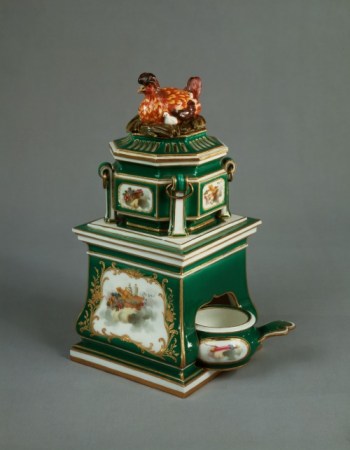
Perfume burner and egg steamer, Sèvres soft-paste porcelain, 1759 (London: The Wallace Collection).
The 2021 Haughton International Seminar provides an international tour of royal bedrooms and boudoirs over the centuries. Amongst the many and varied topics to be discussed will include intimate dining, activities, design, textiles, paintings, lighting, and items used for the toilette, hygiene, and health. They were more than bedrooms; they were the heart of the kingdom.
Cost of the two day seminar: £110 (inc VAT). Cost of the two day seminar including champagne reception and dinner at The Athenaeum (Thursday, 14th October): £190 (inc VAT). Student tickets for two-day seminar (on production of ID): £60 (inc VAT). Booking in advance through the website is essential due to limited numbers. Below is a preliminary programme (subject to change).
T H U R S D A Y , 1 4 O C T O B E R 2 0 2 1
8.45 Registration
9.15 Morning Session
• Annabel Westman
• Timothy Schroder
• Rosalind Savill
• Lisa White
12.40 Lunch Break
2.00 Afternoon Session
• Meredith Chilton
• Simon Thurley
4.30 Q&A Session
6.30 Drinks Reception (for dinner guests only) at The Athenaeum Club, 107 Pall Mall
7.15 Dinner (club dress code: smart, with ties for gentlemen, no denim and no training shoes)
F R I D A Y , 1 5 O C T O B E R 2 0 2 1
9.00 Arrival
9.30 Morning Session
• Bertrand Rondot
• Katharina Hantschmann
• Christiane Ernek-van der Goes
• Rose Kerr
12.55 Lunch Break
2.10 Afternoon Session
• Ivan Day
• Robin Emmerson
• Joanna Marschner
4.30 Q&A Session
Call for Papers | 2022 Wallace Seminars in the History of Collecting
From the Call for Papers:
Seminars in the History of Collecting, 2022
The Wallace Collection, London, last Monday of the Month (possibly online)
Proposals due by 17 September 2021
The seminar series was established as part of the Wallace Collection’s commitment to the research and study of the history of collections and collecting, especially in the eighteenth and nineteenth centuries in Paris and London. We are keen to encourage contributions covering all aspects of the history of collecting, including:
• Formation and dispersal of collections
• Dealers, auctioneers, and the art market
• Collectors
• Museums
• Inventory work
• Research resources
The seminars—normally held on the last Monday of every month during the calendar year, excluding August and December—act as a forum for the presentation and discussion of new research into the history of collecting. Seminars are open to curators, academics, historians, archivists, and all those with an interest in the subject. Papers should generally be about 45–60 minutes long. Seminars take place between 5.30 and 7pm. While we hope that the seminars can resume in situ at the Wallace Collection at some stage during 2022, the Collection will follow government guidelines about best practice as it evolves in the light of the COVID-19 pandemic, and it is quite possible that the seminars will continue to take place on Zoom throughout the year.
If interested, please send a short text (500–750 words), a brief CV, and indicate any months when you would not be available to speak, by Friday 17 September 2021. For more information and to submit a proposal, please contact: collection@wallacecollection.org.
Please note that if seminars take place at the Wallace Collection we are able to contribute up to the following sums towards speakers’ travelling expenses on submission of receipts:
• Speakers within the UK – £80
• Speakers from Continental Europe – £160
• Speakers from outside Europe – £250
Online Lecture | Gem Impressions in the Portuguese Royal Collections
From the registration page:
Ana Mónica da Silva Rolo and Noé Conejo Delgado, A Dactyliothec from Pietro Bracci in the Portuguese Royal Family’s Collections
Wallace Collection Seminars on the History of Collections and Collecting
Online, Monday, 26 July 2021, 17.30
 During the eighteenth and nineteenth centuries, in Europe, the versatile education of erudite elites was indispensable to and synonymous with social distinction. In this cultural frame, travels through Europe, in the style of the Grand Tour, became especially appreciated among European aristocratic youth. At the same time, interest in Classical antiquity and collecting antiques was enhanced, giving rise to a flourishing activity of replica production and trade, especially in Italy.
The dactyliothec by the Italian artist Pietro Bracci (1700–1773) in the collections of the Museum-Library of the House of Bragança (Vila Viçosa, Portugal) illustrates eighteenth- and nineteenth-century taste, shared by the last generations of the Portuguese Royal House. The set presented is composed of 2,350 plaster moulds of gems and cameos, organized in three thematic series. The first and largest series is dedicated to emblematic pieces of ancient art and the Italian Renaissance. The second series is composed of a selection of reproductions of the best carvings originally made by eighteenth-century craftsmen, like Giovanni or Luigi Pichler and Natal Marchant. The third and last series brings together a total of 180 cameos dedicated to Emperors of Europe. Dated between the end of the eighteenth century and the first quarter of the nineteenth century, this dactyliothec reflects the importance that such casts assumed as souvenirs of Classical art and history for collectors and travellers, as well as their use as an educational resource in the academic training of young aristocrats.
You can register to view this talk via Zoom here, or plan to watch via The Wallace Collection’s YouTube channel.
Ana Mónica da Silva Rolo and Noé Conejo Delgado are both based at the Archaeology Centre UNIARQ of Lisbon University.
Tulane Post-Doctoral Fellowship in Africana Studies, 2021–22
Tulane Post-Doctoral Fellowship in Africana Studies, 2021–22
Applications due by 26 July 2021
The Africana Studies Program at Tulane University is pleased to announce a Post-Doctoral Fellowship in Africana Studies for AY2021–22 (with possible renewal through 2024). Applications will be accepted now through 26 July 2021. This Interfolio link contains a description of the position and mechanism to apply.
Tulane University invites applications for a one-year Africana Studies postdoctoral scholar for 2021–2022 (possible renewal through 2024). Centering the interdisciplinary and global study of Africa and its diasporas, Tulane’s vibrant Africana Studies Program is comprised of both joint and affiliate faculty drawn from across the university’s academic programs and departments. The Program has recently secured a major internal grant that, in addition to funding this post-doctoral fellowship, will also underwrite three new initiatives over the next three years.
In addition to contributing to and participating in the Black Studies intellectual community on campus and pursuing their own research agenda, the fellow will play a primary role in coordinating one of these new initiatives, “Black Studies Book Club,” with the guidance of Africana Studies Program faculty. Each semester, Black Studies Book Club will focus on a recently published text that has shifted the conversation in Africana Studies as a discipline. The author will be invited to Tulane to give a free and open public lecture in addition to facilitating a smaller, more intimate, ‘book club’ style conversation engineered to bring together some of the diverse constituencies of the program, including Tulane Africana Studies students and faculty as well as students and faculty from our high school and HBCU Black Studies Book Club partners.
Faculty in the Africana Studies Program will provide mentorship to the fellow via professional development advice, access to their own scholarly networks, and opportunities for the fellow to share and receive feedback about work-in-progress. The fellowship also includes a $2,500 research fund.
Given the inherently interdisciplinary nature of Africana Studies, we welcome applicants from any discipline whose primary research concerns center Africa and/or any part of its global diasporas. Tulane University is an equal employment opportunity/affirmative action/persons with disabilities/veterans employer committed to excellence through diversity. Tulane will not discriminate against individuals with disabilities or veterans. All eligible candidates are encouraged to apply.
Duties will include
• Participating in and contributing the Africana Studies scholarly community on campus
• Teaching one intro-level undergraduate course in Spring 2022 which will feature the Book Club text
• Providing support for the Fall 2021 Black Studies Book Club which will already have been organized
• Organizing and promoting the Black Studies Book Club (planning public lectures and book club meetings, coordinating with our high school and HBCU partners) for spring 2022 and starting the planning for fall 2022
• Engaging with Black Studies Book Club scholars and participants
• Working on their own scholarly research and writing
Qualifications
• Ph.D. in any discipline but with evidence of a research agenda that centers the concerns of Africa and/or any part of its global diasporas. Those with graduate level training specifically in African Studies, African American Studies, African Diaspora Studies, or Black Studies are especially encouraged to apply.
• Excellent writing and analytical skills; experience in writing for different purposes and a diversity of audiences, including but not limited to scholarly audiences
• Flexibility, nimbleness, and creativity, with the ability to work both collaboratively and independently
• Experience in project management and/or in organizing lectures and events
• Enthusiasm for working collaboratively with our high school and HBCU partners
Review of applications will begin July 12. Complete application must be received by July 26 to be considered. Applications must be submitted via Interfolio (https://apply.interfolio.com/90018) and include the following:
• Completed application form
• Cover letter
• Curriculum Vitae – Your most recently updated C.V.
• Research Statement (no more than 750 words)
• Writing sample (no more than 8,000 words)
• List of six scholars you would consider inviting for the Black Studies Book Club, with a few sentences of explanation about each detailing how you think their recent publication(s) have informed conversations about Black Studies as a discipline
• Names and contact information for two references
Online Exhibition | Making History: Shakespeare and the Royal Family
The exhibition is available here:
Making History: Shakespeare and the Royal Family
Online Exhibition, launching 15 July 2021

John Boyne, ‘Falstaff and his Prince’, 1783, etching showing Charles Fox as Falstaff to George’s Prince Hal.
The Shakespeare in the Royal Collection (ShaRC) project is delighted to announce a new digital exhibition, exploring the entwined stories of Shakespeare and the royal family across the centuries, launching on Thursday, 15 July 2021. Making History: Shakespeare and the Royal Family reveals how influential this relationship has been in shaping British culture.
Drawing on new archival research, the exhibition (in eight sections) explores the curious, political, and sometimes tragic connections between Shakespeare and the royal family through access to key objects in the Royal Collection and Royal Archives. A Shakespeare Folio contains handwritten annotations made by Charles I shortly before his 1649 execution. A painting by Thomas Gainsborough marks the short-lived affair of the actress and poet Mary ‘Perdita’ Robinson with George IV when Prince of Wales, casting him in the role of a dashing Prince Florizel. Digital visualisations put viewers in the audience of performances watched by Queen Victoria, bringing historical Shakespearean performances in the State Apartments at Windsor Castle vividly to life for the first time.
A wider online database, allowing users to search over 1,000 Shakespeare-related objects from the Royal Collection and Royal Archives, will also shortly be launched, and can be explored here: https://sharc.kcl.ac.uk/
Shakespeare in the Royal Collection is a three-year AHRC-funded research project led by King’s College London, in collaboration with Birkbeck University of London and The Royal Collection Trust. It investigates the Shakespeare-related holdings in the Royal Collection and Royal Archives, 1714–1945, and provides new information about a broad range of objects created, collected and displayed by generations of members of the royal family.
New Book | Men on Horseback
From Macmillan:
David A. Bell, Men on Horseback: The Power of Charisma in the Age of Revolution (New York: Farrar, Straus and Giroux, 2020), 352 pages, ISBN: 978-0374207922, $30.
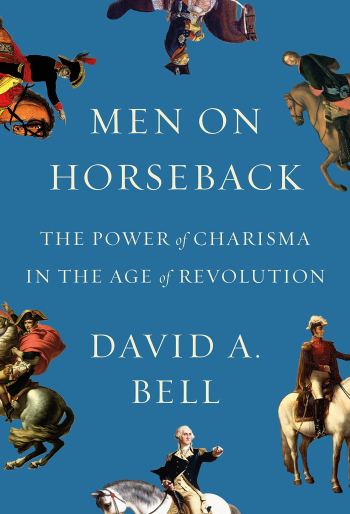 An immersive examination of why the age of democratic revolutions was also a time of hero worship and strongmen
In Men on Horseback, the Princeton University historian David A. Bell offers a dramatic new interpretation of modern politics, arguing that the history of democracy is inextricable from the history of charisma, its shadow self.
Bell begins with Corsica’s Pasquale Paoli, an icon of republican virtue whose exploits were once renowned throughout the Atlantic World. Paoli would become a signal influence in both George Washington’s America and Napoleon Bonaparte’s France. In turn, Bonaparte would exalt Washington even as he fashioned an entirely different form of leadership. In the same period, Toussaint Louverture sought to make French Revolutionary ideals of freedom and equality a reality for the formerly enslaved people of what would become Haiti, only to be betrayed by Napoleon himself. Simon Bolivar witnessed the coronation of Napoleon and later sought refuge in newly independent Haiti as he fought to liberate Latin America from Spanish rule. Tracing these stories and their interconnections, Bell weaves a spellbinding tale of power and its ability to mesmerize.
Ultimately, Bell tells the crucial and neglected story of how political leadership was reinvented for a revolutionary world that wanted to do without kings and queens. If leaders no longer rule by divine right, what underlies their authority? Military valor? The consent of the people? Their own Godlike qualities? Bell’s subjects all struggled with this question, learning from each other’s example as they did so. They were men on horseback who sought to be men of the people―as Bell shows, modern democracy, militarism, and the cult of the strongman all emerged together.
Today, with democracy’s appeal and durability under threat around the world, Bell’s account of its dark twin is timely and revelatory. For all its dangers, charisma cannot be dispensed with; in the end, Bell offers a stirring injunction to reimagine it as an animating force for good in the politics of our time.
David A. Bell is the Sidney and Ruth Lapidus Professor in the Era of North Atlantic Revolutions at Princeton University and the author of several previous books, among them The First Total War and Shadows of Revolution.










 Enfilade
leave a comment