New Book | Botanical Entanglements
Forthcoming from UVA Press:
Anna Sagal, Botanical Entanglements: Women, Natural Science, and the Arts in Eighteenth-Century England (Charlottesville: University of Virginia Press, 2022), 272 pages, ISBN: 978-0813946955 (cloth), $115 / ISBN: 978-0813946962 (paper), $45. Also available as an ebook.
 To this day, women face barriers in entering scientific professions, and in earlier eras the challenges were greater still. But in Botanical Entanglements, Anna Sagal reveals how women’s active participation in scientific discourses of the eighteenth century was enabled by the manipulation of social and cultural conventions that have typically been understood as limiting factors. By taking advantage of the intersections between domesticity, femininity, and nature, the writers and artists studied here laid claim to a specific authority on naturalist subjects, ranging from botany to entomology to natural history more broadly.
Botanical Entanglements pairs studies of well-known authors—Eliza Haywood, Charlotte Lennox, Maria Edgeworth, and Charlotte Smith—with authors and artists who receive less attention in this context—Priscilla Wakefield, Maria Jacson, Elizabeth Blackwell, Henrietta Maria Moriarty, and Mary Delany—to offer a nuanced portrait of the diverse strategies women employed to engage in scientific labor. Using socially acceptable forms of textual production, including popular periodicals, didactic texts, novels, illustrated works, craftwork, and poetry, these women advocated for more substantive and meaningful engagement with the natural world. In parallel, the book also illuminates the emotional and physical intimacies between women, plants, and insects to reveal an early precursor to twenty-first-century theorizing of plant intelligence and human-plant relationships. Recognizing such literary and artistic ‘entanglement’ facilitates a more profound understanding of the multifaceted relationship between women and the natural world in eighteenth-century England.
Anna K. Sagal is Visiting Assistant Professor of English and Creative Writing at Cornell College.
C O N T E N T S
Introduction
1 Caterpillars in the Garden
2 From Native Blooms to Monster Plants
3 Pedagogies and Possibilities
4 Sketching Vegetality
5 Collecting and Creating
Coda
Exhibition | Botanical Expressions
Part of the Nature by Design series at the Cooper Hewitt:
Botanical Expressions
Cooper Hewitt, Smithsonian Design Museum, New York, 7 December 2019 — 25 September 2022

‘Hans Sloane’ Plate, Manufactured by Chelsea Porcelain Manufactory, soft paste porcelain, vitreous enamel, 22.5 cm diameter (New York: Cooper Hewitt, Smithsonian Design Museum, 1957-11-8).
Interpretations of botanical forms wind their way through the decorative arts of the late 18th through the early 20th centuries. Botanical Expressions focuses on key figures—Christopher Dresser, Emile Gallé, William Morris, and Louis Comfort Tiffany—whose knowledge of the natural sciences and personal practices of gardening enriched their creative output as designers. A timeline of objects reflects botanicals in form and pattern, highlighting shifting styles across geography and media in textiles, ceramics, glass, wallcoverings, and more. Significant loans from Smithsonian Libraries include illustrated guidebooks that designers used for natural research and drawing instruction.
At the turn of the 20th century, the intersection of botanical study with design practice stimulated an array of plant forms and motifs in furnishings, glassware, ceramics, textiles, and more. Botanical Expressions reveals how designers, inspired by nature and informed by scientific knowledge, created vibrant new designs in America, Britain, France, and the Netherlands. Blossoming vases, plantlike stuctures, fanciful garden illustrations, and a diversity of vegetal and floral patterns reveal how nature and design dynamically merged.
An increasing number of designers, trained as botanists, advocated for the beauty and order of nature’s systems, colors, and patterns. Many manufacturers operated in proximity to gardens for natural study and stocked books of botanical illustrations as resources for their designers. These primary sources, on loan from Smithsonian Libraries, appear alongside the objects they influenced.
Since the 19th century, the garden was often seen as a refuge from industry and a natural source of plenty and pleasure. This history of botanical expressions in design illuminates a reflection on the critical role of nature within our world.
Exhibition | Foreign Exchange: 18th-Century Design on the Move

Tea and Sugar Caddies, made by William Cripps (d. 1767, active in England, 1758–1767), silver; each approximately 15 cm high (New York: Cooper Hewitt, Smithsonian Design Museum, 1960-1-1-a/d). In addition to Foreign Exchange, the pair was previously on display as part of the exhibitions Rococo: The Continuing Curve, 1730–2008 and The Cooper-Hewitt Collections: A Design Resource.
◊ ◊ ◊ ◊ ◊
Now on view at the Cooper Hewitt:
Foreign Exchange: 18th-Century Design on the Move
Cooper Hewitt, Smithsonian Design Museum, New York, 22 January — 25 September 2022
Drawing from the museum’s permanent collection, Foreign Exchange: 18th-Century Design on the Move explores the unprecedented circulation of labor, skills, aesthetics, and luxury goods across international borders in the 18th century. The exhibition traces the movement of people, ideas, and objects across borders, challenging notions of foreign and domestic, community member and outcast, and national style.
New Book | The History of Art: A Global View

Cover designs by Jen Montgomery.
◊ ◊ ◊ ◊ ◊
Published by Thames & Hudson and Norton:
Jean Robertson, Deborah Hutton, Cynthia Colburn, Ömür Harmansah, Eric Kjellgren, Rex Koontz, De-nin Lee, Henry Luttikhuizen, Allison Lee Palmer, Stacey Sloboda, and Monica Blackmun Visonà, The History of Art: A Global View, Prehistory to the Present (New York: Thames & Hudson, 2021), 1264 pages, ISBN: 978-0500022375, $207 — with a variety of purchase options (and prices), depending upon coverage, including digital options.
Priscilla McGeehon on the latest art history survey text; interviewed by Craig Hanson
After testing an early digital version of The History of Art: A Global View as a text for one of my thematic courses last year, I’m using it now for my regular survey courses. Here, I’m glad to draw attention to Stacey Sloboda’s outstanding work on the chapters addressing seventeenth- and eighteenth-century Europe. While not rejecting familiar introductory structures, there’s now a nuance built in to the text that allows one (for example) to move away from Rococo and Neoclassicism as the only significant organizational devices for the eighteenth century.
Textbooks are, of course, complicated entities–caught between myriad competing interests (including those of high school classes, thanks to AP courses). With that context in mind, I thought it might be useful to hear from the publisher. Priscilla McGeehon, College Publisher at Thames & Hudson, very kindly responded to a handful of questions I sent to her over the course of a few email exchanges. I’m very grateful for the time and energy she gave to the interview. -CH
◊ ◊ ◊ ◊ ◊
Craig Hanson: The survey textbook has a long history within the field of art history; indeed such books have played an integral role in defining the discipline. How might this latest book feel familiar to readers? How might it feel different?
Priscilla McGeehon: What will be familiar in The History of Art: A Global View is almost everything you’d expect to see in any of the major art history survey textbooks, including the full spectrum of canonical ‘Western’ works, along with a good selection of art from non-Euro-American parts of the world.
Most immediately unfamiliar is the organization of the chapters and the order in which the art is presented. Unlike the two top-selling survey books (Gardner’s Art through the Ages by Fred Kleiner, and Art History by Marilyn Stokstad and Michael Cothren), which both isolate the ‘non-western’ chapters at the end of their volumes 1 and 2, The History of Art: A Global View is organized roughly chronologically.
Although the majority of the book is still dedicated to what’s traditionally called ‘Western’ art (more about that word in a moment), this chronological organization gives students a chance to see what was happening contemporaneously around the world. Thus, for example, the chapters on Classical Greece (600 bce–400 bce) are followed immediately by a chapter on the development of Buddhist and Hindu art in South Asia (250 bce–800 ce), and chapters on the colonial periods in Oceania, South Asia and Southeast Asia immediately follow the chapters on the European Enlightenment, Rococo, Neoclassical, and Romantic art—the styles that predominated during the period when European colonialism was taking hold around the world.
This was achieved by having chapters cover much briefer periods of time than the two books mentioned above, allowing us to interweave the Western and non-western chapters more tightly than if chapters were twice as long. Instructors who’ve piloted the book find it easy to assign two or three of these brief chapters in place of the single, much longer chapter they assigned in the past. Some of them also report an unforeseen benefit—their students are more likely to read the briefer chapters!
To tie it all together, those 74 short chapters are organized into six thematic chronological parts. Each part opens with a short, broad-brushstroke introduction to the era; a timeline with about a dozen important works from around the world made during that time period; and a global map showing where each of those works was created.
CH: What are some other ways this book differs from previous survey books?
PM: A lot of things are subtler and may only become apparent once someone is actually assigning the book. For example, language was carefully considered, and we learned to question a lot of our unconscious use of language, trying to correct it wherever we saw its implicit bias or Eurocentric perspective. There are doubtless examples of where we failed in this regard, but I’m confident that we used language and terminology more thoughtfully than any other survey book.
For example, there was a deliberate decision to avoid use of the term ‘Western’ until it was historically accurate to do so, and to avoid use of the term ‘non-western’ altogether. The Art Historical Thinking feature on p. 927 explains why. In another example, we realized that ‘West Asia’ is a more accurate term than ‘Near East’ or ‘Middle East’, as the latter clearly take a Eurocentric geographical perspective. At some point shortly after we made that change, the Met’s Heilbrunn Timeline made the same switch (not that we’re taking credit for their decision—but it was affirming to see it happen there!)
We tried to avoid describing techniques or styles as more ‘developed’ or artworks as more ‘sophisticated’, to avoid implying a progression or advancement that is often attributed to some cultures more than others. And speaking of cultures, we preferred to use that word, or ‘society’, rather than ‘civilization’, which we avoided. We were careful with words like ‘shaman’ and ‘pagan’ as well, finding appropriate substitutes.
As another example of trying to use language in a neutral way, we found that there was a tendency in the European chapters to refer to European cultural groups with specific names—Normans, Franks, or Visigoths, for example—but to lump other groups into more broad swaths—for example ‘Muslims’ instead of Umayyads or Abbasids or Fatimids. Having expert authors and reviewers who were sensitive to these issues was another important factor in the manuscript development.
HECAA members might be especially interested in how Stacey Sloboda ensured her chapters, although mainly about European art and architecture, nevertheless had a global perspective. That’s easily seen in some of the artworks she chose to discuss—the Metropolitan Cathedral in Mexico City, a casta painting, Girodet’s portrait of Citizen Belley—but her chapters also address important transnational phenomena. We took great care, for example, with the discussions of race and the enslavement of Africans in Europe and the Americas. The introductions to Chapters 49 (African Art and Global Trade, by Monica Visonà) and Chapter 58 (Romantic Art in Europe and North America, by Jean Robertson) both describe the consequences of the transatlantic slave trade, and Stacey included touchstone images—Velazquez’s Portrait of Juan de Pareja, the Wedgewood medallion Am I not a Man and a Brother?, and Benoist’s Portrait of Madeleine—to thread these important themes throughout the 17th- to 19th-century chapters.
In fact, Stacey was deeply involved in conceiving and implantation of the global Seeing Connections features, which have garnered a lot of praise from reviewers. She wrote the initial one, “Blue-and-White Porcelain: A Global Commodity,” to serve as a model for all the others, and it’s regularly cited as a favorite. She co-wrote several others, including “Mapping the World,” “The Artist’s Workshop,” “Picturing the Other in the Age of Imperialism,” and “Modern Art and War,” and played a key role by coordinating the entire team as they collaborated on writing the others.
After taking such care with the text, I realized we needed to pay close attention to the other components of the book as well—specifically the bibliography, glossary, and index. The authors were great about diversifying the Further Reading and Bibliography sections (and I admit to a tiny fist-pump when I opened the print book for the first time and saw that the first bibliography entry was Kwame Anthony Appiah.) In the Glossary, the authors pointed out that some terms which might not be considered art historical in other contexts needed to be defined in that sense for this book. For example, auspicious is an important concept when studying some Asian art; barkcloth is an important material in much Oceanic art.
Finally, I spent hours poring over the first draft of the index and rooting out some unexpected biases the indexer had inadvertently revealed. For example, European palaces and gardens were initially indexed by their proper names (Versailles, Kew Gardens) but those from other parts of the world were indexed by their geographic origin (‘Castles, Japanese’ instead of Himeji Castle; ‘Chinese gardens’ instead of Lingering Garden.) We worked hard to correct many instances like those where we found them. (For more on how indexes have been used historically to promote a particular viewpoint, there’s a recent book.)
CH: Looking into the near future, how do you understand the relationship between physical copies and digital copies? Is it a continuum for students, an either/or, a both/and, or something else?
PM: What always surprised people before 2020 was that the majority of students by far preferred print textbooks. Like so many things, the lockdown and pandemic accelerated a trend that was already underway, so that ebooks now make up the majority of textbook sales, at least in my limited view of the textbook world. In answer to your ‘both/and’ scenario—for students who purchase a new print book, we provide access to the ebook as well, so they can get the benefits of both.
Another transformation that was also already underway in 2019 is Inclusive Access, driven by the need for textbooks to be both more affordable and more equitably distributed. Historically, some students had to wait for financial aid to arrive few weeks after classes began in order to purchase their books. Clearly, they were at a disadvantage compared with students who had their textbooks from the outset. Other students would wait to see whether the instructor was going to test on the book content and if not, might never purchase one; still others decided to share with a classmate or to get through without a book. This inconsistency caused difficulty for the instructor as well as students. Now, many campuses arrange for textbooks (in ebook form) to be made available at a steeply discounted price as part of a course fee. In addition to saving students money, Inclusive Access insures that every student has a book on the first day of class. (Students who prefer a print book can opt out of the course fee.)
CH: There are a host of supporting digital materials for the textbook. Could you describe some of those? Do you have a sense that these are added-value features, or do they have the capacity to transform more dramatically what we understand art historical pedagogy to include at the introductory level?
PM: Ten or more years ago, I was a self-described digital skeptic. What could an ebook do that a print book can’t do just as well? As the technology has developed, though, I’ve become a believer, but I still ask the question ‘how will this enhance the students’ learning?’
With The History of Art: A Global View ebook, the answer lies in the embedded animations, videos, and 360-degree panoramas. Seeing a 3-dimensional object or building definitely brings more to the experience than a static photo or illustration; likewise, watching an animation of how something is made or built makes it easier to understand than reading about it. Embedding those items in the ebook means students don’t have to follow a link to the (potentially distracting) internet.
Having immediate access to audio pronunciation of unfamiliar terms is also especially helpful for the global coverage, both for students and instructors. And finally, we’ve done efficacy studies that show that a homework tool like InQuizitive (a proprietary program from W. W. Norton, Thames & Hudson’s distribution partner in the U.S.) can raise students grades by a full point (e.g. from a C to a B, or a B to an A) if it’s assigned as part of the syllabus—that’s pretty convincing.
CH: Art historians are often pretty specialized, and it can be overwhelming to think about teaching a survey course covering large, varied parts of the world. How does that work?
PM: It’s been a real pleasure to see how people approach the somewhat daunting task of teaching art history from around the world and from prehistory to the present. What I’ve learned is that there is a lot of really great teaching going on out there! The first step seems to be to accept that you can’t be an expert in everything and then to think about how you can use what you do know to expand your comfort with unfamiliar material. Experts in 18th- or 19th-century French painting can apply the same research, analytical and interpretive skills they use in their scholarly work to an African nkisi nkondi figure or a Lenape bandolier bag.
Of course, different media and different cultures may require different approaches, as the feature “Art Historical Thinking: Clothing and Formal Analysis” p. 799 shows.) The “Looking More Closely” features guide readers through the visual analysis of various works. Another advantage of having the expertise of several co-authors is that each author could model for readers how to apply visual analysis skills to the objects in their chapters.
In class, there are the tried-and-true methods of having students research and report back to the class, or of engaging students in the process of learning about new content through a classroom activity. In larger departments, instructors may invite colleagues give guest lectures on certain topics. And now that Zoom is ubiquitous, it seems like you could bring in experts from almost anywhere in the world!
We’ve provided materials to support instructors and students with new or unfamiliar material, like the audio pronunciations for non-English terms and names. Many chapters include primary source excerpts from different parts of the world—something instructors said they felt unprepared to research on their own—with suggested discussion questions. The Discussion Questions at the end of each chapter, and chapter-specific teaching advice and chapters summaries in the Instructor’s Manual will help as well.
CH: How does the art history survey textbook work in other languages? I’m thinking especially of French, Spanish, German, and Italian?
PM: We expect the book will be translated into several languages. Thames & Hudson’s foreign rights department already has some serious nibbles, despite the considerable challenge of translating a book of nearly 700,000 words, a process that will take a couple of years.
The book will be published in the People’s Republic of China with some redaction. The authors will have a chance to consider these edits to ensure their intent is not changed, even though some works and/or artists will be removed. Our in-house Chinese reader and co-author De-nin Lee will both have a chance to review the translated version.
There is also the possibility of publication in some countries in several volumes (the six parts lend themselves to that) or even as serial excerpts in weekly or monthly installments.
In the News | Wreck (Perhaps) of Cook’s HMB Endeavour Found
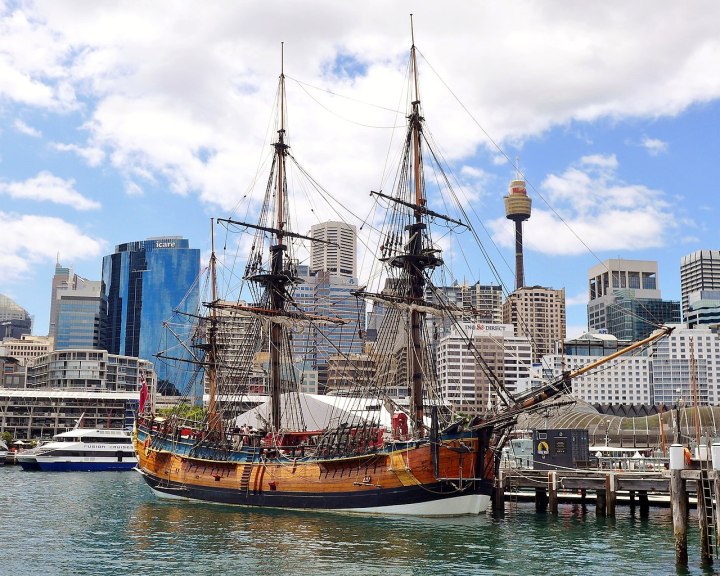
The HM Bark Endeavour Replica, on display at the Australian National Maritime Museum, Darling Harbour, Sydney (Photo: Wikimedia Commons, November 2017). The ship, on of two replicas, was completed in 1994.
◊ ◊ ◊ ◊ ◊
From The New York Times:
Manan Luthra, “Captain Cook’s Ship Caught in Center of a Maritime Rift,” The New York Times (4 February 2022). After researchers in Australia reported finding the wreck of the Endeavour off Rhode Island, their U.S. partners issued a startling rebuke.
When the British explorer James Cook set out in 1768 in search of an “unknown southern land” called Terra Australis Incognita, he sailed on a navy research vessel called the HMB Endeavour. More than 90 people were on board the ship, described by some historians as homely but sturdy.
Two years later, it dropped anchor off the east coast of what is now Australia, precipitating two centuries of British control. It would go on to transport British troops during the American Revolutionary War, and meet its demise in 1778, part of a fleet of ships that historians believe sank off Rhode Island.
For more than two decades, a team of Australian and U.S. researchers have been scouring the waters in search of the wreckage.
Then, on Thursday morning, 254 years after Cook set sail, archaeologists at the Australian National Maritime Museum announced that they were “convinced” they had identified the final resting place of what the museum’s chief executive and director, Kevin Sumption, called “one of the most important and contentious vessels in Australia’s maritime history.”
But soon after the news conference in Sydney, there was an unexpected response from the museum’s American research collaborator, the Rhode Island Marine Archaeological Project.
From Rhode Island, where it was still the middle of the night, a terse statement appeared on the project’s website. It called the identification of the wreckage “premature” and the Australian museum’s actions “a breach of contract between RIMAP and the ANMM for the conduct of this research and how its results are to be shared with the public.”
The dueling statements raised several questions. Did the Australians jump the gun, announcing the finding without the Rhode Island group’s approval? Why had they chosen to hold their news conference at a time seemingly inconvenient to their American research partners? What, exactly, did the breach of contract consist of? And most important: Had the wreckage of Cook’s famous ship finally been discovered, or not? . . .
The full article is available here»
Exhibition | Ingres avant Ingres
The exhibition, on view at the Musée des Beaux-arts, Orléans, closed January 9. Philip Bordes’s review of the show appeared in the January issue of The Burlington. Here’s the information for the catalogue, published by Le Passage.
Mehdi Korchane, ed., Ingres avant Ingres: Dessiner pour peindre (Paris: Le Passage, 2021), 240 pages, ISBN: 978-2847424638, 35€.
 Catalogue d’exposition sous la direction de Mehdi Korchane, responsable des arts graphiques des musées d’Orléans, avec une préface d’Adrien Goetz et des contributions de Laurence Clivet, Yvan Coquinot, Sidonie Lemeux-Fraitot, François-René Martin, Éric Pagliano, Louis-Antoine Prat, Alice Thomine-Berrada et Florence Viguier-Dutheil.
Ce livre examine la production graphique du jeune Ingres et, ce faisant, propose de suivre l’éclosion progressive de son génie, de l’enfance jusqu’à son départ pour Rome, en 1806. La maestria éblouissante du peintre du XIXe siècle est telle que ses premières années retiennent rarement l’attention. Or, elles constituent une aventure artistique en soi, au cours de laquelle la singularité de l’artiste se manifeste principalement dans l’exercice du dessin. Si la formation académique se fonde depuis toujours sur cette pratique, premier moyen de connaissance et de perfectionnement dans l’imitation de la nature, son expérimentation par Ingres prend une dimension exhaustive révélatrice de son ambition. Première œuvre de virtuosité, le portrait de Jean Charles Auguste Simon (1802-1803), conservé au musée des Beaux-Arts d’Orléans, montre comment l’élève de David se prépare à être peintre au moyen du crayon. Mais le dessin est aussi accompli comme une discipline autonome aux finalités multiples et dans laquelle la modernité se fait jour jusque dans les plus insignifiantes expressions. En analysant ce parcours, l’ouvrage tente de redonner une cohérence à un corpus souvent parasité par les attributions abusives et le dilemme des datations. Il examine aussi les fonctions du dessin dans la pratique du peintre en devenir.
New Book | Making Ideas Visible in the Eighteenth Century
Distributed by Rutgers UP:
Jennifer Milam and Nicola Parsons, eds., Making Ideas Visible in the Eighteenth Century (Newark: University of Delaware Press, 2022), 240 pages, ISBN: 978-1644532324 (cloth), $120 / ISBN: 978-1644532331 (paperback), $35. Also available as an ebook and PDF.
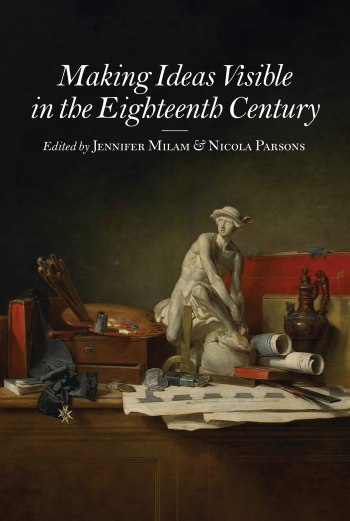 This volume considers how ideas were made visible through the making of art and visual experience occasioned by reception during the long eighteenth century. The event that gave rise to the collection was the 15th David Nochol Smith Seminar in Eighteenth-Century Studies, which launched a new Australian and New Zealand Society of Eighteenth-Century Studies. Two strands of interest are explored by the individual authors. The first four essays work with ideas about material objects and identity formation, suggesting how the artist’s physical environment contributes to the sense of self, as a practicing artist or artisan, as an individual patron or collector, or as a woman or religious outsider. The last four essays address the intellectual work that can be expressed through or performed by objects. Through a consideration of the material formation of concepts, this book explores questions that are implicated by the need to see ideas in painted, sculpted, illustrated, and designed forms. In doing so, it introduces new visual materials and novel conceptual models into traditional accounts of the intellectual history of the Enlightenment.
Jennifer Milam is the Pro Vice Chancellor (Academic Excellence) at the University of Newcastle in Callaghan, Australia. Her books on rococo art include Historical Dictionary of Rococo Art, Fragonard’s Playful Paintings, and an edited collection Women, Art and the Politics of Identity in Eighteenth-Century Europe.
Nicola Parsons is a senior lecturer in English at the University of Sydney in Australia. She is the author of Reading Gossip in Early Eighteenth-Century England.
C O N T E N T S
List of Illustrations
Acknowledgements
Jennifer Milam (University of Newcastle) and Nicola Parsons (University of Sydney), Introduction: The Potential Visibility of Ideas in Enlightenment Art and Aesthetics
1 David Maskill (Victoria University of Wellington), A Good Address: Living at the Louvre in the Eighteenth Century
2 Jessica Priebe (University of Sydney), Inventing Artifice: François Boucher’s Collection at the Louvre
3 Matthew Martin (University of Melbourne), Continental Porcelain Made in England: The Case of the Chelsea Porcelain Factory
4 Jennifer Milam (University of Newcastle), Planting Cosmopolitan Ideals: Thomas Jefferson’s Poplar Forest
5 Jessica L. Fripp (Texas Christian University), Growing Old in Public in Eighteenth-Century France: Marie-Thérese Geoffrin and Marie Leszczynska
6 Wiebke Windorf (University of Düsseldorf), French Funeral Monuments of the Ancien Régime as Products of Individual Artistic Solutions
7 Melanie Cooper (University of Adelaide), Meeting the Locals: Mythical Images of the Indigenous Other in the Eighteenth and Nineteenth Centuries
8 Jennifer Ferng (University of Sydney), Infernal Machines: Designing the Bomb Vessel as Transnational Technology
Notes on the Contributors
Index
Call for Articles | Spring 2023 Issue of J18: Cities
From Call for Proposals for J18:
Journal18, Issue #15 (Spring 2023) — Cities
Issue edited by Katie Scott and Richard Wittman
Proposals due by 15 March 2022; finished articles will be due by 1 September 2022
Art and architectural histories have traditionally approached the city in terms of the monuments and structures of its built environment and the distribution of its spaces. But the city is also, after all, its people: people who occupied and inhabited buildings, shared spaces and resources, and invested in or were inspired by ideas, labor, and beliefs. How did the city make room for that sharing? How did it inhibit it? Institutional structures—those of religion, politics, the economy, of ‘police’ in the broadest early-modern sense—played an essential part in fostering conditions in which social life occurred. How exactly did that fostering happen in the eighteenth century, and what were its intended and unintended consequences? At the same time, urban dwellers, whether elite or subaltern, continually use, transform, exploit, or otherwise make a city their own; the social forms an essential context for such appropriations. How were the limits and possibilities of social life in the eighteenth-century city defined, regulated, and sustained? In what ways did different constituencies represent those limits and possibilities, and discuss and debate them? How were they made visible, made audible, made legible? And how did different categories of labor shape and support a city’s social life?
We invite proposals that engage with the questions asked above, directly addressing relations between built forms and social bodies. These are some themes that are, we feel, raised by the topic: boundaries (walls, ditches) and the exclusion or protection of the faiths, nations, and trades they helped shape; bridges and the connections they cemented between neighborhoods, markets, spaces of leisure, etc.; infrastructure (roads, water, lighting, refuse collection) and the support it gave to the lived experience of the city; beauty and the collective aspiration to care and conservation, and also to better worlds that it proposed. We welcome contributions that consider actual spaces and communities and also ones that reflect critically on projects, both unrealized and utopian. We are open to essays that take as their objects of study built form, the representation of built form and the city generally, and urban material culture (e.g. guidebooks, street maps, shoes, carriages, walking sticks).
Issue Editors
• Katie Scott, Courtauld Institute of Art
• Richard Wittman, University of California, Santa Barbara
Proposals for issue #15 Cities are now being accepted. The deadline for proposals is 15 March 2022. To submit a proposal, send an abstract (250 words) and brief biography to the following three addresses: editor@journal18.org; katie.scott@courtauld.ac.uk; and rwittman@arthistory.ucsb.edu. Articles should not exceed 6000 words (including footnotes) and will be due by 1 September 2022. For further details on submission and Journal18 house style, see Information for Authors.
Lecture | James Middleton on Mexican Court Clothing
Tomorrow (Thursday) from BGC:
James Middleton | ‘But She’s Wearing It Backwards’: Understanding and Misunderstanding an Eighteenth-Century Mexican Court Gown
Online (Zoom), Bard Graduate Center, New York, 3 February 2022, 12.15 (ET)
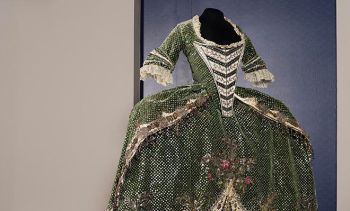
Museo Nacional de Historia. Photo by Omar Dumaine.
This talk will explore the history of a late eighteenth-century Mexican gown since its donation to Mexico’s Museo Nacional de Historia in 1900. The opulent, deep green silk-velvet and ivory satin dress with lavish silver embroidery has long been recognized as one of the most elaborate garments surviving from the colonial Americas, but has only recently been identified as a traje de corte—a court gown, one of four extant New Spanish garments to be so identified—made according to the etiquette requirements of the Spanish royal court. It has been exhibited in many guises, with and without its stomacher and/or train, and paired with radically different pannier and hoop variations. The genesis of the talk’s title is the gown’s first published appearance, in the 1988 book, La historia de Mexico a través de la indumentaria, in which it was correctly identified as a court gown, but misidentified as a Velázquez-era infanta dress and photographed worn backwards by a live model.
Middleton will be using this extant dress, as well as other extant garments in paintings, as a means of reflecting on some of the questions posed by the existence of court clothing in Spanish America. Who wore gowns like this? Were they required for functions of the viceregal court of Mexico City as they were for the court of Madrid, or were they aspirational garments worn for social display by the nouveau riche nobles of New Spain? The presentation will consist of photographs and analyses of extant and painted garments, as well as contemporary texts that document New Spanish tailoring practices and textile commerce, to investigate the little-understood phenomenon of court culture in the Americas.
James Middleton is an independent scholar working on dress in the Spanish-Colonial Americas circa 1520–1820. He has lectured and published on the subject in the US (Metropolitan Museum of Art, Los Angeles County Museum of Art, Denver Art Museum, et al.), Mexico (Museo Nacional de Historia, Museo Nacional de Arte), Colombia (Universidad de los Andes), and England (Society of Dress Historians). His particular interest in this subject dates from the early 1990s, when he first saw the dress that is this presentation’s focus in the conservation lab of the Museo Nacional de Historia, two weeks after having bought a copy of La historia de Mexico a través de la indumentaria.
This event will be held via Zoom. A link will be circulated to registrants by 10am on the day of the event. This event will be live with automatic captions. Registration is available here.
Call for Papers | Egypt in Early Modern Antiquarian Imagery
From ArtHist.net, which includes the German version of the CFP:
Egypt in Early-Modern Antiquarian Imagery
Ägypten in der frühneuzeitlichen antiquarischen Bildwelt
Online Workshops on 5 May, 2 June, 7 July 2022
Proposals due by 11 March 2022
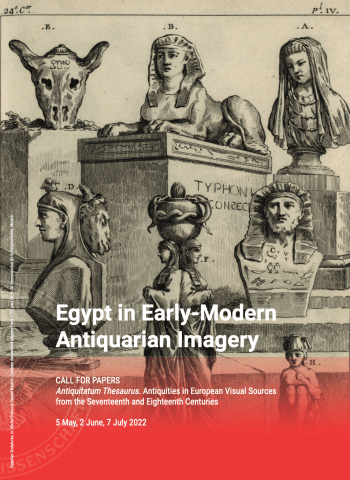 In 2022, Egyptology celebrates important historical events that number among the highlights in the exploration of the culture and civilization of the country by the Nile. In 1822, Jean-François Champollion succeeded in deciphering the hieroglyphics, the hieratic and the demotic scripts, by working primarily with the Rosetta Stone. In 1922, the British archaeologist Howard Carter discovered the tomb of the Pharaoh Tutankhamun in the Valley of the Kings.
The academy research project “Antiquitatum Thesaurus” would like to contribute to the international discourse and, in three half-day digital workshops in the summer semester of 2022 (5 May / 2 June / 7 July), draw attention to some central questions of the early-modern reception of Egypt, which preceded the events mentioned above.
How did contacts with the land of the pharaohs and their culture come about, and what image of it was conveyed? What role did aegyptiaca play in collections of antiquities, cabinets des curiosités or Wunderkammern? How were Egyptian or Egyptianising artefacts visually documented and discussed?
Before Napoleon’s great military expeditions and the subsequent scientific explorations of the country, when the number of travellers to the Levant was still manageable, the perception and understanding of Egypt far from the Nile had to rely primarily on easily portable objects. These had found their way to the other side of the Mediterranean at different times and along different routes. Finally, the study of ancient Greek and Roman authors, who transmitted their own mediated version of history and Egyptian culture, should not be underestimated.
Besides religious motivations, commercial and political activities or the desire to explore that lost or forgotten civilization, discoveries in Europe also stimulated further interest in Nilotic culture. Archaeological finds in Italy, France, Spain, German countries and Britain brought to light artefacts from the Roman imperial period. Through them people assimilated and adapted aspects of Egyptian religion, culture or aesthetics. They were collected together with artefacts from Egypt both as curiositates and as objects of study.
In the course of the early-modern period, a broad spectrum of antiquarian knowledge about Egypt was formed on the basis of these heterogeneous and today often not yet fully tangible foundations, and illustrated by an accompanying world of images.
The project “Antiquitatum Thesaurus” takes on the digital recording and indexing of antiquities in the graphic sources of the 17th and 18th centuries. It has begun this process with the subject area: “Egypt: On the Search of Origins.” Selected, representative illustrated printed works and drawing volumes dedicated to the material legacy of Egypt—or what was considered to be Egyptian—will be analysed. In addition to identifying the illustrated artefacts and architectural works, whether still preserved today or not, the project also aims to describe the methods of recording and conveying the mostly three-dimensional objects on paper, i.e. in a two-dimensional space. Furthermore, digital processing opens up possibilities for recognizing and illustrating spatial, temporal and personal chains within the transmission of knowledge and images across the widely scattered source material.
The subject areas of the three workshops include:
• The protagonists: A consideration of the circulation of artefacts through intermediaries, antiquarians and collectors as well as their reception and representation in drawings and printed works. Particular attention will be paid to how these figures were interconnected between c. 1600 and 1750.
• Multifaceted Egypt: How was the imagery or the idea of Pharaonic Egypt changed or complemented by small-scale artefacts such as amulets, jewellery and funerary objects alongside the familiar monumental evidence such as obelisks or sphinxes?
• The history of reception: What was the basis for the depictions of the many aegyptiaca in the graphic volumes of the time: direct observation or copies based on earlier publications? How exactly did the exchange of drawings and prints, descriptions etc. take place among the members of the European république des lettres?
We plan 20-minute talks in German or English. We kindly ask you to send an abstract relating to the aforementioned topics—alternative proposals are also welcome—of maximum 500 words in German, English, Italian, or French including a short CV to: thesaurus(at)bbaw.de by 11 March 2022. Please indicate the language in which you would like to speak. An answer will be given by 18 March 2022.










 Enfilade
leave a comment