Exhibition | 25 Artists Fascinated by Piranesi
Opening next week in Dublin; from Hélène Bremer’s website:
For the Love of the Master, 25 Artists Fascinated by Piranesi
The Coach House Gallery, Dublin Castle and the Casino Marino, 17 June — 18 September 2022
Curated by Hélène Bremer
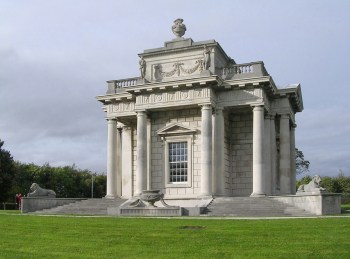
William Chambers, Casino Marino in Dublin, designed for James Caulfeild, the 1st Earl of Charlemont, starting in the late 1750s and finishing around 1775.
2020 marked the tricentenary of the birth of Giovanni Battista Piranesi (1720–1778). The Italian architect, antiquarian, etcher, vedutista, designer, and writer was one of the foremost artistic personalities of 18th-century Rome. His interpretation of the classical world was of great significance not only during his lifetime, but also long after his death. Ireland’s Office of Public Works presents the international exhibition For the Love of the Master: 25 Artists Fascinated by Piranesi to celebrate his legacy in the 21st century, with work from a group of international artists including Emily Allchurch, Pablo Bronstein, Léo Caillard, and Michael Eden. Many of the pieces on display were made specifically for this occasion. One of the show’s locations, the Casino Marino, an important 18th-century neo-classical building, serves to link Piranesi and Ireland, present and past.
Exhibition | Copy-Cat
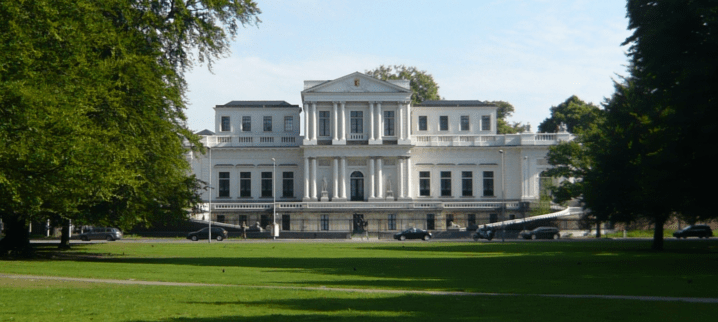
Villa Welgelegen, Haarlem, following the 2009 restoration, view from Haarlemmerhout park (Wikimedia Commons, August 2009). Designed by Abraham van der Hart, the house was commissioned by Henry Hope of the banking family and constructed between 1785 and 1789.
◊ ◊ ◊ ◊ ◊
Now on view in Haarlem:
Copy-Cat
Paviljoen Welgelegen, Haarlem, 8 April — 24 June 2022
Curated by Hélène Bremer
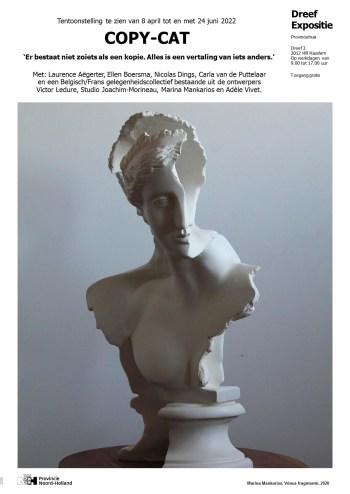 De tentoonstelling Copy-Cat stelt de vraag centraal wat de grenzen van reproductie zijn en wanneer een kopie een zelfstandig kunstwerk met een eigen betekenis wordt. Geïnspireerd door dit thema selecteerde curator Hélène Bremer werk uit diverse kunstdisciplines. Er zijn foto’s, keramiek, beeldhouwkunst en design te zien allemaal geïnspireerd door de beeldhouwwerken van Paviljoen Welgelegen, zorgvuldig gemaakte 21e -eeuwse replica’s. Kopieën dus. Bezoekers kunnen werken bekijken van Laurence Aëgerter, Ellen Boersma, Nicolas Dings, Carla van de Puttelaar en een Belgisch/Franse gelegenheidscollectief bestaande uit de ontwerpers Victor Ledure, Studio Joachim-Morineau, Marina Mankarios en Adèle Vivet.
And from Bremer’s website:
“There is no such thing as a copy. Everything is a translation of something else.”*
The 18th-century building, Paviljoen Welgelegen, the seat of the King’s commissioner of the province of Noord-Holland in Haarlem, stages every three months a contemporary art exhibition under the name Dreef exposities, produced by a guest-curator. Copy-Cat presents art inspired by the classical sculpture that is part of the fabric of the house. The original 18th-century sculptures commissioned in Rome by Henry Hope from Francesco Righetti are now part of the collection of the Rijksmuseum in Amsterdam. There they are prominently displayed in the central hall. In Haarlem they are not missed, though; the sculptures are replaced by bronze copies made in 2009. This theme of copying classical art has been the red threat in selecting artists for this project. However, the cycle of copying literally is broken by the participating artists. Each in their own way appropriate the classical idiom. On view are a selection of photographs, ceramics, and sculpture.
Participating artists: Laurence Aëgerter, Ellen Boersma, Nicolas Dings, Carla van de Puttelaar, and a Belgian/French design collective consisting of Victor Ledure, Studio Joachim-Morineau, Marina Mankarios, and Adèle Vivet.
* David Hockney in Spring Cannot Be Cancelled, with Martin Gayford (London: Thames & Hudson, 2020).
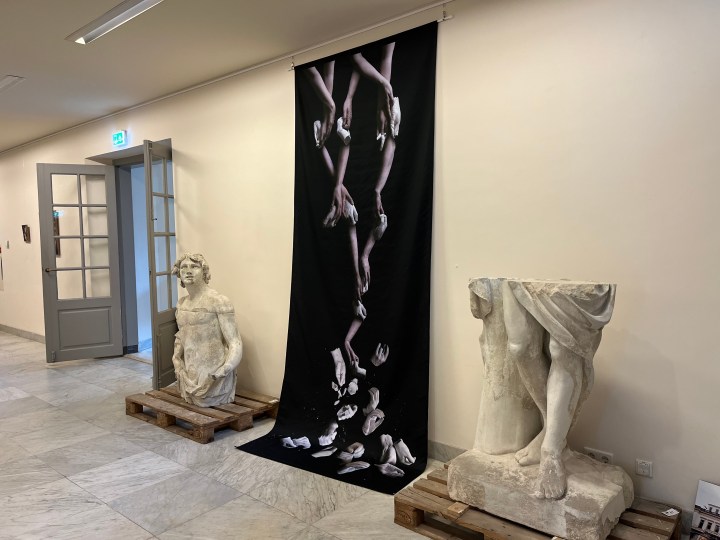
Carla van de Puttelaar, Copy-Cast, 2022, photographic print on eco cotton, 130 × 300 cm, edition 1 of 3; shown alongside a work by the Belgian sculptor Gilles Lambert de Godecharle (1750–1815), which was taken from the storage depot for the occasion of the exhibition.
Panels and Performances | Porcelain, Chinoiserie, and Dance
The Ballet des Porcelaines arrives in the UK this month with performances at Waddesdon Manor (16–17 June) and Brighton’s Royal Pavilion (19–21 June). In conjunction with the project, The Oxford Research Centre in the Humanities (TORCH) presents a day of panel discussions:
Porcelain, Chinoiserie, and Dance: The Teapot Prince
Worcester College, Oxford, Friday, 17 June 2022
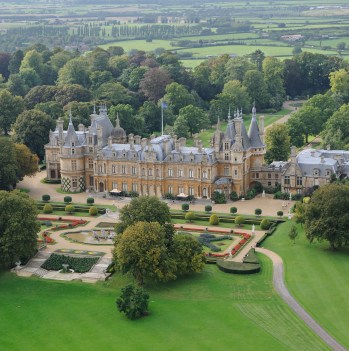
Waddesdon Manor
Three panels of creative artists and academics discuss the porcelain ballet, The Teapot Prince, as part of its world tour. Panel members include choreographer, Phil Chan, founder of Final Bow for Yellow Face; Meredith Martin, art historian and co-creator with Phil Chan, of The Teapot Prince; artist, Hannah Lim; poet and academic, Sarah Howe; ceramicist, Matt Smith; writer and ceramicist, Edmund de Waal; and art historian, Katie Scott. All are welcome! Registration is available here»
The Teapot Prince is based on an Orientalist fairy tale about a sorcerer who lives on a ‘Blue Island’ and transforms anyone who dares to trespass into porcelain cups, vases, and other wares. When the sorcerer turns the eponymous prince into a teapot, his lover, the princess comes to his rescue…The original Ballet des Porcelaines can be seen as an allegory for the aggressive European desire to know and steal the secrets of Chinese porcelain manufacture. In the new version, the narrative is flipped. The main protagonists are now Chinese, the Sorcerer a mad European porcelain collector, modelled on Augustus II the Strong (1670–1733), King of Poland, elector of Saxony and founder of Meissen, the first European manufactory to succeed in making true porcelain.
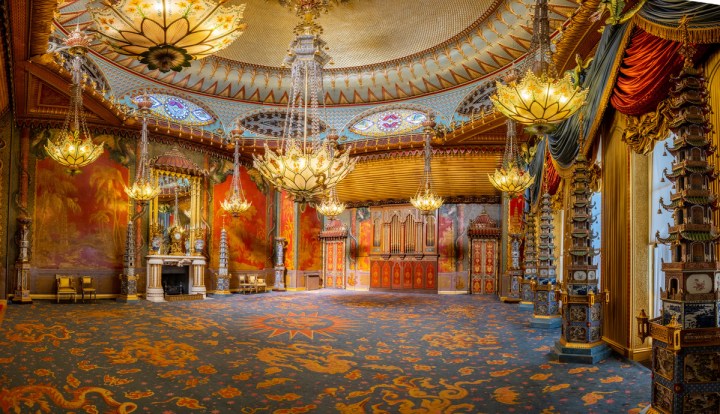
Music Room at the Royal Pavilion, Brighton,
Photo by Jim Holden
Exhibition | Dressed by Nature: Textiles of Japan
Opening later this month at Mia:
Dressed by Nature: Textiles of Japan
Minneapolis Institute of Art, 25 June — 11 September 2022

Festival kimono decorated with carp ascending a waterfall made in Akita Prefecture (detail), late 19th–early 20th century, cotton (Minneapolis: Mia, purchase from the Thomas Murray Collection, 2019.20.84).
The Japanese archipelago is home to extremely diverse cultures that made clothing and other textile objects in a kaleidoscope of materials and designs. This exhibition will focus on the resourcefulness of humans to create textiles from local materials like fish skin, paper, elm bark, nettle, banana leaf fiber, hemp, wisteria, deerskin, cotton, silk, and wool. It will showcase rare and exceptional examples of robes, coats, jackets, vests, banners, rugs, and mats, made between around 1750 and 1930, including the royal dress of subtropical Okinawa, ceremonial robes of the Ainu from northern Japan and the Russian Far East, and folk traditions from throughout Japan.
Exhibition | The Three Perfections
Now on view at Mia:
The Three Perfections: Image, Poem, and Calligraphy in Chinese Painting
Minneapolis Institute of Art, 18 December 2021 — 4 December 2022

Zheng Xie (1693–1765), Qing dynasty, Bamboo and Rocks, detail, ca. 1760, 68 x 39 inches, ink on paper (Minneapolis: Mia, gift of Ruth and Bruce Dayton 95.54.2).
Western viewers are often curious about why Chinese artists write on their paintings and what the characters say. This exhibition answers such questions and explores the idea of integrating fine painting, poetry, and calligraphy, known as the ‘Three Perfections’, in a single artwork.
In traditional China, painting was regarded as ‘silent poetry’, and poetry as ‘painting with sound’. Both could only be manifested through the ‘art of handwriting’—calligraphy. Scholars and scholar-artists used calligraphic brushstrokes in their paintings and considered their artworks to be vehicles of self-expression. As a result, painting was not only considered the only art pure and lyrical enough to stand on an equal footing with poetry and contemplative thought, but also something through which one could experience sight, sound, smell, touch, and emotions.
Exhibition | Venice in the 1700s

Francesco Guardi, The Return of the Buncintoro from S. Nicolò di Lido (detail), ca. 1778, pen and brown ink and wash, over black chalk
(Minneapolis: Mia, the John R. Van Derlip Trust Fund 2021.25)
◊ ◊ ◊ ◊ ◊
Now on view at Mia:
Venice in the 1700s
Minneapolis Institute of Art, 22 January — 16 October 2022
By the 1700s, the once mighty seafaring republic of Venice had been in decline for 300 years. Yet the island city still had one undiminished power—magic. Grand palaces, churches, flotillas of elegant gondolas floated above luminous reflections. Intricate systems of canals and walkways offered endless unexpected perspectives. Centuries of exquisite art could be found everywhere. With much support from tourists who flocked to see the city’s wonders, Venice’s artistic tradition continued to flourish. Three great artists and their families dominated: Antonio Canale (known as Canaletto), Giambattista Tiepolo, and Francesco Guardi. Mia has long had fine prints and drawings by the first two. This presentation celebrates the recent addition of Mia’s first outstanding Guardi drawing.
Exhibition | Making East London Porcelain

Now on view:
Making East London Porcelain
Stratford Library, London, 1–30 June 2022
It is now over 250 years since the earliest dated pieces of Bow porcelain were produced in London. The success of the Bow Porcelain Factory reminds us that Newham was a global centre for experimentation and creativity during the middle of the eighteenth century. As part of our Making London Porcelain Project funded by the Arts and Humanities Research Council (AHRC), scientists and curators at the Victoria and Albert Museum and the Ashmolean Museum have been researching 15 objects owned by Newham Borough of London. Using scientific analysis, we have been trying to better understand the materials and processes used to create such incredible works of art.
Making East London Porcelain is part of a collaborative science-led heritage project between the V&A Museum and Newham Borough of London, which has been made possible by the Arts and Humanities Research Council’s (AHRC) Capability for Collections Fund. Focusing on the celebrated Bow Porcelain Factory, this project brings communities together to explore Newham Borough as a place of creativity, experimentation, and entrepreneurship in the mid-eighteenth century. Co-curated with sixth-form students from Chobham Academy (Newham) and Cardinal Vaughan Memorial School (Chelsea), the exhibition explores how heritage science and re-making practices can help us better understand the places we live today and inspire us to innovate and experiment tomorrow.
◊ ◊ ◊ ◊ ◊
Exploring Bow Porcelain
Stratford Library, London, Wednesday, 15 June 2022, 6.00pm
Join us for an object-handling workshop with local artists as we celebrate the launch of the exhibition Making East London Porcelain.
Take part in a conversation with local ceramic artist Julia Ellen Lancaster, one of the Explorer Leach 100 Artists, whose work offers a modern twist on sculptural figures and historic clay recipes, such as those made by the Bow Porcelain Factory. You will have the opportunity to handle and examine historic pieces of eighteenth-century Bow porcelain from Newham’s special collections guided by V&A Ceramics Curator, Dr Caroline McCaffrey-Howarth, and learn about how historic making processes inspire and influence ceramic artists in Newham today.
Call for Articles | William Hogarth and Cinema

Paul Sandby, Satire with Hogarth as a Magic Lantern Projecting a Parody of his ‘Paul before Felix’, 1753, etching
(London: British Museum, Cc,3.12)
◊ ◊ ◊ ◊ ◊
From the Call for Papers:
William Hogarth and Cinema
Special issue of Ecrans (Spring 2024), edited by Marie Gueden and Pierre Von-Ow
Abstracts due by 5 September 2022; drafts due by 30 March 2023
According to Sergei Eisenstein, “Diderot talked about cinema.” It could likewise be suggested that the eighteenth-century artist William Hogarth (1697–1764) inaugurated cinematic discourse. Through his visual and theoretical work, Hogarth offers a crucial contribution to the narrative and aesthetic reflections that predate—and somehow anticipate—the invention of cinema. Eisenstein did indeed comment upon and commend Hogarth’s visual productions (praising in particular his stage-like compositions and visual narratives articulated in sequences of images). The Russian filmmaker admired his English predecessor’s artistic theory, preoccupied with the movement of bodies and gazes: Eisenstein appropriated the idea of a “line of beauty” developed in Hogarth’s The Analysis of Beauty in his directing and editing. Yet, the filmic potentialities of Hogarth’s work and ideas still await extended critical and scholarly attention. The artist’s name appears sporadically in film studies that mention his influence for set designs—especially in Hollywood where Fritz Lang, Mark Robson, and Stanley Kubrick, among others, drew from Hogarth’s works to stage their historical films—and on the legacy of his artistic writings in film theory and criticism. The abundant art historical literature devoted to Hogarth, however, rarely evokes the artist’s cinematographic legacy. A special issue of the peer-reviewed journal Ecrans (No. 20, Spring 2024), to be published in French and English, seeks to explore the largely understudied connections between William Hogarth and global and expanded cinema.
We invite papers on topics that may include (but are not limited to):
• Pre-cinema, with particular emphasis on magic lanterns and early cinema, for example, filmed tableaux vivants
• William Hogarth in Hollywood, especially in the studios’ archives
• The temporality of images and sequencing of visual narratives
• Graphic novels, illustrated journals, and cartoons
• Adaptations of literary ‘Progresses’ between prints, paintings, theatre, performance, film, TV series, etc.
• Case studies from global cinema, including art documentaries
• Experimental cinema, particularly the challenging of narrative linearity
• The legacy of Hogarth’s satirical work in comedy, including productions featuring Hogarth as a character of fiction
• The legacy of Hogarth’s artistic theory and his “line of beauty” in film theory (for example through various visual shorthand systems) and criticism
• Marxist, feminist, and post-colonial currents in the reception of Hogarth’s work
Please submit a proposal by 5 September 2022 in English or French (up to 400 words), as well as a short bio, to the guest editors of this special issue: Marie Gueden (marie.gueden@univ-lyon2.fr) and Pierre Von-Ow (pierre.von-ow@yale.edu). Final papers should not exceed 8000 words. First drafts expected on 30 March 2023 for publication in April 2024. Feel free to contact us if any questions should arise before submitting your proposal. More information about Ecrans is available here.
Library at Trinity College Dublin Preps for Restoration

The Long Room of the Old Library at Trinity College Dublin
(Wikimedia Commons, July 2015)
◊ ◊ ◊ ◊ ◊
From The NY Times:
Ed O’Loughlin, “An Irish National Treasure Gets Set for a Long-Needed Restoration,” The New York Times (28 May 2022). The majestic Old Library at Trinity College Dublin, where some of Ireland’s most ancient and valuable books are stored, is a popular tourist attraction.
The Long Room, with its imposing oak ceiling and two levels of bookshelves laden with some of Ireland’s most ancient and valuable volumes, is the oldest part of the library in Trinity College Dublin, in constant use since 1732.
But that remarkable record is about to be disrupted, as engineers, architects and conservation experts embark on a 90 million euro, or $95 million, program to restore and upgrade the college’s Old Library building, of which the Long Room is the main part.
The library, visited by as many as a million people a year, had been needing repairs for years, but the 2019 fire at Notre Dame cathedral in Paris was an urgent reminder that it needed to be protected, according to those involved in the conservation effort. . . .
Much of the effort will be focused on conserving the historic worked wood that makes up much of the library’s interior and the frames of its windows, as well as improving fireproofing and environmental controls needed to protect the valuable book collection.
Faced with the example of Notre Dame, and the realization that something similar could happen to an Irish national treasure, the government pledged €25 million, with the college and private donors adding €65 million more.
Work started in April, and in October 2023, the Old Library’s doors will close to visitors for at least three years as it moves into full gear. . . .
The full article is available here»

James Malton (1761—1803), Trinity College Library, The Long Room, eighteenth-century watercolour (Wikimedia Commons). From the Wikipedia entry for “Library of Trinity College Dublin”: “The 65-metre-long (213 ft) main chamber of the Old Library, the Long Room, was built between 1712 and 1732 and houses 200,000 of the Library’s oldest books. Initially, The Long Room had a flat ceiling, shelving for books only on the lower level, and an open gallery. By the 1850s the room had to be expanded as the shelves were filled due to the fact that the Library had been given permission to obtain a free copy of every book that had been published in Ireland and Britain. In 1860, The Long Room’s roof was raised to accommodate an upper gallery.”
Symposium | Thinking Europe Visually
From ArtHist.net, where the posting also includes the French version:
Thinking Europe Visually
Centre IMAGO / École normale supérieure, Paris / Musée du Jeu de Paume, Paris, 9–10 June 2022
“If I had to do it again, I would start with culture.” This statement, often erroneously attributed to Jean Monnet, suggests that in the absence of a shared culture, Europe as a political and economic construct remains nothing but a hollow shell. This conference aims to question the disillusioned position which holds that there is no meaningful common European culture, and to do so through images. One way to visualize the potential existence and limits of a European cultural base is indeed to trace the circulation of images—be they works of art, press images, posters, photographs, or even motifs and patterns—in the region, from antiquity through to the present day. What are the images that have circulated most widely in Europe? Are they specific to Europe or are they already globalized? What was their visual and symbolic impact? Is there a ‘visual culture’ specific to Europe and, if so, what might be its distinctive ‘patterns’?
The symposium will take place on June 9 and 10, 2022 in Paris at the Ecole normale supérieure, 45 rue d’Ulm. It is hosted by European Excellence Center Jean Monnet IMAGO (ENS), in collaboration with the project VISUAL CONTAGIONS at the University of Geneva (Switzerland). If is supported by the European agency Erasmus + and by the Swiss national Fund for research.
The symposium is also structured around three exhibitions:
• Contagions visuelles, an exhibition for the Espace de Création numérique du Jeu de Paume (10 May — 31 December 2022, curated by Béatrice Joyeux-Prunel with Nicola Carboni).
• Ces images qui ont fait l’Europe / Those Images That Made Europe, a digital exhibition hosted by Europeana.eu (forthcoming June 2022)
• Correspondances, a ‘real’ exhibition at the University of Geneva (16–30 May 2022) on the circulation of images, with works and texts by students from the chair in digital humanities at UNIGE (Prof. Béatrice Joyeux-Prunel) and the Atelier de Photographie at the Beaux-Arts de Paris led by Marie José Burki.
Organisation
• Béatrice Joyeux-Prunel, Professeure à l’université de Genève, chaire des humanités numériques
• Léa Saint-Raymond, postdoctorante, ENS-PSL / IMAGO
• Centre d’excellence Jean Monnet IMAGO, ENS-PSL (https://www.imago.ens.fr), en partenariat avec le projet FNS VISUAL CONTAGIONS, Université de Genève (https://visualcontagions.unige.ch)
◊ ◊ ◊ ◊ ◊
T H U R S D A Y , 9 J U N E 2 0 2 2
8.30 Welcome and Coffee
9.30 Béatrice Joyeux-Prunel (UNIGE) and Léa Saint-Raymond (ENS-PSL), Introduction
9.45 Keynote
• Adeline Rispal, L’Étoffe de l’Europe®, une œuvre pour tisser l’avenir [The Fabric of Europe, A Work to Weave the Future]
10.45 Pause
11.00 Morning Session
• Areti Adamopoulou (University of Ioannina), The Pediment and the Column: The Persistence of Values
• Fabienne Gallaire (INP), A Stable Continent: On the Horse and the Other Animal Attributes of Europe in Early Modern Allegories, 16th–18th c.
• Eveline Deneer (University of Utrecht), A Light on Europe: The International and Intermedial Trajectory of a Medieval Chandelier at the Turn of the 19th Century
12.30 Lunch
14.00 Afternoon Session
• Sylvain-Karl Gosselet (CNRS, Université de Paris Cité, LARCA), Fashionable Europe: Iconological Wonders à la Bonnart
• Emilia Olechnowicz (Institute of Art of the Polish Academy of Sciences), Fabrication of Europe: Europe as the Space and the Myth in Early Modern Costume Books
• Béatrice Joyeux-Prunel (UNIGE), What Images Made Europe in the Era of Illustrated Print? The Imago/Visual Contagions Project
• Nicola Carboni (UNIGE), The Rise of Machines: A Data-Driven Approach to the Study of Image Circulations
• Marie Barras (UNIGE), Visual Hits from the Past: Tracing the Global Circulation of Art Images from 1890 until 1990
17.00 Pause
17.30 Grégory Chatonsky (artist) – Réalisme contrefactuel : l’introduction des images possibles dans l’histoire de l’art [Counterfactual Realism: The Introduction of Possible Images in Art History]
18.30 Roundtable — Europe between Its Vision and Its Images / Vision et images de l’Europe
• Thomas Serrier (Université Lille III), Béatrice Joyeux-Prunel (UNIGE), Léa Saint-Raymond (ENS-PSL) and the team of the journal Le Grand Continent
19.30 Cocktail Reception
F R I D A Y , 1 0 J U N E 2 0 2 2
9.00 Coffee
10.00 Keynote
• Christophe Charle (Université Paris 1 Panthéon-Sorbonne), The Cultural Spaces of Europe in the 19th Century
11.00 Pause
11.15 Morning Session
• Emmelyn Butterfield-Rosen (Williams College Graduate Program in the History of Art, Clark Art Institute), Posture and the Invention of European Art
• Léa Saint-Raymond (ENS-PSL) and Quentin Bernet (Ecole du Louvre), The ‘Madonna of Humility’: A Pattern That Made Europe, 14th–16th c.
12.15 Lunch
13.45 Coffee
14.00 Afternoon Session
• Marie Blanc (Université Grenoble Alpes), An Image of Europe for and by Its Tourists during the Cold War: The Example of Czechoslovakia
• Paolo Villa (University of Udine), War and Peace: The Film « iconeme » of the Urban Square as Mirror of Europe in Translation, 1944–1948
• Lefteris Spyrou (Institute for Mediterranean Studies-FORTH), Promoting a Shared European Cultural Heritage: The Council of Europe’s Art Exhibitions in the 1950s
• Antje Kramer (Université Rennes 2), T 1956-9 by Hans Hartung: A Line Drawn between Europe and Africa?
• Matteo Bertele (Ca’Foscari University of Venice), Defining European Art through International Exhibitions, 1955–1958
18.30 Evening at Jeu de Paume Museum (Auditorium)
à propos the exhibition Visual Contagions / Contagions visuelles; les images dans la mondialisation – Jeu de Paume, Espace de Création numérique — with Marta Ponsa (Jeu de Paume), Béatrice Joyeux-Prunel and Nicola Carboni (UNIGE), and the artists Valentine Bernasconi, Robin Champenois, Nora Fatehi, Thomas Gauffroy-Naudin, Anim Jeon, Rui-Long Monico










 Enfilade
leave a comment