Exhibition | Füssli: The Realm of Dreams and the Fantastic

Henry Fuseli, The Dream of Queen Catherine of Aragon (Shakespeare, Henry VIII, Act 4, Scene 2), detail, 1781, oil on canvas, 147 × 211 cm
(Borough of Fylde, Lancashire: Lytham St Annes Art Collection, no. 52).
◊ ◊ ◊ ◊ ◊
Opening this month at the Musée Jacquemart-André:
Füssli: The Realm of Dreams and the Fantastic / Füssli, entre rêve et fantastique
Musée Jacquemart-André, Paris, 16 September 2022 — 23 January 2023
Curated by Christopher Baker and Andreas Beyer
This autumn discover the oeuvre of the Swiss-born British painter Henry Fuseli (Johann Heinrich Füssli, 1741–1825). Comprising sixty works from public and private collections, the exhibition presents a selection of the most emblematic of works by Füssli, the artist of the imaginary and the sublime. From Shakespearean themes to representations of dreams, nightmares, and apparitions, and mythological and Biblical illustrations, Füssli forged a new aesthetic that shifted between reality and the fantastic.

Henry Fuseli, Self-Portrait, 1780s, black and white chalk on buff paper (London: V&A Museum, E.1028-1918).
The son of a painter and art historian, Henry Füssli was trained as a priest and started his artistic career relatively late, during a first trip to London, where he was influenced by the President of the Royal Academy, Sir Joshua Reynolds. After a long stay in Italy, during which he was especially fascinated by the power of Michelangelo’s works, he settled in London at the end of the 1770s. An atypical and intellectual artist, Füssli drew his inspiration from the literary sources that he interpreted imaginatively. In his paintings he developed a dreamlike and dramatic pictorial language, with its blend of the marvellous and the fantastic, the sublime and the grotesque.
Come explore Füssli’s oeuvre, which has not been the subject of a monographic exhibition in Paris since 1975: from works that represent Shakespeare’splays (particularly Macbeth), onto those depicting mythological and biblical tales, the female figures represented in his graphic works and the themes of nightmares, a truly Füselian obsession, dreams, and apparitions.
Füssli developed a fantastic vein that was quite marginal at the time, as it distorted academic rules. In 1782, he presented his first version of Nightmare, an emblematic work drawn from his imagination that truly established his career as a painter. Elected Associate Member of the Royal Academy in 1788, and Academician in 1790, Füssli, while working in a serial fashion, embodied the quest for the sublime that was all the rage in England at the time.
Discover the striking works of the artist—works that are all too rare in French collections—by a highly original painter whose oeuvre was paradoxical, inspired by an imagination in which terror and horror were combined, forming the aesthetic origins of Dark Romanticism (‘romantisme noir’).
Christopher Baker and Andreas Beyer, et al., Füssli, entre rêve et fantastique (Brussels: Fonds Mercator, 2022), 208 pages, €40.
In addition, works from the exhibition are featured in a 44-page special edition of Connaissance des Arts (€11) and an 84-page special edition of Beaux-Arts magazine (€14).
More information is included in the full press packet.
Memorial Service for Christopher Johns
From Vanderbilt University . . . (the event may be live-streamed or at least recorded; I’ll update this posting as details emerge, and please feel free to add comments if you have more information. –CH)
Memorial Service for Christopher M. S. Johns
Cohen Memorial Hall, Vanderbilt University, Nashville, Saturday, 17 September 2022
A memorial service and reception for Christopher M. S. Johns, the Norman L. and Roselea J. Goldberg Professor of Fine Arts and professor of history of art and architecture, will be held on Saturday, 17 September, from 2 to 4pm in the atrium of Cohen Memorial Hall on the Peabody College campus. The memorial program will begin at 2:30pm, with the reception to follow. Johns died May 8 following an extended illness. He was 67.
The event is hosted by the College of Arts and Science and the Department of History of Art and Architecture.
◊ ◊ ◊ ◊ ◊
Note (added 12 September 2022) — Event organizers plan to live-stream the event via Zoom with the following link:
https://vanderbilt.zoom.us/j/8816519966
As ASECS president, Wendy Wassying Roworth has contributed the following statement, which will be read alongside other tributes: “Christopher was a longtime active member of the American Society for Eighteenth-Century Studies. A generous scholar, editor, mentor, and friend, he was always willing to share his vast knowledge of Italian art and culture with colleagues and students. He will be missed, but his significant contributions to eighteenth-century studies will continue to inform and inspire.”
New Book | General William Roy (1726–1790)
From Edinburgh UP:
Humphrey Welfare, General William Roy (1726–1790): Father of the Ordnance Survey (Edinburgh: Edinburgh University Press, 2022), 310 pages, ISBN: 978-1399505789, $120.
 The first biography of William Roy, exploring his life, career, and legacy
• Considers the influences on William Roy and his work by examining the people in his circle, including some of the most famous scientists and explorers of the day
• Reviews the importance of the Military Survey of Scotland to the history of cartography
• Considers the significance of Roy’s experiments in measuring heights by barometric pressure
• Re-assesses—for the first time since 1917—his important contribution to British archaeology
Born in Clydesdale, William Roy was a polymath and a visionary. His work established the path that would lead to the formation of the Ordnance Survey and to all of the paper-based and digital mapping products that we use today. His story—very much one of the Enlightenment—demonstrates how one man’s curiosity and diligence enabled him to excel across a diverse range of topics: military reconnaissance and intelligence; the lessons that could be learned from the past about the tactical use of landscape; the science of determining the height of mountains; and the development of a meticulous methodology to achieve an unprecedented accuracy in topographical measurement. In this biography, Humphrey Welfare uncovers the career and activities of this important figure, and in doing so paints a vivid picture of the inner complexities of 18th-century Britain.
Humphrey Welfare is Visiting Fellow in the School of History, Classics, and Archaeology at the University of Newcastle. Formerly he was Director of the Architectural and Archaeological Survey at the Royal Commission, and, after merger with English Heritage, the Director of Research Projects. His last post before retirement in 2011 was as English Heritage Planning and Development Director for the North. Humphrey has published over forty papers in peer-reviewed journals on the archaeology and history of southern Scotland and northern England, as well as three books, including Roman Camps in England: The Field Archaeology (with V. Swan, HMSO, 1995). He is a former editor of the Proceedings of the Society of Antiquaries of Scotland.
C O N T E N T S
Prologue: A Dinner Party for Captain Cook
Acknowledgements
Introduction
1 Foundations
2 The Map-maker: Developing the Soldier’s Eye
3 The Military Engineer: Reconnaissance, Resources, and Fortifications
4 The Antiquary in the Field: Empathy with the Army of Rome
5 The Practical and Sociable Scientist: Hypsometry and the Royal Society
6 The Geodesist: Large Triangles and Miniscule Adjustments
7 Aftermath and Legacy: The Birth of the Ordnance Survey
Appendix 1 Chronology
Appendix 2 General Roy’s Instructions on Reconnoitring
Appendix 3 Glossary
Abbreviations
Bibliographical References
Index
Colloquium | Inventaires et cartographies du patrimoine
From the conference programme, with more information about the Collecta research project noted below :
Inventaires et cartographies du patrimoine, XVIIe–XXIe siècle
École du Louvre, Paris, 15–16 September 2022
 Organisé dans le cadre du programme de recherche Collecta Archives numériques de la collection Gaignières (1642–1715)
Depuis 2014, le programme de recherche Collecta interroge les pratiques érudites du Grand Siècle et les met en perspective à partir de l’exemple de la collection de François-Roger de Gaignières (1642–1715).
Sa reconstitution et sa mise en ligne ont requis la création d’un outil numérique (collecta.fr) qui tente de rendre compte des liens et des cheminements qui se trament, au sein de la collection :
• à travers les stades du travail de l’érudit — des sources, notes et brouillons aux dessins mis au net et classés pour la présentation au public ;
• à travers les matériaux réunis par l’érudit — tableaux et gravures, manuscrits et imprimés, dessins et copies d’archives ;
• à travers les points d’entrée retenus par l’érudit — personnes, familles, institutions, lieux, périodes.
Se dessinent ainsi les itinéraires mentaux, documentaires, mais aussi spatiaux de l’érudit à travers ses sources, son réseau de contacts, les lieux qu’il visite, ses centres d’intérêt et les méthodes qu’il déploie dans son objectif d’inventaire des monuments et des familles du royaume et de l’Europe.
J E U D I , 1 5 S E P T E M B R E 2 0 2 2
9.30 Accueil des participants
10.00 Ouverture du colloque — Claire Barbillon (École du Louvre) et François Bougard (Institut de recherche et d’histoire des textes – CNRS)
10.20 Introduction
• Après Gaignières : continuité et discontinuité, les enjeux d’une reconstitution numérique de la collection — Anne Ritz-Guilbert (École du Louvre / Institut de recherche et d’histoire des textes – CNRS)
• Le point de vue du design : mise en perspective de la nouvelle interface Collecta & esthétique de la structure — Sophie Fétro (Paris 1 Panthéon-Sorbonne) et Kim Sacks (Université de Strasbourg)
13.00 I. Héraldique et territoires
Michel Pastoureau (École pratique des Hautes Études)
• Marquage héraldique, cartographie et histoire des lignages : les relevés de Gaignières à la chapelle des chanoinesses de Luynes — Sarah Héquette (École du Louvre / École pratique des Hautes Études)
• Une géographie des ordres ? L’ombre de la chevalerie dans la collection Gaignières — Pierre Couhault (Bibliothèque nationale de France)
• Inventorier et cartographier l’héraldique des municipalités portugaises : l’armorial de Cristóvão Alão de Morais — Miguel Metelo de Seixas (Universidade NOVA de Lisboa)
• La cartographie héraldique de Frotier de la Messelière — Laurent Hablot (École pratique des Hautes Études)
15.45 II. La copie comme mise en récit des archives
Marlène Helias-Baron (Institut de recherche et d’histoire des textes – CNRS)
• L’apport des copies de Gaignières à la connaissance des archives de l’abbaye de Longpont — Benoît-Michel Tock (Université de Strasbourg)
• Voyage au passé. Les cartulaires de la collection Gaignières comme fenêtres sur les archives de jadis — Annalena Müller (Université de Fribourg)
V E N D R E D I , 1 6 S E P T E M B R E 2 0 2 2
9.00 III. Voyages, séries, topographies
Émilie d’Orgeix (École pratique des Hautes Études)
• Construire une collection topographique au XVIIe siècle. L’élaboration des portefeuilles dans la collection Gaignières — Damien Bril (Institut national du patrimoine)
• Mémoires des lieux, mémoires des hommes. Étude du portefeuille topographique « Beauce et Vendômois » de la collection Gaignières (1642–1715) — Clotilde Vivier (École du Louvre)
• Imprimer, collecter et concentrer l’image des villes. Lieux d’édition et représentations urbaines en Europe (fin du XVe siècle – milieu du XVIIe siècle) — Eric Grosjean (École pratique des Hautes Études)
• Voyager en image : la topographie dans la collection de Jehannin de Chamblanc (1722–1797) — Johanna Daniel (Institut national d’histoire de l’art, LAHRA – Lyon 2)
14.00 IV. Visualisation et narration, du portefeuille au numérique
Anne Ritz-Guilbert (École du Louvre/Institut de recherche et d’histoire des textes – CNRS)
• Les humanités numériques, un lieu pour les archives du bizarre — Myriam Marrache-Gouraud (Université de Poitiers)
• Construire un outil d’association de données à l’heure de l’open data : la Fabrique Numérique du Passé — Laurent Costa (UMR 7041 ArScAn)
• La fabrique du paysage urbain parisien avant les destructions haussmanniennes : inventorier et cartographier les savoirs — Ellie Khounlivong (École du Louvre), Christophe Claramunt (Institut de Recherche de l’École navale), Éric Mermet (Centre d’analyse et de mathématique sociales, UMR 8557), et Alexandre Radjesvarane (CY Tech)
◊ ◊ ◊ ◊ ◊
From Le Domaine d’Intérêt Majeur Sciences du Texte et Connaissances Nouvelles:
The Collecta + Project is part of a larger research program in digital humanities, devoted to the collection of François-Roger de Gaignières (1642–1715). After launching the website http://www.collecta.fr and its database which provides a reconstitution of the collection now dispersed, Collecta + has defined three main objectives, in partnership with the ANG-G project (Digital Geolocated Archive — the Gaignières collection) sponsored by the ANR (Research Project Funding) within the framework of the IRHT-CNRS.
The first goal is to enrich the database, giving priority to documents relating to the Ile-de-France region. The complete digitization of the Gaignières collection kept in the Bodleian Library of Oxford—1,600 drawings of medieval and modern monuments, mainly from the Paris region—offers a considerable breakthrough in the knowledge of the region’s collection and heritage.
Secondly, we will examine the contribution of geolocation to bring out a better understanding of the collection and the monuments concerned. A mobile application based on the drawings of the Gaignières collection will be the central tool of a participatory research method to launch an inquiry on local heritage. The collection of geolocated datas will offer the opportunity to conduct a large-scale study on the history of viewpoints.
The third objective is to promote interchanges with other projects or partners of the DIM STCN, in particular E-signa and the Bibale database of the IRHT-CNRS. Sharing digital ressources and tools, we will accentuate the interoperability of academic programmes and we will ultimately offer a common platform as a reference frame for research on regional, national and international levels.
Conference | English and Irish Crystal Drinking Glass, 1640–1702
From the V&A:
Celebrating the Birth of English and Irish Crystal Drinking Glass, 1640–1702
In-person and online, Victoria and Albert Museum, London, 6 October 2022
Organised by Colin Brain, Reino Liefkes, and Caroline McCaffrey-Howarth, with assistance from Simon Spier
2022 has been designated the International Year of Glass by the United Nations. This year also marks 125 years since the publication of Albert Harshorne’s Old English Glasses, the first serious study of the history of English and Irish glass. To celebrate, the V&A is presenting a conference Celebrating the Birth of English and Irish Crystal Drinking Glass, 1640–1702, in partnership with the Association for the History of Glass. This study day aims to explore the evolving story of the birth of these sophisticated products, a century before the ‘industrial revolution’ began.
The conference has been organised by Colin Brain (Association for the History of Glass), Reino Liefkes (V&A) and Dr Caroline McCaffrey-Howarth (University of Edinburgh), with assistance from Dr Simon Spier (V&A).
In-person tickets, through Eventbrite
Online tickets, through Eventbrite

Roemer drinking glass, attributed to George Ravenscroft, probably at the Savoy Glasshouse, London, ca. 1677 (London: V&A, C.530-1936).
P R O G R A M M E
10.00 Registration with Tea and Coffee
10.25 Welcome — Justine Bayley and Reino Liefke
10.30 Morning Session
• Colin Brain — ‘And of noe other sorts or fashions’: Fashionable Design in the Birth of English and Irish Crystal Drinking Glass
• Peter Francis — The Irish ‘Lead Glass Revolution’
• Jo Wheeler — Recipes for Lead-glass and Cristallo in Venetian and Florentine Sources and Their Influence on Antonio Neri
• Reino Liefkes — A New Type of Colourless Glass in Imitation of Rock Crystal: Crizzled Glass of the Late-Seventeenth Century
1.00 Lunch Break
2.15 Afternoon Session
• Oliver Gunning — New Perspectives on the Role of the Migrant in British Crystal Glass
• Antoine Giacometti — Seventeenth-Century Glass from the Dublin Castle Excavations, 1961–1987
• Inês Coutinho and Colin Brain — Science in the Service of History: Analysis of Early English and Irish Crystalline Glasses
• Iris Moon and Karen Stamm — Drinking Glass in the Met Museum’s British Galleries
5.10 Closing Remarks — Caroline McCaffrey-Howarth
New Book | The Marlborough Mound
From Boydell & Brewer:
Richard Barber, ed., The Marlborough Mound: Prehistoric Mound, Medieval Castle, Georgian Garden (London: Boydell Press, 2022), 224 pages, ISBN: 978-1783271863 (hardcover), £45 / $65 | ISBN: 978-1787446748 (ebook), £20 / $25.
 The Marlborough Mound has recently been recognised as one of the most important monuments in the group around Stonehenge. It was also a medieval castle and a feature in a major Georgian garden. This is the first comprehensive history of this extraordinary site.
Marlborough Mound, standing among the buildings of Marlborough College, has attracted little attention until recently. Records showed it to be the motte of a Norman castle, of which there were no visible remains. The local historians and archaeologists who investigated it found very little in the way of archaeological evidence beyond a few prehistoric antler picks, the odd Roman coin, and a scatter of medieval pottery. The most dramatic discovery came after the Mound Trust began to restore the mound in 2003. English Heritage was investigating Silbury Hill and arranged to take cores from the Mound for dating purposes. The results were remarkable, as they showed that the Mound was almost a twin of Silbury Hill and therefore belonged to the extraordinary assembly of prehistoric monuments centred on Stonehenge.
For the medieval period, this book brings together for the first time all that we know about the castle from the royal records and from chronicles. These show that it was for a time one of the major royal castles in the land. Most of the English kings from William I to Edward III spent time here. For Henry III and his queen Eleanor of Provence, it was their favourite castle after Windsor.
As to its final form as a garden mound next to the house of the dukes of Somerset, in the eighteenth century, this emerges from letters and even poems, and from the recent restoration. Much of this has been slow and painstaking work, however, involving the removal of the trees which endangered the structure of the Mound, the recutting of the spiral path and the careful replanting of the whole area with suitable vegetation. By doing this, the shape of the Mound as a garden feature has re-emerged, and can now be seen clearly.
This book marks the end of the first stage of the work of the Mound Trust, which, following the restoration, turns to its second objective of promoting public knowledge of the Mound based on scholarly research.
Richard Barber has had a huge influence on the study of medieval history and literature, as both a writer and a publisher. His first book on the Arthurian legend appeared in 1961, and his major works include The Knight and Chivalry (winner of the Somerset Maugham Award in 1971), Edward Prince of Wales and Aquitaine, The Penguin Guide to Medieval Europe, and The Holy Grail: the History of a Legend, which was widely praised and was translated into six languages.
C O N T E N T S
Preface — Barry Cunliffe
1 ‘One Remarkable Earthen-work’: The Neolithic Origins of the Marlborough Mound — Jim Leary and Joshua Pollard
2 Castles and the Landscape of Norman Wessex, c. 1066–1154 — Oliver Creighton
3 Marlborough Castle in the Middle Ages — Richard Barber
4 The Mound as a Garden Feature — Brian Dix
5 Epilogue: The Marlborough Mound Trust
Afterword: The Round Mound Project — Jim Leary, Elaine Jamieson, and Phil Stastney
Appendices
A Inquisition into the State of Marlborough Castle, 11 September 1327
B Castellum Merlebergae, by H.C. Brentnall, FSA
C Constables of Marlborough Castle
D Marlborough Castle: Archaeological Findings for the Medieval Period
Bibliography
Index
In Memoriam | Mark Girouard (1931–2022)
Yesterday’s posting noted the Colvin Prize Shortlist (as announced this week by The Society of Architectural Historians of Great Britain), which includes Mark Girouard’s A Biographical Dictionary of English Architecture, 1540–1640. I should have included notice of Girouard’s very recent passing. The following paragraphs come from the opening of Girouard’s obituary in The Guardian.
Otto Saumarez Smith, “Mark Girouard Obituary,” The Guardian (26 August 2022).
Architectural historian who wrote extensively on stately homes and campaigned to save the Georgian houses of Spitalfields
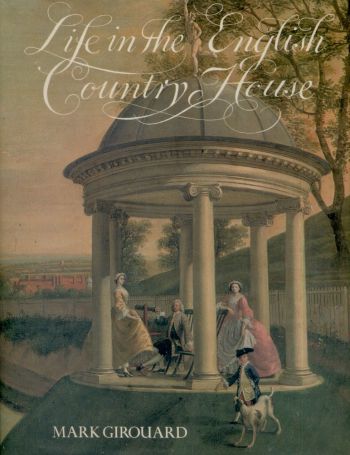 Mark Girouard, who has died aged 90, was Britain’s most readable architectural historian, a great authority on Elizabethan and Victorian architecture whose extensive writings used the study of buildings to illuminate the social life of the past. The publication of Life in the English Country House: A Social and Architectural History in 1978 captured the zeitgeist in a period when stately homes were being repurposed as sites of mass leisure. It sold more than 140,000 copies in hardback.
When Girouard started his career the study of architectural history in Britain was dominated by the German-trained Nikolaus Pevsner, for whom the discipline was essentially about tracking artistic styles through intense formal and spatial analysis. In contrast, Girouard’s books placed buildings within their cultural, social and intellectual milieu. The results were scholarly, but also immensely fun, gossipy and stylish.
Although he wrote a great deal about country houses, he found much of the fogeyish snobbery and nostalgia that often goes with the territory distasteful. Free of pomposity, puckish, self-effacing and urbane, he was much loved by all sorts of people for his kindness and sense of fun. Girouard took on a terrific range of subjects beyond country houses, writing with verve about Victorian Pubs (1975) and urban history in Cities and People: A Social and Architectural History (1985) and The English Town: A History of Urban Life (1990). . . .
The full obituary is available here»
Shortlists Announced for Hitchcock Medallion and Colvin Prize
From The Society of Architectural Historians of Great Britain (SAHGB) . . . with shout-out to HECAA member Basile Baudez!
The shortlists for two of the most important prizes in architectural history—the Alice Davis Hitchcock Medallion and the Colvin Prize—were announced this week. The Alice Davis Hitchcock Medallion is awarded to a monograph that makes an outstanding contribution to the study of architectural history—previous winners include Howard Colvin, Dorothy Stroud, John Summerson, Nikolaus Pevsner, Hermione Hobhouse, and Jill Lever. The Colvin Prize, established in 2017, is awarded to an outstanding work of reference of value to the discipline irrespective of format.
The two shortlists for the awards this year demonstrate a broad range of subjects and approaches to architectural history, ranging from a global atlas of queer spaces, forensic analysis of the urban and architectural fabric of Whitechapel, a fulsome biographical dictionary of early-modern architects in Britain, through to a compendious photographic recording of all the 437 Carnegie libraries that still remain in the UK, and much more.
The winners will be selected in the autumn and announced at the Society’s Annual Lecture and Awards Ceremony in December 2022.
The awards are overseen by the SAHGB to reward work that is innovative, ambitious, and rigorous in tackling histories of the built environment as broadly conceived. The SAHGB’s awards programme, which also includes the ‘Hawksmoor’ Essay Medal, Heritage Research Award, and Dissertation Prize, is open and inclusive wherever possible, celebrating diversity of approach and recognising work at all career levels.
◊ ◊ ◊ ◊ ◊
 Alice Davis Hitchcock Medallion Shortlist
• Basile Baudez, Inessential Colors: Architecture on Paper in Early Modern Europe (Princeton University Press)
• Manolo Guerci, London’s ‘Golden Mile’: The Great Houses of the Strand, 1550–1650 (Paul Mellon Centre for Studies in British Art)
• Jasmine Kilburn-Toppin, Crafting Identities: Artisan Culture in London, c. 1550–1640 (Manchester University Press)
• Nathaniel Walker, Victorian Visions of Suburban Utopia: Abandoning Babylon (Oxford University Press)
Colvin Prize Shortlist
• Adam Nathaniel Furman + Joshua Mardell, eds., Queer Spaces: An Atlas of LGBTQIA+ Places and Stories (RIBA Publishing)
• Mark Girouard, A Biographical Dictionary of English Architecture, 1540–1640 (Paul Mellon Centre for Studies in British Art)
• Oriel Prizeman, The Carnegie Libraries of Britain: A Photographic Chronicle (Arts and Humanities Research Council)
• Peter Guillery, ed., Survey of London, Whitechapel: Vols 54 + 55 (Paul Mellon Centre for Studies in British Art/Yale University Press)











 Enfilade
leave a comment