Study Day | The Evolving Life of Country House Display
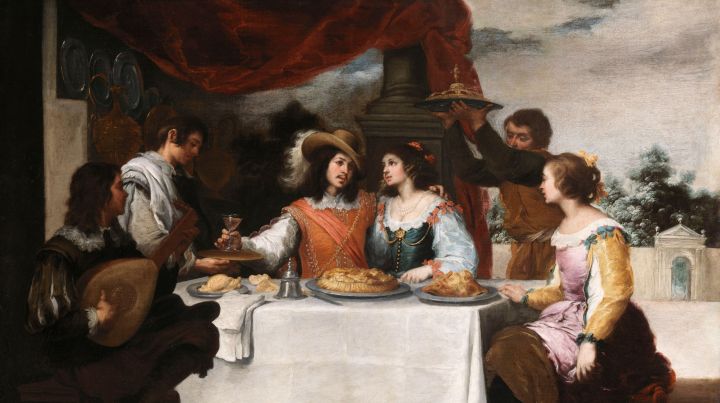
Bartolomé Esteban Murillo, The Prodigal Son Feasting, 1660s. The painting is one of a series of six, all of which are on display at Russborough from March 1 until May 31.
◊ ◊ ◊ ◊ ◊
From ArtHist.net and Russborough:
The Evolving Life of Country House Display
Russborough House & Park, County Wicklow, 10 April 2025
To celebrate the unique history of Russborough, on the occasion of the ‘return home’ of the Prodigal Son series by Bartolomé Esteban Murillo (1617–1682), this study day explores the interplay among houses, collections, and collectors, in a cross-disciplinary attempt to celebrate the richness and diversity of Irish and British country houses.
The historic houses ICOM’s sub-committee (DEMHIST) has identified three main elements that characterise historic houses that are open to the public, and that were formerly owned by collectors—as in the case of Russborough. These are: the container (the house), the content (the collection), and the creator (the collector). All three elements are profoundly intertwined; however, over time, their relationship can evolve, interrupt, or re-bond, thus altering and creating new narratives of collecting, display, and afterlife, often at the intersection of the private and the public.
This is certainly the case for Russborough, where two families and their collections in particular, the Milltowns and the Beits, and two important donations to the National Gallery of Ireland at both ends of the 20th century, have impacted the present history of Russborough and shaped the nature of Ireland’s national collections. The legacy of these donations is commemorated through the naming of the Milltown and Beit wings at the National Gallery of Ireland, and that of the Alfred Beit Foundation at Russborough.
While Russborough offers a significant case study, country houses across Ireland and Britain equally illustrate the evolving nature of historic interiors and display. The architectural design of these properties, their decorative schemes, and the methodologies used to interpret their contents have developed significantly over time, with ongoing research shedding new light on these complex histories. Drawing on Anne Higonnet’s concept of the ‘collection museum’, one may view the relationship between houses, their collections, and their former owners as one that transcends the physical displacement of objects. Despite relocation, such collections often continue to evoke the memory of their original settings and custodians, commemorated through names, foundations, or reimagined displays.
This study day will examine continuities and changes in historic display practices and architectural design, with insights drawn from country houses across Ireland and Britain. Speakers will consider the methodologies and sources that inform such research. The day will also offer participants the opportunity to reflect on Russborough itself, the Beits’ collecting activities, and their connection to Murillo’s Prodigal Son series, which participants will have the opportunity to view in its historic setting. Tickets are €60 and include lunch and refreshments.
The Return of the Prodigal Son exhibition, presented in partnership with the National Gallery of Ireland, runs until May 31st.
p r o g r a m m e
9.45 Registration with tea and coffee
10.15 Welcome and Introduction
10:30 John Goodall (Country Life) — Keynote Speech
11.20 Session 1 | The Architecture of Display
Chair: Mary Heffernan (Office of Public Works)
• Alec Cobbe (Alec Cobbe Design) — Inside Matters
• Frances Bailey (National Trust NI) — Bringing Mount Stewart Back to Life
• James Rothwell (FSA, National Trust) — Restoring Baroque Pomp and Circumstance: The Beauty Room at Petworth, Sussex
12.30 Lunch and Free Flow Tours of the Murillo Display
13.30 Session 2 | Sources for Studying Collecting and Display
Chair: Audrey Whitty (National Library of Ireland)
• David Sheehan (Castletown Foundation) — Castletown: ‘The Epitome of the Kingdom and All the Rarities She Can Afford’
• Adrian Tinniswood (University of Buckingham) — A Madness to Gaze at Trifles
• Seán O’Reilly (Institute of Historic Building Conservation) — Sociological and Psychological, Artistic and Architectural Aspects of Country House Display and Prospective Impacts for Management
14.40 Break and Free Flow Tours of the Murillo Display
15.00 Session 3 | Russborough, the Beits, and Murillo’s Return of the Prodigal Son
Chair: Fionnuala Croke (Chester Beatty)
• Aidan O’Boyle (Office of Public Works) — The Reconstruction of an 18th-Century Picture-hang at Russborough
• John Hilary (University of Nottingham) — The Beit Collection: Murillo’s Prodigal Son Series in Context
• Leah Benson and Muirne Lydon (National Gallery of Ireland) — From Russborough to the National Gallery: The Beit Gift and the Conservation of Murillo’s Prodigal Son Series
16.20 Drinks Reception
Funding | Research Related to Castletown House, County Kildare
From the application form:
Kevin B. Nowlan Castletown Bursary
Applications due by 9 May 2025
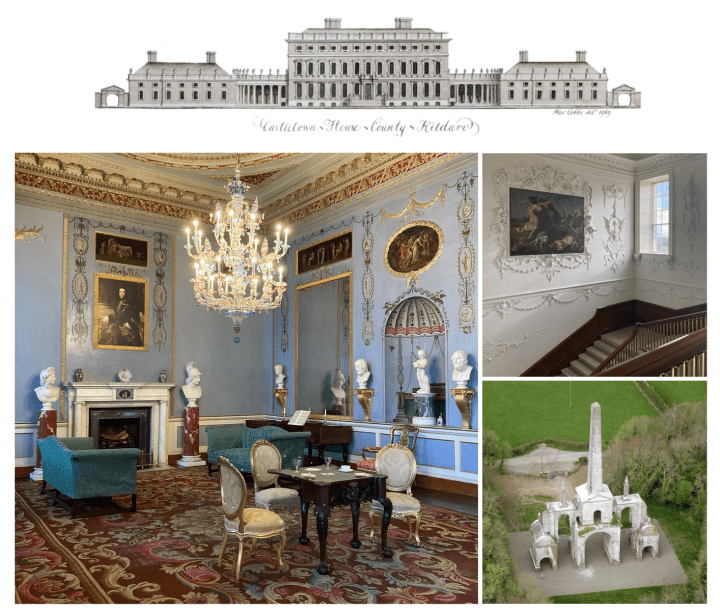 The Castletown Foundation is pleased to announce a call for applicants for the Kevin B. Nowlan Castletown Research Bursary, established to honour the memory of our esteemed former chairman. This scholarship aims to further research that focuses on or relates to Castletown: this extends to houses, collections, objects, and landscapes of allied family properties across Ireland and Great Britain that will have a direct bearing on the mediation and interpretation of Castletown house. Applications are invited from post-graduate students, early career professionals, and established scholars. The award of up to €5,000 may be used for research-related expenses only. The selection committee will be composed of members of the Castletown Foundation and one external specialist. The scholarship need not be awarded in any one year, and the decision of the assessors is final.
Your proposal (max. 1,000 words) should outline how existing knowledge will be extended by your work; it should also include a timeline for the research and an indicative budget. That document together with this application form must be submitted by email to Dr Alison FitzGerald (alison.fitzgerald@mu.ie) and Dr Patrick Walsh (WALSHP9@tcd.ie) by Friday, 9 May 2025 at 5pm, with the subject line ‘Kevin B. Nowlan Castletown Bursary’. A confidential reference supporting the application must arrive separately, before the closing date.
American Ceramic Circle Research Grants
From ArtHist.net:
American Ceramic Circle Research Grants
Applications due by 11 April 2025
To encourage new scholarship in the field of ceramics, the American Ceramic Circle (ACC) annually underwrites grants for up to $5,000 to individuals to help offset costs associated with original research. Grant applications, which are reviewed by the Grants and Scholarship Committee, are due the second Friday of April. Grants are not intended for projects involving commercial profit, including publication subventions. Successful applicants are required to submit the results of their completed research to the ACC in the form of a paper, which may be published in the ACC Journal. Grantees may also be invited to speak at the annual ACC symposium. To apply, please send your coversheet and proposal as a PDF file to Yao-Fen You, the ACC Grants and Scholarship Chair, at accgrants@gmail.com using this form. Queries are also welcome.
1 Coversheet
• Name
• Address
• Telephone
• Email address
• Institutional Affiliation
• List of Publications — please attach copy of one, especially if related to proposed topic.
• References — please ask references familiar with your project to send letters of recommendation directly to accgrants@gmail.com as PDFs.
2 Proposal
Please prepare an attachment to the cover sheet with the following sections:
• Project title
• Brief project summary (100 words max)
• Significance of topic (500 words max)
• List of primary sources consulted (if project is historic in nature)
• Project description: plans for the project, reasons, how it will be accomplished, and describe the qualifications of individuals involved in project (500 words max)
• Research plan
• Timeline, including estimated date of completion
• Collections, archives, institutions, etc. to be visited
• Proposed budget, with estimated expenditures
• Total amount requested from ACC
The American Ceramic Circle was founded in 1970 as a non-profit educational organization committed to the study and appreciation of ceramics. Its purpose is to promote scholarship and research in the history, use, and preservation of ceramics of all kinds, periods, and origins. The current active membership is composed of ceramics enthusiasts from many walks of life, including museum professionals, collectors, institutions, auction house professionals, and dealers in ceramics. Member interest is focused on post-Medieval pottery and porcelain of Europe, Asian ceramics of all periods, and ceramics made, used, or owned in North America.
New Book | Danish Porcelain: 250 Years
From ACC Art Books:
Elliot Todd, Danish Porcelain: 250 Years of Royal Copenhagen and Bing & Grøndahl; Volume 1: A Legacy in Porcelain, Stoneware, and Faience; Volume 2: A Collection of Works (New York: ACC Art Books, 2025), 936 pages, ISBN: 978-1788841504, £125 / $175.
 This detailed two-volume set offers an unparalleled scholarly insight into the history of Danish porcelain. Renowned for its ceramic industry, Denmark earned its status as a leading porcelain exporter through intense rivalry with other firms across Europe. With its factories excelling time and time again at the largest international expositions of the 19th and early 20th century, Danish porcelain took its own place on the world stage. Founded in 1775, Royal Copenhagen remains one the oldest porcelain manufacturers still in operation today. Throughout its history, the factory has experienced numerous highs and lows and has weathered more than 130 years of competition from the Bing & Grøndahl Porcelain Factory. After 1882, the two factories were located less than a mile apart, with their flagship stores eventually competing side-by-side for sales in the heart of Copenhagen.
Danish Porcelain was inspired by a two-generation collection of Royal Copenhagen and Bing & Grøndahl porcelain, stoneware, and faience begun by the author’s father in 1947. Developed over the past 20 years, this is the first comprehensive publication to critically review the history of both factories, from their beginnings to their eventual merger. Featuring detailed appendices and over 2400 images, these two volumes comprise an important source of information on the history of Danish porcelain, including the many technical and artistic successes of the late 1880s that revolutionized production worldwide.
Elliot Todd is a second-generation collector of Danish porcelain, stoneware, and faience from the factories of Royal Copenhagen and Bing & Grøndahl. Dr. Todd recently retired as Professor Emeritus from a major American university and is internationally recognized as a leading researcher and educator.










 Enfilade
leave a comment