Call for Applications | Debenedetti Prize for 18th-C. Art History
From the Call for Applications:
The Elisa Debenedetti Prize for Research Writing in the
History of 18th-Century Art — Inaugural Award 2026
Sapienza Università di Roma, the Centro di Studi sulla
Cultura e l’Immagine di Roma, and the Fondazione Ernesta Besso
Applications due by 31 October 2026
Elisa Debenedetti (1933–2024), professor of art history at Sapienza Università di Roma, promoted the study and research of 18th-century arts for decades. Author of important contributions, essays, and monographs, she founded and edited the journals Studi sul Neoclassico (1973–80) and Studi sul Settecento Romano (since 1985), essential points of reference and discussion for researchers and scholars.
The Debenedetti family, in agreement with the Department of History, Anthropology, Religions, Art, and Entertainment at Sapienza Università di Roma, the Centro di Studi sulla Cultura e l’Immagine di Roma and the Fondazione Ernesta Besso, have established a biennial prize for an unpublished long-form study on the arts of the eighteenth century, focused, though not exclusively so, on Roman culture. The prize is open to young scholars of any nationality who are under 40 years of age on the closing date of the call for applications, for independent, research-based, long-form writing (i.e. degree theses, specialisation theses, doctoral theses, etc.) written in Italian, English, French, or Spanish. The prize consists of publication as a monograph by L’ Erma di Bretschneider in Rome, in the series Inchiostri di Storia dell’arte e dell’architettura.
Each application must contain, in PDF format:
• Text and images (low resolution)
• Abstract (maximum 900 words)
• Brief curriculum vitae et studiorum
Applications must be received by 31 October 2026 at the email address premioelisadebenedetti@gmail.com. Confirmation of receipt of applications will be sent.
The jury is composed of a representative of the Debenedetti family, the director of the Centro di Studi sulla Cultura e l’Immagine di Roma, two representatives of Sapienza Università di Roma (SARAS and DSDRA Departments), two representatives of the Fondazione Ernesta Besso, and a representative of a foreign research institution. The jury’s decision is final. The winner will be announced by 30 November 2026. The prize ceremony will take place in Rome in December 2026, and the publication will be released within the following year.
Premio Elisa Debenedetti per uno studio di Storia delle arti del Settecento
The Prado Launches New Online Platform
◊ ◊ ◊ ◊ ◊
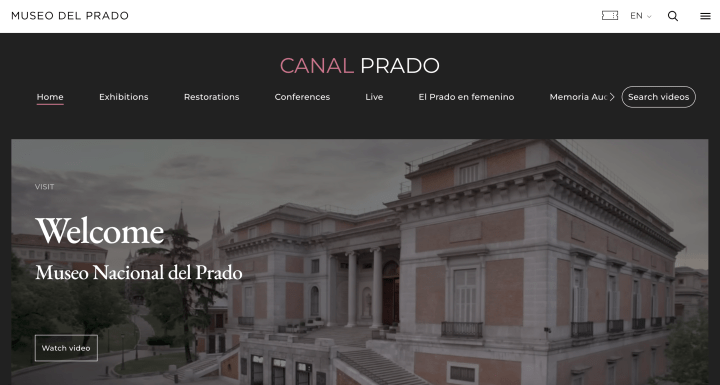
From the press release for the new platform Canal Prado. The social media clip with Michael Yonan is a perfect example of content that will now be easier to find!
The Museo Nacional del Prado has unveiled Canal Prado, a new online platform designed to gather and organize the institution’s growing library of audiovisual content. Accessible through the museum’s website, the channel brings together everything from interviews and lectures to educational videos and documentary-style features, offering visitors a new way to explore the Prado beyond the gallery walls. The launch represents a significant step in the museum’s digital strategy. For years, the Prado has produced a wide range of videos tied to exhibitions, research, and public programs. Canal Prado now places all of that material in one curated space, making it easier for audiences around the world to discover, revisit, and explore the museum’s knowledge resources. The platform emphasizes content that remains relevant over time—conversations about art, scholarship, and the enduring questions that paintings and artists continue to raise.
One of the highlights of the launch is “Thinking the Prado,” a new series created and presented by art historian Alejandro Vergara, who invites viewers to consider some of the fundamental questions that surround works of art. Why do we value certain paintings? What kind of knowledge can art offer us? How have artistic judgments changed over the centuries? And, in practical terms, how long does it actually take to paint a masterpiece? Rather than presenting quick answers, the series takes a reflective approach, encouraging viewers to think about art as historians and curators do. The goal is not to promote the museum’s latest exhibition, but to create a thoughtful, lasting resource for anyone curious about art history. Vergara, who has worked at the Prado since 1999, has played a key role in shaping the museum’s understanding of Flemish painting and Northern European schools, and has curated numerous exhibitions during his career. He holds a doctorate in art history from the Institute of Fine Arts at New York University and has taught at institutions including Columbia University and Universidad Carlos III in Madrid.
The new platform also integrates “Stories of Art,” the extensive audiovisual archive created by the Fundación Amigos del Museo del Prado. The archive includes more than 1,300 videos and audio recordings, documenting decades of lectures, courses, and cultural programming dedicated to the study of art. Many of these materials were originally produced for members and participants in the foundation’s educational initiatives.
Now, through Canal Prado, the public can explore collections such as:
• Courses on art history
• “Sundays at the Prado” lecture programs
• Educational series like “Art Lessons”
Together, these recordings represent more than forty years of intellectual life connected to the Prado, turning the platform into an evolving archive of art scholarship. To make such a large body of material easier to explore, Canal Prado organizes videos into clear thematic categories. Visitors can browse content based on their interests—whether that means restoration projects, exhibition insights, behind-the-scenes stories, or expert conversations. The platform will also highlight special thematic selections throughout the year. In March, for example, the focus is on material related to women connected to the Prado, from artists to scholars and historical figures. The museum plans to continue expanding the channel with new episodes, interviews, and original series, gradually building a rich audiovisual archive.
The launch of Canal Prado coincides with a broader update to the museum’s website through the Plataforma Prado digital initiative. Among the most notable improvements is a new semantic search engine that allows users to explore the museum’s information system more intuitively. Instead of searching only by titles or keywords, visitors can now navigate by connections such as:
• artists
• techniques
• themes
• places
• historical figures depicted in artworks
The redesign also includes improved mobile navigation, updated menus, and newly structured pages that make the site easier to use on smartphones and tablets. Another new feature allows visitors to revisit exhibition itineraries even after exhibitions have closed, preserving the educational value of past shows. With Canal Prado, the Prado continues expanding its presence beyond Madrid, transforming decades of lectures, scholarship, and research into a resource accessible worldwide. For art lovers, students, and researchers alike, the platform offers something rare: direct access to the voices and ideas that shape one of the world’s great museums.










 Enfilade
leave a comment