Exhibition | J’ai descendu dans mon jardin
Now on view:
J’ai descendu dans mon jardin… Destinées de Candide
I Went Down into My Garden… Destinies of Candide
Château de Voltaire, Ferney-Voltaire, 4 June 2026 — 3 January 2027
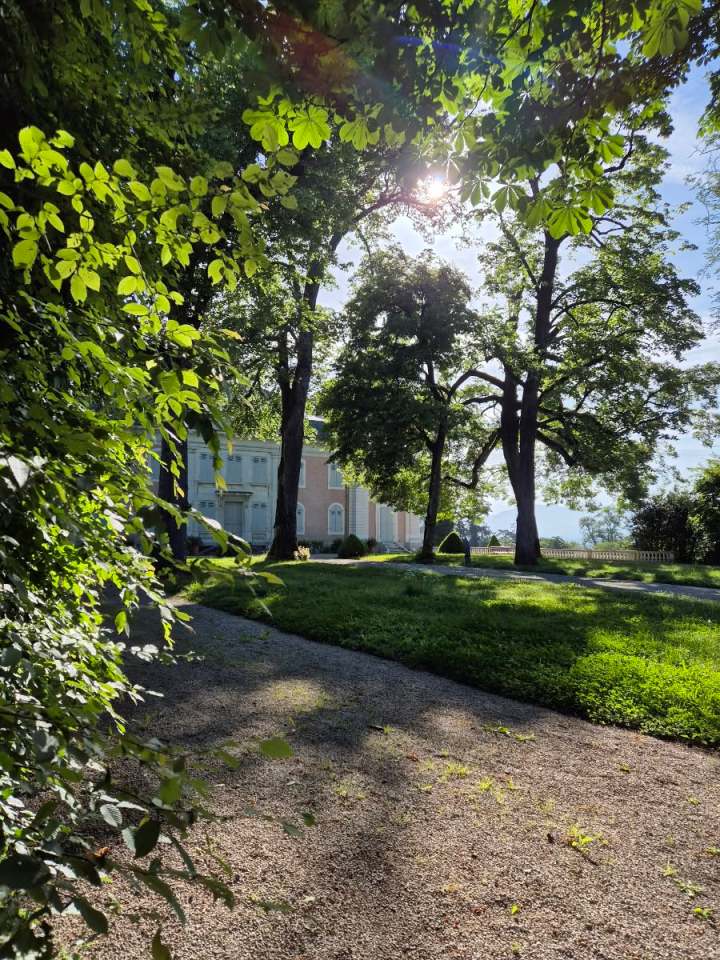 Come and (re)discover the famous tale written by Voltaire in 1759 in Geneva and everything it still has to teach us today, at the château de Voltaire! The exhibition takes curious visitors to the heart of Candide’s imaginary garden, following him on his many journeys.
If there is one work by Voltaire that is truly universally known, it is Candide. Who has not heard of the love affair between this singular character and the beautiful Cunégonde, or of his journey to El Dorado? The success of this little tale, written at Les Délices, surprised even its author, who was probably more interested in his historical works or philosophical treatises. Yet the prodigious success of the work has never waned. Dozens of imitations were produced in the decades following its publication. In the 20th century, one of the most popular operas in the United States was created, thanks to Bernstein, on Voltaire’s theme. The cinema, in turn, has not failed to pay tribute to the tale, whose eponymous character, played in Norbert Carbonneaux’s version by Jean-Pierre Cassel, remains in everyone’s mind more than sixty years later.
At the centre of the story is the garden, which Candide tells us must be ‘cultivated’. As the starting point—and end point—of the exhibition, the garden is examined in its biographical dimensions (Voltaire came up with the idea at the same time as he was developing his own garden, at Les Délices), philosophical dimensions (to what extent did Voltaire refer to the Ancients for this particular element?), religious (doesn’t Candide’s garden compete with the Garden of Eden?) and literary (since Boccaccio, hasn’t the garden been the best place to converse and indulge in the pleasures of literature?) But to reach this garden, we have to go through all sorts of stages and follow the Voltairean hero on his many peregrinations. So let’s travel with Candide.
This journey will allow us to assess the impact of the tale at the beginning of the 21st century. At a time when we seem to be losing our bearings, does Candide still have something to say to us? Do we still have the means to understand what Voltaire, in the heart of the 18th century, was trying to convey to his contemporaries? Or perhaps, on the contrary, our decaying period is paradoxically the best time to reread Voltaire’s prose and listen attentively to the lessons of Pangloss? That would be an amusing turn of events. Quickly, then, let us re-open this magical book, and follow our hero step by step, just as he himself tried to pursue the beautiful Cunégonde, despite the difficulties and through a thousand obstacles.
Exhibition presented by the Centre des monuments nationaux, the fruit of collaboration between the Société Voltaire, the Centre international d’étude du XVIIIe siècle, the Association Voltaire à Ferney, and the Bibliothèque de Genève.
Scientific commissioner
Flávio Borda d’Água, Loïc Dechambenoit, Stéphanie Géhanne Gavoty, François Jacob, Ulla Kölving, and André Magnan
New Book | The Twitnam Summer
From Harper Collins:
Hester Grant, The Twitnam Summer: Friendship, Satire, and the Writing of Gulliver’s Travels (London: William Collins, 2026), 352 pages, ISBN: 978-0008699987, £25.
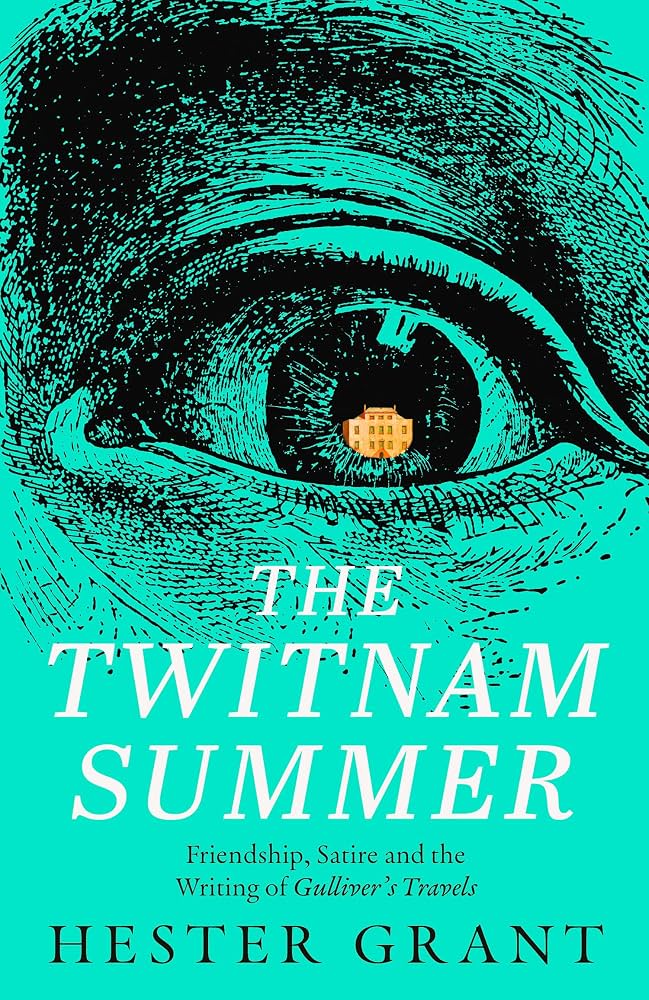 A rollicking narrative history set during the extraordinary summer of 1726 when Jonathan Swift arrived in London from Dublin, with a draft of Gulliver’s Travels in his bag.
Jonathan Swift settled into his great friend Alexander Pope’s new house on the river at Twickenham (or Twitnam as they liked to call it), and joined by John Gay, the trio of Scriblerus Club writers spent a delightful and creative summer, pushing each other to new satirical heights (The Dunciad and The Beggar’s Opera also ensued), exploring the gardens and houses of their aristocratic friends and thinking up ways to torment Robert Walpole’s corrupt Whig administration without going to jail. An unlikely threesome in many ways — Swift was 20 years older, and Gay was as large and indolent as Pope was tiny and restless — ‘the three Yahoos of Twittenham’ were unmarried and took great emotional and intellectual succour from their friendship. The three of them added up to more than the sum of their considerable parts and, as well as being a brilliant evocation of the radical rage, the joy and stench of early eighteenth century life, The Twitnam Summer is also a very moving portrait of male friendship.
Hester Grant studied modern history at Christ Church, Oxford, where she was awarded the J. L. Field Exhibition and the Keith Feiling History Prize. She subsequently practised as a barrister in Nottingham and London, before giving up her legal career to pursue her interest in eighteenth-century British history. Her first book, The Good Sharps: The Eighteenth-Century Family that Changed Britain, was published in 2020.
Exhibition | Ancient Female Portraits and Their Afterlife
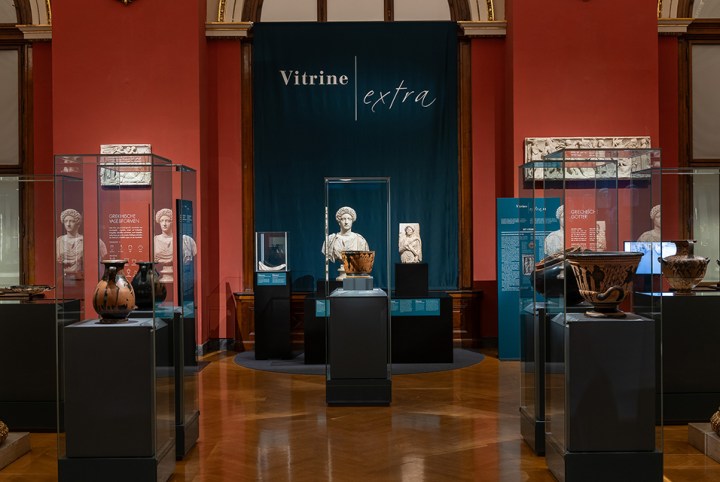
Installation view of the exhibition My Story: Antike Frauenporträts und ihr Nachleben
(Wien: Kunsthistorisches Museum)
◊ ◊ ◊ ◊ ◊
The two works at the center of this exhibition, now on view at the KHM, were owned by Marchese Tommaso Obizzi (1750–1803), who lived nar Padua. A core portion of the museum’s Collection of Historic Musical Instruments also belonged to Obizzi.
My Story: Ancient Female Portraits and Their Afterlife
Vitrine Extra #8
Kunsthistorisches Museum, Vienna, 17 April — 20 September 2026
Curated by Manuela Laubenberger and Ulrike Müller-Kaspar
This installation presents two previously unseen portraits of women, offering direct and surprising insights into current research on Roman portraits. The Collection of Greek and Roman Antiquities at the Kunsthistorisches Museum houses around 250 Roman marble portraits. Their particular impact lies, to this day, in the immediacy with which they bring people from a distant past to life. In this special exhibition, the ancient sculptures themselves take the floor, telling us about their appearance and the central role played by an often-underestimated detail: their hairstyle. This allows us to explore key questions in portrait research—from dating to identity.
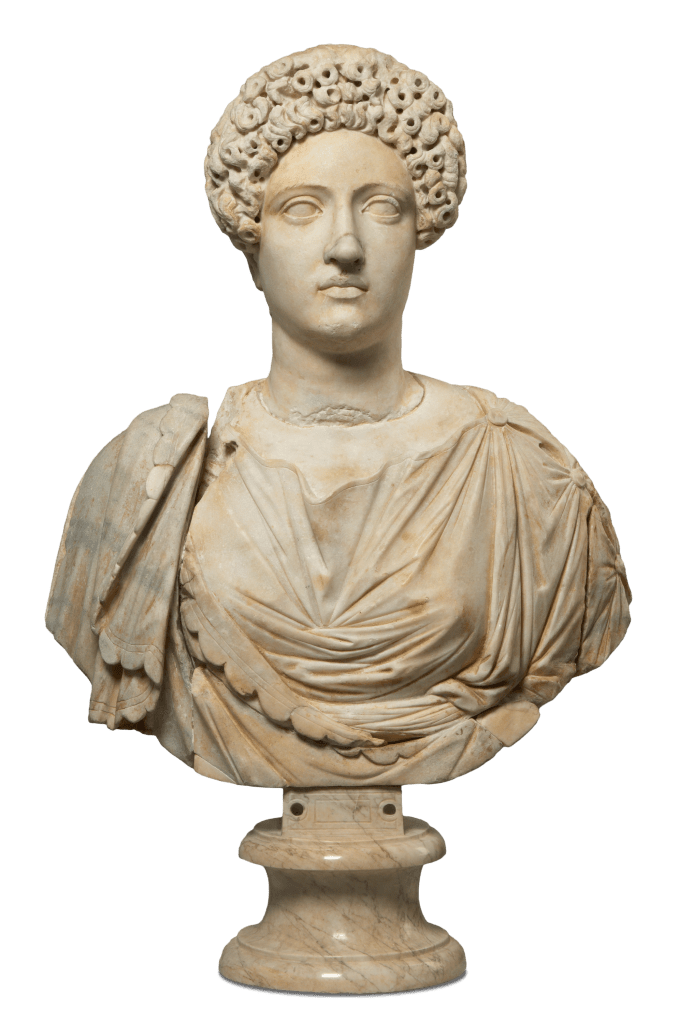
Portrait of Julia Titi: Head Flavian, late 1st century CE; bust 16th century, marble (Vienna: KHM).
This special exhibition is part of a comprehensive research project dedicated to the ‘biographies’ of ancient sculptures. At its heart lies the question: how can a work be assessed when it no longer reflects its state upon discovery, but bears the traces of a long post-ancient history? For many portraits were altered on multiple occasions—not just since the Renaissance, but as early as antiquity. Heads were given new hairstyles, adapted to changing fashions or for pragmatic reasons such as a shortage of materials. Thus, a portrait was repeatedly reinterpreted and reshaped.
The most important dating criterion for research remains the hairstyle, which closely follows the fashions of the respective imperial court. Simultaneously, the alterations reveal how works of art were adapted to the tastes of the time. Damage caused by centuries of storage was also repaired to make the pieces presentable once more. A particularly revealing example in the special exhibition is a proud Roman woman who originally wore the curly hairstyle of Empress Domitia, before being given a braided wreath in the style of Empress Helena in a later alteration. Modern methods such as material analysis and restoration studies reveal these interventions and help distinguish original from additions. Restoration thus becomes a search for clues that uncovers hidden stories.
The project is part of an international research network that is increasingly dedicated to female portraits—long a marginal topic. Collaborations, interdisciplinary approaches and digital reconstructions open up new perspectives on the role of these portraits in ancient society, their symbolic meanings, as well as their varied reception from antiquity to the modern era.
In the Roman Empire, coins were far more than a means of payment: they served as vehicles for imperial visual policy and disseminated the portraits of the ruling dynasty throughout the empire. With impressive precision, even the smallest spaces feature meticulously rendered hairstyles—models that private individuals also used as inspiration for their own portraits on funerary busts, tomb reliefs, or sarcophagi. Since the Renaissance, researchers have used these details, together with the inscriptions, to identify and date marble portraits.
At the heart of the exhibition are two very different portraits of women—both marked by interventions and alterations.
One of the busts is thought to depict the deified Julia (61–89 AD), daughter of Emperor Titus and niece of Emperor Domitian of the Flavian dynasty. She wears a distinctive hairstyle with a lock of hair falling over her forehead, a feature indicative of her rank and the era. The body is a sophisticated montage of ancient fragments—a capital and architectural ornamentation, added in the sixteenth century—so skilfully executed that the alterations went unnoticed for a long time. Here, ancient material meets early modern creative intent.
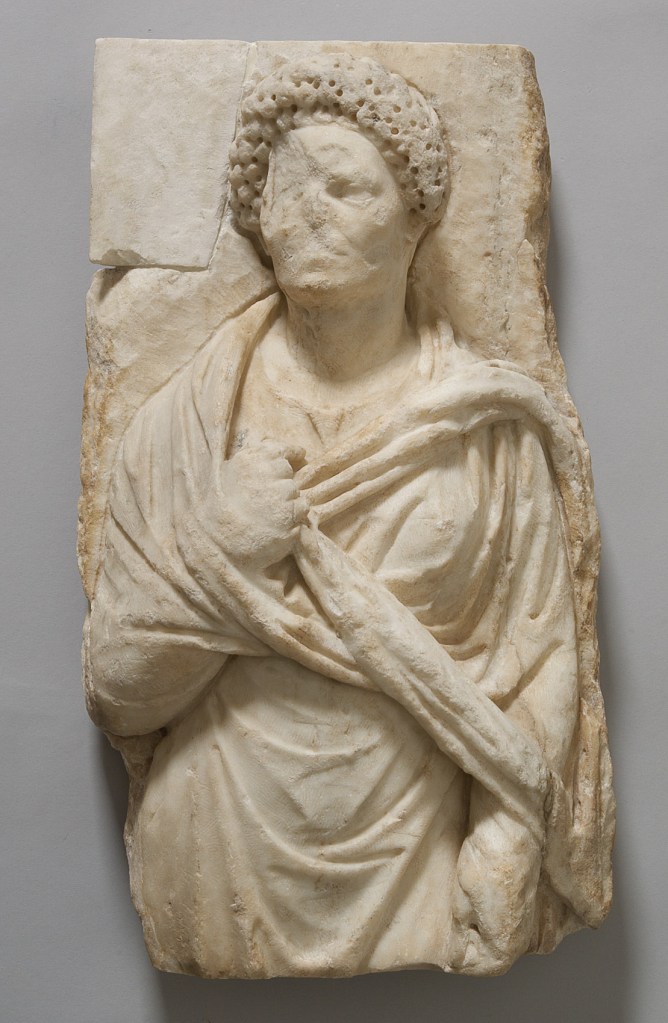
Funerary relief of an elderly woman in the style of the ‘Great Herculaneum Woman’, now separated from its origional sculptural context (Vienna: KHM).
The second exhibit—a funerary relief of an elderly woman in the style of the ‘Great Herculaneum Woman’—tells a different story. She too wears a hairstyle typical of the period, identifying her as a contemporary of Julia. Her precious, traditional clothing suggests she was a wealthy woman. Yet her original context has been lost: cut out of a larger setting, the frame and accompanying figures, such as her husband, are now missing.
Both works presumably reached the Venetian art market via maritime trade from Attica and from there, in the eighteenth century, entered the collection of the Marchese Tommaso Obizzi (d. 1803), who established his own museum of antiquities in his castle at Catajo near Padua. The other selected portraits of women in the collection expand this perspective and unfold an impressive panorama of female self-representation in antiquity—multifaceted, changeable, and astonishingly vivid.
The Vitrine Extra series of presentations, held within the permanent exhibition of the Kunsthistorisches Museum’s Collection of Greek and Roman Antiquities, periodically explores various aspects of classical Antiquity, throwing a new light on old artefacts by showcasing objects long in storage or newly restored, analysed and researched, things that are fascinating and amusing, curious, and inspiring. This particular exhibition was curated by Manuela Laubenberger, curator of the Collection of Greek and Roman Antiquities and the Ephesos Museum at the Kunsthistorisches Museum, and Ulrike Müller-Kaspar, art historian and project collaborator.
Exhibition | Tiepolo, Longhi, and Guardi between Art and Fashion

Francesco Guardi, Villa Loredan in Paese, ca. 1780, oil on canvas.
◊ ◊ ◊ ◊ ◊
This exhibition opens in September, as noted by Adam Busiakiewicz at Art History News (with the digitally-generated English translation from Finestre sull’Arte) . . .
Magnifica Eleganza: Tiepolo, Longhi, and Guardi between Art and Fashion
Fondazione Paolo e Carolina Zani, Brescia, 12 September — 6 December 2026
Curated by Massimiliano Capella

Danilo Donati, dress from Federico Fellini’s film Casanova, 1976. For the Roman salon scene, consisting of a sky-blue cotton velvet dress decorated with geometric motifs in burgundy velvet and gold trim, a large panier made of metal ribs covered in beige cotton, and a beige cotton petticoat.
The exhibition, housed in the new exhibition hall of the house museum, illustrates how, even as the Venetian Republic saw its political influence gradually wane, it continued to play a leading role in Europe thanks to its extraordinary cultural prestige and the refined taste and elegance that characterized its society. The exhibition brings together thirty-six works, including paintings and drawings by Pietro Longhi, Giambattista Tiepolo, Francesco Guardi, and Pietro Antonio Rotari, alongside original 18th-century garments—on public display for the first time—and a selection of costumes created by Danilo Donati for Federico Fellini’s Il Casanova (1976), which won an Oscar the following year. The works come from major institutions and collections, including the Fondazione Musei Civici di Venezia–Gabinetto Stampe e Disegni and Ca’ Rezzonico, the Gallerie d’Italia–Vicenza of Intesa Sanpaolo, the private collection of Mara Bertoli, the Sartoria Farani archive, as well as the Paolo and Carolina Zani Foundation’s House Museum itself.
◊ ◊ ◊ ◊ ◊
Nel pieno declino politico della Serenissima, Venezia conquista l’Europa con la sua eleganza: è questa la città del Settecento raccontata dalla mostra Magnifica Eleganza: Tiepolo, Longhi e Guardi tra arte e moda, alla Fondazione Paolo e Carolina Zani dal 12 settembre al 6 dicembre 2026. Ideata da Massimiliano Capella, l’esposizione propone una lettura inedita della pittura veneziana del XVIII secolo attraverso il dialogo tra arte e moda. In mostra trentasei opere di Longhi, Tiepolo, Guardi e Rotari, abiti originali del Settecento e i costumi di Danilo Donati per Il Casanova di Fellini, premiati con l’Oscar nel 1977. Le opere provengono da importanti istituzioni veneziane, collezioni private e dalla Casa Museo Zani. Il percorso rivela come i maestri veneziani siano stati osservatori straordinari del costume: nei loro dipinti, ogni dettaglio restituisce con precisione codici sociali, gusti e rituali della moda settecentesca.
Call for Papers | Practices of Drawing for Goethe
From the ArtHist.net:
Practices of Drawing in Goethe / Praktiken des Zeichnens bei Goethe
Goethe-Nationalmuseum, Weimar, 10–12 March 2027
Organized by Christoph Orth and Mira Claire Zadrozny
Proposals due by 23 August 2026
Johann Wolfgang von Goethe (1749–1832) bequeathed not only a remarkable literary and scientific oeuvre, but also a comprehensive collection of his own drawings. He drew throughout his entire life—during his upbringing in Frankfurt am Main, his studies in Leipzig, and later in Weimar. Likewise, Goethe was well known to sketch while travelling, whether in the Thuringian Forest or during his Italian journey. More than 2,500 of Goethe’s drawings have been preserved, most of them held in the collections of the museums of the Klassik Stiftung Weimar. Their sheer number alone suggests that drawing was by no means a subsidiary matter for Goethe but rather integral to his intellectual pursuits and conduct.
The practice of drawing permeates his work and interweaves with his other areas of interest. For him, it seems, the act of drawing was a way of comprehending the world. A re-evaluation of Goethe’s graphic oeuvre therefore promises to be highly productive, particularly if, instead of focusing primarily on aesthetic and biographical questions, attention is directed towards the recurring practices associated with the act of drawing. The conference hence proposes a praxeological approach as it has recently been derived from the social sciences to be successfully applied to art history and visual studies. The potential of a practice-oriented approach is particularly evident in conjunction with the aesthetics of production and reception as well as questions of materiality and mediality.
For Goethe’s drawings, three aspects seem particularly relevant. First, the epistemic practice of drawing, which becomes especially apparent when viewed in relation to Goethe’s scientific work in the fields of botany, geology and optics. Secondly, the social practice of drawing, which is not only reflected in sketches found in the margins of letters, but also provided an inherently different way of communication, evident in e.g. the artistic practices of teaching and collaborating that Goethe shared with contemporaries such as Christoph Heinrich Kniep, Carl Wilhelm Lieber or Johann Heinrich Wilhelm Tischbein. And thirdly, the notion of Goethe, the literatus, as a graphic artist who combines writing and visual art, thus developing complex entanglements of image and text.
The conference Practices of Drawing in Johann Wolfgang von Goethe invites participants to explore these key questions in 15– to 20-minute paper presentations that situate an object-oriented approach within the proposed theoretical framework. Speakers are welcome to address the following or other topics:
• Drawing as an epistemological practice of perception and comprehension
• Social interactions in the medium of drawing (letters, portraits, presents)
• Drawing instruction and art theory
• Practices of image production and questions of materiality
• Socio-critical perspectives and drawing as an elitist practice
• The reception of Goethe’s drawings and its constitution through curatorial practices
• Formation and reproduction of an art-historical canon
In addition to the paper presentation, a significant part of the conference will be dedicated to the in-person study of the drawings, providing an opportunity to go beyond questions of form and motif, to observe the drawings’ material conditions, their methods of production, and traces of handling. The conference will be held in German and English. Applications from early-career scholars and curators are especially welcome. Travel and accommodation costs will be covered. A subsequent publication of the conference findings is intended. To apply, please send an abstract (c. 300 words) together with a short biography to graphische.sammlungen@klassik-stiftung.de by 23 August 2026.
The conference is being organised as part of the research project Corpus of Goethe’s Drawings, carried out by the Direktion Museen of the Klassik Stiftung Weimar and funded by the Ernst von Siemens Kunststiftung and the Hermann Reemtsma Stiftung.
Exhibition | Talma and Napoleon
From the Bonaparte Museum:
Talma et Napoléon
Musée National de la Maison Bonaparte, Ajaccio, 20 March — 30 June 2026 / 1 — 30 September 2026
Curated by Vivien Richard and Jean-Marc Olivesi
Du 20 mars au 30 juin, puis du 1er au 30 septembre 2026, le musée national de la Maison Bonaparte à Ajaccio présente, en partenariat avec la Comédie-Française, une exposition consacrée au tragédien François-Joseph Talma (1763–1826) et aux liens singuliers qui l’unissent à Napoléon Bonaparte. À travers cette figure majeure de la scène française, Talma et Napoléon éclaire la place du théâtre entre la Révolution et l’Empire et interroge son rôle dans la construction de l’image du pouvoir consulaire et impérial. Le parcours, construit à partir des collections du château de Malmaison et de la Maison Bonaparte, et enrichi de prêts exceptionnels de la Comédie-Française et d’autres prêteurs, invite le visiteur à suivre les pas de Talma « sur les planches de sa vie », théâtrales comme politiques.
 À l’appui d’une quarantaine d’œuvres—peintures, dessins, estampes, objets d’art, livres et manuscrits—dont certaines exceptionnelles relèvent de prêts de la Comédie Française, l’exposition explore la carrière de Talma et ses grands rôles du répertoire classique et contemporain. Le visiteur découvre ainsi à travers le parcours proposé un monde théâtral traversé par les bouleversements politiques et sociaux de la Révolution. Sur scène comme dans les salons, la notoriété de Talma s’affirme rapidement. Il incarne un renouveau de la tragédie. Les costumes s’accordent aux sujets représentés ; l’art déclamatoire évolue, le jeu recherche naturel et vérité.
Napoléon montre un goût marqué pour les spectacles, en particulier le théâtre. Son intérêt pour la tragédie, les dramaturges classiques et les modèles antiques révèle ses affinités intellectuelles et littéraires avec Talma. Depuis leur rencontre, leurs trajectoires se croisent régulièrement. Napoléon fait du théâtre un instrument du pouvoir : Talma en est l’un des héraults. Talma converse avec Napoléon sur la tragédie et reçoit gratifications et émoluments, signe d’un soutien constant. Malgré la chute de l’Empire, leurs fidélités se poursuivent. Le Mémorial de Sainte-Hélène lui consacre un hommage que l’acteur rend sur scène à Napoléon après sa mort. Leur connivence se prolonge au-delà de la vie, nourrissant une légende commune dont, parmi d’autres, Gérard de Nerval se fera l’écho.
Commissariat
Vivien Richard, conservateur du patrimoine, musée national des châteaux de Malmaison et de Bois-Préau, avec la collaboration de Jean-Marc Olivesi, conservateur général du patrimoine, musée national de la Maison Bonaparte
Elisabeth Caude, Talma et Napoléon (Blois: Éditions Le Charmoiset, 2026), 84 pages, ISBN: 978-2372890403, €20.
New Book | Vigée Le Brun, Souvenirs
From David Zwirner Books:
Élisabeth Louise Vigée Le Brun, Souvenirs (David Zwirner Books, 2025), 184 pages, ISBN: 978-1644231623, £11 / $15. With an introduction by Anne Higonnet.
 A selection from the memoir of Elisabeth Louise Vigée Le Brun, the renowned eighteenth-century French portraitist and one of the most important women painters in art history
In her memoir, Vigée Le Brun offers a candid and thoroughly enjoyable account of her life and art. She relates her encounters among the royalty and aristocracy she painted—including, most famously, her patron Marie Antoinette—and the effusive reception they extended to her across Europe. Forced to flee during the French Revolution, Vigée Le Brun traveled through Italy, Russia, Germany, and England, returning twelve years later to France under Napoleon I. These pages demonstrate her unflagging creativity during unstable times and her remarkable savvy. Her observations provide unique insight into the art world of eighteenth- and nineteenth-century Europe, a time when women were rarely allowed success. In the introduction, Anne Higonnet conveys Vigee Le Brun’s unique position at a turning point in the art world, as well as the larger world beyond, and navigates in particular how one retroactively reconstructs a relationship to a world-changing revolution.
Élisabeth Louise Vigée Le Brun (1755–1842) was a celebrated French painter at the turn of the nineteenth century and one of few women artists admitted to the Académie royale de peinture et de sculpture. She is well known for her portraits of the aristocracy and royal families, including her patron Marie Antoinette. She had contributed more than fifty pictures to the Salons, including history paintings and allegories, by 1789. With the outbreak of the French Revolution, she fled Paris and traveled across Europe and Russia, continuing to paint. Vigée Le Brun returned to Paris in 1802, and in 1825, settled in Louveciennes, she set out writing and publishing her memoir.
Anne Higonnet is a professor of art history at Barnard College, Columbia University. She is the author of Liberty, Equality, Fashion: the Women Who Styled the French Revolution (2024). She has written five other books as well as many essays, and has directed two book-scale digital projects. Her research has been supported by Getty, Guggenheim, Social Science Research Council, and Harvard-Radcliffe Institute fellowships, as well as by grants from the Mellon, Howard, and Kress Foundations.
New Book | De l’avènement des « arts décoratifs »
From Brepols:
Ann Perrin, De l’avènement des « arts décoratifs »: Écrits et réflexions, 1693–1798 (Turnhout: Brepols, 2026), 364 pages, ISBN: 978-2503620220, €75. Also available via open access.
 At the crossroads of the arts, commerce and knowledge, the field of ‘decorative arts’ emerged in the eighteenth century as a real social issue. This book traces its discursive and historiographical genesis, through a wide range of unpublished or little-known sources.
Souvent considérés à l’aune de l’historiographie des beaux-arts avec lesquels ils sont mis en concurrence, les « arts décoratifs » sont rarement étudiés des points de vue théorique et discursif. C’est l’objectif de ce livre, qui défend l’idée selon laquelle les « arts décoratifs », en tant que « champ » autonome constitué – au sens bourdieusien –, émergent progressivement durant une période charnière de l’histoire, au moment précis où se mettent en place une large culture de la consommation et une grande diffusion des connaissances relatives aux arts de la décoration et à la mode. Anne Perrin montre que l’indicateur majeur de cette évolution culturelle se situe dans une efflorescence d’écrits et de réflexions qui firent débat parmi les contemporains, attestant une considération nouvelle acquise pendant un ample XVIIIe siècle par ce champ des « arts décoratifs » alors en construction.
Afin de reconstituer un tel processus historiographique et épistémologique, l’ouvrage rassemble un vaste corpus de sources anciennes, dont la plupart sont méconnues ou jamais incluses dans les bibliographies abordant le sujet. Ont été retenues celles qui se démarquent par leurs qualités critique, réflexive et exploratoire au sein d’une grande diversité de formes textuelles (discours, traités, précis, leçons, annonces, dictionnaires, etc.). Ces textes sont analysés depuis leur contexte d’énonciation, par des hommes et femmes de terrain, qui s’emparèrent du secteur et contribuèrent à le développer, étant artistes, artisans, marchands, pédagogues, philosophes, critiques d’art, amateurs, historiographes, journalistes, économistes, naturalistes ou officiers de l’administration royale. Parmi ces sources imprimées, la production écrite de Jean-Jacques Bachelier, fondateur de la plus importante école de dessin appliquée aux manufactures de la monarchie française (actuelle ENSAD), se distingue autant qu’elle fait écho aux autres voix de son temps.
Anne Perrin est professeure des universités en histoire de l’art moderne à l’Université Toulouse Jean Jaurès – Laboratoire FRAMESPA-UMR 5136. Ses recherches portent sur les arts du XVIIIe siècle, qu’elle aborde sous l’angle de leurs interrelations et dans des approches autant théoriques que pragmatiques. Elle est l’auteure de plusieurs livres et articles sur la culture de la décoration et de la mode, ainsi que sur la pédagogie artistique.
c o n t e n t s
Avertissement
Introduction
Première partie | Prendre la parole
1 Définitions
2 Tensions
Deuxième partie | Défendre une vision
1 Personnalité
2 Formation
Troisième partie | Incarner le changement
1 Économie
2 Mode
Conclusion
Postface de Melissa Hyde — available as a PDF here»
Sources manuscrites et imprimées relatives à Jean-Jacques Bachelier
Sources manuscrites éditées après le XVIIIe siècle
Sources imprimées
Bibliographie
Crédits photographiques
Index des noms propres
New Book | The First Emancipation
From Princeton UP:
Jeremy Popkin, The First Emancipation: The Forgotten History of Abolition in Revolutionary France (Princeton: Princeton University Press, 2026), 440 pages, ISBN: 978-0691246925, $40.
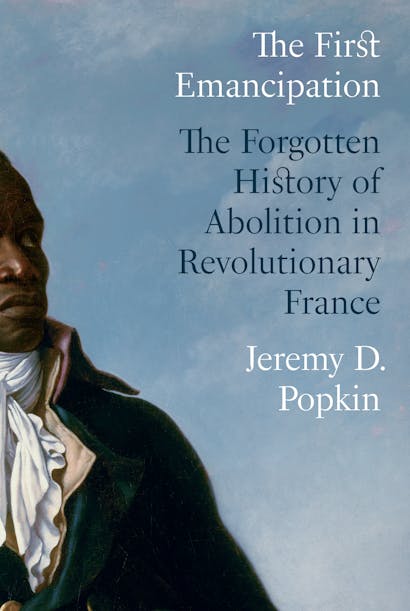 The First Emancipation is a dramatic account of how slavery and race profoundly influenced the course of the French Revolution and had a central impact on the lives of key leaders, including Mirabeau, Robespierre, Toussaint Louverture, and Napoleon. Acclaimed historian Jeremy D. Popkin brings this often-forgotten story to life, highlighting the arguments put forward by French abolitionists and their opponents and the profound repercussions of the first abolition of slavery in a Western empire.
When the French revolutionaries passed the Declaration of the Rights of Man and Citizen in 1789, they immediately faced a burning question: did that document’s first article—“Men are born and remain free and equal in rights”—apply to the 800,000 enslaved Black people in the country’s colonies? Over the next dozen years, revolutionary leaders fought over this question. The First Emancipation tells how French lawmakers initially protected slavery in their constitution but reversed themselves in 1794, making France the first western country to abolish slavery throughout its empire. Yet only eight years later, in 1802, Napoleon tried to force the emancipated Black populations of the colonies back into slavery. His decision led to his first major military defeat and to the proclamation of the independence of the Black nation of Haiti, but also to the reestablishment of slavery in other French colonies, where it would not finally be abolished until 1848. The story of how France emancipated its enslaved people and declared them full citizens only to return many of them to bondage, The First Emancipation reveals that the course of abolition in the modern world was more winding and halting than is often remembered.
Jeremy D. Popkin is the William T. Bryan Chair Professor Emeritus of History at the University of Kentucky. His many books include A New World Begins: The History of the French Revolution and You Are All Free: The Haitian Revolution and the Abolition of Slavery.
Exhibition | Revolutionary Prints from Britain and America
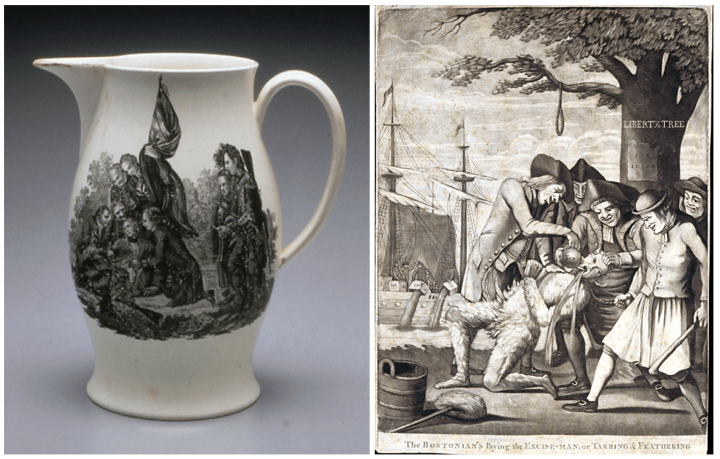
Left | Josiah Wedgwood, creamware jug, transfer printed with an image based on the painting The Death of General Wolfe by Benjamin West (Milwaukee: Chipstone Foundation; photo by Gavin Ashworth). Right | Philip Dawe, The Bostonians Paying the Excise-Man or Tarring and Feathering, 1774, London, mezzotint with engraving (Milwaukee: Chipstone Foundation; photo by Gavin Ashworth).
◊ ◊ ◊ ◊ ◊
Now on view at the Haggerty Museum of Art:
Defying Empire: Revolutionary Prints from Britain and America
Haggerty Museum of Art, Marquette University, Milwaukee, 4 June — 1 August 2026
Curated by J. Patrick Mullins, with Jonathan Prown and Jessica Cooley
On the occasion of the Semiquincentennial of the U.S. Declaration of Independence, the Haggerty Museum of Art at Marquette University welcomes visitors to visualize a passionate, participatory Revolution. Its summer exhibition, Defying Empire: Revolutionary Prints from Britain and America, explores how eighteenth-century British and American prints shaped public opinion about politics, from the French and Indian War through the end of the Washington presidency. Drawn from the collections of the Chipstone Foundation and the Haggerty Museum, the exhibition brings together more than twenty prints on paper, a selection of transfer printed ceramics, and an eighteenth-century maple dining table. Through works by both Britons and Americans of diverse political persuasions, it interprets the Revolutionary era as a time of transatlantic cultural exchange in which political ideas were communicated not just by documents like the Declaration but also objects from the fine and decorative arts.
In the eighteenth century British-speaking world, printed cartoons, portraits, and landscapes circulated widely, accessible to a much broader public than most official documents. These images could trigger such responses as amusement, contempt, reverence, and outrage, spurring viewers to political action. As creators and consumers, middle-class and working-class men and women used etchings, mezzotints, punchbowls, and teapots to participate in elite conversations about imperial authority and colonial resistance. Defying Empire provides an array of these politically charged artworks, including such featured objects as a creamware jug by Josiah Wedgwood interpreting The Death of General Wolfe, prints by William Hogarth satirizing Whig leaders like William Pitt and John Wilkes, Charles Willson Peale’s iconic portraits of George Washington and Benjamin Franklin, and Paul Revere’s inflammatory Bloody Massacre. Replicas of additional prints are displayed on a ‘coffeehouse table’ for visitors to handle and examine at their leisure.
Defying Empire: Revolutionary Prints from Britain and America was curated by Dr. J. Patrick Mullins, Associate Professor of History and Public History Director at Marquette University, in collaboration with Mr. Jonathan Prown, Dr. Jessica Cooley, and the staffs of the Chipstone Foundation and Haggerty Museum of Art. A virtual exhibit and catalog of curatorial essays will be available in Fall 2026 at the Chipstone website. For more information, visit the museum online, or contact Dr. Patrick Mullins at john.mullins@marquette.edu.
Support for this exhibition is generously provided by the John P. Raynor, S.J. Endowment Fund and in part by a grant from the Wisconsin Arts Board with funds from the State of Wisconsin and the National Endowment for the Arts.










 Enfilade
leave a comment