New Book | Oriental Networks
Distributed by Rutgers University Press:
Bärbel Czennia and Greg Clingham, eds., Oriental Networks: Culture, Commerce, and Communication in the Long Eighteenth Century (Lewisburg, PA: Bucknell University Press, 2020), 340 pages, ISBN: 978-1684482726 (cloth), $120 / ISBN: 978-1684482719 (paperback), $45 / ISBN: 978-1684482757 (pdf), $45 / ISBN: 978-1684482733 (ebook), $45.
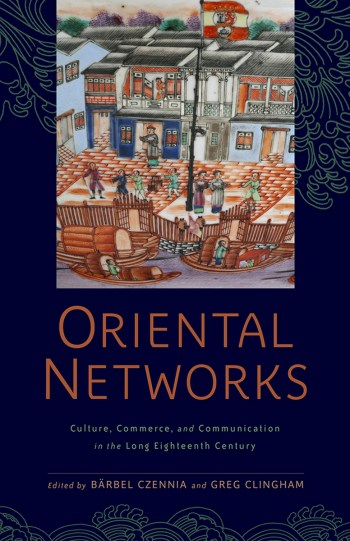 Oriental Networks explores forms of interconnectedness between Western and Eastern hemispheres during the long eighteenth century, a period of improving transportation technology, expansion of intercultural contacts, and the emergence of a global economy. In eight case studies and a substantial introduction, the volume examines relationships between individuals and institutions, precursors to modern networks that engaged in forms of intercultural exchange. Addressing the exchange of cultural commodities (plants, animals, and artifacts), cultural practices and ideas, the roles of ambassadors and interlopers, and the literary and artistic representation of networks, networkers, and networking, contributors discuss the effects on people previously separated by vast geographical and cultural distance. Rather than idealizing networks as inherently superior to other forms of organization, Oriental Networks also considers Enlightenment expressions of resistance to networking that inform modern skepticism toward the concept of the global network and its politics. In doing so the volume contributes to the increasingly global understanding of culture and communication.
Bärbel Czennia has served as associate professor of English at McNeese State University in Lake Charles, Louisiana, and as tenured senior lecturer of English literature at Georg-August-Universität Göttingen, Germany, for more than 25 years. She is the author or editor of many essays and two books, including Celebrities: The Idiom of a Modern Era.
Greg Clingham is emeritus professor of English at Bucknell University, a life member of Clare Hall, Cambridge, and the author or editor of ten books, including Johnson, Writing, and Memory. From 1996 to 2018, he was director of the Bucknell University Press.
C O N T E N T S
List of Illustrations
Acknowledgments
Introduction: Bärbel Czennia — Oriental Networks in the Long Eighteenth Century
1 Richard Coulton — Knowing and Growing Tea: China, Britain, and the Formation of a Modern Global Commodity
2 Stephanie Howard-Smith — China-Pugs: The Global Circulation of Chinoiseries, Porcelain, and Lapdogs, 1660–1800
3 Barbel Czennia — Green Rubies from the Ganges: Eighteenth-Century Gardening as Intercultural Networking
4 Samara Anne Cahill — The Blood of Noble Martyrs: Penelope Aubin’s Global Economy of Virtue as Critique of Imperial Networks
5 Jennifer L. Hargrave — Robert Morrison and the Dialogic Representation of Imperial China
6 James Watt — At Home with Empire? Charles Lamb, the East India Company, and ‘The South Sea House’
7 Greg Clingham — Commerce and Cosmology on Lord George Macartney’s Embassy to China, 1792–94
8 Kevin L. Cope — Extreme Networking: Maria Graham’s Mountaintop, Underground, Intercontinental, and Otherwise Multidimensional Connections
Bibliography
Index
Painting Edo: Japanese Art from the Feinberg Collection
The exhibition Painting Edo: Japanese Art from the Feinberg Collection opened briefly at Harvard, before the museum was forced to close due to the pandemic. The catalogue of the collection, however, is scheduled to be published next month, and online programming continues, including a discussion of the film Edo Avant Garde.
Film Discussion: Edo Avant-Garde
Online, Tuesday, 9 February 2021, 7pm (EST)
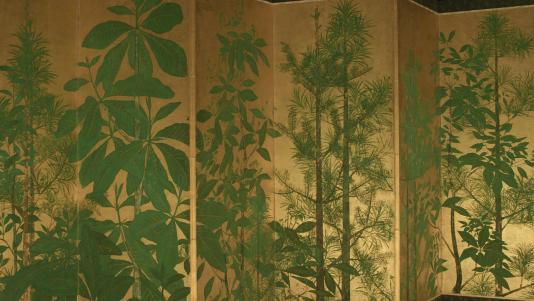
Still from ‘Edo Avant-Garde’ (2019). Master of the I’nen Seal (1600–1630), Sōtatsu school, Trees, Japanese, Edo period, mid-17th century; pair of six-panel folding screens; ink, colors, and gold on paper (Washington, D.C.: Freer Gallery of Art, F1962.30).
Join us on Zoom for a discussion of the film Edo Avant-Garde with curator Rachel Saunders and director Linda Hoaglund, presented in conjunction with the special exhibition Painting Edo: Japanese Art from the Feinberg Collection.
Edo Avant-Garde (2019) reveals the story of how Japanese artists of the explosively creative Edo period (1615–1868) pioneered innovative approaches to painting that many in the west associate most readily with so-called modern art of the 20th century. Through groundbreaking interviews with scholars, priests, art dealers, and collectors in Japan and the United States, the film explores how the concepts of abstraction, minimalism, and surrealism are all to be found in Edo painting. The film’s exquisite cinematography and outstanding original soundtrack, composed in response to individual paintings, present a remarkable immersive experience of some of Japan’s most celebrated and yet least-filmed paintings, many of them outside traditional museum and gallery settings. Simultaneously dynamic and mesmerizing, at its heart Edo Avant-Garde offers a unique opportunity to look closely and see differently.
This conversation will take place online via Zoom. Free admission, but registration is required. To register, please complete this online form.
Edo Avant-Garde will be available to stream for free through the Harvard Art Museums from Friday, February 5 to Friday, February 12. Upon registration, you will receive a link and password to access the film. We encourage you to view the film in advance of the discussion! The film is also available to rent through the Pacific Film Archive at the Berkeley Art Museum (BAMPFA). Please click here for further details.
If you have any questions, please contact am_register@harvard.edu.
◊ ◊ ◊ ◊ ◊
Distributed by Yale University Press:
Rachel Saunders, ed., Catalogue of the Feinberg Collection of Japanese Art (Cambridge: Harvard Art Museums, 2021), 264 pages, ISBN: 978-0300250909, $65.
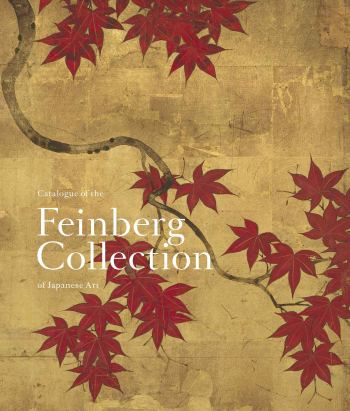 The sophistication and variety of painting in Japan’s Edo period, as seen through a preeminent US collection.
Over more than four decades, Robert and Betsy Feinberg have assembled the finest private collection of Edo-period Japanese painting in the United States. The collection is notable for its size, its remarkable quality, and its comprehensiveness. It represents virtually every stylistic lineage of the Edo-period (1615–1868)—from the gorgeous decorative works of the Rinpa school to the luminous clarity of the Maruyama-Shijo school, from the ‘pictures of the floating world’ (ukiyo-e) to the inky innovations of the so-called eccentrics—in addition to sculpture from the medieval and early modern periods. Hanging scrolls, folding screens, handscrolls, albums, and fan paintings: the objects are as breathtaking as they are varied. This catalogue’s twelve contributors, including established names in the field alongside emerging voices, use the latest scholarship to offer sensitive close readings that bring these remarkable works to life.
Rachel Saunders is the Abby Aldrich Rockefeller Associate Curator of Asian Art at the Harvard Art Museums.
New Book | Living as an Author in the Romantic Period
From Palgrave Macmillan:
Matthew Sangster, Living as an Author in the Romantic Period (London: Palgrave Macmillan, 2021), 384 pages, ISBN: 978-3030370466, £90 / $120.
 This book explores how authors profited from their writings in the late eighteenth and early nineteenth centuries, contending that the most tangible benefits were social, rather than financial or aesthetic. Using previously-underutilised archives, Matthew Sangster shows that during the Romantic period authorship operated principally as a relatively restricted social system, rather than a profession or mode of artistic practice. He discusses the careers of a diverse range of writers, including Robert Southey, Thomas Moore, Felicia Hemans, Robert Heron, Eliza Parsons, Robert Bloomfield, Hannah More, Walter Scott, and Lord Byron—establishing the crucial mediating roles played by larger assemblages, including the publishing industry, political coteries, periodical culture, and privileged families, along with regional, national, and global networks.
Matthew Sangster is Lecturer in Eighteenth-Century Literature and Material Culture at the University of Glasgow. He has published widely on Enlightenment libraries, literary institutions, Romantic metropolitanism, media culture, and the affordances of Fantasy.
C O N T E N T S
Preface: The Life of the Author
Introduction: What Was an Author in the Romantic Period?
1 Publishers, Book Production, and Profits
2 Sociable Alignments
3 Succeeding in ‘the Worst Trade’
4 The Working Writer
5 The Oligarchs of Literature: Authority and the Quarterly Reviews
6 Refashioning Authorship’s Purview
Coda: Print Proliferation and the Invention of the Artist
New Book | Ground Layers in European Painting, 1550–1750
From ACC Art Books:
Anne Haack Christensen, Angela Jager, and Joyce Townsend, eds., Ground Layers in European Painting, 1550–1750 (London: Archetype Books, 2021), 150 pages, ISBN: 978-1909492790, £45 / $90.
 Most of the papers in this volume were presented at the CATS international technical art history conference in June 2019 titled Mobility Creates Masters: Discovering Artists’ Grounds 1550–1700, which explored the introduction of, and change to, the colored ground layers in European paintings form the Early Modern period. The title of the conference stemmed from the desire to instigate new research projects within the topic of the influence of artists’ mobility on material choices and techniques related to the preparation of paintings. As well as contributions presented at the conference, this volume includes additional papers from recent research exploring the same topic. The volume begins with several studies on the documentation of grounds. The contributions are then arranged according to the country in which the painter was active, from southern Europe moving northwards. The lavishly illustrated contributions in this volume deal with the above questions and shed light on different methods of preparing painting supports, the purpose of preparatory layers, materials used in different countries, and influence of shifts in fashion or availability of materials on ground layers. This fifth CATS Proceedings will be of interest to scholars and students, and museum professionals including curators, conservators, art historians, and conservation scientists.
C O N T E N T S
• Moorea Hall-Aquitania and Lieve d’Hont — Troubleshooting coloured grounds: developing a methodology for studying Netherlandish ground colours
• Joanna Russell, Marta Melchiorre Di Crescenzo, Joseph Padfield, and Marika Spring — Experiments using image processing software (Nip2) to define the colour of preparatory layers in 16th-century Italian paintings
• Silvia A. Centeno, Dorothy Mahon, Federico Carò, and José Luis Lazarte Luna — New light on the use of ash in the ground preparations of baroque paintings from Spain, North and South America
• Mariana Aurora Calderón Mejía, Dolores González Pondal, Damasia Gallegos, Fernando Marte, and Marcos Tascón — European art in Argentina: the ground of a painting attributed to Salvator Rosa
• Cristina Morilla, Narayan Khandekar, Kate Smith, and Anne Schaffer — Coloured grounds and transfer techniques in 17th-century Spanish royal portraiture: the case of Pantoja de la Cruz’s portrait of Philip III at the Harvard Art Museums
• Maite Jover de Celis and Maria Dolores Gayo — Velázquez and his choice of preparatory layers: different place, different colour?
• Joanna Szpor, Katarzyna Górecka, and Marcin Kozarzewski — To reach the original: technique and materials of the late 17th-century Italian painter of large-scale battle scenes, Martino Altomonte
• Michela Fasce — White, red, grey and brown: colour in Genoese grounds from the mid-16th to the 18th century
• Loa Ludvigsen, David Buti, Anna Vila, and Eva de la Fuente Pedersen — Discovering patterns in Giralamo Troppa’s grounds
• Claire Betelu — Ground layers in French paintings from the second half of the 17th century: colour, stratigraphy, and function
• Lidwien Speleers, Margriet van Eikema Hommes, Ineke Joosten, Suzan de Groot, and Annelies van Loon — The effect of ground colour on the appearance of two paintings by Thomas Willeboirts Bosschaert in the Oranjezaal, Huis Ten Bosch
• Jørgen Wadum — Are the changed appearances of Carel Fabritius’ paintings a consequence of mobility?
• Marya Albrecht, Sabrina Meloni, Annelies van Loon, Ralph Haswell, and Onno de Noord — Discovering trends in Jan Steen’s grounds using principal component analysis
• Claire Toussat — The grounds of Caravaggism? Case study of Theodoor van Loon
• Joyce H. Townsend and Rica Jones — Preparatory layers in British paintings from the 16th to the early 18th century
Online Talk | Robert Darnton, Pirating and Publishing
This Wednesday, from the Boston Athenæum:
Book Talk: Pirating and Publishing: The Book Trade in the Age of Enlightenment
Robert Darnton in Conversation with John Buchtel
3 February 2021, 6:00pm (EST)
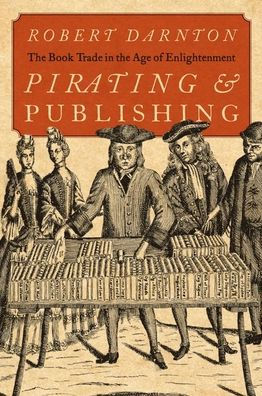 In the late-18th century, a group of publishers in what historian Robert Darnton calls the ‘Fertile Crescent’ countries located along the French border, stretching from Holland to Switzerland pirated the works of prominent (and often banned) French writers and distributed them in France, where laws governing piracy were in flux and any notion of ‘copyright’ very much in its infancy. Piracy was entirely legal and everyone acknowledged tacitly or openly that these pirated editions of works by Rousseau, Voltaire, and Diderot, among other luminaries, supplied a growing readership within France, one whose needs could not be met by the monopolistic and tightly controlled Paris Guild.
Pirating and Publishing: The Book Trade in the Age of Enlightenment focuses on a publisher in Switzerland, one of the largest and whose archives are the most complete. Through the lens of this concern, Darnton offers a sweeping view of the world of writing, publishing, and especially bookselling in pre-Revolutionary France—a vibrantly detailed inside look at a cut-throat industry that was struggling to keep up with the times and, if possible, make a profit off them. Featuring a fascinating cast of characters lofty idealists and down-and-dirty opportunists this new book expands upon on Darnton’s celebrated work on book-publishing in France, most recently found in A Literary Tour de France. Pirating and Publishing reveals how and why piracy brought the Enlightenment to every corner of France, feeding the ideas that would explode into revolution.
Registration is requested. Boston Athenæum Members and VESP holders: free. Visitors: $5.
Robert Darnton is Carl H. Pforzheimer University Professor and University Librarian, Emeritus of Harvard University, and the author of The Great Cat Massacre (1984) and A Literary Tour de France (2018), among others.
John Buchtel is Curator of Rare Books and Head of Special Collections at the Boston Athenaeum.
◊ ◊ ◊ ◊ ◊
Robert Darnton, Pirating and Publishing: The Book Trade in the Age of Enlightenment (Oxford: Oxford University Press, 2021), 400 pages, ISBN: 978-0195144529, $35.
C O N T E N T S
Introduction
Publishing
1 The Rules of the Game and How the Game was Played
2 The Landscape in Paris
3 The Fertile Crescent
Pirating
4 How to Pirate a Book
5 Portraits of Pirates and Their Businesses
6 Underground Geneva
7 A Confederation of Pirates
8 The Struggle to Pirate Rousseau and Voltaire
Inside a Swiss Publishing House
9 Business as Usual
10 Our Man in Paris
11 Relations with Authors
12 Making and Losing Money
Conclusion
New Book | Porcelain: A History from the Heart of Europe
From Princeton UP:
Suzanne Marchand, Porcelain: A History from the Heart of Europe (Princeton: Princeton University Press, 2020), 544 pages, ISBN: 978-0691182339, $35.
 Porcelain was invented in medieval China—but its secret recipe was first reproduced in Europe by an alchemist in the employ of the Saxon king Augustus the Strong. Saxony’s revered Meissen factory could not keep porcelain’s ingredients secret for long, however, and scores of Holy Roman princes quickly founded their own mercantile manufactories, soon to be rivaled by private entrepreneurs, eager to make not art but profits. As porcelain’s uses multiplied and its price plummeted, it lost much of its identity as aristocratic ornament, instead taking on a vast number of banal, yet even more culturally significant, roles. By the nineteenth and twentieth centuries, it became essential to bourgeois dining, and also acquired new functions in insulator tubes, shell casings, and teeth.
Weaving together the experiences of entrepreneurs and artisans, state bureaucrats and female consumers, chemists and peddlers, Porcelain traces the remarkable story of ‘white gold’ from its origins as a princely luxury item to its fate in Germany’s cataclysmic twentieth century. For three hundred years, porcelain firms have come and gone, but the industry itself, at least until very recently, has endured. After Augustus, porcelain became a quintessentially German commodity, integral to provincial pride, artisanal industrial production, and a familial sense of home. Telling the story of porcelain’s transformation from coveted luxury to household necessity and flea market staple, Porcelain offers a fascinating alternative history of art, business, taste, and consumption in Central Europe.
Suzanne L. Marchand is the Boyd Professor of History at Louisiana State University. Her books include German Orientalism in the Age of Empire and Down from Olympus.
C O N T E N T S
List of Illustrations and Tables
Note on Currencies and Other Abbreviations
Acknowledgments
Introduction
1 Reinventing the Recipe
2 The Challenge of Wedgwood and the Rise of the Private Firm
3 Making, Marketing, and Consuming in the ‘Golden Age’
4 Surviving the Revolutions
5 The Discrete Charms of Biedermeier Porcelain
6 Of Capitalism and Cartels: The Glory Days of the Private Producer, 1848–1914
7 Porcelain, the Whilhelmine Plastic
8 The Fragility of Interwar Porcelain
9 From Cold War Wonder to Contemporary White Elephant: Does the Story End Here?
Notes
Bibliography
Image Credits
Index
New Book | The City of Blue and White
From Cambridge UP:
Anne Gerritsen, The City of Blue and White: Chinese Porcelain and the Early Modern World (New York: Cambridge University Press, 2020), 354 pages, ISBN: 978-1108499958, $35.
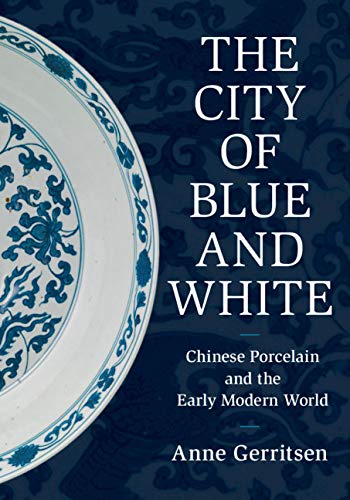 We think of blue and white porcelain as the ultimate global commodity: throughout East and Southeast Asia, the Indian Ocean including the African coasts, the Americas and Europe, consumers desired Chinese porcelains. Many of these were made in the kilns in and surrounding Jingdezhen. Found in almost every part of the world, Jingdezhen’s porcelains had a far-reaching impact on global consumption, which in turn shaped the local manufacturing processes. The imperial kilns of Jingdezhen produced ceramics for the court, while nearby private kilns manufactured for the global market. In this beautifully illustrated study, Anne Gerritsen asks how this kiln complex could manufacture such quality, quantity and variety. She explores how objects tell the story of the past, connecting texts with objects, objects with natural resources, and skilled hands with the shapes and designs they produced. Through the manufacture and consumption of Jingdezhen’s porcelains, she argues, China participated in the early modern world.
Anne Gerritsen is Professor of History and directs the Global History and Culture Centre at the University of Warwick. Since 2013, she has also held the Chair of Asian Art at the Universiteit Leiden where she teaches at the Leiden Institute for Area Studies (LIAS) and the Leiden University Centre for the Arts in Society (LUCAS).
C O N T E N T S
Figures
Maps
Table
Acknowledgements
1 The Shard Market of Jingdezhen
2 City of Imperial Choice: Jingdezhen, 1000–1200
3 Circulations of White
4 From Cizhou to Jizhou: The Long History of the Emergence of Blue and White Porcelain
5 From Jizhou to Jingdezhen in the Fourteenth Century: The Emergence of Blue and White and the Circulations of People and Things
6 Blue and White Porcelain and the Fifteenth-Century World
7 The City of Blue and White: Visualizing Space in Ming Jingdezhen, 1500–1600
8 Anxieties over Resources in Sixteenth-Century Jingdezhen
9 Skilled Hands: Managing Human Resources and Skill in the Sixteenth-Century Imperial Kilns
10 Material Circulations in the Sixteenth Century
11 Local and Global in Jingdezhen’s Long Seventeenth Century
12 Epilogue: Fragments of a Global Past
Notes
Bibliography
Index
New Book | She Being Dead Yet Speaketh
Distributed by The University of Chicago Press:
Mary Franklin and Hannah Burton, She Being Dead Yet Speaketh: The Franklin Family Papers, edited by Vera Camden (Toronto: Iter Press, 2020), 349 pages, ISBN: 978-0866986236, $60.
 On Black Bartholomew’s Day—August 24, 1662—nearly two thousand ministers denied the authority of the Church of England and were subsequently removed from their posts. Mary Franklin was the wife of Presbyterian minister Robert Franklin, one of the dissenting ministers ejected from their pulpits and their livings on that day. She recorded the experience of her persecution in the unused pages of her husband’s sermon notebook. In 1782—some hundred years after the composition of her grandmother’s narrative— Mary’s granddaughter, Hannah Burton, took up this same notebook to chronicle her experience as an impoverished widow, barely surviving the economic revolutions of eighteenth-century London. Collected for the first time, this volume of the Franklin Family Papers offers rare insight into the personal lives of three generations of dissenting women.
The Other Voice in Early Modern Europe: The Toronto Series, 71
Mary Franklin (d. 1711) was the wife of an English Presbyterian minister.
Hannah Burton (1723–1786) was the granddaughter of Mary and Robert Franklin and the wife of a London goldsmith.
Vera J. Camden is professor of English at Kent State University, training and supervising analyst at the Cleveland Psychoanalytic Center, and assistant clinical professor of psychiatry at Case Western Reserve University. She is associate editor of American Imago and American editor of the Journal of Graphic Novels and Comics.
C O N T E N T S
Acknowledgments
Illustrations
Abbreviations
Introduction
Mary Franklin (d. 1711)
The Notebook of Mary Franklin (ca. 1685)
The Experience of Mary Franklin (ca. 1689–90)
The Prison Correspondence of Mary and Robert Franklin (1670)
The Last Will and Testament of Mary Franklin (1709, probated 1711)
Hannah Burton (1723–1786)
The Diary of Hannah Burton (1782)
Appendix 1: The Funeral Sermon for Mary Franklin
• The Dissolution of the Earthly House of this Tabernacle (1713)
Appendix 2: Letters
• The Letters of Ralph Snow (1691)
• The Letter of William Bailey to Joshua Wilson (1817)
Appendix 3: Probated Wills
• The Last Will and Testament of Walter Boddington (1734, probated 1736)
• The Last Will and Testament of William Burton (1777, probated 1781)
Bibliography
Index
New Book | A Catalogue of the Sculpture Collection at Wilton House
From Oxbow Books:
Peter Stewart, ed., A Catalogue of the Sculpture Collection at Wilton House, with photographs by Guido Petruccioli (Oxford: Archaeopress Archaeology, 2021), 438 pages, ISBN: 978-1789696554, $160.
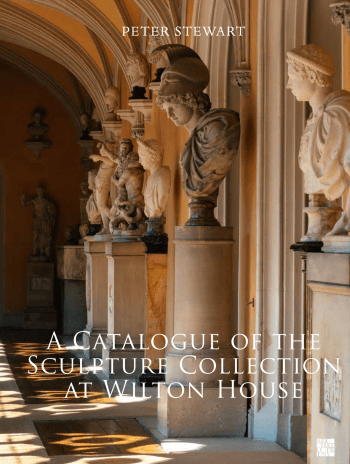 The Wilton House sculptures constituted one of the largest and most celebrated collections of ancient art in Europe. Originally comprising some 340 works, the collection was formed around the late 1710s and 1720s by Thomas Herbert, the eccentric 8th Earl of Pembroke, who stubbornly ‘re-baptized’ his busts and statues with names of his own choosing. His sources included the famous collection of Cardinal Mazarin, assembled in Paris in the 1640s and 1650s, and recent discoveries on the Via Appia outside Rome. Earl Thomas regarded the sculptures as ancient—some of them among the oldest works of art in existence—but in fact much of the collection is modern and represents the neglected talents of sixteenth-and seventeenth-century artists, restorers and copyists who were inspired by Greek and Roman sculpture.
About half of the original collection remains intact today, adorning the Gothic Cloisters that were built for it two centuries ago. After a long decline, accelerated by the impact of the Second World War, the sculptures have been rehabilitated in recent years. They include masterpieces of Roman and early modern art, which cast fresh light on Graeco-Roman antiquity, the classical tradition, and the history of collecting.
Illustrated with specially commissioned photographs, this catalogue offers the first comprehensive publication of the 8th Earl’s collection, including an inventory of works dispersed from Wilton. It re-presents his personal vision of the collection recorded in contemporary manuscripts. At the same time, it dismantles some of the myths about it which originated with the earl himself, and provides an authoritative archaeological and art-historical analysis of the artefacts.
Peter Stewart is Director of the Classical Art Research Centre and Associate Professor of Classical Art and Archaeology at the University of Oxford. He has worked widely in the field of ancient sculpture. His publications include Statues in Roman Society: Representation and Response (2003) and The Social History of Roman Art (2008). Much of his research concerns the relationship between Gandhāran art and Roman sculpture.
Guido Petruccioli is an Oxford University-trained classical archaeologist and professional photographer with specialist interests in Roman imperial portraiture and the documentation of ancient sculpture.
C O N T E N T S
Preface
Image Credits
Introduction
Catalogue
Statues, Statuettes, and Herms
Busts and Heads
Reliefs and Miscellaneous Objects
Architectural Elements
Plates
Appendix 1 Works Formerly in the Collection
Appendix 2 Concordance to Michaelis
Index of Names and Places
Exhibition | Goya’s Graphic Imagination

Francisco de Goya y Lucientes, Giant Seated in a Landscape (detail), by 1818, burnished aquatint with scraping and strokes of ‘lavis’ added along the top of the landscape and within the landscape; plate: 28.4 × 20.8 cm (New York: The Metropolitan Museum of Art, 35.42).
◊ ◊ ◊ ◊ ◊
Opening next month at The Met:
Goya’s Graphic Imagination
The Metropolitan Museum of Art, New York, 12 February — 2 May 2021
Regarded as one of the most remarkable artists from the late eighteenth and early nineteenth centuries, Francisco Goya (1746–1828) is renowned for his prolific activity as a draftsman and printmaker, producing about nine hundred drawings and three hundred prints during his long career. Through his drawings and prints, he expressed his political liberalism, criticism of superstition, and distaste for intellectual oppression in unique and compelling ways. This exhibition will explore Goya’s graphic imagination and how his drawings and prints allowed him to share his complex ideas and respond to the turbulent social and political changes occurring in the world around him. The broadly chronological presentation will follow Goya’s evolution and different phases as a graphic artist as well as his approaches to his subjects. Around one hundred works on display will come mainly from The Met collection—one of the most outstanding collections of Goya’s drawings and prints outside Spain—with other works coming from New York, Boston, and Madrid’s Museo Nacional del Prado and the Biblioteca Nacional.
The catalogue is distributed by Yale University Press:
Mark McDonald, with contributions by Mercedes Ceron-Pena, Francisco J. R. Chaparro, and Jesusa Vega, Goya’s Graphic Imagination (New York: The Metropolitan Museum of Art , 2021), 320 pages, ISBN: 978-1588397140, $50.
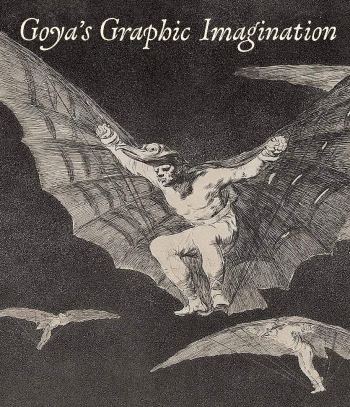 This book presents the first focused investigation of Francisco Goya’s (1746–1828) graphic output. Spanning six decades, Goya’s works on paper reflect the transformation and turmoil of the Enlightenment, the Inquisition, and Spain’s years of constitutional government. Two essays, a detailed chronology, and more than 100 featured artworks illuminate the remarkable breadth and power of Goya’s drawings and prints, situating the artist within his historical moment. The selected pieces document the various phases and qualities of Goya’s graphic work—from his early etchings after Velázquez through print series such as the Caprichos and The Disasters of War to his late lithographs, The Bulls of Bordeaux, and including albums of drawings that reveal the artist’s nightmares, dreams, and visions.
Mark McDonald is curator in the Department of Drawings and Prints at The Metropolitan Museum of Art.










leave a comment