 The first survey of the history, design, and use of trimmings in the historic interior in Britain and Ireland which will become the standard work on the subject.
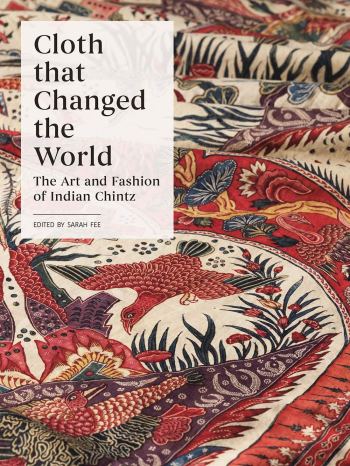 Made with novel cotton, vivid colours and exuberant design, the painted and printed cottons of India changed human history; they revolutionized art, fashion, and science wherever they went around the globe. Featuring pieces from the Museum’s world-renowned collection and several important international loans, this ROM original exhibition explores how over thousands of years India’s artisans have created, perfected, and innovated these printed and painted multicoloured cotton fabrics to fashion the body, honour divinities, and beautify palaces and homes.
Exploring the fascinating stories behind the making and trade of these glorious pieces past and present, The Cloth that Changed the World considers India’s textile innovations and their influences on fashion, trade, and industry around the world in places as far as Cairo, Japan, Sumatra, London, and Ottawa. They were the luxury fabric of their day, coveted by all, and one of the great inventions that drew foreigners to India’s shores hungry for more. Discover how through trade-routes, encounters, and exchange, these cloths connected cultures, inspired imitation and, quite literally, changed the world. Experience how India’s designers and makers today are innovating for new times and audiences.
Sarah Fee, ed., with a preface by Sven Beckert, Cloth that Changed the World: The Art and Fashion of Indian Chintz (New Haven: Yale University Press, 2020), 312 pages, ISBN: 978-0300246797, $50.
◊ ◊ ◊ ◊ ◊
This ROM blog posting from 6 July 2018 looks back to the museum’s 1970 exhibition:
The Origins of Chintz
Royal Ontario Museum, Toronto, 8 April — 28 May 1970
“Chintz… the exotic fabric from India that caught Europe’s fancy… So popular it was banned in England and France… Revolutionized Europe’s textile printing industry.”
Thus exclaimed the brochure that accompanied the ROM’s landmark exhibition, The Origins of Chintz, which opened in April, 1970, now nearly fifty years ago. Occupying the whole of the central ground gallery, known today as Currelly’s Court, the exhibition displayed nearly 100 towering examples of Indian ‘chintz’. . . .
Half of the one hundred objects displayed in the ROM exhibition Origins of Chintz came from the ROM’s own great holdings, particularly the 1934 donation from the estate of Harry Wearne (1852–1929), a British-born textile and wall paper designer. London’s Victoria & Albert (V&A) museum loaned almost forty treasures, including its unique ‘Garrick bed’: these Indian chintz bed coverings are famous both for their grandeur and for the impassioned letters that Mr. Garrick sent to customs officials in London begging for their return; the fabrics had been impounded during the aforementioned import ban on Indian chintz, meant to protect local British silk and linen weavers. A few additional masterpieces—including a seventeenth-century hanging from a Deccan Indian court palace—came on loan from the Metropolitan Museum of Art, the Cooper Hewitt Design Museum, and Austrian Decorative Art Museum of Vienna. . . .
The full posting is available here»

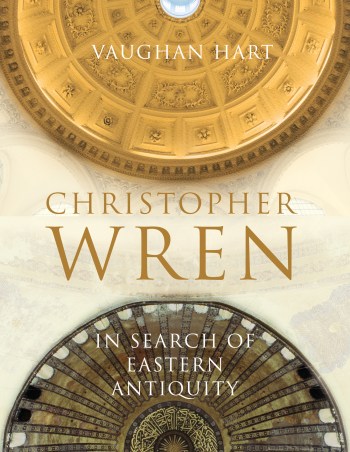 In this revelatory study of one of the great architects in British history, Vaughan Hart considers Christopher Wren’s (1632–1723) interest in Eastern antiquity and Ottoman architecture, an interest that would animate much of his theory and practice. As the early modern understanding of antiquity broadened to include new discoveries at Palmyra and Persepolis, Wren disputed common assumptions about the European origins of Classical and Gothic architecture, tracing these building traditions not to the Greeks or Germans but to the stonemasons of the biblical East. In a deft analysis, Hart contextualizes Wren’s use of classical elements—columns, domes, and cross plans—within his enthusiasm for the East and the broader Anglican interest in the Eastern church. A careful study of diary records reappraises Wren’s working relationship with Robert Hooke (1635–1703), who shared in many of Wren’s theoretical commitments. The result is a new, deepened understanding of Wren’s work.
 This striking book gathers together an extensive collection of ceramic tiles from around the world and explores their rich history, purpose, and decorative qualities. For centuries, tiles have been used for both functional and aesthetic purposes on the façades and interiors of buildings. Found in a multitude of shapes, sizes, colors, and designs—ranging from complex geometrical Islamic patterns to figurative seventeenth-century delftware—tiles are among the most varied ceramic products. This luxurious source book, curated by the award-winning studio Here Design, is organized chronologically and features tiles in every variety of shape, displaying each individual tile type and its overall laid pattern in vivid color. Tiles are also shown in situ around the world and at different periods in their remarkable history. The Tile Book is a dazzling mosaic, with colors and patterns that will uplift and inspire.
 Before 1600

 To a nineteenth-century amateur naturalist named Peter A. Browne, hair was of paramount importance: he believed it was the single physical attribute that could unravel the mystery of human evolution. Thirty years before Charles Darwin revolutionized understanding of the descent of man, Browne vigorously collected for study what he called the ‘pile’ (from the Latin word for hair, pilus) of as wide a variety of humans (and animals) as possible in his quest to account for the differences and similarities between groups of humans. The result of his diligent, obsessive work is a fastidious, artfully assembled twelve-volume archive of mammalian diversity. Browne’s growing quest for knowledge became an all-consuming specimen-collecting passion. By the time of his death in 1860, Browne had assembled samples from innumerable wild and domestic animals, as well as the largest known study collection of human hair. He obtained hair from people from all parts of the globe and all walks of life: artists, scientists, abolitionist ministers, doctors, writers, politicians, financiers, military leaders, and even prisoners, sideshow performers, and lunatics. His crowning achievement was a gathering of hair from thirteen of the first fourteen presidents of the United States. The pages of his albums, some spare, some ornately decorated, many printed ducit amor patriae―’led by love of country’―are distinctly idiosyncratic, captivating, and powerfully evocative of a vanished world. Browne’s albums have been sequestered in the archives of the Academy of Natural Sciences in Philadelphia to which Brown bequeathed them, narrowly escaping destruction in the 1970s. They are a unique manifestation of the avid collecting instinct in nineteenth-century scientific endeavors to explain the mysteries of the natural world.
 Mary Beale (1633–1699) was one of the earliest professional women artists in Britain. Her successful career as a Baroque-era portrait artist was documented by her husband, Charles, whose almanacs provide a unique record of Beale’s patrons, painting technique, and family affairs. Her portraits of politicians, clergy, aristocracy, and intellectuals reflect the vibrant literary, scientific, and political scene of the seventeenth century.
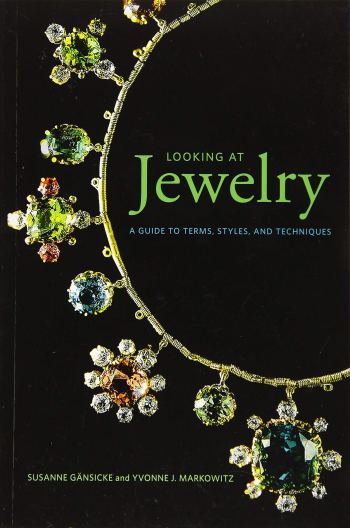 The fascination with personal adornment is universal. It is a preoccupation that is primal, instinctive, and uniquely human. Jewelry encompasses a seemingly endless number of ornaments produced across time and in all cultures. The range of materials and techniques used in its construction is extraordinary, even revolutionary, with new substances and methods of fabrication added with every generation. In any given society, master artisans have devoted their time, energy, and talent to the fine art of jewelry making, creating some of the most spectacular objects known to humankind.










leave a comment