New Book | Dudley House
Published by Swan Éditeur and available from Artbooks.com:
James Stourton, with photographs by Marc Walter and a foreword by the Prince of Wales, Dudley House (Paris: Swan Editeur, 2018), 496 pages, ISBN: 979-1097529017, $275.
 A faithful and inspired rendition of Dudley House, a rare Park Lane survivor, the only great aristocratic house in the capital from the 18th/19th centuries that is now fully occupied as a family home—an exceptional residence, as lavishly restored in accordance with its owner’s wishes. To give the most comprehensive idea of the beauty, style, and treasures of Dudley House, this book is a room-to-room visit of the place, revealing both the overall harmony of the house and the wealth of detail in its interior layout and furniture. A fresh view of Dudley House by contrasting overall perspectives and close-ups and by varying angles and viewpoints to recreate the essence of the house.
C O N T E N T S
Introduction
Entrance Hall
Waiting Room
Library
Morning Room
Evening Room
Dining Room
Breakfast Room
Grand Staircase
Atrium
Le Boudoir
Conservatory
Yellow Drawing Room
Blue Drawing Room
Ballroom
Picture Gallery
Exhibition | The Art of the Site: Building and Demolishing
Now on view at the Cité de l’architecture et du patrimoine:
The Art of the Site: Building and Demolishing from the 16th to the 21th Century
Cité de l’architecture et du patrimoine, Paris, 9 November 2018 — 11 March 2019
Curated by Valérie Nègre and Marie-Hélène Contal
 The exhibition juxtaposes different viewpoints, bringing together a collection of works and documents produced by artists, journalists, and amateurs, as well as those who work in situ: engineers, architects, contractors, and—what is rarer—labourers, through votive offerings or masterpieces produced by the Compagnons charpentiers des Devoirs du Tour de France. The exhibition ends with the statements of three contemporary architect-engineers: Patrick Bouchain, Marc Mimram, and Martin Rauch, for whom the building site is ever increasingly the space where architecture meets complexity, inventiveness and the aspirations of the modern-day world.
As the result of close collaboration between specialists of art and specialists of techniques, the exhibition offers a diverse interpretation of the theme: it casts a light on the technical dimension, as well as the social, political, and artistic dimensions. The path begins with what you would expect to find on a site: construction processes, machines, and men at work. It then highlights the political and social issues about the place that is being built. Even though the site is a highly technical area, it is also a theatre for those in charge, who like to show themselves there, and for the labourers, who are sometimes viewed as oppressed masses, sometimes viewed as heroes.
L’Art du chantier: Construire et démolir du 16e au 21e siècle (Paris, Snoeck, 2018), 283 pages, ISBN: 978-9461614728, 42€.
New Book | Classical Art: A Life History
From Princeton UP:
Caroline Vout, Classical Art: A Life History from Antiquity to the Present (Princeton: Princeton University Press, 2018), 376 pages, ISBN: 978-0691177038, $40.
 How did the statues of ancient Greece wind up dictating art history in the West? How did the material culture of the Greeks and Romans come to be seen as ‘classical’ and as ‘art’? What does ‘classical art’ mean across time and place? In this ambitious, richly illustrated book, art historian and classicist Caroline Vout provides an original history of how classical art has been continuously redefined over the millennia as it has found itself in new contexts and cultures. All of this raises the question of classical art’s future.
What we call classical art did not simply appear in ancient Rome, or in the Renaissance, or in the eighteenth-century Academy. Endlessly repackaged and revered or rebuked, Greek and Roman artifacts have gathered an amazing array of values, both positive and negative, in each new historical period, even as these objects themselves have reshaped their surroundings. Vout shows how this process began in antiquity, as Greeks of the Hellenistic period transformed the art of fifth-century Greece, and continued through the Roman empire, Constantinople, European court societies, the neoclassical English country house, and the nineteenth century, up to the modern museum. A unique exploration of how each period of Western culture has transformed Greek and Roman antiquities and in turn been transformed by them, this book revolutionizes our understanding of what classical art has meant and continues to mean.
Caroline Vout is Reader in Classics at the University of Cambridge and a Fellow of Christ’s College. Her books include Sex on Show: Seeing the Erotic in Greece and Rome, The Hills of Rome: Signature of an Eternal City, and Power and Eroticism in Imperial Rome.
C O N T E N T S
Preface
Acknowledgments
1 Setting the Agenda, or Putting the Art into Heritage
2 Finding the Classical in Hellenistic Greece
3 Making Greek Culture Roman Culture
4 Roman Art, the Building Blocks of Empire
5 Reviving Antiquity in Renaissance Italy
6 European Court Society and the Shaping of the Canon
7 ‘Neoclassicisms’ and the English Country House
8 Seeing Anew in the Nineteenth Century
9 The Death of Classical Art?
10 And the Moral of the Story . . .
Notes
Bibliography
Index
Print Quarterly, December 2018
The eighteenth century in the current issue of Print Quarterly:
Print Quarterly 35.4 (December 2018)

François Vivares after Samuel Wale, Trade Card of Henry Scott, Gardener and Fruitseller, Weybridge, Surrey, 1754, etching and engraving, 281 × 211 mm (London: The British Museum).
A R T I C L E S
• Bryony Bartlett-Rawlings, “Jonathan Richardson (1667–1745) as Etcher,” pp. 392–406.
On the basis of the 1772 auction catalogue for the sale of Jonathan Richardson Jr’s collection, the article sheds light on Richardson’s activity as a printmaker, his working method, and intended audience. By quoting contemporary correspondence by and on the artist, the article also places Richardson’s etchings within the context of his life and work.
• Martin Hopkinson, “Gardeners’ Trade Cards by William Kilburn and François Vivares,” pp. 420–26.
Deservedly famous for his outstanding textile designs and illustrations to William Curtis’s Flora Londinensis, Kilburn also etched a trade card for the gardener Thomas Greening, an image of great botanical precision. A comparison is drawn with two elaborate trade cards for gardeners by François Vivares.
N O T E S A N D R E V I E W S
• Jean-Gérald Castex, Review of the exhibition catalogue, A Kingdom of Images: French Prints in the Age of Louis XIV, 1660–1715 (Getty Research Institute, 2015; and Bibliothèque National de France, 2015–16), pp. 430–32.
• An Van Camp, Review of Ad Stijnman and Simon Turner, ed., The New Hollstein Dutch & Flemish Etchings, Engravings, and Woodcuts, 1450–1700: Johannes Teyler and Dutch Colour Prints, parts 1–4 (Sound and Vision Publishers, 2017), pp. 432–34.
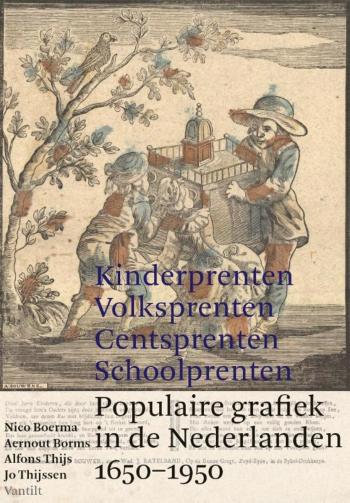 • Ger Luijten, Review of Nico Boerma, Aernout Borms, Alfons Thijs, and Jo Thijssen, eds., Kinderprenten, Volksprenten, Centsprenten, Schoolprenten: Populaire grafiek in de Nederlanden 1650–1950 (Uitgeverij Vantilt, 2014), p. 434.
“At more than a thousand pages,” this volume “is a reference work that deserves a place in any library striving to cover the history of printmaking … Written and compiled by Dutch and Flemish specialists of popular prints over a period of some ten years, it provides a mine of information that is nowhere else to be found … The book has a useful summary in English and German.”
• Anthony Dyson, Review of Richard Goddard, ‘Drawing on Copper’: The Basire Family of Copper-Plate Engravers and Their Works (Maastricht University Press, 2016), pp. 437–39.
• Notice of the exhibition catalogue, Marcela Vondráčková, Norbert Grund (1717–1767): Půvab všedního dne / The Charm of the Everyday, Czech and English (National Gallery in Prague, 2017), p. 459.
“This handsomely-illustrated exhibition catalogue gives a survey of the work of the delightful rococo painter Norbert Grund (1717–1767), who is scarcely known outside Central Europe … We look forward to learning more … in a comprehensive monograph on Grund’s oeuvre, which is due to be published by Marcela Vondráčková.”
• Patricia Emison, Review of Susanna Berger, The Art of Philosophy: Visual Thinking in Europe from the Late Renaissance to the Early Enlightenment (Princeton University Press, 2017), pp. 471–74.
“Berger’s readable and well-illustrated account tackles the topic of logic’s contribution to the history of visualization, and of scholastics’ interest in transmitting knowledge via images … Berger has dug deep in unusual places,” including a mnemonic treatise of 1725 and eighteenth-century student notebooks from Paris and Leuven. “This is fascinating material.”
• Sarah Grant, Review of April Calahan, Fashion Plates: 150 Years of Style (Yale University Press, 2015), pp. 474–78.
Exhibition | Georges Focus: The Madness of a Painter
From the communiqué de presse:
Georges Focus (1644–1708): La folie d’un peintre de Louis XIV
Palais des Beaux-Arts, Paris, 13 October 2018 — 6 January 2019
Curated by Emmanuelle Brugerolles
 La découverte de l’œuvre de Georges Focus produite lors de son enfermement aux Petites Maisons suscite aujourd’hui l’étonnement, pour ne pas dire un choc, qui nous bouleverse. Elle nous inspire le sentiment de l’inédit, du jamais vu, et remet en cause nos idées reçues. Georges Focus, membre de l’Académie royale de peinture et de sculpture sous Louis XIV, eut une double production artistique, académique d’une part, personnelle et intime, d’autre part. L’étonnant corpus réuni en France pour la première fois au Palais des Beaux-Arts, soit environ 80 dessins ainsi que des estampes et des peintures provenant de l’université d’Édimbourg, de collections particulières et d’institutions publiques dont les Beaux-Arts de Paris, rend compte de sa trajectoire unique. Une occasion d’explorer l’oeuvre exceptionnelle et singulière d’un artiste de l’époque de Louis XIV, atteint de folie.
Emmanuelle Brugerolles, ed., Georges Focus: La Folie d’un Peintre de Louis XIV (Paris: Beaux-Arts de Paris Editions, 2018), 447 pages, ISBN: 978-2840565444, $80.
The full press release is available here»
New Book | The Art Market in Rome
From Brill:
Paolo Coen, ed., The Art Market in Rome in the Eighteenth Century: A Study on the Social History of Art (Leiden: Brill, 2018), 234 pages, ISBN: 978-9004388154, 105€ / $121.
 Recent interest in the economic aspects of the history of art have taken traditional studies into new areas of enquiry. Going well beyond provenances or prices of individual objects, our understanding of the arts has been advanced by research into the demands, intermediaries, and clients in the market. Eighteenth-century Rome offers a privileged view of such activities, given the continuity of remarkable investments by the local ruling class, combined with the decisive impact of external agents, largely linked to the Grand Tour. This book, the result of collaboration between international specialists, brings back into the spotlight protagonists, facts, and dynamics that have remained unexplored for many years.
Paolo Coen (PhD, 2001) is Professor of Art History and Museum Studies at the University of Teramo. He has published monographs, essays, and articles on the Roman ‘art system’, which span from the seventeenth to early nineteenth century.
C O N T E N T S
• Paolo Coen, The Art Market in Rome in the Eighteenth Century: A Study in the Modern ‘Social History’ of Art
• Peter Burke, The Social Histories of Art
• Renata Ago, The Value of a Work of Art: Minor Collections and Display
• Patrizia Cavazzini, Marketing Strategies and the Creation of Taste in Seventeenth-Century Rome
• Raffaella Morselli, Jan Meyssens’ 1649 Portfolio of Artists: The Conception and Composition of the Book Image de divers hommes d’esprit sublime (and the Inclusion of Three Italian Painters)
• Valter Curzi, Moral Subjects and Exempla Virtutis at the Start of the Eighteenth Century: Art and Politics in England, Rome and Venice
• Giovanna Perini Folesani, Sir Joshua Reynolds in Rome, 1750–1752: The Debut of an Artist, an Art Collector, or an Art Dealer?
• Paolo Coen, Brownlow Cecil, Ninth Earl of Exeter, Thomas Jenkins, and Nicolas Mosman: Origins, Functions, and Aesthetic Guidelines of a Great Drawing Collection in Eighteenth-Century Rome, Now at the British Museum
• Brian Allen, The Capture of the Westmorland and the Purchase of Art in Rome in the 1770s
• Daniela Gallo, Economic and Scholarly Appraisal of Ancient Marbles in Late Eighteenth-Century Rome
• Maria Teresa Caracciolo, Jean-Baptiste Wicar in Rome (1784–1834): Fifty Years of Purchases, Sales, and Appraisals of Works of Art
Exhibition | Secret Tiepolo
Seven frescoes by Giandomenico Tiepolo are on public view for the first time in Vicenza:
Secret Tiepolo / Tiepolo Segreto
Palladio Museum, Vicenza, 3 November 2017 — 31 December 2018
Curated by Guido Beltramini and Fabrizio Magani
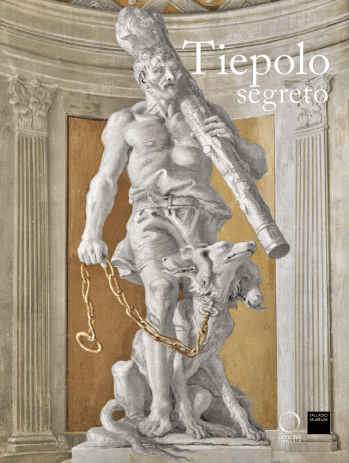 Sette straordinari affreschi di Giandomenico Tiepolo (1727–1804) da oltre cinquant’anni anni erano conservati nelle residenze dei proprietari che coraggiosamente li salvarono dalle distruzioni belliche. Oggi gli eredi, convinti dell’opportunità di un godimento pubblico di tali capolavori, li hanno destinati al Palladio Museum. Ad essi viene dedicata una mostra, realizzata grazie alle competenze e alla collaborazione della Soprintendenza di Verona diretta da Fabrizio Magani, che la cura insieme al direttore del Palladio Museum, Guido Beltramini.
In questa vicenda s’intrecciano più storie. Quella della straordinaria arte dei Tiepolo, in grado di trasformare dalla radice la tradizione frescante veneta. Quella della difesa del patrimonio artistico negli anni cupi della seconda guerra mondiale. Ma esiste una terza storia che lega in modo indissolubile gli affreschi di Palazzo Valmarana Franco agli studi palladiani: essi infatti sono realizzati due decenni dopo la straordinaria decorazione di Villa Valmarana ai Nani, per il figlio del committente, Gaetano Valmarana. Nella dimora suburbana a poca distanza dalla Rotonda palladiana, per il padre Giustino Valmarana, i Tiepolo celebrano la naturalezza di una vita ‘moralizzata’ in campagna. Vent’anni dopo, in città, a poca distanza dal Teatro Olimpico, il registro è completamente diverso: Tiepolo concepisce per il figlio una riedizione in pittura della magnificente scena del teatro all’antica di Palladio adottando non più il registro lieve e scherzoso della vita agreste ma il linguaggio aulico, monocromo ma nondimeno guizzante, della vicina architettura palladiana.
“Siamo orgogliosi di poter contribuire alla cultura della nostra città—dichiarano Camillo e Giovanni Franco, proprietari degli affreschi—con una parte della storia della nostra famiglia.” Fu fra l’altro Fausto Franco, zio dei generosi proprietari e Soprintendente ai Monumenti, a seguire il salvataggio degli affreschi di famiglia nel 1945. Dieci anni dopo lo stesso Franco, insieme—fra gli altri—a Rodolfo Pallucchini, Anthony Blunt, Rudolf Wittkower e André Chastel, fu fra i tredici fondatori del primo Consiglio scientifico del Centro palladiano, coordinato da Renato Cevese.
Tiepolo Segreto (Vicenza, Palladium Museum, 2018), 80 pages, ISBN: 978-8899765781, 17€.
New Book | Georgian Jewellery, 1714–1830
First published in 2007, this book was reprinted this fall by ACC Art Books:
Ginny Redington Dawes with Olivia Collings, Georgian Jewellery, 1714–1830 (New York: ACC Art Books, 2018), 192 pages, ISBN: 978-1851499212, $85.
 Georgian Jewellery is a celebration of the style and excellence of the eighteenth century and of the ingenuity that produced such a wealth of fabulous jewelry. Heavy academic tomes have already been written about the period, but this book examines it in a more colorful and accessible way. The book aims to show that Georgian jewelry is not only the stuff of museums and safe boxes, but that it can be worn as elegantly and fashionably today as it was 200 years ago.
Much disparate information about the jewelry has been gathered together and the period is brought alive by portraits and character sketches of famous Georgians in their finery, fashion tips, gossip, and some rather outrageous cartoons of the time, as well as fascinating recently discovered facts. With information on how to identify, buy and repair pieces, this sumptuously illustrated volume contains the largest single catalogue of eighteenth-century jewelry.
Ginny Redington Dawes, a life-long collector of antique jewelry, has written two previous books on the subject: The Bakelite Jewellery Book and Victorian Jewellery. Staff writer for MGM Screengems Music, she is also a successful composer; she wrote the book, music and lyrics for the off-Broadway show The Talk of the Town and has won a CLEO award for music for advertising.
Olivia Collings became fascinated by the seventeenth-century alchemist and jeweler Christopher Pinchbeck at an early age and bought her first piece of antique jewelry aged seven. She trained in an exclusive Bond Street antique jewellery shop before starting her own business in 1975 and has continued learning about and dealing in Georgian jewellery ever since. She is now an independent jewelry consultant.
Exhibition | Art of Native America: The Diker Collection
Press release for the exhibition:
Art of Native America: The Charles and Valerie Diker Collection
The Met Fifth Avenue, New York, 4 October 2018 — 6 October 2019
 Opening October 4 at The Metropolitan Museum of Art, Art of Native America: The Charles and Valerie Diker Collection will feature 116 artworks from more than 50 cultures across North America. Ranging in date from the 2nd to the early 20th century, the diverse objects are promised gifts (first announced in spring 2017), donations, and loans to The Met from the pioneering collectors Charles and Valerie Diker. The collection has particular strengths in sculpture from British Columbia and Alaska, California baskets, pottery from southwestern pueblos, Plains drawings and regalia, and rare accessories from the eastern Woodlands.
Max Hollein, the Museum’s Director, commented: “The presentation in the American Wing of these exceptional works by Indigenous artists marks a critical moment in which conventional narratives of history are being expanded to acknowledge and celebrate the contributions of cultures that have long been marginalized. The extraordinary gift of the Diker Collection has forever transformed The Met’s ability to more fully display the development of American art, enabling an important shift in thinking.”
The exhibition is made possible by The Peter Jay Sharp Foundation, the Diane W. and James E. Burke Fund, the Enterprise Holdings Endowment, and the Walton Family Foundation.
A ceremonial opening of the exhibition involving contemporary Native American artists will be accompanied by a robust series of public programs.

Shoulder bag, ca. 1780; Anishinaabe, probably Ojibwa; possibly made in Minnesota, Wisconsin, or Ontario; native-tanned leather, porcupine quills, dye, metal cones, deer hair, vegetal fiber, and wool yarn (New York: The Metropolitan Museum of Art, Promised Gift of Charles and Valerie Diker, L.2018.35.70).
Art of Native America will be the first exhibition of Indigenous American art to be presented in the American Wing since it was established in 1924. Originally focused on Colonial and early Federal decorative arts and architecture, the Wing’s collecting areas have continued to evolve.
Sylvia Yount, the Lawrence A. Fleischman Curator in Charge of the American Wing, said: “We are committed to exploring thoughtfully and sensitively the entangled histories of contact and colonization from both Native and Euro-American perspectives. The Met takes seriously its curatorial responsibility to share with our broad audiences—in a variety of displays and contexts—the cultural endurance and creative continuity of Indigenous American artists.”
Art of Native America will highlight production from seven distinct regions: Woodlands, Plains, Plateau, California and Great Basin, Southwest, Northwest Coast, and Arctic. Featured works cover all of the major artistic forms by both identified and unrecorded Native Americans: paintings, drawings, sculpture, textiles, quill and bead embroidery, basketry, and ceramics. Highlights include a ca. 1800 shoulder bag made from finely tanned and dyed deerskin hide embellished with porcupine quills by an Anishinaabe woman, possibly from Ontario, Canada; a striking ca. 1895–1900 ceramic jar depicting the Butterfly Maiden spirit being (Palhik Mana) by renowned Hopi-Tewa potter Nampeyo from Hano Village, Arizona; a monumental 1907 woven basket by Washoe artist Louisa Keyser from Carson City, Nevada; a masterfully carved 1820–40 Tsimshian headdress frontlet with abalone shell inlays from British Columbia; and an elaborate ca. 1900 dance mask by a Yup’ik artist from Hooper Bay, Alaska.
A core group of works from the Diker Collection will remain on view in the American Wing’s Erving and Joyce Wolf Gallery, while light-sensitive works will be rotated annually. Displays of Native and non-Native art—historical and contemporary—will also be organized in response to the Diker Collection.
The Met is collaborating with a range of advisors on the exhibition, including: Kathleen Ash-Milby (Diné/Navajo), Associate Curator, Smithsonian National Museum of the American Indian, New York; Bruce Bernstein, Executive Director, Ralph T. Coe Center for the Arts, Santa Fe, New Mexico; Ned Blackhawk (Western Shoshone), Professor of History and American Studies, Yale University, New Haven, Connecticut; Steven C. Brown, independent scholar, Olympic Peninsula, Washington; Elizabeth Hutchinson, Associate Professor, Art History, Barnard College and Columbia University, New York; and Brian Vallo (Acoma), Director, Indian Arts Research Center, School for Advanced Research, Santa Fe, New Mexico.
Gaylord Torrence, with contributions by Ned Blackhawk and Sylvia Yount, Art of Native America: The Charles and Valerie Diker Collection (New York: The Metropolitan Museum of Art, 2018), 232 pages, ISBN: 978-1588396624, $50.
Exhibition | Magnificent Venice!
Now on view at the Grand Palais (and also worth noting that the Royal Collection exhibition on Canaletto opens in Dublin in December) . . .
Magnificent Venice! Europe and the Arts in the 18th Century
Grand Palais, Paris, 26 September 2018 — 21 January 2019
Fondazione Musei Civici di Venezia, Palazzo Ducale, Venice, 23 February — 9 June 2019
Curated by Catherine Loisel
 Venice fascinated Europe in the 18th century. Its site, on islands transformed into a monumental city, its political regime, its artistic and musical traditions, and its carnival made it attractive and unique. At the time, the Republic of Venice, with its rich history, was among the key powers in Europe. But throughout the century, the city also suffered a series of crises, both economic and social, which led to its decline and precipitated its fall in 1797 at the hands of Bonaparte’s armies. Despite this difficult context, the city’s arts scene still displayed an exuberant vitality. Painters, sculptors, decorators, and designers were among the most illustrious on the Italian stage. Composers, playwrights, instrumentalists and singers were famous throughout Europe. It is this last golden age that the exhibition aims to recount, with an emphasis on the influence of Venetian artists in England, France, Germany, and Spain. It also evokes the power of the myth reflected in their works inspired by the joyful and decadent Serenissima. In addition to fine art, the exhibition also seeks to recreate the atmosphere of these last flames of a civilisation. To this end, the scenography has been entrusted to Macha Makeïeff, a set designer renowned for her lively inventiveness.
Catherine Loisel, Éblouissante Venise! Les arts et l’Europe au XVIIIe siècle (Paris: Les éditions Rmn-Grand Palais, 2018), 256 pages, ISBN: 978-2711870714, €45.
The exhibition booklet, in English, is available as a PDF file here»










 Enfilade
leave a comment