Exhibition | Rosetsu: Ferocious Brush

Nagasawa Rosetsu, Tiger, 1786 door panels from the Zen Temple Muryōji, Kushimoto.
◊ ◊ ◊ ◊ ◊
From the press release for the exhibition:
Rosetsu: Ferocious Brush / Rosetsu: Fantastische Bilderwelten aus Japan
Museum Rietberg, Zurich, 6 September — 4 November 2018
Curated by Khanh Trinh and Matthew McKelway
For eight weeks, Japan’s most famous tiger will reside exclusively at Museum Rietberg in Zurich. The story goes that the Japanese artist Nagasawa Rosetsu (1754–1799) painted this monumental tiger together with its counterpart, a dragon, on the sliding door panels of the Zen temple Muryōji in a single night in the year 1786. Now the entire temple’s painted walls and a number of other, awe-inspiring masterpieces by Rosetsu are being shown for the first time outside of Japan. Rosetsu’s highly dynamic paintings created with vigorous brushstrokes and sometimes with his fingers, but also his delicate compositions painted with fine brushes and rich colour are replete with energy, wit, and modern appeal.
Renowned as one of the most eccentric and imaginative artists in early modern Japan, Nagasawa Rosetsu (1754–1799) produced visually exciting, classification-defying works during his brief career. The exhibition Rosetsu: Ferocious Brush unravels the many mysteries of this enigmatic career. An exclusive and expert selection of works by Rosetsu chosen in consultation with the Agency for Cultural Affairs of the Government of Japan (Bunkachō) reveals his painting subjects, his relationship to Zen Buddhism, his contacts with patrons outside Kyoto, and his choice of extraordinarily bold images.

The exhibition at the Rietberg Museum will survey Rosetsu’s art through a selection of sixty of his most important paintings, beginning with the earliest works in the realist style of his teacher Maruyama Ōkyo (1733–1795) and ending with the haunting and occasionally bizarre final masterpieces of his career. Screen paintings, scrolls, and albums depicting Zen eccentrics, children at play, ethereal beauties, breathtaking landscapes, and vivacious animals and birds will take viewers on a journey through Rosetsu’s own travels and into his fantastic imagination. These works, some of them compellingly realistic and others surprisingly abstract, take us into an early modern Japan we did not know and which feels very contemporary.
The highlight of the exhibition will be a magnificent ensemble of 48 screens and hanging scrolls, displayed in a recreated original floorplan of the Zen temple Muryōji. This Zen temple in the southern part of Japan’s main island holds the largest and most important collection of Rosetsu’s paintings, created in 1786. Various stories recount the creation of this breathtaking ensemble. The installation of these works would present an unprecedented opportunity to view and examine the paintings in a single venue outside their home in Kushimoto, and indeed the first such installation of architecturally specific paintings in an exhibition outside Japan.
Approximately one-third of the works to be exhibited are registered as Important Cultural Properties or Important Art Objects. Complementing these masterpieces from Japan, paintings from museums, temples, and private collections in Japan, Europe, and the United States trace the phases of Rosetsu’s life as he pursued his livelihood in Kyoto and the surrounding provinces. The exhibition closes with a dramatic display of abstract landscapes, ghosts, and perhaps his most astonishing work of all, a depiction of 500 Disciples of the Buddha on a surface of only one square inch.
Rosetsu, who hailed from a low-ranking samurai family, gained his reputation among art circles in the imperial capital Kyoto and its neighbouring regions with his untamed personality and his unusual talent. The exhibits run the gamut of formats and subjects, from exquisitely executed scrolls depicting birds and flowers in brilliant polychrome pigments to large-scale sliding doors and folding screens with fantastic landscapes, bizarre figures, and adorable animals. With his unconventional compositions and powerful brushwork Rosetsu always offers a fresh take on traditional subject matter. His paintings never fail to surprise, entertain, and charm.
The show at the Museum Rietberg is the first comprehensive presentation ever to take place outside of Japan. The exhibition is jointly curated by Dr Khanh Trinh, Curator of Japanese art, Museum Rietberg, Zurich, and Professor Matthew McKelway, Takeo and Itsuko Atsumi Professor of Japanese art history; director of the Mary Griggs Burke Center for Japanese Art, Columbia University in the City of New York.
Khanh Trinh and Matthew McKelway, Rosetsu: Ferocious Brush (London: Prestel, 2018), 296 pages, ISBN: 978-3791357263, $60 / £45. Also available in German.
Exhibition | Isabelle de Borchgrave
From The Frick Pittsburgh:
Isabelle de Borchgrave: Fashioning Art from Paper
Dixon Gallery and Gardens, Memphis, 15 October 2017 — 7 January 2018
The Society of the Four Arts, Palm Beach, 27 January — 15 April 2018
Oklahoma City Museum of Art, 16 June — 9 September 2018
The Frick Art Museum, Pittsburgh, 13 October 2018 — 6 January 2019
The Baker Museum, Artis, Naples, February — May 2019
Curated by Dennita Sewell

Isabelle de Borchgrave, Banyan and Waistcoat, 1998; inspired by a banyan and waistcoat ca. 1730 worn by Peter the Great of Russia.
Co-organized by the Frick in collaboration with four other American museums, this major exhibition presents the full breadth of de Borchgrave’s exploration of historical costume through contemporary paper sculpture. If you’ve never seen the artist’s work, you will be delighted by these breathtaking, life-size renditions of historic clothing created completely from artfully painted, pleated, crumpled, and manipulated paper.
From replicas of Renaissance Italian gowns to recreations of the fantastical modernist costumes of the Ballet Russes, Isabelle de Borchgrave’s work is meticulously crafted and astonishingly beautiful. The artist’s interest in creating paper costumes was sparked by a visit to the Metropolitan Museum of Art in 1994, where she found herself inspired by the historic costumes on display. Back in her studio, she began to experiment with creating renditions of the pieces in paper. Since then, de Borchgrave’s paper costumes have been featured in major exhibitions around the world.
This immersive exhibition celebrates the breadth of de Borchgrave’s work with costume and fashion history and is designed to introduce her work to a wider audience. De Borchgrave’s paper sculptures are masterpieces of trompe l’oeil—even upon close inspection it is often difficult to discern that the costumes are made of paper. At the Frick, de Borchgrave’s work will be exhibited throughout the museum, creating a dialogue with the museum’s collection. Joining the exhibition will be the Frick’s recently commissioned piece inspired by one of our best-known masterpieces—Peter Paul Rubens’ Portrait of Charlotte- Marguerite de Montmorency, Princess of Condé.
The exhibition will include examples from all the artist’s major series, beginning with her exploration of 300 years of fashion history in the works created for Papiers à la Mode. The works from her Splendors of the Medici series are inspired by Italian Renaissance costumes portrayed in Old Master paintings. Her next series, The World of Mariano Fortuny explored the work of the iconoclastic Spanish fashion designer, famously based in Venice, and her most recent series, Les Ballet Russes features fantastical modernist costumes designed by artists like Picasso, Bakst, and Matisse. The Frick’s recent commission will be the only new piece included in the exhibition. A fully illustrated color catalogue accompanies the exhibition.
Exhibition | The Chocolate Girl by Liotard
Notice of the exhibition appeared at Enfilade in April, but here are the details for the catalogue, published in association with Hirmer Verlag:
Stephan Koja and Roland Enke, eds., ‘The Most Beautiful Pastel Ever Seen’: The Chocolate Girl by Jean-Étienne Liotard in the Dresden Gemäldegalerie (Munich: Hirmer Verlag, 2018), 272 pages, ISBN: 978-3777431369, $42.
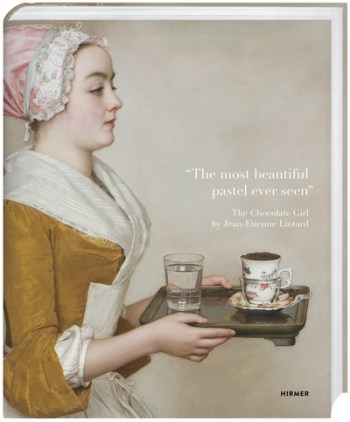 The Chocolate Girl is one of the most famous works by the Swiss artist Jean-Étienne Liotard. This richly illustrated volume leads the reader through the age in which it was created during the French-inspired Rococo and into the Vienna of Empress Maria Theresia, where the work was painted. It also explains the art of pastel painting, in which this enchanting work has been executed. The painting had a tremendous effect in those days and still does so today. Even during Liotard’s life (1702–1789) his pastel painting was highly valued, as the description by the most famous pastel artist Rosalba Carriera as “the most beautiful pastel” demonstrates. The Chocolate Girl shows a simple, unknown domestic servant, until then a rarely chosen subject. In its sober and precise observation it reflects the art of the Enlightenment as well as anticipating the realism of the nineteenth century. Chocolate itself, always associated with pleasure, contributes further to the particular charm. Characteristic works from other creative periods complete the overview of Liotard’s oeuvre.
New Book | Collecting the Past: British Collectors
From Routledge:
Toby Burrows and Cynthia Johnston, eds., Collecting the Past: British Collectors and their Collections from the 18th to the 20th Centuries (New York: Routledge, 2018), 144 pages, ISBN: 978-0815382348, $60.
 Today’s libraries and museums are heavily indebted to the passions and obsessions of numerous individual collectors who devoted their lives to amassing collections of books, manuscripts, artworks, and other culturally significant objects. Collecting the Past brings together the latest research on a wide range of significant British collectors from the eighteenth to the twentieth centuries, including Hans Sloane, Sarah Sophia Banks, Thomas Phillipps, Sydney Cockerell, J. P. Morgan Jr., Alfred Chester Beatty, and R. E. Hart.
Contributors to the volume examine the phenomenon of collecting in a variety of settings and across a range of different materials. Considering the aims and motives that led these collectors to assemble such remarkable collections, the book also examines the history of these collections after the collector’s death. Particular attention is given to the often complicated relationship between collectors and the public institutions that subsequently came to house their collections. Situated within the framework of cultural collecting more generally, this book offers an authoritative series of essays on key collectors.
Toby Burrows is Senior Researcher at the University of Oxford and a Senior Honorary Research Fellow at the University of Western Australia.
Cynthia Johnston is Lecturer in the History of the Book and Communications at the Institute of English Studies, School of Advanced Study, University of London.
C O N T E N T S
1 Toby Burrows and Cynthia Johnston, Collecting the Past: Manuscript and Book Collecting in the Nineteenth and Twentieth Centuries
2 Alice Marples, Creating and Keeping a National Treasure: The Changing Uses of Hans Sloane’s Collection in the Eighteenth Century
3 Arlene Leis, Sarah Sophia Banks: A ‘Truly Interesting Collection of Visiting Cards and Co.’
4 Toby Burrows, ‘There Never Was Such a Collector Since the World Began’: A New Look at Sir Thomas Phillipps
5 Laura Cleaver and Danielle Magnusson, American Collectors and the Trade in Medieval Illuminated Manuscripts in London, 1919–1939: J. P. Morgan Junior, A. Chester Beatty, and Bernard Quaritch Ltd.
6 Stella Panayotova, Sydney Cockerell: A Bibliophile Director-Collector
7 Cynthia Johnston, Spending a Fortune: Robert Edward Hart, Bibliophile and Numismatist, An Industrialist Collector in Blackburn, Lancashire
8 Karen Attar, Ossified Collections: The Past Encapsulated in British Institutions Today
Exhibition | Tudors to Windsors: British Royal Portraits
From the MFAH:
Tudors to Windsors: British Royal Portraits
Museum of Fine Arts, Houston, 7 October 2018 — 27 January 2019
Bendigo Art Gallery, 16 March — 14 July 2019
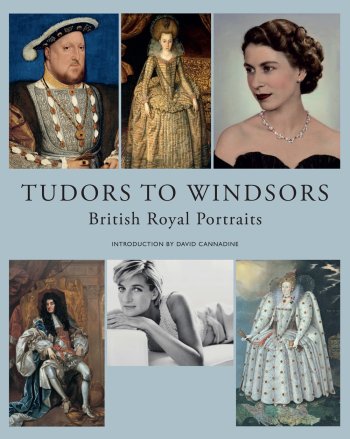 Tudors to Windsors: British Royal Portraits from Holbein to Warhol sheds new light on changing ideas of monarchy and nationhood in Britain. The exhibition features portraits of British royalty spanning 500 years, by artists from Hans Holbein and Sir Joshua Reynolds to Annie Leibovitz and Andy Warhol.
In a sweeping survey, Tudors to Windsors covers the cavalcade of kings, queens, princes, and princesses who have graced the British crown. The MFAH is the only U.S. venue to host this unprecedented exhibition, part of a major partnership with the National Portrait Gallery in London. Some 150 objects—most never before seen outside of England—tell the story of Britain’s monarchy through masterworks of painting, sculpture, and photography.
Visitors have an extraordinary opportunity to come face-to-face with the fascinating figures of British royalty. Tudors to Windsors explores four royal dynasties: the House of Tudor (1485–1603), the House of Stuart (1603–1714), the House of Hanover (1714–1901), and the present-day House of Windsor. Among the many works of art on view are portraits featuring King Henry VIII, Queen Elizabeth I, King George I, Queen Victoria, Queen Elizabeth II, Princess Diana, and Prince William.
Tudors to Windsors: British Royal Portraits, with an introduction by David Cannadine (London: National Portrait Gallery, 2018), 240 pages, ISBN 978-1855147560, $50.
Call for Nominations | Eldredge Book Prize
2019 Charles C. Eldredge Prize
Nominations due by 1 December 2018
The Smithsonian American Art Museum is now accepting nominations for the 2019 Charles C. Eldredge Prize. The prize is given annually by the museum for outstanding scholarship in the field of American art. A cash award of $3,000 is made to the author of a recent book-length publication that provides new insights into works of art, the artists who made them, or aspects of history and theory that enrich our understanding of the artistic heritage of the United States. The Eldredge Prize seeks to recognize originality and thoroughness of research, excellence of writing, clarity of method, and significance for professional or public audiences. It is especially meant to honor those authors who deepen or focus debates in the field, or who broaden the discipline by reaching beyond traditional boundaries.
Single-author books devoted to any aspect of the visual arts of the United States and published in the three previous calendar years (2016–2018) are eligible. To nominate a book, please send a one-page letter explaining the work’s significance to the field of American art history and discussing the quality of the author’s scholarship and methodology. Nominations by authors or publishers for their own books will not be considered. The deadline for nominations is December 1, 2018. Please send them to: The Charles C. Eldredge Prize, Research and Scholars Center, Smithsonian American Art Museum, P.O. Box 37012, MRC 970, Washington, D.C. 20013-7012. Nominations will also be accepted by email: eldredge@si.edu, or fax: (202) 633-8373. For more information about the prize, please visit americanart.si.edu/research/awards/eldredge.
The museum will host a lecture by University of Texas at Austin professor Susan Rather, winner of the 2018 Eldredge Prize, on February 7, 2019, at 4pm. The talk will be related to Rather’s award-winning book, The American School: Artists and Status in the Late Colonial and Early National Era. It will also be available via webcast.
New Book | Marbled Paper
From Oak Knoll Press:
Richard Wolfe, Marbled Paper: Its History, Techniques, and Patterns (New Castle, Delaware: Oak Knoll Press, 2018), 245 pages, ISBN: 978-1584563600, $95.
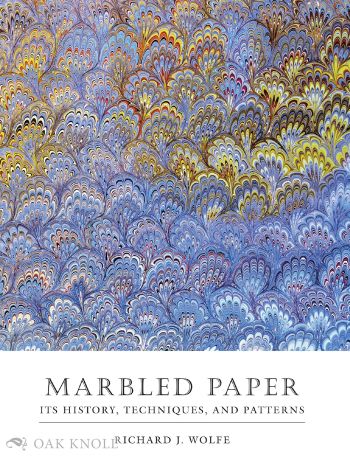 Second edition with corrections, from the original edition published in 1990 by the University of Pennsylvania Press (a publication of the A.S.W. Rosenbach Fellowship in Bibliography). With over 350 color and 80 black-and-white illustrations, and a new Foreword by Sidney Berger.
Richard J. Wolfe (1928–2017) was a rare book librarian, practicing marbler, and collector of marbled papers and books about marbling. This book is the result of more than twenty-five years of research and practical experience. Wolfe personally tracked down and sorted out historical records of marbling from their original sources, and he drew on his own extensive experience as a practitioner to write eloquently on technical and stylistic questions. The resulting study meticulously reconstructs the rise and fall of the craft and recounts its history, techniques, and patterns in such a way as to put all aspects of this fascinating craft in proper perspective.
When first published, Marbled Paper was immediately recognized as the most comprehensive study of marbling to that point, and its status as the standard history of the subject has not been diminished by more recent works. For that reason, and with the goal of making it available again to scholars, students, and practitioners of marbling, Oak Knoll Press is pleased to be able to present this second edition in cooperation with the Wolfe family, completed with minor corrections left by the author.
New Book | Experimental Selves
From the University of Toronto Press:
Christopher Braider, Experimental Selves: Person and Experience in Early Modern Europe (Toronto: University of Toronto Press, 2018), 448 pages, ISBN: 9781487503680, $90.
 Drawing on the generous semantic range the term enjoyed in early modern usage, Experimental Selves argues that ‘person,’ as early moderns understood this concept, was an ‘experimental’ phenomenon—at once a given of experience and the self-conscious arena of that experience. Person so conceived was discovered to be a four-dimensional creature: a composite of mind or ‘inner’ personality; of the body and outward appearance; of social relationship; and of time.
Through a series of case studies keyed to a wide variety of social and cultural contexts, including theatre, the early novel, the art of portraiture, pictorial experiments in vision and perception, theory of knowledge, and the new experimental science of the late-seventeenth and eighteenth centuries, the book examines the manifold shapes person assumed as an expression of the social, natural, and aesthetic ‘experiments’ or experiences to which it found itself subjected as a function of the mere contingent fact of just having them.
Christopher Braider is a professor of French and Comparative Literature at the University of Colorado, Boulder.
C O N T E N T S
Introduction — Changing the Subject: Early Modern Persons and the Culture of Experiment
1 The Shape of Knowledge: The Culture of Experiment and the Byways of Expression
2 The Art of the Inside Out: Vision and Expression in Hoogstraten’s London Peepshow
3 Persons and Portraits: The Vicissitudes of Burckhardt’s Individual
4 Justice in the Marketplace: The Invisible Hand in Ben Jonson’s Bartholomew Fayre
5 Actor, Act, and Action: The Poetics of Agency in Corneille, Racine, and Molière
6 The Experiment of Beauty: Vraisemblance Extraordinaire in Lafayette’s Princesse de Clèves
7 Groping in the Dark: Aesthetics and Ontology in Diderot and Kant
Conclusion — Person, Experiment, and the World They Made
Print Quarterly, September 2018
The eighteenth century in the current issue of Print Quarterly:
Print Quarterly 35.3 (September 2018) . . .
N O T E S A N D R E V I E W S
• Jean Michel Massing, Review of the collection of essays, Suzanne Karr Schmidt and Edward Wouk, eds., Prints in Translation, 1450–1750: Image, Materiality, Space (Routledge, 2016), pp. 305–08. “The eleven most interesting articles in Prints in Translation . . . developed from a two-day conference panel at the 2014 meeting of the College Art Association on ‘Objectifying Prints: Hybrid Media 1450–1800’ (305).” [Of particular interest to Enfilade readers will be the article by David Pullins, “The State of the Fashion Plate, circa 1727: Historicizing Fashion Between ‘Dressed Prints’ and Dezallier’s Recueils,” discussed briefly by Massing on pp. 307–08.]
• John Roger Paas, Review of the exhibition catalogue Tiphaine Gaumy, ed., Images & Révoltes dans le livre et l’estampe, XIVe–milieu du XVIIIe siècle (Bibliothèque Mazarine & Editions des Cendres, 2016), pp. 308–10. “This catalogue with its thirteen scholarly essays and numerous images—many not widely known—focuses on political events, but more importantly it underscores the seminal importance of all visual material for our general understanding of the past. It is clear that these images are not of secondary historical importance” (310).
• Julia McHugh, Review of Pedro German Leal and Rubem Amaral, eds., Emblems in Colonial Ibero-America: To the New World on the Ship of Theseus (Glasgow University Press, 2017), pp. 311–13. “The three sections of the book correspond to the three main colonies of the New World [New Spain, Peru, and Portuguese America]. In each section, two case studies follow a general survey of emblematic and symbolic culture, which foregrounds the distinct historical and geographical conditions of each administrative territory. These three preliminary essays by Víctor Mínguez, José Júlio García Arranz, and Rubem Amaral Jr. are extremely systematic and comprehensive and would be excellent additions to syllabi for colonial Latin American courses” (311).
 • Thomas Döring, Review of Jef Schaeps, Edward Grasman, Elmer Kolfin, and Nelke Bartelings, eds., For Study and Delight: Drawings and Prints from Leiden University (Leiden University, 2017), pp. 313–15. “The book was published to mark the 200th anniversary of the 1814 bequest of Jan Theodore Royer’s print collection to the University of Leiden. This gift became the basis of the university’s Print Room founded in 1825. . . The publication aims to offer a representative cross-section of the collection. Carefully conceived and handsomely produced, it fully lives up to this claim and to its well-considered title” (313).
• Stephanie Dickey, Review of the exhibition catalogue, Victoria Sancho Lobis, with an essay by Maureen Warren, Van Dyck, Rembrandt, and the Portrait Print (Art Institute of Chicago, 2016), pp. 315–17. “This compact, handsomely produced publication documents an exhibition that featured 116 prints, two albums, and twenty portraits in other media, dating from 1522 to 1993, most from the Art Institute of Chicago’s own collection” (315).
• Rena Hoisington, Review of the exhibition catalogue, Anne-Lise Desmas, Edouard Kopp, Guilhem Scherf, and Juliette Trey, Bouchardon: Royal Artist of the Enlightenment (Getty Publications, 2017), pp. 318–21. “Prefaced by essays written by each of the four contributing curators, this beautifully produced and lavishly illustrated catalogue includes images of hundreds of sculptures, drawings, prints and illustrated books (and a few paintings) discussed according to theme or project, including Bouchardon’s work on two celebrated landmarks in eighteenth-century Paris: the elegant Grenelle Fountain that still graces the street from which it takes its name, completed in 1745; and the equestrian statue of King Louis XV that once presided over the Place Louis XV, begun in 1748, completed after Bouchardon’s death by the sculptor Jean-Baptiste Pigalle and destroyed in 1792” (318).
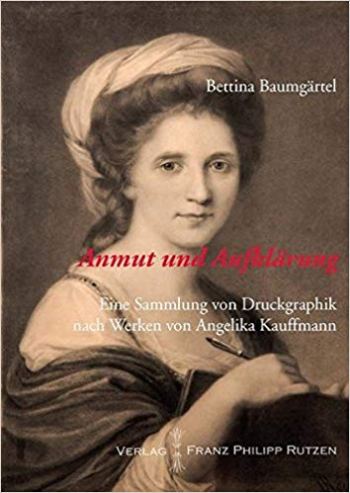
• Wendy Wassyng Roworth, Review of the exhibition catalogue, Bettina Baumgärtel, Anmut und Aufklärung: Eine Sammlung von Druckgraphik nach Werken von Angelika Kauffman (Harrassowitz, 2016), pp. 321–23. “An exhibition at the Winckelmann Museum in Stendhal, Germany . . . presented a selection of prints after Kauffman’s work . . . The exhibition catalogue includes examples of engraved reproductions by British and other printmakers . . . There is a detailed chronology of Kauffman’s life and work; an essay on prints after Kauffman and eighteenth-century printmaking; another essay on the Winckelmann portrait and its influence; a numbered catalogue of works exhibited; and a bibliography of cited sources. The catalogue of works exhibited is divided into sections according to subjects and themes Kauffman portrayed: self-portraits, portraits, mythology, scenes from Shakespeare and other poetry, Roman and early English history, allegory and genre” (322).
• Monika Hinkel, Review of the exhibition catalogue, Timothy Clark, ed., Hokusai: Beyond the Great Wave (Thames & Hudson, 2017), pp. 323–25. “The superb selection, incorporating paintings, woodblock prints, drawings, manuals and illustrated books selected from collections around the world illustrate well the versatility of Hokusai’s striking work. They not only portray the ingenious way in which he amalgamated Japanese-, Chinese- and European-inspired techniques, but also reveal his profound knowledge of mythology, history, the natural world and religion and his strong interest in draughtsmanship” (324–25).
• Stephen Clarke, Review of the book Lucy Peltz, Facing the Text: Extra-illustration, Print Culture, and Society in Britain, 1769–1840 (Huntington Library Press, 2017), pp. 353–55. “Peltz’s book is the product of some fifteen or more years of research, during which period she has published a number of related articles, most notably the correspondence of Granger and Bull in the Walpole Society volume for 2004. The result of her labours is by far the best and most detailed study of a phenomenon that has received surprisingly little scholarly attention. She divides the subject into three broadly chronological sections, using exemplars to tease out meanings and connections rather than aspiring to an impossible vision of encyclopaedic completeness” (354–55).
◊ ◊ ◊ ◊ ◊
Note (added 11 September 2018) — The original posting did not include quotations from the reviews.
New Book | Picturing the Pacific
From Bloomsbury:
James Taylor, Picturing the Pacific: Joseph Banks and the Shipboard Artists of Cook and Flinders (London: Adlard Coles Nautical, 2018), 256 pages, ISBN: 978-1472955432, £25 / $35.
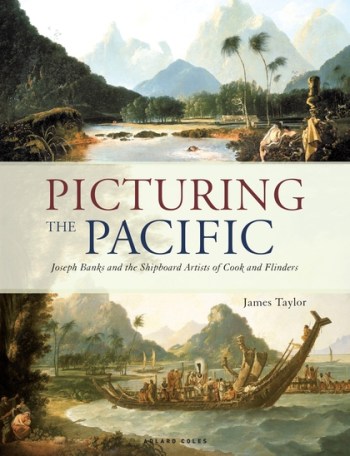 For over 50 years between the 1760s and the early 19th century, the pioneers who sailed from Europe to explore the Pacific brought back glimpses of this new world in the form of oil paintings, watercolours and drawings—a sensational view of a part of the world few would ever see. Today these works represent a fascinating and inspiring perspective from the frontier of discovery. It was Sir Joseph Banks, President of the Royal Society, who popularised the placement of professional artists on British ships of exploration. They captured striking and memorable images of everything they encountered: exotic landscapes, beautiful flora and fauna, as well as remarkable portraits of indigenous peoples. These earliest views of the Pacific, particularly Australia, were designed to promote the new world as enticing, to make it seem familiar, to encourage further exploration and, ultimately, British settlement. Drawing on both private and public collections from around the world, this lavish book collects together oil paintings, watercolours, drawings, prints, and other documents from those voyages and presents a unique glimpse into an age where science and art became irrevocably entwined.
Dr James Taylor, FRSA studied at the Universities of St Andrews, Manchester, and Sussex. He is an accredited lecturer for the National Association of Fine and Decorative Arts; a former curator of paintings, drawings and prints, organiser of exhibitions and galleries and corporate membership manager at the National Maritime Museum, Greenwich; and Victorian paintings specialist with Phillips Fine Art Auctioneers. He is an avid collector of artist-drawn picture postcards.










 Enfilade
leave a comment