New Book | François de Cuvilliés
From Allitera Verlag:
Albrecht Vorherr, ed., François de Cuvilliés: Rokokodesigner am Münchner Hof (Allitera Verlag, 2018), 280 pages, ISBN: 978-3962330224, 30€.
 Zum 250 Todestag von Francois de Cuvilliés (1695–1768) am 14. April 2018 erscheint diese Anthologie mit pointierten Texten namhafter Wissenschaftler zum großen Architekten und Designer des Rokokos. Elf Beiträge widmen sich dem stilsicheren Genie und vergessen dabei nicht die bitteren Seiten seiner Vita. Vor dem Hintergrund aktueller Forschung wird Cuvilliés zum einen als Künstler und Mensch vorgestellt, zum anderen auch ein Schlaglicht auf die Epoche des Rokoko in München geworfen: Handwerker- und Hofleben, Verwaltung und Realisierung barocker Bauprojekte, luxuriöses Design öffentlicher Bauten, Palais und Schlösser, Theater- und Festkultur. Der Belgier François de Cuvillies hat wie kein anderer die Haupt- und Residenzstadt mit seiner Bau- und Ausstattungskunst geprägt und das kurfürstliche München auf dem Niveau von Paris, Dresden und Venedig zum Strahlen gebracht.
Mit Beiträgen von, Magdalena Bayreuther, Neven Denhauser, Gabriele Dischinger, Hanna Dornieden, Ernst Götz, Alexandra Loske, Stefan Nadler, Hermann Neumann, Max Tillmann, Christian Quaeitzsch, Albrecht Vorherr.
Albrecht Vorherr ist Kunstpädagoge und Autor. Sein besonderes Interesse gilt der Kunst- und Kulturgeschichte des 18. Jahrhunderts. Mit Doris Fuchsberger veröffentlichte er im Allitera Verlag Schloss Nymphenburg unterm Hakenkreuz (2014) und den Bildband Schloss Nymphenburg: Menschen – Bauwerke – Geschichte (2015).
Exhibition | High Society
Press release (1 December 2017) from the Rijksmuseum:
High Society: Four Centuries of Glamour
Rijksmuseum, Amsterdam, 8 March — 3 June 2018

Sir Joshua Reynolds, Jane Fleming, later Countess of Harrington, ca. 1778–79 (San Marino, The Huntington Library, Art Collections and Botanical Gardens).
The Dutch national museum, the Rijksmuseum, is presenting High Society with over thirty-five life-size portraits of powerful princes, eccentric aristocrats, and fabulously wealthy citizens by the great masters of art history, including Cranach, Veronese, Velázquez, Reynolds, Gainsborough, Sargent, Munch, and Manet. The centrepiece are Rembrandt’s spectacular wedding portraits, Marten Soolmans and Oopjen Coppit, which will be shown for the first time following their restoration.
Never before has there been an exhibition dedicated to this most glamorous type of portrait: life-size, standing, and full length. Loans have come from museums and private collections from all over the world including Paris, London, Florence, Vienna, and Los Angeles. High Society also gives a glimpse into the informal life of the well-to-do. More than eighty prints and drawings from the Rijksmuseum’s own collection show what went on behind closed doors: parties, drinks, gambling, and amorous encounters.
International Masterpieces
The works vary from the early sixteenth to the start of the twentieth century. Masterpieces include the impressive portraits of Henry the Pious, Duke of Saxony and Catharina, Countess of Mecklenburg by Lucas Cranach the Elder (1514), the married couple Iseppo da Porto and Livia da Porto Thiene with Their Children by Veronese (1555), Don Pedro de Barberana y Aparregui by Velázquez (ca. 1631–33), Portrait Jane Fleming by Sir Joshua Reynolds (1778/79), The Artist by Edouard Manet (1875), and of course Marten Soolmans and Oopjen Coppit by Rembrandt (1634).
Four Centuries of Fashion
Most of the people portrayed are very lavishly dressed, giving the exhibition an overview of four centuries of fashion: from the tightly cut trousers and doublet from 1514 to the haute couture of the late nineteenth century. Some of the subjects portrayed, however, are wearing fancy garments in an antique style. Another is wearing a kilt, yet another is not wearing trousers and one is almost completely naked. Remarkably, those portrayed often have dogs with them. One man is accompanied by a lion. One couple have their children with them. The backgrounds can be richly decorated interiors, often with columns and/or curtains, or a summer or winter landscape. One man is standing in front of an imaginary landscape with palm trees, while another is adopting a flamboyant pose in front of the Colosseum in Rome.
Vices
Whereas the life-size portraits show the well-to-do in their Sunday best, three rooms in the exhibition are devoted to activities that take place for the most part behind closed doors: parties, drinks, gambling, amorous encounters, and brothel visits. Based on the vices of Gluttony, Greed, and Lust, more than eighty prints and drawings from the collection of the Rijksmuseum have been assembled, many showing humorous and satirical scenes, often with a strong moralizing message in the inscriptions.

Photo: Rijksmuseum/David van Dam.
◊ ◊ ◊ ◊ ◊
The catalogue by Jonathan Bikker (Curator of Research at the Rijksmuseum) will be available at the Rijksmuseum Shop from March 2018. An edition of the journal Kunstschrift entitled Ten Voeten Uit (Full Length) will also be published to accompany the exhibition.
Jonathan Bikker, High Society (Rotterdam: NAI Publishers, 2018), 136 pages, ISBN: 978-9462084261, 25€.
New Book | Die Fresken von Joseph Mages
Published by Schnell & Steiner and now available from Artbooks.com:
Angelika Dreyer, Die Fresken von Joseph Mages (1728–1769): Zwischen barocker Frömmigkeit und katholischer Aufklärung (Regensburg: Schnell & Steiner, 2017), 312 pages, ISBN: 9783795432560, 76€ / $95.
 Josef Mages (1729–1769) setzte sich in seinen Freskenausstattungen richtungsweisend mit den Reformbestrebungen der katholischen Aufklärung auseinander. Seinen vom künstlerischen Umfeld der Augsburger Kunstakademie geprägten Deckenmalereien wird hier erstmals eine umfassende Studie gewidmet, die zugleich eine wesentliche Lücke in der Erforschung des süddeutschen Barocks schließt.
Neben einer exemplarischen Künstlersozialgeschichte stehen insbesondere die jeweiligen Auftraggeber sowie ihre vorwiegend religionspolitischen Ansichten und Absichten bei der Auftragsvergabe im Vordergrund der Untersuchung. Dabei nahm die vor allem im Bistum Augsburg wesentlich an Bedeutung gewinnende Auseinandersetzung über eine aufgeklärte Erneuerung der nachtridentinischen Frömmigkeitspraxis entscheidenden Einfluss auf die ikonographischen Inhalte und formale Gestaltung der Freskomalereien von Josef Mages. Im Gegensatz zu dem maßgeblich von Lodovico Antonio Muratori (1672–1750) initiierten religiösen Wandel und seinen Auswirkungen auf die raumbestimmende Kirchenausstattung wurden die Deckengemälde in Altomünster bei Freising oder in Oberschönenfeld von den weit existenzielleren Sorgen der dortigen Konventualen geprägt. Diese können als frühe malerische Vorboten der vom katholischen Klerus mit sorgenvollem Blick verfolgten Entwicklung hin zur späteren Säkularisation gesehen werden.
Exhibition | Salazar: Portraits of Influence in Spanish New Orleans
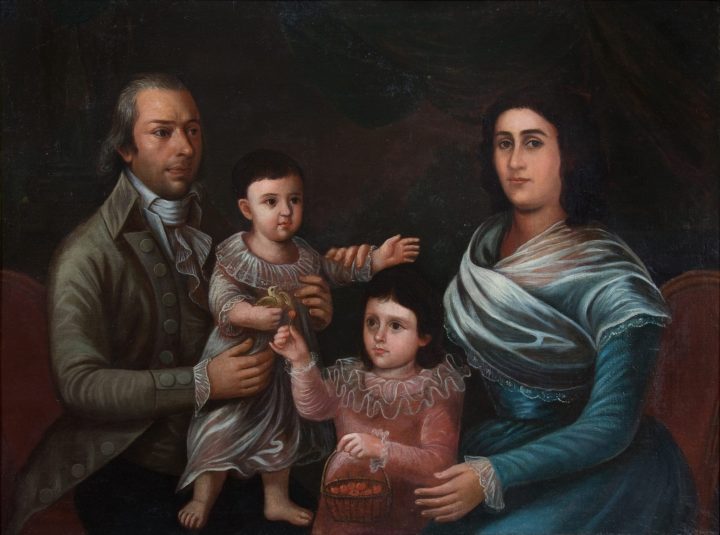
Josef Salazar y Mendoza, Portrait of Don Antonio Mendez (1750–1829) and His Family, 1795, oil on canvas, 36 × 49 inches (Collection of Mr. and Mrs. Robert J. Patrick).
◊ ◊ ◊ ◊ ◊
Now on view at the Ogden Museum of Southern Art:
Salazar: Portraits of Influence in Spanish New Orleans, 1785–1802
Ogden Museum of Southern Art, New Orleans, 8 March — 2 September 2018
Curated by Cybele Gontar
In conjunction with the tricentennial celebration of New Orleans, Salazar: Portraits of Influence in Spanish New Orleans tells the story of Yucatán-born Josef Francisco Xavier de Salazar y Mendoza (ca. 1750–1802), whose career spanned most of the Spanish administration of New Orleans. The exhibition offers a view of Spanish colonial New Orleans through a re-examination of about 30 of Salazar’s portraits. His oeuvre is contextualized in relation to works and other historical artifacts reflective of the city as a site of mobility and transatlantic artistic exchange.
The catalogue is available from ArtBooks.com:
Cybele Gontar, ed., Salazar: Portraits of Influence in Spanish New Orleans, 1785–1802 (New Orleans: University of New Orleans Press, 2018), 240 pages, ISBN: 9781608011544, $65.
The catalogue includes a comprehensive collection of Salazar’s portraits and essays that explore the historical and artistic implications of the era. The oeuvre of this Mexican artist is contextualized in relation to works by other early New Orleans portraitists including Antonio Meucci, Francois M. Guyol de Guiran (1775–1849), and Louis Collas (1775–1856).
Exhibition | New Orleans, the Founding Era

François Chéreau, Le Missisipi ou la Louisiane dans l’Amérique Septentrionale, ca. 1720, hand-colored engraving (The Historic New Orleans Collection, 1959.210).
◊ ◊ ◊ ◊ ◊
Now on view at THNOC:
New Orleans, the Founding Era
The Historic New Orleans Collection, 27 February — 27 May 2018
Curated by Erin Greenwald
In commemoration of the city’s 300th anniversary in 2018, The Historic New Orleans Collection provides a multifaceted exploration of the city’s first few decades and its earliest inhabitants with New Orleans, the Founding Era, an original exhibition and bilingual companion catalog. The exhibition brings together a vast array of rare artifacts from THNOC’s holdings and from institutions across Europe and North America to tell the stories of the city’s early days, when the city consisted of little more than hastily assembled huts and buildings.
Beginning with the region’s Native American tribes, through the waves of European arrival and the forced migration of enslaved African people, the exhibition reflects on the complicated and often conflicted meanings the settlement’s development held for individuals, empires, and indigenous nations. It features works on paper, ethnographic and archaeological artifacts, scientific and religious instruments, paintings, maps and charts, manuscripts and rare books. These original objects are complemented by large-scale reproductions and interactive items. More than 75 objects are on loan from organizations in Spain, France, Canada, and around the United States. A number of items, like a pair of 18th-century Native American bear-paw moccasins from the Musée du quai Branly in Paris and pieces of 15th-century Mississippian pottery from the University of Mississippi, have rarely traveled beyond their home institutions.
Digital interactives will include a gallery of photographs from archaeological digs at a variety of French Quarter sites, a game quizzing visitors on supplies needed for a new home in the settlement and a 1731 inventory of enslaved Africans and African-descended people living on a West Bank plantation.
Erin Greenwald, ed., New Orleans, the Founding Era / La Nouvelle-Orléans, les années fondatrices, translated by Henry Colomer (New Orleans: The Historic New Orleans Collection, 2018), 176 pages, ISBN 978-0917860744, $50.
The companion catalog—a bilingual edition, in English and French—will feature essays describing the different populations who inhabited precolonial New Orleans and the surrounding areas, as well as the forces driving the settlement’s growth. Essayists include exhibition curator Erin M. Greenwald and historians Emily Clark, Shannon Lee Dawdy, Robbie Ethridge, Gilles-Antoine Langlois, Yevan Terrien, Daniel Usner, and Cécile Vidal. Gérard Araud, ambassador of France to the United States, contributed the book’s foreword.
Erin M. Greenwald is curator of programs at the New Orleans Museum of Art. Formerly, as curator at The Historic New Orleans Collection, she was project director of the National Endowment for the Humanities-funded traveling exhibition Purchased Lives: The American Slave Trade from 1808 to 1865. Greenwald holds a PhD in history from the Ohio State University.
Henry Colomer is a French documentary filmmaker and translator. He has directed some thirty films, including various portraits of artists and writers (L’exilé, Iddu, Ricercar, Vies métalliques), as well as a number of documentaries about the upheavals of the twentieth century (Monte Verità, Sous les drapeaux). Colomer has won several awards (Best Historic Documentary, Festival of History Films, Pessac, 1998, 2008; Focal International Award, London, 2010).
New Book | Cultivating Commerce: Cultures of Botany
From Cambridge UP:
Sarah Easterby-Smith, Cultivating Commerce: Cultures of Botany in Britain and France, 1760–1815 (New York: Cambridge University Press, 2017), 252 pages, ISBN: 978-1107126848, $99.
 Sarah Easterby-Smith rewrites the histories of botany and horticulture from the perspectives of plant merchants who sold botanical specimens in the decades around 1800. These merchants were not professional botanists, nor were they the social equals of refined amateurs of botany. Nevertheless, they participated in Enlightenment scholarly networks, acting as intermediaries who communicated information and specimens. Thanks to their practical expertise, they also became sources of new knowledge in their own right. Cultivating Commerce argues that these merchants made essential contributions to botanical history, although their relatively humble status means that their contributions have received little sustained attention to date. Exploring how the expert nurseryman emerged as a new social figure in Britain and France, and examining what happened to the elitist, masculine culture of amateur botany when confronted by expanding public participation, Easterby-Smith sheds fresh light on the evolution of transnational Enlightenment networks during the Age of Revolutions.
C O N T E N T S
Figures
Maps
Acknowledgements
Note on the Text
Abbreviations
Introduction: Cultivating Commerce
1 Plant Traders and Expertise
2 Science, Commerce, and Culture
3 Amateur Botany
4 Social Status and the Communication of Knowledge
5 Commerce and Cosmopolitanism
6 Cosmopolitanism under Pressure
Conclusion: Commerce and Cultivation
Bibliography
Index
New Book | Piranesi: Studies in Honor of John Wilton-Ely
As noted in Salon, the newsletter of the Society of Antiquaries of London, issue 402 (6 March 2018) . . .
On 31 January John Wilton-Ely FSA was presented with a festschrift at a ceremony at the Instituto Centrale per la Grafica, Palazzo Poli, Rome, in recognition of his services to scholarship on the life and works of Giovanni Battista Piranesi, FSA (elected 1757). The publication is volume 32 of the art historical journal, Studi sul Settecento Romano (Sapienza Università di Roma), entitled Giovanni Battista Piranesi, predecessori, contemporanei e successori: Studi in onore di John Wilton-Ely. The papers were formally delivered in 2016 at a special conference arranged by the Royal Swedish Academy in the Royal Palace at Stockholm, which contains a significant collection of Piranesi’s imaginatively restored classical antiquities, acquired by Gustav III from the artist’s former museo in Rome.
From Arbor Sapientiae:
Francesco Nevola, ed., Giovanni Battista Piranesi, Predecessori, contemporanei e successori: Studi in onore di John Wilton-Ely, Studi sul Settecento Romano, volume 32 (Rome: Sapienza Università di Roma, 2016), 400 pages, ISBN: 978-8871407432, 60€.
 • Francesco Nevola, John Wilton-Ely: Una vita con Piranesi
• Jörg Garms, Il rococò in Italia e la vicenda di Piranesi
• Lola Kantor-Kazovsky, On the Eve of the Graeco-Roman Controversy: Pierre Jean Mariette and Bouchardon’s Fountain of the Four Seasons
• Francesco Nevola, Giovanni Battista Piranesi’s Origins as a Vedutista: The impact of Canaletto and Bellotto
• Myra Nan Rosenfeld, Piranesi’s Grotteschi: A Visual Expression of the Literary Aims of the Accademia degli Arcadi
• Silvia Gavuzzo-Stewart, Irony in Piranesi’s Carceri and Lettere di Giustificazione
• Frank Salmon, Piranesi and the Accademia di San Luca in Rome
• Susanna Pasquali, Piranesi’s Campo Marzio as described in 1757
• Elisa Debenedetti, Piranesi, Marchionni e il mito di Diogene
• Mario Bevilacqua, Piranesi’s Ironies and the Egyptian and Etruscan Dreams of Margherita Gentili Boccapaduli
• Georg Kabierske, Vasi, urne, cinerarie, altari e candelabri: Newly Identified Drawings for Piranesi’s Antiquities and Sculptural Compositions at the Staatliche Kunsthalle Karlsruhe
• Heather Hyde Minor and John Pinto, ‘Marcher sur les traces de son père’: The Piranesi Enterprise between Rome and Paris
• Pier Luigi Panza, Il Museo Piranesi: Un censimento e osservazioni su attribuzioni, vendite e uso dei pezzi in architettura
• Raffaella Bosso, Per un catalogo dei marmi piranesiani del Museo Gustavo III di Stoccolma: Il caso di studio del candelabro con uccelli
• Alvar Gonzalez-Palacios, Il Nilo in bigio del Museo Gregoriano Egizio
• Anne-Marie Leander Touati, Piranesi’s Grande Cheminée, Virtually Recreated for John Wilton-Ely
• Cesare de Seta, Roma al tempo di Giovan Battista Piranesi e i suoi eredi nell’arte del paesaggio nel Settecento europeo
Indice dei nomi
Print Quarterly, March 2018

J. R. Smith after John Francis Rigaud, Group Portrait of Agostino Carlini, Fransescho Bartolozzi, Giovani Battista Cipriani, 1778, mezzotint, 44.4 × 504 cm (London: The British Museum).
◊ ◊ ◊ ◊ ◊
The eighteenth century in the current issue of Print Quarterly:
Print Quarterly 35.1 (March 2018)
 A R T I C L E S
• David Alexander, “A Cosmopolitan Engraver in London: Francesco Bartolozzi’s Studio, 1763–1802,” pp. 6–26.
S H O R T E R N O T I C E S
• Daan van Heesch, “The Graphic Source for Rajput Images of Fools,” pp. 50–53.
N O T E S A N D R E V I E W S
• Ellis Tinios, Review of the exhibition catalogue T. June Li and Suzanne Wright, Gardens, Art, and Commerce in Chinese Woodblock Prints (The Huntington Library, Art Collections, and Botanical Gardens, 2016), pp. 63–65.
• David Pullins, Review of W. McAllister Johnson, The Rise and Fall of the Fine Art Print in Eighteenth-Century France (University of Toronto Press, 2016), pp. 65–66.
• Naomi Lebens, Review of the exhibition catalogue The Royal Game of the Goose: 400 Years of Printed Board Games (Grolier Club, 2016), pp. 66–70.
• Brendan Cassidy, Note on William Woollett’s Ring, pp. 70–71.
• Ellis Tinios, Review of the exhibition catalogue A Third Gender: Beautiful Youths in Japanese Prints (Royal Ontario Museum, 2016), pp. 72–74.
• Martin Hopkinson, Review of Gill Saunders, Eclectic: The Julie and Robert Breckman Collections at the Victoria and Albert Museum (V&A Publishing, 2016), pp. 74–75.
• Jesusa Vega, Review of Juliet Wilson-Bareau and Leah Lehmbeck, Goya in the Norton Simon Museum (Norton Simon Museum, 2016), pp. 75–77.
• Mark McDonald, Review of Antonio G. Moreno Garrido, La Estampa de devoción en la España de los siglos XVIII y XIX (Editorial Universidad de Granada, 2015), pp. 77–78.
• Jean Michel Massing, Review of Juan Pimentel, The Rhinoceros and the Megatherium: An Essay in Natural History, translated by Peter Mason (Harvard University Press, 2017), pp. 78–79.
• Stephan Bann, Review of Antony Griffiths, The Print before Photography: An Introduction to European Printmaking, 1550–1820 (The British Museum Press, 2016), pp. 94–97.
• Bozena Anna Kowalczyk, Review of Michael Matile with Alberto Craievich and Isabelle Scheck, Della Grafica Veneziana: Das Zeitalter Anton Maria Zanettis (1680–1767) (Michael Imhof Verlag, 2016), pp. 98–101.
New Book | Giambettino Cignaroli: Memoire
Soon available from Artbooks.com:
Bruno Chiappa and Andrea Tomezzoli, Giambettino Cignaroli: Memoire (Verona: Scripta, 2017), 368 pages, ISBN: 9788898877966, $68.
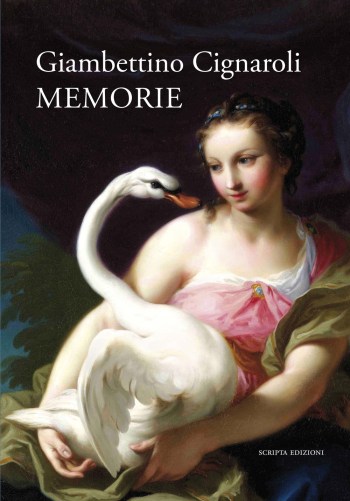 Tanti, innumerevoli sono i protagonisti di trentasei carte di un piccolo taccuino manoscritto: il principe di Chablais, il ministro plenipotenziario Carlo Firmian, l’imperatore Giuseppe II, Bartolomeo Cavaceppi, Angelica Kauffman, il giovanissimo Mozart, Kirill Grigorievich Razumovski grande atamano dei cosacchi… E ancora: ambasciatori, nunzi apostolici, letterati, esploratori, ufficiali o semplici militari, vescovi e abati, nobiluomini e nobildonne italiani e foresti… Tutti passano—tra marzo 1754 e ottobre 1770— dallo studio del più accreditato pittore veronese di quei decenni: Giambettino Cignaroli (1706–1770). E Cignaroli li registra minuziosamente con una scrittura che talvolta fa trasparire in filigrana dinamiche di mercato, ma anche legami professionalie amicali. Il volume ne offre trascrizione commentata, nel tentativo di allacciare fi li rossi tra il caleidoscopio di personaggi che si avvicendano nell’atelier dell’artista e la città di Verona, che emerge da queste pagine come vero e proprio crocevia del Settecento europeo.
New Book | Dutch Drawings in Swedish Public Collections
Published by Hatje Cantz and available from ArtBooks.com:
Börje Magnusson, Dutch Drawings in Swedish Public Collections (Stuttgart: Hatje Cantz, 2018), 336 pages, ISBN: 9783775743259, 60€ / $85.
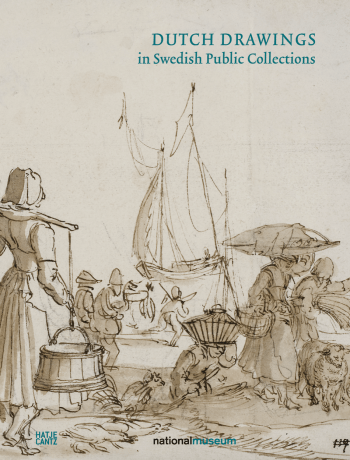 The Nationalmuseum, Stockholm, holds the most extensive collection of Dutch master drawings in Sweden. It comprises important works by Rembrandt and his pupils, as well as drawings by Abraham Bloemart, Jan van Goyen, Herman Saftleven, Willem van de Velde, and many other artists. Although trade contacts between the Netherlands and Sweden were lively in the seventeenth century, they account for only a small part of the collection. The bulk of the drawings was acquired by Swedish collectors in the eighteenth and nineteenth centuries. Foremost among them was Count Carl Gustaf Tessin, whose acquisitions at the 1741 Paris sale of the financier Pierre Crozat make up the core of the collection. This catalogue, the result of a long-term research project, includes almost 600 drawings, of which approximately 130 are previously unpublished. Besides the Nationalmuseum, it draws on the collections of the Royal Academy of Fine Arts in Stockholm, The Gothenburg Museum of Art, the Uppsala University Library, and other institutions.










 Enfilade
leave a comment