New Book | Versailles et l’Europe
All essays are available for download as PDF files from ArtHistoricum.net:
Thomas Gaehtgens, Markus Castor, Frédéric Bussmann, and Christophe Henry, eds., Versailles et l’Europe: L’appartement monarchique et princier, architecture, décor, cérémonial (Paris: Centre allemand d’histoire de l’art 2018), 896 pages, ISBN: 9782955931509.
 Les 31 contributions de cet ouvrage examinent en premier lieu la signification et la fonction des appartements royaux de Louis XIV en France, puis leur réception dans les cours du Saint Empire romain germanique, avant de s’intéresser aux résidences des Pays-Bas, de l’Angleterre, de la Suède, de la Pologne et de l’Espagne au cours des XVIIe et XVIIIe siècles.
Der vorliegende Band untersucht den Einfluss eines der brillantesten Repräsentationsleistungen der Frühen Neuzeit auf die europäischen Höfe des 17. und 18. Jahrhunderts. Das Versailler Schloss, ein „Showroom“, der die französischen Luxusgüter über die Grenzen hinaus bekannt und zum begehrten Gut machte, zog die Blicke aller Regenten der Zeit auf sich. Doch wenngleich von Künstlern und Kunsthandwerkern, die sich an den europäischen Höfen niederließen, zahlreiche Formen und Ideen übernommen wurden, darf die Beharrlichkeit der lokalen Traditionen dennoch nicht unterschätzt werden.
Beginnend mit einer Analyse des Versailler Appartements nach Form und Funktion wird das in Frankreich entwickelte Modell in seiner Bedeutung für die Konzepte des Appartements der europäischen Höfe betrachtet. Die Beiträge analysieren das Zusammenspiel von Architektur, Dekor und Zeremoniell und die besondere Bedeutung des Appartements für die höfische Repräsentation. Die räumliche Disposition tritt als komplexes Verweissystem hervor, das die Inszenierung der Macht und die Zugänglichkeit des Regenten bestimmte. Die Logik der Ausstattungssysteme erschließt sich nur in interdisziplinärer Betrachtung, die auch die sozialen und politisch—historischen Bedingungen berücksichtigt. Bereits vorhandene Traditionen der europäischen Häuser werden in diesem Prozess zwischen Übernahmen und Transformationen neu konfiguriert.
Der erste Teil widmet sich dem in Frankreich entwickelten Modell des Appartements und versucht die komplexe Entwicklung in Versailles bis 1701 nachzuvollziehen, in der die Chambre de Parade zum Herzstück des Schlosses wurde. Im zweiten Teil beleuchten die Fallstudien zu Residenzen der deutschsprachigen Länder den komplexen Austausch und die Vielfalt der heterogenen Lösungen. Mit Beiträgen zu einigen wesentlichen europäischen Höfen in England, Holland, Schweden, Polen, Spanien und Italien schließt die Studie ab.
Thomas W. Gaehtgens (Director, Getty Research Institute, LA); Markus A. Castor (Directeur de Recherche, DFK-Paris); Freddric Bussmann (Kurator, Museum der bildenden Künste Leipzig); Christophe Henry (Professeur Grandes Ecoles, Histoire et theorie des arts).
C O N T E N T S
Thomas Kirchner, Préface
Thomas Gaehtgens, Markus Castor, Frédéric Bussmann, Appartement, décor et cérémonial: une introduction
Versailles et la France
• Raphaël Masson, Thierry Sarmant, COMITAS ET MAGNIFICENTIA. Essai sur l’appartement royal en France
• Jean-Pierre Samoyault, L’appartement du roi à Fontainebleau sous Louis XIV (1643–1715)
• Stéphane Castelluccio, L’appartement du roi à Versailles, 1701 : le pouvoir en représentation
• Max Tillmann, « Une étiquette prétentieuse » La cour princière de l’électeur Max-Emmanuel de Bavière au château de Compiègne (1708–1715)
• Jörg Garms, Les appartements du duc Léopold à Lunéville
Les cours princières du Saint-Empire entre Habsbourg et Bourbon
• Katharina Krause, Des exemples à suivre absolument ? Distribution française et commodité allemande dans le traité et la pratique architecturale au tournant du xviiie siècle
• Cordula Bischoff, Le Frauenzimmer-Ceremoniel (cérémonial des femmes) et ses conséquences sur la distribution des appartements princiers des dames vers 1700
• Rainer Valenta, L’appartement impérial à l’époque de Charles VI. Proposition de reconstitution
• Ulrike Seeger, L’appartement électoral entre Vienne et Versailles. L’appartement de parade de la résidence princière de Rastatt
• Annegret Kotzurek, Les appartements ducaux du corps de logis baroque du château de Ludwigsbourg
• Kathrin Ellwardt, Les appartements du château de Mannheim
• Eva-Bettina Krems, « Le sujet est de ceux qui […] s’accompagnent du plus grand nombre de pointillés. » – De la diversité des espaces d’audience dans les châteaux français et allemands autour de 1700
• Henriette Graf, La fonction des appartements de l’électeur Charles-Albert de Bavière dans le cérémonial de cour vers 1740
• Virginie Spenlé, Galeries de peintures et appartements princiers dans le Saint-Empire romain germanique
• Marc Jumpers, L’appartement d’apparat de la résidence de Bonn : une tentative de reconstitution
• Martin Miersch, Le rôle des diplomates français dans la formation du « bon goût » chez le prince électeur de Cologne Clément-Auguste
• Frédéric Bussmann, Le château de Nordkirchen, le « Versailles de Westphalie » ? Architecture, distribution et décor des appartements de la résidence du prince évêque de Münster et de la famille Plettenberg
• Verena Friedrich, La décoration française à la résidence de Wurtzbourg. Les projets du premier appartement de l’évêque de Wurtzbourg
• Claudia Schnitzer, « …afin d’en laisser à la postérité un souvenir ineffaçable » Les pièces de parade du château de Dresde dans la relation de la fête organisée à l’occasion du mariage de 1719
• Katja Heitmann, Distribution et ornementation. Le château de Heidecksburg à Rudolstadt et l’influence de l’architecture française sur les châteaux princiers allemands
• Martin Pozsgai, L’appartement de parade dans les châteaux des princes protestants du Saint-Empire romain germanique
• Guido Hinterkeuser, Les pièces d’habitation et les salles d’apparat de Sophie-Charlotte et Frédéric Ier au château de Charlottenburg : finalité, aménagement et usage
• Thomas W. Gaehtgens, Frédéric Ier, Frédéric -Guillaume Ier et Frédéric II. Trois conceptions de la représentation et de l’habitat princier à la cour de Prusse
• Peter O. Krückmann, Le Vieux Château de l’Ermitage à Bayreuth. L’iconographie du pouvoir au temps de l’absolutisme et des Lumières
Les autres grandes cours européennes, un tour d’horizon
• Johan de Haan, L’appartement princier au palais du Stadhouder à Leeuwarden 1650–1710
• Konrad Ottenheym, Les appartements princiers des résidences du prince d’Orange dans la Hollande du xviie siècle
• Michael Schaich, La chambre de parade sous la monarchie anglaise autour de 1700
• Linda Hinners, Martin Olin, Les appartements royaux du château de Stockholm
• Anna Olenska, L’Union de Pologne-Lituanie a-t-elle eu son « Versailles » ? Du Wilanów de Jean III Sobieski au Bialystok du prétendant au titre de Jean IV Branicki
• Elisabeth Wünsche- Werdehausen, Entre Bourbon et Habsbourg ? Les grands appartements du palais royal de Turin
• Markus A. Castor, Anne Kurr, Philippe V de Bourbon à Madrid -Architecture, décor et cérémonial entre changement programmatique et tradition
Plans des châteaux
Abrévations
Bibliographie
Glossaire franco-allemand
Index des noms propres
Index topographique
Crédits photographiques
Exhibition | Drawn to Greatness
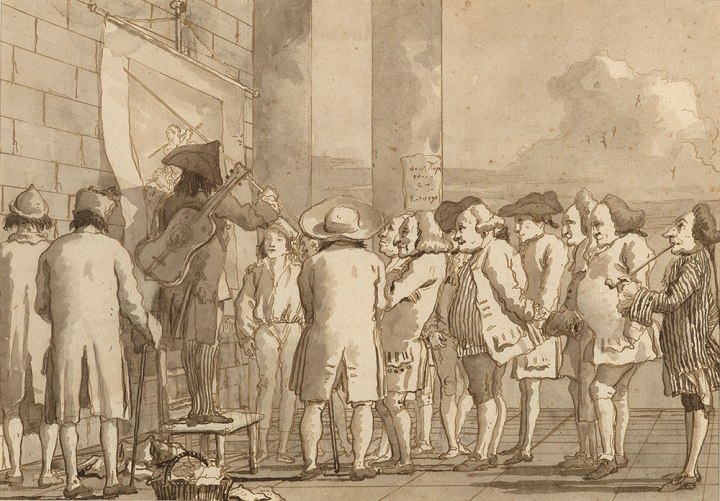
Giovanni Domenico Tiepolo, Scene of Contemporary Life: The Picture Show, 1791; pen and brown and black ink and wash over black chalk on paper, 11 5/16 × 16 5/16 inches (New York: Morgan Library & Museum, 2017.253)
◊ ◊ ◊ ◊ ◊
Press release (15 December 2017) for the exhibition now on view at The Clark:
Drawn to Greatness: Master Drawings from the Thaw Collection
The Morgan Library & Museum, New York, 29 September 2017 — 7 January 2018
The Sterling and Francine Clark Art Institute, Williamstown, MA, 3 February — 22 April 2018
Curated by Jennifer Tonkovich and Jay Clarke
Over the past fifty years, New York art dealer and philanthropist Eugene V. Thaw assembled one of the world’s finest private collections of drawings. The collection, known for its breadth and exceptional quality, charts the high points of drawing from the Renaissance through the twentieth century and features works made by pivotal artists at key moments in the history of the art form. Mr. Thaw donated his collection of more than 400 drawings to the Morgan Library & Museum, New York, which celebrated the gift with the September 2017 opening of Drawn to Greatness: Master Drawings from the Thaw Collection, an exhibition that has drawn critical acclaim for the diversity and quality of the works presented. In recognition of Mr. Thaw’s longstanding interest in the Clark Art Institute, Drawn to Greatness will travel to Williamstown for an exclusive presentation at the Clark from February 3 through April 22, 2018. Featuring 150 drawings that tell the story of a visionary collector, the exhibition examines five centuries of western drawing. Sketchbooks belonging to Jackson Pollock, Francisco de Goya, Edgar Degas, and Paul Cézanne and illustrated letters from Vincent van Gogh are among the works exhibited.
“It is an honor for the Clark to have the opportunity to show this exquisite collection in our galleries,” said Olivier Meslay, the Felda and Dena Hardymon Director of the Clark. “The works in this exhibition provide an incredibly rich and remarkable opportunity to consider the art form as practiced by generations of masters. It is one of the most important and impressive drawing exhibitions that has been assembled in decades.”
The exhibition is organized in a series of chronological sections that illustrate key moments in the history of draftsmanship while also highlighting the work of artists whom the Thaws collected in depth, among them Rembrandt van Rijn, Francisco de Goya, Odilon Redon, and Edgar Degas.
“These exceptional drawings, watercolors, and collages exemplify both the eternal power of the drawn line and the innovative genius of the artists who have explored the medium over five centuries,” said Jay A Clarke, Manton Curator of Prints, Drawings, and Photographs. “It is a truly spectacular collection of works and I am thrilled to be able to work in collaboration with the Morgan’s curatorial team to bring this show to the Clark.”
The exhibition extends the Institute’s relationship to Mr. Thaw who, in 2016, made a generous gift to create the Eugene V. Thaw Gallery for Works on Paper in the Clark’s Manton Research Center. Drawn to Greatness: Master Drawings from the Thaw Collection is organized by the Morgan Library & Museum, New York. The curator of the exhibition at the Morgan is Jennifer Tonkovich, Eugene and Clare Thaw Curator of Drawings and Prints; the curator at the Clark is Jay A. Clarke, Manton Curator of Prints, Drawings, and Photographs. Presentation of Drawn to Greatness at the Clark is made possible by the Eugene V. and Clare E. Thaw Charitable Trust. Major support is provided by the Fernleigh Foundation in memory of Clare Thaw. This exhibition is supported by an indemnity from the Federal Council on the Arts and the Humanities.
An exhibition checklist is available here»
Jennifer Tonkovich, ed., Drawn to Greatness: Master Drawings from the Thaw Collection (New York: The Morgan Library & Museum, 2017), 295 pages, ISBN: 978-0875981826, $40.
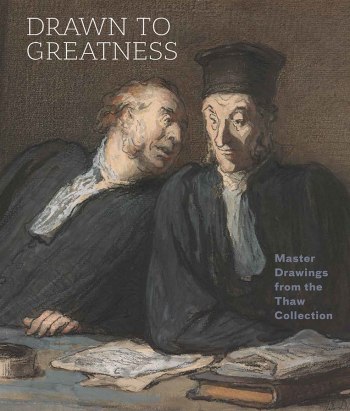 The catalogue features a series of essays by leading scholars devoted to pivotal moments in the history of drawing. Authors include Jane Shoaf Turner, Head of Rijksprentenkabinet, Amsterdam; Andrew Robison, former Head of Drawings, Prints, and Photographs at the National Gallery of Art; Matthew Hargraves, Chief Curator of Art Collections, Yale Center for British Art; Richard R. Brettell, Chair of Art and Aesthetic Studies, University of Texas at Dallas; Jay A. Clarke, Manton Curator of Prints, Drawings, and Photographs, Clark Art Institute; and, of the Morgan Library & Museum, Colin B. Bailey, Director; John Marciari, Curator and Department Head of Drawings and Prints; and Jennifer Tonkovich, Eugene and Clare Thaw Curator.
A selection of programming:
Jennifer Tonkovich | French Artists and Their Models
Sunday, 11 February 2018, 3:00pm
Jennifer Tonkovich, Eugene and Clare Thaw Curator of Drawings at the Morgan Library & Museum, explores how French artists worked with models during the eighteenth and early nineteenth centuries. Where did they find their models? What role did the models play in the creative process? How does an individual artist’s approach to the model reveal their broader outlook? A close look at studies by Watteau, Fragonard, Prud’hon, Gericault, Ingres, and Delacroix illuminates the challenges inherent in working from the model.
Matthew Hargraves | Visionaries: Romantic Drawings from the Thaw Collection
Sunday, 15 April 2018, 3:00pm
Drawn to Greatness includes some of Eugene Thaw’s finest Romantic drawings, among them outstanding works of art by William Blake, Caspar David Friedrich, and J.M.W. Turner. This lecture by Matthew Hargraves, chief curator of art collections and head of college information and access at the Yale Center for British Art, focuses on the visionary qualities of these Romantic artists and explores how they abandoned the simple imitation of the natural world to capture truths beyond the reach of the human eye.
New Book | Colouring the Caribbean
From Manchester UP:
Mia Bagneris, Colouring the Caribbean: Race and the Art of Agostino Brunias (Manchester: Manchester University Press, 2017), 272 pages, ISBN: 978-15261-20458, £75 / $115.
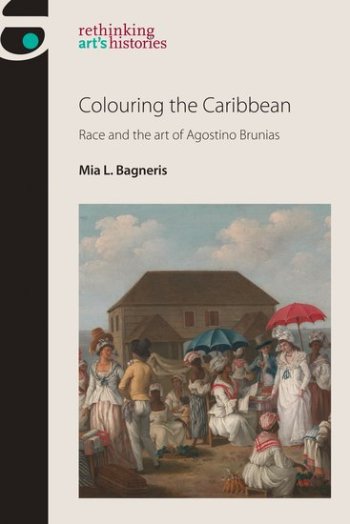 Colouring the Caribbean offers the first comprehensive study of Agostino Brunias’s intriguing pictures of colonial West Indians of colour—so called ‘Red’ and ‘Black’ Caribs, dark-skinned Africans and Afro-Creoles, and people of mixed race—made for colonial officials and plantocratic elites during the late-eighteenth century. Although Brunias’s paintings have often been understood as straightforward documents of visual ethnography that functioned as field guides for reading race, this book investigates how the images both reflected and refracted ideas about race commonly held by eighteenth-century Britons, helping to construct racial categories while simultaneously exposing their constructedness and underscoring their contradictions. The book offers provocative new insights about Brunias’s work gleaned from a broad survey of his paintings, many of which are reproduced here for the first time.
Mia L. Bagneris is Jesse Poesch Junior Professor of Art History at Tulane University.
C O N T E N T S
Introduction
1 Brunias’s Tarred Brush, or Painting Indians Black: Race-ing the Carib Divide
2 Merry and Contented Slaves and Other Island Myths: Representing Africans and Afro-Creoles in the Anglo-American World
3 Brown-Skinned Booty, or Colonising Diana: Mixed-Race Venuses and Vixens as the Fruits of Imperial Enterprise
4 Can You Find the White Woman in This Picture? Agostino Brunias’s ‘Ladies’ of Ambiguous Race
Coda: Pushing Brunias’s Buttons, or Re-Branding the Plantocracy’s Painter: The Afterlife of Brunias’s Imagery
Index
New Book | Pretty Gentleman
From Yale UP:
Peter McNeil, Pretty Gentleman: Macaroni Men and the Eighteenth-Century Fashion World (New Haven: Yale University Press, 2018), 256 pages, ISBN: 978 03002 17469, $45.
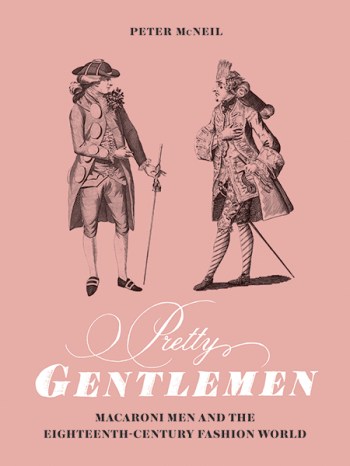 The term ‘macaroni’ was once as familiar a label as ‘punk’ or ‘hipster’ is today. In this handsomely illustrated book devoted to notable 18th-century British male fashion, award-winning author and fashion historian Peter McNeil brings together dress, biography, and historical events with the broader visual and material culture of the late 18th century. For thirty years, macaroni was a highly topical word, yielding a complex set of social, sexual, and cultural associations. Pretty Gentlemen is grounded in surviving dress, archival documents, and art spanning hierarchies and genres, from scurrilous caricature to respectful portrait painting. Celebrities hailed and mocked as macaroni include politician Charles James Fox, painter Richard Cosway, freed slave Julius ‘Soubise’, and criminal parson Reverend Dodd. The style also rapidly spread to neighboring countries in cross-cultural exchange, while Horace Walpole, George III, and Queen Charlotte were active critics and observers of these foppish men.
Peter McNeil is distinguished professor at University of Technology Sydney and Aalto University, Helsinki.
New Book | The Challenge of the Sublime
From Manchester UP:
Hélène Ibata, The Challenge of the Sublime: From Burke’s Philosophical Enquiry to British Romantic Art (Manchester: Manchester University Press, 2018), 336 pages, ISBN: 978 15261 17397, £75 / $115.
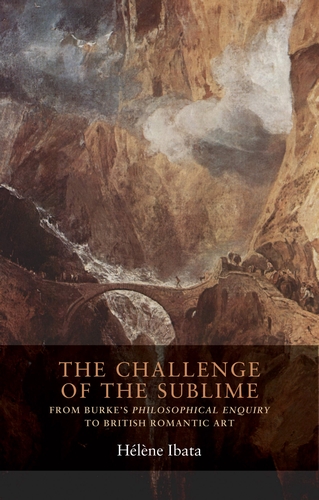 This book examines the links between the unprecedented visual inventiveness of the Romantic period in Britain and eighteenth-century theories of the sublime. Edmund Burke’s Philosophical Enquiry into the Origin of our Ideas of the Sublime and Beautiful (1757), in particular, is shown to have directly or indirectly challenged visual artists to explore not just new themes, but also new compositional strategies and visual media such as panoramas and book illustrations, by arguing that the sublime was beyond the reach of painting. More significantly, it began to call into question mimetic representational models, causing artists to reflect about the presentation of the unpresentable and drawing attention to the process of artistic production itself, rather than the finished artwork.
Helene Ibata is Professor of English and Visual Studies at the University of Strasbourg
C O N T E N T S
Introduction
Part I: From the Enquiry to the Academy
1 The Philosophical Enquiry, Theories of the Sublime and the Sister Arts Tradition
2 Presenting the Unpresentable: The Modernity of Burke’s Enquiry
3 Reynolds, the Great Style, and the Burkean Sublime
4 The Sublime Contained: Academic Compromises
Part II: Beyond the ‘Narrow Limits of Painting’
5 Immersive Spectatorship at the Panorama and the Aesthetics of the Sublime
6 Frames, Edges, and ‘Unlimitation’
7 ‘Sublime Dreams’: Ruin Paintings and Architectural Fantasies
Part III: Relocating the Sublime: Blake, Turner and Creative Endeavour
8 Against and beyond Burke: Blake’s ‘Sublime Labours’
9 Turner: From Sublime Association to Sublime Energy
Conclusion
Bibliography
Index
New Book | Tiepolo’s Pictorial Imagination
The Second Annual Thaw Lecture presented by William Barcham in May 2016 at The Morgan Library & Museum is now available in print from the museum’s shop:
William Barcham, Tiepolo’s Pictorial Imagination: Drawings for Palazzo Clerici (New York: The Morgan Library & Museum, 2017), 63 pages, ISBN: 9780875981819, $17.
 In 1740 Giambattista Tiepolo completed his grand ceiling fresco for the Gallery of Palazzo Clerici, Milan. Unlike his previous ceilings, this was a long gallery that could not be seen in its entirety from a single viewpoint; instead, the ceiling unrolls overhead in a scroll-like manner as visitors pass down the long Gallery. A large group of preparatory studies survives for the ceiling, and these permit us to consider how Tiepolo responded to this daunting assignment and produced a series of interrelated figure groups to decorate the vault. Nearly all today at the Morgan Library & Museum and the Metropolitan Museum of Art in New York and the Museo Horne in Florence, these drawings have long been recognized as studies for the ceiling, but never before has there been a sustained attempt to trace Tiepolo’s creative process through the dozens of sheets. William Barcham’s study of the Clerici drawings thus offers new perspectives not only on the Clerici ceiling but more broadly on Tiepolo’s pictorial imagination and inventive genius.
New Book | The Académie Royale de Peinture et de Sculpture
From Getty Publications, comes this English translation of the 2012 French edition:
Christian Michel, The Académie Royale de Peinture et de Sculpture: The Birth of the French School, 1648–1793, translated by Chris Miller (Los Angeles: Getty Research Institute, 2018), 424 pages, ISBN: 978 160606 5358, $75.
 The Académie Royale de Peinture et de Sculpture (French Academy of Painting and Sculpture)—perhaps the single most influential art institution in history—governed the arts in France for more than 150 years, from its founding in 1648 until its abolition in 1793. Christian Michel’s sweeping study presents an authoritative, in-depth analysis of the Académie’s history and legacy.
The Académie Royale assembled nearly all of the important French artists working at the time, maintained a virtual monopoly on teaching and exhibitions, enjoyed a priority in obtaining royal commissions, and deeply influenced the artistic landscape in France. Yet the institution remains little understood today: all commentary on it, during its existence and since its abolition, is based on prejudices, both favorable and critical, that have shaped the way the institution has been appraised. This book takes a different approach. Rather than judging the Academie Royale, Michel unravels existing critical discourse to consider the nuances and complexities of the academy’s history, reexamining its goals, the shifting power dynamics both within the institution and in the larger political landscape, and its relationship with other French academies and guilds.
Christian Michel is professor of art history at the Université de Lausanne.
New Book | Touring and Publicizing England’s Country Houses
From Bloomsbury Academic:
Jocelyn Anderson, Touring and Publicizing England’s Country Houses in the Long Eighteenth Century (London: Bloomsbury Academic, 2018) 256 pages, ISBN: 978 15013 34979, £86.
 Over the course of the long 18th century, many of England’s grandest country houses became known for displaying noteworthy architecture and design, large collections of sculptures and paintings, and expansive landscape gardens and parks. Although these houses continued to function as residences and spaces of elite retreat, they had powerful public identities: increasingly accessible to tourists and extensively described by travel writers, they began to be celebrated as sites of great importance to national culture. This book examines how these identities emerged, repositioning the importance of country houses in 18th-century Britain and exploring what it took to turn them into tourist attractions. Drawing on travel books, guidebooks, and dozens of tourists’ diaries and letters, it explores what it meant to tour country houses such as Blenheim Palace, Chatsworth, Wilton, Kedleston and Burghley in the tumultuous 1700s. It also questions the legacies of these early tourists: both as a critical cultural practice in the 18th century and an extraordinary and controversial influence in British culture today, country-house tourism is a phenomenon that demands investigation.
Jocelyn Anderson completed her PhD at the Courtauld Institute of Art in 2013. Subsequently, she held a postdoctoral fellowship at the Paul Mellon Centre for Studies in British Art (2014) and the post of Early Career Lecturer in Early Modern Art at the Courtauld (2015–16). She has recently received grants from the Marc Fitch Fund and the Society of Architectural Historians of Great Britain, and she is now an independent scholar based in Toronto, Canada.
C O N T E N T S
List of Plates
List of Figures
List of Tables
Acknowledgments
Introduction: ‘Come Here for Entertainment and Instruction’: Country Houses Exhibited to the Public
1 ‘For the Numerous Strangers Who Visit’: Tourists’ Itineraries and Practices
2 ‘A Sumptuous Pile of Building’: Remaking the Sights and Spaces of the House
3 ‘Eminent in Public Estimation’: The Transformation of Country Houses’ Paintings and Sculptures
4 ‘A Degree of Taste and Elegance’: Commenting on Country Houses’ Interiors
5 ‘The Beauties of Nature’: Descriptions of Country-House Gardens and Parks
Conclusion: ‘The Visitor of Today’: Legacies of 18th-Century Country-House Tourism
Appendix: Country-house Guidebooks
Bibliography
Index
New Book | Raynham Hall
From ACC Distribution:
Michael Ridgdill, Raynham Hall: An English Country House Revealed (Woodbridge: Antique Collectors Club, 2018), 224 pages, ISBN: 978 18514 98604, £30.
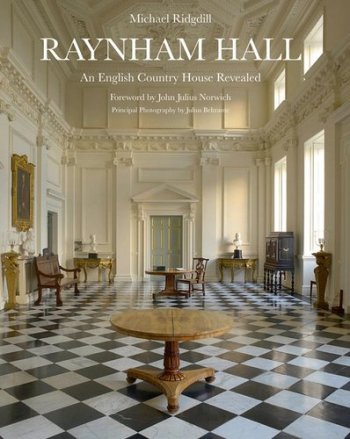 On the eve of its 400th anniversary, Raynham Hall is experiencing a renaissance. The present Marquess and Marchioness Townshend are breathing new life into this ancient family house, which has been passed down through generation after generation, and are sharing its treasures with the public for the first time.
As one of the earliest examples of neo-Palladian architecture in England, and with significant William Kent interiors, Raynham Hall is now the focal point of an entire book devoted to its evolution as a splendid country house and as the seat of one of England’s most important families.
This book serves as the first comprehensive survey of the house, its history, its evolution, and divulges the history of the Townshend family, whose impact on British politics has been felt since before the sixteen hundreds.
Michael Ridgdill founded the American Friends of British Art in 2003, with the mission to help restore and preserve historic art and architecture in Great Britain. Based in Florida, his summers are spent in England, exploring historic sites and meeting with key individuals in the heritage sector. As the charity’s head, Dr. Ridgdill works to promote American appreciation for Britain’s historic treasures, which is achieved by hosting guest lecturers from the UK to give talks in the US and by guiding Americans on country house tours across England. Dr Ridgdill is a native Floridian with a doctorate in Clinical Psychology. His lifelong passion for architecture and history has been the driving force behind the success of the American Friends of British Art, whose supporters are spread across the United States.
New Book | Women and the Country House in Ireland and Britain
From Four Courts Press:
Terence Dooley, Maeve O’Riordan, and Christopher Ridgway, eds., Women and the Country House in Ireland and Britain (Dublin: Four Courts Press, 2018), 320 pages, ISBN: 978 184682 6474, 30€.
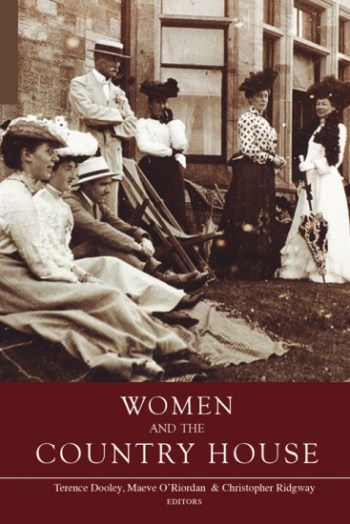 In recent years the role of women in country houses and estates across Ireland and the UK has been the focus of greater attention. Chatelaines, mothers, wives, daughters, widows, sisters, housekeepers and maids were ever-present figures in the microcosm of the country house. New research has begun to reveal the extent of their involvement in managing households and estates, influencing design, adopting public roles, championing good causes, as well as raising families, and committing their thoughts to paper in literary expression. This volume of essays, many of which draw on hitherto unseen family archives, will bring new perspectives to our understanding of the country house as a place where many women often held powerful roles.
Terence Dooley is director of the Centre for Historic Irish Houses and Estates, Maynooth University. Maeve O’Riordan is coordinator of Women’s Studies at University College Cork. Christopher Ridgway is curator at Castle Howard in Yorkshire.
C O N T E N T S
• Amy Boyington, The Architectural Endeavours of the Widowed Jemima Yorke, Marchioness Grey
• Kerry Bristol, Sisters and Sisters-in-law at Nostell Priory, West Yorkshire
• Philip Bull, Five Women of Monksgrange, Co. Wexford
• Anne Casement, The Social, Industrial and Land-owning Worlds of Frances Anne Vane-Tempest
• Jonathan Cherry and Arlene Crampsie, The Women of Ulster’s Country Houses and the Organization of Ulster Day
• Caroline Dakers, Madeline Wyndham of Clouds and Mabel Morrison of Fonthill: Two Victorian Ladies of Wiltshire
• William Fraher, An English Governess in Ireland during World War One
• Judith Hill, Catherine Maria Bury of Charleville Castle, Co. Offaly, 1800–12
• Edmund Joyce, Lady Harriet Kavanagh, 1800–1885: An Influential Chatelaine
• Ruth Larsen, Elite Women, Sorority and the Life Cycle, 1770–1860
• Anna Pilz, Lady Gregory, Forestry and the Domesticated Landscape
• Lowri Ann Rees, Patriarchal Perceptions of Welsh Rural Protest from the Letters of Miss Jane Walters, 1843–44
• Ciarán Reilly, The Country House and the Great Famine: Mildred Darby’s novel, The Hunger
• Regina Sexton, Elite Women and Their Recipe Books: The Case of Dorothy Parsons and her Booke of Choyce Receipts
• Brendan Twomey, Louisa Conolly’s Letters to Her Sister Sarah Bunbury
• Fiona White, Louisa Moore of Moorehall: A Life in Letters










 Enfilade
leave a comment