Exhibition | Chaekgeori: Korean Painted Screens
In terms of objects, it is a nineteenth-century exhibition, but this fascinating genre dates to the late eighteenth century. From SUNY Press:
Chaekgeori: Pleasure of Possessions in Korean Painted Screens
Charles B. Wang Center, Stony Brook University, 29 September — 23 December 2016
Spencer Museum of Art, The University of Kansas, 15 April — 11 June 2017
The Cleveland Museum of Art, 5 August — 5 November 2017
 Chaekgeori explores the genre of Korean still-life painting known as chaekgeori (loosely translated as ‘books and things’). Encouraged and popularized by King Jeongjo (1752–1800, r. 1776–1800) as a political tool to promote societal conservatism against an influx of ideas from abroad, chaekgeori was one of the most enduring and prolific art forms of Korea’s Joseon dynasty (1392–1910). It depicts books and other material commodities as symbolic embodiments of knowledge, power, and social reform.
Chaekgeori has maintained its popularity in Korea for more than two centuries, and remains a force in Korean art to this day. No other genre or medium in the entirety of Korean art, including both court and folk paintings, has so engaged and documented the image of books and collectable commodities and their place in an ever-evolving Korean society. When it transitioned into folk-style painting, unexpected and creative visual elements emerged. Folk versions of chaekgeori from the eighteenth and nineteenth centuries often show an exquisite fusion of Korean and Western composition that feels modern to our contemporary eyes. Not only books but many other commodities are depicted to represent the commoner’s desire for higher social status, wealth, and knowledge.
The first large-scale traveling exhibition of its kind to be published, The Power and Pleasure of Possessions in Korean Painted Screens is made possible by generous grants from the Korea Foundation and the Gallery Hyundai.
Byungmo Chung and Sunglim Kim, eds., Chaekgeori: The Power and Pleasure of Possessions in Korean Painted Screens (Albany: State University of New York Press, 2017), 250 pages, ISBN: 978 14384 68112, $60.
Byungmo Chung is Professor in the Department of Cultural Assets at Gyeongju University, Korea. He was a visiting scholar in the Department of Asian Cultures and Languages at Rutgers University and President of the Korean Folk Painting Society. His scholarship focuses on the genre paintings and Minhwa—the folk painting of Korea. He has organized several Minhwa exhibitions in Korea and written numerous articles and books about Korean folk and genre paintings, including Chaesaekhwa: Polychrome Paintings of Korea.
Sunglim Kim is Assistant Professor of Korean Art History in the Department of Art History and the Asian and Middle Eastern Studies Program, Dartmouth College. Her scholarship focuses on premodern and early twentieth-century Korean art and culture, including the rise of consumer culture and the role of professional nouveau riche in late Joseon Korea, Japanese colonial photographs of Korea, and Korean women artists. She has curated several exhibitions in the United States and written numerous publications on Korean art.
New Book | The Conversation Piece
From Yale UP:
Kate Retford, The Conversation Piece: Making Modern Art in Eighteenth-Century Britain (London: Paul Mellon Centre for Studies in British Art, 2017), 440 pages, ISBN: 978 030019 4807, $75.
 Pioneered by William Hogarth (1697–1764) and his peers in the early eighteenth century, and then revitalized by Johan Zoffany (1733–1810), the conversation piece was an innovative mode of portraiture, depicting groups posed in landscape or domestic settings. These artists grappled with creating complex multi-figured compositions and intricate narratives, filling their paintings with representations of socially, nationally, and temporally precise customs. Paying particular attention to the vibrant (and at times fabricated) interior and exterior settings in these works, Kate Retford discusses the various ways that the conversation piece engaged with the rich material culture of Georgian Britain. The book also explores how these portraits served a wide array of interests and concerns among familial networks and larger social groups. From codifying performances of politeness to engaging in cross-cultural exchanges, the conversation piece was a complex and nuanced expression of a multifaceted society.
Kate Retford is senior lecturer in 18th- and early 19th-century art at Birkbeck, University of London.
New Book | Longford Castle
With the Bouverie family’s purchase of Longford Castle in 1717, the launch of the book coincides with the tercentenary of the family’s ownership of the house. From Unicorn Publishing:
Amelia Smith, Longford Castle: The Treasures and the Collectors (London: Unicorn Publishing, 2017), 208 pages, ISBN: 9781910787687, £40.
 Longford Castle is a fine Elizabethan country house, home to a world-class collection of art built up in the eighteenth and nineteenth centuries by the Bouverie family and still owned today by their descendants. Until now, it has been relatively less known amongst the pantheon of English country houses. This book, richly illustrated and based on extensive scholarly research into the family archive, tells a comprehensive story of the collectors who amassed these treasures. It explores the acquisition and commission of works of art from Holbein’s Erasmus and The Ambassadors, to exquisite landscapes by Claude and Poussin, and family portraits by Thomas Gainsborough and Sir Joshua Reynolds. It explores how Longford, an unusual triangular-shaped castle that inspired Sir Philip Sidney’s Arcadia and Disney’s The Princess Diaries, was decorated and furnished to house these works of fine art. The book brings the story up to the present day, with an introduction and conclusion by the current owner, the 9th Earl of Radnor, himself a keen collector of art, to celebrate this remarkable house and collection.
Amelia Smith grew up in Surrey and attended university in London. She recently completed a PhD on the Longford Castle art collections at Birkbeck College in collaboration with the National Gallery. Amelia Smith graduated in 2012 with a first class degree in History of Art from University College London, where she was awarded the Gombrich Prize and Zilkha Prize. She went on to gain an MA in Curating the Art Museum at the Courtauld Institute of Art in 2013 and undertook a curatorial internship at the National Portrait Gallery, researching for the exhibition The Great War in Portraits (2014).
◊ ◊ ◊ ◊ ◊
From the National Gallery:
Longford Castle: Past and Present
National Gallery, London, Friday, 13 October 2017, 6pm
Join art historian Amelia Smith as she introduces her new book on Longford Castle, its treasures and its collectors, and also Lord Radnor, the castle’s owner, in discussion about his current art collecting. The evening begins with a short interview between Lord Radnor and Susanna Avery-Quash. Amelia Smith’s lecture will follow, and the event will end with a drinks reception, where you will have the opportunity to buy a copy of Smith’s book, signed by the author. The event is free, though tickets are required.
Longford Castle sits on the banks of the River Avon in Wiltshire and is home to a world-class collection including works by Holbein, Claude, Poussin, Gainsborough, and Reynolds. The National Gallery has a long-standing relationship with the Castle, having acquired and enjoyed works of art from its collection over the years. In recent years, visitors have enjoyed guided tours of the Castle, organised by the Gallery.
New Book | John Baskerville: Art and Industry
From Liverpool UP: (with a book launch scheduled for Sunday, 8 October, at 5pm at Waterstone’s Birmingham).
Caroline Archer-Parré and Malcolm Dick, John Baskerville: Art and Industry in the Enlightenment (Liverpool: Liverpool University Press, 2017), 288 pages, ISBN: 978 17869 40643, £80.
 This book is concerned with the eighteenth-century typographer, printer, industrialist, and Enlightenment figure John Baskerville (1707–1775). Baskerville was a Birmingham inventor, entrepreneur, and artist with a worldwide reputation who made eighteenth-century Birmingham a city without typographic equal, by changing the course of type design. Baskerville not only designed one of the world’s most historically important typefaces; he also experimented with casting and setting type, improved the construction of the printing-press, developed a new kind of paper, and refined the quality of printing inks. His typographic experiments put him ahead of his time, had an international impact, and did much to enhance the printing and publishing industries of his day. Yet despite his importance, fame, and influence many aspects of Baskerville’s work and life remain unexplored and his contribution to the arts, industry, culture, and society of the Enlightenment are largely unrecognized. Moreover, recent scholarly research in archaeology, art and design, history, literary studies, and typography is leading to a fundamental reassessment of many aspects of Baskerville’s life and impact, including his birthplace, his work as an industrialist, the networks which sustained him, and the reception of his printing in Britain and overseas. The last major, but inadequate publication of Baskerville dates from 1975. Now, forty years on, the time is ripe for a new book. This interdisciplinary approach provides an original contribution to printing history, eighteenth-century studies, and the dissemination of ideas.
Caroline Archer-Parré is Professor of Typography at Birmingham City University, Director of the Centre for Printing History & Culture and Chairman of the Baskerville Society. She is the author of The Kynoch Press, 1876–1982: The Anatomy of a Printing House (British Library, 2000); Paris Underground (MBP, 2004); and Tart Cards: London’s Illicit Advertising Art (MBP, 2003). Caroline is currently Co-investigator on the AHRC-funded project, ‘Letterpress Printing: past, present, future’.
Malcolm Dick is Director of the Centre for West Midlands History at the University of Birmingham. He directed two history projects in Birmingham between 2000 and 2004: the ‘Millennibrum Project’, which created a multi-media archive of post-1945 Birmingham history, and ‘Revolutionary Players’, which produced an online resource of the history of the West Midlands region. Malcolm has published books on Joseph Priestley, Matthew Boulton, and the history of Birmingham; he co-directs the Centre for Printing History & Culture.
C O N T E N T S
List of Figures
Acknowledgements
Foreword
Timeline
Baskerville Family Tree
Introduction: John Baskerville: Art and Industry of the Enlightenment, Caroline Archer-Parré and Malcolm Dick
1 The Topographies of a Typographer: Mapping John Baskerville since the Eighteenth Century, Malcolm Dick
2 Baskerville’s Birmingham: Printing and the EnglishUrban Renaissance, John Hinks
3 Place, Home and Workplace: Baskerville’s Birthplace and Buildings, George Demidowicz
4 John Baskerville: Japanner of ‘Tea Trays and other Household Goods’, Yvonne Jones
5 John Baskerville, William Hutton and their Social Networks, Susan Whyman
6 John Baskerville the Writing Master: Calligraphy and Type in the Seventeenth and Eighteenth Centuries, Ewan Clayton
7 A Reappraisal of Baskerville’s Greek Types, Gerry Leonidas
8 John Baskerville’s Decorated Papers, Barry McKay and Diana Patterson
9 The ‘Baskerville Bindings’, Aurélie Martin
10 After the ‘Perfect Book’: English Printers and their Use of Baskerville’s Type, 1767–90, Martin Killeen
11 The Cambridge Cult of the Baskerville Press, Caroline Archer-Parre
Appendix 1 The ‘Baskerville Bindings’
Appendix 2 Members of the Baskerville Club
Appendix 3 Comparative Bibliography
Further Reading
General Bibliography
Notes on the Contributors
Index
New Book | Eighteenth-Century Neapolitan Staircases
From ArtBooks.com:
Dirk De Meyer, Eighteenth-Century Neapolitan Staircases: Showpiece and Utility (Gent: A&S Books, 2017), 128 pages, ISBN: 978 90767 14493, $48.
 Eighteenth-century Neapolitan staircases present a shift from the traditional, monumental Baroque palace stairs towards the staircase serving four, five, or more levels of apartments of different social standing. While prefiguring stairs in modern apartment buildings, they solve issues of aristocratic etiquette as well as practical plan arrangements. They are showpiece and utility in one. At times grand and imposing, at times cramped in tapered courtyards, these staircases are numerous and disparate in form. Eighteenth-Century Neapolitan Staircases: Showpiece and Utility documents seven sets of stairs by Neapolitan architects such as Ferdinando Sanfelice. It is the outcome of a master seminar in Architectural History at the Department of Architecture and Urban Planning of Ghent University.
New Book | Synagogues In Hungary, 1782–1918
Klein’s magnum opus was first published in Hungarian in 2011. It’s recently been translated into English. From the Central European Press:
Rudolf Klein, Synagogues In Hungary, 1782–1918 (Budapest: Terc Press, 2017), 800 pages, ISBN: 978 615544 5088, $120 / €106 / £92.
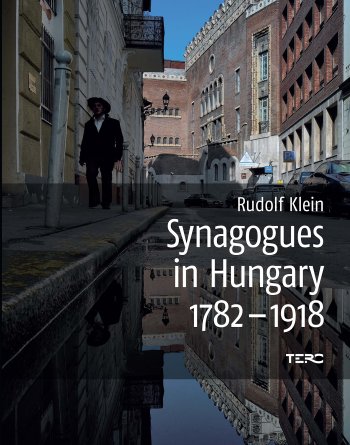 This is the first comprehensive study that systematically covers all synagogues in Hungary from the Edict of Tolerance by Joseph II to the end of World War I. Unlike prior attempts, dealing only with post-World-War-II Hungary, the geographical range of this study includes historic Hungary, including the Austro-Hungarian successor states. The study presents the architecture of Hungarian synagogues chronologically, giving special attention to the boom of synagogue architecture and art from 1867 to 1918, a time also called ‘the modern Jewish Renaissance’. The greatest contribution of this book is the innovative matrix method, which the author applies to determine the basic types of synagogues by using eight basic criteria. The book also deals with the problem of urban context, the position of the synagogue in the city and its immediate environment. There are two detailed case studies addressing how communities built their synagogues and how these were received by the general public. A theoretical summary tries to determine the role of post-emancipation period synagogues in general architectural history.
Rudolf Klein is Professor of modern architectural history, Szent István University, Miklós Ybl Faculty of Architecture and Civil Engineering, Budapest.
New Book | Turin and the British in the Age of the Grand Tour
Scheduled for November publication from Cambridge UP:
Paola Bianchi and Karin Wolfe, eds., Turin and the British in the Age of the Grand Tour (Cambridge: Cambridge University Press, 2017), 506 pages, ISBN: 978 110714 7706, $135.
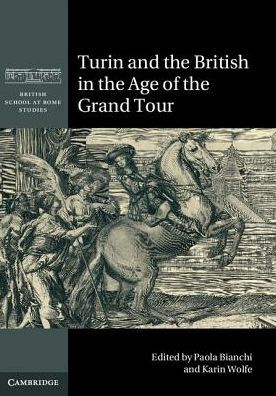 The Duchy of Savoy first claimed royal status in the seventeenth century, but only in 1713 was Victor Amadeus II, Duke of Savoy (1666–1732), crowned King of Sicily. The events of the Peace of Utrecht (1713) sanctioned the decades-long project, the Duchy had pursued through the convoluted maze of political relationships between foreign powers. Of these, the British Kingdom was one of their most assiduous advocates, because of complimentary dynastic, political, cultural and commercial interests.
A notable stream of British diplomats and visitors to the Sabaudian capital engaged in an extraordinary and reciprocal exchange with the Turinese during this fertile period. The flow of travellers, a number of whom were British emissaries and envoys posted to the court, coincided, in part, with the itineraries of the international Grand Tour which transformed the capital into a gateway to Italy, resulting in a conflagration of cultural cosmopolitanism in early modern Europe.
Paola Bianchi teaches Early Modern History at the Università della Valle d’Aosta. She has researched and written on the journeys of various English travellers who came to Italy in the eighteenth century to be presented at the Savoy court and to be part of Piedmont society. Her publications include Onore e mestiere: Le riforme militari nel Piemonte del Settecento (2002); Cuneo in età moderna: Città e stato nel Piemonte d’antico regime (with A. Merlotti) (2002); Sotto diverse bandiere: L’internazionale militare nello stato sabaudo d’antico regime (2012); L’affermarsi della corte sabauda: Dinastie, poteri, élites in Piemonte e Savoia fra tardo Medioevo e prima età moderna (with L.C. Gentile) (2006); Le strategie dell’apparenza: Cerimoniali, politica e società alla corte dei Savoia in età moderna (with A. Merlotti) (2010); and Storia degli Stati sabaudi, 1416–1848 (with A. Merlotti) (2017).
Karin Wolfe is a Research Fellow at the British School at Rome. Her research focuses on topics in seventeenth- and eighteenth-century Italian history, including art, architecture, patronage, and collecting, as well as the history of cardinals and the Grand Tour. Her publications include Roma Britannica: Art Patronage and Cultural Exchange in Eighteenth-Century Rome (edited with D. R. Marshall and S. Russell, 2011). She is presently completing a monograph on Francesco Trevisani, Francesco Trevisani (1656–1746): A Universal Painter, Catalogue Raisonné.
C O N T E N T S
List of figures
Contributors
Preface and Acknowledgements, Christopher J. Smith and Andrea Merlotti
Foreword, Martin Postle
Introduction, Paola Bianchi and Karin Wolfe
Part I | Britain in Turin: Politics and Culture at the Savoy Court
1 England and Savoy: Dynastic Intimacy and Cultural Relations under the Early Stuarts, Toby Osborne
2 Marriage Proposals: Seventeenth-Century Stuart–Savoy Matrimonial Prospects and Politics, Andrea Pennini
3 The Court of Turin and the English Succession, 1712–20, Edward Corp
4 The British Diplomatic Presence in Turin: Diplomatic Culture and British Elite Identity, 1688–1789/98, Christopher Storrs
Part II | Turin: Gateway to Grand Tour Society
5 The British at the Turin Royal Academy: Cosmopolitanism and Religious Pragmatism, Paola Bianchi
6 Thomas Coke in Turin and the Turin Royal Academy, Andrew Moore
7 ‘Never a More Favorable Reception than in the Present Juncture’: British Residents and Travellers in and about Turin, 1747–48, Edoardo Piccoli
8 The British and Freemasonry in Eighteenth-Century Turin, Andrea Merlotti
Part III | Torino Britannica: Diplomacy and Cultural Brokerage
9 John Molesworth: British Envoy and Cultural Intermediary in Turin, Karin Wolfe
10 Silver from London and Turin: Diplomacy by Display and George Hervey, Earl of Bristol, Envoy Extraordinary to the Court of Savoy, 1755–58, James Rothwell
11 The ‘Savoyard’: The painter Domenico Duprà and His British Sitters, Jonathan Yarker
12 The Culture of Confession: The Sardinian Chapel in London in the Eighteenth Century, Paola Cozzo
Part IV | Turin and Britain: Architectural Crossroads
13 Architects and Kings in Grand Tour Europe, Tomasso Manfredi
14 A Homage from Turin: Filippo Juvarra’s Sketches for Lord Burlington, Cristina Ruggero
15 Crossing Borders: The Pioneering Role of the Architect-Engineer Giovanni Battista Borra between Piedmont and Britain, Olga Zoller
Part V | Britain and Turin: Chinoiserie as an International Aesthetic
16 Chinoiserie in Piedmont: An International Language of Diplomacy and Modernity, Christopher M. S. Johns
17 ‘Alla China’: The Reception of International Decorative Models in Piedmont, Cristina Mossetti
18 The British Garden in Piedmont in the Late Eighteenth Century: Variations on the Picturesque, the Anglo-Chinese, and the Landscape Garden, Paolo Cornaglia
Part VI | Turin in Britain: Cultural Exchange in Grand Tour Europe
19 A Plurality of Pluras: The Plura Family of Sculptors between Turin and Britain, Alastair Laing
20 ‘A Memorable Era in the Instrumental Music of This Kingdom’: Piedmontese Musicians in London in the Latter Half of the Eighteenth Century, Annarita Colturato
21 The British Baretti: Didactics and Criticism, Cristina Bracchi
22 Vittorio Alfieri and the ‘English Republic’: Reflections on an Elective Affinity, Francesca Fedi
Appendices
A British Diplomats and Visitors to Turin in the Eighteenth Century, Christopher Storrs
Sabaudian Diplomats to London in the Eighteenth Century, Andrea Merlotti
B British Attendees at the Turin Royal Academy, Paola Bianchi
C Letters from the Molesworth–Galilei Correspondence, 1721–25, Karin Wolfe
References
Index
Exhibition | Making Beauty: The Ginori Porcelain Manufactory
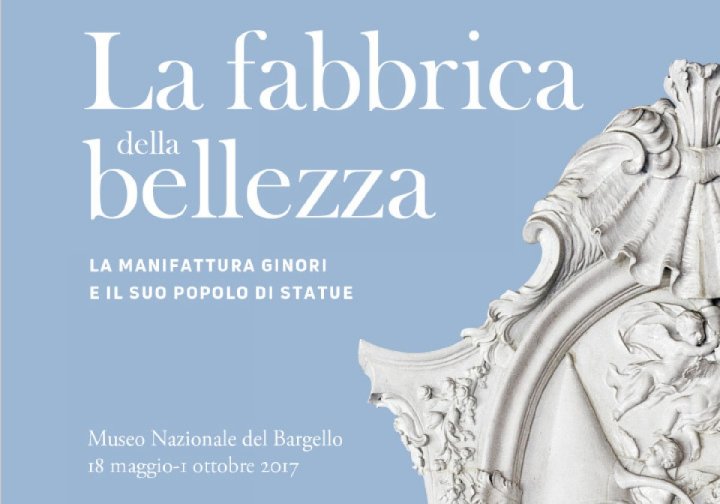
Now on view at the Bargello:
Making Beauty: The Ginori Porcelain Manufactory and Its Progeny of Statues
La Fabbrica della Bellezza: La manifattura Ginori e il suo popolo di statue
Museo Nazionale del Bargello, Florence, 8 May — 1 October 2017
The exhibition is divided into six thematic sections illustrating the transformation of sculptural invention into works of porcelain. The first section opens with an 18th-century life-size bronze Venus, a copy of the celebrated Medici Venus in the Uffizi Tribune. Sculpted by Massimo Soldani Benzi in 1702, the bronze was commissioned by Prince Johann Adam Andreas I of Liechtenstein and still forms part of the present prince’s collection, this exhibition marking its first return to Italy in over 350 years. It stands side by side with a large porcelain Venus made by Gasparo Bruschi in 1747–48, probably using the plaster moulds which Carlo Ginori purchased from Soldani Benzi’s workshop. The two Venuses are, in turn, displayed alongside a monumental porcelain Mercury based on another Classical statue in the Uffizi Tribune. The Mercury, now in the Ginori Lisci Collection, is on display for the very first time in this exhibition, not only with the Venus but also with the monumental Fireplace alongside which it stood in the old Museo di Doccia until 1962, because the Museo Ginori has kindly granted the loan of the two most important works in its entire collection: the Medici Venus reproducing the celebrated statue in the Uffizi Tribune, and the monumental Fireplace specially restored for the exhibition.

Tempietto Ginori, modeled by Gaspero Bruschi, 1750–51; glazed and painted porcelain, heigh 167 cm including ebony base (Museo dell’Academia Etrusca e della Città di Cortona).
The second section is devoted to the superlative Ginori Tempietto Ginori, a masterpiece by Gasparo Bruschi which Carlo Ginori himself donated to the Accademia Etrusca in Cortona. The Tempietto, of exceptional sophistication in terms of its technique and design and unique in terms of its size, summarises in concentrated form not only the artistic aims but also the political aspirations of the manufactory’s founder. Specially restored for the exhibition, it is returning to Florence for the first time since 1757. Alongside it we have Giambologna’s small bronze and wax models of Mercury, from the Bargello Collection and the Museo Ginori respectively, which inspired the Mercury atop Gaspare Bruschi’s Tempietto.
The next room hosts two large, complex bronze and porcelain versions of the Pietà. In 1708, Soldani made the model for the large Lamentation over the Dead Christ, of which numerous versions are known. Carlo Ginori purchased the plaster moulds—some of which are on display in the exhibition—which were used for the porcelain version that the Marchese Ginori gave to the influential Cardinal Neri Corsini around 1745. The group was made in fifty-nine different porcelain parts, individually fired and then assembled by the manufactory’s craftsmen in Sesto Fiorentino.
Somewhat smaller but equally sophisticated in terms of their execution are the groups of Judith with the Head of Holofernes that comprise the exhibition’s fourth thematic section. Gaspare Bruschi’s porcelain version, on loan from the Los Angeles County Museum, is displayed in an unprecedented dialogue with Agostino Cornacchini’s terracotta model, the first sculptural study for this popular group.

Lamentation over the Dead Christ, after Massimo Soldani Benzi, 1745–50, glazed porcelain, height 71.5 cm not including ebony base (Rome: Palazzo Corsini).
This is followed by Soldani’s precious bronze ‘pictorial’ relief depicting the Passing of St. Joseph and the wax model based on the bronze, from the Bargello Collection, which are on display alongside the preparatory study in unfired clay, it too in Italy for the very first time, testifying to the Ginori Manufactory’s plan to produce porcelain versions of it—none of which have, however, survived.
The exhibition’s ‘grand finale’ is the monumental porcelain Fireplace, an absolutely unique work, which may be attributed to Doccia’s chief modeller Gasparo Bruschi and to Domenico Stagi, a stage set designer and painter of quadrature. The piece is a veritable triumph of technical mastery and ornamental sophistication. Its upper part hosts porcelain versions of works by illustrious sculptors, the oval bas-relief with ‘putti distilling flowers’ after a bronze by Massimiliano Soldani Benzi and copies of Dawn and Dusk which Michelangelo carved for the tomb of Lorenzo de’ Medici in the Medici Chapels.
The exhibition is accompanied by a catalogue rich in new research, published by Mandragora in both Italian and English. The catalogue entries explore the manufactory’s artistic and political history, using essays focusing on the works on display to set Ginori’s porcelain sculpture, whether monumental or on a smaller scale, in the broader artistic and political context of the time, and presenting a number of important new attributions. The catalogue also contains fascinating input from experts in the manufacture of porcelain, not only reviewing the manufactory’s history but also illustrating previously unpublished material and highlighting the unique technical nature of Ginori’s inventions.
 La Fabbrica della bellezza has also served as a formative experience for two university students who have taken part in all of the various phases in the development of the exhibition project and drafted the catalogue entries on the basis of an apprenticeship agreement with Florence University’s SAGAS Department. The exhibition and catalogue have been designed and produced with a grant from the Fondazione Cassa di Risparmio di Firenze, with the sponsorship of Richard Ginori and with the collaboration of Firenze Musei; Opera Laboratori Fiorentini and Arteria have also contributed in their capacity as partners for the layout and transport respectively.
In addition to acquainting the general public with an exceptional chapter in the history of Florentine sculpture, the exhibition also sets out to draw the attention of Florentine and international public opinion to the fate of the Museo di Doccia. The generosity of international loans for the exhibition points to the intense interest in the the museum and the manufactory shown by numerous institutions both in Italy and abroad. In that connection, we would like to express our special gratitude to HRH Prince Hans-Adam II von und zu Liechtenstein for granting the exhibition his lofty patronage.
Tomaso Montanari and Dimitrios Zikos, eds., Making Beauty: The Ginori Porcelain Manufactory and Its Progeny of Statues (New York: ACC Publishing, 2017), 160 pages, ISBN: 978 88746 13496, $30. Also available in Italian.
◊ ◊ ◊ ◊ ◊
Note (added 17 September 2017) — Aileen Dawson provides a review of the exhibition in the current issue of The Burlington Magazine (September 2017), pp. 748–49.
Exhibition | Luigi Crespi
Now on view at the Museo Davia Bargellini in Bologna:
Luigi Crespi: Portraitist in the Age of Pope Lambertini
Museo Davia Bargellini, Bologna, 15 September — 3 December 2017
Curated by Mark Gregory d’Apuzzo and Irene Graziani
 The Musei Civici d’Arte Antica dell’Istituzione Bologna Musei, in collaboration with the Department of Arts at the University of Bologna, present Luigi Crespi: Portraitist in the Age of Pope Lambertini, the first exhibition dedicated to the painter and art dealer Luigi Crespi (1708–1779), the son of the famous painter Giuseppe Maria Crespi (1665–1747).
The exhibition is a tribute to this multifaceted figure—among the most interesting of the artistic and literary panorama of eighteenth-century Bologna—in relation to the climate of cultural renewal favored by the enlightened pastoral work of Cardinal Prospero Lambertini, who in 1740 became Pope Benedict XIV. The exhibition presents the most significant core of Crespi’s paintings here, together with other works from the Municipal Art Collections and loans from other important museums and private collectors. The exhibition is organized around seven thematic sections that chart the most important phases of the artist’s career.
◊ ◊ ◊ ◊ ◊
La mostra, a cura di Mark Gregory D’Apuzzo e Irene Graziani, è la prima dedicata al pittore, molte opere del quale sono esposte presso il Museo Davia Bargellini e le Collezioni Comunali d’Arte. Figura poliedrica fra le più interessanti del panorama artistico e letterario di Bologna durante l’episcopato del cardinale Prospero Lambertini (1731–54), e dunque nel periodo di apertura della città alle istanze di rinnovamento culturale sostenute dal vescovo e poi papa Benedetto XIV (1740–58), Luigi Crespi è protagonista della mostra realizzata grazie alla collaborazione di importanti Istituzioni museali cittadine e collezionisti privati.
Luigi, pur essendo soprattutto celebre come letterato e autore del terzo tomo della Felsina Pittrice, edita nel 1769, ha percorso con successo anche la carriera artistica, intrapresa sotto la guida del padre fra la fine degli anni venti e gli inizi degli anni trenta del Settecento. Un’attività che egli stesso, molti anni più tardi, nella biografia del padre (1769), sosterrà di aver svolto «per divertimento», per significare il privilegio accordato al prestigioso ruolo, assunto a partire dagli anni cinquanta, di scrittore e critico d’arte, che gli frutterà infatti l’aggregazione alle Accademie di Firenze (1770), di Parma (1774) e di Venezia (1776).
La sua produzione figurativa tuttavia, in particolar modo quella rappresentata dal più congeniale genere del ritratto, lo rivela sensibile al dialogo con la scienza moderna e con la libera circolazione delle idee dell’Europa cosmopolita. Nonostante l’impegno applicato anche all’ambito dell’arte sacra, cui Luigi si dedica almeno fino agli inizi degli anni sessanta, è soprattutto nella ritrattistica che raggiunge esiti di grande efficacia, molto apprezzati dalla committenza. «Ebbe un particolare dono di ritrarre le fisionomie degli Uomini, e ne fece una serie di Ritratti di Cavaglieri e Damme», scrive infatti Marcello Oretti (1760–80), celebrandone l’abilità nell’adattare la formula del codice ritrattistico alle esigenze della clientela.
Come dimostrano il Ritratto di giovane dama con il cagnolino, o i tre ritratti dei Principi Argonauti in origine nel collegio gesuitico di San Francesco Saverio, la pittura di Crespi junior, già addestrato dal genitore Giuseppe Maria ad un fare schietto, attento al naturale e al «vero», evolve verso un nitore della visione che risalta i dettagli, in un’analitica investigazione della realtà, memore di certi esempi (Balthasar Denner e Martin van Meytens) osservati durante un viaggio di sette mesi fra Austria e Germania, dove visita le Gallerie delle corti di Dresda e Vienna (1752). Così li commenterà infatti Gian Pietro Zanotti in una nota manoscritta: «Bisogna dire il vero che ora fa ritratti bellissimi, e di ottimo gusto, in un certo stile oltramontano».
Dal confronto con il «grande mondo»—per utilizzare un’espressione di Prospero Lambertini, che fu in stretti rapporti con Giuseppe Maria Crespi e fu in gran parte il responsabile della carriera ecclesiastica del figlio, conferendogli la carica di «segretario generale della visita della città e della diocesi», il canonicato di Santa Maria Maggiore (1748) ed ancora nominandolo suo cappellano segreto—Luigi deriva dunque la conferma della validità del codice del ritratto ufficiale, che gli consente di rappresentare i personaggi, qualificandone i gusti sofisticati, le abitudini raffinate, i comportamenti eleganti e disinvolti da assumere nella vita di società, dove si praticano i rituali di quella “civiltà della conversazione” che nella moderna Europa riunisce aristocratici e intellettuali in un dialogo paritario, dettato dalla condivisione di regole e valori comuni. Ma la prossimità con la cultura lambertiniana lo conduce anche a sperimentare, dapprima ancora con il sostegno del padre, poi autonomamente (Ritratto di fanciulla), nuove tipologie di ritratto, in cui lo sguardo incrocia i volti di individui del ceto borghese: talvolta sono gli oggetti a raccontare con la loro perspicuità di definizione la dignità del lavoro (Ritratto di Antonio Cartolari), altre volte sono invece i gesti caratteristici, l’inquadratura priva di infingimenti (Ritratto di fanciulla), la resa confidenziale del modello, quasi al limite della caricatura (Ritratto di Padre Corsini), a fare emergere il valore umano di quella parte della società, cui papa Lambertini riconosceva un ruolo fondamentale nel rinnovamento.
Irene Graziani and Mark Gregory d’Apuzzo, Luigi Crespi: Ritrattista nell’età di Papa Lambertini (Milan: Silvana, 2017), 144 pages, ISBN: 978 88366 37928, $35.
New Book | Robert Adam and Diocletian’s Palace in Split
From the ‘Grand Tour: Dalmatia’ project website:
Joško Belamarić and Ana Šverko, eds., Robert Adam and Diocletian’s Palace in Split (Zagreb: Školska knjiga, 2017), 608 pages, ISBN 978 9537875 381 / 978 9530 609754, $61.
 When, on his Grand Tour, the Scottish architect Robert Adam travelled from Rome to Split in 1757 to study Diocletian’s Palace, he expected to find a monumental Roman villa. Instead, he came across an exceptional late antique structure that, in the Middle Ages, had been transformed into a city. Adam turned his study of this monument into an original architectural theory, and, in London in 1764, it was published in one of the most beautiful books of the eighteenth century: Ruins of the Palace of the Emperor Diocletian at Spalatro in Dalmatia.
The lessons Adam grasped in Split also inspired his own architectural projects in England and Scotland, influencing, in part, the ‘Adam Style’, a specific neoclassical style that had a significant impact on European and American architecture. We find the imprint of Diocletian’s Palace as a design model everywhere in Adam’s projects, from the scale of the ornamentation (a famous example is his interpretation of the capital from Diocletian’s Peristyle) to the application of the specificities of its spatial construction.
In 2014, a group of scholars gathered in Split to mark the 250th anniversary of the publication of Adam’s book, and a series of essays developed out of their discussions. Their texts are illustrated with more than two hundred images, some of which are being published for the first time, from numerous archives and museums, from Sir John Soane’s Museum in London to the State Hermitage Museum in Saint Petersburg.
This book shows that the ancient stratum of Diocletian’s Palace, this extraordinary multi-layered urban fabric, has not changed notably since Adam’s visit to Split. Yet the book is more than just the story of Adam and Diocletian’s Palace; it is also a guide to the Palace’s spaces and monuments, and a witness to its changes and its continuity. All of these we would not have been able to understand, nor experience so well, without Adam’s tireless research. The book can be ordered at: izvoz@skolskaknjiga.hr.
Contributors
Josko Belamaric, Iain Gordon Brown, Stephen Caffey, Amanda Green, Heather Hyde Minor, Angelo Lorenzi, Krasanka Majer Jurišić, Ivan Mirnik, John A. Pinto, Ante Rendić-Miočević, Frances Sands, Valery Shevchenko, Ana Sverko, Colin Thom, Isabelle Warin, Elke Katharina Wittich










leave a comment