New Book Series | The Material Culture of Art
New Bloomsbury Academic Book Series: The Material Culture of Art
Series Editor: Michael Yonan, University of Missouri
The Material Culture of Art is devoted to scholarship that brings art history into dialogue with interdisciplinary material culture studies. The material components of an object—its medium and physicality—are key to understanding its cultural significance. Material culture has stretched the boundaries of art history and emphasized new points of contact with other disciplines, including anthropology, archaeology, consumer and mass culture studies, the literary movement called ‘Thing Theory’, and materialist philosophy. The Material Culture of Art seeks to publish studies that explore the relationship between art and material culture in all of its complexity. The series is a venue for scholars to explore specific object histories (or object biographies, as the term has developed), studies of medium, and the procedures for making works of art and investigations of art’s relationship to the broader material world that comprises society. It seeks to be the premiere venue for publishing the growing scholarship about works of art as exemplifications of material culture.
 The series encompasses material culture in its broadest dimensions, including the decorative arts (furniture, ceramics, metalwork, textiles), everyday objects of all kinds (toys, machines, musical instruments), and studies of the familiar high arts of painting and sculpture. The series welcomes proposals for monographs, thematic studies, and edited collections.
Please direct inquiries and proposals to both Michael Yonan, series editor, yonanm@missouri.edu, and Margaret Michniewicz, Visual Arts Acquisitions Editor, Margaret.Michniewicz@bloomsbury.com.
Series Advisory Board
Wendy Bellion, University of Delaware
Claire Jones, University of Birmingham
Stephen McDowall, University of Edinburgh
Amanda Phillips, University of Virginia
John Potvin, Concordia University, Canada
Stacey Sloboda, Southern Illinois University
Kristel Smentek, MIT
Robert Wellington, Australian National University
New Book | Red: The History of a Color
From Princeton UP:
Michel Pastoureau, Red: The History of a Color (Princeton: Princeton University Press, 2017), 216 pages, ISBN: 978 06911 72774, $40 / £33.
 The color red has represented many things, from the life force and the divine to love, lust, and anger. Up through the Middle Ages, red held a place of privilege in the Western world. For many cultures, red was not just one color of many but rather the only color worthy enough to be used for social purposes. In some languages, the word for red was the same as the word for color. The first color developed for painting and dying, red became associated in antiquity with war, wealth, and power. In the medieval period, red held both religious significance, as the color of the blood of Christ and the fires of Hell, and secular meaning, as a symbol of love, glory, and beauty. Yet during the Protestant Reformation, red began to decline in status. Viewed as indecent and immoral and linked to luxury and the excesses of the Catholic Church, red fell out of favor. After the French Revolution, red gained new respect as the color of progressive movements and radical left-wing politics.
In this beautifully illustrated book, Michel Pastoureau, the acclaimed author of Blue, Black, and Green, now masterfully navigates centuries of symbolism and complex meanings to present the fascinating and sometimes controversial history of the color red. Pastoureau illuminates red’s evolution through a diverse selection of captivating images, including the cave paintings of Lascaux, the works of Renaissance masters, and the modern paintings and stained glass of Mark Rothko and Josef Albers.
Michel Pastoureau is a historian and director of studies at the École Pratique des Hautes Études de la Sorbonne in Paris. A specialist in the history of colors, symbols, and heraldry, he is the author of many books, including Green, Black, and Blue (all Princeton) and The Devil’s Cloth: A History of Stripes. His books have been translated into more than thirty languages.
New Book | City of Refuge: Separatists and Utopian Town Planning
From Princeton UP:
Michael Lewis, City of Refuge: Separatists and Utopian Town Planning (Princeton: Princeton University Press, 2016), 256 pages, ISBN: 978 0691 171814, $45 / £38.
 The vision of Utopia obsessed the nineteenth-century mind, shaping art, literature, and especially town planning. In City of Refuge, Michael Lewis takes readers across centuries and continents to show how Utopian town planning produced a distinctive type of settlement characterized by its square plan, collective ownership of properties, and communal dormitories. Some of these settlements were sanctuaries from religious persecution, like those of the German Rappites, French Huguenots, and American Shakers, while others were sanctuaries from the Industrial Revolution, like those imagined by Charles Fourier, Robert Owen, and other Utopian visionaries.
Because of their differences in ideology and theology, these settlements have traditionally been viewed separately, but Lewis shows how they are part of a continuous intellectual tradition that stretches from the early Protestant Reformation into modern times. Through close readings of architectural plans and archival documents, many previously unpublished, he shows the network of connections between these seemingly disparate Utopian settlements—including even such well-known town plans as those of New Haven and Philadelphia.
The most remarkable aspect of the city of refuge is the inventive way it fused its eclectic sources, ranging from the encampments of the ancient Israelites as described in the Bible to the detailed social program of Thomas More’s Utopia to modern thought about education, science, and technology. Delving into the historical evolution and antecedents of Utopian towns and cities, City of Refuge alters notions of what a Utopian community can and should be.
Michael J. Lewis is the Faison-Pierson-Stoddard Professor of Art History at Williams College. His books include Frank Furness: Architecture and the Violent Mind, The Gothic Revival, and American Art and Architecture. His essays and reviews have appeared in such publications as The Wall Street Journal and The New York Times.
C O N T E N T S
1 The Idea of the City of Refuge
2 The Sacred Squareness of Cities
3 The Protestant Tempering of Utopia
4 Christianopolis
5 The Lord’s Grove
6 Harmony
7 Economy
8 Conclusion
Notes
Selected Bibliography
Index
Illustration Credits
Acknowledgments
New Book | The Art of Philosophy: Visual Thinking in Europe
From Princeton UP:
Susanna Berger, The Art of Philosophy: Visual Thinking in Europe from the Late Renaissance to the Early Enlightenment (Princeton: Princeton University Press, 2017), 352 pages, ISBN: 978 06911 72279, $65 / £55.
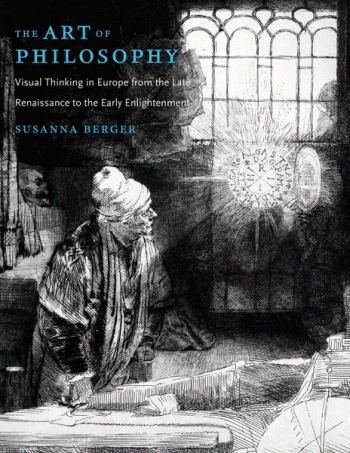 Delving into the intersections between artistic images and philosophical knowledge in Europe from the late sixteenth to the early eighteenth centuries, The Art of Philosophy shows that the making and study of visual art functioned as important methods of philosophical thinking and instruction. From frontispieces of books to monumental prints created by philosophers in collaboration with renowned artists, Susanna Berger examines visual representations of philosophy and overturns prevailing assumptions about the limited function of the visual in European intellectual history.
Rather than merely illustrating already existing philosophical concepts, visual images generated new knowledge for both Aristotelian thinkers and anti-Aristotelians, such as Descartes and Hobbes. Printmaking and drawing played a decisive role in discoveries that led to a move away from the authority of Aristotle in the seventeenth century. Berger interprets visual art from printed books, student lecture notebooks, alba amicorum (friendship albums), broadsides, and paintings, and examines the work of such artists as Pietro Testa, Léonard Gaultier, Abraham Bosse, Dürer, and Rembrandt. In particular, she focuses on the rise and decline of the ‘plural image’, a genre that was popular among early modern philosophers. Plural images brought multiple images together on the same page, often in order to visualize systems of logic, metaphysics, natural philosophy, or moral philosophy. Featuring previously unpublished prints and drawings from the early modern period and lavish gatefolds, The Art of Philosophy reveals the essential connections between visual commentary and philosophical thought.
Susanna Berger is assistant professor of art history at the University of Southern California.
C O N T E N T S
Acknowledgments
Abbreviations
Introduction
1 Apin’s Cabinet of Printed Curiosities
2 Thinking through Plural Images of Logic
3 The Visible Order of Student Lecture Notebooks
4 Visual Thinking in Logic Notebooks and Alba amicorum
5 The Generation of Art as the Generation of Philosophy
Appendix 1 Catalogue of Surviving Impressions of Philosophical Plural Images
Appendix 2 Transcriptions of the Texts Inscribed onto Philosophical Plural Images
Notes
Bibliography
Index
Illustration Credits
New Book | ‘Drawing on Copper’: The Basire Family
From the newsletter of the Society of Antiquaries of London, Salon 379 (7 February 2017) . . .
Richard Goddard, ‘Drawing on Copper’: The Basire Family of Copper-Plate Engravers and their Works (Maastricht, 2017), 332 pages, ISBN: 978 946159 5911.
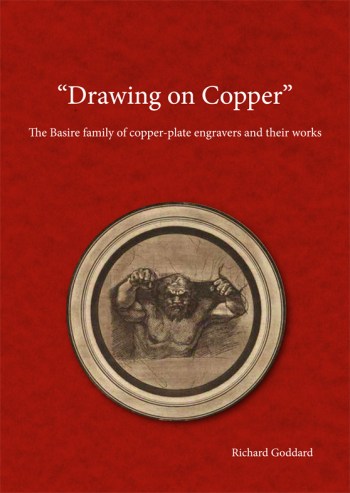
Julian Pooley FSA writes with news of a book about copper-plate engraving. Four generations of the Basire family of skilled printmakers, draughtsmen, and engravers, spanning 1730–1883, were celebrated for their skill in drawing, on copper and stone, accurate representations of monuments and antiquities. Their pictures can be found throughout Archaeologia, Vetusta Monumenta, and many of the most celebrated works of 18th- and 19th-century topography and antiquarianism (James Basire, 1730–1802, was engraver to the Society of Antiquaries for 20 years). Richard Goddard, a descendent of the Basire family, has published a meticulously researched and beautifully written study of their careers, interests and influence called ‘Drawing on Copper’: The Basire Family of Copper-Plate Engravers and their Works. It is beautifully illustrated by over 70 plates, says Pooley, and has six chapters assessing the medium of engraving and careers of successive members of the Basire family. Details can be found on the author’s website, where a PDF of the book can be downloaded.
New Book | Art and Celebrity
From Penn State University Press:
Heather McPherson, Art and Celebrity in the Age of Reynolds and Siddons (University Park: The Pennsylvania State University Press, 2017), 272 pages, ISBN: 978 0271 074078, $90.
 In this volume, Heather McPherson examines the connections among portraiture, theater, the visual arts, and fame to shed light on the emergence of modern celebrity culture in eighteenth-century England. Popular actors in Georgian London, such as David Garrick, Sarah Siddons, and John Philip Kemble, gave larger-than-life performances at Drury Lane and Covent Garden; their offstage personalities garnered as much attention through portraits painted by leading artists, sensational stories in the press, and often-vicious caricatures. Likewise, artists such as Joshua Reynolds and Thomas Lawrence figured prominently outside their studios—in polite society and the emerging public sphere. McPherson considers this increasing interest in theatrical and artistic celebrities and explores the ways in which aesthetics, cultural politics, and consumption combined during this period to form a media-driven celebrity culture that is surprisingly similar to celebrity obsessions in the world today.
This richly researched study draws on a wide variety of period sources, from newspaper reviews and satirical pamphlets to caricatures and paintings by Reynolds and Lawrence as well as Thomas Gainsborough, George Romney, and Angelica Kauffman. These transport the reader to eighteenth-century London and the dynamic venues where art and celebrity converged with culture and commerce. Interweaving art history, history of performance, and cultural studies, Art and Celebrity in the Age of Reynolds and Siddons offers important insights into the intersecting worlds of artist and actor, studio and stage, high art and popular visual culture.
Heather McPherson is Professor of Art History at the University of Alabama at Birmingham.
C O N T E N T S
List of Illustrations
Acknowledgments
Introduction: Studio and Stage in the Age of Reynolds and Siddons
1 Garrick, Reynolds, and the Apotheosis of Performance
2 Portraiture, Public Display, and the Politics of Representation
3 Staging Celebrity: Siddons and Tragic Pallor
4 Targeting Celebrity: Caricature and Cultural Politics
5 Artistic Afterlives and the Historiography of Fame
Notes
Selected Bibliography
Index
Exhibition | In the Name of the Lily: French Printmaking
Press release for the exhibition now on view in Bremen:
In the Name of the Lily: French Printmaking in the Age of Louis XIV
Im Zeichen der Lilie: Französische Druckgraphik zur Zeit Ludwigs XIV
Kunsthalle Bremen, 1 February — 28 May 2017

Pierre Drevet after Hyacinthe Rigaud, Portrait of Louis XIV, 1714/15, 39 × 52 cm (Kunsthalle Bremen).
This exhibition presents outstanding French prints from 1650 to 1715, an era in which the magnificence of Absolutism reached its climax. During the reign of Louis XIV, a principal task of the fine arts was to spread the glory and splendour of the Sun King as a statesman, general, and patron far beyond the borders of his own country. Prints were especially suited to this purpose. They were easy to transport; they could be produced in great numbers; they were sold individually or sumptuously bound together; and they could unequivocally serve political aspirations. Engravings after paintings in the King’s collections, views of his palaces, and images of his military victories advanced them to highly respected prestige objects.
In 1660, Louis XIV freed engravers from the restrictions of the guild system and elevated them to the rank of free artists. In 1663 they were allowed to enter the Royal Academy, which provided standardized training and thereby ensured an extraordinarily high level of technical skills. The precision and inventiveness of engravers such as Gérard Edelinck, Robert Nanteuil, Pierre Drevet, and Jean Audran—who used subtle graduated tonality, sophisticated lighting, and elaborately worked surfaces—contributed significantly to the formation of a French style that set the standard for later printmaking.
The engraver Anton Würth (b. 1957), who has explored the aesthetic quality of 17th-century French engravings in depth, has been invited to make a guest contribution.
Only a few minutes’ walk away from Bremen’s central market square, the Kunsthalle Bremen’s building has stood in the Wall gardens for over 150 years. The gallery’s private owner is to this day is the Kunstverein in Bremen (the Bremen Art Association), founded by the citizens of Bremen in 1823, making it one of the oldest art associations in Germany. With more than 9,000 members, it counts today one of the strongest memberships in the Federal Republic of Germany. As the city’s most distinguished art and cultural institution, its impact extends far beyond the region. Generous endowments, private donations, bequests by friends of the arts and allocations from the City of Bremen municipality form the basis for the gallery’s successful pursuit of its historic activity. Over the centuries, a rich and diverse collection has been assembled, containing outstanding paintings and sculptures as well as precious holdings of graphic art.
◊ ◊ ◊ ◊ ◊
Christien Melzer and Anton Würth, Im Zeichen der Lilie: Französische Druckgraphik zur Zeit Ludwigs XIV (Bremen: Kunstverein Bremen, 2017), 96 pages, ISBN: 978-3935127332.
 Der französische Kupferstich erlebte zwischen 1650 und 1715 eine besondere Blüte. Ausstellung und Katalog Im Zeichen der Lilie. Französische Druckgraphik zur Zeit Ludwigs XIV. stellen vom 1. Februar bis 28. Mai 2017 erstmals in der Kunsthalle Bremen eine Auswahl von rund 70 Kupferstichen und Radierungen von 25 Künstlern des Barock vor. Die Zeitspanne umfasst in etwa die Regierungszeit des französischen Sonnenkönigs, Ludwig XIV., der alle Künste der Staatsräson unterordnete. In der Druckgraphik erkannte er ein Massenmedium par excellence, um seinen Ruhm über die Grenzen Frankreichs hinaus zu verbreiten und seine Macht zu festigen. Zahlreiche, teils monumentale Kupferstiche in ausgezeichneter Qualität und hervorragender Erhaltung spiegeln die Machtentfaltung des französischen Monarchen. Auf höchstem technischem Niveau zeigen sie die Besitztümer des Königs, seien es Gemälde, Tapisserien, Fresken oder Gebäude. Dramatische Schlachtenbilder illustrieren die militärischen Erfolge des Königs, brillante Porträts hn unterordnete. In der Druckgraphik erkannte er ein Massenmedium par excellence, um seinen Ruhm über die Grenzen Frankreichs hinaus zu verbreiten und seine Macht zu festigen. Zahlreiche, teils monumentale Kupferstiche in ausgezeichneter Qualität und hervorragender Erhaltung spiegeln die Machtentfaltung des französischen Monarchen. Auf höchstem technischem Niveau zeigen sie die Besitztümer des Königs, seien es Gemälde, Tapisserien, Fresken oder Gebäude. Dramatische Schlachtenbilder illustrieren die militärischen Erfolge des Königs, brillante Porträts halten die Subjekte seines Staatswesens für die Ewigkeit fest, prachtvolle Allegorien führen seine Tugenden vor Augen. Die präzisen und zugleich höchst sinnlichen Stiche von Gérard Edelinck, Robert Nanteuil, Pierre Drevet oder Jean Audran zeichnen sich durch subtil abgestufte Tonalitäten, eine raffinierte Lichtregie und differenziert ausgearbeitete Oberflächen aus und etablierten einen genuin französischen Stil, der geschmacksbildend für ganz Europa werden sollte.
New Book | Battlefield Emotions, 1500–1800
From Palgrave Macmillan:
Erika Kuijpers and Cornelis van der Haven, eds., Battlefield Emotions, 1500–1800: Practices, Experience, Imagination (Basingstoke: Palgrave Macmillan, 2016), 303 pages, ISBN: 978 1137 564894, $109.
 This book explores changes in emotional cultures of the early modern battlefield. Military action involves extraordinary modes of emotional experience and affective control of the soldier, and it evokes strong emotional reactions in society at large. While emotional experiences of actors and observers may differ radically, they can also be tightly connected through social interaction, cultural representations and mediatisation. The book integrates psychological, social and cultural perspectives on the battlefield, looking at emotional behaviour, expression and representation in a great variety of primary source material. In three steps it discusses the emotional practices in the army, the emotional experiences of the individual combatant and the emotions of the mediated battlefield in the visual arts.
Erika Kuijpers teaches cultural history at VU University, the Netherlands. Her previous work concerned the social history of early modern migration and labour relations. From 2008 to 2013 she worked at Leiden University, researching memories of the Dutch Revolt, as part of the VICI research project Tales of the Revolt: Memory, Oblivion and Identity in the Low Countries, 1566–1700. She is co-editor of the volume Memory before Modernity: Practices of Memory in Early Modern Europe (2013) and is working on a monograph about the way early modern witnesses and victims of war dealt with traumatic memories.
Cornelis van der Haven is a literary historian who has published on Dutch and German theatre and literature in the 17th and 18th centuries, with a strong focus on the role of literary texts in shaping cultural and social identities. He lectures at the Literary Department of Ghent University, Belgium.
C O N T E N T S
1 Erika Kuijpers and Cornelis van der Haven, Battlefield Emotions 1500–1800: Practices, Experience, Imagination
2 Cornelis van der Haven, Drill and Allocution as Emotional Practices in Seventeenth-Century Dutch Poetry, Plays, and Military Treatises
3 Andreas Bähr, Magical Swords and Heavenly Weapons: Battlefield Fear(lessness) in the Seventeenth Century
4 Bettina Noak, Emotions, Imagination, and Surgery: Wounded Warriors in the Work of Ambroise Paré and Johan van Beverwijck
5 Ilya Berkovich, Fear, Honour and Emotional Control on the Eighteenth-Century Battlefield
6 Johan Verberckmoes, Early Modern Jokes on Fearing Soldiers
7 Brian Sandberg, ‘His Courage Produced More Fear in His Enemies than Shame in His Soldiers’: Siege Combat and Emotional Display in the French Wars of Religion
8 Marian Füssel, Emotions in the Making: The Transformation of Battlefield Experiences during the Seven Years’ War (1756–63)
9 Ian Germani, Mediated Battlefields of the French Revolution and Emotives at Work
10 Mary Favret, Whose Battlefield Emotion?
11 Lisa De Boer, The Sidelong Glance: Tracing Battlefield Emotions in Dutch Art of the Golden Age
12 Valerie Mainz, Deflecting the Fire of Eighteenth-Century French Battle Painting
13 Philip Shaw, Picturing Valenciennes: Philippe-Jacques de Loutherbourg and the Emotional Regulation of British Military Art in the 1790s
14 Dorothee Sturkenboom, Battlefield Emotions in Early Modern Europe: Trends, Key Issues, and Blind Spots
New Book | Days of Glory? Imaging Military Recruitment
From Palgrave Macmillan:
Valerie Mainz, Days of Glory? Imaging Military Recruitment and the French Revolution (Basingstoke, Palgrave Macmillan, 2016), 298 pages, ISBN 978 1137 542946, $90.
 This book examines a range of visual images of military recruitment to explore changing notions of glory, or of gloire, during the French Revolution. It raises questions about how this event re-orientated notions of ‘citizenship’ and of service to ‘la Patrie’. The opening lines of the Marseillaise are grandly declamatory: Allons enfants de la Patrie/le jour de gloire est arrivé! or, in English: Arise, children of the Homeland/The day of glory has arrived! What do these words mean in their later eighteenth-century French context? What was gloire and how was it changed by the revolutionary process? This military song, later adopted as the national anthem, represents a deceptively unifying moment of collective engagement in the making of the modern French nation. Valerie Mainz questions this through a close study of visual imagery dealing with the issue of military recruitment. From neoclassical painting to popular prints, such images typically dealt with the shift from civilian to soldier, focusing on how men, and not women, were called to serve the Homeland.
Valerie Mainz is Senior Lecturer in the School of Fine Art, History of Art and Cultural Studies at the University of Leeds, UK, having previously worked in both the commercial and subsidised sectors of the theatre. She has curated exhibitions on the French Revolution at the University Gallery, University of Leeds in 1998, at the Musée de la Révolution française, Vizille in 1999 and, together with Richard Williams, at the Henry Moore Institute, Leeds in 2006.
C O N T E N T S
Introduction
Signing Up before the Revolution
Transforming
Recruitment and Revolution before Thermidor
Fighting Women
Fame’s Two Trumpets
New Book | Staging Blackness and Performing Whiteness
From Routledge:
Wendy Sutherland, Staging Blackness and Performing Whiteness in Eighteenth-Century German Drama (New York: Routledge, 2016), 272 pages, ISBN: 978 14094 24024, $150.
 Focusing on eighteenth-century cultural productions, Wendy Sutherland examines how representations of race in philosophy, anthropology, aesthetics, drama, and court painting influenced the construction of a white bourgeois German self. Sutherland positions her work within the framework of the transatlantic slave trade, showing that slavery, colonialism, and the triangular trade between Europe, West Africa, and the Caribbean function as the global stage on which German bourgeois dramas by Friedrich Wilhelm Ziegler, Ernst Lorenz Rathlef, and Theodor Körner (and a novella by Heinrich von Kleist on which Körner’s play was based) were performed against a backdrop of philosophical and anthropological influences. Plays had an important role in educating the rising bourgeois class in morality, Sutherland argues, with fathers and daughters offered as exemplary moral figures in contrast to the depraved aristocracy. At the same time, black female protagonists in nontraditional dramas represent the boundaries of physical beauty and marriage eligibility while also complicating ideas of moral beauty embodied in the concept of the beautiful soul. Her book offers convincing evidence that the eighteenth-century German stage grappled with the representation of blackness during the Age of Goethe, even though the German states were neither colonial powers nor direct participants in the slave trade.
Wendy Sutherland is Associate Professor of German at New College of Florida.
C O N T E N T S
Introduction
Race in Eighteenth-Century Germany
Slavery, Colonialism, and the Eighteenth-Century Global Stage
‘Looking at the Overlooked’: Stage Properties and the Table in Karl Lessing’s Die Mätresse (1780)
Excursus: The Court Moor and Eighteenth-Century Court Painting
The Construction of Whiteness in the Traditional German Bourgeois Drama
Race, Doubles, and Foils: Staging Blackness in Friedrich Wilhelm Ziegler’s Die Mohrinn (1801)
Race, Homosocial Desire, and the Black in Ernst Lorenz Rathlef’s Die Mohrinn zu Hamburg (1775)
Reading in the Dark? Racial Hierarchy and Miscegenation in Heinrich von Kleist’s Die Verlobung in St. Domingo (1811) and Theodor Körner’s Toni (1812)
Epilogue
Bibliography
Index










 Enfilade
leave a comment