Exhibition | Making America: Myth, Memory, and Identity
Next fall at the VMFA:
Making America: Myth, Memory, and Identity
Virginia Museum of Fine Arts, Richmond, 12 September 2015 — 3 January 2016
Other venues to be announced
Making America will be the first full-scale multimedia investigation of America’s most enduring cultural phenomenon—the Colonial Revival. Featuring approximately 200 paintings, sculptures, works on paper, photographs, decorative arts, architectural and landscape designs, costumes, and popular culture ephemera—dating from the late 18th century to the present day—VMFA’s landmark exhibition expands the chronological and geographic boundaries of the regionally diverse, multicultural revival. More than just a style or movement, this ongoing hybrid impulse draws from the historical past to understand the present through the creative use of iconic forms and motifs. Making America will explore how and why this desire to revisit—and reinterpret—the past has shaped America’s visual landscapes, ideologies, and collective memories in times of celebration and crisis.
Making America, which will travel nationally, is organized by the curatorial team of University of Virginia Commonwealth Professor Dr. Richard Guy Wilson; Dr. Sylvia Yount, VMFA Chief Curator and Louise B. and J. Harwood Cochrane Curator of American Art; and her museum colleagues Dr. Susan J. Rawles, Assistant Curator of American Decorative Art, and Christopher Oliver, Assistant Curator of American Art, all of whom will contribute to the accompanying scholarly catalogue.
New Book | Portraiture and Politics in Revolutionary France
From Penn State UP:
Amy Freund, Portraiture and Politics in Revolutionary France (University Park: The Pennsylvania State University Press, 2014), 312 pages, ISBN: 978-0271061948, $85.
 Portraiture and Politics in Revolutionary France challenges widely held assumptions about both the genre of portraiture and the political and cultural role of images in France at the beginning of the nineteenth century. After 1789, portraiture came to dominate French visual culture because it addressed the central challenge of the Revolution: how to turn subjects into citizens. Revolutionary portraits allowed sitters and artists to appropriate the means of representation, both aesthetic and political, and articulate new forms of selfhood and citizenship, often in astonishingly creative ways. The triumph of revolutionary portraiture also marks a turning point in the history of art, when seriousness of purpose and aesthetic ambition passed from the formulation of historical narratives to the depiction of contemporary individuals. This shift had major consequences for the course of modern art production and its engagement with the political and the contingent.
New Book | A Surviving Legacy in Spanish America
From the Antique Collectors Club:
María Campos Carlés de Peña, A Surviving Legacy in Spanish America: Seventeenth- and Eighteenth-Century Furniture from the Viceroyalty of Peru (Madrid: Ediciones El Viso, 2014), 448 pages, ISBN: 978-8494006180, $75.
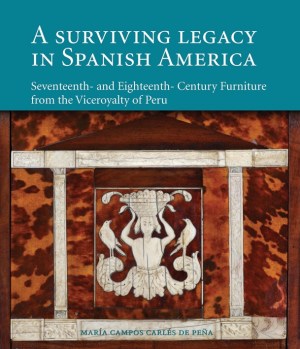 María Campos Carlés de Peña, a leading expert in furniture history, has undertaken an exhaustive project of research into the large and varied production of furniture made in Peru in the seventeenth and eighteenth centuries—the colonial period—for churches, convents, monasteries and private collections. Over eleven chapters she provides a thorough description of this type of furniture, which was inspired by artistic styles ranging from Mannerism to Neoclassicism, with their many variants and creators. Her analysis allows for an appreciation of the way vice-regal furniture in Peru is a valuable witness to its time: an example of a syncretism of varied and different cultures, endowed with symbolism, iconographic meaning and enormous beauty.
The Burlington Magazine, June 2014
The eighteenth century in The Burlington:
The Burlington Magazine 156 (June 2014)
 A R T I C L E S
• Meredith M. Hale, “Amsterdam Broadsheets as Sources for a Painted Screen in Mexico City, c. 1700,” pp. 356–64.
European print sources for a twelve-panel screen made in Mexico City (c. 1697–1701).
• Alvar González-Palacios, “Giardini and Passarini: Facts and Hypotheses,” pp. 365–75.
New documents on the gold- and silversmith Giovanni Giardini (1646–1721).
• Koenraad Brosens and Guy Delmarcel, “Raphael’s Acts of the Apostles: Italians in the Service of the Habsburg Monarchy and the Leyniers Tapestry Workshop, 1725–55,” pp. 376–81.
A seven-part series of tapestries made by Daniel Leyniers (1752–54) in the Villa Hugel, Essen, based on Raphael’s Acts of the Apostles (woven 1516–21).
R E V I E W S
• Simon Jervis, Review of the exhibition William Kent: Designing Georgian Britain, pp. 391–94.
• Christopher Baker, Review of Christopher Rowell, ed., Ham House: 400 Years of Collecting and Patronage (The Paul Mellon Centre for Studies in British Art and the National Trust, 2013), pp. 398–99.
• Kate Retford, Review of the exhibition catalogue Moira Goff et al, Georgians Revealed: Life, Style, and the Making of Modern Britain (British Library, 2013), p. 401.
• David Pullins, Review of the exhibition From Watteau to Fragonard: Les Fêtes Galantes, pp. 408–10.
• Philippe Bordes, Review of the exhibition Le Goût de Diderot, pp. 413–15.
New Book | Looking Smart: Chardin’s Genre Subjects
From the University of Delaware Press:
Paula Radisich, Pastiche, Fashion, and Galanterie in Chardin’s Genre Subjects: Looking Smart (Newark: University of Delaware Press, 2013), 206 pages, ISBN: 978-1611494242, $75.
 Pastiche, Fashion, and Galanterie in Chardin’s Genre Subjects seeks to understand how Chardin’s genre subjects were composed and constructed to communicate certain things to the elites of Paris in the 1730s and 1740s. The book argues against the conventional view of Chardin as the transparent imitator of bourgeois life and values so ingrained in art history since the nineteenth century. Instead, it makes the case that these pictures were crafted to demonstrate the artist’s wit (esprit) and taste, traits linked to conventions of seventeenth-century galanterie.
Early eighteenth-century Moderns like Jean-Siméon Chardin (1699–1779) embraced an aesthetic grounded upon a notion of beauty that could not be put into words—the je ne sais quoi. Despite its vagueness, this model of beauty was drawn from the present, departed from standards of formal beauty, and could only be known through the critical exercise of taste. Though selecting subjects from the present appears to be a simple matter, it was complicated by the fact that the modernizers expressed themselves through the vehicles of older, established forms. In Chardin’s case, he usually adapted the forms of seventeenth-century Dutch and Flemish genre painting in his genre subjects. This gambit required an audience familiar enough with the conventions of Lowlands art to grasp the play involved in a knowing imitation, or pastiche. Chardin’s first group of enthusiasts accordingly were collectors who bought works of living French artists as well as Dutch and Flemish masters from the previous century, notably aristocratic connoisseurs like the chevalier Antoine de la Roque and Count Carl-Gustaf Tessin.
Paula Radisich is professor of art history at Whittier College.
New Book | Les Ruines: Entre Destruction et Construction
Published by Campisano and available from ArtBooks.com:
Karolina Kaderka, ed., Les Ruines: Entre destruction et construction de l’Antiquité à nos jours (Rome: Campisano Editore, 2013), 284 pages, ISBN: 978-8898229123, €40.
 Aucune époque n’échappe aux ruines et toutes les ruines ont une histoire. Elles sont vouées à perdurer ou disparaître, fasciner ou déranger. L’intérêt pour les ruines s’explique de façon naturelle par leur omniprésence et ne date pas d’aujourd’hui: différentes époques et cultures témoignent de leur façon propre de les appréhender. Si le goût des ruines antiques émerge en Europe avec la Renaissance et suscite un véritable culte au siècle des Lumières, toutes les époques de l’histoire sont amenées à affronter des ruines de genres divers, parfois conceptualisées mentalement. Au cours du siècle dernier, dans un contexte où surgissent de nouvelles formes de destructions, massives et violentes, se font jour une nouvelle sensibilité aux ruines et un désir d’étudier, de manière plus complexe, leur impact et leur signification pour les sociétés : celles auxquelles elles appartenaient à l’origine, comme celles auxquelles elles seront confrontées par la suite. S’inscrivant dans la continuité des recherches actuelles sur le sujet, ce volume interdisciplinaire souhaite présenter et discuter l’existence et la perception de ruines en Europe, dans des contextes culturels et historiques variés, qu’elles soient considérées in situ, représentées ou ressenties, qu’elles soient décrites ou abordées par d’autres moyens que les mots. Des archéologues, historiens, historiens de l’art et de l’architecture, esthéticiens, spécialistes des langues, de la littérature et des nouvelles technologies de conservation des traces du passé, croisent leurs regards dans des études qui portent sur les constructions détruites, tout comme sur les destructions construites, en montrant diverses façons de les concevoir depuis l’Antiquité jusqu’à aujourd’hui.
Karolina Kaderka est archéologue et historienne de l’art antique. Chercheuse associée dans l’équipe d’accueil Histara (EA 4115) de l’École pratique des hautes études (EPHE Paris) et lauréate du prix «Jeune chercheur» de la Fondation des Treilles pour 2013, elle est actuellement post-doctorante Fernand Braudel-IFER à l’Université
de Constance. Après des études universitaires à l’Université Charles de Prague et à l’Université Louis-et-Maximilien de Munich, elle a obtenu en 2012 un doctorat (co-tutelle EPHE Paris/Université de Dresde), avec une thèse consacrée au décor tympanal des temples de Rome. Ses travaux portent notamment sur la sculpture romaine, sur l’art romain dans son contexte (spatial, socioculturel et historique, avec un intérêt particulier pour les programmes décoratifs), sur les transferts culturels entre la Grèce, le monde étrusco-italique et Rome et sur la photographie archéologique. Dernièrement elle a collaboré au catalogue d’exposition Éclats d’antiques. Sculptures et photographies : Gustave Mendel à Constantinople (Paris, 2013).
C O N T E N T S
• Préface – Une lecture des ruines, François Queyrel
• Introduction. Les Ruines. Entre destruction et construction, Karolina Kaderka
• La conservazione delle rovine di guerra nella Grecia antica e il giuramento di Platea (vero o falso?), Massimiliano Papini
• Les ruines de Cicéron. Temples et mœurs à la fin de la République romaine, Karolina Kaderka
• Paysage de ruines dans la peinture romaine (Ier siècle av. J.-C. – Ier siècle ap. J.-C.), Isabella Colpo
• Abandonner ou restaurer: la peur des ruines dans l’Antiquité tardive, Éric Morvillez
• L’esthétique paysanne des spolia dans les églises médiévales du Hat¸eg (Roumanie, xiiie-xve siècle), Vladimir Agrigoroaei
• Le «Antichità greche» di Giuliano da Sangallo. Erudizione e rovinismo nel Libro dei Disegni, Codice Barberiniano Latino 4424, Dario Donetti
• Tradition religieuse contre invention à l’antique: ruines dans la peinture de la deuxième moitié du Quattrocento, Sabine Frommel
• Spazio, Tempo e rovine nel giardino del Rinascimento, Claudia Conforti
• Symbolique et réemploi des ruines: réflexions à partir du cas de la Lorraine après la guerre de Trente Ans, Raphaël Tassin
• La tourelle de l’abbatiale de Royaumont: un débris devenu monument, Jean-François Belhoste
• Ruines et Lumières : Français et Anglais aux prises autour de la Rome antique aux xviiie et début xixe siècles, Odile Boubakeur
• Ruines et pensée de l’Histoire. Le paradigme catastrophique de Walter Benjamin, Sabine Forero Mendoza
• Ruines de la modernité ou modernité de la ruine ?, Audrey Norcia
• Poétiques des ruines ou comment écrire dans les décombres de la Seconde Guerre mondiale, Pierre Hyppolite
• L’expression interlinguistique des ruines et sa poétique, Anne Szulmajster-Celnikier
• Réplique virtuelle et réplique réelle de la tablette d’Idalion – bronze chypriote conservé à la BnF, Patrick Callet
• Ruines, permanence de l’impermanence: un essai de conclusion, Alain Schnapp
New Book | The Life and Times of Quatremère de Quincy
From Palgrave Macmillan:
Louis A. Ruprecht, Classics at the Dawn of the Museum Era: The Life and Times of Antoine Chrysostome Quatremère de Quincy (1755–1849) (New York: Palgrave Macmillan, 2014), 300 pages, ISBN: 978-1137384072, $95.
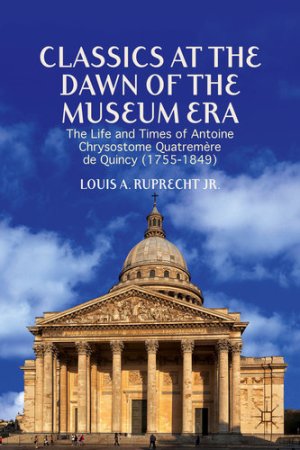 Antoine Chrysostome Quatremere de Quincy (1759–1849), arguably the foremost French classicist and art historian of the nineteenth century, is relatively little-known in English language scholarship. Three of his books were translated in the early nineteenth century, none in the twentieth century, and an important collection of two sets of open letters concerning museums, looting and repatriation was just published in 2012.
Quatremère has been unfairly called ‘the French Winckelmann,’ a charge that sticks primarily because so little of his work has ever been translated. In fact, he shows us, not what apish imitation of Wincklemann’s Neoclassicism looked like in the nineteenth century, but rather what these two overlapping disciplines had become in the generation after Winckelmann. Quatremère was formed by three crucial developments that Winckelmann did not and could not know: the French Revolution and its aftermath; Hegelian aesthetics; and the establishment of the museum era in Europe. Quatremère also remained committed to his Roman Catholicism and to the secular values of the early Revolution; in this he is very different than Winckelmann, who converted to Catholicism just before moving to Rome, and who was, according to many who claimed to understand him best, really a ‘closeted pagan’ if he were anything at all. Quatremère wrote eloquently and with deep insight concerning his understanding of the compatibilities between the Classical and Christian vision, an issue that does not figure in Winckelmann’s more intentionally ‘profane’ musings. Ruprecht hopes to show that Quatremère’s true importance emerges only if we situate him in his own times, one generation after Winckelmann, in a very different, and a far more revolutionary and secularizing cultural moment.
Louis A. Ruprecht is William M. Suttles Chair of Religious Studies at Georgia State University.
New Book | The Pathos of the Cross
According the the foreword, the book focuses on the period from 1600 to 1750. From Oxford UP:
Richard Viladesau, The Pathos of the Cross: The Passion of Christ in Theology and the Arts-The Baroque Era (New York: Oxford University Press, 2014), 368 pages, ISBN: 978-0199352685, £36 / $55.
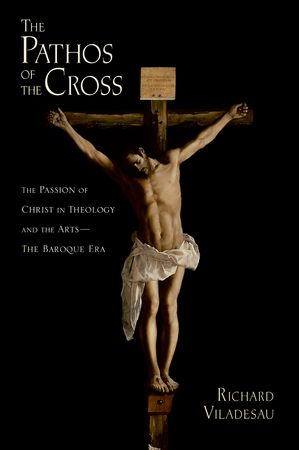 The Baroque period was in some senses the beginning of modern Western scientific and intellectual culture, the early budding of the Enlightenment. In the light of a new scientific and historical consciousness, it saw the rise of deism and the critique of traditional forms of Christianity. Secular values and institutions were openly or surreptitiously replacing the structures of traditional Christian society. At the same time, it was a time of religious renewal and of the reaffirmation of tradition. In sacred art, it was the age of of Bernini, Rubens, Van Dyck, Velazquez, and Rembrandt; in church music, the period of Monteverdi, Scarlatti, Handel, Telemann, and Bach. The pathos of Christ’s crucifixion—its power to evoke strong emotions of pity and compassion—was a central element in Baroque theology and spirituality. The sacred arts of the period reflect the centrality of this theme. Many of the works of the period retain their ability to move us emotionally and spiritually centuries later—even though the theology they represent has been challenged and frequently rejected. This volume traces the ways in which Roman Catholic and Protestant theologies of the period continued to proclaim the centrality of cross of Christ to human salvation. In a parallel movement, it illustrates how musical and artistic works of the period were both inspired and informed by these theologies, and how they moved beyond them in an aesthetic mediation of faith.
• Continues the historical theological/aesthetic survey of the first two volumes of this series
• Systematically examines the presence of theological themes in individual works of art and music of the Baroque period
• Is unique in its overview of the interrelationships of art and theology during a significant period of religious development
• Proposes the notion of ‘pathos’ as a means of summarizing the Baroque sensibility with regard to Christ’s passion
Richard Viladesau was ordained in 1969 in Rome for the Diocese of Rockville Centre. He is Professor of Theology at Fordham University, since 1988, and Administrator of Our Lady Star of the Sea Church, Saltaire, New York.
◊ ◊ ◊ ◊ ◊
C O N T E N T S
Foreword
Abbreviations
List of Illustrations
Introduction—The Social Context of the Baroque Period: The Beginnings of Modernity
Part I: The Survival of the Classical Paradigm of the Cross in Roman Catholicism
1 The Theoretical Mediation: The Cross in Baroque Tridentine Orthodoxy
2 The Aesthetic Mediation: The Cross in Baroque Catholic Art
3 The Aesthetic Mediation: The Passion in Catholic Music
Part II: The Cross in Protestant Orthodoxy
4 The Theological Mediation: Baroque Lutheran and Reformed Theology of the Cross
5 The Aesthetic Mediation: The Cross in Protestant Art
6 The Aesthetic Mediation: Protestant Passion Music
Part III: The Challenge to the Orthodox Doctrine of Redemption: The Enlightenment Paradigm
7 Challenges to the Classical Paradigm of the Cross and the Emergence of a New Paradigm of Salvation
Envoi
Appendix 1: Virtual Museum
Appendix 2: Discography—Music of the Passion of the Baroque Era
Bibliography
Index
Notes
Exhibition | The Fortunes of the Italian Primitives, ca. 1800
From the exhibition website:
La Fortuna dei Primitivi: Tesori d’Arte dalle Collezioni Italiane fra Sette e Ottocento
The Fortunes of the Primitives: Art Treasures from Italian Collections
between the Late Eighteenth and Nineteenth Centuries
Galleria dell’Accademia, Florence, 24 June — 8 December 2014

Libro d’Ore di Lorenzo de’ Medici, Annunciazione (Firenze, Biblioteca Medicea Laurenziana, Ms. Ashb. 1874, c. 13v)
This exhibition is the first ever dedicated to the topic as a whole. It proposes to offer a critical-bibliographic picture of this very important cultural phenomenon concerning the history of taste and collecting in Italy between the late XVIII century and early XIX century. Among other things, this phenomenon exerted a considerable and direct influence on the formation of the major public art collections in the most important European countries.
The exhibition begins with the fundamental contribution of Giovanni Previtali (La fortuna dei primitivi. Dal Vasari ai Neoclassici, Turin, 1964), published exactly fifty years ago. With a scientific committee made up of art historians, historians of collecting and art critics, the exhibition intends to delve into this theme that to date has been relatively neglected. Significant progress has been made since the pioneering studies of Venturi, Previtali, Haskell and Pomian. The time is therefore ripe to reflect on this phenomenon and, especially, on the people who collected works by the primitives, to some extent systematically (and therefore not occasionally), and on those who strove to lay hands on these panel paintings with precious gold grounds (merchants, agents, procurers and restorers). Singling out Florence as the privileged site for an exhibition like this one is practically a foregone conclusion, given the wealth the Tuscan-Florentine area has had historically in the production of artworks in the fourteenth and fifteenth centuries. Almost all the collections of primitives indeed boasted works from this geographic area.
The exhibition will review the principal personalities who were in the forefront of this recovery, exponents of the church (from simple abbots to powerful cardinals), as well as noblemen and scholars who could not resist the attraction of these fragile and precious artistic representations. The rooms will therefore exhibit works of art (paintings, sculptures, objects of sumptuary art and illuminated codices) that were once in the collections of Francesco Raimondo Adami, Stefano Borgia, Angelo Maria Bandini, Alexis-François Artaud de Montor, Joseph Fesch, Teodoro Correr, Girolamo Ascanio Molin, Alfonso Tacoli Canacci, Sebastiano Zucchetti, Anton Francesco Gori, Agostino Mariotti, Matteo Luigi Canonici, Giuseppe Ciaccheri, Tommaso degli Obizzi, Gabriello Riccardi, Giovan Francesco De Rossi and Guglielmo Libri, to cite only the best-known names.
An animated dialogue will accompany visitors along a sort of ideal stroll through the Italy of collectors from the late XVIII century to the early XIX century. Visitors will be encouraged to make quick visual comparisons aimed at grasping the taste, the eye and the aesthetic sensitivity of the various collectors whose collections will be compared for the first time. Alongside paintings that at that time constituted the principal interest of collectors, there are other, equally important sections tied to illuminations and sculpture. The intention is to show the circularity of interests of collectors who with a pioneering approach sought to preserve these historical-scholarly representations, every day threatened by the risk of destruction or abandon.
The very numerous visitors of the Galleria dell’Accademia will thus be able to appreciate a selection of works of art of high and, in many cases, of the highest level, based on a serious scientific project, which will offer yet another confirmation of the heights of quality Italian art attained from the XIII to the XV century. The artists whose work will be on display in this exhibition include, among others, the Master of Magdalene, Arnolfo di Cambio, Bernardo Daddi, Taddeo Gaddi, Nardo di Cione, Lippo Memmi, Ambrogio Lorenzetti, Pietro da Rimini, Beato Angelico, Filippo Lippi, Andrea Mantegna, Cosmè Tura, Piermatteo d’Amelia and Giovanni Bellini. The exhibition catalogue is expected to constitute the till-now inexistent text of reference dedicated to this specific theme taken as a whole.
The catalogue will be available from ArtBooks.com:
Angelo Tartuferi and Gianluca Tormen, eds., La Fortuna dei Primitivi: Tesori d’Arte dalle Collezioni Italiane fra Sette e Ottocento (Firenze: Giunti, 2014), $78.
Exhibition | Art and Politics: The Electress Palatine

From the Museo delle Cappelle Medicee:
Art and Politics: The Electress Palatine and the Final Season of Medici Patronage in San Lorenzo
Museum of the Medici Chapels (Cappelle Medicee) Florence, 8 April — 2 November 2014
Curated by Monica Bietti
There are many reasons for paying due tribute to the Electress Palatine, Anna Maria Luisa de’ Medici (1667–1743), the last descendent of the Grand-ducal branch of the Medici dynasty. Indeed the last years of her life—following the death of her brother the last Medici Grand Duke Gian Gastone—were intimately bound up with the present and future life of her State, for the safeguarding of which she drafted the “Family Pact,” the fundamental document that guaranteed the protection and conservation of the heritage of the Medici within their city and their State.
The idea for the exhibition stemmed from a 2012 project organised in collaboration between the REM museums of Mannheim—which wished to honour the memory of the Electress who lived and reigned in Germany following her marriage to the Elector Palatine Johann Wilhelm von Pfalz Neuburg, from 1691 to 1716—the Museum of the Medici Chapels, the Faculty of Medical Surgery of the University of Florence and the Superintendencies for the Archaeological Heritage of Tuscany, for the Architectural, Landscape, Historic, Artistic and Ethno-Anthropological Heritage of the Province of Florence and the Opificio delle Pietre Dure. This project led, between the 8th and 22nd October of 2012, to the control of the state of conservation of the mortal remains of the Electress and the rehabilitation of the tomb as well as the restoration of part of the important collection of grave goods. The Museum of the Medici Chapels decided to illustrate to the public the results of this research and restoration by organising this exhibition, centred in particular on the last years of life of the Electress.
Among the outcomes of the control of the tomb and the remains of the last descendent of the Medici, the show displays to the public for the first time two gold medals, two coins and the dedicatory plaque. In addition, the exhibition is also intended to cast light on what Anna Maria Luisa did for art and politics in Florence from 1737, when her brother Gian Gastone died up to the year of her own death in 1743. It presents novelties and authentic rarities emerging from the new studies and researches that followed in the wake of the monographic show devoted to the Electress in 2006, curated by Stefano Casciu (The Wise Princess: The Legacy of Anna Maria Luisa de’ Medici, Electress Palatine).

Bartolomäus van Douven, Allegoria degli Elettori Palatini come protettori delle Arti, 1722 (Firenze, Galleria degli Uffizi)
The show is divided into four sections designed to introduce the heterogeneous public of the Museum of the Medici Chapels to the personality of the Princess. The first, Childhood and the Adolescent Years at Poggio Imperiale, briefly illustrates her education and the years of her early youth that she spent at the Medici Villa of Poggio Imperiale with her brothers Ferdinando and Gian Gastone, her uncle Francesco Maria and her grandmother Vittoria della Rovere.
The second section, Youth and Marriage, opens with the fine portrait of Anna Maria Luisa as Flora by Antonio Franchi and deals with the period of her marriage to the Elector Palatine of the Rhine, Johann Wilhelm, celebrated in 1691, and her long sojourn in Germany where the couple were intensely engaged in artistic patronage, well-represented by the works commissioned from Bartolomeo Van Douven, whose famous Allegory of the Electors Palatine as Patrons of the Arts can be admired at the exhibition.
The third section, The Return to Florence and the Commitment to the Family Church, constitutes the core of the exhibition, illustrating the years immediately following the return to Florence of the Electress after the death of her husband in 1716. The events of these years significantly affected the complex of San Lorenzo, which was enhanced by important commissions made by Anna Maria Luisa, presented here in the light of new “political” documents. Following the “Family Pact” of 1737, the Princess indeed launched the final season of Medici patronage in the great complex of San Lorenzo: “Anna Maria set in motion a wide-ranging series of commission initiatives which were focused on San Lorenzo, comprising the construction of the bell-tower, the painting of the cupola of the basilica, the project for the decoration of the ceiling of the Chapel of the Princes (never carried through): it was clearly an attempt on her part to conclude the extensive cycle of operations begun by her distant ancestor Giovanni di Bicci three centuries earlier, in the service of the famous basilica and the public magnificence of the family” (Cristina Acidini).
The show ends with the fifth section, Death, which took place on 18 February 1743, where period engravings and publications illustrate the ceremonies connected with the event. Also displayed in this section are the three-dimensional cast of the head of the Electress, the medals and the other objects found in her tomb.
◊ ◊ ◊ ◊ ◊
From Sillabe:
Monica Bietti, Arte e Politica: L’Elettrice Palatina e l’ultima stagione della committenza medicea a San Lorenzo (Livorno, Sillabe, 2014), 280 pages, ISBN: 978-8883477324, €30.
 La campagna di restauro e indagine che ha avuto per oggetto il monumentale complesso delle Cappelle dei Principi presso la basilica di San Lorenzo a Firenze ha dato esiti a dir poco straordinari, non ultima la riesumazione e la delicatissima ricognizione sulle spoglie mortali della principessa Anna Maria Luisa, evento eccezionale di altissimo profilo scientifico, documentato dal National Geographic, e in questo 2014 il Museo vuole renderne partecipe il pubblico.
Già nel 2006 Firenze ha reso omaggio all’ultima dei Medici con un’altra importante mostra La principessa saggia. L’eredità di Anna Maria Luisa de’ Medici Elettrice Palatina, edito da Sillabe; in questo nuovo evento saranno affrontati temi che approfondiscono la vita di Anna Maria Luisa, moglie dell’Elettore Palatino Johann Wilhelm von Pfalz-Neuburg, e la sua politica dopo il rientro a Firenze, in seguito della morte del fratello Giangastone.
La mostra delle 77 opere di vario genere, alcune delle quali mai esposte al pubblico, offriranno una panoramica aggiornata e approfondita della vita della principessa, le sue committenze artistiche, le sue scelte politiche e di famiglia.










 Enfilade
leave a comment