Exhibition | Exposed: A History of Lingerie
Press release (2 April 2014) from The Museum at FIT:
Exposed: A History of Lingerie
Museum at FIT, New York, 3 June — 15 November 2014
Curated by Colleen Hill
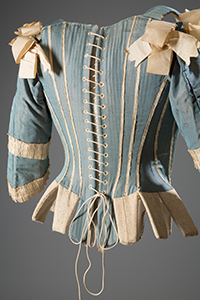
Corset (stay), silk, silk ribbon, whalebone, ca. 1770, possibly Europe
(New York: Museum at FIT)
The Museum at FIT presents Exposed: A History of Lingerie, an exhibition that traces developments in intimate apparel from the 18th century to the present. Exposed features over 70 of the most delicate, luxurious, and immaculately crafted objects from the museum’s permanent collection, many of which have never before been shown. Each piece illustrates key developments in fashion, such as changes in silhouette, shifting ideals of propriety, and advancements in technology.
The concept of underwear-as-outerwear is most commonly associated with the 1980s, but the look of lingerie has long served as inspiration for fashion garments. Exposed opens with several pairings of objects that underscore that connection. For example, a 1950s nylon nightgown, made by the upscale lingerie label Iris, is shown alongside an evening gown by Claire McCardell, also a 1950s garment, created in a similar fabric and silhouette. McCardell was one of the first designers to use nylon—a material typically marketed for lingerie—for eveningwear. A 2007 evening dress by Peter Soronen features a corset bodice, the construction of which is highlighted with bright blue topstitching. It is flanked by two 19th-century corsets, one made from bright red silk, the other from peacock blue silk.
The exhibition then continues chronologically. The earliest object on view is a sleeved corset (then called stays), circa 1770, made from sky-blue silk with decorative ivory ribbons that crisscross over the stomach. Stiffened with whalebone, 18th-century corsets straightened the back and enhanced the breasts by pushing them up and together. While they were essential to maintaining both a woman’s figure and her modesty, corsets also held an erotic allure.
Women’s undergarments were generally modest in the first half of the 19th century. This is exemplified by a dressing gown from circa 1840, made from white cotton. Although the dressing gown was simply designed and meant to be worn within the privacy of a woman’s boudoir, its full sleeves and smocked, pointed waistline mimic fashionable dress styles of the era. (more…)
Exhibition | ‘Of Green Leaf, Bird, and Flower’: Artists’ Books
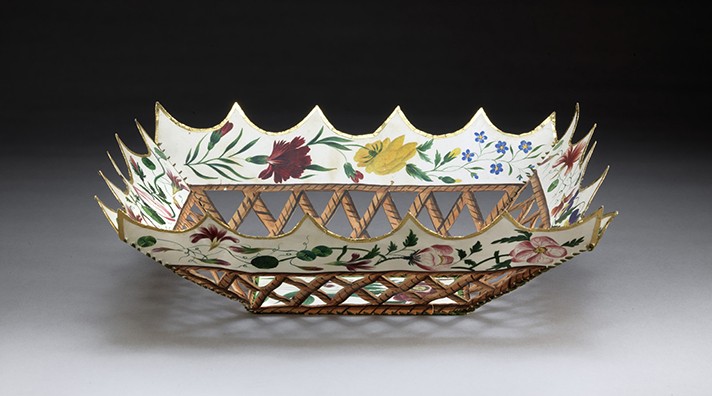
Unknown maker, Basket, ca. 1820, silk thread, cut paper, and watercolor,
(Yale Center for British Art, Paul Mellon Fund)
◊ ◊ ◊ ◊ ◊
From the exhibition press release:
‘Of Green Leaf, Bird, and Flower’: Artists’ Books and the Natural World
Yale Center for British Art, New Haven, 15 May — 10 August 2014
Curated by Elisabeth Fairman
This spring, the Yale Center for British Art presents ‘Of Green Leaf, Bird, and Flower’: Artists’ Books and the Natural World, an exhibition examining the intersections of artistic and scientific interest in the natural world from the sixteenth century to the present. On view from May 15 through August 10, 2014, the exhibition explores depictions of Britain’s countryside and its native plant and animal life through more than two hundred objects drawn primarily from the Center’s collections, ranging from centuries-old manuscripts to contemporary artists’ books.
 The exhibition highlights the scientific pursuits in the eighteenth and nineteenth centuries that resulted in the collecting and cataloging of the natural world. Also explored are the aesthetically oriented activities of self-taught naturalists during the Victorian era, particularly those of women who collected and drew specimens of butterflies, ferns, grasses, feathers, seaweed, and shells, and assembled them into albums and commonplace books. Examples of twentieth- and twenty-first-century artists’ books, including those of Eileen Hogan, Mandy Bonnell, Tracey Bush, John Dilnot, Sarah Morpeth, and Helen Douglas, broaden the vision of the natural world to incorporate its interaction with consumer culture and with modern technologies. Work by contemporary artists in the exhibition reveal a shared inspiration to record, interpret, and celebrate nature as in the work of their predecessors.
‘Of Green Leaf, Bird, and Flower’ features traditional bound books, drawings, and prints, as well as a range of more experimental media incorporating cut paper, wood, stone, natural specimens, sound, video, and interactive multimedia. Historical works are also on loan from the Beinecke Rare Book and Manuscript Library and the Lentz Collection at the Yale Peabody Museum of Natural History, including examples of early microscopes used by natural historians.
◊ ◊ ◊ ◊ ◊
From Yale UP:
Elisabeth Fairman, ed., with essays by David Burnett, Molly Duggins, Elisabeth Fairman, and Robert McCracken Peck, Of Green Leaf, Bird, and Flower: Artists’ Books and the Natural World (New Haven: Yale University Press, 2014), 248 pages, ISBN: 978-0300204247, $70.
Highlighting an enduring interest in natural history from the 16th century to the present, this gorgeous book explores depictions of the natural world, from centuries-old manuscripts to contemporary artists’ books. It examines the scientific pursuits in the 18th and 19th centuries that resulted in the collecting and cataloguing of the natural world. It also investigates the aesthetically oriented activities of self-taught naturalists in the 19th century, who gathered flowers, ferns, seaweed, feathers, and other naturalia into albums. Examples of 20th- and 21st-century artists’ books, including those of Eileen Hogan, Mandy Bonnell, and Tracey Bush, broaden the vision of the natural world to incorporate its interaction with consumer culture and with modern technologies. Featuring dazzling illustrations, the book itself is designed by Miko McGinty to evoke a fieldwork notebook, and features a collection pocket and ribbon markers.
Elisabeth Fairman is senior curator of rare books and manuscripts at the Yale Center for British Art.
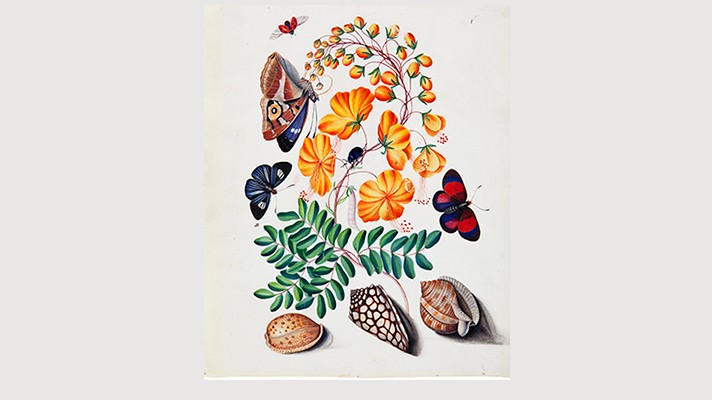
James Bolton, one of twenty drawings depicting specimens from the natural history cabinet of Anna Blackburne, ca. 1768, Yale Center for British Art, Paul Mellon Fund, in honor of Jane and Richard C. Levin, President of Yale University (1993–2013).
New Book | Chinoiserie in Eighteenth-Century Britain
From Manchester University Press:
Stacey Sloboda, Chinoiserie: Commerce and Critical Ornament in Eighteenth-Century Britain (Manchester: Manchester University Press, 2014), 272 pages, ISBN: 978-0719089459, £70 / $105.
 In a critical reassessment of chinoiserie, a style both praised and derided for its triviality, prettiness and ornamental excesses, Stacey Sloboda argues that chinoiserie was no mute participant in eighteenth-century global consumer culture, but was instead a critical commentator on that culture. Analysing ceramics, wallpaper, furniture, garden architecture and other significant examples of British and Chinese design, this book takes an object-focused approach to studying the cultural phenomenon of the ‘Chinese taste’ in eighteenth-century Britain. It is essential reading for anyone interested in the critical history of design and the decorative arts in the period, and students and scholars of art history, material culture, eighteenth-century studies and British history will find a novel approach to studying the decorative arts and a forceful argument for their critical capacities.
Stacey Sloboda is Associate Professor of Art History at Southern Illinois University.
C O N T E N T S
Introduction: Reassessing Chinoiserie
1. Making China: Circulation, Imitation and Innovation
2. Buying China: Commerce, Taste and Materialism
3. Commerce in the Bedroom: Sex, Gender and Social Status
4. Commerce in the Garden: Nature, Art and Authority
Conclusion: Style and the Global Marketplace
Bibliography
Index
New Book | The Site of Rome, 1400–1750
From L’Erma di Bretschneider (and available from artbooks.com) . . .
David R. Marshall, ed., The Site of Rome: Studies in the Art and Topography of Rome 1400–1750 (Melbourne Art Journal 13) (Rome: L’Erma di Bretschneider, 2014), 264 pages, ISBN: 978-8891306661, €160 / $235 / Digital Version €128.
 This volume, number 13 in the Melbourne Art Journal series, brings together nine scholars who each explore an aspect of the art and architecture of Rome situated within the topography—or map—of Rome in the Renaissance and Early Modern periods, with several studies focusing on the eighteenth century. These are studies of sight and site: about how the appearance of different regions or aspects of the city intersect with complex systems of political, economic, social and artistic institutions and customs.
David R. Marshall is Principal Fellow, Art History, School of Culture and Communication, The University of Melbourne
A preview is available here»
◊ ◊ ◊ ◊ ◊
C O N T E N T S
1. Julie Rowe (La Trobe University), Rome’s Mediaeval Fish Market at S. Angelo in Pescheria
2. Joan Barclay Lloyd (La Trobe University), Memory, Myth and Meaning in the Via Appia from Piazza di Porta Capena to Porta S. Sebastiano
3. Louis Cellauro (Deutsches Studienzentrum, Venice), Roma Antiqva Restored: The Renaissance Archaeological Plan
4. Donato Esposito (Metropolitan Museum, New York), The Virtual Rome of Sir Joshua Reynolds
5. Lisa Beaven (University of Sydney), Claude Lorrain and La Crescenza: The Tiber Valley in the Seventeenth Century
6. David R. Marshall (University of Melbourne), The Campo Vaccino: Order and the Fragment from Palladio to Piranesi
7. Arno Witte (University of Amsterdam), Architecture and Bureaucracy: The Quirinal as an Expression of Papal Absolutism
8. Tommaso Manfredi (University ‘Mediterranea’, Reggio Calabria), Arcadia at Trinità dei Monti: The Urban Theatre of Maria Casimira and Alexander Sobieski in Rome
9. John Weretka (University of Melbourne), The ‘Non-aedicular Style’ and the Roman Church Façade of the Early Eighteenth Century
Exhibition | Coypel’s Don Quixote Tapestries
Next February at The Frick:
Coypel’s Don Quixote Tapestries: Illustrating a Spanish Novel in Eighteenth-Century France
The Frick Collection, New York, 24 February — 17 May 2015
Curated by Charlotte Vignon
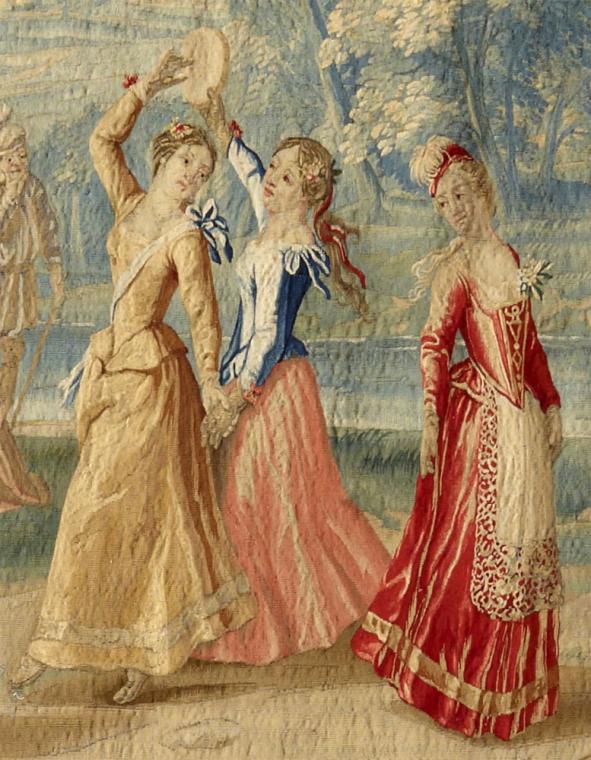
Peter Van den Hecke, The Arrival of Dancers at the Wedding of Camacho (detail), Brussels, ca. 1730s–40s. Tapestry,
123 x 219 inches (New York: The Frick Collection).
Photo by Michael Bodycomb.
A masterpiece of comic fiction, Cervantes’s Don Quixote (fully titled The Ingenious Gentleman Don Quixote of La Mancha) enjoyed great popularity from the moment it was published, in two volumes, in 1605 and 1615, respectively. Reprints and translations spread across Europe, captivating the continental imagination with the escapades of the knight Don Quixote and his companion, Sancho Panza. The novel’s most celebrated episodes inspired a multitude of paintings, prints, and interiors. Most notably, Charles-Antoine Coypel (1694–1752), painter to Louis XV, created a series of twenty-eight cartoons to be produced by the Gobelins tapestry manufactory in Paris. Twenty-seven were painted between 1714 and 1734, with the last scene realized just before Coypel’s death in 1751. In 2015 (the four-hundredth anniversary of the publication of the second volume of Don Quixote), the Frick will bring together a complete series of Coypel’s scenes, which will be shown in the Frick’s Oval Room and East Gallery. The exhibition with include the Frick’s two large tapestries inspired by Coypel—which have not been shown for more than ten years—and twenty-five other eighteenth-century paintings, prints, and tapestries from Coypel’s designs.
The accompanying publication will explore Coypel’s role in illustrating Don Quixote and the circumstances of his designs becoming the most renowned pictorial interpretations of the novel. It will also map the production of Coypel’s Don Quixote tapestries, from cartoons and engravings to looms in Paris and Brussels. The Frick will offer rich education programs that will include a series of lectures on eighteenth-century French and Flemish tapestries and on the illustration of Don Quixote over the centuries. Further programs will explore the history of the novel and its influence on artists working in a variety of media, including film, ballet, and opera. The exhibition is organized by the Frick’s Associate Curator of Decorative Arts, Charlotte Vignon.
Exhibition | Catching Sight: The World of the British Sporting Print
From the VMFA:
Catching Sight: The World of the British Sporting Print
Virginia Museum of Fine Arts, Richmond, 31 August 2013 — 13 July 2014
 This exhibition sheds new light on a common, but often overlooked aspect of British art: the British sporting print. Highly sought after during the 18th and 19th centuries, these prints endure as symbols of English culture. Featuring more than 100 prints, Catching Sight demonstrates the aesthetic sophistication and accomplishments of the genre. The exhibition takes an innovative approach, examining these works of art from an art historical perspective rather than simply as documents of the history of sport and rural culture. Catching Sight demonstrates the qualities of directness, vividness, and even wit for which the genre was prized by both the larger public and artists such as Degas and Géricault, who borrowed extensively from its artistic vocabulary.
Mitchell Merling, with Malcolm Cormack and Corey Piper, Catching Sight: The World of the British Sporting Print (Richmond: Virginia Museum of Fine
Arts, 2013), 112 pages, ISBN: 978-1934351031, $36.
The exhibition is accompanied by an illustrated catalogue by Mitchell Merling, Paul Mellon Curator, with contributions from Malcolm Cormack, Paul Mellon Curator Emeritus, and Corey Piper, former Curatorial Associate for the Mellon Collection.
Catalogue cover: Isaac Cruikshank, London Sportsmen Shooting Flying [from a set of four], ca. 1800, hand-colored etching (VMFA: Paul Mellon Collection, 85.1282.2)
New Book | The Concept of the ‘Master’ in Art Education
From Ashgate:
Matthew Potter, ed., The Concept of the ‘Master’ in Art Education in Britain and Ireland, 1770 to the Present (Aldershot: Ashgate, 2013), 312 pages, ISBN: 978-1409435556, £70.
 A novel investigation into art pedagogy and constructions of national identities in Britain and Ireland, this collection explores the student-master relationship in case studies ranging chronologically from 1770 to 2013, and geographically over the national art schools of England, Ireland, Scotland and Wales. Essays explore the manner in which the Old Masters were deployed in education; fuelled the individual creativity of art teachers and students; were used as a rhetorical tool for promoting cultural projects in the core and periphery of the British Isles; and united as well as divided opinions in response to changing expectations in discourse on art and education.
Case studies examined in this book include the sophisticated tradition of ‘academic’ inquiry of establishment figures, like Joshua Reynolds and Frederic Leighton, as well as examples of radical reform undertaken by key individuals in the history of art education, such as Edward Poynter and William Coldstream. The role of ‘Modern Masters’ (like William Orpen, Augustus John, Gwen John and Jeff Wall) is also discussed along with the need for students and teachers to master the realm of art theory in their studio-based learning environments, and the ultimate
pedagogical repercussions of postmodern assaults on the
academic bastions of the Old Masters.
Matthew C. Potter is a Senior Lecturer in Art and Design History at Northumbria University, UK. His research interests include national identity in British art and the history of art education.
◊ ◊ ◊ ◊ ◊
C O N T E N T S
Learning from the masters: An introduction, Matthew C. Potter
1. Naturalising tradition: Why learning from the masters?, Iris Wien
2. A free market in mastery: Re-imagining Rembrandt and Raphael from Hogarth to Millais, Paul Barlow
3. The John Frederick Lewis Collection at the Royal Scottish Academy: Watercolour copies of old masters as teaching aids, Joanna Soden
4. British art students and German masters: W.B. Spence and the reform of German art academies, Saskia Pütz
5. Standing in Reynolds’ shadow: The academic discourses of Frederic Leighton and the legacy of the first President of the Royal Academy, Matthew C. Potter
6. Opening doors: The entry of women artists into British art schools, 1871–1930, Alice Strickland
7. Struggling with the Welsh masters, 1880–1914, Matthew C. Potter
8. Emulation and legacy: The master-pupil relationship between William Orpen and Seán Keating, Éimear O’Connor
9. Prototype and perception: Art history and observation at the Slade in the 1950s, Emma Chambers
10. The pedagogy of capital: Art history and art school knowledge, Malcolm Quinn
11. Study the masters? On the ambivalent status of art history within the contemporary art school, Katerina Reed-Tsocha
12. ‘Without a master’: Learning art through an open curriculum, Joanne Lee
Bibliography
Index
New Book | Matthew Boulton: Enterprising Industrialist
From Ashgate:
Kenneth Quickenden, Sally Baggott, and Malcolm Dick, eds., Matthew Boulton: Enterprising Industrialist of the Enlightenment (Aldershote: Ashgate, 2014), 312 pages, ISBN: 978-1409422181, £75 / $124.
 Matthew Boulton was a leading industrialist, entrepreneur, and Enlightenment figure. Often overshadowed through his association with James Watt, his Soho manufactories put Birmingham at the centre of what has recently been termed ‘The Industrial Enlightenment’.
Exploring his many activities and manufactures—and the regional, national and international context in which he operated—this publication provides a valuable index to the current state of Boulton studies.
Combining original contributions from social, economic, and cultural historians, with those of historians of science, technology, and art, archaeologists and heritage professionals, the book sheds new light on the general culture of the eighteenth century, including patterns of work, production, and consumption of the products of art and industry. The book also extends and enhances knowledge of the Enlightenment, industrialization, and the processes of globalization in the eighteenth century.
Kenneth Quickenden is Research Professor at Birmingham Institute of Art and Design, Birmingham City University. Sally Baggott was Librarian and Curator at The Birmingham Assay Office and is now Research Facilitator, College of Arts and Law, University of Birmingham. Malcolm Dick is Director of the Centre for West Midlands History, University of Birmingham.
◊ ◊ ◊ ◊ ◊
C O N T E N T S
1. Introduction: Matthew Boulton — Enterprising industrialist of the Enlightenment, Kenneth Quickenden, Malcolm Dick, and Sally Baggott
2. Matthew Boulton, Birmingham, and the Enlightenment, Peter M. Jones
3. Matthew Boulton: Innovator, Jennifer Tann
4. Was Matthew Boulton a scientist? Operating between the abstract and the entrepreneurial, David Philip Miller
5. The origins of the Soho Manufactory and its layout, George Demidowicz
6. Boulton, Watt and Wilkinson: The birth of the improved steam engine, Jim Andrew
7. Matthew Boulton’s copper, Peter Northover and Nick Wilcox
8. The mechanical paintings of Matthew Boulton and Francis Eginton, Barbara Fogarty
9. Samuel Garbett and early Boulton and Fothergill assay silver, Kenneth Quickenden
10. Hegemony and hallmarking: Matthew Boulton and the battle for the Birmingham Assay Office, Sally Baggott
11. Dark Satanic millwrights? Forging foremanship in the industrial revolution: Matthew Boulton and the leading hands of Boulton and Watt, Joseph Melling
12. Workers at the Soho Mint, (1788–1809), Sue Tungate
13. Matthew Boulton’s Jewish partners between France and England: Innovative networks and merchant enlightenment, Liliane Hilaire-Pérez and Bernard Vaisbrot
14. Enlightened entrepreneurs versus ‘philosophical pirate’, (1788–1809): Two faces of the Enlightenment, Irina Gouzévitch
15. Creating an image: portrait prints of Matthew Boulton, Val Loggie
16. The death of Matthew Boulton 1809: Ceremony, controversy and commemoration, Malcolm Dick
Appendix
Select bibliography
Index
New Book | Soul Food
The 2014 James Beard Awards were announced this week, with Adrian Miller’s Soul Food taking top honors for Reference and Scholarship. (Also nominated was William Sitwell’s A History of Food in 100 Recipes, which, while employing a much larger scope, may also appeal to Enfilade readers; 7 of the recipes date from the eighteenth century). From UNC Press:
Adrian Miller, Soul Food: The Surprising Story of an American Cuisine, One Plate at a Time (Chapel Hill: The University of North Carolina Press, 2013), 352 pages, ISBN 978-1469607627, $30.
 In this insightful and eclectic history, Adrian Miller delves into the influences, ingredients, and innovations that make up the soul food tradition. Focusing each chapter on the culinary and social history of one dish—such as fried chicken, chitlins, yams, greens, and ‘red drinks’—Miller uncovers how it got on the soul food plate and what it means for African American culture and identity.
Miller argues that the story is more complex and surprising than commonly thought. Four centuries in the making, and fusing European, Native American, and West African cuisines, soul food—in all its fried, pork-infused, and sugary glory—is but one aspect of African American culinary heritage. Miller discusses how soul food has become incorporated into American culture and explores its connections to identity politics, bad health raps, and healthier alternatives. This refreshing look at one of America’s most celebrated, mythologized, and maligned cuisines is enriched by spirited sidebars, photographs, and 22 recipes.
Adrian Miller is a writer, attorney, and certified barbecue judge who lives in Denver, Colorado. He has served as a special assistant to President Bill Clinton, a senior policy analyst for Colorado Governor Bill Ritter Jr., and a Southern Foodways Alliance board member.
New Book | The Gardener of Versailles
From Rizzoli:
Alain Baraton, The Gardener of Versailles: My Life in the World’s Grandest Garden, translated by Christopher Brent Murray (New York: Rizzoli, 2014), 296 pages, ISBN: 978-0847842681, $27.
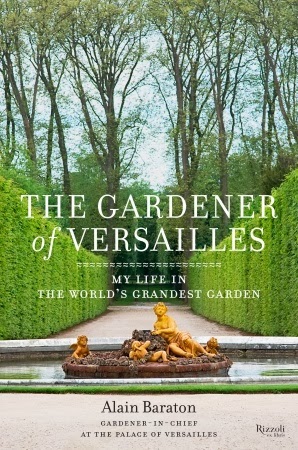 For gardening aficionados and Francophiles, a love letter to the Versailles Palace and grounds, from the man who knows them best. In Alain Baraton’s Versailles, every grove tells a story. As the gardener-in-chief, Baraton lives on its grounds, and since 1982 he has devoted his life to the gardens, orchards, and fields that were loved by France’s kings and queens as much as the palace itself. His memoir captures the essence of the connection between gardeners and the earth they tend, no matter how humble or grand.
With the charm of a natural storyteller, Baraton weaves his own path as a gardener with the life of the Versailles grounds, and his role overseeing its team of eighty gardeners tending to 350,000 trees and thirty miles of walkways on 2,100 acres. He richly evokes this legendary place and the history it has witnessed but also its quieter side that he feels privileged to know. The same gardens that hosted the lavish lawn parties of Louis XIV and the momentous meeting between Marie Antoinette and the Cardinal de Rohan remain enchanted, private places where visitors try to get themselves locked in at night, lovers go looking for secluded hideaways, and elegant grandmothers secretly make cuttings to take back to their own gardens. A tremendous best seller in France, The Gardener of Versailles gives an unprecedentedly intimate view of one of the grandest places on earth.
Alain Baraton is the best-selling author of many books on gardening and the host of weekly gardening programs on French radio and television.










leave a comment