Summer Reading Idea | The Stockholm Octavo
From Harper Collins:
Karen Englemann, The Stockholm Octavo: A Novel (New York: Ecco, 2012), 432 pages, ISBN: 978-0061995347, $27.
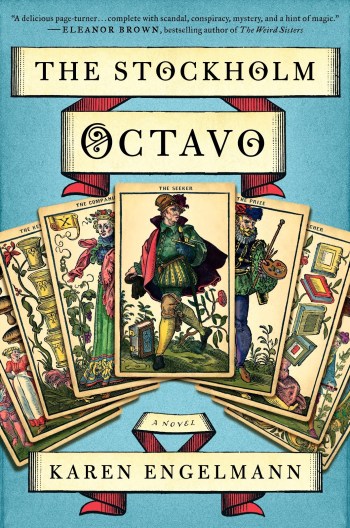 Life is close to perfect for Emil Larsson, a self-satisfied bureaucrat in 1791 Stockholm. He is a true man of The Town—drinker, card player, and contented bachelor. Until one evening, when Mrs. Sophia Sparrow, proprietor of an exclusive gaming parlor and fortune teller, shares with him a vision she has had—a golden path that will lead to love and connection for Emil. She offers to lay an Octavo for him, a spread of cards that augur the eight individuals who can help him realize this vision—if he can find them. Emil begins his search, intrigued by the puzzle of his Octavo and the good fortune Mrs. Sparrow’s vision portends. But when Mrs. Sparrow wins a mysterious folding fan in a card game, the Octavo’s deeper powers are revealed. No longer just a game of the heart, collecting his Eight is now crucial to pulling his country back from the crumbling precipice of rebellion and chaos. Set against the luminous backdrop of late 18th-century Stockholm, as the winds of revolution rage through the great capitals of Europe, The Stockholm Octavo brings together a collection of characters both fictional and historical whose lives tangle in political conspiracy, love, and magic in a breathtaking debut that will leave readers spellbound.
◊ ◊ ◊ ◊ ◊
From Ron Charles’s review (4 December 2012) for The Washington Post:
Engelmann lived in Sweden for almost 10 years and worked as an art director for Ikea, which you might see reflected in her story’s careful attention to design. No sepia tones for these 200-year-old scenes. Every room here vibrates with color. Even a relatively modest shop, for instance, “was painted in broad horizontal stripes of cheery lemon and cream, and the white crown moldings were like sculpted meringue oozing against the ceiling.” And Engelmann is just as captivating with the gorgeous outfits these people don to entertain and impress one another at a time when clothing was a strict marker of class and status. The antique etchings sprinkled throughout these pages are a nice touch, too . . .
Reviewed | Taking Time: ‘Chardin’s Boy Building a House of Cards’
Recently added to caa.reviews:
Juliet Carey, with essays by Pauline Prévost-Marcilhacy, Pierre Rosenberg and Katie Scott, Taking Time: “Chardin’s Boy Building a House of Cards” and Other Paintings (London: Paul Holberton Publishing, 2012), 160 pages, ISBN: 978-1907372339, £30.
Reviewed by Paula Rea Radisich, Department of Art and Art History, Whittier College; posted 16 May 2013.
‘Taking Time: Chardin’s “Boy Building a House of Cards” and Other Paintings’ is the catalogue accompanying an exhibition mounted at Waddesdon Manor, the country house in Buckinghamshire, England, built in the nineteenth century for Baron Ferdinand de Rothschild. Today the manor is run jointly by the National Trust and a charitable Rothschild Family Trust headed by Jacob Rothschild, 4th Lord Rothschild. In 2007, the trust purchased Jean-Siméon Chardin’s ‘Boy Building a House of Cards’ (1735). ‘Taking Time’ celebrates the arrival of Chardin’s painting to Waddesdon Manor, where it joins another famous genre painting by Chardin, ‘Girl with a Shuttlecock’ (1737), on loan from the Rothschild Collection, Paris.
As Lord Rothschild notes in his foreword to the catalogue, this is the first time Waddesdon has organized an exhibition consisting of loans from other countries. The curatorial premise of the show was to display the Waddesdon ‘House of Cards’ with Chardin’s other versions of the same subject belonging to the Louvre, the National Gallery in London, and the National Gallery of Art in Washington, DC. . . .
The full review is available here» (CAA membership required)
New Book | Painters and Paintings in the Early American South
From Yale UP:
Carolyn J. Weekley, Painters and Paintings in the Early American South (New Haven: Yale University Press, 2013), 448 pages, ISBN: 978-0300190762, $75.
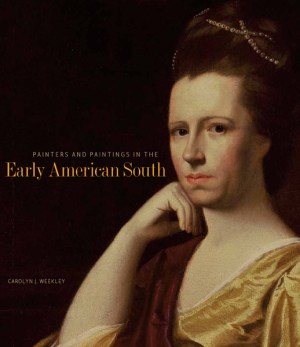 This beautifully illustrated volume presents the complex ways in which the lives of artists, clients, and sitters were interconnected in the early American South. During this period, paintings included not only portraits, but also seascapes, landscapes, and pictures made by explorers and naturalists.
The first comprehensive study of this subject, Painters and Paintings in the Early American South draws upon materials including diaries, correspondence, and newspapers in order to explore the stylistic trends of the period and the lives of the sitters, as gentility spread from the wealthiest southerners to the middle class. Featuring works by John Singleton Copley, Charles Willson Peale, and Benjamin West, among many others, this important book examines the training and status of painters, the distinction between fine art and the mechanical arts, the popularity of portraiture, and the nature of clientele between 1540 and 1790, providing a new, critical understanding of the history of art in the American South.
Carolyn J. Weekley is Juli Grainger Curator at the Colonial Williamsburg Foundation. She is co-author of Treasures of American Folk Art: From the Abby Aldrich Rockefeller Folk Art Center and The Kingdoms of Edward Hicks.
◊ ◊ ◊ ◊ ◊
Note (added 27 July 2013) — The book accompanies a major exhibition of more than 80 works created in or for the South between 1735 and 1800, on view at the DeWitt Wallace Decorative Arts Museum in Colonial Wiliamsburg from 23 March 2013 until 7 September 2014. The press release is available here.
Exhibition | Disegno & Couleur: Dessins italiens et français
From L’Officiel Galleries & Musées:
Disegno & Couleur: Dessins italiens et français du XVIe au XVIIIe siècle
Bonnefantenmuseum, Maastricht, 27 November 2012 — 17 February 2013
Musée des Beaux-arts, Tours, 16 March — 27 May 2013
Musées Royaux des Beaux-arts de Belgique, Brussels, October 2013 — January 2014
 L’exposition présentée par le musée des Beaux-Arts de Tours réunit 75 dessins italiens et français réalisés du XVIe au XVIIIe siècle et appartenant aux musées royaux des Beaux-Arts de Belgique, à Bruxelles.
Certaines de ces œuvres n’ont jamais été présentées en France et proviennent de la prestigieuse collection Jean de Grez (1837-1910), offerte à l’état belge en 1911. Ces dessins ont été créés à Florence, à Bologne, à Rome, à Venise et ont permis la réalisation de grands projets comme le Palazzo Vecchio à Florence.
Vous pourrez également découvrir des feuilles d’artistes français rendues à Jean Cousin, Claude Déruet, Laurent de La Hyre, Eustache Lesueur, Charles Le Brun, Antoine Watteau, Joseph Benoit Suvée.
◊ ◊ ◊ ◊ ◊
From ArtBooks.com:
Stefaan Hautekeete, ed., Disegno & Couleur: Dessins italiens et français du XVIe au XVIIIe siècle (Milan: Silvana Edoriale, 2012), 256 pages, ISBN: 978-8836623716, $65.
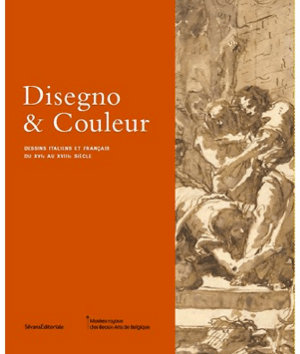 Les Musées royaux des Beaux-Arts de Belgique organisent depuis 2001 d’importantes expositions de dessins autour des chefs-d’œuvre de leur collection : Dessins de Rembrandt et ses élèves en 2005, Dessins du Siècle d’or hollandais en 2007. La troisième manifestation réunira les plus belles feuilles françaises et italiennes du XVIe au XVIIIe siècle, provenant essentiellement de la prestigieuse collection Jean de Grez (Breda, 1837- Bruxelles, 1910) donnée à l’Etat belge en 1911.
Le musée des Beaux-Arts de Tours, première institution française à être associée à ces projets, réunira les plus belles feuilles françaises et italiennes du XVIe au XVIIIe siècle, provenant essentiellement de la prestigieuse collection Jean de Grez (Breda, 1837- Bruxelles, 1910) donnée à l’Etat belge en 1911. Le public tourangeau découvrira 75 feuilles exceptionnelles d’artistes italiens qui ont participé à la décoration de grands projets de décoration à Florence (Palazzo Vecchio), à Rome (salles du Vatican), à Venise….tels que Paolo Farinati, Giovanni Stradano, Frederico Zuccaro, Giovanni Lorenzo Bernini, dit Le Bernin, Tiepolo…. ainsi qu’une sélection française opérée par Pierre Rosenberg, où seront présents les grands noms de la peinture, Jean Cousin, Claude Déruet, Eustache Lesueur, Charles Le Brun, Antoine Watteau… A cette occasion, une vingtaine de dessins français et italiens de la collection du musée de Tours seront confrontés à ces œuvres, notamment ceux de François Boucher, Louis-François Cassas, Jean Cousin, Jacques-Louis David, Prospero Fontana, Augustin-Alphonse Gaudar de Laverdine, Claude Vignons, mais aussi les nouvelles découvertes : Baglione, Bolzoni..
New Book | The Wallace Collection Catalogues: Gold Boxes
From Paul Holberton:
Charles Truman, The Wallace Collection: Catalogue of Gold Boxes (London: Paul Holberton, 2013), 352 pages, ISBN: 978-0900785948, £100.
 The 18th-century gold snuffbox was the ultimate fashion accessory – beautifully made, exquisitely carved and very expensive, and, like fashion, its form and ornament changed according to the taste of the time. The skills of the goldsmith, the enameller, the lapidary and the miniaturist combined to form a piece – always different – for the most discerning clientele that Europe has ever known.
The Wallace Collection has some of the finest, and certainly some of the most famous, gold boxes in the world. Paris was the centre of taste in the 18th century and the collection contains a remarkable group of boxes by the greatest goldsmiths of the period: Jean Ducrollay, Pierre-François Drais and Louis Roucel. Somewhat surprisingly the Wallace Collection, which is noted for its French works or art, has some very important German boxes by Jean-Guillaume-Georges Kruger of Berlin, Johann Christian Neuber of
Dresden and Ignatius Peter Krafft of Hanau.
Charles Truman, who has catalogued the collection of gold boxes, is one of the leading authorities on the subject. In this book he discusses the history of snuff-taking and the development, manufacture and collecting of gold boxes, with a particular emphasis on the design sources from which the craftsmen repsonsible for these wonderful works of art took their inspiration. These 99 pieces in the catalogue represent a brilliant cross-section of the products of the European goldsmith from approximately 100 years from the late 1730s. This book will prove invaluable to collectors, academics and students interested in the 18th century.
Exhibition | Trapani Coral
From the exhibition:
I Grandi Capolavori del Corallo: I Coralli di Trapani del XVII e XVIII Secolo
Fondazione Puglisi Cosentino, Catania, Sicily, 3 March — 5 May 2013
Museo Pepoli, Trapani, Sicily, 18 May — 30 June 2013
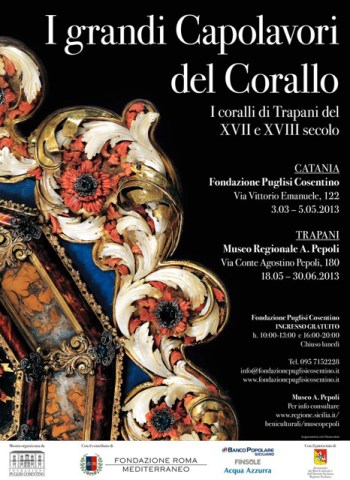 Il Museo Pepoli di Trapani ospiterà una grande mostra sui coralli trapanesi realizzati dai maestri artigiani della citt siciliana tra il XVII e XVIII secolo. Simbolo della bellezza e perfezione del creato, materia prima con l’oro per meravigliosi oggetti di culto, arredi sacri e profani, il corallo al centro di una grande mostra. Esposti per la prima volta capolavori provenienti da collezioni pubbliche e private che testimoniano come la lavorazione di questo straordinario materiale, in Sicilia e in particolare a Trapani, sia assurta a vera e propria arte.
In mostra oltre 120 preziosi manufatti di inestimabile valore selezionati con grande attenzione: gioielli e arredi sacri (calici, ostensori, crocifissi, reliquiari, rosari e presepi) e ancora calamai, saliere e raffinatissimi elementi darredo come specchiere, cornici, tavoli da gioco, scrigni e monumentali stipi destinati a case principesche e regge.
Si tratta di oggetti di grande valore artistico, realizzati con materiali pregiati per essere donati, tra il 500 e il 600, a principi e regnanti. Naturalia e Mirabilia erano esposti nelle Wunderkammer settecentesche, le cos dette stanze delle meraviglie, dove lappassionato collezionista raccoglieva oggetti della natura arricchendoli con materiali preziosi finemente cesellati in base allestro dellartista, filigrana d oro e d argento, splendidi oggetti destinati al godimento di pochi eletti nelle proprie dimore, piccoli musei ante litteram.
◊ ◊ ◊ ◊ ◊
From ArtBooks.com:
Valeria Patrizia Li Vigni Tusa, Maria Concetta Di Natale, Vincenzo Abbate, I grandi capolavori del Corallo: I coralli di Trapani del XVII e XVIII secolo (Milan: Silvana, 2013), 192 pages, ISBN: 978-8836625888, $65.
 Il catalogo presenta ai lettori una rassegna di capolavori in corallo provenienti dalla Sicilia, regione dove la realizzazione di meravigliosi manufatti in questo materiale ha raggiunto nei secoli l’apice della bellezza e della maestria artigianale. Il corallo ha visto fiorire intorno a sè infinite credenze popolari, legate soprattutto alla sua forma e al suo intenso colore: carico di valenze apotropaiche, usato in passato anche in medicina, il corallo è soprattutto simbolo della bellezza e perfezione del Creato e per questo divenne la materia prima, insieme con l’oro, per la produzione di meravigliosi oggetti di culto e arredi sacri. Fra le opere qui documentate, tutte realizzate con il corallo raccolto a Trapani, lungo i fondali delle Egadi e intorno all’isola di Tabarca, spiccano sia gioielli, sia ostensori, crocifissi, reliquari, presepi, nonché elementi di raffinato arredo: specchiere, tavoli da gioco, cornici, scrigni, fino a monumentali trumeaux destinati a case principesche. Queste opere testimoniano la ricchezza e la qualità di alcune collezioni considerate fondamentali nel settore, ovvero quelle della Banca di Novara, del Museo Pepoli di Trapani, della Fondazione Whitaker e del Museo Diocesano di Monreale, qui documentate insieme a singoli pezzi di inestimabile valore apparteneti a raccolte private italiane e straniere.
Exhibition | Revisiting the Picture Gallery of Frederick the Great
From the Prussian Palaces and Gardens Foundation (SPSG):
The Most Beautiful Gallery: Revisiting the Picture Gallery of Frederick the Great
Sanssouci, Picture Gallery, Potsdam, 9 May — 31 October 2013
As for the gallery, after St. Peter’s in Rome, it is undisputedly the most beautiful thing there is in the world. –Marquis d’Argens to Frederick the Great, 1761
 The Picture Gallery in Sanssouci Park ranks among the first and most magnificent buildings in Europe to be erected specifically for an art collection. Together with the paintings and sculptures selected by Frederick the Great, the building, adorned with portrayals of the arts and precious materials, constitutes a unique overall work of art. As a fitting expression of connoisseurship and education, at the same time it pointed to the importance of the Kingdom of Prussia. 250 years after it was first opened, visitors are now being invited to view through the eyes of Frederick this ‘queen’ of all gallery beauties.
The Picture Gallery was finished in 1763, and the cabinet was hung with paintings in 1764. Many of the masterpieces – for example, by Peter Paul Rubens and Carlo Maratta as well as by sculptors such as Jean-Baptiste Lemoyne and Louis-Claude Vassé – still hang here today. The collection of more than 180 paintings and sculptures has undergone powerful changes since its founding, however. The Prussian Palaces and Gardens Foundation Berlin-Brandenburg is now re-introducing the Gallery in a way that corresponds to the original furnishing concept of its royal builder.
 For the first time since 1830, antique sculptures, on loan from the Collection of Antiquities and the Sculpture Collection at the Staatliche Museen zu Berlin as well as the Muzeum Narodowe in Poznan, are coming to Sanssouci, where they may be admired in the Gallery once again. Among the pieces is the famous statuette of the Girl Playing Knucklebones. The Frederician manner of hanging paintings has been visualized in a photograph presentation. Particularly distinctive is the new hanging of the paintings in the small cabinet: With the return of works in 2010 that were long thought to be war losses, a closer approximation to the historical wall-to-wall hanging has been achieved. Thus, it is now possible to experience the overwhelming gallery rooms in a completely new manner as architecture, painting, and sculpture engage with one another in a unique dialogue.
Catalogue: Die Schönste der Welt: Eine Wiederbegegnung mit der Bildergalerie Friedrichs des Großen (Berlin: Deutscher Kunstverlag, 2013), 144 pages, ISBN 978-342207184, €15.
Additional information is available at ArtDaily»
Forthcoming Book | The Museum of the Horse
From Prestel:
Philip Jodidio, ed., The Museum of the Horse (London: Prestel, 2013), 176 pages, ISBN: 978-3791352985, £30 / $50.
 One of France’s most visited monuments, the Château de Chantilly features gardens by André Le Nôtre, a world-renowned art collection and impressive stables, which were the center of eighteenth-century French equestrian culture and transformed into a captivating museum in 1982. Now, under the auspices of the Aga Khan and the Foundation for the Safeguarding and Development of the Domain of Chantilly, the Museum of the Horse has undergone an extensive renovation. In addition to detailing the contents of the museum’s galleries, this beautifully illustrated volume explores the important role that Chantilly has played in horse racing and hunting. It takes readers on a tour of the historic stables and surrounding grounds and, in personal essays, looks at the close ties between horse and rider through the centuries.
Philip Jodidio is the author of more than 75 books on architecture.
New Book | Women and Gender in Early Modern Europe
From Ashgate:
Allyson Poska, Jane Couchman, and Katherine McIver, The Ashgate Research Companion to Women and Gender in Early Modern Europe (Aldershot: Ashgate, 2013), 572 pages, ISBN: 978-1409418177, $150.
 Over the past three decades scholars have transformed the study of women and gender in early modern Europe. This Ashgate Research Companion presents an authoritative review of the current research on women and gender in early modern Europe from a multi-disciplinary perspective. The authors examine women’s lives, ideologies of gender, and the differences between ideology and reality through the recent research across many disciplines, including history, literary studies, art history, musicology, history of science and medicine, and religious studies. The book is intended as a resource for scholars and students of Europe in the early modern period, for those who are just beginning to explore these issues and this time period, as well as for scholars learning about aspects of the field in which they are not yet an expert. The companion offers not only a comprehensive examination of the current research on women in early modern Europe, but will act as a spark for new research in the field.
Allyson M. Poska is Professor of History at the University of Mary Washington, USA and co-editor of Ashgate’s ‘Women and Gender in the Early Modern World’ book series. Jane Couchman is Professor Emerita of French Studies, Women’s Studies and Humanities at Glendon College, York University, Toronto. Katherine A. McIver is Professor Emerita of Art History at the University of Alabama at Birmingham.
◊ ◊ ◊ ◊ ◊
C O N T E N T S
Introduction, Allyson M. Poska, Jane Couchman and Katherine A. McIver
Part I | Religion
The permeable cloister, Elizabeth A. Lehfeldt
Literature by women religious in early modern Catholic Europe and the New World, Alison Weber
Convent creativity, Marilynn Dunn
Convent music: an examination, Kimberlyn Montford
Lay patronage and religious art, Catherine E. King
Female religious communities beyond the convent, Susan E. Dinan
Protestant movements, Merry Wiesner-Hanks
Protestant women’s voices, Jane Couchman
Part II | Embodied Lives
Maternity, Lianne McTavish
Upending patriarchy: rethinking marriage and family in early modern Europe, Allyson M. Poska
The economics and politics of marriage, Jutta Gisela Sperling
Before the law, Lyndan Warner
Permanent impermanence: continuity and rupture in early modern sexuality studies, Katherine Crawford
Women and work, Janine M. Lanza
Old women in early modern Europe: age as an analytical category, Lynn Botelho
Women on the margins, Elizabeth S. Cohen
Women and political power in early modern Europe, Carole Levin and Alicia Meyer
Part III | Cultural Production
The Querelle des femmes, Julie D. Campbell
Intellectual women in early modern Europe, Diana Robin
Women in science and medicine, 1400-1800, Alisha Rankin
Early modern women artists, Sheila ffolliott
Beyond Isabella and beyond: secular women patrons of art in early modern Europe, Sheryl E. Reiss
Material culture: consumption, collecting and domestic goods, Katherine A. McIver
Images of women, Andrea Pearson
Women, gender, and music, Linda Phyllis Austern
2012-13 Clifford Prize | Messbarger on the Florentine Anatomical Venus
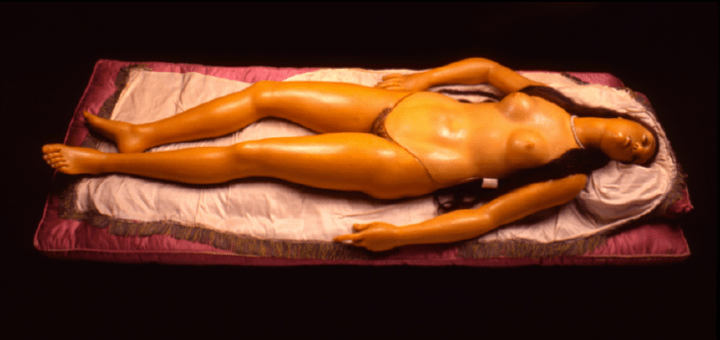
Anatomical Venus, ca. 1780, wax, Museum of Natural History in Florence
(Photo: Saulo Bambi)
◊ ◊ ◊ ◊ ◊
ASECS recently announced that the 2012-13 James L. Clifford Prize was awarded to Rebecca Messbarger for her article “The Re-Birth of Venus in Florence’s Royal Museum of Physics and Natural History” published by the Journal of the History of Collections (May 2012): 1-21.
Messbarger is the author of The Lady Anatomist: The Life and Work of Anna Morandi Manzolini (Chicago: University of Chicago Press, 2010).










leave a comment