Exhibition | Disegno & Couleur: Dessins italiens et français
From L’Officiel Galleries & Musées:
Disegno & Couleur: Dessins italiens et français du XVIe au XVIIIe siècle
Bonnefantenmuseum, Maastricht, 27 November 2012 — 17 February 2013
Musée des Beaux-arts, Tours, 16 March — 27 May 2013
Musées Royaux des Beaux-arts de Belgique, Brussels, October 2013 — January 2014
 L’exposition présentée par le musée des Beaux-Arts de Tours réunit 75 dessins italiens et français réalisés du XVIe au XVIIIe siècle et appartenant aux musées royaux des Beaux-Arts de Belgique, à Bruxelles.
Certaines de ces œuvres n’ont jamais été présentées en France et proviennent de la prestigieuse collection Jean de Grez (1837-1910), offerte à l’état belge en 1911. Ces dessins ont été créés à Florence, à Bologne, à Rome, à Venise et ont permis la réalisation de grands projets comme le Palazzo Vecchio à Florence.
Vous pourrez également découvrir des feuilles d’artistes français rendues à Jean Cousin, Claude Déruet, Laurent de La Hyre, Eustache Lesueur, Charles Le Brun, Antoine Watteau, Joseph Benoit Suvée.
◊ ◊ ◊ ◊ ◊
From ArtBooks.com:
Stefaan Hautekeete, ed., Disegno & Couleur: Dessins italiens et français du XVIe au XVIIIe siècle (Milan: Silvana Edoriale, 2012), 256 pages, ISBN: 978-8836623716, $65.
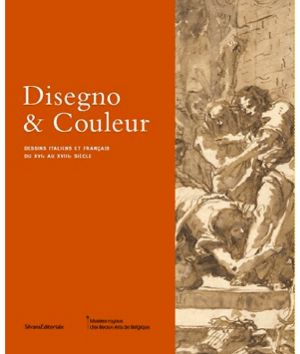 Les Musées royaux des Beaux-Arts de Belgique organisent depuis 2001 d’importantes expositions de dessins autour des chefs-d’œuvre de leur collection : Dessins de Rembrandt et ses élèves en 2005, Dessins du Siècle d’or hollandais en 2007. La troisième manifestation réunira les plus belles feuilles françaises et italiennes du XVIe au XVIIIe siècle, provenant essentiellement de la prestigieuse collection Jean de Grez (Breda, 1837- Bruxelles, 1910) donnée à l’Etat belge en 1911.
Le musée des Beaux-Arts de Tours, première institution française à être associée à ces projets, réunira les plus belles feuilles françaises et italiennes du XVIe au XVIIIe siècle, provenant essentiellement de la prestigieuse collection Jean de Grez (Breda, 1837- Bruxelles, 1910) donnée à l’Etat belge en 1911. Le public tourangeau découvrira 75 feuilles exceptionnelles d’artistes italiens qui ont participé à la décoration de grands projets de décoration à Florence (Palazzo Vecchio), à Rome (salles du Vatican), à Venise….tels que Paolo Farinati, Giovanni Stradano, Frederico Zuccaro, Giovanni Lorenzo Bernini, dit Le Bernin, Tiepolo…. ainsi qu’une sélection française opérée par Pierre Rosenberg, où seront présents les grands noms de la peinture, Jean Cousin, Claude Déruet, Eustache Lesueur, Charles Le Brun, Antoine Watteau… A cette occasion, une vingtaine de dessins français et italiens de la collection du musée de Tours seront confrontés à ces œuvres, notamment ceux de François Boucher, Louis-François Cassas, Jean Cousin, Jacques-Louis David, Prospero Fontana, Augustin-Alphonse Gaudar de Laverdine, Claude Vignons, mais aussi les nouvelles découvertes : Baglione, Bolzoni..
New Book | The Wallace Collection Catalogues: Gold Boxes
From Paul Holberton:
Charles Truman, The Wallace Collection: Catalogue of Gold Boxes (London: Paul Holberton, 2013), 352 pages, ISBN: 978-0900785948, £100.
 The 18th-century gold snuffbox was the ultimate fashion accessory – beautifully made, exquisitely carved and very expensive, and, like fashion, its form and ornament changed according to the taste of the time. The skills of the goldsmith, the enameller, the lapidary and the miniaturist combined to form a piece – always different – for the most discerning clientele that Europe has ever known.
The Wallace Collection has some of the finest, and certainly some of the most famous, gold boxes in the world. Paris was the centre of taste in the 18th century and the collection contains a remarkable group of boxes by the greatest goldsmiths of the period: Jean Ducrollay, Pierre-François Drais and Louis Roucel. Somewhat surprisingly the Wallace Collection, which is noted for its French works or art, has some very important German boxes by Jean-Guillaume-Georges Kruger of Berlin, Johann Christian Neuber of
Dresden and Ignatius Peter Krafft of Hanau.
Charles Truman, who has catalogued the collection of gold boxes, is one of the leading authorities on the subject. In this book he discusses the history of snuff-taking and the development, manufacture and collecting of gold boxes, with a particular emphasis on the design sources from which the craftsmen repsonsible for these wonderful works of art took their inspiration. These 99 pieces in the catalogue represent a brilliant cross-section of the products of the European goldsmith from approximately 100 years from the late 1730s. This book will prove invaluable to collectors, academics and students interested in the 18th century.
Exhibition | Trapani Coral
From the exhibition:
I Grandi Capolavori del Corallo: I Coralli di Trapani del XVII e XVIII Secolo
Fondazione Puglisi Cosentino, Catania, Sicily, 3 March — 5 May 2013
Museo Pepoli, Trapani, Sicily, 18 May — 30 June 2013
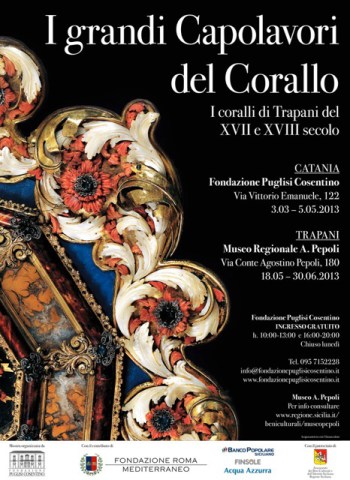 Il Museo Pepoli di Trapani ospiterà una grande mostra sui coralli trapanesi realizzati dai maestri artigiani della citt siciliana tra il XVII e XVIII secolo. Simbolo della bellezza e perfezione del creato, materia prima con l’oro per meravigliosi oggetti di culto, arredi sacri e profani, il corallo al centro di una grande mostra. Esposti per la prima volta capolavori provenienti da collezioni pubbliche e private che testimoniano come la lavorazione di questo straordinario materiale, in Sicilia e in particolare a Trapani, sia assurta a vera e propria arte.
In mostra oltre 120 preziosi manufatti di inestimabile valore selezionati con grande attenzione: gioielli e arredi sacri (calici, ostensori, crocifissi, reliquiari, rosari e presepi) e ancora calamai, saliere e raffinatissimi elementi darredo come specchiere, cornici, tavoli da gioco, scrigni e monumentali stipi destinati a case principesche e regge.
Si tratta di oggetti di grande valore artistico, realizzati con materiali pregiati per essere donati, tra il 500 e il 600, a principi e regnanti. Naturalia e Mirabilia erano esposti nelle Wunderkammer settecentesche, le cos dette stanze delle meraviglie, dove lappassionato collezionista raccoglieva oggetti della natura arricchendoli con materiali preziosi finemente cesellati in base allestro dellartista, filigrana d oro e d argento, splendidi oggetti destinati al godimento di pochi eletti nelle proprie dimore, piccoli musei ante litteram.
◊ ◊ ◊ ◊ ◊
From ArtBooks.com:
Valeria Patrizia Li Vigni Tusa, Maria Concetta Di Natale, Vincenzo Abbate, I grandi capolavori del Corallo: I coralli di Trapani del XVII e XVIII secolo (Milan: Silvana, 2013), 192 pages, ISBN: 978-8836625888, $65.
 Il catalogo presenta ai lettori una rassegna di capolavori in corallo provenienti dalla Sicilia, regione dove la realizzazione di meravigliosi manufatti in questo materiale ha raggiunto nei secoli l’apice della bellezza e della maestria artigianale. Il corallo ha visto fiorire intorno a sè infinite credenze popolari, legate soprattutto alla sua forma e al suo intenso colore: carico di valenze apotropaiche, usato in passato anche in medicina, il corallo è soprattutto simbolo della bellezza e perfezione del Creato e per questo divenne la materia prima, insieme con l’oro, per la produzione di meravigliosi oggetti di culto e arredi sacri. Fra le opere qui documentate, tutte realizzate con il corallo raccolto a Trapani, lungo i fondali delle Egadi e intorno all’isola di Tabarca, spiccano sia gioielli, sia ostensori, crocifissi, reliquari, presepi, nonché elementi di raffinato arredo: specchiere, tavoli da gioco, cornici, scrigni, fino a monumentali trumeaux destinati a case principesche. Queste opere testimoniano la ricchezza e la qualità di alcune collezioni considerate fondamentali nel settore, ovvero quelle della Banca di Novara, del Museo Pepoli di Trapani, della Fondazione Whitaker e del Museo Diocesano di Monreale, qui documentate insieme a singoli pezzi di inestimabile valore apparteneti a raccolte private italiane e straniere.
Exhibition | Revisiting the Picture Gallery of Frederick the Great
From the Prussian Palaces and Gardens Foundation (SPSG):
The Most Beautiful Gallery: Revisiting the Picture Gallery of Frederick the Great
Sanssouci, Picture Gallery, Potsdam, 9 May — 31 October 2013
As for the gallery, after St. Peter’s in Rome, it is undisputedly the most beautiful thing there is in the world. –Marquis d’Argens to Frederick the Great, 1761
 The Picture Gallery in Sanssouci Park ranks among the first and most magnificent buildings in Europe to be erected specifically for an art collection. Together with the paintings and sculptures selected by Frederick the Great, the building, adorned with portrayals of the arts and precious materials, constitutes a unique overall work of art. As a fitting expression of connoisseurship and education, at the same time it pointed to the importance of the Kingdom of Prussia. 250 years after it was first opened, visitors are now being invited to view through the eyes of Frederick this ‘queen’ of all gallery beauties.
The Picture Gallery was finished in 1763, and the cabinet was hung with paintings in 1764. Many of the masterpieces – for example, by Peter Paul Rubens and Carlo Maratta as well as by sculptors such as Jean-Baptiste Lemoyne and Louis-Claude Vassé – still hang here today. The collection of more than 180 paintings and sculptures has undergone powerful changes since its founding, however. The Prussian Palaces and Gardens Foundation Berlin-Brandenburg is now re-introducing the Gallery in a way that corresponds to the original furnishing concept of its royal builder.
 For the first time since 1830, antique sculptures, on loan from the Collection of Antiquities and the Sculpture Collection at the Staatliche Museen zu Berlin as well as the Muzeum Narodowe in Poznan, are coming to Sanssouci, where they may be admired in the Gallery once again. Among the pieces is the famous statuette of the Girl Playing Knucklebones. The Frederician manner of hanging paintings has been visualized in a photograph presentation. Particularly distinctive is the new hanging of the paintings in the small cabinet: With the return of works in 2010 that were long thought to be war losses, a closer approximation to the historical wall-to-wall hanging has been achieved. Thus, it is now possible to experience the overwhelming gallery rooms in a completely new manner as architecture, painting, and sculpture engage with one another in a unique dialogue.
Catalogue: Die Schönste der Welt: Eine Wiederbegegnung mit der Bildergalerie Friedrichs des Großen (Berlin: Deutscher Kunstverlag, 2013), 144 pages, ISBN 978-342207184, €15.
Additional information is available at ArtDaily»
Forthcoming Book | The Museum of the Horse
From Prestel:
Philip Jodidio, ed., The Museum of the Horse (London: Prestel, 2013), 176 pages, ISBN: 978-3791352985, £30 / $50.
 One of France’s most visited monuments, the Château de Chantilly features gardens by André Le Nôtre, a world-renowned art collection and impressive stables, which were the center of eighteenth-century French equestrian culture and transformed into a captivating museum in 1982. Now, under the auspices of the Aga Khan and the Foundation for the Safeguarding and Development of the Domain of Chantilly, the Museum of the Horse has undergone an extensive renovation. In addition to detailing the contents of the museum’s galleries, this beautifully illustrated volume explores the important role that Chantilly has played in horse racing and hunting. It takes readers on a tour of the historic stables and surrounding grounds and, in personal essays, looks at the close ties between horse and rider through the centuries.
Philip Jodidio is the author of more than 75 books on architecture.
New Book | Women and Gender in Early Modern Europe
From Ashgate:
Allyson Poska, Jane Couchman, and Katherine McIver, The Ashgate Research Companion to Women and Gender in Early Modern Europe (Aldershot: Ashgate, 2013), 572 pages, ISBN: 978-1409418177, $150.
 Over the past three decades scholars have transformed the study of women and gender in early modern Europe. This Ashgate Research Companion presents an authoritative review of the current research on women and gender in early modern Europe from a multi-disciplinary perspective. The authors examine women’s lives, ideologies of gender, and the differences between ideology and reality through the recent research across many disciplines, including history, literary studies, art history, musicology, history of science and medicine, and religious studies. The book is intended as a resource for scholars and students of Europe in the early modern period, for those who are just beginning to explore these issues and this time period, as well as for scholars learning about aspects of the field in which they are not yet an expert. The companion offers not only a comprehensive examination of the current research on women in early modern Europe, but will act as a spark for new research in the field.
Allyson M. Poska is Professor of History at the University of Mary Washington, USA and co-editor of Ashgate’s ‘Women and Gender in the Early Modern World’ book series. Jane Couchman is Professor Emerita of French Studies, Women’s Studies and Humanities at Glendon College, York University, Toronto. Katherine A. McIver is Professor Emerita of Art History at the University of Alabama at Birmingham.
◊ ◊ ◊ ◊ ◊
C O N T E N T S
Introduction, Allyson M. Poska, Jane Couchman and Katherine A. McIver
Part I | Religion
The permeable cloister, Elizabeth A. Lehfeldt
Literature by women religious in early modern Catholic Europe and the New World, Alison Weber
Convent creativity, Marilynn Dunn
Convent music: an examination, Kimberlyn Montford
Lay patronage and religious art, Catherine E. King
Female religious communities beyond the convent, Susan E. Dinan
Protestant movements, Merry Wiesner-Hanks
Protestant women’s voices, Jane Couchman
Part II | Embodied Lives
Maternity, Lianne McTavish
Upending patriarchy: rethinking marriage and family in early modern Europe, Allyson M. Poska
The economics and politics of marriage, Jutta Gisela Sperling
Before the law, Lyndan Warner
Permanent impermanence: continuity and rupture in early modern sexuality studies, Katherine Crawford
Women and work, Janine M. Lanza
Old women in early modern Europe: age as an analytical category, Lynn Botelho
Women on the margins, Elizabeth S. Cohen
Women and political power in early modern Europe, Carole Levin and Alicia Meyer
Part III | Cultural Production
The Querelle des femmes, Julie D. Campbell
Intellectual women in early modern Europe, Diana Robin
Women in science and medicine, 1400-1800, Alisha Rankin
Early modern women artists, Sheila ffolliott
Beyond Isabella and beyond: secular women patrons of art in early modern Europe, Sheryl E. Reiss
Material culture: consumption, collecting and domestic goods, Katherine A. McIver
Images of women, Andrea Pearson
Women, gender, and music, Linda Phyllis Austern
2012-13 Clifford Prize | Messbarger on the Florentine Anatomical Venus
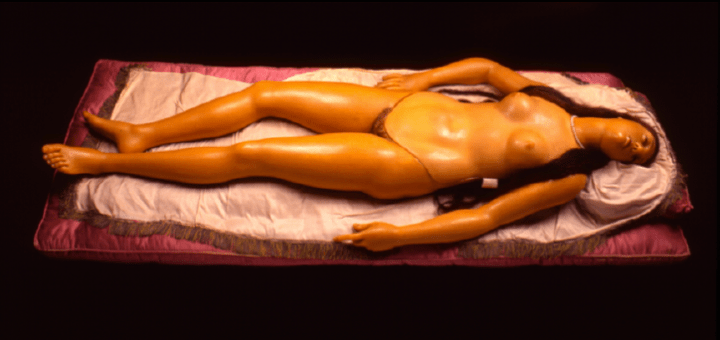
Anatomical Venus, ca. 1780, wax, Museum of Natural History in Florence
(Photo: Saulo Bambi)
◊ ◊ ◊ ◊ ◊
ASECS recently announced that the 2012-13 James L. Clifford Prize was awarded to Rebecca Messbarger for her article “The Re-Birth of Venus in Florence’s Royal Museum of Physics and Natural History” published by the Journal of the History of Collections (May 2012): 1-21.
Messbarger is the author of The Lady Anatomist: The Life and Work of Anna Morandi Manzolini (Chicago: University of Chicago Press, 2010).
New Book | Une Facétie de Fragonard
From the publisher:
Carole Blumenfeld, Une Facétie de Fragonard: Les révélations d’un dessin retrouvé (Paris: Editions Gourcuff-Gradenigo, 2013), 80 pages, ISBN: 978-2353401475, 20€.
 L’ouvrage de Carole Blumenfeld apporte un éclairage nouveau sur les talents de portraitistes de Fragonard et lève le voile sur l’identité de chacun des personnages qui se cachent derrière Diderot, La Guimard, L’Inspiration, L’étude…
Les Figures de fantaisie de Fragonard comptent parmi les œuvres les plus éblouissantes, les plus célèbres et les plus énigmatiques de l’histoire de la peinture française. La découverte d’un dessin inédit de l’artiste vient bouleverser aujourd’hui tout ce que nous savions de ces silhouettes peintes en « une heure de temps ». Il apporte la preuve indubitable qu’elles sont des portraits et non des figures imaginaires. Fragonard a en effet esquissé au crayon, sur une feuille, dix-huit de ses tableaux en marquant les noms de chacun de ses modèles. Dans de nombreux cas, il s’agit de révélations étonnantes qui contredisent des certitudes acquises au cours des années.
Available from ArtBooks.com
◊ ◊ ◊ ◊ ◊
Didier Rykner reported on the book’s discoveries for The Art Tribune (4 December 2012). . .
The Fragonard portrait which has, almost, always been known as Portrait of Diderot is in fact not a likeness of the philosopher as proven by the drawing recently auctioned off and published for the first time on 17 July on The Art Tribune by Marie-Anne Dupuy-Vachey.
However, she was not alone in immediately recognizing the probable importance of the sheet. Hubert Duchemin, a Parisian expert and dealer, along with his collaborator Lilas Sharifzadeh, also guessed its likely pedigree. At the auction, Hubert Duchemin made the final bid, a high price given the uncertainty still surrounding the work. After the sale, he turned it over for study to Carole Blumenfeld, the art historian. Now, a small book will appear on 13 December [2012] at Editions Gourcuff-Gradenigo and will reveal the very fruitful results of this research. . .
The full article is available here»
New Book | The Hermit in the Garden
From Oxford UP:
Gordon Campbell, The Hermit in the Garden: From Imperial Rome to Ornamental Gnome (New York: Oxford University Press, 2013), 272 pages, ISBN: 978-0199696994, £17 / $30.
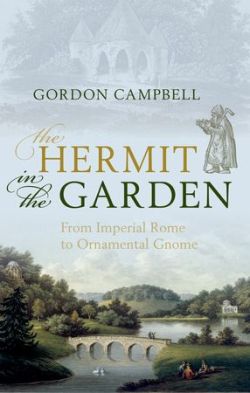 Tracing its distant origins to the villa of the Roman emperor Hadrian in the second century AD, the eccentric phenomenon of the ornamental hermit enjoyed its heyday in the England of the eighteenth century. It was at this time that it became highly fashionable for owners of country estates to commission architectural follies for their landscape gardens. These follies often included hermitages, many of which still survive, often in a ruined state.
Landowners peopled their hermitages either with imaginary hermits or with real hermits – in some cases the landowner even became his own hermit. Those who took employment as garden hermits were typically required to refrain from cutting their hair or washing, and some were dressed as druids. Unlike the hermits of the Middle Ages, these were wholly secular hermits, products of the eighteenth-century fondness for ‘pleasing melancholy’.
Although the fashion for them had fizzled out by the end of the eighteenth century, they had left their indelible mark on both the literature as well as the gardens of the period. And, as Gordon Campbell shows, they live on in the art, literature, and drama of our own day – as well as in the figure of the modern-day garden gnome.
This engaging and generously illustrated book takes the reader on a journey that is at once illuminating and whimsical, both through the history of the ornamental hermit and also around the sites of many of the surviving hermitages themselves, which remain scattered throughout England, Scotland, and Ireland. And for the real enthusiast, there is even a comprehensive checklist, enabling avid hermitage-hunters to locate their prey.
Gordon Campbell is Professor of Renaissance Studies at the University of Leicester. He is the author of the best-selling Bible: The Story of the King James Bible and of many other books on literature, art, history, and biography. A fellow of the British Academy and a former chair of the Society for Renaissance Studies, in 2012 he was awarded the Longman – History Today Trustees Award for a lifetime contribution to History. In this book his interests in cultural history, architectural history, and designed landscapes converge in a pioneering study of the phenomenon of the English ornamental hermit and his hermitage.
◊ ◊ ◊ ◊ ◊
C O N T E N T S
Introduction
1: Origins and Antecedents
2: The Idea of the Hermit
3: The Hermits
4: The Hermitage in Georgian England
5: The Celtic lands and the Continent
6: The Afterlife of the Hermit: from gnomes to Arcadia
Appendix: a Catalogue of Hermitages
Works Consulted
Index
New Book | A Taste for China
From Cambridge UP:
Eugenia Zuroski Jenkins, A Taste for China: English Subjectivity and the Prehistory of Orientalism (New York: Cambridge University Press, 2013), 304 pages, ISBN: 978-0199950980, $74.
 Challenging existing narratives of the relationship between China and Europe, this study establishes how modern English identity evolved through strategies of identifying with rather than against China. Through an examination of England’s obsession with Chinese objects throughout the long eighteenth century, A Taste for China argues that chinoiserie in literature and material culture played a central role in shaping emergent conceptions of taste and subjectivity.
Informed by sources as diverse as the writings of John Locke, Alexander Pope, and Mary Wortley Montagu, Zuroski Jenkins begins with a consideration of how literature transported cosmopolitan commercial practices into a model of individual and collective identity. She then extends her argument to the vibrant world of Restoration comedy-most notably the controversial The Country Wife by William Wycherley-where Chinese objects are systematically associated with questionable tastes and behaviors. Subsequent chapters draw on Defoe, Pope, and Swift to explore how adventure fiction and satirical poetry use chinoiserie to construct, question, and reimagine the dynamic relationship between people and things. The second half of the eighteenth century sees a marked shift as English subjects anxiously seek to separate themselves from Chinese objects. A reading of texts including Aphra Behn’s Oroonoko and Jonas Hanway’s Essay on Tea shows that the enthrallment with chinoiserie does not disappear, but is rewritten as an aristocratic perversion in midcentury literature that prefigures modern sexuality. Ultimately, at the century’s end, it is nearly disavowed altogether, which is evinced in works like Charlotte Lennox’s The Female Quixote and Jane Austen’s Northanger Abbey.
Eugenia Jenkins is Assistant Professor of English and Cultural Studies at McMaster University.
◊ ◊ ◊ ◊ ◊
C O N T E N T S
Introduction: ‘China’ and The Prehistory of Orientalism
1. The Cosmopolitan Nation, ‘Where Order in Variety We See’
2. The Chinese Touchstone of the Tasteful Imagination
3. Defoe’s Trinkets: Fiction’s Spectral Traffic
4. ‘Nature to Advantage Drest’: The Poetry of Subjectivity
5. How Chinese Things Became Oriental
6. Disenchanting China: Orientalism and the English Novel
Afterword: Rethinking Modern Taste










leave a comment