New Title | The Origins of Sex
Dabhoiwala’s book appeared earlier this year, building on a 2010 Past and Present article, and I should have noted it months ago. I’m not sure scholarly reviews of it are yet in (please add what I’ve overlooked), but it was reviewed widely in the popular press. Here’s one of those from The Literary Review:
Faramerz Dabhoiwala, The Origins of Sex: A History of the First Sexual Revolution (Oxford University Press, 2012), 496 pages, ISBN: 9780199892419, $35.
Reviewed by Norma Clarke, Kingston University
A woman born in 1600 grew up being told she was the most lustful of God’s creatures. Come 1800 and the message was reversed: she was ‘naturally’ delicate and pure. No longer having lusts of her own to manage, her role was to control the ‘natural’ lust of men and thus preserve civilisation. Dogmas about sexuality had undergone remarkable change. What remained the same was female subordination.
In this ambitious and wide-ranging book, Faramerz Dabhoiwala charts what he calls ‘a history of the first sexual revolution’. He examines the religious, economic, intellectual and social pressures that provided the context for a shift in attitudes towards sexuality. The move from pre-modern to modern times was towards sexual permissiveness and privacy, and away from external controls of individual sexual behaviours. . . .
The full review is available here»
Exhibition | Dark Romanticism: From Goya to Max Ernst
Press release from the Städel Museum:
Schwarze Romantik: Von Goya bis Max Ernst
The Städel Museum, Frankfurt am Main, 26 September 2012 — 20 January 2013
Musée d’Orsay, Paris, 4 March — 9 June 2013
Curated by Felix Krämer
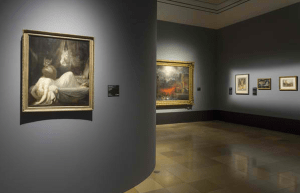 The Städel Museum’s major special exhibition Dark Romanticism: From Goya to Max Ernst is the first German exhibition to focus on the dark aspect of Romanticism and its legacy, mainly evident in Symbolism and Surrealism. Comprising over 200 paintings, sculptures, graphic works, photographs and films, it presents the fascination that many artists felt for the gloomy, the secretive and the evil. Using outstanding works in the museum’s collection on the subject by Francisco de Goya, Eugène Delacroix, Franz von Stuck or Max Ernst as a starting point, the exhibition is also presenting important loans from internationally renowned collections, such as the Musée d’Orsay, the Musée du Louvre, both in Paris, the Museo del Prado in Madrid and the Art Institute of Chicago. The works on display by Goya, Johann Heinrich Fuseli and William Blake, Théodore Géricault and Delacroix, as well as Caspar David Friedrich, convey a Romantic spirit which by the end of the 18th century had taken hold all over Europe. In the 20th century artists such as Salvador Dalí, René Magritte or Paul Klee and Max Ernst continued to think in this vein. The art works speak of loneliness and melancholy, passion and death, of the fascination with horror and the irrationality of dreams. After Frankfurt the exhibition, conceived by the Städel Museum, will travel to the Musée d’Orsay in Paris.
The exhibition’s take on the subject is geographically and chronologically comprehensive, thereby shedding light on the links between different centres of Romanticism, and thus retracing complex iconographic developments of the time. It is conceived to stimulate interest in the sombre aspects of Romanticism and to expand understanding of this movement. Many of the artistic developments and positions presented here emerge from a shattered trust in enlightened and progressive thought, which took hold soon after the French Revolution – initially celebrated as the dawn of a new age – at the end of the 18th century. Bloodstained terror and war brought suffering and eventually caused the social order in large parts of Europe to break down. The disillusionment was as great as the original enthusiasm when the dark aspects of the Enlightenment were revealed in all their harshness. Young literary figures and artists turned to the reverse side of Reason. The horrific, the miraculous and the grotesque challenged the supremacy of the beautiful and the immaculate. The appeal of legends and fairy tales and the fascination with the Middle Ages competed with the ideal of Antiquity. The local countryside became increasingly attractive and was a favoured subject for artists. The bright light of day encountered the fog and mysterious darkness of the night.
The exhibition is divided into seven chapters. It begins with a group of outstanding works by Johann Heinrich Fuseli. The artist had initially studied to be an evangelical preacher in Switzerland. With his painting The Nightmare (Frankfurt Goethe-Museum) he created an icon of dark Romanticism. This work opens the presentation, which extends over two levels of the temporary exhibition space. Fuseli’s contemporaries were deeply disturbed by the presence of the incubus (daemon) and the lecherous horse – elements of popular superstition – enriching a scene set in the present. In addition, the erotic-compulsive and daemonic content, as well as the depressed atmosphere, catered to the needs of the voyeur. The other six works by Fuseli – loans from the Kunsthaus Zürich, the Royal Academy London and the Staatsgalerie Stuttgart – represent the characteristics of his art: the competition between good and evil, suffering and lust, light and darkness. Fuseli’s innovative pictorial language influenced a number of artists – among them William Blake, whose famous watercolour The Great Red Dragon from the Brooklyn Museum will be on view in Europe for the first time in ten years.
The second room of the exhibition is dedicated to the Spanish artist Francisco de Goya. The Städel will display six of his works – including masterpieces such as The Witches’ Flight from the Prado in Madrid and the representations of cannibals from Besançon. A large group of works on paper from the Städel’s own collection will be shown, too. The Spaniard blurs the distinction between the real and the imaginary. Perpetrator and victim repeatedly exchange roles. Good and evil, sense and nonsense – much remains enigmatic. Goya’s cryptic pictorial worlds influenced numerous artists in France and Belgium, including Delacroix, Géricault, Victor Hugo and Antoine Wiertz, whose works will be presented in the following room. Atmosphere and passion were more important to these artists than anatomical accuracy. . .
The full press release is available here»
◊ ◊ ◊ ◊ ◊
Available from the publisher:
Catalogue: Felix Krämer, ed., Dark Romanticism: From Goya to Max Ernst (Ostfildern: Hatje-Cantz-Verlag, 2012), 305 pages, ISBN 9783775733731 (German edition ISBN: 9783775733724), $70 / 35€.
 The exhibition, which presents the Romantic as a mindset that prevailed throughout Europe and remained influential beyond the 19th century, is accompanied by a substantial catalogue with contributions by Roland Borgards, Ingo Borges, Claudia Dillmann, Dorothee Gerkens, Johannes Grave, Mareike Hennig, Hubertus Kohle, Felix Krämer, Franziska Lentzsch, Manuela B. Mena Marqués and Nerina Santorius. As is true for any designation of an epoch, Romanticism too is nothing more than an auxiliary construction, defined less by the exterior characteristics of an artwork than by the inner sentiment of the artist. The term ‘dark Romanticism’ cannot be traced to its origins, but – as is also valid for Romanticism per se – comes from literary studies. The German term is closely linked to the professor of English Studies Mario Praz and his publication La carne, la morte e il diavolo nella letteratura romantica of 1930, which was published in German in 1963 as Liebe, Tod und Teufel:
Die schwarze Romantik (literally: Love, Death and Devil: Dark
Romanticism).
Exhibition | Pride and Prejudice: Female Artists in France and Sweden
Press release from Sweden’s Nationalmuseum in Stockholm:
Pride and Prejudice: Female Artists in France and Sweden 1750–1860
Nationalmuseum, Stockholm, 27 September 2012 — 20 January 2013

Constance Marie Charpentier, Melancholy, 1810
(Amiens: Musée de Picardie)
◊ ◊ ◊ ◊ ◊
Pride and Prejudice – Female Artists in France and Sweden 1750–1860 explores conditions for female artists in France and Sweden during a period of revolutionary social change. The exhibition presents works by some of the French and Swedish women who managed to establish themselves as artists and create a name for themselves at this time. Works by amateurs are also on display, since women of higher standing were expected to master skills such as drawing and embroidery.
The exhibition includes six works by Marie Suzanne Giroust. She was married to artist Alexander Roslin and is The Lady with the Veil in his well-known painting of that name. During her lifetime, she was also a recognised figure, but she later came to be omitted from art history, a fate that she shares with many other female artists. Today only 19 of her works can be identified with any certainty. Giroust was one of the few women to be inducted into France’s Royal Academy of Painting and Sculpture in the late 18th century. Its members had the exclusive opportunity to showcase works at the Salon in Paris, the most important exhibition in France at the time. Within the Royal Academy, there was staunch opposition to female artists. In the mid-18th century, a ceiling was introduced that permitted no more than four members of this gender at any one time.

Adélaïde Labille-Guiard, Portrait of a Woman, 1787 (Musée des beaux-arts de Quimper)
During this period, family ties or social relations to male artists were crucial in determining women’s opportunities for training and inclusion in the art establishment. Giroust was accepted into the Royal Academy for her high artistic quality, but her husband’s prominence was no doubt also a significant factor. The same was true for other female members: Anne Vallayer-Coster, Elisabeth Louise Vigée-Lebrun and Adélaïde Labille-Guiard were all under Royal patronage and Marie Thérèse Reboul was married to the director of the French Academy in Rome. In Sweden too, female artists were unable to access the training offered by the Royal Swedish Academy of Fine Arts. Ulrica Fredrica Pasch became the first female member of the Royal Academy in 1773. She was apprenticed to her father, portraitist Lorens Pasch the Elder, and her brother Lorens Pasch the Younger was a professor and director of the Royal Academy. Once again, family ties and relations to established artists were a precondition for admission.
After the French Revolution, the Salon was opened up to all artists. Art was broadened out, enabling women to exhibit on the same terms as men. At the same time, the revolution caused the well-heeled customers to disappear, which affected incomes and the chances of finding good patrons. Women were also still excluded from all public art-related education. Their only chance was to enrol at private art schools such as the studios of Jacques-Louis David and Jean-Baptiste Regnauld. Some of the most eminent female artists had their own students, but these were all women. Soon these exclusively female studios in Paris also began to attract Swedish students.
During the first half of the 19th century, more and more women were able to step out of the shadows and see their career follow an increasingly professional course. In certain areas, such as French miniature painting, women led the field. Portraits were a path to both fame and fortune and, coupled with genre painting, came to form an important area for women artists. Leading figures during the first half of the 17th century include Cécile Hortense Haudebourt-Lescot and Marguerite Gérard in France, and Maria Röhl, Sophie Adlersparre and Amalia Lindegren in Sweden. Women gained the formal right to become fully-fledged students at the Royal Swedish Academy of Fine Arts in 1864, which is why the exhibition has taken this particular decade as its cut-off point.
Pride and Prejudice is a joint venture with Washington’s National Museum of Women in the Arts, where several of the French works have featured in the exhibition Royalists to Romantics. In Stockholm, they will be complemented with key loans from France plus works from Nationalmuseum and other collections. For many of the works, this will be their first appearance before a Swedish audience. The exhibition comprises around 250 objects, from works in oils and pastels to drawings, miniatures and embroidered artworks. The artists on show include Marie Suzanne Giroust, Anne Vallayer-Coster, Elisabeth Louise Vigée-Lebrun, Adélaïde Labille-Guiard, Marie Thérèse Reboul, Cécile Hortense Haudebourt-Lescot, Marguerite Gérard, Ulrica Fredrica Pasch, Maria Röhl, Sophie Adlersparre and Amalia Lindegren.
The exhibition is accompanied by a fully illustrated catalogue containing articles written by various Swedish and international specialists. Magnus Olausson, Eva-Lena Bengtsson, Barbro Werkmäster, Eva-Lena Bergström, Eva-Lena Karlsson and Solfrid Söderlind are among the Swedish authors.
◊ ◊ ◊ ◊ ◊
Theme Day
Sunday, 14 October, 1–3 pm
(Program will be announced later in September)
Lecture
Thursday, 17 January, 6 pm
Royalists and Revolutionaries: Women Artists and the French Revolution, lecture by Laura Auricchio, Associate Professor of Art History, Parsons The New School for Design. In English.
Forthcoming Book | The First Modern Museums of Art
Due out this November from The Getty:
Carole Paul, ed., The First Modern Museums of Art: The Birth of an Institution in 18th- and Early-19th-Century Europe (Los Angeles: J. Paul Getty Museum, 2012), 368 pages, ISBN 9781606061206, $50.
 In the eighteenth and early nineteenth centuries, the first modern, public museums of art—civic, state, or national—appeared throughout Europe, setting a standard for the nature of such institutions that has made its influence felt to the present day. Although the emergence of these museums was an international development, their shared history has not been systematically explored until now. Taking up that project, this volume includes chapters on fifteen of the earliest and still major examples, from the Capitoline Museum in Rome, opened in 1734, to the Alte Pinakothek in Munich, opened in 1836. These essays consider a number of issues, such as the nature, display, and growth of the museums’ collections and the role of the institutions in educating the public.
The introductory chapters by art historian Carole Paul, the volume’s editor, lay out the relationship among the various museums and discuss their evolution from private noble and royal collections to public institutions. In concert, the accounts of the individual museums give a comprehensive overview, providing a basis for understanding how the collective emergence of public art museums is indicative of the cultural, social, and political shifts that mark the transformation from the early-modern to the modern world. The fourteen distinguished contributors to the book include Robert G. W. Anderson, Adrian von Buttlar, Jeffrey Collins, Paula Findlen, Thomas W. Gaehtgens, Andrew McClellan, Magnus Olausson, Bénédicte Savoy, Andrew Schulz, Solfrid Söderlind, Brandon Taylor, Tristan Weddigen, and Michael Yonan.
Carole Paul is a scholar of seventeenth- and eighteenth-century art in Italy, whose recent work concerns the history of museums and collections in the early-modern period. Her publications include Making a Prince’s Museum: Drawings for the Late-Eighteenth-Century Redecoration of the Villa Borghese (Getty Publications, 2000).
New Novel | The Potter’s Hand
Just out in the UK from Atlantic Books:
A. N. Wilson, The Potter’s Hand (London: Atlantic, 2012), 512 pages, ISBN: 9781848879515, £18.
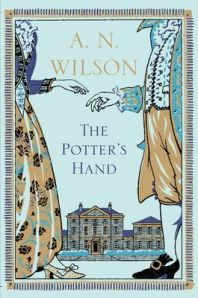 In 1774, Josiah Wedgwood, master craftsman possessed with a burning scientific vision, embarks upon the thousand piece Frog Service for Catherine the Great. Josiah’s nephew Tom journeys to America to buy clay from the Cherokee for this exquisite china. Tom is caught up in the American rebellion, and falls for a Cherokee woman who will come to play a crucial role in Josiah’s late, great creation: the Portland Vase. As the family fortune is made, and Josiah’s entrepreneurial brilliance creates an empire that will endure for generations, it is his daughter Sukey, future mother of Charles Darwin, who bears clear-eyed witness.
A novel of epic scope, rich in warmth, intellect and humanity, The Potter’s Hand explores the lives and loves of one of Britain’s greatest families, whose travails are both ordinary — births, deaths, marriages, opium addiction, depression — and utterly extraordinary.
A. N. Wilson grew up in Staffordshire, where his father was Managing Director of Josiah Wedgwood and Sons. He was educated at Rugby and New College, Oxford. A Fellow of the Royal Society of Literature, he holds a prominent position in the world of literature and journalism. He is a prolific and award-winning biographer and celebrated novelist. His most recent novel, Winnie and Wolf, was longlisted for the 2007 Man Booker Prize. He lives in North London.
◊ ◊ ◊ ◊ ◊
From Country Life:
Reviewed by Giles Waterfield; posted 10 September 2012.
Historian, biographer, commentator and novelist A. N. Wilson is full of variety. Having recently written about St Paul and Adolf Hitler, he turns his attention in this long and richly flavoured novel to Josiah Wedgwood, probably the most famous of all British ceramicists, at least until the 20th century. Wedgwood excelled as craftsman, designer and businessman, building up the ceramics industry in Staffordshire. . .
This boldly panoramic novel mixes history and invention, swooping from the narrator’s viewpoint to the personal feelings of the very large cast of characters. Highly experienced narrator that he is, Mr Wilson skilfully interweaves his various plots, yet keeps Wedgwood, his wife and his daughter Sukie at the centre of the book. This is the historical novel at its most ambitious.
The full review is available here»
Exhibition | The Last Days of Pompeii
While the exhibition showcases the nineteenth-century response to the eruption, there are still plenty of eighteenth-century offerings. The exhibition checklist is available here (as a PDF file). The following comes from the description of the accompanying publication.
◊ ◊ ◊ ◊ ◊
The Last Days of Pompeii: Decadence, Apocalypse, Resurrection
Getty Villa, Los Angeles, 12 September 2012 — 7 January 2013
Cleveland Museum of Art, 24 February — 19 May 2013
Musée national des beaux-arts du Québec, 13 June — 8 November 2013
 Destroyed yet paradoxically preserved by the eruption of Mount Vesuvius in A.D. 79, Pompeii and other nearby sites are usually considered places where we can most directly experience the daily lives of ancient Romans. Rather than present these sites as windows to the past, however, the authors of The Last Days of Pompeii: Decadence, Apocalypse, Resurrection explore Pompeii as a modern obsession, in which the Vesuvian sites function as mirrors of the present. Through cultural appropriation and projection, outstanding visual and literary artists of the last three centuries have made the ancient catastrophe their own, expressing contemporary concerns in diverse media—from paintings, prints, and sculpture, to theatrical performances, photography, and film. This lavishly illustrated volume—featuring the works of artists such as Piranesi, Fragonard, Kaufmann, Ingres, Chassériau, and Alma-Tadema, as well as Duchamp, Dalí, Rothko, Rauschenberg, and Warhol—surveys the legacy of Pompeii in the modern imagination under the three overarching rubrics of decadence, apocalypse, and resurrection.
Decadence investigates the perception of Pompeii as a site of impending and well-deserved doom due to the excesses of the ancient Romans, such as paganism, licentiousness, greed, gluttony, and violence. The catastrophic demise of the Vesuvian sites has become inexorably linked with the understanding of antiquity, turning Pompeii into a fundamental allegory for Apocalypse, to which all subsequent disasters (natural or man-made) are related, from the San Francisco earthquake of 1906 to Hiroshima, Nagasaki, 9/11, and Hurricane Katrina. Resurrection examines how Pompeii and the Vesuvian cities have been reincarnated in modern guise through both scientific archaeology and fantasy, as each successive cultural reality superimposed its values and ideas on the distant past.
Victoria C. Gardner Coates, Kenneth Lapatin, and Jon L. Seydl, The Last Days of Pompeii: Decadence, Apocalypse, Resurrection (Los Angeles: J. Paul Getty Museum, 2012), 256 pages, ISBN: 9781606061152, $40.
June 2012 Issue of ‘The Court Historian’
Eighteenth-century topics in the current issue of The Court Historian 17 (June 2012) . . .
Articles
• Clarissa Campbell Orr, “Popular History, Court Studies, and Courtier Diaries,” pp. 1-15.
• Robin Thomas, “Building the Monarchy: The Teatro di San Carlo in Naples, 1737,” pp. 35-60
• Neil Jeffares, “Between France and Bavaria: Louis-Joseph d’Albert de Luynes, Prince de Grimberghen,” pp. 61-85.
Reviews
• Clare Hornsby, Review of David Marshall, Susan Russell, and Karin Wolfe, eds., Roma Britannica: Art Patronage and Cultural Exchange in Eighteenth-Century Rome (London: British School at Rome, 2011), pp. 91-93.
• Wolf Burchard, Review of Christina Strunck and Elisabeth Kieven, eds., Europäische Galeriebauten: Galleries in a Comparative European Perspective (1400-1800), Römische Studien der Bibliotheca Hertziana 29 (Munich: Hirmer Verlag, 2010); and Mathieu da Vinha and Claire Constans, eds., Les grandes galeries européennes XVIIe-XIXe siècles (Paris: Éditions de la Maison des sciences de l’homme, 2010), pp. 95-104.
Conference Reports
• Antonio Ernesto Denunzio, “Aristocratic Residences in Naples: The Palazzo Zevallos Stigliano and Arts Patronage by the Nobility from the 16th to the 20th Centuries” (Naples, October 2011), pp. 113-14.
• Charles C. Noel, “The Court in Europe: Politics and Religion, 1500-1800,” (Madrid, December 2010), pp. 117-20.
New Field Editor for Eighteenth-Century Art at ‘caa.reviews’
From the Editor
 I am thrilled to announce that I’ll be stepping in as the new field editor for Eighteenth-Century Art at caa.reviews, succeeding Laura Auricchio who has brilliantly filled the position since 2007. I am especially grateful to both Laura and the editor-in-chief of caa.reviews, Sheryl Reiss, for all they’ve done to facilitate what, I hope, will be a smooth transition.

Published by the College Art Association, caa.reviews plays a valuable role for the scholarly community, keeping a pulse on art historical discourse but also — crucially, to my thinking — helping shape that discourse with more reviews and more timely reviews than would have ever been possible from CAA’s paper-based publications. As I’ve often said in my capacity as editor at Enfilade, I now say in this new role as a caa.reviews editor: the success of the publication depends upon you, the readers. I’ll do my best to invite thoughtful, engaged responses to a selection of the most striking and substantive scholarship addressing the eighteenth century, to give you good cause to keep reading. While promising neither revolutions (glorious or otherwise) nor sweeping societal enlightenment — certainly no guarantees regarding the sublime — I can affirm that I approach the position as an amateur, in the best sense of the eighteenth-century designation, as one who finds much to love in this period, a period as central as ever for grappling with questions of what it means to be human, what it means to make and use art, what it means to be modern, and what it means to address the past productively.
-Craig Ashley Hanson
◊ ◊ ◊ ◊ ◊
About caa.reviews
Founded in 1998, caa.reviews publishes timely scholarly and critical reviews of studies and projects in all areas and periods of art history, visual studies, and the fine arts, providing peer review for the disciplines served by the College Art Association. Publications and projects reviewed include books, articles, exhibitions, conferences, and other works as appropriate. It also publishes essays on these subjects, as well as on art education and policy and related topics. In reviewing and publishing recent texts and projects, caa.reviews fosters timely, worldwide access to the intellectual and creative materials and issues of art-historical, critical, curatorial, and studio practice, and promotes the highest standards of discourse in the disciplines of art and art history. The journal is published on a continual basis by the College Art Association. Access to caa.reviews is a benefit of membership in the College Art Association. For details about becoming a CAA member, please visit CAA’s membership pages.
Exhibition | ‘Canaletto in Venice’ at the Musée Maillol
It’s a busy autumn for eighteenth-century Venice — whether you’re in Venice or Paris. Along with the exhibition at the Musée Jacquemart-André, Canaletto–Guardi: The Two Masters of Venice, museum-goers in Paris can also see Canaletto in Venice at the Musée Maillol. The latter is loosely connected with the Guardi exhibition, opening in Venice at the Correr Museum on September 28. Continuing this theme of pairs, Canaletto in Venice will include the Venetian Notebook, shown earlier this year at the Palazzo Grimani. Thanks to Pierre-Henri Biger for pointing out this latest Parisian offering. The full press release is available as a PDF file here.
◊ ◊ ◊ ◊ ◊
Canaletto in Venice
Musée Maillol, Paris, 19 September 2012 — 10 February 2013
Curated by Annalisa Scarpa
 The Musée Maillol pays homage to Venice with the first exhibition devoted exclusively to Canaletto’s Venetian works. The exhibition will be presented in partnership with the Foundation of Venice Civic Museums which is preparing to put on a Francesco Guardi retrospective at the Correr Museum in Venice to mark the 300th anniversary of that Venetian painter’s birth. Canaletto in Venice will be an exclusive occasion for visitors to enjoy the master’s vision of his city, brought to life through his paintbrush. Along the canals we discover places, islands, squares and monuments, views of a city that still retains its 18th-century charm. The Venetian painter certainly didn’t invent the veduta, or detailed cityscape, a genre that has ancient origins, but he helped to develop it by giving his paintings a modernity that allowed him to overtake his masters.
Canaletto (1697-1768) is the most famous of the Venetian vedutisti of the 18th century. Over the centuries Antonio Canal has never fallen from favour; his works have always been eagerly sought after by collectors. They seem to have an endless charm, unaffected by trends. Canaletto has the crystal clarity of a man who was faithful to the spirit of the Enlightenment, with a very personal vision of reality. His painting manages to capture the very essence of the light; it conveys a unique and sensual shimmering.
The exhibition will bring together more than 50 carefully selected works, from the greatest museums and some historic private collections. On display too will be his drawings and also the famous sketchbook from about 1731, a rare loan by the Gabinetto dei Disegni e Stampe Gallerie the Cabinet of Prints and Drawings of the Accademia Gallery in Venice, which will be displayed open but which can be fully explored on computers.
Visitors will also be able to see a copy, made by Venetian master craftsmen, of the optical chamber used by Canaletto to make his drawings, thanks to a partnership with the superintendence of the Polo Museale of the City of Venice and the research of Dario Maran. It is taken from Canaletto’s original device, which was often used on a boat, made with carefully placed lenses that offered highly precise images that were unique at that time. Visitors will be able to see for themselves just how effective it was.
In recent times Canaletto has had a central role in a series of ground-breaking exhibitions about the vedutisti, including the one in Rome curated by the much-missed Alessandro Bettagno with Bozena Anna Kowalczyk; The Splendours of Venice in Treviso in 2009, by Giuseppe Pavanello and Alberto Craievich; and more recently the outstanding shows in London and Washington, curated by Charles Beddington. The exhibition at the Musée Maillol aims to be the last in this decade-long cycle by allowing Canaletto alone to lead the spectator around his city through his view paintings. The works on display will show how the artist developed his style. The juxtapositioning of his paintings of the same view will show how his early style, heavily influenced by the artist Marco Ricci and also by his training as a theatrical scenery painter, gradually evolved into interpretations of reality. These were imbued with an atmosphere that was both subtle and sublime, paving the way for painting that was to conquer Europe.
◊ ◊ ◊ ◊ ◊
Annalisa Scarpa specialises in Venetian painting of the 18th century and Venetian view painting. After teaching at the University of Ca’ Foscari in Venice, alongside authorities on Venetian art such as Pietro Zampetti, Alessandro Brettagno and especially Terisio Pignatti, she spent many years studying Canaletto’s graphic art. With Ludovico Mucchi she published Nella Profondità dei Dipinti: La Radiografia nell’indagine Pittorica (The Profundity of Painting: Radiography in Art Research), analyzing more than 200 Venetian view paintings using radiography. She is the author of important works on 18th-century Venetian art, Marco Ricci, Sebastiano Ricci and Jacopo Amigoni. She has curated a number of major recent exhibitions: Settecento Veneciano at the Academia of San Fernando in Madrid and at the Museo ode Bellas Artes in Seville, as well as From Canaletto to Tiepolo at the Palazzo Reale in Milan. She is the curator of the Fondazione A. F. Terruzzi in Milan.
S C I E N T I F I C C O M M I T T E E
• Irina Artemieva, Curator of Venetian painting, the State Hermitage Museum, St Petersburg
• Charles Beddington, Art historian who was curator of two of the most recent and important exhibitions dedicated to Canaletto: Canaletto in England: A Venetian Artist Abroad 1746-1755 at Yale Centre for British Art, New Haven, 2006, and the Dulwich Picture Gallery, London, 2007; as well as Venice: Canaletto and His Rivals at the National Gallery in London, 2010 and the National Gallery of Art in Washington, D.C. in 2011.
• Alberto Craievich, Curator, Museo del Settecento Veneziano, Ca’ Rezzonico, Venice, and Professore Emerito of the University of Ca’ Foscari
• Alastair Laing, Curator of Paintings and Sculpture, the National Trust, London
• Filippo Pedrocco, Director, Museo del Settecento Veneziano, Ca’ Rezzonico, Venice
• Lionello Puppi, President of the Centro Studi Tiziano e Cadore, Pieve di Cadore
• Alain Tapié, Chief Curator of Cultural Heritage
New Title | Invaluable Trees: Cultures of Nature, 1660-1830
Just out from SVEC (formerly Studies on Voltaire and the Eighteenth Century), available from the Voltaire Foundation:
Laura Auricchio, Elizabeth Heckendorn Cook and Giulia Pacini, eds., Invaluable Trees: Cultures of Nature, 1660-1830 — SVEC 2012:08 (Oxford: Voltaire Foundation, 2012), 360 pages, ISBN 9780729410489, £65 / €95 / $110.
 Trees and tree products have long been central to human life and culture, taking on intensified significance during the long eighteenth century. In this interdisciplinary volume, contributors trace changes in early modern theories of resource management and ecology across European and North American landscapes, and show how different and sometimes contradictory practices were caught up in shifting conceptions of nature, social identity, physical health and moral wellbeing.
◊ ◊ ◊ ◊ ◊
C O N T E N T S
Introduction
• Laura Auricchio — Elizabeth Heckendorn Cook and Giulia Pacini, Invaluable trees
I. Arboreal Lives
• Hamish Graham — ‘Alone in the forest’? Trees, charcoal and charcoal burners in eighteenth-century France
• J. L. Caradonna — Conservationism avant la lettre,? Public essay competitions on forestry and deforestation in eighteenth-century France
• Paula Young Lee — Land, logs and liberty: the Revolutionary expansion of the Muséum d’histoire naturelle during the Terror
• Peter Mcphee — ‘Cette anarchie dévastatrice’: the légende noire of the French Revolution
• Paul Elliott — Erasmus Darwin’s trees
• Giulia Pacini — At home with their trees: arboreal beings in the eighteenth-century French imaginary
II. Strategic Trees
• Elizabeth Heckendorn Cook — The vocal stump: the politics of tree-felling in Swift’s ‘On cutting down the old thorn at Market Hill’
• Michael Guenther — Tapping nature’s bounty: science and sugar maples in the age of improvement
• Meredith Martin — Bourbon renewal at Rambouillet
• Susan Taylor-Leduc — Assessing the value of fruit trees in the marquis de Fontanes’s poem Le Verger
• Elizabeth Hyde — Arboreal negotiations, or William Livingston’s American perspective on the cultural politics of trees in the Atlantic world
• Lisa Ford — The ‘naturalisation’ of François André Michaux’s North American sylva: patriotism in early American natural history
III. Arboreal Enlightenments
• Tom Williamson — The management of trees and woods in eighteenth-century England
• Steven King — The healing tree
• Nicolle Jordan — ‘I writ these lines on the body of the tree’: Jane Barker’s arboreal poetics
• Waltraud Maierhofer — Goethe and forestry
• Paula R. Backscheider — Disputed value: women and the trees they loved
• Aaron S. Allen — ‘Fatto di Fiemme’: Stradivari’s violins and the musical trees of the Paneveggio
Summaries
Bibliography
Index
◊ ◊ ◊ ◊ ◊
Laura Auricchio is Associate Professor of Art History and Chair of Humanities at The New School in New York. Her current research addresses Franco-American cultural exchanges in the Age of Revolution.
Elizabeth Heckendorn Cook is Associate Professor of English at the University of California, Santa Barbara. She studies the history of environmental ethics and early modern representations of trees and forests.
Giulia Pacini is Associate Professor of French at The College of William & Mary. Her current research focuses on the political and material significance of trees in early modern France.










leave a comment