New Book | Scottish Furniture, 1500–1914
From National Museums Scotland:
Stephen Jackson, Scottish Furniture, 1500–1914 (Edinburgh: NMSE Publishing, 2024), 272 pages, ISBN: 978-1910682487, £40.
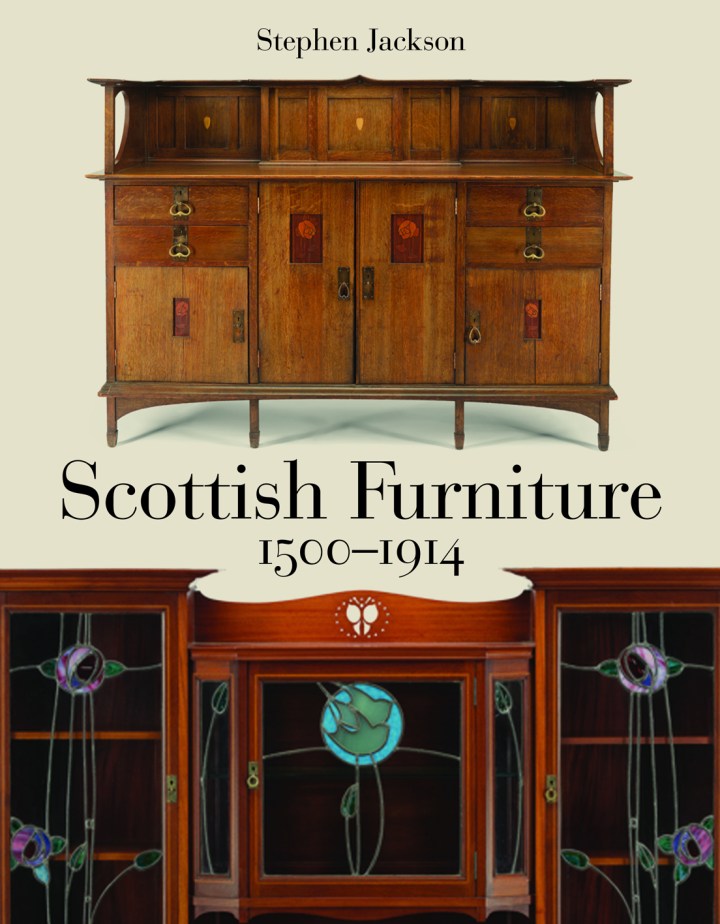 Scotland’s furniture evolved against a background of social and cultural change that included religious reformation, civil war, union with England, and participation in rapidly expanding commercial empire. The contribution of the country’s finest workshops has been overlooked in general histories of British furniture and sever decades of scholarly research is represented here to a wider public for the first time. From the beguiling and fragmentary woodwork of the sixteenth century to the blossoming of new art movements in the years around 1900, Scottish Furniture explores a form of material culture that was central to both everyday life and the expression of status and identity. The careers of prominent cabinet-makers such as Francis Brodie and William Trotter are explored in depth, while over sixty others from all regions of the country are represented among the 340 illustrations. Well-known designers such as Charles Rennie Mackintosh are considered alongside the firms which made their furniture.
Stephen Jackson is Senior Curator, Furniture and Woodwork at National Museums Scotland.
New Book | The Irish Country House
From Rizzoli:
Robert O’Byrne, photographs by Luke White, The Irish Country House: A New Vision (Ne York: Rizzoli, 2024), 272 pages, ISBN: 978-0847832835, $65.

A unique presentation of Irish country house interiors, combining well-preserved historic estates with adventurous contemporary restorations, celebrating some of the most characterful houses in Ireland.
Forgoing the criteria of stateliness and opulence, this book is an exploration of the most captivating and unusual interiors in Ireland. Whether in the transformation of a derelict estate, the preservation of an historic hunting lodge, or the re-creation of a Gothic fantasy, each of the homes in this extraordinary book reflects a renewed vitality in the contemporary approach to Irish country houses.
Rich in detail and varied in scope, the houses reveal a refreshing dynamism in their decoration by equally diverse owners—from the ornate refurbishment of a castle by a Mexican financier to the bold palette of a contemporary artist’s renovation to an Elizabethan Revival house. The sparse interiors of a mansion in Westmeath reflect its painstaking restoration by descendants of the original owners, and at Coollattin—Ireland’s largest country house, part restored, part still in disrepair—the building’s baroque splendor is amplified by its raw, unfinished state. Accompanying photography of the houses made specially for the book, the author guides readers through fifteen exceptional spaces, elucidating the remarkable aspects of each—and in doing so celebrates the unexpected eclecticism and reinvigorated spirit of Ireland’s historic interiors.
Robert O’Byrne is a writer and lecturer specializing in the fine and decorative arts. He is the author of more than a dozen books, a former columnist for Apollo magazine, and has written for both The Burlington Magazine and the Irish Arts Review. He authors the award-winning blog The Irish Aesthete. Luke White is a British photographer of portraits, interiors, and architecture.
New Book | Travellers in Eighteenth-C. Europe: The Sexes Abroad
From Pen and Sword History:
Julie Peakman, ed., Travellers in Eighteenth-Century Europe: The Sexes Abroad (Barnsley: Pen and Sword History, 2024), 256 pages, ISBN: 978-1399049603, £25 / $50.
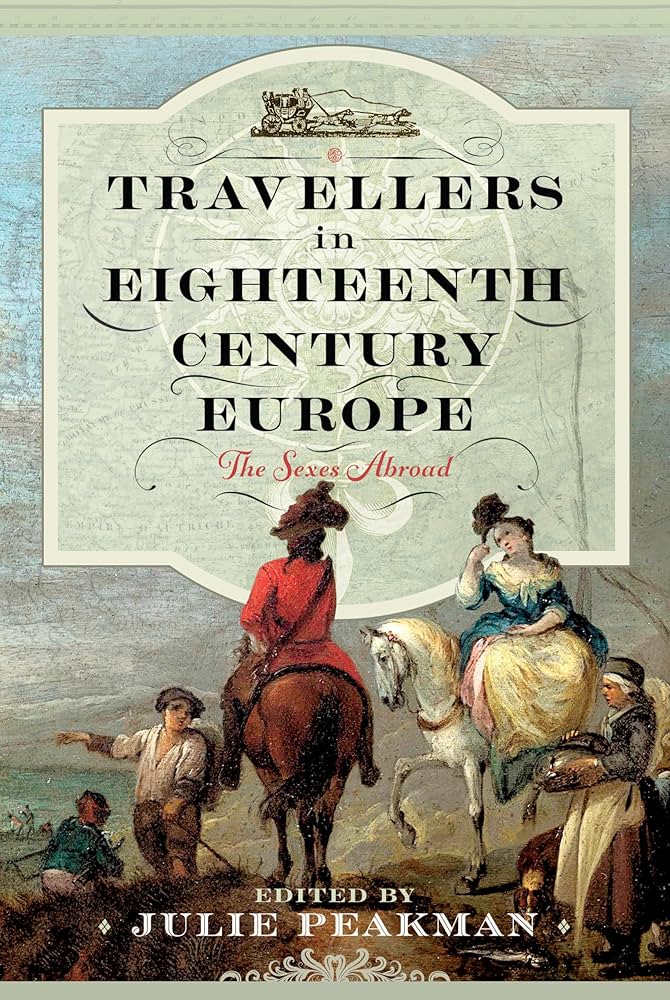 A collection of essays by leading scholars brought together by Julie Peakman, an expert in eighteenth-century culture.
The Grand Tour was considered a part of the education of a young gentleman. Travellers included blossoming scholars, poets, writers, and scientists. Visits were made to Greece and Italy via France and Switzerland, often taking in Turkey. But women also travelled extensively, though these accounts have been under-explored. This collection of essays examines first-hand accounts of the impact of foreign travel on both women and men, as seen through their letters, travel diaries, journals, and their creative response in poems, music, and art. Its originality is seen in its exploration of a comparison between the views of women and men abroad and the differences in what they deemed interesting and worthy of comment. The book is especially relevant in light of the many past (and current) xenophobic views of the ‘foreigner’. Here, we more often see travellers viewing their experience of ‘otherness’ and exoticism, in a positive light, a cultural appreciation rather than a cultural appropriation. This book examines how men and women saw these new worlds opening up before them, what delighted them, what influenced them, and their interaction with others in the light of domesticity, antiquity, politics, work, science, sex, and friendships.
Julie Peakman is an historian, a Fellow of the Royal Historical Society and Honorary Fellow at the Department of History, Classics, and Archaeology at Birkbeck College, University of London. She contributes regularly to newspapers, popular and academic journals and has worked on various documentaries for TV including for the BBC, Sky, Channel 4, and the Biography channel. She is a prolific author in the areas of eighteenth-century culture, history of sexuality, and social history. Her books include Libertine London, Licentious Worlds; The Pleasure’s All Mine; Amatory Pleasures, Lascivious Bodies; and Mighty Lewd Books: The Development of Pornography in Eighteenth-Century England; along with biographies of Dublin brothel-keeper Peg Plunket and Emma Hamilton.
New Book | Maurice Quentin de La Tour: L’Oeil absolu
From Cohen et Cohen:
Xavier Salmon, Maurice Quentin de La Tour: L’Oeil absolu (Paris: Cohen et Cohen, 2024), 623 pages, ISBN: 978-2367491141, €160.
 Maurice Quentin de La Tour (1704–1788) se joua des difficultés à reproduire ce qu’il voyait, transcrivant à l’aide des poudres de pastel aussi bien la douceur d’un velours, la délicatesse d’une dentelle, que le miroitement d’une armure, mais il sut aussi emporter l’âme de ses modèles en descendant à leur insu au plus profond de leur être.
L’homme n’a jamais laissé indifférent et il s’est livré tout au long de son œuvre et de ses écrits. Maurice Quentin de La Tour se joua des difficultés à reproduire ce qu’il voyait. Non seulement il eut le secret de toutes les manufactures, ainsi que se plurent à le souligner ses contemporains, transcrivant à l’aide des poudres de pastel aussi bien la douceur d’un velours, la délicatesse d’une dentelle, que le miroitement d’une armure, mais il sut aussi emporter l’âme de ses modèles en descendant à leur insu au plus profond de leur être. Fin psychologue, La Tour se piqua également de musique, de théâtre, de danse ou bien encore d’astronomie. Sans cesse en quête de perfection, il fut l’ami des philosophes, des savants et des artistes et livra leurs visages à la postérité.
Riche d’environ 500 pastels et préparations, l’œuvre de La Tour et la vie du maître n’ont pas fait en France l’objet d’une monographie complète depuis celle que publièrent Albert Besnard et Georges Wildenstein en 1928. Travaillant depuis bientôt 30 ans sur le maître et ses créations, Xavier Salmon relève aujourd’hui le défi de rendre un nouvel hommage au plus célèbres des pastellistes du XVIIIème siècle et livre une étude précise où chefs-d’œuvre et pastels inédits ou méconnus sont soigneusement analysés, replacés dans le contexte du temps et reproduits afin de restituer toute la richesse et la diversité d’un Siècle des Lumières dont Maurice Quentin de La Tour fut assurément l’un des témoins les plus fidèles.
Spécialiste de l’art européen du XVIIème et du XVIIIème siècle, Xavier Salmon est directeur du département des Arts graphiques du musée du Louvre. Il a été précédemment conservateur des peintures du XVIIIème siècle et du cabinet d’arts graphiques au château de Versailles, chef de l’inspection générale des musées et directeur du patrimoine et des collections du château de Fontainebleau. Il fut commissaire de nombreuses expositions dont les rétrospectives Jean-Marc Nattier, Maurice Quentin de La Tour: Le voleur d’âmes, et Alexandre Roslin: Un portraitiste pour l’Europe à Versailles, Madame de Pompadour et les arts également à Versailles, Marie-Antoinette et Elisabeth Louise Vigée Le Brun au Grand Palais à Paris. Il a reçu en 2014 le grand prix de l’Académie Française pour son ouvrage : Fontainebleau: Le temps des Italiens. Il a dédié une partie de ses travaux aux pastels français du XVIIIème siècle.
◊ ◊ ◊ ◊ ◊
As Adam Busiakiewicz noted at Art History News in June, Salmon’s is the first print catalogue raisonné to be published since 1928, though Neil Jeffares published a new online catalogue in 2022 as part of his Pastellists website, available for free here. –CH
New Book | The Story of Drawing: An Alternative History of Art
From Yale UP:
Susan Owens, The Story of Drawing: An Alternative History of Art (New Haven: Yale University Press, 2024), 256 pages, ISBN: 978-0300260472, $35.
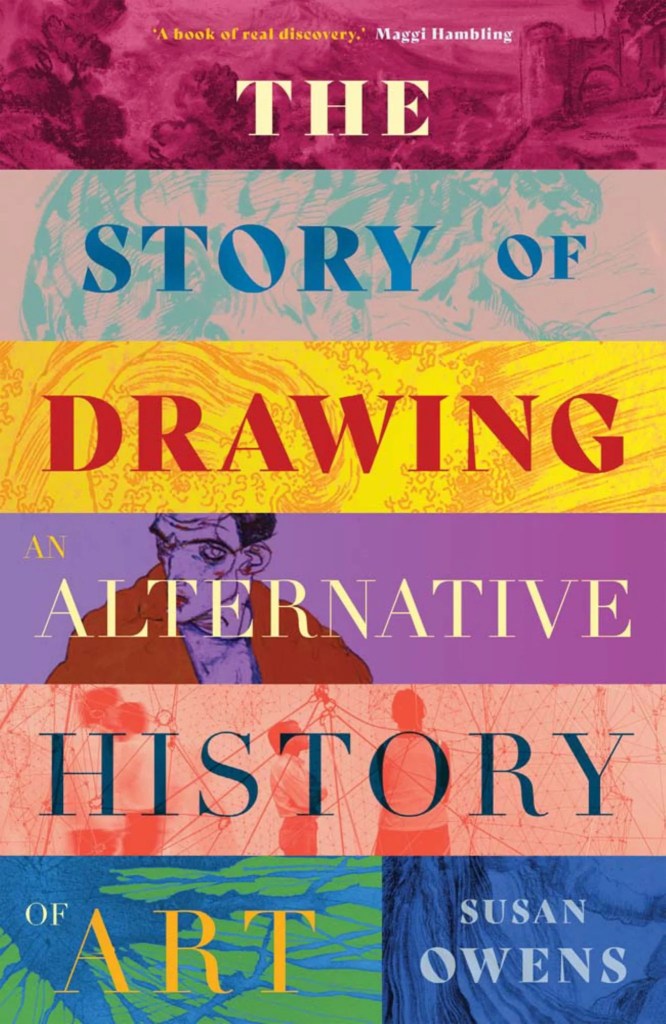 Drawing is at the heart of human creativity. The most democratic form of art-making, it requires nothing more than a plain surface and a stub of pencil, a piece of chalk or an inky brush. Our prehistoric ancestors drew with natural pigments on the walls of caves, and every subsequent culture has practised drawing—whether on papyrus, parchment, or paper. Artists throughout history have used drawing as part of the creative process.
While painting and sculpture have been shaped heavily by money and influence, drawing has always offered extraordinary creative latitude. Here we see the artist at his or her most unguarded. Susan Owens offers a glimpse over artists’ shoulders—from Michelangelo, Rembrandt, and Hokusai to Van Gogh, Käthe Kollwitz, and Yayoi Kusama—as they work, think, and innovate, as they scrutinise the world around them or escape into imagination. The Story of Drawing loops around the established history of art, sometimes staying close, at other times diving into exhilarating and altogether less familiar territory.
Susan Owens is a writer, art historian, and former V&A curator. Her previous books include The Art of Drawing, Spirit of Place, and Imagining England’s Past.
New Book | Philadelphia: A Narrative History
From Penn Press:
Paul Kahan, Philadelphia: A Narrative History (Philadelphia: University of Pennsylvania Press, 2024), 424 pages, ISBN: 978-1512826296, $40.
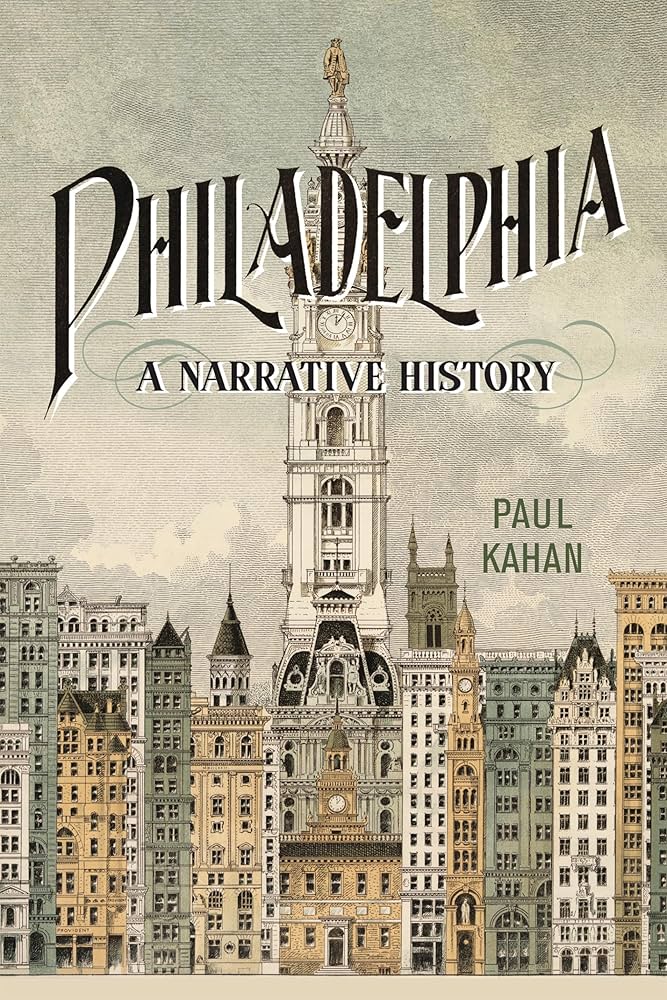 A comprehensive history of Philadelphia from the region’s original Lenape inhabitants to the myriad of residents in the twenty-first century
Philadelphia is famous for its colonial and revolutionary buildings and artifacts, which draw tourists from far and wide to gain a better understanding of the nation’s founding. Philadelphians, too, value these same buildings and artifacts for the stories they tell about their city. But Philadelphia existed long before the Liberty Bell was first rung, and its history extends well beyond the American Revolution. In Philadelphia: A Narrative History, Paul Kahan presents a comprehensive portrait of the city, from the region’s original Lenape inhabitants to the myriad of residents in the twenty-first century.
As any history of Philadelphia should, this book chronicles the people and places that make the city unique: from Independence Hall to Eastern State Penitentiary, Benjamin Franklin and Betsy Ross to Cecil B. Moore and Cherelle Parker. Kahan also shows us how Philadelphia has always been defined by ethnic, religious, and racial diversity—from the seventeenth century, when Dutch, Swedes, and Lenapes lived side by side along the Delaware; to the nineteenth century, when the city was home to a vibrant community of free Black and formerly enslaved people; to the twentieth century, when it attracted immigrants from around the world. This diversity, however, often resulted in conflict, especially over access to public spaces. Those two themes— diversity and conflict—have shaped Philadelphia’s development and remain visible in the city’s culture, society, and even its geography. Understanding Philadelphia’s past, Kahan says, is key to envisioning future possibilities for the City of Brotherly Love.
Paul Kahan is an expert on U.S. political, economic, and diplomatic history. He earned his Ph.D. in U.S. history from Temple University and lives outside of Philadelphia with his family. This is his seventh book.
c o n t e n t s
Introduction
1 Philadelphia Before 1681
2 The Founding of Philadelphia, 1681–1718
3 Franklin’s Philadelphia, 1718–1765
4 The Revolutionary City, 1765–1800
5 The Athens of America, 1800–1854
6 Civil War and Reconstruction, 1854–1876
7 Corrupt and Contended, 1876–1901
8 Wars, Abroad and at Home, 1901–1945
9 The Golden Age? 1945–1976
10 Crisis . . . and Renaissance? Philadelphia Since 1976
Notes
Index
Acknowledgments
New Book | Never Broken: Visualizing Lenape Histories
The exhibition was on view at the James A. Michener Art Museum in Doylestown, Pennsylvania this time last year (September 2023 – January 2024); the catalogue is still available from Penn Press:
Joe Baker and Laura Igoe, eds., Never Broken: Visualizing Lenape Histories (Philadelphia: University of Pennsylvania Press, 2024), 96 pages, ISBN: 978-1879636163, $30.
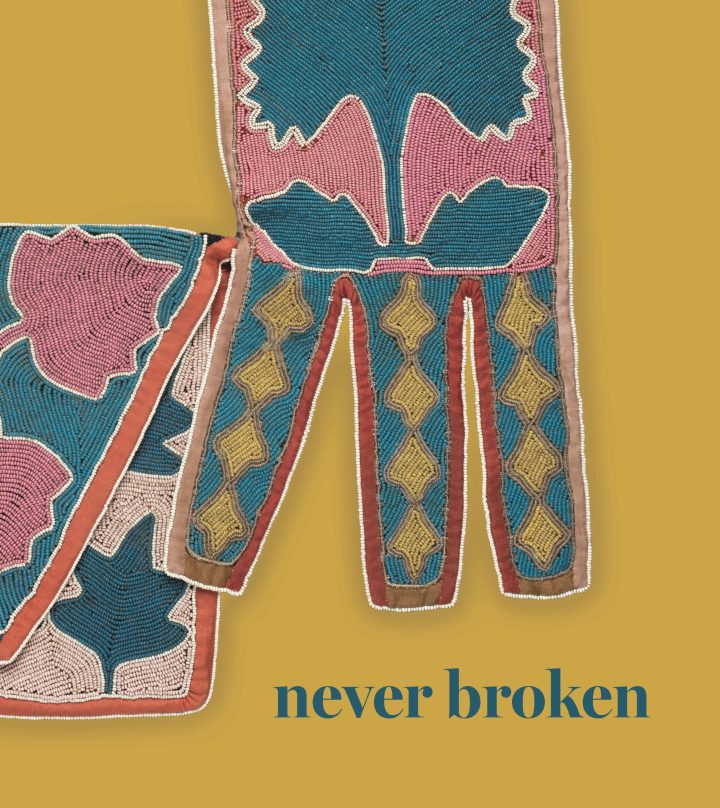 Through a focus on Lenape art, culture, and history and a critical examination of historical visualizations of Native and European American relationships, Never Broken explores the ways in which art can create, challenge, and rewrite history. This richly illustrated volume features contemporary work by Lenape artists in dialogue with historic Lenape ceramics, beadwork, and other cultural objects as well as re-creations of Benjamin West’s painting Penn’s Treaty with the Indians by European American artists. Published in conjunction with the first exhibition in Pennsylvania of contemporary Lenape artists who can trace their families back to the time of William Penn, Never Broken includes essays by Laura Turner Igoe, Joel Whitney, and Joe Baker. Igoe argues that the plethora of prints, paintings, and decorative arts that incorporated imagery from West’s iconic painting over a century after the depicted event attempted to replace the fraught history of Native and Anglo-American conflict with a myth of peaceful coexistence and succession. Whitney’s essay provides an overview of the culture of the Lenape and their forced removal out of Pennsylvania and the northeast to Oklahoma, Wisconsin, and Ontario. Finally, Baker highlights how he and the other contemporary Lenape artists featured in the exhibition, including Ahchipaptunhe (Delaware Tribe of Indians and Cherokee), Holly Wilson (Delaware Nation and Cherokee), and Nathan Young (Delaware Tribe of Indians, Pawnee, and Kiowa), tell their own stories rooted in memory, ancestry, oral history. Their work underscores the continuing legacy and evolution of Lenape visual expression and cross-cultural exchange, reasserts the agency of their Lenape ancestors, and establishes that the Lenape’s ties to the area were—unlike Penn’s Treaty—never broken.
Joe Baker is an artist, educator, curator, and culture bearer who has been working in the field of Native Arts for the past thirty years. He is an enrolled member of the Delaware Tribe of Indians of Oklahoma and co-founder and executive director of the Lenape Center in Manhattan. His work is included in the permanent collection of the Metropolitan Museum of Art and numerous other museums and collections in the United States and Canada, including the American Museum of Art and Design.
Laura Turner Igoe is the Gerry and Marguerite Lenfest Chief Curator at the James A. Michener Art Museum in Doylestown, Pennsylvania. At the Michener, she curated Impressionism to Modernism: The Lenfest Collection of American Art (2019), Rising Tides: Contemporary Art and the Ecology of Water (2020), and she co-curated Through the Lens: Modern Photography in the Delaware Valley (2021) and Daring Design: The Impact of Three Women on Wharton Esherick’s Craft (2021–22).
c o n t e n t s
Foreword and Acknowledgements — Vail Garvin
Introduction — Joe Baker and Laura Turner Igoe
Penn’s Treaty with the Indians: Myth-Making across Media — Laura Turner Igoe
Violence and the Forced Removals of the Lenape — Joel Whitney
Nèk Elànkumàchi Maehëleyok: The Relatives Gathered — Joe Baker
Plates
Contributors
New Book | Native Nations: A Millennium in North America
From Penguin Random House:
Kathleen DuVal, Native Nations: A Millennium in North America (New York: Random House, 2024), 752 pages, ISBN: 978-0525511038, $38.
 Finalist for the Cundill History Prize
Long before the colonization of North America, Indigenous Americans built diverse civilizations and adapted to a changing world in ways that reverberated globally. And, as award-winning historian Kathleen DuVal vividly recounts, when Europeans did arrive, no civilization came to a halt because of a few wandering explorers, even when the strangers came well armed.
A millennium ago, North American cities rivaled urban centers around the world in size. Then, following a period of climate change and instability, numerous smaller nations emerged, moving away from rather than toward urbanization. From this urban past, egalitarian government structures, diplomacy, and complex economies spread across North America. So, when Europeans showed up in the sixteenth century, they encountered societies they did not understand—those having developed differently from their own—and whose power they often underestimated.
For centuries afterward, Indigenous people maintained an upper hand and used Europeans in pursuit of their own interests. In Native Nations, we see how Mohawks closely controlled trade with the Dutch—and influenced global markets—and how Quapaws manipulated French colonists. Power dynamics shifted after the American Revolution, but Indigenous people continued to command much of the continent’s land and resources. Shawnee brothers Tecumseh and Tenskwatawa forged new alliances and encouraged a controversial new definition of Native identity to attempt to wall off U.S. ambitions. The Cherokees created institutions to assert their sovereignty on the global stage, and the Kiowas used their power in the west to regulate the passage of white settlers across their territory.
In this important addition to the growing tradition of North American history centered on Indigenous nations, Kathleen DuVal shows how the definitions of power and means of exerting it shifted over time, but the sovereignty and influence of Native peoples remained a constant—and will continue far into the future.
Kathleen DuVal is a professor of history at the University of North Carolina at Chapel Hill, where she teaches early American and American Indian history. Her previous work includes Independence Lost, which was a finalist for the George Washington Prize, and The Native Ground: Indians and Colonists in the Heart of the Continent. She is a coauthor of Give Me Liberty! and coeditor of Interpreting a Continent: Voices from Colonial America.
Berger Prize Shortlist, 2024
From the press release for the shortlist, as shared on 15 September; the winner will be announced 15 November.
 The Walpole Society has recently announced the shortlist for the Berger Prize, the most prestigious book prize for art history, including a major publication on Gwen John, one of the most significant British women artists of the 20th century, and a book which explores the role that art played in destabilising the legitimacy of the one of the most powerful corporations in history: the East India Company.
A lifetime of knowledge is gifted to the reader in Steven Brindle’s monumental Architecture in Britain and Ireland 1530–1830 (Paul Mellon Centre). From its brilliant opening introduction this magisterial overview sets the national architectural story alight and the reader is struck by the scale and the sweep of history that Brindle handles with consummate skill, revealing a lifetime of practical and scholarly expertise in the field. This book will become an essential handbook and a classic study for future generations of scholars.
In her critical biography, Gwen John: Art and Life in London and Paris (Thames & Hudson), Alicia Foster deftly dismantles the various myths surrounding John and ensures that she regains her full artistic stature; the author asks important theoretical questions about the status of a self-portrait and the artist-model relationship in the nineteenth and twentieth centuries. Enriched by over 240 reproductions of paintings and contemporary photographs and through many excerpts of letters, the reader is immersed in the artist’s deeply personal aesthetic world.
Richly researched and beautifully written, Laura Freeman charts the story of one of the most fascinating figures of mid-century British art, the curator, patron and museum maker, Jim Ede. Ways of Life: Jim Ede and the Kettle’s Yard Artists (Penguin, Jonathan Cape), brings Ede’s Cambridge house to life, offering fresh insights into its familiar collection of paintings, sculptures and pebbles. Based on meticulous research, Freeman populates her narrative with a fascinating cast of characters from Henri Gaudier-Brzeska to T.E. Lawrence.
 Highlighting an area which is gaining momentum and interest for scholars as well as collectors, Alun Graves’s Studio Ceramics (Thames & Hudson / V&A) presents the state of the national collection of Studio Ceramics and will have international impact. The exemplary writing, photography and design make this the unmissable reference work on the subject.
The complex world of post-colonial scholarship is nimbly traversed for a modern audience by Tom Young in Unmaking the East India Company: British Art and Political Reform in Colonial India, c.1813–58 (Paul Mellon Centre). This revelatory book explores how the visual culture of members of the East India Company prompted significant structural change. Fresh material is explored from a compelling new angle, charting the ways in which new artistic forms and practices presaged shifts in the governance of the Company and its relationship with the people it governed. This is a dazzling and erudite intervention that will define the discipline for future generations.
The Berger Prize is the most prestigious award in art history, offering the largest cash prize in the field: £5,000 is awarded to the winner and £500 to each of the shortlisted authors. Named in honour of the late William B. Berger, whose collection of British art is on display at the Denver Art Museum in his native Colorado, the award was founded in 2001 by the Berger Collection Educational Trust (BCET) and The British Art Journal. This year, for the first time, The Walpole Society, which promotes the study of Britain’s art history, has partnered with the BCET to deliver the prize, which celebrates brilliant writing and scholarship about the arts and architecture of the United Kingdom.
New Book | Goya’s Caprichos in Nineteenth-Century France
From CEEH:
Paula Fayos Pérez, Goya’s Caprichos in Nineteenth-Century France: Politics of the Grotesque (Madrid: Centro de Estudios Europa Hispánica, 2024), 544 pages, ISBN: 978-8418760204, €56.
 The impact of Goya’s oeuvre and particularly of the Caprichos (1799) on nineteenth-century French art was immense, long lasting, and multifaceted. Whereas in Spain Goya was associated with the work he produced as court painter, in France he became known as the author of the Caprichos, interpreted by the Romantics as a lampoon of late eighteenth-century Spain. This vision overlooked the fact that the true modernity of Goya’s work lies in its universalism, as a mirror reflecting the essence of humankind, unfettered by patriotism—this is also true of his monsters and witches, which are nothing more than the deformed reflection of humans. It could be argued that this was a two-way influence: Goya contributed to shape French Romantic art—and thus the beginning of modern art—and the Romantics in turn modelled his critical image. This study challenges the established interpretation of the Spanish artist that has dominated the scholarship until recently, based on Romantic stereotypes, many of which have been perpetuated to this day.
Goya became known in the French market—the main receptor of his work—through his graphic oeuvre. This was promoted by artists, critics and collectors such as Charles Yriarte, Paul Lefort, and Eugène Piot, most of them in association with the Spanish artist and dealer Valentín Carderera. Goya’s influence can be divided into two broad categories: aesthetics and politics. On the one hand, artists of the Romantisme noir—focusing on the taste for the grotesque and the literary vision of Spain—saw Goya as the last representative of the Spanish School. On the other, the political impact of his work can be appreciated in the satirical prints produced by artists such as Honoré Daumier and J. J. Grandville, who held him to be a politically engaged caricaturist who fought against censorship and mocked the aristocracy and the clergy. The case of Eugène Delacroix offers the richest example of Goya’s impact on nineteenth-century French art, here backed up by a catalogue of forty of his copies after the Caprichos, some of them hitherto unpublished.
Paula Fayos Pérez received a PhD in History of Art from the University of Cambridge in 2019 with a dissertation on the influence of Goya on nineteenth-century French art and literature. She worked as a researcher in the Duke of Wellington’s private collection at Apsley House (London) and Stratfield Saye House (Hampshire). Before receiving a ‘Leonardo’ scholarship from the BBVA Foundation she held a ‘Margarita Salas’ postdoctoral fellowship to teach and conduct research at the Universities of Strasbourg and Madrid (Complutense). In 2023 she organised the international seminar Goya: grotesco / coleccionismo. She has written articles for The Burlington Magazine (2019, 2020), Boletín del Museo del Prado (2022), and Print Quarterly (2023).
c o n t e n t s
Note to the Reader
Acknowledgements
Introduction
I | The Spread of Goya’s Œuvre in the French Art Market: Presentations, Viewers, and Collectors
• First Period (1799–1828): Goya’s Lifetime
• Second Period (1828–1854): The Dealing of Javier Goya
• Third Period (1854–1870): The Dealing of Valentín Carderera
• Fourth Period (1870–1900): Major Auction Sales and Collections
II | The Caprichos and Romantic Aesthetics: Goyaesque Spain and the Grotesque in Prints and Literature
• The Romantic Interpretation of Goya
• Romantic Literature and Illustration Inspired by Goya
III | Political Bigotry and Social Mœurs: Caricature, Censorship, and Democracy
• Goya as a Political Artist
• Political Caricature, Censorship and Democracy
• From Political to Social Criticism
IV | ‘Tout Goya palpitait autour de moi’: The Case of Eugène Delacroix
• A Self-proclaimed Classicist
• Goya’s Influence on Delacroix
• Delacroix’s Copies after the Caprichos
• Quotations or ‘Inspired Originals’ after the Caprichos
• Original Works Indirectly Influenced by Goya
V | Conclusion
• The Everlasting Influence of Goya
• Censorship and the Power of Caricature
• Future Research Threads
• The Fine Line between Admiration and Fabrication
Appendices
1 Goya’s Etchings and Lithographs: Series and Single Prints
2 Goya Mentions in French Literature (1771–1900)
3 Catalogue of Eugène Delacroix’s Works after Goya’s Caprichos (c. 1819–1827)
4 Copies by Capricho
List of Illustrations
Bibliography
Goya Works
Index
Illustration Credits










 Enfilade
leave a comment