New Book | Slavery and the Invention of Dutch Art
From Duke UP, with a talk on Thursday at BGC:
Caroline Fowler, Slavery and the Invention of Dutch Art (Durham: Duke University Press, 2025), 176 pages, ISBN: 978-1478028093 (hardcover), $125 / ISBN: 978-1478031321 (paperback), $30.
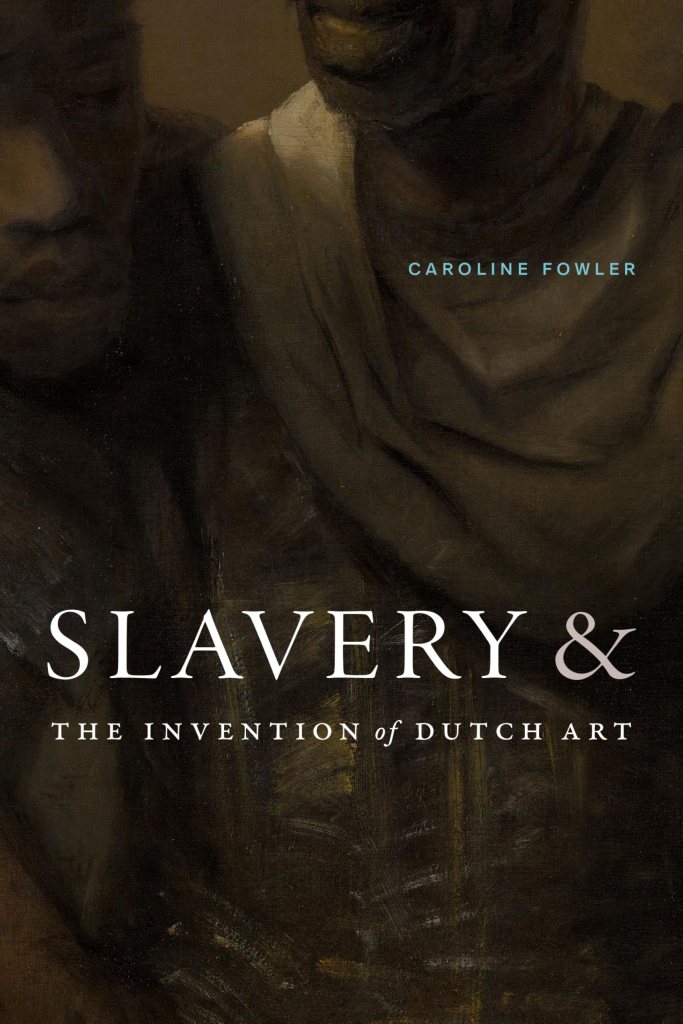 In Slavery and the Invention of Dutch Art, Caroline Fowler examines the fundamental role of the transatlantic slave trade in the production and evolution of seventeenth-century Dutch art. Whereas the sixteenth-century image debates in Europe engaged with crises around the representation of divinity, Fowler argues that the rise of the transatlantic slave trade created a visual field of uncertainty around picturing the transformation of life into property. Fowler demonstrates how the emergence of landscape, maritime, and botanical painting were deeply intertwined with slavery’s economic expansion. Moreover, she considers how the development of one of the first art markets was inextricable from the trade in human lives as chattel property. Reading seventeenth-century legal theory, natural history, inventories, and political pamphlets alongside contemporary poetry, theory, and philosophy from Black feminism and the African diaspora, Fowler demonstrates that ideas about property, personhood, and citizenship were central to the oeuvres of artists such as Rembrandt van Rijn, Hercules Segers, Frans Post, Johannes Vermeer, and Maria Sibylla Merian and therefore inescapably within slavery’s grasp.
Caroline Fowler is Starr Director of the Research and Academic Program at the Clark Institute. She is the author of The Art of Paper: From the Holy Land to the Americas and Drawing and the Senses: An Early Modern History.
c o n t e n t s
Acknowledgments
Introduction: Transubstantiation across Atlantic Worlds
1 Art Markets and Futures Speculation
2 Seascapes and Landscapes
3 Monuments and Architectural Painting
4 Domestic Interiors and Natural History
Conclusion: Historiography and Race
Notes
Bibliography
Index
◊ ◊ ◊ ◊ ◊
Slavery and the Invention of Dutch Art | A Conversation with Caroline Fowler and Helga Davis
Bard Graduate Center, New York, 13 February 2025, 6pm
Caroline Fowler will speak with renowned artist and podcaster Helga Davis about the book Slavery and the Invention of Dutch Art, thinking about the role of poetics in writing history, the importance of Black feminism in rethinking art history, and the ways in which ‘Old Master’ painting continues to impact how the world is seen and interpreted.
Registration is available here»
New Book | The Empire’s New Cloth
Available soon from Yale UP (and please note Rado’s upcoming BGC talk, noted below) . . .
Mei Mei Rado, The Empire’s New Cloth: Cross-Cultural Textiles at the Qing Court (New Haven: Yale University Press, 2024), 208 pages, ISBN: 978-0300275148, $75.
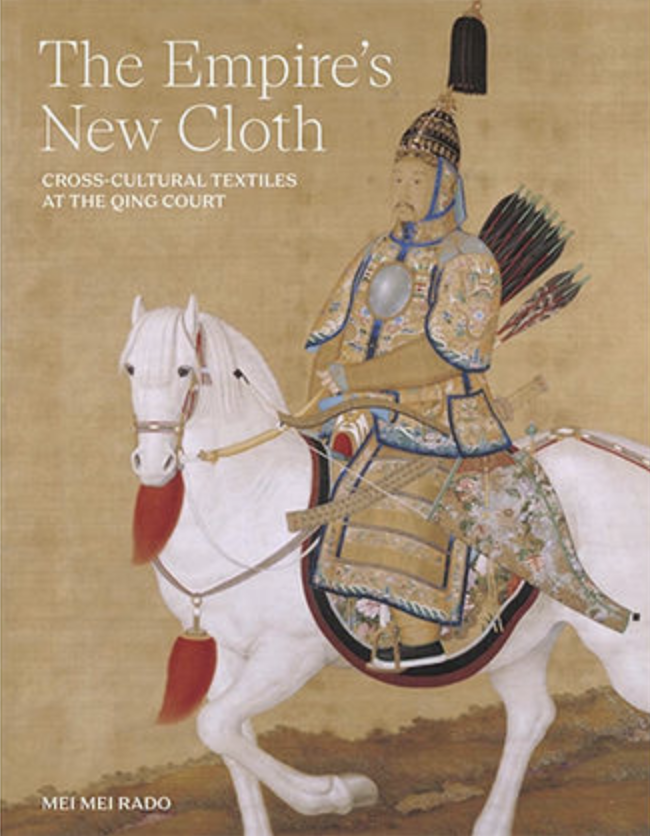 A groundbreaking study of textiles as transcultural objects in the Qing court that provides a new understanding of the interconnectedness of the early modern world
In the early modern period luxury textiles circulated globally as trade goods and diplomatic gifts, fostering cultural exchange between distant regions. By the eighteenth century, both China and Europe had developed a splendid tradition of silk and tapestry weaving. While the role of Chinese silk imports in Europe has been well studied, this book reconstructs the forgotten history of the eastward movement of European textiles to China and their integration into the arts and culture of the Qing Empire. The Empire’s New Cloth explores how Qing court workshops adapted European textile designs and techniques and uncovers the specific uses and meanings of these textiles in imperial military ceremonies, religious spaces, and palace interiors. Through careful study of a wide range of previously unpublished objects, Mei Mei Rado illuminates how these cross-cultural textiles provided the visual and material means for the Qing ruler to convey political messages. By revealing how Qing imperial patrons and artisans responded and assigned meanings to European influences, this beautifully illustrated volume highlights the reciprocity in eighteenth-century Sino-European exchanges and centers textiles within the dynamic global flow of objects and ideas.
Mei Mei Rado received her MA from the University of Chicago and her PhD from Bard Graduate Center, New York, where she is currently an assistant professor. Her research and teaching focus on the history of textiles, dress, and decorative arts in China and France from the eighteenth to the early twentieth centuries, especially on Sino-French exchanges. From 2020 to 2022 she was associate curator of costume and textiles at Los Angeles County Museum of Art, and previously she has held research fellowships in the Department of European Sculpture and Decorative Arts at the Metropolitan Museum of Art and in the Department of Court Arts at the Palace Museum, Beijing..
◊ ◊ ◊ ◊ ◊
Mei Mei Rado | The Empire’s New Cloth
Bard Graduate Center, New York, 19 February 2025, 6pm
Registration is available here»
Master Drawings, Winter 2024
In the latest issue of Master Drawings:
Master Drawings 62.4 (Winter 2024)
 a r t i c l e s
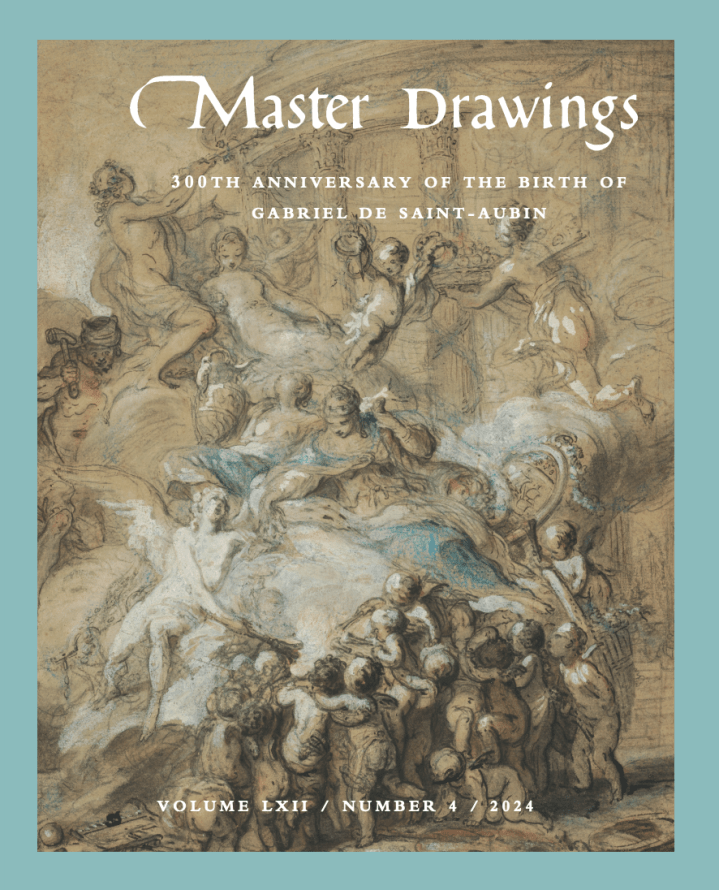
• Perrin Stein, “The Crown, the City, and the Public: Saint-Aubin’s Images of Paris.”
• Kim de Beaumont, “A Curious Swan Song for Gabriel de Saint-Aubin: The Comte d’Estaing’s New World Naval Exploits.”
• Margaret Morgan Grasselli, “A Drawing by Hubert Robert and Jean Robert Ango: Correcting a Technical Description.”
• Sarah Catala, “Signed ‘Roberti’: Drawings by Hubert Robert and Jean Robert Ango.”
• Kee Il Choi Jr., “Learning to Draw: The Éducation visuelle of Alois Ko and Étienne Yang.”
r e v i e w s
• Aaron Wile, Review of the exhibition catalogue Claude Gillot: Satire in the Age of Reason, by Jennifer Tonkovich.
• Eduoard Kopp, Review of the exhibition catalogue, Promenades on Paper: Eighteenth-Century French Drawings from the Bibliothèque Nationale de France, edited by Esther Bell, Sarah Grandin, Corinne Le Bitouzé, and Anne Leonard.
• Ashley E. Dunn, Review of the exhibition catalogue Impressionists on Paper: Degas to Toulouse-Lautrec, by Ann Dumas, Leïla Jarbouai, Christopher Lloyd, and Harriet Stratis.
o b i t u a r y
• Perrin Stein, Obituary for Alaster Laing.
New Book | Eighteenth-Century Sicily: Rebuilding after Natural Disaster
From Amsterdam UP:
Martin Nixon, Architecture, Opportunity, and Conflict in Eighteenth-Century Sicily: Rebuilding after Natural Disaster (Amsterdam: Amsterdam University Press, 2023), 284 pages, ISBN: 978-9463725736, €134 / $154.
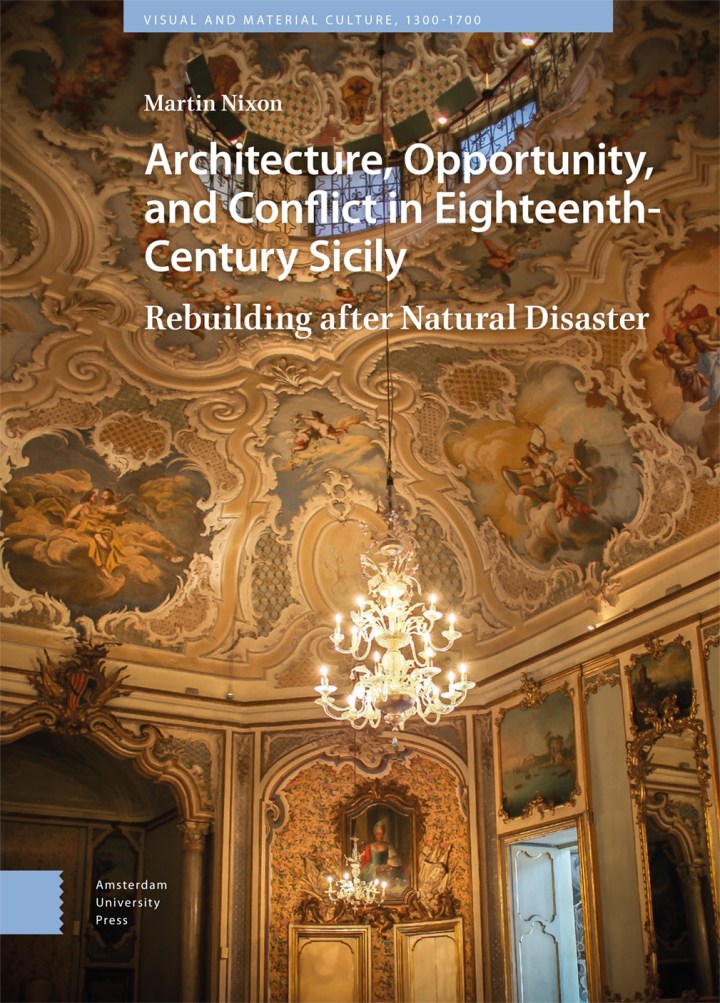 The catastrophic Sicilian earthquake of 1693 led to the rebuilding of over 60 towns in the island’s south-west. The rebuilding extended into the eighteenth century and gave opportunities for the reassertion and the transformation of power relations. Although eight of the towns are now protected by UNESCO, the remarkable architecture resulting from this rebuilding is little known outside Sicily.
This is the first book-length study in English of this interesting area of early modern architecture. Rather than seek to address all of the towns, five case studies discuss key aspects of the rebuilding by approaching the architecture from different scales, from that of a whole town to parts of a town, or single buildings, or parts of buildings and their decoration. Each case study also investigates a different theoretical assumption in architecture, including ideas of the Baroque, rational planning, and the relegation of decoration in architectural discourse.
Martin Nixon is Assistant Professor of Art History at Zayed University, United Arab Emirates. His research interests include Southern Italian art and architecture, architecture and political power, urbanism and territorial transformation, the reception of architectural ornament, and questions of cultural and stylistic hybridity in architecture. Nixon completed his doctoral dissertation on the eighteenth-century rebuilding of the Val di Noto, Sicily with York University in 2018. In 2011, he received the John Fleming Travel Award to assist his doctoral research in Sicily. He completed an MA in Art History at the Open University in December 2007 with a dissertation on the eighteenth-century Sansevero Chapel in Naples.
c o n t e n t s
List of illustrations
Acknowledgments
Introduction
1 Sicily as a Colonial Possession c. 1600–1750: Subordination and Resistance
2 The Hexagonal Towns of Avola and Grammichele: Urbanism, Fortification, and Coercion
3 The Palaces of Noto: Ornament, Order, and Opportunism
4 The Palazzo Biscari in Catania: Lightness, Refinement, and Distinction
5 The Palazzo Beneventano in Scicli: Trauma and Violence
6 The Palaces of Ragusa: Abundance, Famine, and the Grotesque
Conclusion
Glossary
Bibliography
Index
New Book | Shoes and the Georgian Man
From Bloomsbury:
Matthew McCormack, Shoes and the Georgian Man (London: Bloomsbury Visual Arts, 2025), 208 pages, ISBN: 978-1350358676 (hardback), £85, $100 / ISBN: 978-1350358669 (paperback), £29, $40.
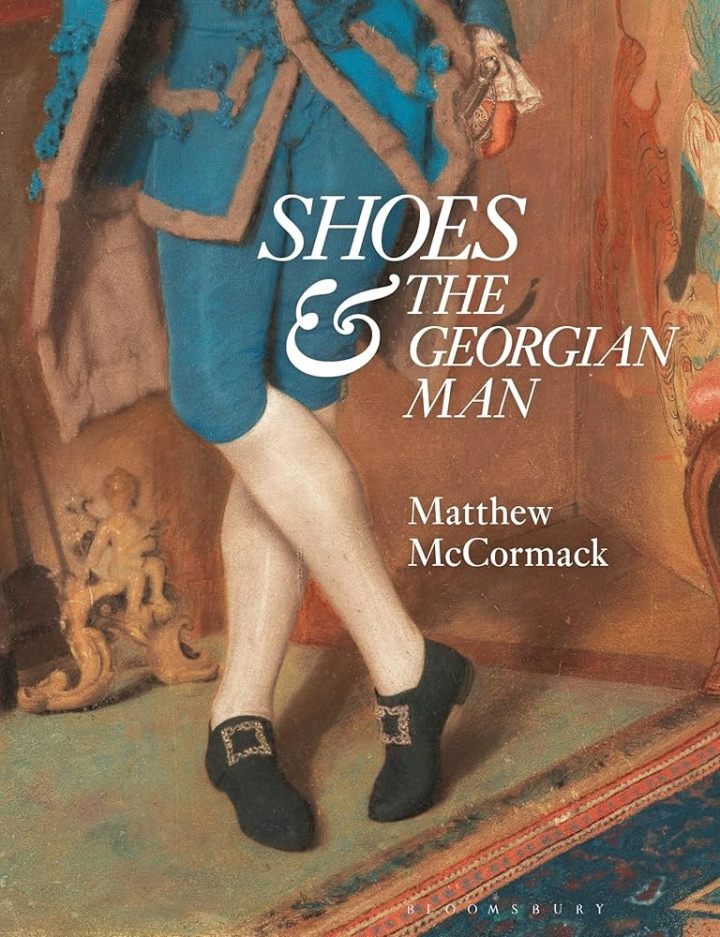 Shoes are everyday objects, but they are loaded with meaning. This book reveals how shoes played a powerful role in the wider story of shifts in gender relations in 18th-century Britain. It focuses on the relationship of shoes with the body and its movements, and therefore how what we wear on our feet relates closely to social, occupational, and gender roles. It also uses footwear to explore topics such as politics, war, dance, and disability. Thinking about shoes as material objects, McCormack studied historic shoes first-hand in museums, in order to ascertain their physical properties and what they would have been like to wear. Worn shoes preserve traces of the wearer’s body in their indentations, stretches and scuffs, providing a unique primary source about their wearer. This approach forges new connections between the histories or material culture, gender, and the body, and sheds new light on what it meant to be a man in the 18th century.
Matthew McCormack is Professor of History at the University of Northampton, course leader for MA History, and a Fellow of the Royal Historical Society and of the Higher Education Academy. His previous books include The Independent Man: Citizenship and Gender Politics in Georgian England, Embodying the Militia in Georgian England, and Citizenship and Gender in Britain, 1688–1928. He edited the Journal for Eighteenth-Century Studies (2015–20).
c o n t e n t s
List of Figures
Acknowledgements
Introduction
1 Georgian Men and Their Shoes
2 Shoes and the Body
3 Shoes and Politics
4 Boots and Masculinity
5 Gout Shoes and Disability
6 Dancing Feet
7 The Soldier’s Shoe
Conclusion: Wearing Georgian Shoes
Select Bibliography
Index
Registration for an online conversation about the book is available via Eventbrite:
Online Conversation: Shoes and the Georgian Man
Tuesday, 11 March 2025, 2pm EDT
Serena Dyer talks with Matthew McCormack about his new book, Shoes and the Georgian Man, published by Bloomsbury in January 2025. By Leicester Branch of the Historical Assn.
New Book | The Turban
From Reaktion Books with distribution by The University of Chicago Press:
Chris Filstrup and Jane Merrill, The Turban: A History from East to West (London: Reaktion Books, 2025), 264 pages, ISBN: 978-1836390749, £20 / $30.
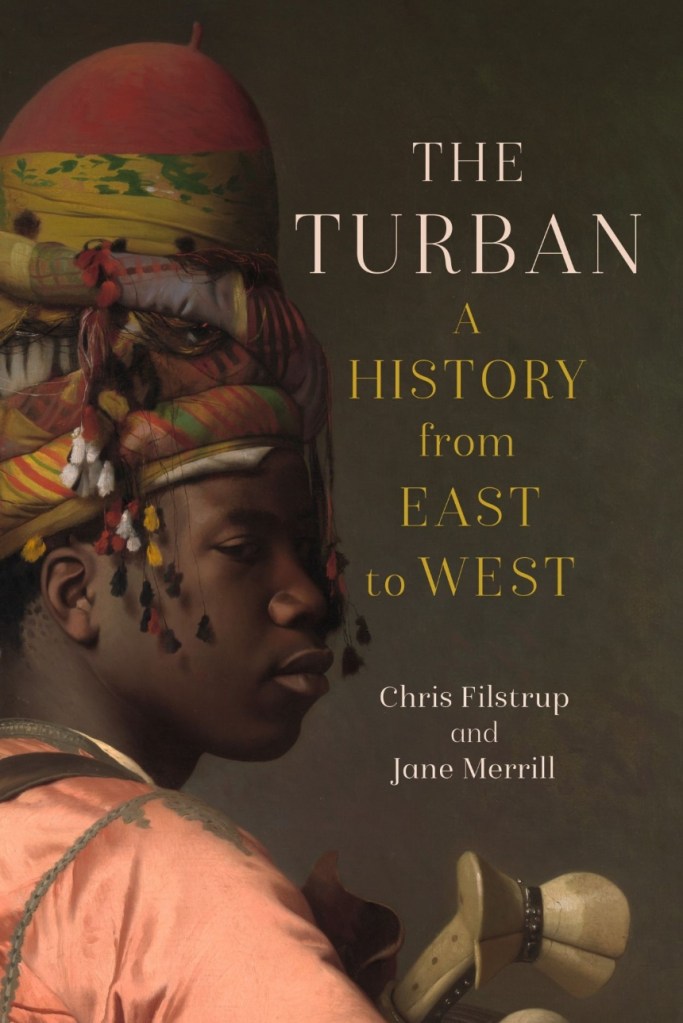 A superbly illustrated history of the turban, from Arabian origins to global cultural icon.
A turban is a strip of cloth folded and wrapped around the head; however, this description includes multifarious forms across space and time. This book follows the turban as it moves from the Arabian Peninsula through the Ottoman Empire to Europe and the Americas. It directs the reader’s gaze from traditional and religious uses of the turban into the realms of international trade, Renaissance art and contemporary fashions. Turbans, as this book shows, have moved in and out of Western culture, at times considered archaic and forgotten, then noticed and reinstated as major accessories. Today Sikh men are recognized by their distinctive headwraps, and the turban remains an important part of Black culture. This book explores the turban’s many adaptations worldwide.
Chris Filstrup was Chief of the Oriental Division at the New York Public Library and Dean of Libraries at Stony Brook University. He is co-author with Jane Merrill of The Wedding Night (2011) among other titles. He lives in Alexandria, Virginia.
Jane Merrill has written for many national U.S. magazines and is the author of The Showgirl Costume (2018) and other cultural histories. She lives in Saint George, Maine.
c o n t e n t s
Introduction
1 A Path into Western Iconography
2 Trade, Diplomacy and Depiction
3 Nabobs, Adventurers and Travellers
4 Masques and Turquerie
5 Riding the Magic Carpet
6 A Neoclassical Accessory
7 Individual Expressions: Africa and the Caribbean
8 Cultural Tourism and Authenticity since 1900
References
Bibliography
Acknowledgements
Photo Acknowledgements
Index
New Book | The Virtues of Underwear
From Reaktion Books, with distribution by The University of Chicago Press:
Nina Edwards, The Virtues of Underwear: Modesty, Flamboyance and Filth (London: Reaktion Books, 2024), 224 pages, ISBN: 978-1789149562, £20 / $28.
 Unravels the intimate narratives woven into the fabric of our most personal garments.
Stories are woven into the fabric of our most personal garments. From the first loincloths to the intricate layers of shapewear, the concealed world of underwear is capable of expressing individual desire and also aspects of society at large. An indicator of the vagaries of fashion, underwear can be simple or elaborate. It both safeguards and exposes, reflecting our hopes and experiences. Underwear can embarrass and excite, amuse and shame us. This book illuminates the sometimes profound significance of the garments we wear beneath our outer clothing. It discusses the history of both women’s and men’s underwear, and global cultures of dress.
Nina Edwards is a freelance writer based in London. Her books include Darkness: A Cultural History (2018) and Pazazz: The Impact and Resonance of White Clothing (2023), both published by Reaktion Books.
c o n t e n t s
Introduction
1 What Is Underwear For?
2 Codpiece and Corset
3 Modesty and the Immodest Torso
4 Outer to Under and Back Again
5 Fabric and Fit
6 Medical and Other Practical Matters
7 Economic and Religious Concerns
8 The Underwear Drawer
Glossary
References
Bibliography
Acknowledgements
Photo Acknowledgements
Index
The Burlington Magazine, January 2025
.
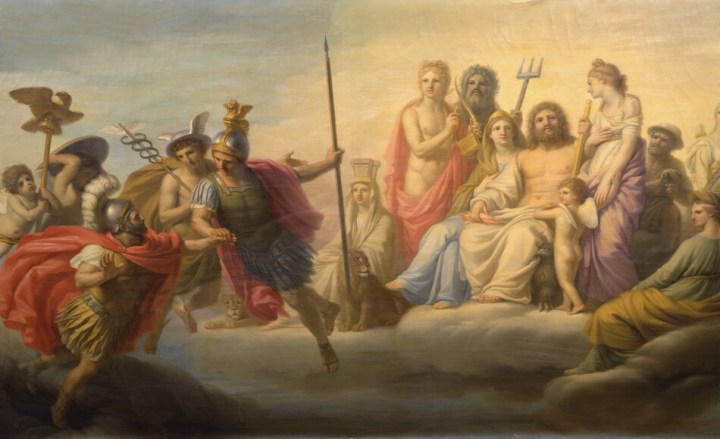
Stefano Tofanelli, Apotheosis of Romulus before the Gods of Olympus, 1790, oil on canvas, 208 × 318 cm
(Rome: Palazzo Altieri)
◊ ◊ ◊ ◊ ◊
The long 18th century in the January issue of The Burlington:
The Burlington Magazine 167 (January 2025)
e d i t o r i a l
• “A One Billion Pound Gift,” p. 3.
“Now you can gasp,” said the Chairman of the Trustees of the British Museum to guests at a recent fundraising dinner. He had just revealed the valuation of £1billion for the magnificent collection of Chinese ceramics that has been given to the museum by the Sir Percival David Foundation. Munificence on this scale is normally only associated with the richest of American museums, so a new record seems to have been set in the European context by this extraordinary gesture.
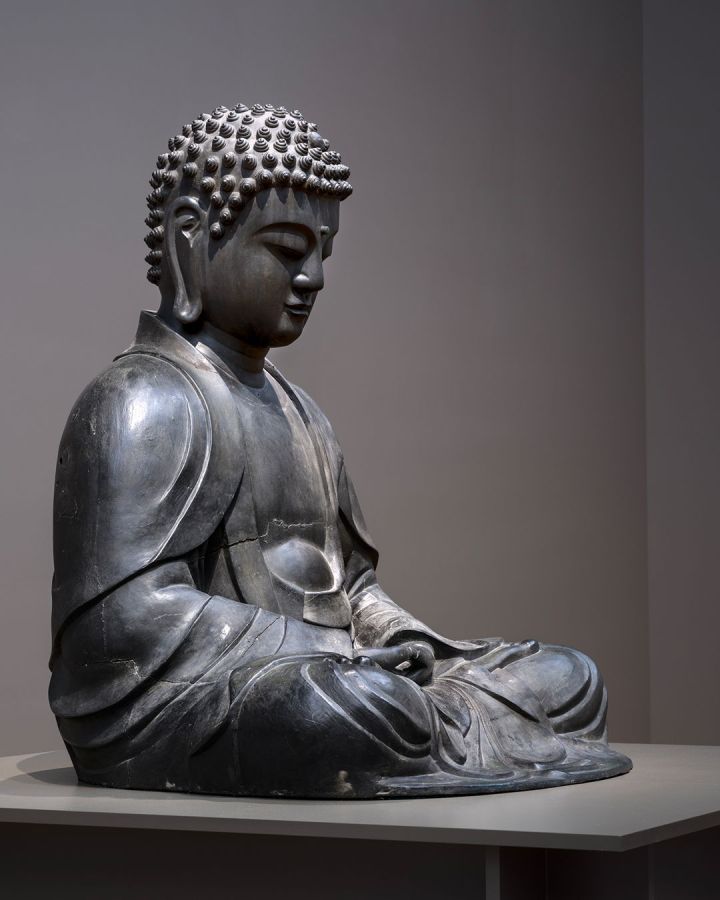
Buddha Amida (Amitabha), Japan, 1716 (Collection Wereldmuseum). Included in the exhibition Asian Bronze: 4,000 Years of Beauty.
s h o r t e r n o t i c e s
• Pilar Diez del Corral Corredoira, “A Project for the Church of Menino Deus, Lisbon, by Vieira Lusitano,” pp. 26–29.
• Alessio Cerchi, “Stefano Tofanelli’s Deification of Aeneas by Venus Rediscovered,” pp. 29–31.
r e v i e w s
• Lori Wong and Sujatha Arundathi Meegama, Review of the exhibition Asian Bronze: 4,000 Years of Beauty (Rijksmuseum, 2024–25), pp. 35–37.
• Delphine Bastet, Review of Grands décors restaurés de Notre-Dame de Paris, edited by Caroline Piel and Emmanuel Pénicaut (Silvana Editoriale, 2024), pp. 62–63.
• Peter Humfrey, Review of Anne Nellis Richter, The Gallery at Cleveland House: Displaying Art and Society in Late Georgian London (Bloomsbury, 2024), pp. 71–72.
New Book | Reading the World, British Practices of Natural History
Coming in March from the University of Pittsburgh Press:
Edwin Rose, Reading the World: British Practices of Natural History, 1760–1820 (Pittsburgh: University of Pittsburgh Press, 2025), 408 pages, ISBN: 978-0822948513, $65.
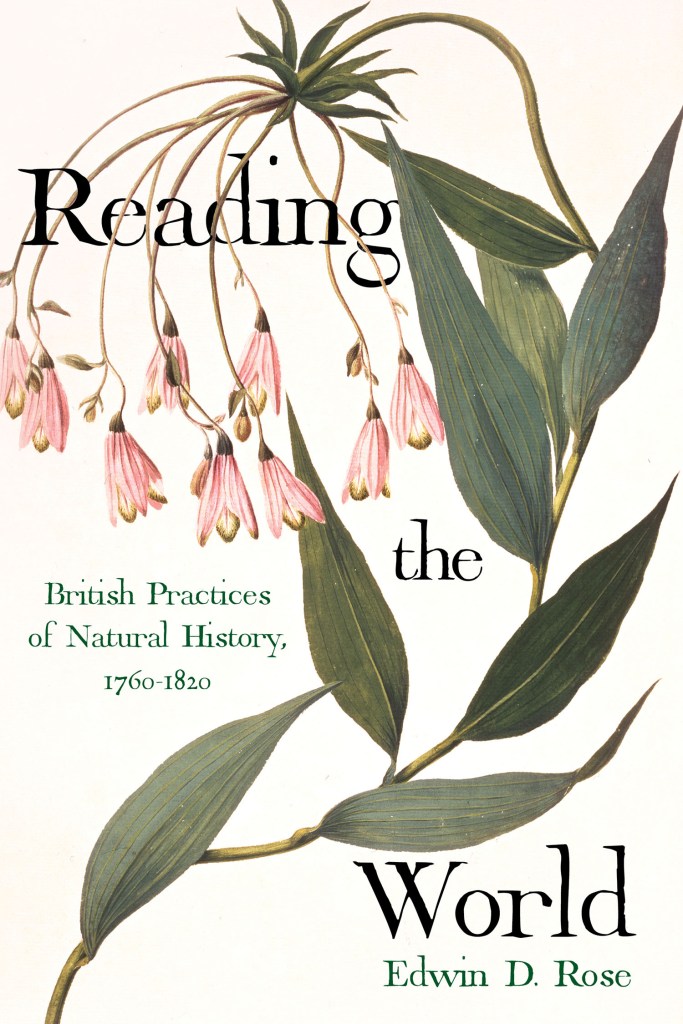 In the eighteenth and nineteenth centuries—a period that marked the emergence of a global modernity—educated landowners, or ‘gentlemen’, dominated the development of British natural history, utilizing networks of trade and empire to inventory nature and understand events across the world. Specimens, ranging from a Welsh bittern to the plants of Botany Bay, were collected, recorded, and classified, while books were produced in London and copies distributed and used across Britain, Continental Europe, the Pacific, Asia, and the Americas. Natural history connected a diverse range of individuals, from European landowners to Polynesian priests, incorporating, distributing, synthesizing, and appropriating information collected on a global scale. In Reading the World, Edwin D. Rose positions books, natural history specimens, and people in a close cycle of literary production and consumption. His book reveals new aspects of scientific practice and the specific roles of individuals employed to collect, synthesize, and distribute knowledge—reevaluating Joseph Banks’s and Daniel Solander’s investigations during James Cook’s Endeavour voyage to the Pacific. Uncovering the range of skills involved in knowledge production, Rose expands our understanding of natural history as a cyclical process, from the initial collection and identification of specimens to the formal publication of descriptions to the eventual printing of sources.
Edwin D. Rose is currently AHRC Research Fellow in the Department of History and Philosophy of Science at the University of Cambridge and Advanced Research Fellow at Darwin College, Cambridge. From May 2025 he will be a Leverhulme Trust Early Career Research Fellow in the School of Philosophy, Religion, and History of Science at the University of Leeds.
Research Seminar | Artists and the East India Company, 1760–1830
Upcoming at the Mellon Centre:
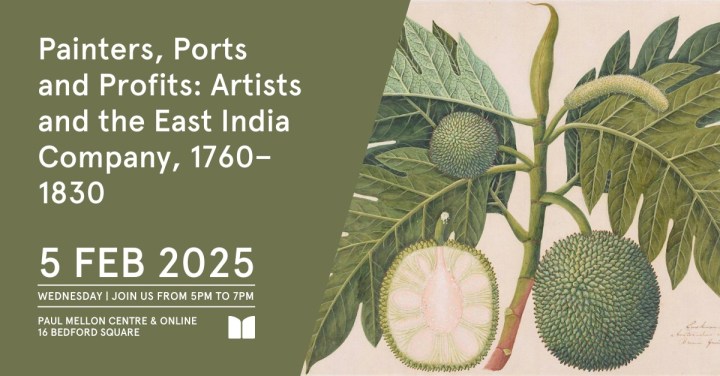
Holly Shaffer and Laurel Peterson | Painters, Ports, and Profits: Artists and the East India Company, 1760–1830
Online and in-person, Paul Mellon Centre, London, 5 February 2025, 5pm
In January 2026, the Yale Center for British Art (YCBA) will open Painters, Ports, and Profits: Artists and the East India Company, 1760–1830. This exhibition explores the interactions between artists trained in India, China, and Britain amid the relentless commercial ambitions of the East India Company at key ports and centres of trade in Asia. Featuring over a hundred objects drawn from the YCBA collection in various media—including architectural drafts, opaque watercolours, hand-coloured aquatints and small- and large-scale portraits—the exhibition highlights works by artists who are no longer well known alongside those of well-established ones. Brought together for the first time, these works tell a story of artists compelled by new subjects, styles and materials in expanding markets, profoundly affecting art within and beyond Asia.
As the power of the British empire waned in the twentieth century, ‘Company painting’ became a prevalent umbrella term to describe works made for Company officials, specifically by Indian artists, and ‘Export art’ became a descriptor for works created by Chinese artists for a European market. Painters, Ports, and Profits challenges and critically rethinks these terms while also putting the arts into dialogue. It presents an expanded conception of arts made under the auspices of the Company by focusing on artists trained in different ways who worked for Company patrons as well as commercial markets in India, China, and Britain; the types of subjects in which they specialised; and the artistic materials with which they experimented. By examining the range of arts and relationships developed during the Company’s relentless pursuit of profits, the exhibition sheds light on aesthetic and colonial discourses that were formed in the eighteenth and nineteenth centuries and persist today. Co-curators Laurel Peterson and Holly Shaffer will preview the themes and objects explored in the exhibition and the related catalogue.
Book tickets here»
Holly Shaffer is Robert Gale Noyes Assistant Professor of Humanities in the department of history of art and architecture at Brown University. Her research focuses on eighteenth- and nineteenth-century arts in Britain and South Asia, and their intersections. Her first book, Grafted Arts: Art Making and Taking in the Struggle for Western India, 1760–1910 (London and New Haven: Paul Mellon Centre with Yale University Press, 2022), was awarded the Edward C. Dimock Jr. Prize in the Indian Humanities and an Historians of British Art Book Award. In 2011, she curated Adapting the Eye: An Archive of the British in India, 1770–1830 at the YCBA, and in 2013, Strange and Wondrous: Prints of India from the Robert J. Del Bontà Collection at the National Museum of Asian Art. She has published essays in Archives of Asian Art, The Art Bulletin, Art History, Journal 18, Modern Philology, and Third Text, and recently edited volume 51 of Ars Orientalis on the movement of graphic arts across Asia and Europe.
Laurel O. Peterson is the Assistant Curator of Prints and Drawings at the Yale Center for British Art. She specialises in British works on paper produced during the long eighteenth century. She served as the organising curator of John Singer Sargent: Portraits in Charcoal in 2019 and as co-curator of Architecture, Theater, and Fantasy: Bibiena Drawings from the Jules Fisher Collection in 2021, both at the Morgan Library and Museum. She received her PhD in the history of art from Yale and her research has been supported by the Sir John Soane’s Museum Foundation, the Paul Mellon Centre for Studies in British Art, and the Lewis Walpole Library. She has held positions at the British Museum and the Morgan Library.










leave a comment