New Book | Architectural Revolution on the Ottoman Frontier
From Penn State UP:
Emily Neumeier, Architectural Revolution on the Ottoman Frontier: Greece and Albania in the Age of Ali Pasha (University Park: The Pennsylvania State University Press, 2025), 232 pages, ISBN: 978-0271097749, $115.
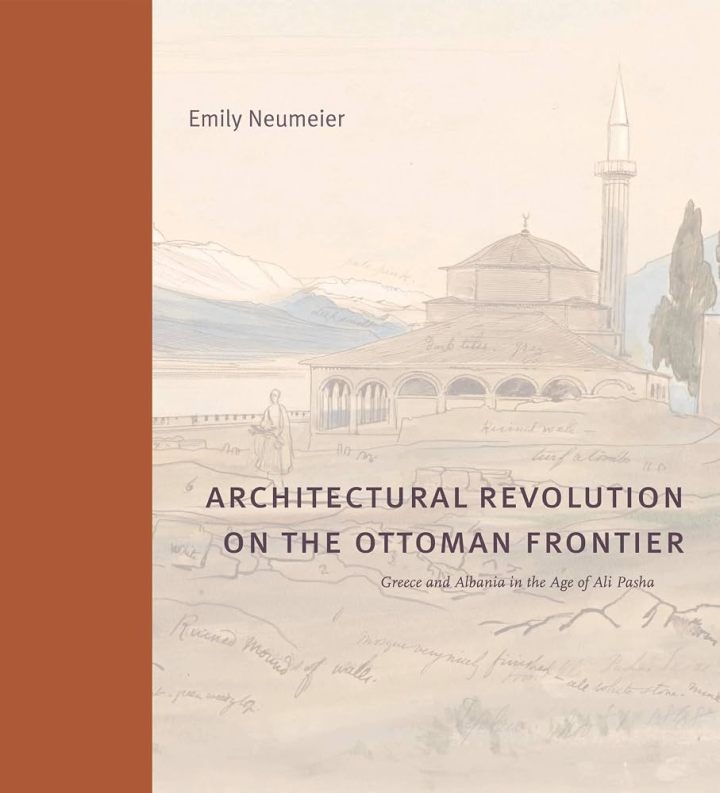 In the early nineteenth century, the most consequential developments in Ottoman architecture were taking place not in Istanbul but in the farthest reaches of imperial territory. Emily Neumeier investigates this wider phenomenon through a consideration of the architecture of Ali Pasha of Ioannina, one of the most prolific patrons in the history of the Ottoman Empire, who undertook a building program so ambitious that it ultimately got him killed.
Ali Pasha is still a household name in present-day Greece and Albania, where he served as Ottoman governor from 1788 to 1822. To consolidate his rule over an incredibly diverse population, the governor set out on a sweeping building program that included mosques, palaces, military fortifications, dervish lodges, and even Orthodox Christian monasteries. Drawing upon a wealth of primary sources, Neumeier reveals how Ali Pasha’s buildings shifted the sociopolitical order by testing the standards of patronage established by the imperial court and relocating administrative authority from center to province. To reconstruct the world that Ali Pasha built, Neumeier draws from both extensive fieldwork and abundant archival material, whose far-flung nature—from Istanbul to London—reflects the impressively wide scope of Ali Pasha’s influence.
Rigorously researched and packed with fascinating stories, this book presents an innovative spatial history of the Ottoman frontier during the age of revolutions, a pivotal period in the late eighteenth and early nineteenth centuries when there was no obvious blueprint for power. It will be of interest to specialists in art and architectural history, the Ottoman Empire, and Mediterranean, Islamic, and Modern Greek studies.
Emily Neumeier is Assistant Professor of Islamic Art and Architecture at Temple University.
c o n t e n t s
List of Illustrations
Acknowledgments
Note on Translations and Transliterations
Introduction
1 ‘Amidst No Common Pomp’: Redefining the Governor’s Palace
2 Revising the Rules of Engagement: Fortifications on a Liquid Frontier
3 Building Local Support: Patronage for Multiconfessional Communities
4 Poetic Justice: Experiments in Architectural Epigraphy
Conclusion
Notes
Bibliography
Index
New Book | Beyond Blue and White
Distributed by Simon & Schuster:
Genevieve Wheeler Brown, Beyond Blue and White: The Hidden History of Delftware and the Women Behind the Iconic Ceramic (New York: Pegasus Books, 2025), 336 pages, ISBN: 978-1639368914, $35.
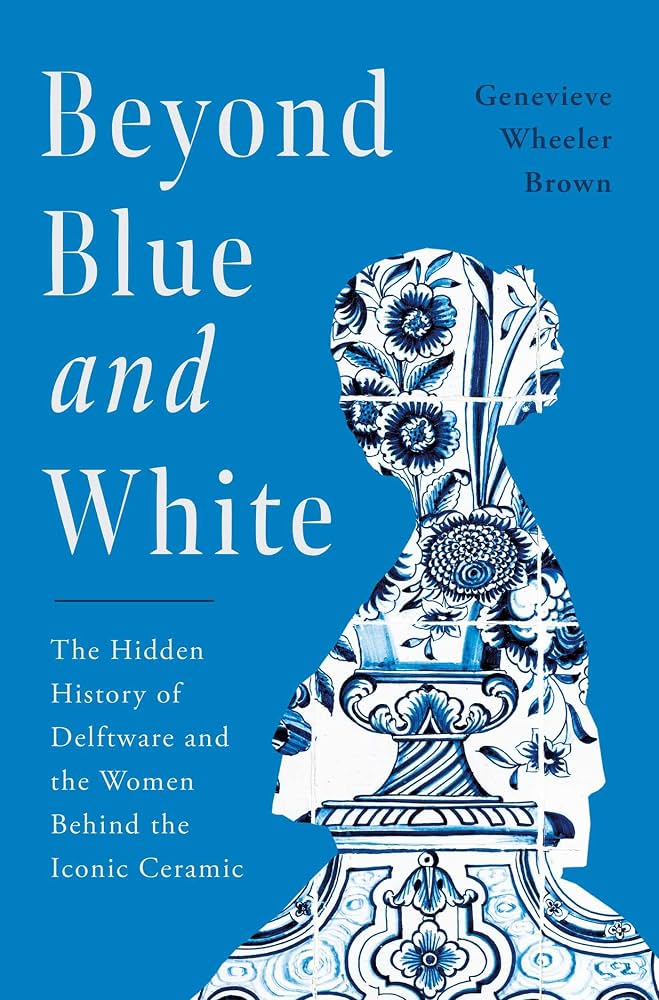 An absorbing work of cultural history that reveals the stories behind one of the world’s most coveted and beloved ceramic.
When over seventy-five pieces of rare and intriguing 17th- and 18th-century Delftware are rediscovered in an historic Manhattan townhouse, decorative art advisor and writer Genevieve Wheeler Brown quickly recognizes that, together, these pieces tell an amazing story. What begins as a curatorial exercise quickly evolves not only into an exploration of this colorful, expressive, and sometimes even humorous decorative art, coveted for hundreds of years, but also an unexpected uncovering of forceful female lives yet untold.
Connecting the accounts of women across centuries, Beyond Blue and White allows us to craft a more complete picture of female experience through the lens of material culture. We meet female Delftware makers, including Barbara Rotteveel founder of “The Three Bells” Delftware factory in 1671. We are introduced to female Delftware patrons such as Queen Mary II, who found her means of expression while creating a vogue in the 17th century for Delft blue and white across royal courts. And then there are the female collectors beginning in the 19th century who saw the artistry and craft in these ceramics others had overlooked. Foremost among them was Mrs. J. Pierpont Morgan and Mrs. Cornelius Vanderbilt II who came together with fellow New York women and laid the groundwork for women in the museum world while preserving decorative arts with an educational mission.
With illustrations of period objects, documents, maps, paintings, prints and drawings, Beyond Blue and White is a colorful celebration of an iconic decorative art and dynamic women living in extraordinary times. Wheeler Brown’s rich narrative encourages us to see beyond the dazzling cobalt glaze of Delftware to consider that these vessels are also our connection to a history with a fascinating group of women at its center.
As a decorative art advisor and writer with over thirty years in the art world, including a decade with Christie’s in New York and London, Genevieve Wheeler Brown has been actively involved in the community of Delftware. She has also participated on the Antiques Roadshow as an appraiser with an eye out for overlooked ‘treasure’. In her role, she has held innumerable objects, from fake Stradivari violins to gold-mounted Faberge eggs, considering their value but also the stories they can tell.
Print Quarterly, June 2026
With apologies for not posting this much sooner! –CH
The long eighteenth century in the latest issue of Print Quarterly:
Print Quarterly 43.2 (June 2026)
a r t i c l e s
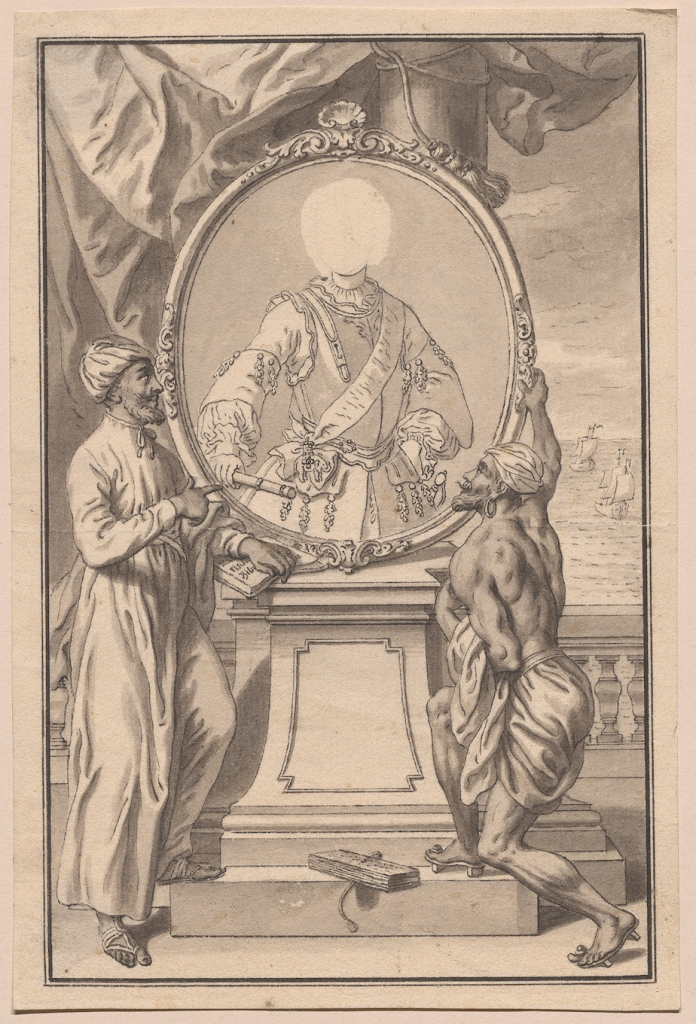
Attributed to Martin Tyroff, Crown Prince Frederick of Denmark and Norway, ca. 1740, pen and grey ink and grey wash, 152 × 101 mm (Augsburg, State and City Library of Augsburg).
• Victoria Fernandez, “On Conserving and Remounting the Edmond de Rothschild Collection at the Louvre,” pp. 158–68. This article examines the Louvre’s conservation campaign since 2016 to conserve and remount the roughly 35,000 prints and 865 drawings bequeathed by Baron Edmond de Rothschild (1845–1934), with respect to the stipulations mentioned in the deed of gift. The author also illustrates many unique findings and observations, including reattributions. Readers of Enfilade may be interested to know that part of the collection includes those that belonged to the donor’s father, Baron James de Rothschild (1792–1868), who owned the complete printed oeuvre of Daniel Nikolaus Chodowiecki (1726–1801).
• Karl-Georg Pfändtner, “Denmark’s Sea Trade: A Preparatory Drawing and Martin Tyroff’s Related Print,” pp. 169–72. This short article connects a drawing in the Staats- und Stadtbibliothek Augsburg with the engraved portrait of Crown Prince Frederick of Denmark and Norway (1723–66) by Martin Tyroff (1704–59). Crown Prince Frederick ascended the throne of Denmark and Norway in 1746. The print served as the frontispiece to a book of Martin Luther’s writings, Das Nutzbareste aus denen gesamten Erbaulichen Schriften Des seligen Herrn D. Martini Lutheri, published in 1740. Originally from Nuremberg, but active for years in Augsburg, Tyroff married the daughter of the Nuremberg engraver and publisher Christoph Weigel, and moved back to Nuremberg himself. The iconography highlights trade via Danish settlements in India and forts on the Danish Gold Coast, in present-day Ghana, as well as missionary activity there.
n o t e s a n d r e v i e w s
• Daan van Heesch, Review of Élisabeth Antoine-König and Pierre-Yves Le Pogam, eds., Figures du Fou. Du Moyen Âge aux Romantiques (Musée du Louvre and Éditions Gallimard, 2024), pp. 173–75.
• Richard Stephens, Review of François Marandet, Louis Chéron: L’ambition du dessin parfait (Musée des Beaux-Arts de Caen, 2021), pp. 183–85.
• Esther Chadwick, Review of Elizabeth Wyckoff and Sarah Weston, Blake (Yale Center for British Art, 2025), pp. 185–87.
• Thierry Depaulis, Review of Sara Benvenuti and Francesca Volpini, L’arte del gioco. Giochi antichi dalla Collezione Crippa della Raccolta Bertarelli di Milano (Silvana Editoriale, 2024), pp. 187–89.
• Ellis Tinios, Review of Hokusai’s Method (Thames and Hudson, 2024), pp. 189–90.
• Louis Marchesano, Review of Maxime Préaud, Louis le Grand, la terreur et l’admiration de l’univers. Les almanachs muraux publiés à Paris sous le règne personnel de Louis XIV (1661/1662–1715/1716) (Bibliothèque Nationale de France and Le Passage, 2023), pp. 203–07.
• Tim Clayton, Review of Esther Chadwick, The Radical Print: Art and Politics in Late Eighteenth-Century Britain (Paul Mellon Centre for Studies in British Art, 2024), pp. 208–12.
Exhibition | Juste-Aurèle Meissonnier: Rococo Goldsmith

Covered Tureen on Stand (Pot-à-oille), 1735–38, designed by Juste-Aurèle Meissonnier and made by Pierre-François Bonnestrenne and Henry Adnet, silver (The Cleveland Museum of Art, 1977.182).
◊ ◊ ◊ ◊ ◊
Opening in October at The Cleveland Museum of Art:
Juste-Aurèle Meissonnier: Rococo Goldsmith in Focus
The Cleveland Museum of Art, 25 October 2026 — 14 March 2027
Curated by Ada de Wit
Juste-Aurèle Meissonnier (1695–1750) was the most revolutionary forerunner of the Rococo style in the decorative arts. Multitalented with entrepreneurial skills, he worked for the French court and European nobility. Considered a genius goldsmith by his contemporaries, he was also a prolific designer and aspiring architect, seamlessly maneuvering between media and disciplines.
 Born and trained in Turin, Italy, Meissonnier moved to Paris around 1715 to advance his career, although the conservative guild of Parisian goldsmiths made it practically impossible for newcomers to register as masters and open their own workshops. Meissonnier’s ambition, creativity, and determination in pursuing his desired career path are apparent from his work and limited biographical information and continue to resonate today.
Few of Meissonnier’s works survived political upheavals; the most celebrated is a silver tureen in the collection of the Cleveland Museum of Art, made for the Duke of Kingston. A striking sculpture rather than a functional object, the tureen epitomizes the Rococo style with its movement, asymmetrical design, fluid unity of form and ornament, and elements inspired by nature. The tureen has recently undergone scientific analysis, which has provided new insights into its sophisticated creation process.
The catalogue is distributed by Yale UP:
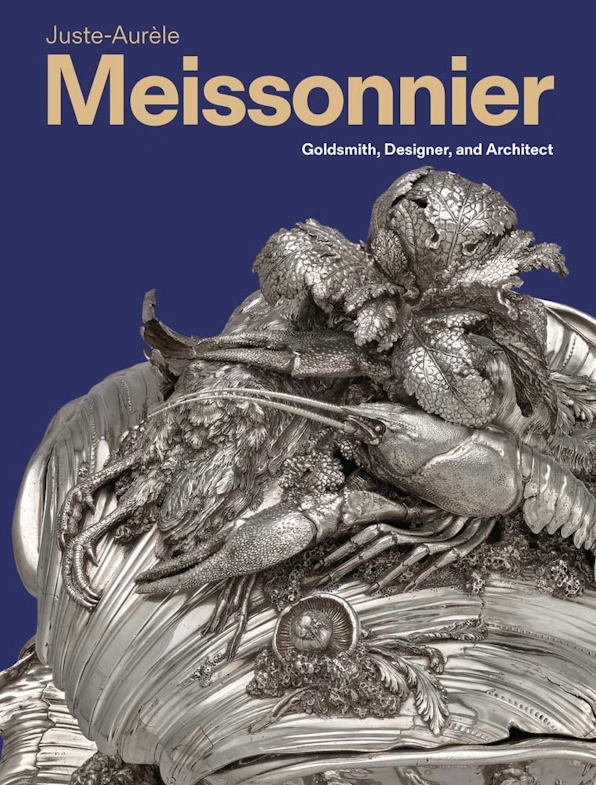
Ada de Wit, ed., with additional contributions by Michèle Bimbenet-Privat, Beth Edelstein, Peter Fuhring, Alexandre Gady, and Colleen Snyder, Juste-Aurèle Meissonnier: Goldsmith, Designer, and Architect (Cleveland: The Cleveland Museum of Art, 2026), 160 pages, ISBN: 978-0300282306, $50.
◊ ◊ ◊ ◊ ◊
From the press release for the recent acquisition of a snuffbox (7 May 2026) . . .

Juste-Aurèle Meissonnier, Gold Box, 1728–29, gold and lapis lazuli, 3 × 8.3 × 5.2 cm (The Cleveland Museum of Art, 2026.12).
The Cleveland Museum of Art has acquired an extraordinarily rare gold snuffbox made in Paris in 1728–29 by Juste-Aurèle Meissonnier. Of exceptional art historical importance, the box is one of only five known objects in precious metals firmly associated with Meissonnier to have survived the political upheavals of subsequent centuries, during which works in gold and silver were frequently melted down. For many years, it was the only known work bearing the maker’s mark of Meissonnier, until the 2019 discovery of his mark on a gold mount for a rock crystal ewer belonging to Marie Antoinette, now in the Louvre. The snuffbox is distinguished as a work executed by Meissonnier himself, without the involvement of other master goldsmiths.
This acquisition significantly strengthens the museum’s Meissonnier collection and will play a central role in Juste-Aurèle Meissonnier: Rococo Goldsmith in Focus, an exhibition of the artist’s work, which opens at the CMA in October 2026. Notably, the object has never before been displayed in a museum.
“This important acquisition reinforces the museum’s standing as one of the world’s leading collections of 18th-century French decorative arts,” said the CMA’s Sarah S. and Alexander M. Cutler Director William M. Griswold. “It also strengthens our position as a preeminent center for the study and appreciation of Meissonnier’s work.”
“Meissonnier’s box is one of the most sophisticated works of art in our collection, whose extraordinary qualities can be fully appreciated only through close, in-person looking,” said Ada de Wit, the Ellen S. and Bruce V. Mavec Curator of Decorative Arts at the Cleveland Museum of Art. “This remarkable acquisition further enhances the CMA as a destination for both scholars and the broader public.”
The snuffbox was acquired through a private sale facilitated by the auction house Christie’s. The deputy chairman of Christie’s Department of European Furniture and Works of Art, Will Strafford, said: “We have a long and proud history of private sales to storied institutions such as the Cleveland Museum of Art and we are thrilled that this sublime masterpiece of the decorative arts has gone to such a worthy home; I have no doubt that this work amazes and delights visitors to the museum for generations to come.”
This Meissonnier box has long been regarded as among the finest of its kind and described as “an object in a class of its own.” It stands out from others due to its superior design and execution, the strong sense of movement achieved by its dynamic contour, its extraordinary level of detail, and the dramatic contrast of its gold and lapis lazuli materials. Together, these qualities position the box at the pinnacle of Meissonnier’s artistic achievement.
Small, ornate boxes such as this were used to hold snuff tobacco and functioned as highly personal luxury objects that conveyed the owner’s wealth, refinement, and social standing. Often exchanged as prestigious gifts, they were among the most sophisticated expressions of craftsmanship and design in 18th-century Europe.
The snuffbox also carries an important royal and modern history. It was made for the dowager Queen of Spain, Maria Anna of Neuburg, and bears her coat of arms alongside that of her late husband, Charles II. During World War II, it was looted by the Nazis from the collection of Parisian collector David David-Weill. The object was restituted to him in 1946 after passing through the Munich Central Collecting Point, administered by the Allied Monuments, Fine Arts, and Archives program.
Exhibition | These Truths: The Declarations of Independence
Now on view:
These Truths: The Declarations of Independence
American Philosophical Society Museum, Philadelphia, 10 April 2026 — 3 January 2027
 These Truths: The Declarations of Independence explores how Americans used and reproduced the document during the first fifty years of its history.
At first it served as a pronouncement of news, later a political tool, and then transformed into a national symbol. The creation of the Declaration was a process, not an event, and its story is more complex than assumed. The many copies of the Declaration in the exhibition offer a reminder that the Declaration’s ‘truths’ were never static and each era reevaluated their meaning.
These Truths draws on the APS’s extensive Library and Museum holdings. Highlights of the exhibition include a first printing of Thomas Paine’s Common Sense, the chair Thomas Jefferson sat in while writing the Declaration of Independence, John Binns’ 1819 printing of the Declaration, and William James Stone’s 1823 printing of the Declaration.
Distributed by Penn Press:
David Gary, Emily Sneff, and Patrick Spero, These Truths: The Declarations of Independence (Philadelphia: The American Philosophical Society Press, 2026), 100 pages, ISBN: 9781606181744, $30.
New Book | The A–Z of Georgian London and Its Environs, 1746–47
From The London Topographical Society:
Sheila O’Connell and Laurence Worms, eds., with an introduction by John Montague, a checklist of Rocque’s London maps by Ashley Baynton-Williams, and an index by Roger Cline, The A–Z of Georgian London and Its Environs: John Rocque’s Maps, 1746–1747 (London: The London Topographical Society, 2026), 207 pages, £23.
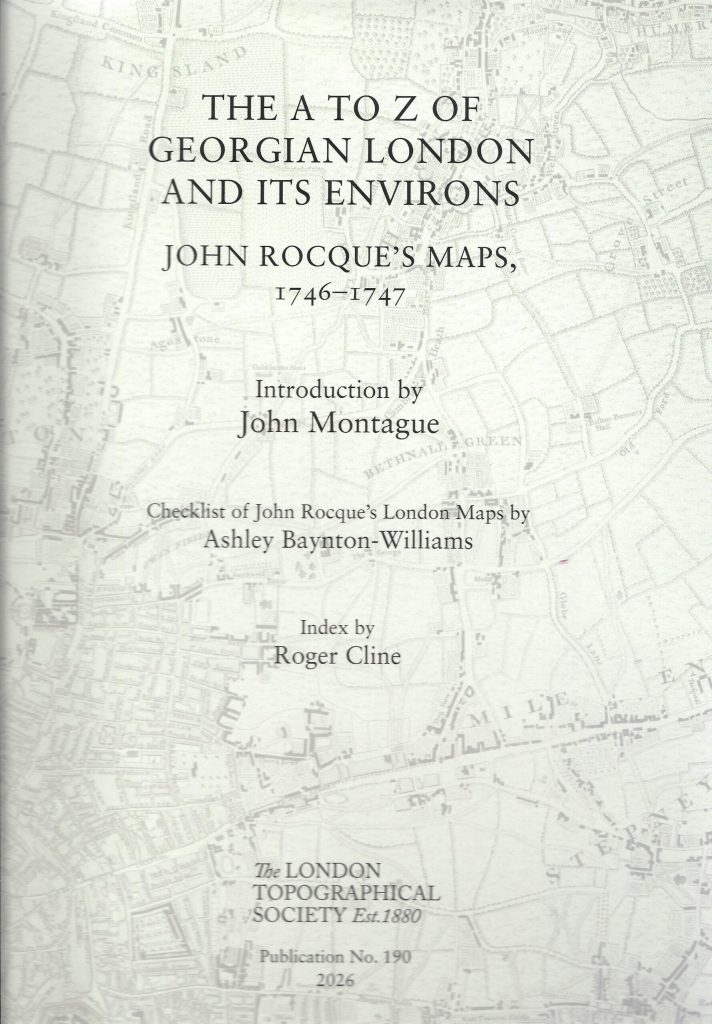 This publication reproduces at about fifty per cent actual size John Rocque’s two great maps of London in the 1740s: the 24-sheet Plan of the Cities of London and Westminster and Borough of Southwark and the 16-sheet Exact Survey of the Cities of London and Westminster, the Borough of Southwark with the Country near ten Miles round.
John Montague’s introduction tells the complex story of the development of the maps, incorporating new information on Rocque’s early life courtesy of Sandra Robinson. Roger Cline has produced an index of 6000 place names, over 250 places of worship, and sixty-four estates outside the urban centre.
New Books Network Podcast | City of the Gallows
Many of you will already know about the New Books Network, but if not, this conversation between Meredith Gamer and Kelsey Brosnan is a fine introduction! As described by the Wikipedia entry for the network:
 The New Books Network (NBN) is a podcast network featuring interviews with scholars, researchers, and writers about their new books. Most of the books the NBN covers are non-fiction and published by university or independent scholarly presses. The mission of the NBN is public education. The NBN is the largest book-focused podcast enterprise in the world. It features over 130 ‘organic’ author-interview podcasts (“New Books in…”) produced in-house and over 100 ‘hosted’ podcasts produced by university presses, academic institutes, and scholars. The NBN publishes 70 episodes per week and has published over 30,000 episodes to date, all of which are permanently accessible for free on the NBN website. The NBN reaches 200,000 listeners monthly; those listeners download approximately one million episodes each month. . . .
◊ ◊ ◊ ◊ ◊
From the NBN website:
Podcast | Meredith Gamer, City of the Gallows, hosted by Kelsey Brosnan on the art channel of the New Books Network (27 July 2026), 62 minutes.
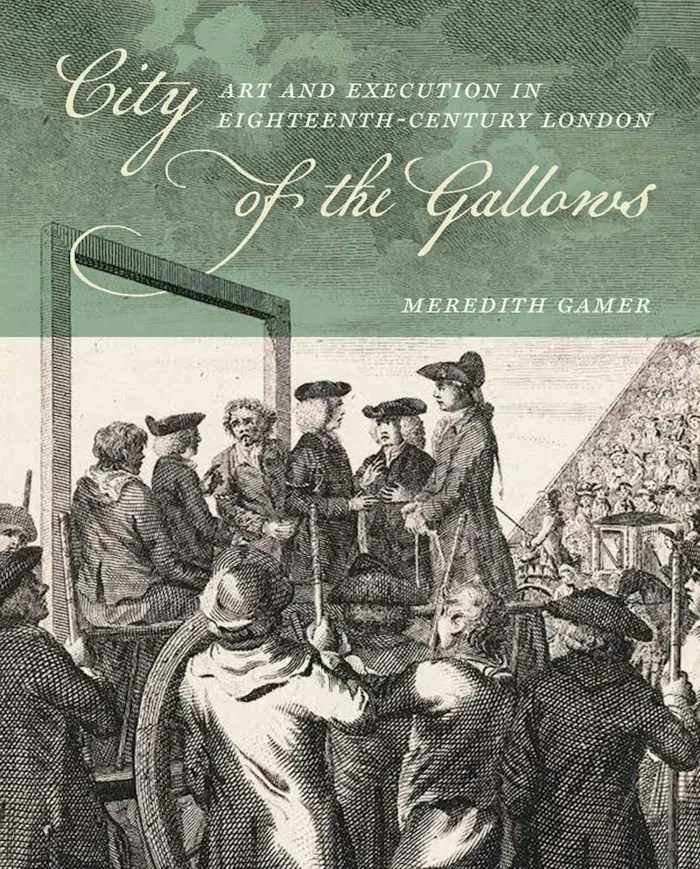 Meredith Gamer, City of the Gallows: Art and Execution in Eighteenth-Century London (London: Paul Mellon Centre for Studies in British Art, 2026) uncovers the complex and often unexpected connections between eighteenth-century London’s sites of punishment and its spaces of art-making, instruction, and display. Drawing together a wide range of images, objects, and texts—from popular woodcuts and anatomical sculptures to moral tracts and dictionaries of slang—it offers new readings of works by major artists, such as William Hogarth, Johan Zoffany, and Joseph Wright of Derby, and shines a light on others that traditional accounts of the period have overlooked or ignored. In doing so, this book shows how state violence shaped the art and visual culture of this era, whose legacies persist to this day.
Kelsey Brosnan is an art historian specializing in eighteenth- and nineteenth-century French art. Her book on the still-life painter Anne Vallayer-Coster was published by Lund Humphries and Getty Publications in 2026.
New Book | The Enlightenment in Concert
From Yale UP:
Andrei Pesic, The Enlightenment in Concert: Music, Markets, and Secularization (New Haven: Yale University Press, 2026), 280 pages, ISBN: 978-0300251579, $65.
 A new interpretation of the Age of Enlightenment through the lens of music, institutions, and markets
The birth of public concerts changed Europe’s cultural landscape by introducing sacred music to secular spaces. The Concert spirituel in Paris is a landmark in this Enlightenment transition: the first long-lasting concert series, it began in 1725 with performances that mostly featured sacred music composed for the royal chapel in Versailles. By the time the Concert ended, in 1790, it was presenting a variety of musical genres, and its sacred repertoire had declined precipitously. The Concert had evolved from an institution dependent on the church calendar and the court into a business in a competitive market. Andrei Pesic explores the dynamics of secularization during the Enlightenment, including the unintended consequences of linking music to commerce, social hierarchy, and religious practices. He reveals the role of public concerts in a burgeoning marketplace for entertainment—and the expansion of secular customs and diminishment of religious constraints—in places as varied as Paris, Berlin, and Haiti.
Andrei Pesic is assistant professor of French and Italian at Stanford University. His research has been supported by a Mellon/ACLS Fellowship, the Deutscher Akademischer Austauschdienst, and the American Society for Eighteenth-Century Studies.
2026 Berger Prize Longlist
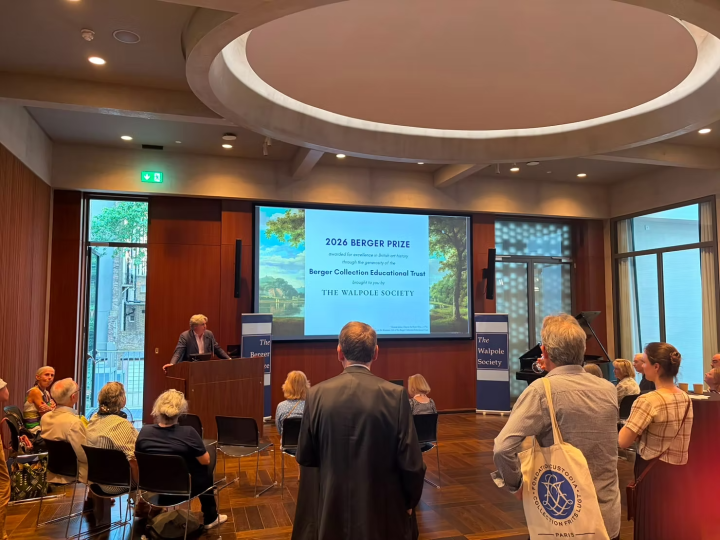
From The Walpole Society:
The 2026 Berger Prize longlist was announced on 8 July at the Warburg Institute, by Dr Jonny Yarker, Chair of the Berger Prize judging panel. In addition, Laura Freeman, Chief Art Critic at The Times, and shortlisted author for the 2024 Berger Prize for her book Ways of Life: Jim Ede and the Kettle’s Yard Artists, delivered a talk, “Doorstepping: House Museums and Shaking Hands with the Past.”
Here are the fifteen titles, with the winning title scheduled to be announced on December 3.
• Kate Anderson, Catriona Murray, Jemma Field, Anna Groundwater, Karen Hearn, and Liz Louis, Art & Court of James VI & I (National Galleries Scotland).
• Christine Casey, Architecture and Artifice: The Crafted Surface in Eighteenth-Century Building Practice (Paul Mellon Centre).
• Apurba Chatterjee, An Empire of Images: Visual Culture and the British in India, 1688–1815 (Cambridge University Press).
• Adrian Clark and Richard Calvocoressi, Irascible: The Combative Life of Douglas Cooper, Collector and Friend of Picasso (Yale University Press).
• Amy Concannon, Turner and Constable: Rivals and Originals (Tate Publishing).
• Alexis Goodin et al, A Room of Her Own: Women Artist Activists in Britain, 1875–1945 (Clark Art Institute).
• John Hilary, Magnates and Masterpieces: The German-Jewish Collectors of Edwardian Britain (Yale University Press).
• Peter Humfrey, Regency Collectors: Buying and Displaying Old Masters in Early Nineteenth-Century England (Paul Holberton Publishing).
• James King, ‘Our Little Gang’: The Lives of the Vorticists (Reaktion Books).
• Catherine Lampert and Toby Treves, Lucian Freud: Catalogue Raisonné of the Oil Paintings (Modern Art Press).
• Jonathan Marsden, European Sculpture in the Collection of His Majesty the King (Modern Art Press).
• Stephanie O’Rourke, Picturing Landscape in an Age of Extraction: Europe and Its Colonial Networks, 1780–1850 (University of Chicago Press).
• Sam Smiles, Turner and the Slave Trade (Paul Mellon Centre).
• Anne Stutchbury, Tessa Wild, Stephen Ponder, and Alice Strickland, Standen: Philip Webb, Morris & Co., and the Creation of an Arts and Crafts Home (Yale University Press).
• Ian Warrell, with a contribution by Gillian Forrester, Turner (Yale Center for British Art).
New Book | The Dog’s Gaze
From Penguin Random House:
Thomas Laqueur, The Dog’s Gaze: A Visual History (New York: Penguin Press, 2026), 400 pages, ISBN: 978-0593652794, $45.
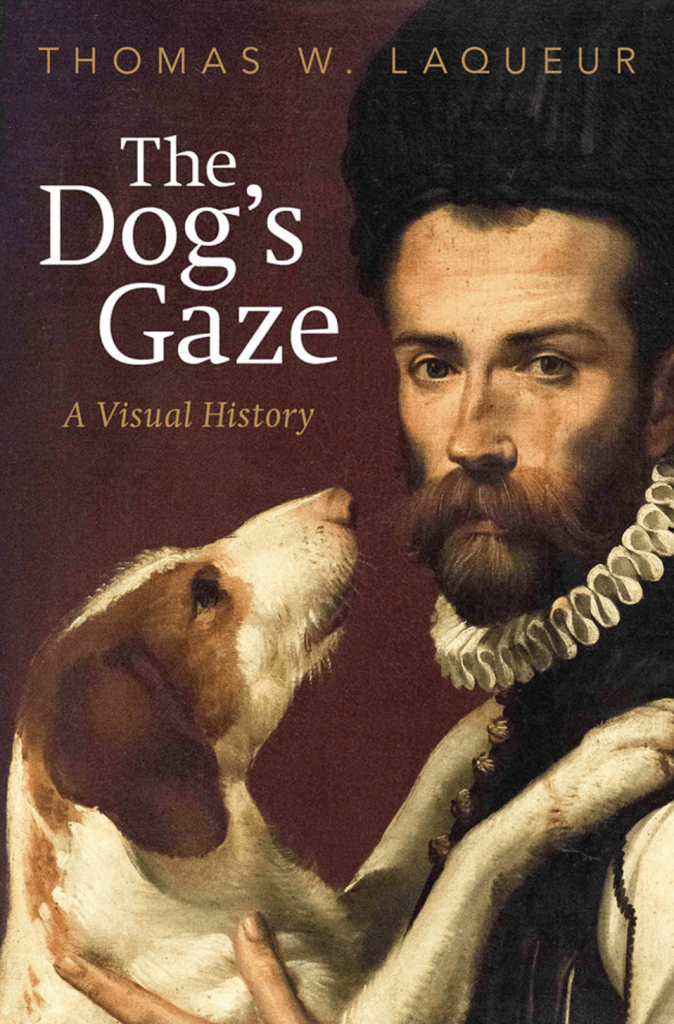 From award-winning cultural historian Thomas Laqueur, an enlightening and unique meditation on the presence of dogs in art, from the Paleolithic era to the present, and what our intertwined human-canine relationship reveals about human nature
Long before the phrase man’s best friend became common parlance, dogs were already standing beside us in art as in life. In The Dog’s Gaze, the historian Thomas W. Laqueur invites us to explore why they feature more than any other animal in the ways in which we picture ourselves and our stories.
Dogs have been ubiquitous in the worldmaking of visual artists as far back as the Paleolithic age. Looking across the Western tradition, from Giotto to Goya and Rubens to Rego, Laqueur shows what their presence—as hunting partners, beloved friends, and even conduits to the afterlife—reveals about our own ways of seeing and how we want to be remembered. Far from being mere motifs, dogs are an integral and intentional element of the images in which they appear: They provide narrative coherence; they look out and bear witness, often on the artist’s behalf; they illuminate our understanding of morality and melancholy and some, like us, become celebrities. Indeed, as Laqueur reveals, dogs in art are our social doppelgängers, our companions in looking and being.
Richly illustrated and lovingly written, The Dog’s Gaze is a unique visual history that examines the remarkable social bond between two species, shedding new light on the human condition through the eyes of our canine companions.
Thomas W. Laqueur is the Helen Fawcett Distinguished Professor of History Emeritus at the University of California, Berkeley. An internationally renowned cultural historian, he has published books on topics ranging from working class religion and education to the history of sexuality and the body. He is a member of both the American Academy of Arts and Sciences and the American Philosophical Society and recipient of the 2007 Mellon Foundation Distinguished Achievement Award and the 2016 Cundill History Prize. His work has been translated into twenty languages.










leave a comment