New Book | De l’avènement des « arts décoratifs »
From Brepols:
Ann Perrin, De l’avènement des « arts décoratifs »: Écrits et réflexions, 1693–1798 (Turnhout: Brepols, 2026), 364 pages, ISBN: 978-2503620220, €75. Also available via open access.
 At the crossroads of the arts, commerce and knowledge, the field of ‘decorative arts’ emerged in the eighteenth century as a real social issue. This book traces its discursive and historiographical genesis, through a wide range of unpublished or little-known sources.
Souvent considérés à l’aune de l’historiographie des beaux-arts avec lesquels ils sont mis en concurrence, les « arts décoratifs » sont rarement étudiés des points de vue théorique et discursif. C’est l’objectif de ce livre, qui défend l’idée selon laquelle les « arts décoratifs », en tant que « champ » autonome constitué – au sens bourdieusien –, émergent progressivement durant une période charnière de l’histoire, au moment précis où se mettent en place une large culture de la consommation et une grande diffusion des connaissances relatives aux arts de la décoration et à la mode. Anne Perrin montre que l’indicateur majeur de cette évolution culturelle se situe dans une efflorescence d’écrits et de réflexions qui firent débat parmi les contemporains, attestant une considération nouvelle acquise pendant un ample XVIIIe siècle par ce champ des « arts décoratifs » alors en construction.
Afin de reconstituer un tel processus historiographique et épistémologique, l’ouvrage rassemble un vaste corpus de sources anciennes, dont la plupart sont méconnues ou jamais incluses dans les bibliographies abordant le sujet. Ont été retenues celles qui se démarquent par leurs qualités critique, réflexive et exploratoire au sein d’une grande diversité de formes textuelles (discours, traités, précis, leçons, annonces, dictionnaires, etc.). Ces textes sont analysés depuis leur contexte d’énonciation, par des hommes et femmes de terrain, qui s’emparèrent du secteur et contribuèrent à le développer, étant artistes, artisans, marchands, pédagogues, philosophes, critiques d’art, amateurs, historiographes, journalistes, économistes, naturalistes ou officiers de l’administration royale. Parmi ces sources imprimées, la production écrite de Jean-Jacques Bachelier, fondateur de la plus importante école de dessin appliquée aux manufactures de la monarchie française (actuelle ENSAD), se distingue autant qu’elle fait écho aux autres voix de son temps.
Anne Perrin est professeure des universités en histoire de l’art moderne à l’Université Toulouse Jean Jaurès – Laboratoire FRAMESPA-UMR 5136. Ses recherches portent sur les arts du XVIIIe siècle, qu’elle aborde sous l’angle de leurs interrelations et dans des approches autant théoriques que pragmatiques. Elle est l’auteure de plusieurs livres et articles sur la culture de la décoration et de la mode, ainsi que sur la pédagogie artistique.
c o n t e n t s
Avertissement
Introduction
Première partie | Prendre la parole
1 Définitions
2 Tensions
Deuxième partie | Défendre une vision
1 Personnalité
2 Formation
Troisième partie | Incarner le changement
1 Économie
2 Mode
Conclusion
Postface de Melissa Hyde — available as a PDF here»
Sources manuscrites et imprimées relatives à Jean-Jacques Bachelier
Sources manuscrites éditées après le XVIIIe siècle
Sources imprimées
Bibliographie
Crédits photographiques
Index des noms propres
New Book | The First Emancipation
From Princeton UP:
Jeremy Popkin, The First Emancipation: The Forgotten History of Abolition in Revolutionary France (Princeton: Princeton University Press, 2026), 440 pages, ISBN: 978-0691246925, $40.
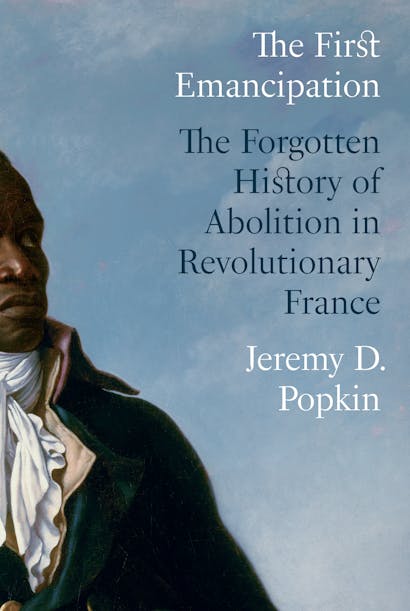 The First Emancipation is a dramatic account of how slavery and race profoundly influenced the course of the French Revolution and had a central impact on the lives of key leaders, including Mirabeau, Robespierre, Toussaint Louverture, and Napoleon. Acclaimed historian Jeremy D. Popkin brings this often-forgotten story to life, highlighting the arguments put forward by French abolitionists and their opponents and the profound repercussions of the first abolition of slavery in a Western empire.
When the French revolutionaries passed the Declaration of the Rights of Man and Citizen in 1789, they immediately faced a burning question: did that document’s first article—“Men are born and remain free and equal in rights”—apply to the 800,000 enslaved Black people in the country’s colonies? Over the next dozen years, revolutionary leaders fought over this question. The First Emancipation tells how French lawmakers initially protected slavery in their constitution but reversed themselves in 1794, making France the first western country to abolish slavery throughout its empire. Yet only eight years later, in 1802, Napoleon tried to force the emancipated Black populations of the colonies back into slavery. His decision led to his first major military defeat and to the proclamation of the independence of the Black nation of Haiti, but also to the reestablishment of slavery in other French colonies, where it would not finally be abolished until 1848. The story of how France emancipated its enslaved people and declared them full citizens only to return many of them to bondage, The First Emancipation reveals that the course of abolition in the modern world was more winding and halting than is often remembered.
Jeremy D. Popkin is the William T. Bryan Chair Professor Emeritus of History at the University of Kentucky. His many books include A New World Begins: The History of the French Revolution and You Are All Free: The Haitian Revolution and the Abolition of Slavery.
New Book | Constable’s Year
From Thames & Hudson:
Susan Owens, Constable’s Year: An Artist in Changing Seasons (London: Thames & Hudson, 2026), 224 pages, ISBN: 978-0500028896, $35.
 Published to celebrate the 250th anniversary of his birth, this book offers a fresh look at John Constable, whose life and work were profoundly shaped by the cycle of the natural world in his native rural England.
As exhilarating as a lungful of oxygen: that’s how some of his contemporaries felt about John Constable’s paintings. Others, though, were baffled by his uncompromisingly fresh and realistic treatment of the natural world. Author Susan Owens follows Constable’s work and life through the seasons, tracing the rhythms and resonances of the artist’s year to offer a vivid, unconventional perspective on this beloved figure. Whether in London in May, preparing pictures for exhibition and longing for the Suffolk spring, or painting boat-builders and waiting to be married in a particularly gloomy September, Constable’s life and work were unusually shaped by the yearly cycles of weather and agriculture, as well as by the often competing demands of the art world. Raised in Suffolk, England, and trained to manage his father’s land, his rural background had an enduring impact on his painting. His was the approach of one who knew the laneways, ploughs, and millponds he painted intimately, and who understood the countryside as a place of both labor and natural phenomena. Though today he is often considered a traditional artist, in truth John Constable (1776–1837) was a radical in his own time. His sketchbooks and paintings reject secondhand, slipshod versions of nature, instead subjecting the land, its people, and industry to intense scrutiny; developing a new kind of painting to fit the landscape he saw with his farmer’s eye and felt beneath the soles of his boots.
Susan Owens is an expert on British landscape art and a leading critical voice in the field. Her publications include The Story of Drawing: An Alternative History, which was Apollo magazine’s 2024 Book of the Year, Imagining England’s Past: Inspiration, Enchantment, Obsession, and Spirit of Place: Artists, Writers and the British Landscape. She was curator of paintings at the V&A, and was involved in the major V&A exhibition and catalog Constable: The Making of a Master.
◊ ◊ ◊ ◊ ◊
N.B.— And as The Guardian noted in June, Constable’s cello will be displayed at Christchurch Mansion in Ipswich from 17 June until 4 October.
Exhibition | Celtic Art Across the Ages
Now on view at Harvard Art Museums, the exhibition spans a wide period including the reception of Celtic art in the 18th and 19th centuries.
Celtic Art Across the Ages
Harvard Art Museums, Cambridge, Massachusetts, 6 March — 2 August 2026
Curated by Susanne Ebbinghaus, with Penny Coombe, Laure Marest, and Matthew Rogan
 Discover the many forms of Celtic creativity and their artistic legacies in this sweeping story that spans ancient to modern times.
When you think of the word ‘Celtic’, what do you picture? Perhaps intricate knotwork designs, legendary warriors, or mystical spirituality? Maybe even a certain NBA team? Celtic Art across the Ages will introduce visitors to the worlds of the various peoples who were historically labeled ‘Celts’—through the objects they created, the interactions they had across the European continent, and the myths that shaped their legacy, then as now. The exhibition stretches from 800 BCE through today, showcasing the craftsmanship, innovation, cultural connections, and multilayered reception that characterized Celtic art in Europe and beyond.
The first major exhibition on this topic to take place in the United States, Celtic Art across the Ages offers an unprecedented opportunity to explore masterful metalwork, including exquisitely decorated weaponry, jewelry, and horse and chariot trappings of the first millennium BCE Iron Age and early medieval times, all brought to light through archaeological discoveries of the last 200 years. See how imagery transformed under Roman rule, and trace the revival of Celtic art and identities in the modern era. From shape-shifting ancient ornaments to the more well-known Celtic iconography of medieval Ireland and Scotland, the objects in this exhibition reveal rich and complex artistic traditions that defy stereotypes of what constitutes ‘Celtic art’.
The exhibition is curated by Susanne Ebbinghaus, George M.A. Hanfmann Curator of Ancient Art and Head of the Division of Asian and Mediterranean Art, with Penny Coombe, Kelekian Curatorial Fellow in Ancient Art, Laure Marest, Damarete Associate Curator of Ancient Coins, and Matthew Rogan, Senior Curatorial Assistant for Special Exhibitions and Publications.
The catalogue is disributed by Yale UP:
Susanne Ebbinghaus, ed., Celtic Art Across the Ages (Cambridge: Harvard Art Museums, 2026), 272 pages, ISBN: 978-0300286380, $45. With contributions by Franck Abert, Sophia Adams, Bettina Arnold, Kathryn Brush, Kimberly Cassibry, Michael Dietler, Christian Dupont, Susanne Ebbinghaus, Astrid Fendt, Ana Franjić, Martin Goldberg, Gloria Polizzotti Greis, Karina Grömer, Vanessa Haussener, Veronika Holzer, Thomas Hoppe, Fraser Hunter, Marina Kliger, Rachel Love, Laure Marest, Catherine McKenna, Nancy Netzer, Laurent Olivier, Sean Rainbird, Matthew Rogan, Maeve Sikora, Adrian Stähli, Georg Tiefengraber, and Katharina Ulmschneider.
New Book | Out of the Shadows: Rediscovering Maria Cosway
From Unicorn Publishing Group:
Diane Boucher, Out of the Shadows: Rediscovering Maria Cosway (Lewes: Unicorn Publishing, 2025), 256 pages, ISBN: 978-1916846784, £28.
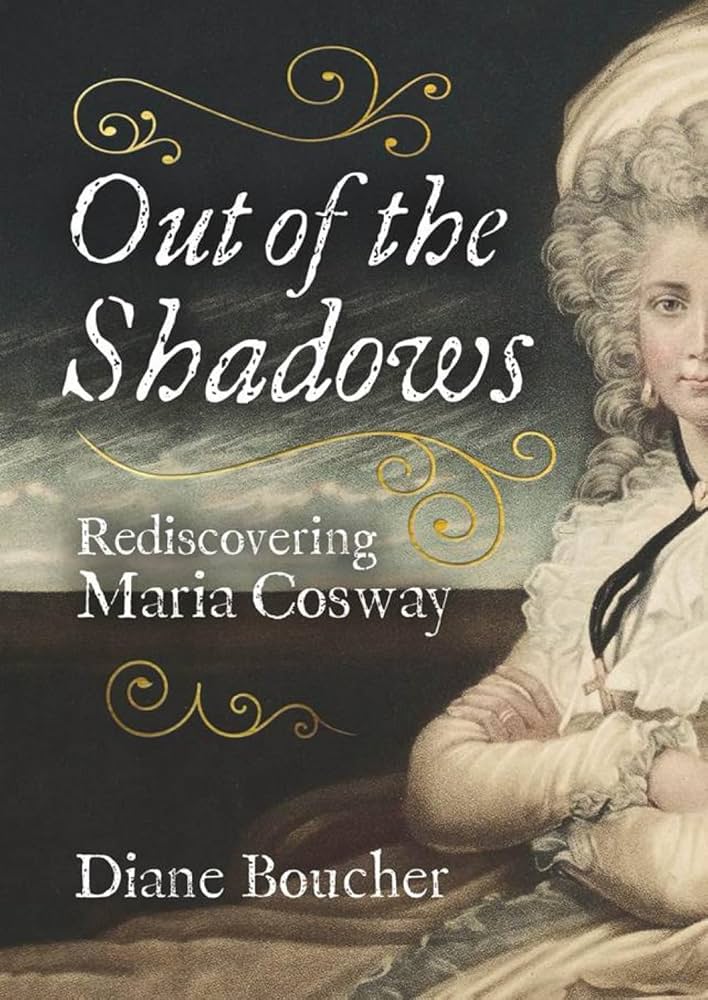 The beautiful Anglo-Italian artist Maria Cosway was one of the most talented and dynamic women active in Regency England, but one whose achievements have been largely overlooked. Born in Florence in 1760, she was acclaimed at an early age as both a painter and a musician. She exhibited forty-one paintings at the Royal Academy summer exhibition between 1781 and 1801 and hosted regular musical soirées at the Pall Mall house she shared with her husband, Richard Cosway. They were attended by the political and cultural elite of London.
Maria’s extraordinary network of connections to the great and the good of the late-eighteenth and early-nineteenth centuries, included friendships with, among others, Thomas Jefferson, the Prince of Wales, Pasquale Paoli, the artist Jacques-Louis David, the opera singer Luigi Marchesi, the Duchess of Devonshire, the actress and writer Mary Robinson, and members of the Bonaparte family. Estranged from her husband by 1801, Maria Cosway largely gave up painting and reinvented herself as a progressive educator, founding schools for young women: first in Lyon, later in Lodi, Italy. In recognition of her achievements at Lodi, the Emperor of Austria made her a baroness.
Diane Boucher was born in London and has an MA in History of Art from University College London. From 1998 until 2002, she was Research Director for the Commission for Looted Art in Europe. In the United States, she worked at the Crab Tree Collection of American and British Arts and Crafts and at the Fralin Museum of Art, University of Virginia. She has published magazine articles and books on the arts and interior design. She lives in London and Suffolk with her husband.
New Book | Picture Democracy
As previously noted here at Enfilade, Wolf Burchard co-curated the exhibition Revolution! now on view at The Met. He also has just published this small book, from Thornwillow Press:
Wolf Burchard, Picture Democracy (Newburgh, New York: Thornwillow Press, 2026), 80 pages, $65.
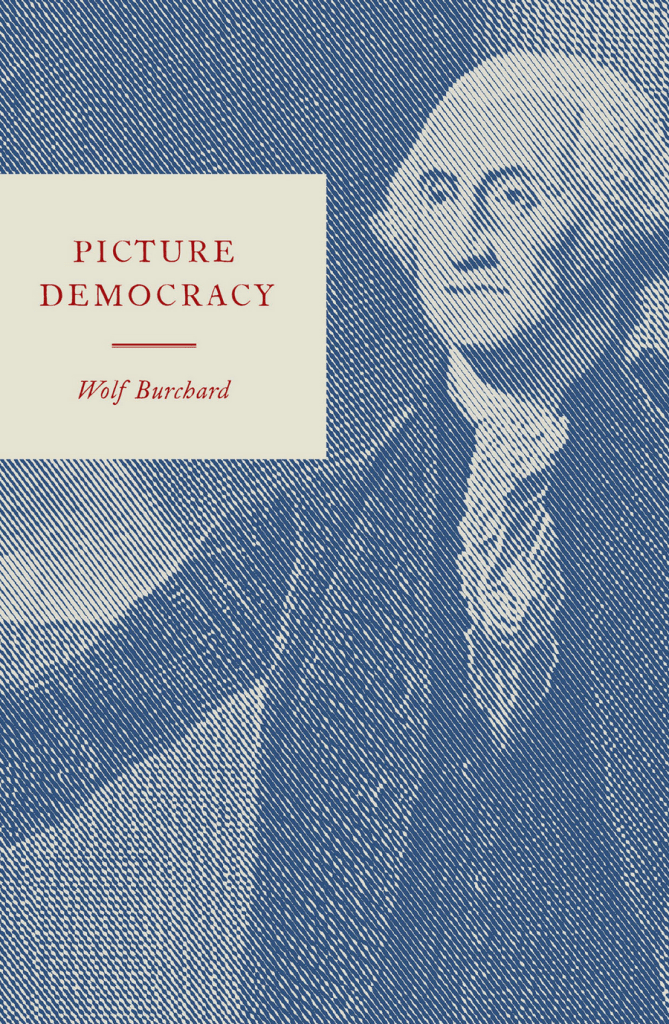 What did power look like before 1776? This is the question Wolf Burchard asks in Picture Democracy. His answer unfolds through three iconic portraits of George III, Louis XVI, and George Washington and reveals just how radical the American experiment truly was. If kings had long been portrayed through the established language of majesty, inherited authority, and divine right, how was one to portray the leader of a republic?
At the center of the book is Gilbert Stuart’s great Lansdowne portrait of Washington, a painting that helped invent a new visual language for democratic leadership. But how do you portray a president? Washington was the first of his kind, so there was no established formula comparable to that employed in the depictions of other heads of state, kings, queens, emperors, and popes. Picture Democracy is about such people of power, and how some of the supreme artistic exponents of their time tried to convey that power through portraiture. It tells the story of three likenesses of three men—George III, Louis XVI, and George Washington—who never met in person, but who for decades had almost daily interactions with one another, or were, at the very least, on each other’s minds.
Wolf Burchard is Curator at the Metropolitan Museum of Art, where he joined the Department of European Sculpture and Decorative Arts in 2019, after holding curatorial positions at the British Royal Collection and the National Trust. Much of his work focuses on the relationship between art and power. In 2026, he co-curated Revolution! at The Met, an exhibition marking the 250th anniversary of the Declaration of Independence, and The Rediscovered Treasure of the Sun King, at the Grand Palais in Paris. He also co-organized the exhibition The First Georgians: Art and Monarchy, 1714–1760, shown at The Queen’s Gallery, Buckingham Palace to mark the tercentenary of the Hanoverian succession in 2014, and published The Sovereign Artist: Charles Le Brun and the Image of Louis XIV (2016).
New Book | Women, Gardens, and Agency in Imperial Russia
From Bloomsbury:
Ekaterina Heath, Women, Gardens, and Agency in Imperial Russia: Empress Maria Feodorovna’s Pavlovsk Park (London: Bloomsbury Academic, 2026), 144 pages, ISBN: 978-1350544505, £45 / $62.
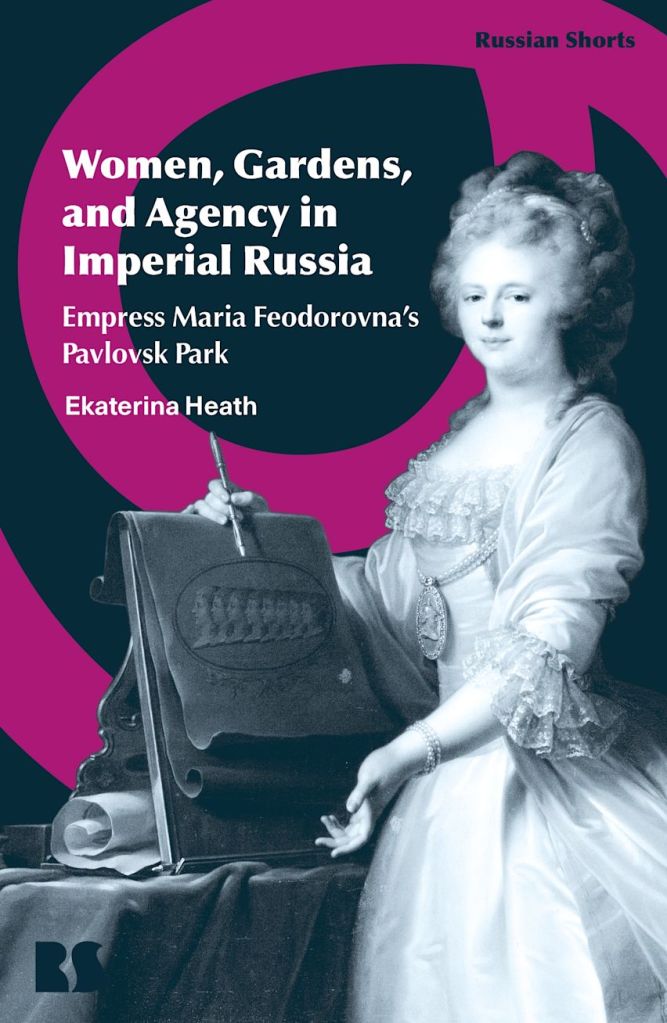 How does a woman with no formal political authority influence the politics of an empire? Through her garden.
In the hierarchies of the late 18th- and early 19th-century Russian imperial court, a consort held no direct access to power. Yet Empress Maria Feodorovna, wife of Paul I and later Dowager Empress during the reign of Alexander I, influenced the politics of her era through the cultivation of Pavlovsk Park near St Petersburg. Women, Gardens, and Agency in Imperial Russia draws on the rich historical record of the Russian royal court to recover the evidence of her agency. Heath traces Maria Feodorovna’s strategies for maintaining access to power under Catherine II and Paul I, and examines how, widowed and formally sidelined, she used Pavlovsk to consolidate influence during her son’s reign, turning a garden into a panopticon, a memorial, and a vehicle for rewriting history.
Ekaterina Heath is a Research Associate at the University of Sydney, specialising in garden studies and Russian history of the eighteenth and nineteenth centuries. Her earlier work includes essays on Grand Tour memory at Pavlovsk and on plants as diplomatic gifts in British-Russian relations.
c o n t e n t s
Introduction
1 Imperial Family: Building Bridges
2 Plants in the Garden: Growing the Power Base
3 Diplomacy: Weaving the Networks of Power
4 Grief: Turning Defeat into Victory
5 Pavlovsk Panopticon: Arguing against Abolishing Serfdom
6 Charity: Creating Legacy through Rewriting History
Conclusion
Bibliography
Index
New Book | What Was America?
Coming this fall from Yale UP:
Elise Armani and Katy Siegel, What Was America? Art, Culture, and Politics in the Bicentennial Era (New Haven: Yale University Press, 2026), 224 pages, ISBN: 978-0300284430, $65.
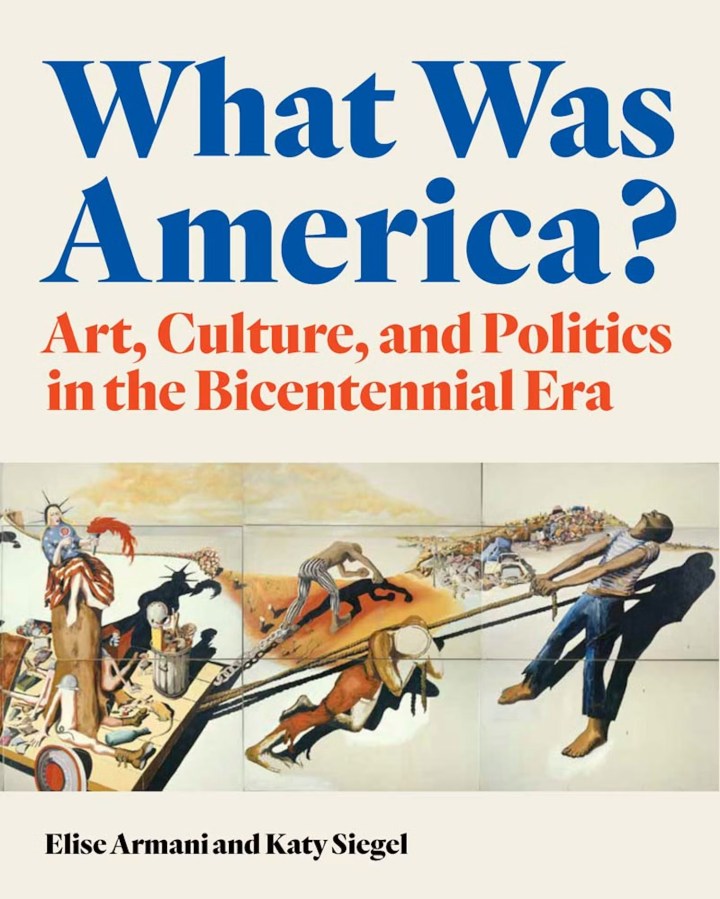 In 1976 the United States celebrated its two hundredth year with festivals, exhibitions, works of art, and historical initiatives. Over a decade, planning for the Bicentennial spanned postwar prosperity, political activism, and, toward the end, fear of national decline. The social alchemy of these conditions produced a national investment in shared cultural experience never matched before or since. Across wildly disparate venues, demographics, interests, presidencies, and geographies, Bicentennial cultural production contended with community, the environment, immigration, heritage, technology, and what it meant to be American. This outpouring of projects both reflected and drove national debates, eliciting mass participation in negotiating US history and imagining the nation’s future.
What Was America? offers a prismatic view of American art and culture in the years leading up to 1976. Ten fascinating case studies examine the individual efforts of artists such as Benny Andrews; blockbuster exhibitions, including A Nation of Nations at the Smithsonian; and popular community projects such as protest quilts and time capsules. The authors consider issues that remain highly relevant today and offer new perspectives on the possibilities for art’s social role, exploring its use in defining the nation’s past and future, its purpose and its people.
Elise Armani is assistant curator of twentieth-century art at the Joslyn Art Museum in Omaha. Katy Siegel is the Eugene V. and Clare E. Thaw Endowed Chair in Modern American Art at Stony Brook University.
New Book | When the Declaration of Independence Was News
From Oxford UP:
Emily Sneff, When the Declaration of Independence Was News (Oxford: Oxford University Press, 2026), 272 pages, ISBN: 978-0197816691, $30.
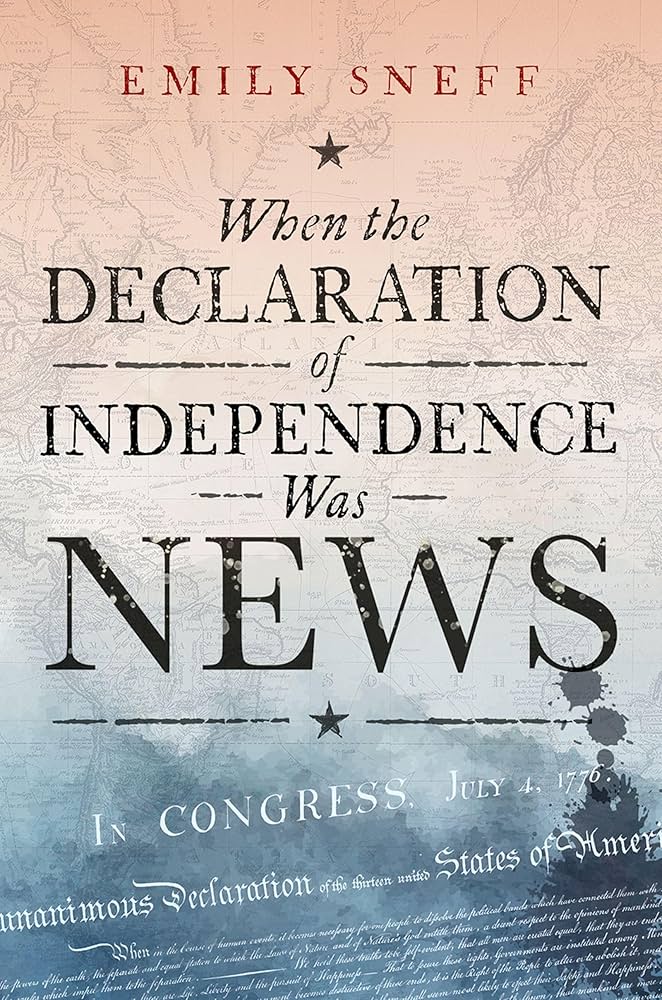 Tracing the moments after its creation, this groundbreaking book follows how news of the Declaration of Independence spread to people throughout the thirteen United States and the Atlantic world.
In 1776 people could hear the Declaration of Independence proclaimed in public squares and could read it in the pages of their local newspapers. Stories of the Declaration typically recount the work that took place inside the Continental Congress, focusing on the men tasked with drafting the text. Although Congress declared independence, the work of spreading the news involved printers, post riders, ship captains, civic leaders, soldiers, clerks, orators, preachers, diplomats, and translators.
When the Declaration of Independence Was News reveals the stories behind how the Declaration was communicated in the United States and around the Atlantic. Tracing the travels of the founding document of the United States from Philadelphia to New York, Boston, Charleston, London, Leiden, Paris, and beyond, Emily Sneff shows how people both celebrated the Declaration and critiqued it. In the weeks after the document was penned, it was printed in the columns of newspapers, translated into German and French, and shared with Native American allies. The document induced some people to make public their privately held beliefs about whether they wanted the United States to be independent or to reconcile with King George III. The Declaration was met with unique circumstances everywhere it went, and people modified the text along the way. The questions of who experienced the news of independence, when, and how reveal an expansive and complex history of a critical moment in the American Revolution.
Published for the 250th anniversary of American independence, When the Declaration of Independence Was News returns to a time before the legacy of these words and the outcome of the war against Great Britain were known to reconsider what the founding of the United States meant to the people who were living through it.
Emily Sneff is a historian of the founding era of the United States and a leading expert on the Declaration of Independence. With a PhD in history from William and Mary, she is a consulting curator for museum exhibitions for the 250th anniversary of the Declaration.
c o n t e n t s
Acknowledgments
1 Introduction: The News of Independence
2 When the Declaration of Independence was News
3 Short of Independence: The May 15 Resolution
4 Postponed: The Continental Congress Debates Independence
5 Publish and Declare: The People Learn the News
6 Melted Majesty: Statues Fall and Tensions Rise in New York
7 The Reigning Subject: Inoculation and Independence in Massachusetts
8 Words and Wampum: Native Americans Acknowledge Independence
9 Embarrassment: Clergymen Close Churches and Change Prayers
10 Intercepted: Broadsides in British Hands
11 Pretended Acts: London Changes the Declaration
12 An Old Storey: Silas Deane Waits for the Declaration
13 Conclusion: A Lasting Testimony
Appendix: Transcription of the Dunlap Broadside of the Declaration of Independence
Notes
Bibliography
Index
Exhibition | A Day in the Eighteenth Century
Now on view at the Musée des Arts Décoratifs:
A Day in the Eighteenth Century: Chronicle of a Parisian Townhouse
Musée des Arts Décoratifs, Paris, 18 February — 5 July 2026
Curated by Ariane James-Sarazin and Sophie Motsch
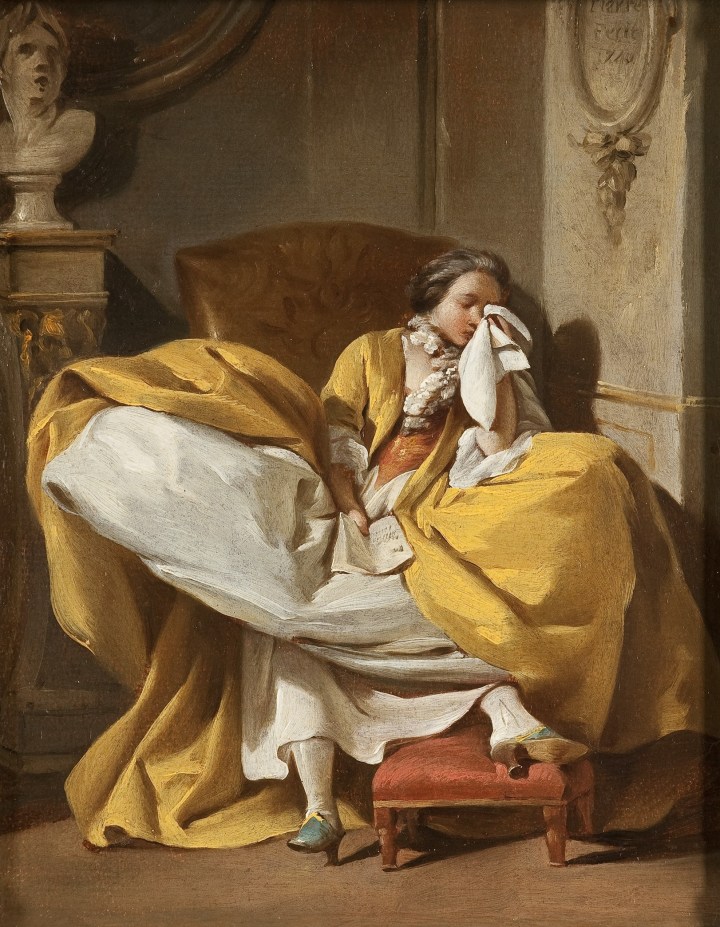
Jean-Baptiste Marie Pierre, La Mauvaise Nouvelle (The Bad News), oil on canvas, 23.5 × 18.5 cm (Paris: Musée des Arts Décoratifs).
A Day in the Eighteenth Century: Chronicle of a Parisian Townhouse invites visitors to step inside the intimate world of an eighteenth-century aristocratic residence and its inhabitants—masters, servants, and household animals. Featuring more than 550 original objects, drawn from the museum’s collections and for most of them, rarely on view, the exhibition gathers all fields of expression of the decorative arts—wood panelling and wallpapers, furniture, ceramics, silverware, clothing and fashion accessories, toys, and jewellery—to recreate the life of a Parisian hôtel particulier in the 1780s. In a cinematic, sound-filled and scented atmosphere, the visitors wander from room to room as if they were close acquaintances, friends, or privileged guests of the family.
The exhibition is curated by Ariane James-Sarazin, Chief Heritage Curator responsible for the seventeenth- and eighteenth-century collections and the Nissim de Camondo collection, together with Sophie Motsch, Assistant Curator.
Ariane James-Sarazin and Sophie Motsch, eds., Une journée au XVIIIe siècle, chronique d’un hôtel particulier (Paris: Éditions Les Arts Décoratifs, 2026), 528 pages, ISBN: 978-2383140351, €39.










leave a comment