New Book | Yale and Slavery: A History
From Yale UP:
David Blight, with Yale and Slavery Research Project, foreword by Peter Salovey, Yale and Slavery: A History (New Haven: Yale University Press, 2024), 448 Pages, ISBN: 978-0300273847, $35.
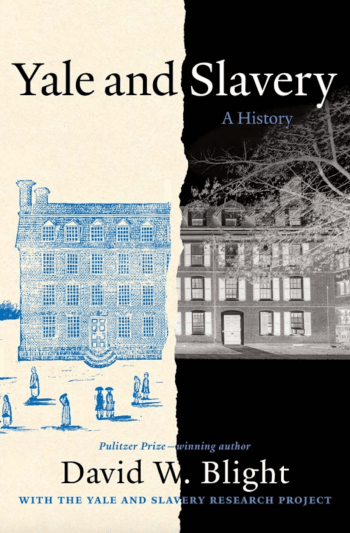 A comprehensive look at how slavery and resistance to it have shaped Yale University
Award-winning historian David W. Blight, with the Yale and Slavery Research Project, answers the call to investigate Yale University’s historical involvement with slavery, the slave trade, and abolition. This narrative history demonstrates the importance of slavery in the making of this renowned American institution of higher learning.
Drawing on wide-ranging archival materials, Yale and Slavery extends from the century before the college’s founding in 1701 to the dedication of its Civil War memorial in 1915, while engaging with the legacies and remembrance of this complex story. The book brings into focus the enslaved and free Black people who have been part of Yale’s history from the beginning—but too often ignored in official accounts. These individuals and their descendants worked at Yale; petitioned and fought for freedom and dignity; built churches, schools, and antislavery organizations; and were among the first Black students to transform the university from the inside.
Always alive to the surprises and ironies of the past, Yale and Slavery presents a richer and more complete history of Yale, the third-oldest college in the country, showing how pillars of American higher education, even in New England, emerged over time intertwined with the national and international history of racial slavery.
David W. Blight is Sterling Professor of History and director of the Gilder Lehrman Center for the Study of Slavery, Resistance, and Abolition at the MacMillan Center at Yale. The Yale and Slavery Research Project was convened in 2020.
TEFAF Maastricht 2024
TEFAF Maastricht opens soon, with lots of interesting 18th-century offerings, including these catalogues from Zebregs & Röell, one of which focuses on a rediscovered portrait of Gustav Badin, a well-known Black African at the court of Maria Louisa of Prussia, Queen of Sweden.
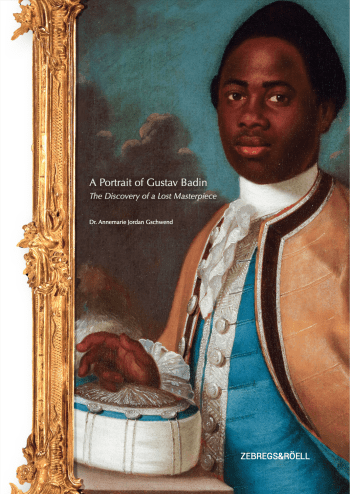
Jakob Björk, after Gustav Lundberg, Portrait of Fredrik Adolf Ludvig Gustav Albert Badin Couschi (ca. 1750–1822), 1776, oil on canvas.
Guus Röell and Dickie Zebregs, Uit verre Streken / From Distant Shores (Maastricht: Zebregs & Röell, 2024), 146 pages. Link»
Annemarie Jordan-Gschwend, A Portrait of Gustav Badin: The Discovery of a Lost Masterpiece (Maastricht: Zebregs & Röell, 2024), 20 pages. Link»
◊ ◊ ◊ ◊ ◊
TEFAF Maastricht
Maastricht, 9–14 March 2024
The European Fine Art Foundation, TEFAF Maastricht, is widely regarded as the world’s premier fair for fine art, antiques, and design, bringing together 7,000 years of art history under one roof. Featuring over 260 prestigious dealers from some 20 countries, TEFAF Maastricht is a showcase for the finest art works currently on the market. Alongside the traditional areas of Old Master paintings, antiques, and classical antiquities that cover approximately half of the fair, you can also find modern and contemporary art, photography, jewelry, 20th century design, and works on paper.
New Book | Disegni di Prospettiva Ideale (1732)
This collection of drawings of Rome by Filippo Juvarra is published as part of the series FONTES: Text- und Bildquellen zur Kunstgeschichte 1350–1750, from arthistoricum.net, where the full PDF is available for free.
Cristina Ruggero, Disegni di Prospettiva Ideale (1732): Un omaggio di Filippo Juvarra ad Augusto il Forte e i rapporti fra le corti di Roma, Torino, Dresda (Heidelberg: arthistoricum.net, 2023), 456 pages, ISBN: 978-3985010851.
 Nella primavera del 1732 Filippo Juvarra spediva da Roma un album con 41 Disegni di Prospettiva Ideale destinato ad Augusto il Forte, principe elettore sassone e re di Polonia. Latore del dono doveva essere Antonio Giuseppe Gabaleone conte di Wackerbarth Salmour—il nobile torinese naturalizzato in Sassonia—che in quel momento era nella città pontificia in missione segreta per suo conto. L’album conservato nel Kupferstich-Kabinett di Dresda celebra l’esemplarità di Roma nei secoli, laddove, attraverso i temi affrontati, le composizioni scenografiche e la tecnica si sviluppa una narrazione di grande forza evocativa, a ulteriore conferma delle poliedriche qualità di Juvarra come grande regista delle arti. I disegni sono pubblicati qui per la prima volta integralmente assieme ad alcune lettere inedite che aiutano a far luce su un episodio artistico che coinvolse le corti di Roma, Torino e Dresda.
Cristina Ruggero è attualmente collaboratrice scientifica del progetto Antiquitatum Thesaurus presso la Berlin-Brandeburgische Akademie der Wissenschaften. Oltre alle sue pubblicazioni su Juvarra, studia da anni la ricezione dell’antico e le reti culturali e artistiche tra le corti europee nel XVIIe XVIII secolo. Ha collaborato con rinomate istituzioni internazionali quali la Bibliotheca Hertziana e l’Università La Sapienza di Roma, il Zentralinstitut für Kunstgeschichte di Monaco e l’Italian Academy at Columbia University di New York.
c o n t e n t s
Page preliminari
Indice
Ringraziamenti
• Introduzione
• Il libro di Disegni di Prospettiva Ideale nel Kupferstich-Kabinett di Dresda
• Catalogo dei disegni
• Filippo Juvarra (1678–1736): l’architetto e i suoi doni di grafica
• Augusto il Forte (1670–1733): un sovrano cultore delle arti
• Giuseppe Antonio Gabaleone conte di Wackerbarth–Salmour (1685–1761) e il suo ruolo di intermediario
• I Disegni di Prospettiva Ideale tra capriccio e seduzione
• Conclusione
• An homage from Filippo Juvarra to August the Strong and the relationships between the courts of Rome, Turin, and Dresden
Abbreviazioni
Bibliografia
Referenze fotografiche
Indice dei nomi
New Book | Specialized Dictionaries and Encyclopedias, 1650–1800
The latest from the Oxford University Studies in the Enlightenment series:
Jeff Loveland and Stéphane Schmitt, eds., Specialized Dictionaries and Encyclopedias, 1650–1800: A Tribute to Frank Kafker (Oxford: Voltaire Foundation with Liverpool University Press, 2024), 488 pages, ISBN: 978-1837641468, $99.
 • One of the first books to focus on specialized dictionaries and encyclopedias
• Complements case studies of specialized dictionaries and encyclopedias with a wide-ranging, analytical overview
• Covers a largely neglected but extremely important aspect of European encyclopedism
• Brings the history of specialized lexicography into touch with the history of science, book history, and the history of culture
During the seventeenth and eighteenth centuries, the number of specialized dictionaries and encyclopedias grew from a trickle to a flood, while the number of disciplines they were devoted to grew from a handful to dozens, representing many varieties of knowledge. Specialized dictionaries—as most were called, whether lexical or encyclopedic—were far more numerous than general encyclopedias. Yet despite their importance—as sources of knowledge, for example, and as definers of disciplines—they have not been much studied. Drawing on Frank Kafker’s methods for studying the period’s general encyclopedias, as pioneered in Notable Encyclopedias of the Seventeenth and Eighteenth Centuries (1981), this volume examines specialized dictionaries as commercial products, collections of content, and cultural artifacts. Specifically, it complements a wide-ranging, analytical introduction sketching out the characteristics of specialized dictionaries in general with a series of individually authored but standardized case studies. The latter deal with dictionaries on a variety of disciplines, from the Bible to mining, and in five European languages. The volume concludes with an essay on Frank Kafker’s influence on historiography.
Jeff Loveland is a visiting assistant professor of history at Utah Tech University. Much of his research concerns the history of encyclopedias, especially eighteenth-century European encyclopedias. His publications include The Early Britannica, 1768–1803, co-edited with Frank A. Kafker (2009) and The European Encyclopedia, from 1650 to the Twenty-First Century (2019).
Stéphane Schmitt is a research director at the Archives Henri Poincaré (French Centre National de la Recherche Scientifique) in Nancy. He works on the history of the life sciences, especially in the eighteenth and the nineteenth centuries. He has published many books and papers on the history of anatomy, embryology, and zoology, and is the main editor of Buffon’s Oeuvres completes (2007–, 17 volumes published to date).
c o n t e n t s
List of illustrations
Introduction
Appendix
• Augustin Calmet’s Dictionnaire historique, critique, chronologique, géographique et littéral de la Bible (1719) — Kathleen Hardesty Doig
• Étienne Chauvin’s Lexicon rationale (1692) and Lexicon philosophicum (1713) — Giuliano Gasparri
• A Medicinal Dictionary (1742–45) by Robert James: An Enlightenment Reference Work — Alexander Wright and R. W. McConchie
• John Barrow’s Dictionarium Polygraphicum (1735) — Craig Hanson
• Noël Chomel’s Dictionnaire oeconomique (1708) — Clorinda Donato
• The Dictionnaire raisonné universel d’histoire naturelle (1764) — Stéphane Schmitt
• The Reales Staats- und Zeitungs-Lexicon (1704) — Jeff Loveland
• The Curieuses Natur- Kunst- Gewerck- und Handlungs-Lexicon (1712) — Ines Prodöhl
• The Dictionnaire universel de commerce (1723–30) — Jeff Loveland
• Nicolas Desroche’s Dictionaire des termes propres de marine (1687): A Linguistic Tool for Seafarers? — Élisabeth Ridel-Granger and Michel Daeffler
• Sven Rinman’s Bergwerks Lexicon (1788–89) and the Emergence of Mining Encyclopedias in Preindustrial Europe — Linn Holmberg
• Frank Kafker and the Social History of Eighteenth-Century Encyclopedism — Gregory S. Brown and Melanie Conroy
Bibliography
New Book | First Among Men
Published by Johns Hopkins UP, First Among Men was awarded the George Washington Prize last fall:
Maurizio Valsania, First Among Men: George Washington and the Myth of American Masculinity (Baltimore: Johns Hopkins University Press, 2022), 416 pages, ISBN: 978-1421444475, $32.
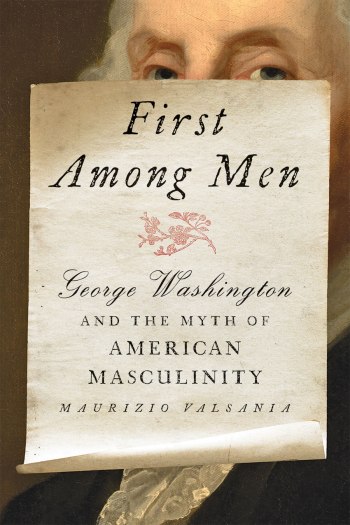 George Washington—hero of the French and Indian War, commander in chief of the Continental Army, and first president of the United States—died on December 14, 1799. The myth-making began immediately thereafter, and the Washington mythos crafted after his death remains largely intact. But what do we really know about Washington as an upper-class man?
Washington is frequently portrayed by his biographers as America at its unflinching best: tall, shrewd, determined, resilient, stalwart, and tremendously effective in action. But this aggressive and muscular version of Washington is largely a creation of the nineteenth century. Eighteenth-century ideals of upper-class masculinity would have preferred a man with refined aesthetic tastes, graceful and elegant movements, and the ability and willingness to clearly articulate his emotions. At the same time, these eighteenth-century men subjected themselves to intense hardship and inflicted incredible amounts of violence on each other, their families, their neighbors, and the people they enslaved. In First Among Men: George Washington and the Myth of American Masculinity, Valsania considers Washington’s complexity and apparent contradictions in three main areas: his physical life (often bloody, cold, injured, muddy, or otherwise unpleasant), his emotional world (sentimental, loving, and affectionate), and his social persona (carefully constructed and maintained). In each, he notes, the reality diverges from the legend quite drastically. Ultimately, Valsania challenges readers to reconsider what they think they know about Washington.
Aided by new research, documents, and objects that have only recently come to light, First Among Men tells the fascinating story of a living and breathing person who loved, suffered, moved, gestured, dressed, ate, drank, and had sex in ways that may be surprising to many Americans. In this accessible, detailed narrative, Valsania presents a full, complete portrait of Washington as readers have rarely seen him before: as a man, a son, a father, and a friend.
Maurizio Valsania is a professor of American history at the University of Turin. He is the author of Jefferson’s Body: A Corporeal Biography.
c o n t e n t s
1 The American Giant
Part I | Physical
2 Testing Himself
3 A Taste for Cruelty and War
4 A Body in Pain
5 Checking the Body
Part II | Emotional
6 The Love Letters
7 The Meaning of Love (and Marriage)
8 A Sentimental Male
9 A Maternal Father
Part III | Social
10 A Person of Fine Manners
11 The Message of His Clothing
12 Astride the Great Stage
13 Consummation
14 Giants Die as Well
New Book | Objects of Liberty
From the University of Delaware Press:
Pamela Buck, Objects of Liberty: British Women Writers and Revolutionary Souvenirs (Newark: University of Delaware Press, 2024), 202 pages, ISBN: 978-16445333338 (hardback), $150 / ISBN: 978-1644533321 (paperback), $43.
 While souvenir collecting was a standard practice of privileged men on the eighteenth-century Grand Tour, women began to partake in this endeavor as political events in France heightened interest in travel to the Continent. Objects of Liberty: British Women Writers and Revolutionary Souvenirs explores the prevalence of souvenirs in British women’s writing during the French Revolution and Napoleonic era. It argues that women writers employed the material and memorial object of the souvenir to circulate revolutionary ideas and engage in the masculine realm of political debate. Looking at travel accounts by Helen Maria Williams, Mary Wollstonecraft, Catherine and Martha Wilmot, Charlotte Eaton, and Mary Shelley, this study reveals how they used souvenirs to affect political thought in Britain and contribute to conversations about individual and national identity. Objects of Liberty is a story about the ways that women established political power and agency through material culture. Easily transported across borders due to their small size, souvenirs allowed women to provide visual representations of the distant conflict in France and encourage sympathy for and remembrance of revolutionary ideals. At a time when gendered beliefs precluded women from full citizenship, they used souvenirs to redefine themselves as legitimate political actors. By establishing networks of sociability, women’s exchange of souvenirs helped Britain develop international alliances and redefine itself as a more powerful and global nation.
Pamela Buck is Associate Professor of English at Sacred Heart University in Fairfield, Connecticut. Her research focuses primarily on women’s writing and material culture in late eighteenth- and early nineteenth-century British literature.
c o n t e n t s
List of Figures
Acknowledgements
Introduction
1 Helen Maria Williams’ Sentimental Objects in Letters from France
2 Mary Wollstonecraft and Political Spectacle in An Historical and Moral View of the French Revolution
3 Imperial Collecting in Catherine and Martha Wilmot’s Travel Journals
4 Charlotte Eaton’s Battlefield Relics in Narrative of a Residence in Belgium
Conclusion: Refiguring the Revolution in Mary Shelley’s Rambles in Germany and Italy
Notes
Bibliography
Index
New Book | Bluestockings
Susannah Gibson will give a lunchtime lecture related to her new book at London’s National Portrait Gallery on 7 March 2024. The volume is scheduled for publication in the United States this summer. From John Murray Press:
Susannah Gibson, Bluestockings: The First Women’s Movement (London: John Murray Press, 2024), 352 pages, ISBN: 978-1529369991, £25 / $30.
 In Britain in the 1750s, women had no power and no rights—all money and property belonged to their fathers or husbands. A brave group risked everything to think and live as they wished, despite the sneers of contemporaries who argued that books frazzled female brains and damaged their wombs.
Meet the Bluestockings:
• Elizabeth Montagu hosted a series of glittering salons in her London drawing room, where a circle of women and men discussed theatre, philosophy and the classics, competing to outdo each other in wit and brilliance. Discover how she took on Voltaire and won.
• Whilst nursing twelve children and helping run her bullying husband’s brewery, Hester Thrale took key writers under her wing—Dr Johnson moved into her house for several years. Her vivid diaries offer a powerful chronicle of what happened when she finally decided to follow her heart.
• Find out how poetess and former milkmaid Ann Yearsley fought back when her snobbish patron refused to hand over her earnings because she was working class and thus irresponsible . . .
• Or how Catherine Macauley’s eight-volume history of England caused such a sensation that she became a leading light in the American Revolution—while her unorthodox love-life scandalised her contemporaries . . .
Susannah Gibson explores the lives and legacies of these and other figures who went on to inspire writers and thinkers from Mary Wollstonecraft to Virginia Woolf and lead the way for feminism.
Susannah Gibson is an Irish writer and historian. She is the author of The Spirit of Inquiry and Animal, Vegetable, Mineral? She holds a PhD from the University of Cambridge in eighteenth-century history and lives in Cambridge, England.
Exhibition | Angelica Kauffman

Angelica Kauffman, Portrait of Emma, Lady Hamilton, as Muse of Comedy, detail, 1791, oil on canvas, 127 × 102 cm
(Private collection)
◊ ◊ ◊ ◊ ◊
A version of the exhibition appeared in 2020 at Düsseldorf’s Kunstpalast and was intended to arrive much sooner at the Royal Academy but was derailed by Covid. The show opens next month (hooray!). . .
Angelica Kauffman
Royal Academy of Arts, London, 1 March — 30 June 2024
Curated by Bettina Baumgärtel and Per Rumberg, with Annette Wickham
Angelica Kauffman RA (1741–1807) was one of the most celebrated artists of the 18th century. In this major exhibition, we trace her trajectory from child prodigy to one of Europe’s most sought-after painters.
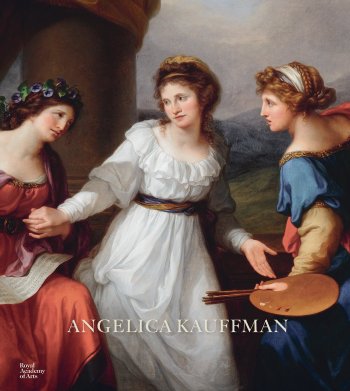 Known for her celebrity portraits and pioneering history paintings, Angelica Kauffman helped to shape the direction of European art. She painted some of the most influential figures of her day—queens, countesses, actors and socialites—and she reinvented the genre of history painting by focusing largely on female protagonists from classical history and mythology. This exhibition covers Kauffman’s life and work: her rise to fame in London, her role as a founding member of the Royal Academy, and her later career in Rome where her studio became a hub for the city’s cultural life. See paintings and preparatory drawings by Kauffman, including some of her finest self-portraits and her celebrated ceiling paintings for the Royal Academy’s first home in Somerset House, as well as history paintings of subjects including Circe and Cleopatra, and discover the remarkable life of the artist whom one of her contemporaries described as “the most cultivated woman in Europe.”
The exhibition is curated by Bettina Baumgärtel, Head of the Department of Painting at the Kunstpalast in Düsseldorf, and Per Rumberg, Curator at the Royal Academy, with Annette Wickham, Curator of Works on Paper at the Royal Academy.
Bettina Baumgärtel and Annette Wickham, Angelica Kauffman (London: Royal Academy of Arts, 2024), 144 pages, ISBN: 978-1915815033, £20 / $30.
◊ ◊ ◊ ◊ ◊
Note (added 15 February 2024) — Wendy Wassyng Roworth’s review of the 2020 exhibition catalogue appeared in The Woman’s Art Journal 42.1 (Spring/Summer 2021): 46–48.
Exhibition | Entangled Pasts, 1768–Now
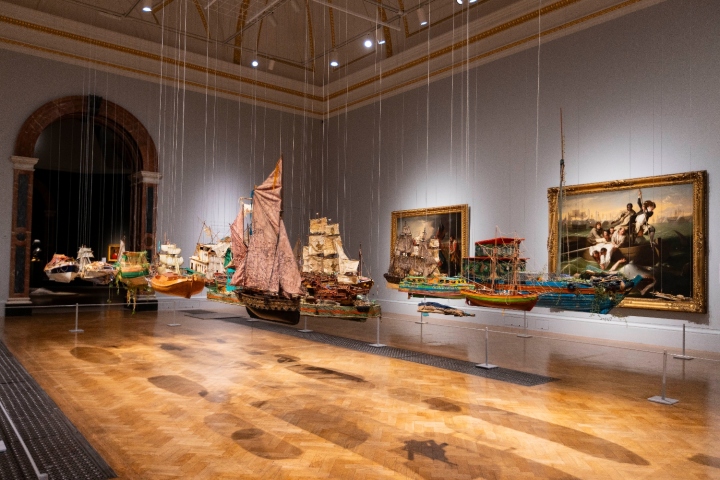
Installation view of Entangled Pasts, 1768–Now: Art, Colonialism, and Change at the Royal Academy of Arts, London, showing Hew Locke’s Armada, 2017–19 (Photo by David Parry for the Royal Academy of Arts, London).
◊ ◊ ◊ ◊ ◊
Now on view at the RA:
Entangled Pasts, 1768–Now: Art, Colonialism, and Change
Royal Academy of Arts, London, 3 February — 28 April 2024
Curated by Dorothy Price with Cora Gilroy-Ware and Esther Chadwick
J.M.W. Turner and Ellen Gallagher. Joshua Reynolds and Yinka Shonibare. John Singleton Copley and Hew Locke. Past and present collide in one powerful exhibition.
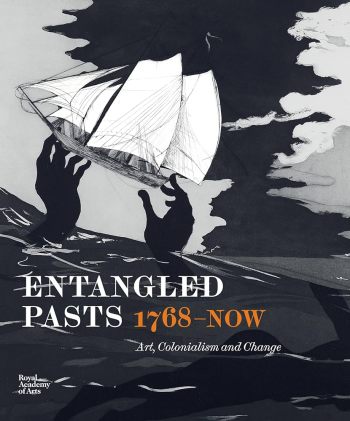 This spring, we bring together over 100 major contemporary and historical works as part of a conversation about art and its role in shaping narratives of empire, enslavement, resistance, abolition, and colonialism—and how it may help set a course for the future. Artworks by leading contemporary British artists of the African, Caribbean, and South Asian diasporas, including Sonia Boyce, Frank Bowling, and Mohini Chandra will be on display alongside works by artists from the past 250 years including Joshua Reynolds, J.M.W.Turner, and John Singleton Copley—creating connections across time which explore questions of power, representation, and history. Experience a powerful exploration of art from 1768 to now. Featuring a room of life-sized cut-out painted figures by Lubaina Himid, an immersive video installation by Isaac Julien, a giant flotilla of model boats by Hew Locke, and a major new sculpture in the Courtyard by Tavares Strachan. Plus, powerful paintings, photographs, sculptures, drawings, and prints by El Anatsui, Barbara Walker, Kerry James Marshall, Kara Walker, Shahzia Sikander, John Akomfrah, and Betye Saar. Informed by our ongoing research of the RA and its colonial past, this exhibition engages around 50 artists connected to the RA to explore themes of migration, exchange, artistic traditions, identity, and belonging.
More information is available here»
Dorothy Price, Alayo Akinkugbe, Esther Chadwick, Cora Gilroy-Ware, Sarah Lea, and Rose Thompson, Entangled Pasts, 1768–Now: Art, Colonialism, and Change (London: Royal Academy of Arts, 2024), 208 pages, 978-1912520992, £25 / $35.
New Books | Shortlist, 2024 Charles Rufus Morey Book Award
The shortlist for the 2024 Charles Rufus Morey Book Award, from the College Art Association, with three of the five books addressing the long 18th c. (and special congratulations to HECAA president, Jennifer Van Horn) –CH
The Charles Rufus Morey Book Award, named in honor of one of the founding members of CAA and first teachers of art history in the United States, was established in 1953. This award honors an especially distinguished book in the history of art, published in the English language. Preference is given to books, including catalogues raisonnés, by a single author, but major publications in the form of articles or group studies may be included. Publication of documents or inventories, unless specifically in the context of an exhibition, are also eligible.
◊ ◊ ◊ ◊ ◊
Delia Cosentino and Adriana Zavala, Resurrecting Tenochtitlan: Imagining the Aztec Capital in Modern Mexico City (Austin: University of Texas Press, 2023), 272 pages, ISBN: 978-1477326992, $60.
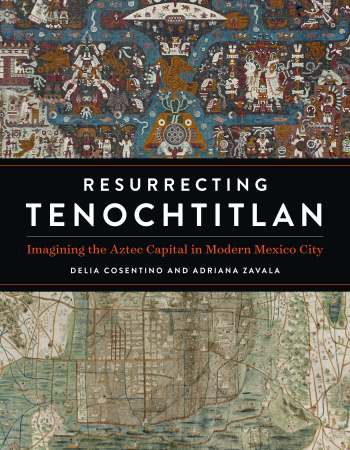 How Mexican artists and intellectuals created a new identity for modern Mexico City through its ties to Aztec Tenochtitlan
After archaeologists rediscovered a corner of the Templo Mayor in 1914, artists, intellectuals, and government officials attempted to revive Tenochtitlan as an instrument for reassessing Mexican national identity in the wake of the Revolution of 1910. What followed was a conceptual excavation of the original Mexica capital in relation to the transforming urban landscape of modern Mexico City. Revolutionary-era scholars took a renewed interest in sixteenth century maps as they recognized an intersection between Tenochtitlan and the foundation of a Spanish colonial settlement directly over it. Meanwhile, Mexico City developed with modern roads and expanded civic areas as agents of nationalism promoted concepts like indigenismo, the embrace of Indigenous cultural expressions. The promotion of artworks and new architectural projects such as Diego Rivera’s Anahuacalli Museum helped to make real the notion of a modern Tenochtitlan. Employing archival materials, newspaper reports, and art criticism from 1914 to 1964, Resurrecting Tenochtitlan connects art history with urban studies to reveal the construction of a complex physical and cultural layout for Mexico’s modern capital.
Delia Cosentino is an associate professor of Latin American art history at DePaul University. She is the author of Las joyas de Zinacantepec: Arte colonial en el Monasterio de San Miguel and was a guest editor for Artl@s Bulletin’s thematic volume Cartographic Styles and Discourse.
Adriana Zavala is an associate professor of the history of art and architecture and race, colonialism, and diaspora studies at Tufts University. She is the author of Becoming Modern, Becoming Tradition: Women, Gender, and Representation in Mexican Art.
◊ ◊ ◊ ◊ ◊
Matthew Francis Rarey, Insignificant Things: Amulets and the Art of Survival in the Early Black Atlantic (Durham: Duke University Press, 2023), 304 pages, ISBN: 978-1478017158 (hardback), $100 / ISBN: 978-1478019855, $27.
 In Insignificant Things Matthew Francis Rarey traces the history of the African-associated amulets that enslaved and other marginalized people carried as tools of survival in the Black Atlantic world from the seventeenth to the nineteenth centuries. Often considered visually benign by white Europeans, these amulet pouches, commonly known as ‘mandingas’, were used across Africa, Brazil, and Portugal and contained myriad objects, from herbs and Islamic prayers to shells and coins. Drawing on Arabic-language narratives from the West African Sahel, the archives of the Portuguese Inquisition, sixteenth- and seventeenth-century European travel and merchant accounts of the West African Coast, and early nineteenth-century Brazilian police records, Rarey shows how mandingas functioned as portable archives of their makers’ experiences of enslavement, displacement, and diaspora. He presents them as examples of the visual culture of enslavement and critical to conceptualizing Black Atlantic art history. Ultimately, Rarey looks to the archives of transatlantic slavery, which were meant to erase Black life, for objects like the mandingas that were created to protect it.
Matthew Francis Rarey is Associate Professor of Art History at Oberlin College.
◊ ◊ ◊ ◊ ◊
Tatiana Reinoza, Reclaiming the Americas: Latinx Art and the Politics of Territory (Austin: University of Texas Press, 2023), 248 pages, ISBN: 978-1477326909, $35.
 How Latinx artists around the US adopted the medium of printmaking to reclaim the lands of the Americas
Printmakers have conspired, historically, to illustrate the maps created by European colonizers that were used to chart and claim their expanding territories. Over the last three decades, Latinx artists and print studios have reclaimed this printed art form for their own spatial discourse. This book examines the limited editions produced at four art studios around the US that span everything from sly critiques of Manifest Destiny to printed portraits of Dreamers in Texas.
Reclaiming the Americas is the visual history of Latinx printmaking in the US. Tatiana Reinoza employs a pan-ethnic comparative model for this interdisciplinary study of graphic art, drawing on art history, Latinx studies, and geography in her discussions. The book contests printmaking’s historical complicity in the logics of colonization and restores the art form and the lands it once illustrated to the Indigenous, migrant, mestiza/o, and Afro-descendant people of the Americas.
Tatiana Reinoza is an assistant professor of art history at the University of Notre Dame.
◊ ◊ ◊ ◊ ◊
Andrew Shanken, The Everyday Life of Memorials (New York: Zone Books, 2022), 432 pages, ISBN: 9781942130727, £30 / $35.
 Memorials are commonly studied as part of the commemorative infrastructure of modern society. Just as often, they are understood as sites of political contestation, where people battle over the meaning of events. But most of the time, they are neither. Instead, they take their rest as ordinary objects, part of the street furniture of urban life. Most memorials are ‘turned on’ only on special days, such as Memorial Day, or at heated moments, as in August 2017, when the Robert E. Lee monument in Charlottesville was overtaken by a political maelstrom. The rest of the time they are turned off. This book is about the everyday life of memorials. It explores their relationship to the pulses of daily life, their meaning within this quotidian context, and their place within the development of modern cities. Through Andrew Shanken’s close historical readings of memorials, both well-known and obscure, two distinct strands of scholarship are thus brought together: the study of the everyday and memory studies. From the introduction of modern memorials in the wake of the French Revolution through the recent destruction of Confederate monuments, memorials have oscillated between the everyday and the ‘not-everyday’. In fact, memorials have been implicated in the very structure of these categories. The Everyday Life of Memorials explores how memorials end up where they are, grow invisible, fight with traffic, get moved, are assembled into memorial zones, and are drawn anew into commemorations and political maelstroms that their original sponsors never could have imagined. Finally, exploring how people behave at memorials and what memorials ask of people reveals just how strange the commemorative infrastructure of modernity is.
Andrew M. Shanken is Professor of Architecture at the University of California, Berkeley. He is the author of 194X: Architecture, Planning, and Consumer Culture on the American Home Front and Into the Void Pacific: Building the 1939 San Francisco World’s Fair.
◊ ◊ ◊ ◊ ◊
Jennifer Van Horn, Portraits of Resistance: Activating Art during Slavery (New Haven: Yale University Press, 2022), 344 pages, ISBN: 978-0300257632, $60.
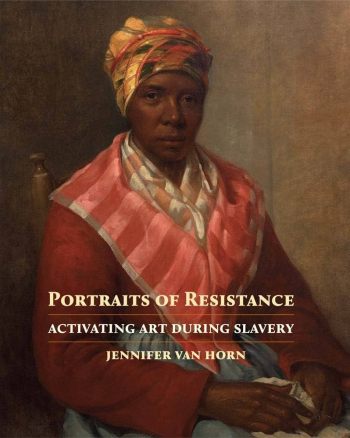 A highly original history of American portraiture that places the experiences of enslaved people at its center
This timely and eloquent book tells a new history of American art: how enslaved people mobilized portraiture for acts of defiance. Revisiting the origins of portrait painting in the United States, Jennifer Van Horn reveals how mythologies of whiteness and of nation building erased the aesthetic production of enslaved Americans of African descent and obscured the portrait’s importance as a site of resistance. Moving from the wharves of colonial Rhode Island to antebellum Louisiana plantations to South Carolina townhouses during the Civil War, the book illuminates how enslaved people’s relationships with portraits also shaped the trajectory of African American art post-emancipation. Van Horn asserts that Black creativity, subjecthood, viewership, and iconoclasm constituted instances of everyday rebellion against systemic oppression. Portraits of Resistance is not only a significant intervention in the fields of American art and history but also an important contribution to the reexamination of racial constructs on which American culture was built.
Jennifer Van Horn is associate professor of art history and history at the University of Delaware.










 Enfilade
leave a comment