New Book | Venice and the Doges
From Rizzoli:
Toto Bergamo Rossi, with photographs by Matteo de Fina, an introduction by Count Marino Zorzi, and contributions by Diane von Furstenberg and Peter Marino, Venice and the Doges: Six Hundred Years of Architecture, Monuments, and Sculpture (New York: Rizzoli Electa, 2023), 364 pages, ISBN: 978-0847899296, $135.
 While Venice is better known for soft light and atmospheric painters, this elegant new volume transforms our understanding of Venetian sculpture and its place in the city’s artistic tradition. A feast for the eyes and an entertaining, erudite read, this book opens with an illustrated survey of the 120 doges who led the Venetian Republic before continuing with a detailed survey of the incredible array of sculptures and monuments that memorialize them. Although celebrated for painting and music, Venice has a sculptural tradition that was overshadowed by Florence and Rome. Based on new scholarship, this volume reveals the true magnificence of six centuries of Venetian sculpture. With the oldest works dating to the thirteenth century, these masterpieces fill the city’s churches and include pieces by great masters from the Lombardo family to Antonio Rizzo, Jacopo Sansovino, Alessandro Vittoria, and Baldassare Longhena. The sculptural marvels of Venice tell the story of a procession of doges—politicians, scholars, conquerors, merchants, and even a saint, Pietro Orseolo—over a thousand-year history. Engaging text highlights the adventurous, eventful, and sometimes glorious lives of these legendary figures, while the newly commissioned photography showcases the grandeur and beauty of a neglected aspect of Venice’s cultural history.
Francesco ‘Toto’ Bergamo Rossi has been the head of the Venetian Heritage Foundation since 2010. Matteo de Fina specializes in photographing art, interiors, and architecture. Count Marino Zorzi, former director of the Biblioteca Marciana, comes from one of the oldest Venetian families with a doge in their lineage. Diane von Furstenberg is a noted philanthropist and celebrated fashion designer, best known for the wrap dress, as well as founding her eponymous global luxury lifestyle brand. She is International Ambassador for the Venetian Heritage Foundation. Peter Marino, FAIA, is the principal of Peter Marino Architect PLLC, the New York–based architecture firm he founded in 1978. Known for his residential and retail work for the most iconic names in fashion and art, he is also Chairman of the Venetian Heritage Foundation and serves on the board of directors for International Committee of L’Union Centrale des Arts Décoratifs.
New Book | Tiepolo und das Kostüm
Franziska Kleine’s review of the book (in German) appeared at ArtHist.net earlier this month (16 May 2023). From Gebr. Mann Verlag:
Torsten Korte, Tiepolo und das Kostüm: Konstruktion von Geschichte im Historienbild (Berlin: Gebr. Mann Verlag, 2023), 332 pages, ISBN: 978-3786128922, €79.
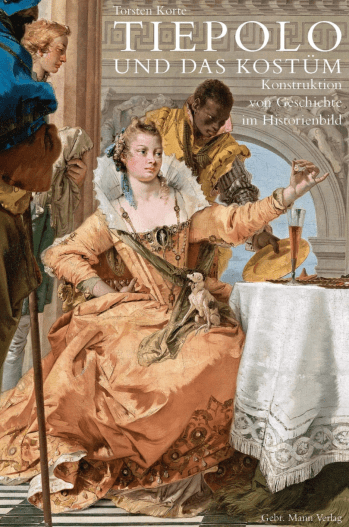 Luxuriöse, fantasievolle Gewänder in Tiepolos Bildwelten des Rokoko
Giambattista Tiepolos Malerei ist reich an prächtigen, fantasievollen Gewändern, die zum besonderen Reiz seiner Bildwelten beitragen. In den historisierenden und orientalisierenden Gewändern drückt sich ein Blick des 18. Jahrhunderts auf Geschichte und kulturelle Identitäten aus, dem das Buch durch bildtheoretische Reflexionen nachgeht.
Die Anziehungskraft der Malerei von Giambattista Tiepolo (1696–1770) beruht besonders auf der Darstellung von Kostümen. Die Helden und Heldinnen seiner Historienbilder sind in aufwendige, luxuriöse und fantasievolle Gewänder gekleidet. Dabei handelt sich keineswegs um dekoratives Beiwerk—vielmehr setzt Tiepolo historische und orientalisierende Kleider kenntnisreich ein und visualisiert dadurch komplexe Geschichtskonzepte. Anhand ausgewählter Hauptwerke des Künstlers wirft Torsten Korte einen neuen Blick auf diesen bisher kaum beachteten Aspekt. Seine theoretische Reflexion zur Gattung des Historienbildes reicht dabei über das 18. Jahrhundert hinaus.
Torsten Korte, Studium der Kunstgeschichte, Philosophie und Musikwissenschaft in Bonn und Venedig, Promotion an der Humboldt-Universität zu Berlin. Seit 2021 wissenschaftlicher Mitarbeiter an der Fachhochschule Nordwestschweiz.
New Books | Recent Historical Fiction
From Penguin Random House:
Celia Bell, The Disenchantment: A Novel (New York: Pantheon, 2023), 368 pages, ISBN: 978-0593317174, $28.
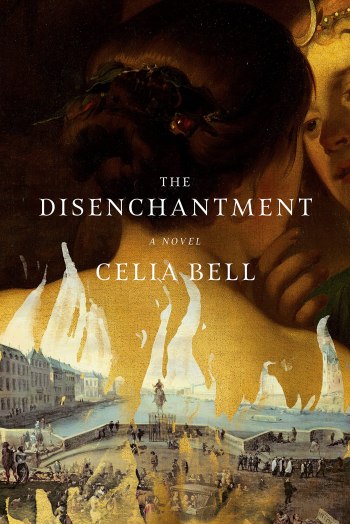 In 17th-century Paris, everyone has something to hide. The noblemen and women and writers consort with fortune tellers in the confines of their homes, servants practice witchcraft and black magic, and the titled poison family members to obtain inheritance. But for the Baroness Marie Catherine, the only thing she wishes to hide is how unhappy she is in her marriage, and the pleasures she seeks outside of it. When her husband is present, the Baroness spends her days tending to her children and telling them elaborate fairy tales, but when he’s gone, Marie Catherine indulges in a more liberated existence, one of forward-thinking discussions with female scholars in the salons of grand houses, and at the center of her freedom: Victoire Rose de Bourbon, Mademoiselle de Conti, the androgynous, self-assured countess who steals Marie Catherine’s heart and becomes her lover. Victoire possesses everything Marie Catherine does not—confidence in her love, and a brazen fearlessness in all that she’s willing to do for it. But when a shocking and unexpected murder occurs, Marie Catherine must escape. And what she discovers is the dark underbelly of a city full of people who have secrets they would kill to keep. The Disenchantment is a stunning debut that conjures an unexpected world of passion, crime, intrigue, and black magic.
Celia Bell has written short fiction for VQR, The White Review, The Sewanee Review, The Southern Review, and Bomb Magazine. She is the winner of the 2018 VQR Emily Clark Balch Prize for Fiction and holds an MFA from the New Writers Project at the University of Texas. She lives in Austin, Texas.
◊ ◊ ◊ ◊ ◊
From Macmillan (in September):
David Diop, translated from the French by Sam Taylor, Beyond the Door of No Return: A Novel (New York: Farrar, Straus and Giroux, 2023), ISBN: 978-0374606770, $27.
 The highly anticipated new novel by David Diop, winner of the International Booker Prize.
Paris, 1806. The renowned botanist Michel Adanson lies on his deathbed, the masterwork to which he dedicated his life still incomplete. As he expires, the last word to escape his lips is a woman’s name: Maram. The key to this mysterious woman’s identity is Adanson’s unpublished memoir of the years he spent in Senegal, concealed in a secret compartment in a chest of drawers. Therein lies a story as fantastical as it is tragic: Maram, it turns out, is none other than the fabled revenant. A young woman of noble birth from the kingdom of Waalo, Maram was sold into slavery but managed to escape from the Island of Gorée—a major embarkation point of the transatlantic slave trade—to a small village hidden in the forest. While on a research expedition in West Africa as a young man, Adanson hears the story of the revenant and becomes obsessed with finding her. Accompanied by his guide, he ventures deep into the Senegalese bush on a journey that reveals not only the savagery of the French colonial occupation but also the unlikely transports of the human heart. Written with sensitivity and narrative flair, David Diop’s Beyond the Door of No Return is a love story like few others. Drawing on the richness and lyricism of Senegal’s oral traditions, Diop has constructed a historical epic of the highest order.
David Diop was born in Paris and was raised in Senegal. He is the head of the Arts, Languages, and Literature Department at the University of Pau, where his research includes such topics as eighteenth-century French literature and European representations of Africa in the seventeenth and eighteenth centuries. His second novel, At Night All Blood Is Black, was awarded the International Booker Prize and the Los Angeles Times Book Prize for fiction.
Sam Taylor has written for The Guardian, Financial Times, Vogue, and Esquire; he has translated such works as the award-winning HHhH by Laurent Binet and the internationally-bestselling The Truth about the Harry Quebert Affair by Joël Dicker.
◊ ◊ ◊ ◊ ◊
From Penguin Random House:
Tania James, Loot (New York: Knopf, 2023), 304 pages, ISBN: 978-0593535974, $28.
 Abbas is just seventeen years old when his gifts as a woodcarver come to the attention of Tipu Sultan, and he is drawn into service at the palace in order to build a giant tiger automaton for Tipu’s sons, a gift to commemorate their return from British captivity. His fate—and the fate of the wooden tiger he helps create—will mirror the vicissitudes of nations and dynasties ravaged by war across India and Europe. Working alongside the legendary French clockmaker Lucien du Leze, Abbas hones his craft, learns French, and meets Jehanne, the daughter of a French expatriate. When Du Leze is finally permitted to return home to Rouen, he invites Abbas to come along as his apprentice. But by the time Abbas travels to Europe, Tipu’s palace has been looted by British forces, and the tiger automaton has disappeared. To prove himself, Abbas must retrieve the tiger from an estate in the English countryside, where it is displayed in a collection of plundered art.
Tania James is the author of three works of fiction, most recently the novel The Tusk That Did the Damage (Knopf), which was named a Best Book of 2015 by The San Francisco Chronicle, The Guardian, and NPR, and shortlisted for the International Dylan Thomas Prize and the Financial Times Oppenheimer Award. Her short stories have appeared in One Story, The New Yorker, Granta, Freeman’s Anthology, Oxford American, and other venues. James is an associate professor of creative writing at George Mason University and lives in Washington, DC.
◊ ◊ ◊ ◊ ◊
From Simon & Schuster:
Neil Jordan, The Ballad of Lord Edward and Citizen Small: A Novel (Pegasus Books, 2023) 352 pages, ISBN: 978-1639364534, $27.
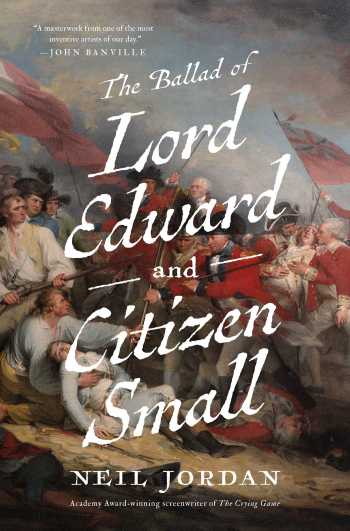 From Academy Award-winning film director Neil Jordan comes an artful reimagining of an extraordinary friendship spanning the revolutionary tumult of the eighteenth century.
South Carolina, 1781: the American Revolution. An enslaved man escaping to his freedom saves the life of Lord Edward Fitzgerald, a British army officer and the younger son of one of Ireland’s grandest families. The tale that unfolds is narrated by Tony Small, the formerly enslaved man who becomes Fitzgerald’s companion—and best friend. While details of Lord Edward’s life are well documented, little is known of Tony Small, who is at the heart of this moving novel. In this gripping narrative, his character considers the ironies of empire, captivity, and freedom, mapping Lord Edward’s journey from being a loyal subject of the British Empire to becoming a leader of the disastrous Irish rebellion of 1798. This powerful new work of fiction brings Neil Jordan’s inimitable storytelling ability to the revolutions that shaped the eighteenth century—in America, France, and, finally, in Ireland.
Neil Jordan is an award-winning Irish film director, screenwriter, and novelist. His first book, Night in Tunisia, won the Somerset Maugham Award and the Guardian Fiction Prize. He is the winner of an Academy Award, the Rooney Prize for Irish Literature, the Irish PEN Award, a BAFTA, and the Kerry Group Irish Fiction Award. Jordan’s films include Interview with the Vampire, Angel, The Crying Game, Michael Collins, The End of the Affair, and The Butcher Boy. He lives in Dublin.
◊ ◊ ◊ ◊ ◊
From Penguin Random House:
Stephanie Marie Thornton, Her Lost Words: A Novel of Mary Wollstonecraft and Mary Shelley (New York: Berkley Press, 2023), 448 pages, ISBN: 978-0593198421, $17.
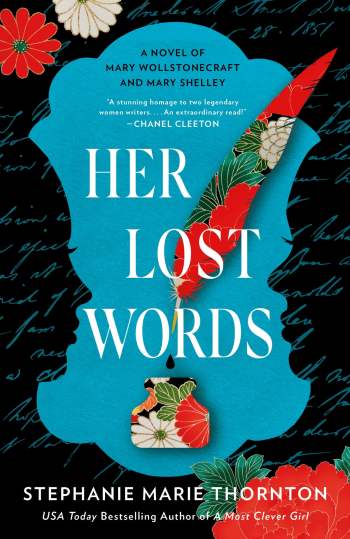 1792. As a child, Mary Wollstonecraft longed to disappear during her father’s violent rages. Instead, she transforms herself into the radical author of the landmark volume A Vindication of the Rights of Woman, in which she dares to propose that women are equal to men. From conservative England to the blood-drenched streets of revolutionary France, Mary refuses to bow to society’s conventions and instead supports herself with her pen until an illicit love affair challenges her every belief about romance and marriage. When she gives birth to a daughter and is stricken with childbed fever, Mary fears it will be her many critics who recount her life’s extraordinary odyssey…
1818. The daughter of infamous political philosopher Mary Wollstonecraft, passionate Mary Shelley learned to read by tracing the letters of her mother’s tombstone. As a young woman, she desperately misses her mother’s guidance, especially following her scandalous elopement with dashing poet Percy Bysshe Shelley. Mary struggles to balance an ever-complicated marriage with motherhood while nursing twin hopes that she might write something of her own one day and also discover the truth of her mother’s unconventional life. Mary’s journey will unlock her mother’s secrets, all while leading to her own destiny as the groundbreaking author of Frankenstein.
A riveting and inspiring novel about a firebrand feminist, her visionary daughter, and the many ways their words transformed our world.
Stephanie Marie Thornton is a high school history teacher and lives in Alaska with her husband and daughter.
New Book | Eighteenth-C. Engravings and Visual History in Britain
From Routledge:
Isabelle Baudino, Eighteenth-Century Engravings and Visual History in Britain (New York: Routledge, 2023), 202 pages, ISBN: 978-1032153643, $160.
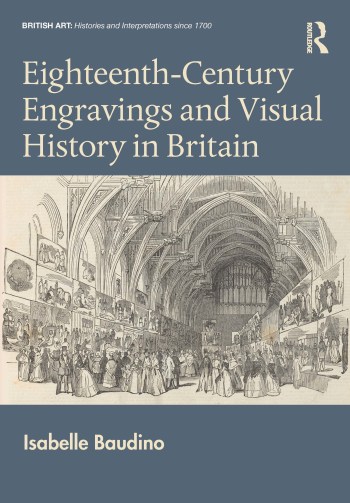 Extending the scholarly discussion of visual history, this book examines eighteenth-century engraved book illustrations in order to outline the genealogy of the modern visualisation of the past in Britain. This study is based on a body of more than a hundred engraved historical plates designed in the second half of the eighteenth century in Britain and published in more than a dozen pictorial histories. Focusing on these previously unstudied engravings, this work contributes to the study of eighteenth-century visual culture and is informed by current interdisciplinary approaches at the intersection of visual and book studies. Eighteenth-Century Engravings and Visual History in Britain is about the urge to envision the past and about the establishment of the new relationship between visual media, visuality, and history in eighteenth-century Britain.
Isabelle Baudino is Senior Lecturer at the École normale supérieure de Lyon, France.
C O N T E N T S
List of Illustrations
Acknowledgments
Introduction
1 Picturing History
2 Reinventing the Past
3 The Historical Genre
4 Visual History as a New Language
Appendix
Select Bibliography
Index
Exhibition | Style & Society: Dressing the Georgians

Installation view of Style & Society: Dressing the Georgians at the Queen’s Gallery, Buckingham Palace, London, 2023.
◊ ◊ ◊ ◊ ◊
From the press release (20 April 2023) for the exhibition:
Style & Society: Dressing the Georgians
The Queen’s Gallery, Buckingham Palace, London, 21 April – 8 October 2023
The King’s Gallery, Palace of Holyroodhouse, Edinburgh, 22 March — 22 September 2024
Curated by Anna Reynolds
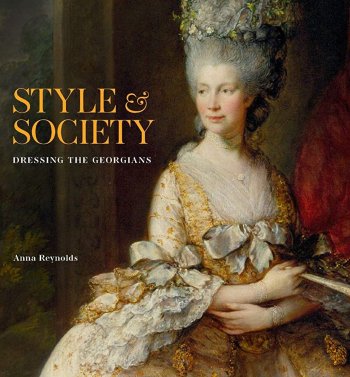
The wedding dress of George IV’s daughter Princess Charlotte of Wales, on display for the first time in over a decade, is among more than 200 works from the Royal Collection on view at The Queen’s Gallery in the exhibition Style & Society: Dressing the Georgians.

Thomas Gainsborough, Portrait of Queen Charlotte, ca. 1781, oil on canvas, 239 × 159 cm (London: Royal Collection, RCIN 401407). As noted at the exhibition website, this full-length portrait, “usually hangs in the White Drawing Room at Windsor Castle. Painted by candlelight, it depicts the Queen in a magnificent gown, worn over a wide hoop and covered with gold spangles and tassels.”
The exhibition explores what fashion can tell us about life in Georgian Britain, a period rocked by social, political, and technological revolutions. Alongside paintings, prints, and drawings by artists such as Gainsborough, Zoffany, and Hogarth are rare surviving examples of clothing, jewellery, and accessories. Together, they provide a fascinating insight into what was worn across all levels of society, from the practical dress of laundry maids to the glittering gowns at court.
Princess Charlotte was George IV’s only legitimate child, but died in childbirth at the age of 21 in 1817. Her marriage to Prince Leopold a year earlier was considered one of the most important royal weddings of the era. Her silk embroidered bridal gown is the only royal wedding dress that survives from the Georgian period, though it appears to have been significantly altered from its original form, in keeping with the Georgian practice of repurposing and recycling clothing. The Princess followed the tradition for European royal brides to wear silver, despite white wedding dresses becoming popular by the end of the 18th century.
Princess Charlotte’s mother, Caroline of Brunswick, also wore silver for her wedding to the future George IV in 1795. On display for the first time is a portrait of the wedding ceremony by John Graham, displayed alongside the original silver and gold dress samples supplied for the bride and other royal guests, on loan from Historic Royal Palaces. While the royal couple and their congregation made a glittering spectacle, their highly embellished clothing and wide skirts would have been noticeably outdated in fashionable circles, reflecting the increasing association of the court with old-fashioned styles of dress rather than cutting-edge trends.
Anna Reynolds, curator of Style & Society, said, “Dress is so much more than just what we see on the surface, and it’s fascinating what we can learn about a period when looking at it through a fashion history lens. Visitors might be surprised to learn how much the Georgian period has in common with the fashion landscape we know today, from influencers and fashion magazines to ideas about the value of clothes and how they can be recycled and repurposed.”
At the heart of the exhibition is a full-length portrait by Thomas Gainsborough, ca.1781, depicting Queen Charlotte wearing a magnificent court gown. It will be shown alongside a beautifully preserved gown of a similar style, worn at Queen Charlotte’s court in the 1760s, on loan from the Fashion Museum Bath. Portraits throughout the exhibition will demonstrate how artists rendered magnificent gowns such as these in paint in exquisite detail, from the metallic woven silk in Antoine Pesne’s Duchess of Saxe-Wessenfels, to the bows and fine lace of Francis Cotes’ Princess Louisa and Princess Caroline.
Allan Ramsay’s life-size coronation portraits of George III and Queen Charlotte demonstrate how ceremonial clothing was carefully chosen to emphasise themes of continuity, tradition, and spectacle. Queen Charlotte wears a gown heavily embroidered with gold thread and a stomacher panel covered with diamonds. This stomacher, which no longer survives, was valued by a contemporary spectator at £60,000—the equivalent of almost £10 million today.
The exhibition trailer (above), engages with the painting St James’s Park and the Mall, by an unknown painter, ca. 1745, oil on canvas, 104 × 139 cm (London: Royal Collection, RCIN 405954).
◊ ◊ ◊ ◊ ◊
With the rise of a professional class, more women earning wages, and cheaper fabrics available, the 18th century saw fashion becoming more accessible to the masses. Pleasure gardens, theatres, and coffee houses provided new settings to show off the latest styles, and the first fashion periodicals spread up-to-the-minute trends, many inspired by clothing previously reserved for working-class or sporting pursuits. Pages from influential French fashion periodicals, on display for the first time, recommend looks inspired by men’s riding dress and military uniforms, both of which became popular everyday styles for women.
 The Georgian period saw specific forms of children’s clothing introduced, designed with comfort, practicality and freedom of movement in mind. In Benjamin West’s 1782 portrait of Prince Octavius, the 13th child of George III and Queen Charlotte, the three-year-old wears a skeleton suit—a new style of children’s dress inspired by the working-class clothing of sailors and fishermen. The young prince, perhaps playing at being king, is shown carrying his father’s sword, which will be shown alongside the painting, both on public display for the first time.
Georgian jewellery was often highly personal and sentimental. Items on display include diamond rings given to Queen Charlotte on her wedding day and a bracelet with nine lockets, six containing locks of hair and one with a miniature of the left eye of Princess Charlotte of Wales. As with textiles, jewellery was often repurposed; a striking necklace was made from pearl-adorned dress-coat buttons that had belonged to George III. Other accessories that may be less familiar to visitors will include jewel-encrusted snuffboxes and chatelaines, which were attached to the waist and used to carry items from pocket watches to perfume bottles.
The exhibition also explores the hair, cosmetics, and grooming tools used by Georgian men and women to achieve their elaborate styles, as well as 18th-century developments in eyewear and dentistry. On show for the first time is a silver-gilt travelling toilet service, acquired by the future George IV as a gift for his private secretary at a cost of £300, the equivalent of more than £20,000 today. The toilet service gives a remarkable insight into a Georgian gentleman’s grooming routine, containing more than 100 objects including razors, combs, ear spoons, and tongue scrapers—as well as tools for cleaning guns and making hot chocolate.
Anna Reynolds, Style & Society: Dressing the Georgians (London: Royal Collection Trust, 2023), 344 pages, ISBN: 978-1909741850, £40 / $50.
◊ ◊ ◊ ◊ ◊
Note (added 20 April 2024) — The posting was updated to include information on the exhibition as presented in Edinburgh.
New Book | Wedgwood: Craft & Design
From Thames & Hudson:
Catrin Jones, with a foreword by Tristram Hunt, Wedgwood: Craft & Design (London: Thames & Hudson, 2023), 144 pages, ISBN: 978-0500480755, $20.
 Looking back at key moments in Wedgwood’s design history, this book celebrates the manufacturer’s visual power and great design from its founding in 1759 to the present day.
The name Wedgwood has come to stand for something far beyond its illustrious and energetic founder: it has united art and industry; introduced design and artistic collaborations; and pioneered the development ofthe firm’s iconic blue-and-white jasperware. This book tells that story through design, reflecting the continuing role that Wedgwood and its designers, artists, and employees have played in setting trends—including collaborations with many British artists and designers such as Christopher Dresser, Eric Ravilious, and Keith Murray. Wedgwood continuously responds to the market and produces high-quality, desirable ceramicsfor a broad range of consumers, yet remains faithful to the traditions established by Josiah Wedgwood in the eighteenth century. The book presents highlights from the internationally renowned V&A Wedgwood Collection, praised by the Art Fund—one of the UK’s leading art organizations—as “one of the most important industrial archives,” containing around 80,000 objects. This archive reflects the unique proposition of Wedgwood’s business: by operating in both the ‘ornamental’ and ‘useful’ markets, Wedgwood has been able to bring innovative ceramic design to a broad and increasingly international clientele. These ceramics and their stories demonstrate the artistic heritage, craft, and innovation that have become synonymous with the Wedgwood name for more than 250 years.
Catrin Jones is a curator specializing in historic and contemporary applied arts. She joined the V&A in 2020 as Chief Curator, V&A Wedgwood Collection.
Tristram Hunt is the Director of the V&A and former Member of Parliament for Stoke-on-Trent, where the Wedgwood factory is located.
Exhibition | Giuseppe Marchesi (il Sansone)

Giuseppe Marchesi, known as il Sansone, Moses and the Daughters of Jethro / Mosé e le figlie di Jethro, ca. 1720–25, oil on canvas
(Private Collection)
◊ ◊ ◊ ◊ ◊
Bologna’s Musei Civici d’Arte Antica hosts the first monographic exhibition on the early career of the painter Giuseppe Marchesi, known as Samson.
Leggiadro Barocco: L’attività giovanile di Giuseppe Marchesi detto il Sansone
Collezioni Comunali d’Arte, Palazzo d’Accursio, Bologna, 1 April — 2 September 2023
Curated by Antonella Mampieri and Angelo Mazza
Giuseppe Marchesi (1699–1771)—of restless temperament and imposing build, to which he owed his nickname ‘Samson’—was among the most fruitful painters in cosmopolitan 18th-century Bologna, where the art scene was as lively as ever. He was, however, forgotten as a result of changes in the history of taste. Leggiadro Barocco: L’attività giovanile di Giuseppe Marchesi detto il Sansone aims to rediscover this significant painter from the classicist side of the Bolognese school. A pupil of leading artists of the previous generation, including Aureliano Milani and Marcantonio Franceschini, Marchesi was part of the local painting tradition that found an indispensable model in the Carracci and their pupils—particularly Guido Reni, Francesco Albani, and Domenichino.
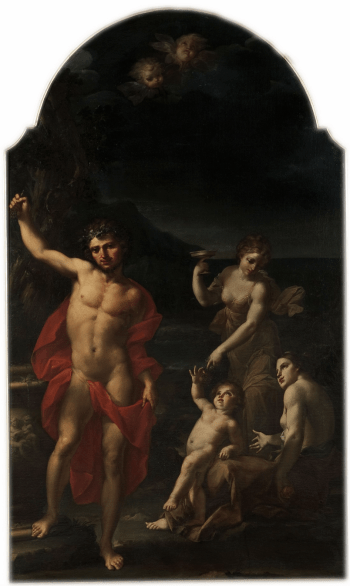
Giuseppe Marchesi, known as il Sansone, Autumn, from The Four Seasons, ca. 1725, oil on canvas (Bologna: Pinacoteca Nazionale).
This stylistic orientation was also supported and promoted by the city’s main artistic institution, the Accademia Clementina, to which Marchesi belonged, holding a variety of positions, didactic and directorial, until his appointment as Principe in 1752. His subsequent artistic evolution led him to the gradual abandonment of an Arcadian classicism in favor of an almost Mannerist style, similar to that of Francesco Monti and Vittorio Maria Bigari. Marchesi’s biography, present only in the manuscript lives composed by the Bolognese scholar Marcello Oretti in the second half of the century, is missing in Luigi Crespi’s Felsina Pittrice (1739) and appears only marginally in the Storia dell ’ Accademia Clementina by Giampietro Zanotti (1739), who nevertheless recognized, along with Luigi Lanzi, Marchesi’s remarkable artistic qualities for “a manner of painting so beautiful and so strong, that all delight, and good, and great fame comes to him.”
Early on there was overlap between Marchesi’s work and that of his contemporary Ercole Graziani, so much so that at the 1935 Mostra del Settecento Bolognese, which marked the resurgence of interest in this period of local art history, many of the works now ascribed to Marchesi were attributed to Graziani. It was up to critic Renato Roli to make a brilliant first reconstruction of Marchesi’s oeuvre in 1971, distinguishing the hands of the two painters. Subsequent studies, conducted mainly by Antonella Mampieri and Angelo Mazza, expanded the catalogue of known paintings, adding specimens of graphics and engravings made from Marchesi’s drawings. The ability to blend warm colors and strong musculature, derived from the Carracci, with the Arcadian grace of drawing, typical of Franceschini’s painting, made Samson a fashionable painter, up to date with the post-Baroque trends that were already in vogue in France and Austria, appreciated by the public and his colleagues.
A prolific and garrulous petit maître, his lively narrative vein yielded extremely pleasing results, especially in his younger years. The culmination of this phase was the fresco decoration of the vault and apse of the church of Santa Maria di Galliera, in Bologna, Marchesi’s first great public commission (1732–44), which established his reputation as a painter at home, in other Italian regions, and in other European countries, including England and Holland.
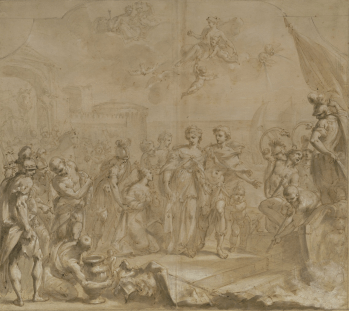
Giuseppe Marchesi, known as il Sansone, The Abduction of Helen, 1725 (Bologna: Collezioni d’Arte e di Storia della Cassa di Risparmio).
The exhibition, designed for the Collezioni Comunali d’Arte, which keeps in its permanent collection the painting Clement VIII Returning the Keys of the City to the Elders of Bologna, focuses on the early period of the artist’s elegant and graceful career: his relationship with Marcantonio Franceschini, who transmitted to him his moderate Arcadian taste, to 1725, the conventional starting point of Marchesi’s independent career. Two paintings recently found on the antiques market and exhibited here for the first time from a private collection—Moses and the Daughters of Jethro and Solomon Censoring the Idols, the success of which is demonstrated by the presence of copies at the Museo Diocesano in Imola—and other examples of paintings of sacred and profane themes demonstrate the artist’s youthful style. These include the Four Seasons from the Pinacoteca Nazionale in Bologna and The Drunkenness of Noah, now in a private collection. Completing the exhibition are a miniature Portrait of a Maiden preserved at the Museo Civico d’Arte Industriale and Galleria Davia Bargellini and two lively drawings from the the Fondazione Cassa di Risparmio in Bologna: The Abduction of the Sabine Women and The Abduction of Helen, preparatory projects for a large painting to be made in the hall of honor of the house that later belonged to the Buratti merchants, promoters of the arts and various Bolognese artists. Only the second one, dated 1725, was later realized by the painter, opening his documented career.
Leggiadro Barocco: L’attività giovanile di Giuseppe Marchesi detto il Sansone proposes a renewed reading of this protagonist of the Bolognese ’barocchetto’, allowing new hypotheses on the chronological ordering of his early work. The exhibition is accompanied by a publication edited by Antonella Mampieri and Angelo Mazza, with the collaboration of Silvia Battistini, a preface by Massimo Medica, text by Mirko Bonora, and essays by Antonella Mampieri and Angelo Mazza.
Exhibition | Louis XVI, Marie-Antoinette, and the Revolution
From the French National Archives and the Boutiques de musées:
Louis XVI, Marie-Antoinette, and the Revolution: The Royal Family at the Tuileries, 1789–1792
Archives Nationales / Hôtel de Soubise, Paris, 29 March — 6 November 2023
Curated by Isabelle Aristide-Hastir, Jean-Christian Petitfils, and Emmanuel de Waresquiel
 A period of almost three years separated the end of the ancien régime from the collapse of the French monarchy. Between 1789 and 1792, the royal family, forced to leave Versailles and its splendour, lived under house arrest in Paris, in the Tuileries Palace. Through archival documents, engravings, works of art, and pieces of furniture from the Tuileries, this tumultuous period is presented in the exhibition with a particular focus on the daily life of the royal couple, Marie-Antoinette’s secret correspondence with the Swedish Count Axel de Fersen, and the intimacy of a palace that has since disappeared.
Les Archives nationales éclairent d’un jour nouveau la période méconnue qui a suivi les événements de 1789. Cette exposition rassemble une centaine de documents, tableaux, gravures et plusieurs éléments de mobilier, et propose une immersion dans le quotidien de la famille royale, depuis son départ de Versailles pour les Tuileries jusqu’à la chute de la monarchie.
Comment la famille royale a-t-elle vécu la période de grande tension politique qui a suivi le déclenchement de la Révolution ? À quoi ressemblait la vie de la cour dans l’enceinte des Tuileries ? De quelle manière le roi et la reine ressentaient-ils le tumulte de la rue et la pression de l’opinion publique ? Autant de questions qui sont au cœur de l’exposition Louis XVI, Marie-Antoinette et la Révolution. La famille royale aux Tuileries, 1789–1792, présentée par les Archives nationales, à l’hôtel de Soubise, du 29 mars au 6 novembre 2023.
Riche en événements politiques, cet épisode de mille jours est bien représenté dans les archives et l’iconographie. Entre autres documents inédits ou méconnus, les visiteurs pourront ainsi découvrir le prAdolf Ulrik Wertmüller, Portrait de la reine Marie-Antoinette, vers 1785–1788. Marie-Antoinette est ici représentée dans une tenue d’intérieur. Le peintre suédois Wertmüller a aussi peint la reine en 1785 avec ses deux enfants dans le jardin de Trianon, et en 1788 en habit d’amazone. Collection particulièreé-cieux journal de Louis XVI (« Mardi 14 juillet : rien ») ouvert aux pages des années 1791–1792, son manifeste politique aux Français (20 juin 1791), un portrait de la reine très rarement exposé et la correspondance secrète entre Marie-Antoinette et le comte de Fersen. Pour la première fois, le contenu de leurs lettres codées, chiffrées et caviardées sera révélé au grand public. L’une des facettes les plus fascinantes de cette période fondatrice de l’histoire de France, marquée Lettre de Marie-Antoinette à Fersen (copie faite par Fersen), avec passages caviardés. Autographe, 26 septembre 1791par la fin d’un règne et la naissance d’un monde nouveau.
Isabelle Aristide-Hastir, Jean-Christian Petitfils, Emmanuel de Waresquiel, Lucien Bély, and Philip Mansel, Louis XVI, Marie-Antoinette et la Révolution: La famille royale aux Tuileries, 1789–1792 (Paris: Éditions Gallimard, 2023), 192 pages, ISBN: 978-2072974618, €30.
The cover of the catalogue comes from a print after Jean-Louis Prieur, Siege and Capture of the Château des Tuileries on 10 August 1792 / Siège et prise du château des Tuileries le 10 août 1792, ca. 1792 (Paris: Archives nationales, AE/II/3019).
New Book | Barnave: The Revolutionary
From Yale UP:
John Hardman, Barnave: The Revolutionary Who Lost His Head for Marie Antoinette (New Haven: Yale University Press, 2023), 416 pages, ISBN: 978-0300270846, $40.
 A major new biography of Antoine Barnave—the politician and writer who advocated for a constitutional monarchy in revolutionary France
Antoine Barnave was one of the most influential statesmen in the early French Revolution. He was a didactic man of austere morals and vaulting ambition who dressed as an English dandy, running up considerable tailor’s bills. Before his execution at age thirty-two, he played a decisive role in revolutionary politics and even governed France in 1791 through a secret correspondence with Marie-Antoinette. In the first biography for more than a century, John Hardman traces Barnave’s life from his youth in Dauphiné to his role in the Constituent Assembly and his part in forming the Feuillants, the party dedicated to the moderate cause. Despite his early death, Barnave left a remarkable volume of material, from published works to thousands of manuscript pages. Hardman uses this rich archive to explore the life of this elusive writer, politician, and thinker—and sheds new light on the revolutionary period.
John Hardman is one of the world’s leading experts on the French Revolution and the author of several distinguished books on the subject, including Marie-Antoinette and The Life of Louis XVI, which was shortlisted for the Elizabeth Longford Prize for Historical Biography and won the Franco-British Society Prize.
C O N T E N T S
Introduction
1 Reluctant Lawyer
2 The Origins of the French Revolution according to Barnave
3 Political Awakening: Barnave in the Pre-Revolution, 1787–89
4 The Assemblies at Romans: The Last Estates of Dauphiné
5 From Estates-General to National Assembly
6 The Decisive Phase, 14 July – 6 October 1789
7 The Year 1790
8 Barnave’s Private Life
9 Barnave and the Court before the Flight to Varennes
10 Barnave on the Defensive
11 Varennes and Its Repercussions
12 The Revision of the Constitution
13 Governing in Secret
14 The Return of the Native: January – August 1792
15 A Long Incarceration
16 Trial and Death
Conclusion
Endnotes
Bibliography
Index
Online Conversation | Material Cultures of the Global 18th Century
Material Cultures of the Global 18th Century: Art, Mobility, and Change
HECAA Zoom Event, Wednesday, 17 May 2023, 6.30–8.00pm EST
 This upcoming Zoom event, sponsored by the Historians of Eighteenth Century Art and Architecture (HECAA), celebrates the publication of a new volume dedicated to global eighteenth-century material cultures. The editors, Wendy Bellion and Kristel Smentek, will offer remarks and invite conversation. There will also be presentations by select authors: Douglas Fordham, Yve Chavez, Matthew Gin, and Tara Zanardi.
This online event is open to all; HECAA membership is not required. Please register in advance here».
Wendy Bellion and Kristel Smentek, eds., Material Cultures of the Global Eighteenth Century: Art, Mobility, and Change (London: Bloomsbury Visual Arts, 2023), 288 pages, ISBN: 978-1350259034, $115. Also available as an ebook.










leave a comment