New Book | Europe Divided: Huguenot Refugee Art and Culture
From the V&A:
Tessa Murdoch, Europe Divided: Huguenot Refugee Art and Culture (London: Victoria & Albert Museum, 2022), 320 pages, ISBN: 978-1838510121, £40 / $55.
 This richly illustrated book focuses on the extraordinary international networks resulting from the diaspora of more than 200,000 refugees who left France in the late 17th century to join communities already in exile spread far and wide. Indeed, George Washington (along with 20 other presidents) was a descendant of Huguenots. First-generation Huguenot refugees included hundreds of trained artists, designers, and craftsmen. Beyond the French borders, they raised the quality of design and workshop practice, passing on skills to their apprentices, sons, godsons, cousins, and to successive generations, who continued to dominate output in the luxury trades. Although silver and silks are the best-known fields with which Huguenot settlers are associated, their significant contribution to architecture, ceramics, design, clock and watchmaking, engraving, furniture, woodwork, sculpture, portraiture, and art education provides fascinating insight into the motivation and resolve of this highly skilled diaspora. Thanks to a sophisticated network of Huguenot merchants, retailers, and bankers who financed their production, their wares reached a global market.
Tessa Murdoch is research curator of the Gilbert Collection at the V&A.
C O N T E N T S
Author’s Preface
Introduction
Maps
1 The Huguenot Diaspora
2 The Reception of Huguenot Artists, Craftsmen, and Designers in the British Isles
3 The Huguenots as Educators
4 Decorative Painters
5 Huguenot Architects and Engineers
6 Huguenot Metalsmiths
7 Carvers, Gilders, Cabinetmakers, and Upholsterers
8 Huguenot Sculptors in France and Beyond
9 The Taste for Porcelain and Ceramic Manufacture in Britain and Ireland
10 Huguenot Goldsmiths and Silversmiths in the British Isles, 1550–1780
11 Huguenot Watchmakers and Jewellers: The Manufacture and International Market for Luxury Goods
12 Printmakers and Sellers: Design, Ornament, and Reproductive Prints
13 Huguenots and Portraiture: Allegiance, Identity, Loyalty, and Memory
Acknowledgments
Timeline
Notes & References
Bibliography
New Book | A Biographical Dictionary of British and Irish Engravers
From Yale UP:
David Alexander, A Biographical Dictionary of British and Irish Engravers, 1714–1820 (London: Paul Mellon Centre for Studies in British Art, 2022), 1120 pages, ISBN: 978-1913107215, $125.
 This biographical dictionary of engravers working on copper encompasses both those who produced fine art prints, and also those who engraved book illustrations for medical, technical, and literary works, all of which played a more important part than is usually realised in spreading information in the age of Enlightenment. Some 3,000 biographical entries draw on much unpublished information, researched over four decades, notably records of apprenticeship, genealogy, insurance, and bankruptcy as well as newspaper advertisements and contemporary accounts.
This is the first reference work to cover all engravers working on copper in Britain and Ireland 1714–1820. Many biographical entries describe celebrated engravers producing ‘fine art’ prints of paintings, which spread knowledge about living and dead artists. However, this book also builds up a more complex picture of the occupation of printmaking and includes engravers, many previously unresearched, who engraved ephemeral material, such as trade cards, bank notes, and satirical prints as well as the images that spread knowledge across literary, geographical, historical, topographical, medical, and technical fields.
David Alexander is a historian and honorary keeper of British prints at the Fitzwilliam Museum, Cambridge, and a member of the editorial board of Print Quarterly.
New Book | Hawkers, Beggars, and Quacks: ‘The Cries of London’
A new edition of this mainstay of eighteenth-century publishing was recently released by the Bodleian Library and distributed by The University of Chicago Press:
Sean Shesgreen, Hawkers, Beggars and Quacks: Portraits from ‘The Cries of London’ (Oxford: Bodleian Library Publishing, 2021), 240 pages, ISBN: 978-1851245512, $55.
 Seventy-four striking portraits of men and women on the margins of London society in the seventeenth century—including street vendors and petty criminals.
“Buy my Dish of great Eeles, Any Old Iron take money for, Twelve Pence a Peck Oysters, Buy my fat Chickens, Fair Lemons & Oranges.”
At the end of the seventeenth century, Marcellus Laroon (1653–1702) became well known for a series of drawings that illustrated London’s marginal men and women: street vendors, hustlers, and petty criminals. This set of drawings came to be known as The Cries of London after the shouts and cries vendors used to hawk their wares. Hawkers, Beggars, and Quacks presents seventy-four of Laroon’s striking portraits. Following an illustrated introduction that contextualizes The Cryes of London, each portrait is beautifully reproduced with a commentary on the individual street-seller and their trade. These commentaries provide a wealth of detail about each seller’s dress, the equipment they used to ply their trade, their own diets, and the diets of those they served. Drawing on historic material found in the British Library’s Burney Collection of English newspapers, Hawkers, Beggars and Quacks provides a fascinating insight into the men and women who made their livelihood—legally and illegally—on the streets of England’s capital.
Sean Shesgreen is emeritus professor of English and formerly a Presidential Professor at Northern Illinois University.
New Book | The French Royal Wardrobe: The Hôtel de la Marine
From Rizzoli:
Jérôme Hanover and Gabriel Bauret, with photographs by Ambroise Tézenas, The French Royal Wardrobe: The Hôtel de la Marine Restored (Paris: Flammarion, 2022), 288 pages, ISBN: 978-2080261328, $85.
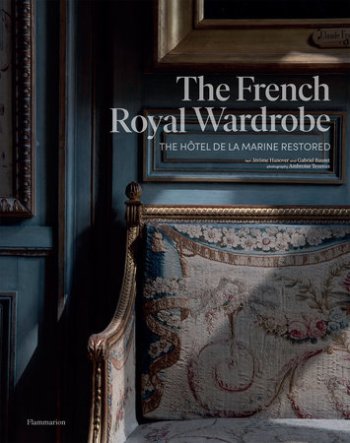 This volume goes behind the scenes to reveal the history and metamorphosis of the Hôtel de la Marine, a treasure of Parisian heritage.
The Hôtel de la Marine, an exemplary monument on Paris’s Place de la Concorde, is a superb architectural achievement constructed in the eighteenth century by Ange-Jacques Gabriel, the official architect of King Louis XV. The institution it housed was charged with choosing, purchasing, and maintaining all of the king’s furniture—from beds to the simplest chair—and the crown’s treasures were stored here until 1789, after which it became the site of the Ministry of the Navy for more than two hundred years. An extensive four-year restoration was completed in 2021; the building reopened to the public and features a museum, conserved apartments that highlight the tastes of the eighteenth and nineteenth centuries, an exhibition hall, a bookshop, and three restaurants. Previously unpublished photography captures the splendor and majesty of the monument.
Jérôme Hanover is a fashion and luxury journalist; he regularly writes for Vogue Paris, GQ, and Le Figaro, and contributed to Dior in Bloom (Flammarion, 2020). Gabriel Bauret is a photography historian, independent curator, and author. Ambroise Tézenas’s photographs have been published in Presidential Residences in France (Flammarion, 2021), Be My Guest (Flammarion, 2020), and Beijing: Theatre of the People (2006), which won a best European book of photography prize. His work has been exhibited across Europe and Asia.
Exhibition | À la mode

Installation view of the exhibition À la mode: L’art de paraître au 18e siècle at the Musée d’arts de Nantes.
◊ ◊ ◊ ◊ ◊
Now on view at the Musée d’arts de Nantes; see particularly the ‘Exhibition in Pictures’:
À la mode: L’art de paraître au 18e siècle
À la mode: The Art of Appearance in the 18th Century
Musée d’arts de Nantes, 26 November 2021 — 6 March 2022
Musée des Beaux-arts de Dijon, 13 May — 22 August 2022
Curated by Sophie Lévy
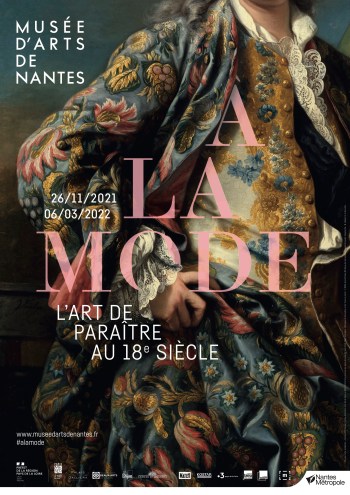 The exhibition À la mode: The Art of Appearance in the 18th Century juxtaposes iconic textile and pictorial items to reveal the reciprocal influences at play between the world of art and the birth of fashion in the 18th century. The exhibition brings together over 200 objects dating from the 18th century from major textile and fine art museums. Iconic paintings are displayed alongside precious textiles, never previously seen drawings, garments, and accessories, some of which have been restored especially for the exhibition.
The exhibition is a special collaboration with the Palais Galliera, musée de la Mode de la Ville de Paris, Paris Musées, and co-produced with the Musée des Beaux-arts de Dijon, which will host the exhibition from 13 May to 22 August 2022.
Chief Curator
• Sophie Lévy, Director and Curator of the Musée d’arts de Nantes
Scientific Curators
• Adeline Collange-Perugi, Curator of early art collections, Musée d’arts de Nantes
• Pascale Gorguet Ballesteros, Chief curator, 18th-Century Fashion and Dolls Department, Palais Galliera, musée de la Mode de la Ville de Paris
• Sandrine Champion-Balan, Chief curator, Collections Development Centre manager, Collections manager, head of modern collections for the curatorial team of the exhibition at the Musée des Beaux-Arts de Dijon
À la mode: L’art de paraître au 18e siècle (Ghent: Éditions Snoeck, 2021), 327 pages, ISBN: 978-9461617101, €35.

Author Talks | Highlighting New Books from the Mellon Centre
This spring, you’re invited to a series of talks by authors of books recently published by the Paul Mellon Centre. Each author will give a glimpse into their project, sharing insights about the process of researching, writing, and publishing their book. Each event consists of two talks of around 20 minutes each, followed by a discussion and Q&A session. All events take place from 18.30 to 20.00. More information, including booking details, is available from the Mellon Centre.

Henrietta McBurney and Joseph Viscomi | Illustrations and Illuminations
Online, 2 February 2022
In the first of these events, Henrietta McBurney will discuss her book Illuminating Natural History: The Art and Science of Mark Catesby, and Joseph Viscomi will speak about William Blake’s Printed Paintings. Together, the authors will consider how art and cultural histories tackle issues around illustration, copies, copying, and originality, as well as questions of professional status, authorial voice, and vision. The evening will be chaired by British Art Network convener, Martin Myrone. Register here»
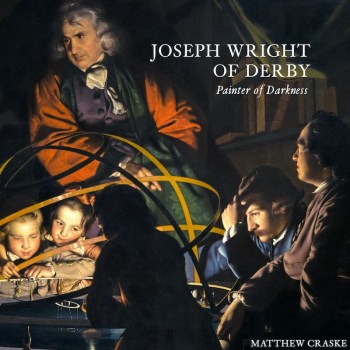
Matthew Craske and Martin Postle | In Darkness and In Light: Rethinking Joseph Wright of Derby
Online and in-person, Paul Mellon Centre, London, 16 February 2022
Join Matthew Craske, author of Joseph Wright of Derby: Painter of Darkness (published by the Paul Mellon Centre, 2020; winner of the 2021 William M. B. Berger Prize for British Art History) and Martin Postle, Senior Research Fellow at the Paul Mellon Centre, who is working on a catalogue raisonné on Joseph Wright of Derby’s paintings, for an evening of talks and discussion. Together, the authors will consider how the output of a single artist is rewritten and reimagined at different historical moments. The conversation will be chaired by PMC Director, Mark Hallett. Register here»

Petra ten-Doesschate Chu, Max Donnelly and Andrea Wolk Rager, | Aesthetic Encounters
Online, 9 March 2022
In the third of these events, Petra ten-Doesschate Chu and Max Donnelly will speak about their research for their book Daniel Cottier: Designer, Decorator, Dealer; and Andrea Wolk Rager will discuss The Radical Vision of Edward Burne-Jones (which will be published in May 2022). Together, the authors will consider new approaches to studying art, craft, and design of the nineteenth century and the intersection of art, social, and political history for creating richer understandings of the work of the artists and art workers they have researched. The conversation will be chaired by Liz Prettejohn. Register here»
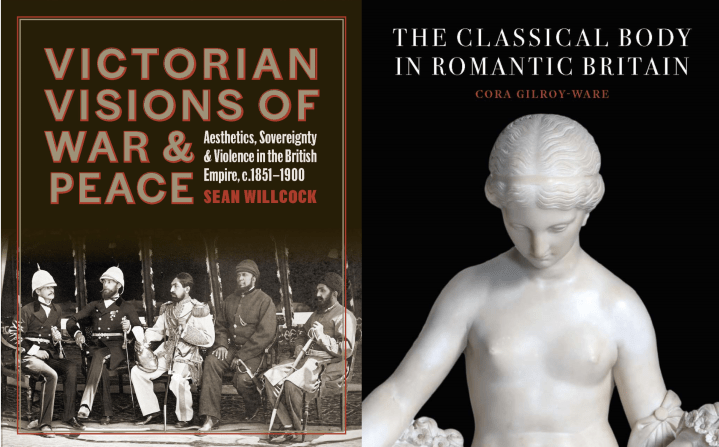
Cora Gilroy-Ware and Sean Willcock | War and Peace: Rethinking Aesthetics in the Age of Empire
Online and in-person, Paul Mellon Centre, London, 16 March 2022
In the fourth of these events, Cora Gilroy-Ware will speak about her research rethinking the sculpted body The Classical Body in Romantic Britain, and Sean Willcock will discuss Victorian Visions of War & Peace: Aesthetics, Sovereignty, and Violence in the British Empire. Together, the authors will consider how their research has questioned assumptions about aesthetics and style in the eighteenth and nineteenth centuries, researching overlooked artists, and discuss the intersections of the body, gender, race, and empire through their work on sculpture and photography. They will also talk about the process of turning a PhD thesis into a book manuscript. The conversation will be chaired by PMC Head of Research and Learning, Sria Chatterjee. Register here»
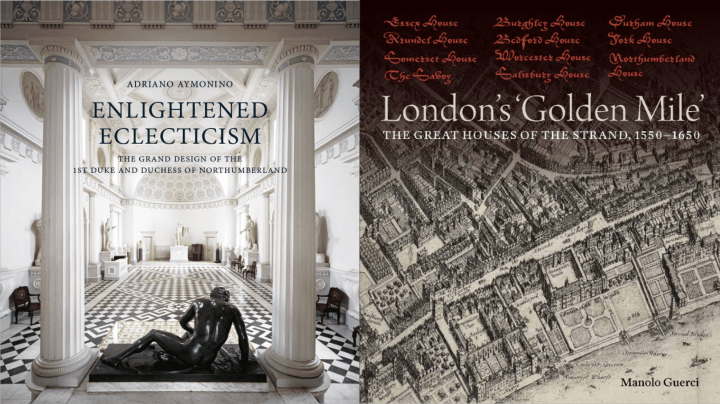
Adriano Aymonino and Manolo Guerci | Grand Designs and Great Houses
Online and in-person, Paul Mellon Centre, London, 23 March 2022
In the fifth and final of these events, Adriano Aymonino, author of Enlightened Eclecticism: The Grand Design of the 1st Duke and Duchess of Northumberland, and Manolo Guerci, author of London’s ‘Golden Mile’: The Great Houses of the Strand, 1550–1650, will come together to discuss discoveries made in writing their books about ambitious architectural commissions. They will consider the possibilities and the losses of the archive, issues around writing about designs of great scale (both extant and destroyed), and how to research campaigns of design, patronage and collecting stretching over a number of decades. The conversation will be chaired by Kate Retford. Register here»
Exhibition | 100 Great British Drawings

William Blake, Hecate or The Night of Enitharmon’s Joy, 1795, planographic color print with pen and ink and watercolor on wove paper, 16 3/8 × 22 inches (San Marino: The Huntington Library, Art Museum, and Botanical Gardens).
◊ ◊ ◊ ◊ ◊
The exhibition opens this summer; the catalogue is scheduled to appear this month from Lund Humphries. From the press release (13 December 2021) . . .
100 Great British Drawings
The Huntington Library, Art Museum, and Botanical Gardens, San Marino, 18 June — 5 September 2022
Curated by Melinda McCurdy
Rarely seen highlights from The Huntington’s premier collection of British drawings and watercolors spotlight top artists working in the medium from the 17th to the mid-20th century.
100 Great British Drawings, a major exhibition at The Huntington Library, Art Museum, and Botanical Gardens, will trace the practice of drawing in Britain from the 17th through the mid-20th century, spotlighting The Huntington’s important collection of more than 12,000 works that represent the great masters of the medium. On view from June 18 until September 5, 2022, in the MaryLou and George Boone Gallery, the exhibition will feature rarely seen treasures, including works by William Blake, John Constable, Thomas Gainsborough, and J. M. W. Turner, as well as examples by artists associated with the Pre-Raphaelite Brotherhood and early 20th-century modernism. A fully illustrated catalog accompanies the exhibition, examining for the first time the strength and diversity of The Huntington’s British drawings collection, a significant portion of which has never been published before. The Huntington is the sole venue for the exhibition.
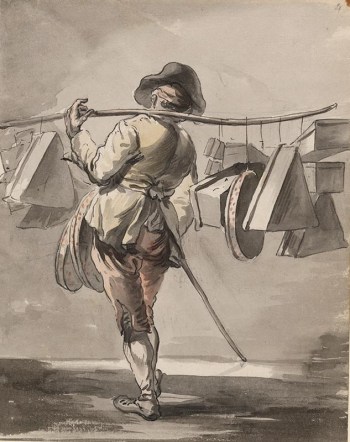
Paul Sandby, Band Box Seller, ca. 1760, brush and black ink and wash with red and yellow watercolor over traces of graphite on laid paper, 8 × 6 1/4 inches (San Marino: The Huntington Library, Art Museum, and Botanical Gardens).
“The Huntington is renowned for its incomparable collection of British art, ranging from 15th-century silver to the graphic art of Henry Moore, with the most famous works being, of course, our grand manner paintings,” said Christina Nielsen, Hannah and Russel Kully Director of the Art Museum at The Huntington. “Thomas Gainsborough’s Blue Boy and Thomas Lawrence’s Pinkie often serve as the poster boy and poster girl for the whole institution. But what most visitors do not realize is that The Huntington is also home to an extensive and remarkable collection of British drawings. This exhibition and catalog, the first to show the range of our British works on paper on such a scale, seek to fill that knowledge gap.”
Most of The Huntington’s British drawings collection, with a few notable exceptions, was established after the time of the institution’s founders, Henry and Arabella Huntington. Henry was an avid collector of rare books and manuscripts, and his wife, Arabella, was the force behind their collection of paintings and decorative art, but drawings did not factor largely into their art purchases. It was Robert R. Wark, curator of the art collections from 1956 to 1990, whose vision and tenacity established The Huntington as an outstanding repository of drawings made in Britain, where the art form was especially well developed, particularly in the late 18th to mid-19th century.
“Drawing is the most spontaneous and intimate of art forms, revealing the thoughts and mood of the artist through the stroke of a pen or touch of a brush dipped in watercolor,” said Melinda McCurdy, curator of British art, curator of the exhibition, and author of the catalog. “It is a practice especially associated with British artists, whose serious engagement with the medium is on vibrant display in the works we highlight in this exhibition.”

Matilda Conyers, Wallflower and Tulip, 1767, watercolor and opaque watercolor over traces of graphite with brown ink (est. iron gall) inscriptions on vellum, 9 × 6 1/4 inches (San Marino: The Huntington Library, Art Museum, and Botanical Gardens).
Organized chronologically, 100 Great British Drawings will explore portraiture, historical subjects, landscape, still life, botanical illustration, and caricature. The works on view will represent a full range of styles, including quick pencil sketches that candidly reveal artists’ creative processes, fluid pen-and-ink studies that approach the quality of finished works, and highly refined watercolor paintings.
The art of drawing first flourished in Britain in the late 17th century with an influx of artists coming from continental Europe, where the practice was commonly a part of artistic training. British artists also traveled abroad to view and copy the works of Europe’s old masters and contemporary artists. While portraiture was the most popular British art form at the time (as polished works by John Greenhill and Edmund Ashfield demonstrate in the exhibition), British artists eventually embraced a wide range of subjects, from landscape painting to history painting, a genre that appealed to such 18th-century titans as Thomas Gainsborough and George Romney.
Romney was unique among his peers in that he saw drawing as an end in and of itself, rather than merely a tool in preparation for oil painting. His Cimon and Iphigenia (early 1780s) was inspired by a tale from Boccaccio’s Decameron, and it captures the moment at which shepherd Cimon first spies his love, Iphigenia, asleep with two other women. Romney chose to depict Iphigenia in a sensual embrace with one of the women, using sweeping strokes of ink to imbue the scene with energy and passion. Cimon is barely present—cut off on the left of the frame—adding a suggestion of erotic voyeurism to Romney’s interpretation.
Even William Blake, famous for his unique imagination, betrays his European influences in Hecate or The Night of Enitharmon’s Joy (1795). Made by using a complex mix of printing techniques, drawing, and watercolor, Hecate depicts the witchlike mythological figure with musculature that recalls Michelangelo’s female forms, which were sketched from male nudes. By applying Michelangelo’s approach, Blake gives Hecate a powerful physique that suggests an unnatural, occult strength. The large-scale work is drawn from The Huntington’s William Blake collection, which was established by Henry Huntington himself and easily ranks among the most important Blake collections in the world.
 Most of the works in The Huntington’s British drawings collection are from the 18th and 19th centuries, when drawings and watercolors became popular commodities. Watercolors, though less forgiving than oil, allow artists to create luminous effects and are well suited to capturing the misty English climate. J. M. W. Turner was a master of these atmospheric effects. His Beaumaris Castle, Anglesey (ca. 1825–36) uses layered washes of color to create a soft fog that obscures people, horses, buildings, and ships, blending the line between sea and land. In its exploration of artistic techniques, the exhibition will look at the pigments and paper that artists used. Turner, for example, required a strong paper that could withstand his method, described by an eyewitness as first saturating the paper with wet paint. Then, “he tore … scratched … scrabbled at it in a kind of frenzy” until the image emerged as if by “magic … with all its exquisite minutia.”
By the mid-19th century, transparent watercolor technique gave way to an interest in opaque pigments or gouache, in keeping with a Victorian-era taste for sharp-focus realism. Many of the Victorian works in the exhibition were created as illustrations to poems or stories, including Samuel Palmer’s watercolor and gouache Lonely Tower (ca. 1881), which was inspired by John Milton’s Il Penseroso, and popular children’s book illustrator Kate Greenaway’s watercolor and graphite Now All of You Come Listen (ca. 1879). Some works from this period—such as those by artist Edward Burne-Jones, who was associated with the Pre-Raphaelites and collaborated with designer William Morris—demonstrate a turn away from realism toward pure “art for art’s sake,” a notion affiliated with the Aesthetic movement.
Drawings from the first half of the 20th century reveal the extraordinarily wide array of artistic styles that were emerging at the time. Many of The Huntington’s works from the period are by artists from the Slade School of Fine Art in London, where students studied abstraction, French Impressionism, Fauvism, Expressionism, Cubism, and Surrealism. A highlight of this group is Gwen John’s Two Hatted Women in Church (1920s), a work in water-based transparent paint that she made when living in France. John attended church there regularly, where she would draw the congregation, focusing less on the individuals and more on the shapes she saw in their clothing, their varying postures, and the chairs they sat on. John asserts her modernism in the painting, said McCurdy, as she “wittily juxtaposes two differently shaped hats, abbreviating such descriptive details as facial features and composing the image with bold black outlines and broad washes of muted tones.” The exhibition includes several other arresting 20th-century works on paper in various styles by such artists as David Bomberg, Paul Nash, and John Piper.
The 20th-century works combine with the others in 100 Great British Drawings to create a display that reveals the infinitely diverse aspects of “mark making,” said Ann Bermingham, professor emeritus of the history of art and architecture at the University of California, Santa Barbara, in her essay for the exhibition catalog. She concludes, “If The Huntington drawings speak to us over the distances of time and space, it is because they still hold in their linear grasp the thrill and promise of endless creativity.”
Originally part of The Huntington’s Centennial Celebration, this exhibition has been made possible by the generous support of Avery and Andrew Barth, Terri and Jerry Kohl, and Lisa and Tim Sloan. Support for this exhibition is provided by the Gladys Krieble Delmas Foundation. Support for the catalog is provided by Furthermore: a program of the J. M. Kaplan Fund.
Melinda McCurdy, Ann Bermingham, and Christina Nielson, Excursions of Imagination: 100 Great British Drawings from The Huntington’s Collection (London: Lund Humphries, 2022), 256 pages, ISBN: 978-1848224483, $45.
New Book | Fragonard’s Progress of Love
From D. Giles Ltd:
Alan Hollinghurst and Xavier Salomon, Fragonard’s Progress of Love (London: Giles, 2022), 112 pages, ISBN: 978-1911282983, £25 / $30.
 Fragonard’s Progress of Love, a series of 14 paintings, is considered by many to be the artist’s masterpiece. Jean-Honoré Fragonard (1732–1806) was commissioned in 1771 to complete four large canvases for the comtesse du Barry, for the pavilion at the Château de in Louveciennes outside Paris, built for her by her lover, Louis XV. By 1773 the canvases, The Pursuit, The Meeting, The Lover Crowned, and Love Letters, had been rejected by Du Barry and returned to the artist. In 1790 Fragonard moved the canvases to his cousin’s house, the Villa Maubert, in Grasse, and over the course of the year painted ten additional panels. Sold by the Maubert estate to the dealer Agnew’s in 1898, the works were finally purchased in 1915 by industrialist Henry Clay Frick. By May 1916 the panels were installed at Frick’s new mansion in New York in the present-day Fragonard Room.
In “The Garden and the Forest” author Alan Hollinghurst writes an immersive piece inspired by the dreamlike romantic story told in the panels. In “Fragonard’s Progress of Love” Xavier F. Salomon explores the fascinating and complex story behind their creation.
The Frick Diptych series is a series of books co-published by Giles with The Frick Collection, New York. Each volume in the series provides fresh insights into some of the Frick’s best known master works with an essay by an art historians paired with a contribution by a contemporary artists or writer.
Alan Hollinghurst is a novelist, poet, short story writer and translator. He is the recipient of numerous awards including the 2004 Booker Prize for The Line of Beauty.
Xavier F. Salomon is deputy director and Peter Jay Sharp Chief Curator at The Frick Collection, New York.
New Book | Rhapsodic Objects
From De Gruyter:
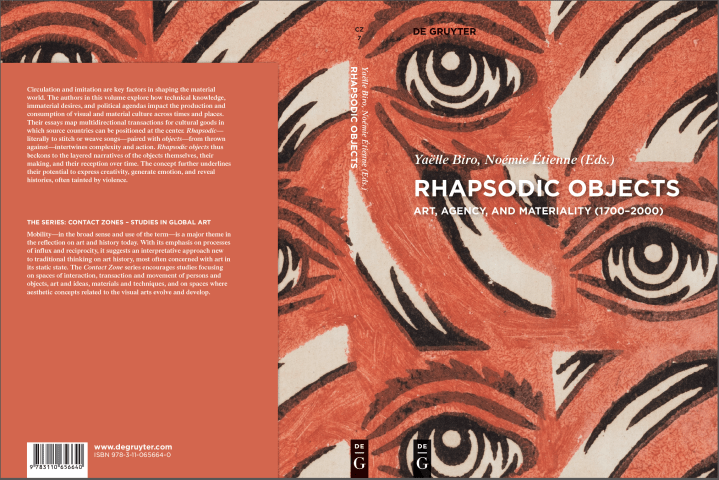
Yaëlle Biro and Noémie Étienne, eds., Rhapsodic Objects: Art, Agency, and Materiality, 1700–2000 (Berlin: De Gruyter, 2022) 236 pages, ISBN: 97-83110656640, $80. Also available as a free PDF file from the publisher.
Circulation and imitation are key factors in shaping the material world. The authors in this volume explore how technical knowledge, immaterial desires, and political agendas impact the production and consumption of visual and material culture across times and places. Their essays map multidirectional transactions for cultural goods in which source countries can be positioned at the center. Rhapsodic—literally to stitch or weave songs—paired with objects—from thrown against—intertwines complexity and action. Rhapsodic objects thus beckons to the layered narratives of the objects themselves, their making, and their reception over time. The concept further underlines their potential to express creativity, generate emotion, and reveal histories—often tainted with violence.
Edited by Yaëlle Biro (Metropolitan Museum of Art) and Noémie Étienne (Universität Bern).
C O N T E N T S
Yaelle Biro and Noemie Etienne, Introduction
Part 1 | Interlaced Patterns
• Dorothy Armstrong, Wandering Designs: The Repossession of the ‘Oriental’ Carpet and Its Imaginary
• Aziza Gril-Mariotte, The Art of Printed Textiles: Selecting Motifs in the Eighteenth Century
• Chonja Lee, Chintzes as Printed Matter and Their Entanglement within the Transatlantic Slave Trade around 1800
Part 2 | Embedded Relationships
• James Green, Interpretations of Central African Taste in European Trade Cloth of the 1890s
• Helen Glaister, The Picturesque in Peking: European Decoration at the Qing Court
• Rémi Labrusse and Bernadette Nadia Saou-Dufrêne, Cultural Intersections and Identity in Algeria on the Eve of the French Invasion: The Case of the Bey Palace in Constantine
Part 3 | Crafted Identities
• Ashley V. Miller, ‘What Is Colonial Art? And How Can It Be Modern?’: Design and Modernity in France and Morocco, 1925
• Victoria L. Rovine, Crafting Colonial Power: Weaving and Empire in France and French West Africa
• Thomas Grillot, A World of Knowledge: Recreating Lakota Horse Effigies
• Gail Levin, Frida Kahlo’s Circulating Crafts: Her Painting and Her Identities
Authors
Picture Credits
New Book | Luisa Roldán
On this day (10 January) in 1706, Luisa Roldán died, as both a celebrated and impoverished artist. From the Getty Store:
Catherine Hall-van den Elsen, Luisa Roldán (Los Angeles: Getty Publications, 2021), 144 pages, ISBN 978-1606067321, $40.
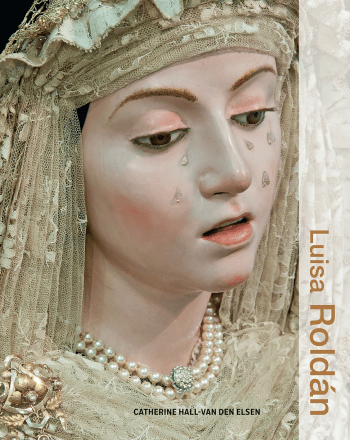 This initial book in the groundbreaking new series Illuminating Women Artists is the first English-language monograph on the extraordinary Spanish Baroque sculptor Luisa Roldán.
Luisa Roldán (1652–1706), also known as La Roldana, was an accomplished Spanish Baroque artist, much admired during her lifetime for her exquisitely crafted and painted wood and terracotta sculptures. Roldán trained under her father and worked in Seville, Cádiz, and Madrid. She even served as sculptor to the royal chambers of two kings of Spain. Yet despite her great artistry and achievements, she has been largely forgotten by modern art history. Written for art lovers of all backgrounds, this beautifully illustrated book offers an important perspective that has been missing—a deeper understanding of the opportunities, and the challenges, facing a woman artist in Roldán’s time. With attention to the historical and social dynamics of her milieu, this volume places Roldán’s work in context alongside that of other artists of the period, including Velázquez, Murillo, and Zurbarán, and provides much-needed insight into what life was like for this trailblazing artist of seventeenth-century Spain.
Catherine Hall-van den Elsen studied Spanish art at La Trobe University in Melbourne, Australia. She completed her MA and PhD on the life and work of Luisa Roldán.
C O N T E N T S
Series Foreword
Preface
Introduction
1 Women in Early Modern Spain
2 Sculpture in Early Modern Seville
3 Andalucía: Building a Career
4 Madrid: Challenge and Opportunity
5 Luisa Roldán through the Lenses of History
Chronology
Notes
List of Extant Works in Public and Church Collections
A Selection of Further Reading
Image Credits
Index










leave a comment