Call for Articles | Service and Servants, 1500–1750
Call for Papers from The Journal of Early Modern Studies (JEMS) . . .
JEMS 4 (2015) | Service and Servants in Early Modern Culture, 1500–1750
Proposals due by 1 October 2013, Final Drafts due by 31 January 2014
The Journal of Early Modern Studies (JEMS) is an open access peer-reviewed international journal that promotes interdisciplinary research and discussion on issues concerning all aspects of early modern European culture.
We are now inviting contributions for volume 4, to be released online in March 2015. Jointly edited by William C. Carroll (Boston University) and Jeanne Clegg (Università Ca’ Foscari, Venice), JEMS 4, entitled Service and Servants in Early Modern Culture, 1500-1750, aims to bring together scholars from across a wide disciplinary spectrum to inquire into differences and similarities, continuities and changes in the ethics, representation and practice of service and servitude in different countries and contexts. The issue will be open to contributions on oral and visual forms of cultural expression as well as textual, and we invite studies of emerging voices and works intended for and by, as well as about, servants and service. Contributions addressing issues of class, gender, and ethnic/national representations are particularly encouraged.
Main deadlines
• 1 October 2013: adhere to project and send working title and short abstract to William Carroll (wcarroll@bu.edu) and Jeanne Clegg (jfclegg@unive.it).
• 31 January 2014: finalize paper for submission to referees. Articles must comply with the editorial norms and must not exceed 12,000 words, including endnotes and bibliography.
All articles are published in English. Please be so kind as to have your paper revised by a native speaker.
Call for Papers | Ateliers et Manufactures, 1789–1815
From the Call for Papers (the PDF includes the French version) . . .
Workshops and Manufactures in the Years between the
French Revolution and the Napoleonic Empire (France, 1789–1815)
Institut national d’histoire de l’art and Centre allemand d’histoire de l’art, Paris, 13–14 June 2014
Proposals due by 30 September 2013
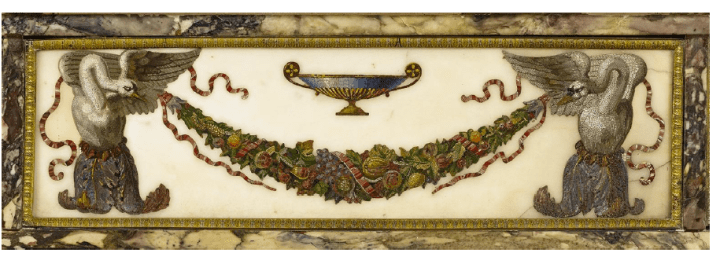
The twenty-five years between the assembly of the États généraux and the end of the Napoleonic Empire saw political, social, cultural and economic changes that created a context of instability for the luxury industries and fine arts in France. Workshops and manufacturers were confronted with material and logistical challenges. The shortage of materials, the collapse of the financial system and the loss of a significant number of skilled workmen to the army, had a direct impact on French productivity. In spite of these difficult conditions, the insecurity and instability of social upheaval and war in this period, creativity and the invention of new trends and fashions were by no means halted in Paris. New markets quickly offered plenty of opportunities for inventive craftsmen to extend and diversify their activities.
Up until now the revolutionary period has mainly been considered as a period of disruption, especially in the field of luxury industries, which were considered to be at odds with the values of the new emerging social system. It is now possible to show that contrary to this general assumption, continuity can be found in this pivotal period between the eighteenth and nineteenth centuries. The quick re-awakening of the production of luxury goods followed the establishment of the Directoire and its flowering during the Napoleonic years is proof of great flexibility and adjustment to social change and the new paradigms of labor. A number of questions emerge from these observations: what events and changes confronted former royal and later national manufacturers, famous workshops and regional producers in the years between the Ancien Régime and the Bourbon Restoration? In what ways were artists and artisans able to adapt or resign themselves to the new challenges? But also – to what extent did these events stimulate new modes of creativity and production which would have an impact on the development of industrialization in France?
This symposium aims to shed light on a pivotal period in the history of material culture and the decorative arts in France. One of its goals is to provide a better understanding of and insight into what exactly happened during these years and into the impact of the transformation of every aspect of civil and industrial life on Parisian and regional production in this period, which is generally recognized as one of cataclysmic change. Organized as an interdisciplinary event, this symposium will study the period from the point of view of art, social, economic and technological histories. Its main objectives are to define and shed light on the specific characteristics of the period and its production, in order to generate new insights and conclusions which complement the field’s well-established stylistic analyses, while also providing new tools for the broader analysis of objects.
Contributions of 20 minutes should approach the following pivotal points:
The Organization of Production: Actors and places of production – The management of workshops before and after the abolition of the guilds in 1791 – The institutional and legal context for production – Creators and makers in different trades linked to the luxury industries – Supply and suppliers of materials – Competition between national and private industries.
Forms and Materials: Tools, techniques and materials – Fashion and trends – The relation of stylistic evolution and industrialization- Professional schools and academic institutions for the industries – Iconographies and style for manufactured goods – Know-how and the evolution of style
Distribution: Industrial exhibitions from 1798 onwards – Methods of distribution – Producers of manufactured goods – Commercial networks – Press and publicity – Franchising and dealers – Places of sale – Diplomatic gifts – Commercial challenge and competition
Papers may be given in French or English language. Proposals for papers of one A-4 side length and a short biography in French or English should be sent to the following address before Monday, September 30th 2013: AteliersManufactures1789-1815@dt-forum.org.
Organisational Board
Natacha Coquery (université Lumière Lyon 2, LAHRA)
Jörg Ebeling (Centre allemand d’histoire de l’art, Paris)
Anne Perrin-Khelissa (université de Toulouse 2 Le Mirail)
Philippe Sénéchal (Institut national d’histoire de l’art)
Scientific Board
Marc Bayard (Mobilier national, Paris) ; Jean-Francois Belhoste (École Pratique des Hautes Études, Paris) ; Andreas Beyer (Centre allemand d’histoire de l’art) ; Philippe Bordes (université Lumière Lyon 2) ; Anne Dion (musée du Louvre) ; Daniela Gallo (université Pierre Mendès France Grenoble 2) ; Liliane Hilaire-Pérez (université Paris 7) ; Ulrich Leben (Bard Graduate Center, New York) ; Lesley Miller (Victoria & Albert Museum, London) ; Jean-Michel Minovez (université de Toulouse 2) ; France Nerlich (université de Tours) ; Odile Nouvel (Paris) ; Jean-Michel Olivier (université de Toulouse 2) ; Hans Ottomeyer (Berlin) ; Daniel Roche (Collège de France, Paris) ; Bénédicte Savoy (Technische Universität, Berlin) ; Patrick Verley (Geneva).
Call for Papers | Questioning the Frame in Decorative Systems
Questioning the Frame in the Decorative Systems of the Modern Era
Jeux et enjeux du cadre dans les systèmes décoratifs à l’époque moderne
Institut national d’histoire de l’art, Paris, 9–10 May 2014
Proposals due by 15 October 2013
International symposium organized by the CHAR (HICSA, University Paris 1 Panthéon – Sorbonne), the Centre François-Georges Pariset (Université Michel de Montaigne – Bordeaux 3) and the GEMCA (Catholic University of Louvain)
In its ability to create systems, modern decor emerges as a phenomenon of artistic practice that deserves further analysis. Between the fifteenth and eighteenth centuries, decoration reached a particularly high degree of elaboration and complexity through the multiplication of presentation devices in the visual discourse, while simultaneously integrating the spatial constraints imposed by supports. This symposium seeks to explore the originality of this phenomenon through the question of the frame. Often neglected and marginalized in studies pertaining to decoration, the frame constitutes one of its essential dimensions, which conditions not only modes of perception but also provides paths towards understanding the mechanisms of decorative systems. Indeed, if decorative systems are the place par excellence of experimentation with the boundaries between real and representational spaces, subtle and varied framing games are the active agents, and shall be explored during this event.
Quadri riportati, architectural elements, anthropomorphic and hybrid figures, feigned materials (tapestries, parchment, leather, etc.), medallions, cartouches, and festoons are some examples of framing devices which, far from being accessory or gratuitous, carry a multitude of illusionistic, syntactic, and semantic implications, all-the-while participating in the visual splendor and the mise-en-scène of the representation. Through the definition and articulation of these particular spaces and discursive registers, framing devices create interpretative solutions, conditioning and guiding the perception and comprehension of visual discourse. Even when the frame appears as a disjunctive element, which separates and differentiates, it can still allow for conjunctions and transitions through space, or, through an excess of reflexivity and a tendency for autonomy, blur and provoke a crisis in the hierarchy between the visual regions. By taking into consideration this perpetual shifting of frontiers, these games and perspectival challenges, the goal of this symposium is to question the framing devices of decorative systems in the modern era. In other words the objective is to understand how the frame participates in the transformation of decor into a system that produces meaning across a variety of supports and mediums.
Among the many issues raised by this topic, some possible themes include:
• What are the specific mechanisms in decorative practice used for defining and creating spaces, images, and graphic or symbolic representations? Could this use of the frame contribute to the definition of certain tendencies or aesthetic currents?
• In terms of reception, what are the devices used to create frontiers or passages between the decor and the viewer? In what ways does decor create effects of presence and distance, thus contributing to the viewer’s experience?
• How does the ornament of the frame respond to the principle of decorum? To what extent does this constitute a transgression? How does the relationship between ergon and parergon apply in this context? How do the boundaries and transitions between these different areas challenge the traditional hierarchies of representation and create spaces of freedom and autonomy?
• How can the transition between different mediums and contexts provoke, for similar devices, varied readings corresponding to particular challenges? How does the use of different materials, real or feigned, participate in the framing process, from an aesthetic as well as a symbolic point of view?
Developing on studies which, since the 1960s, have been problematizing the issues of the frame in the visual arts, and adhering to the current revival of interest in question of the ornamental, this symposium aims to shed light on this essential issue in the art of the modern era, which is the decor. Abstracts of no more than 300 words (in French or English) should be sent before October 15, 2013 by email to the address: cadre.decor.2014@gmail.com
Organizing Committee: Nicolas Cordon, Edouard Degans, Elli Doulkaridou, Caroline Heering
Scientific Committee: Pascal Bertrand, Nicolas Cordon, Edouard Degans, Ralph Dekoninck, Elli Doulkaridou, Caroline Heering, Philippe Morel, Victor Stoichita
The Call for Papers in French is available at L’ApAhAu»
Call for Articles | Museum and Curatorial Studies Review
Museum and Curatorial Studies Review is a new peer-reviewed journal powered by the University of California, Berkeley Electronic Press, and the California Digital Library. Each issue will feature full-length academic articles, exhibition reviews, book reviews and dialogic contributions (such as interviews and open letters).
Volume 1, Number 1 will be published very soon. The editors are now seeking contributions to journal’s second issue. All submissions should be sent electronically in MS Word format and follow The Chicago Manual of Style. The details for each submission type are below:
• Articles (6000–9000 words): send a fully drafted, polished version of the paper to be blind peer reviewed.
• Interviews, open letters, or other conversational pieces (2000–6000 words): send a 300- to 400-word proposal for the item [Note: interviewers are responsible for all transcription work]. Final drafts are also welcome.
• Exhibition reviews (1000–2500 words): send a 250-word proposal that includes a description of the exhibition you intend to review and a brief discussion of its significance to the field of museum and curatorial studies.
• Book reviews (1000–1500 words): send a 250-word proposal that includes a description of the book you intend to review and a brief discussion of its significance to the field of museum and curatorial studies.
Email submissions and inquiries to: macs.review@gmail.com
Call for Papers | Artistic Practices in Southern Asian Art
Artistic Practices in Southern Asian Art in the Long Eighteenth Century
College Art Association, Chicago, 12-15 February 2014
Proposals due by 15 July 2013
Session sponsored by the American Council of Southern Asian Art (ACSAA)
Panel Chair: Yuthika Sharma, Postdoctoral Fellow, Max Planck Institute of Human Development, Berlin
The eighteenth century in South Asia was an era of transition that saw the gradual decentralization of the Mughal State, the rise of autonomous regional polities as economic hubs and consolidation of the English East India Company as an administrative power. The artistic culture of this period underwent a fundamental change with increasing diversification of the patronage base, the rise of the domestic art market and the consolidation of regional identities. With the Mughal court no longer a dominant venue of artistic production, artists cut across of divides of genres and styles and acquired greater mobility. The rise of collecting, in turn, also indexed a demand for historical paintings and manuscripts contributing to a burgeoning market for copies. Taking a longue durée span between the closing years of the 17th century to the opening decades of the 19th century, we invite papers to consider a range of complexities that signal important shifts within artistic practice in this period. How can we think about in this period differently, reaching beyond conventional art historical categories or regional paradigms of analysis? How did the mobility of artists, ideas, and the rise of new media and print culture create new modes of visual expression? How did artists invent new visual vocabularies to address their cross-cultural contexts? What were the private and public channels through which artworks circulated? What was the role of copies in this period? This panel asks how the art of this transition era can bear upon the present methodologies of art historical analysis and how they can further inform questions about the nature of modernity in this period. While the term modern is taken here as a research problematic, this panel is concerned with explicit and implicit expressions of newness in artistic practices that can enrich new perspectives within South Asian art history.
Please send an abstract (300 words) and a brief one page CV by July 15, 2013 with the subject heading CAA-ACSAA Long 18th Century to: yuthika.sharma@gmail.com.
Call for Papers | Society for Emblem Studies Conference
Call for Papers from the Kunsthistorisches Institut at Kiel:
10th International Conference of the Society for Emblem Studies
Some light up, when we read them / Manche leuchten, wenn man sie liest
Christian-Albrechts-Universität zu Kiel, Kunsthistorisches Institut, 28 July — 1 August 2014
Proposals due by 1 September 2013
The conference will devote itself to the entire spectrum of emblem studies, and papers on all aspects of emblematics are welcome. Please submit proposals by 1 September 2013. In additional to a traditional focus on emblem books, the conference will focus on four thematic clusters:
The Domains of the Emblem: Changes in Medium

University Library Kiel. Text was designed by Elsbeth Arlt (Flensburg) in 2002, from André Gide, Les nourritures terrestres et Les nouvelles nourritures (1897), translated into German by Hans Prinzhorn (1930). Photo: Katrin Ulrich, Kunsthistorisches Institut, Kiel.
While emblems are closely associated with the development of printing, emblems can be found in all aspects of life and culture, and they were adapted to these new spaces and uses beyond the page. The choice, application, space, adaption and invention, the compilation of emblematic programs in sacred and secular architectural spaces, and their application to furniture and objects constitute one thematic cluster of the conference. This includes, of course, ephemeral emblems in festivals and theater, and in baptismal and funeral rituals. Emblems in devotional books, novels and other literary genres, on title pages and in paintings and graphics are further topics for consideration. This rubric also includes transitional forms of emblematic expressions, such as emblematized fables and imprese and devices as manifestations of individual or dynastic maxims.
History of Emblem Research
The Tenth Conference of the Society for Emblem Studies provides the opportunity to continue the impetus from the Glasgow conference in 2011 by looking both forward and backward. The beginnings and development of the study of emblems and its most important representatives, beginning with Henry Green, the discoverer of Alciato, and the scholar of mannerism, Mario Praz, will provide the focus here. It will be particularly interesting to compare the various national research traditions and various directions in emblem research with one another, as well as to discover other relationships and contexts. The critical look back is intended to give impetus to new directions in research.
Digitization and Documentation
This area has increasingly become an important focus of research. In addition to completed individual emblem projects with a national or thematic focus, Emblematica Online and its OpenEmblem Portal are now established, providing cross-repository searching across international boundaries. While work continues to expand the scope of the Portal, there now exists a substantial online corpus for emblem studies that facilitates and supports comparative research. There is now greater access to emblem books than ever before. This also supports the study of non-literary emblems.
Text and Image Combinations in Modern Art
The juxtaposition of textual and pictorial elements can be observed in many forms of modern art: photography and painting with integrated or accompanying texts, films, and videos, interactive and internet-based art, and performative art strategies and interventions in public spaces create tension between image and language/text elements. Previously unknown and entirely new forms of expression have been created by assuming textual structures into pictorial forms and by fixing and encoding syntactic models in pictorial contexts. This thematic cluster of the conference is dedicated to questions concerning how modern art employs emblematic strategies that are, however, distinctly different from emblematic ways of constituting meaning. An exhibition in Kiel’s Kunsthalle will complement this part of the conference.
Papers and entire panels on all aspects of your research into emblematics, in addition to these topics, are welcome. Papers can be given in German, English, French, or Spanish. Please let us know if you would like to suggest a panel or moderate a section. Please send us your abstract for a twenty-minute presentation by 1 September 2013.
ihoepel@kunstgeschichte.uni-kiel.de
kunstgeschichte@email.uni-kiel.de
Call for Papers | American Art History and Digital Scholarship
From the symposium and workshop website:
American Art History and Digital Scholarship: New Avenues of Exploration
Archives of American Art, Smithsonian Institution, Washington, D.C., 15–16 November 2013
Proposals due by 15 August 2013; registration due by 30 September 2013
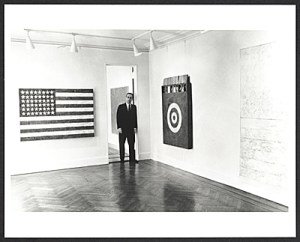
Leo Castelli in a room of the Jasper Johns exhibit at the Castelli Gallery, 1958 (Archives of American Art)
The Archives of American Art announces an upcoming symposium, American Art History and Digital Scholarship: New Avenues of Exploration, to be held at the Donald W. Reynolds Center for American Art and Portraiture, in Washington, DC, on Friday, November 15, followed by a one-day workshop at the Archives of American Art on Saturday, November 16. We seek proposals for Friday’s presentations and applications for participation in Saturday’s moderated workshop.
The symposium will convene scholars, archivists, librarians, graduate students, technical experts, and the public to consider American art history in a digital world, examining ways to integrate digital tools and resources into the study of
American art and to encourage collaboration. (more…)
Call for Papers | The Art of Science in New England, 1700–1920
The Art of Science in New England, 1700–1920
Wellesley College, Wellesley, Massachusetts, 15 March 2014
Proposals due by 30 September 2013
A one-day symposium sponsored by the Grace Slack McNeil Program for Studies in American Art at Wellesley College and the Office of Academic Programs at Historic Deerfield
This symposium will explore visual representations of scientific inquiry produced, collected, distributed or otherwise circulating in New England from the start of the 18th century to the first decades of the 20th century. Beginning with the scientific discoveries of the Enlightenment and extending through the 19th and into the 20th centuries, New Englanders sought to understand and explain scientific paradigms through two and three-dimensional representations. Botanical drawings, geological maps and charts, anatomical models, waxworks, and dioramas are just a few of the methods through which professionals and amateurs employed artistic methods and techniques in pursuit of scientific research and pedagogy. How did these representations shape scientific understanding? How did scientific ideas produce particular types of objects? What was the nature of collaboration between scientist and artist? How was the art of science put to pedagogical use in a variety of educational institutions from classrooms to lecture halls and museums?
Papers should be theoretical or analytical in nature rather than descriptive and should be approximately 20 minutes long. Please submit 250-word proposals and a two-page c.v. via electronic mail to Martha McNamara, mmcnamar@wellesley.edu and Barbara Matthews, bmathews@historic-deerfield.org. Proposals should include the title of the paper and the presenter’s name. The deadline for submissions is September 30th, 2013.
Call for Papers | Persistent Spaces: 18th- and 19th-Century Cities
Persistent Spaces: Politics, Aesthetics, and Topography in the 18th- and 19th-Century City
Université Paris Diderot, 12-13 December 2013
Proposals due by 13 October 2013
Keynote Speakers: Lynda Nead (Birkbeck College) and Stéphane Van Damme (Sciences Po Paris)
The aim of this two-day conference is to bring together young researchers to explore the city and its ideologies from a fully interdisciplinary perspective. We would like to combine approaches from the fields of literature and the arts, sociology, philosophy, law, science and engineering in order to create a dialogue between disciplines and methodologies. This conference would also establish a dialogue between the eighteenth and nineteenth centuries. We will seek to highlight the individual specificities of these two periods, but also to understand the echoes, continuities and breaks between them.
From the Enlightenment to the late nineteenth century and before urbanism was fully established as a discipline, the city was constantly being configured and reconfigured by the joint influences of architects, civil engineers, political organizations, associations and the informal ‘practices’ of inhabitants. Writers and artists also play a major part in this process, both picking up on these developments and changing them through the aesthetics they deploy. The conference will shed light on the city as a topography of struggle, a site of conflicting and interpenetrating layers, changing yet also persisting through time and space, and continually shaped by tensions between authority and resistance.
Topics may include, but are by no means limited to:
• Authority, ideology, urban planning and everyday ‘practices’
• Coherence or fragmentation of the urban space (home and workplace, centre and slums, etc.)
• Geographical juxtapositions / temporal superimpositions of spaces
• Population, mobility and living conditions
• Technological developments and urban networks
• 18th/19th-century continuity and breaks
• 18th-century ideas persisting and materializing in the 19th century
• Comparisons between / specificity of London and Paris
Papers will last for 20 minutes and will be followed by 15-minute discussions. Abstracts no longer than 300 words should be sent to Clemence Follea (clemence.follea@gmail.com) or Clement Martin (clemm.martin@gmail.com) by October 13th, 2013, along with a brief biographical note, which should not exceed 50 words. The scientific committee examining the papers is composed of doctoral students from Paris Diderot University: Claire Deligny; Clémence Follea; Clément Martin; Roisin Quinn-Lautrefin; Estelle Murail; and Marie Ruiz.
The conference will take place at Paris Diderot University (Paris, 13e arrondissement), on the 12th-13th December 2013. This event is supported by the Laboratoire de Recherches sur les Cultures Anglophones (Université Paris Diderot).
Call for Articles | Collecting Italian Art North of the Alps
From RIHA Journal:
RIHA Journal Special Issue: Collecting Italian Art North of the Alps 1600–1800
Submissions due by 1 December 2013
The Italian schools occupied central positions in early modern art collections, a tradition that continued through the 19th and 20th centuries. The primacy of Italian art became a cornerstone for museum practice as well as a founding principle for the nascent art history discipline. This issue takes a closer look at the beginning of this tradition in the 17th and 18th century. Since the 1960s (and before), scholars have taken an interest in the Grand Tours of princes, aristocrats and connoisseurs. More recent research has added to the picture by discussing the collecting activities of artists, architects, diplomats, dealers and scholars, and of women collectors and travellers. Further advances in the last few years have included investigations of the Italian art market(s), early modes of display, legal and illegal ways of export and curatorial strategies in the early princely collections and private museums. Although pictures and sculptures have been most in focus, scholars are also bringing these questions with a new interest to collections of the applied arts, prints and drawings (including architectural and decorative drawings).
The issue could include (but does not have to be restricted to) studies of individual collectors and collectors, primary and secondary art markets, the history and theory of display, the export and physical transportation of art, auctions, bequests, the supply of and demand for particular schools, changing attitudes to individual artists, the rise of the interest in the “primitivi,” looting, copying, and the political and nation-building dimensions of collecting.
Suitable submissions will be sent to two expert peer reviewers for blind review. Articles should be no longer than 50,000 characters (including spaces) or 8,000 word, both measures including footnotes and captions. Up to 10 illustrations will be accepted. Contributions in English, French, Italian or German are welcome. Please follow the RIHA Journal Style Guide. Please send your contributions, including a 250-word abstract, to the editors at linda.hinners@nationalmuseum.se by 1 December 2013.
Kind regards,
Martin Olin, Assistant Director, Swedish Institute in Rome. Guest Editor of “Collecting Italian Art North of the Alps”
Magdalena Gram, RIHA Journal Local Editor
Linda Hinners, Assistant Local Editor, Nationalmuseum, Stockholm










leave a comment