Call for Papers | ‘Art History Supplement’ to Address Advertising Images
From Hypotheses.org, the blog of the Art Histories Society and Art History Supplement:
Art History Supplement 3.6 (November 2013) — Advertising Images / Art as Advertisement
Papers due by 15 October 2013
Images with advertising attitude frequently draw forms and figures from artworks. This appropriation is commonly discussed in each case as a reference to the particular work of art being discussed in the image of the advertisement, when it comes to an art history curriculum. The reception of that artwork would be the primary concern of that study. For instance, see John Berger (1972) Ways of Seeing, London: BBC and Penguin Books, chapter seven. The role of advertisement is primarily to communicate a certain message in order to support, in one way or another, the promotion, the sale or the awareness of a particular product. This product may be a commodity; including a person or an idea, for instance. Such a perspective inevitably brings art historians in front of a certain quandary.
When are these advertising images becoming part of a history of art (art history) curriculum on their own status? Could advertising images bridge the gap, if such a gap exists indeed, between history of art and history of images?
On the other hand, according to OED (2nd edition), for instance, an advertisement could be defined as: a) the turning of the mind to anything, b) the action of calling the attention of others; admonition, warning, precept, instruction, c) the action of informing or notifying; information, notification, notice, d) a (written) statement calling attention to anything; a notification, a ‘notice’, e) a public notice or announcement: formerly by the town-crier; now, usually, in writing or print, by placards, or in a journal; spec. a paid announcement in a newspaper or other print.
Yet, Hoepli describes the current meanings of pubblicità as a) L’essere fatto in pubblico, b) azione del far conoscere al pubblico, c) complesso delle varie forme di propaganda aventi lo scopo di far conoscere e di incrementare il consumo e l’uso di un prodotto commerciale, di un servizio, d) mezzo con cui si fa conoscere al pubblico, a scopo commerciale, un determinato prodotto, e) piccola pubblicità, nei giornali, la rubrica degli annunci economici.
While, John Florio (1611) in his Italian – English dictionary annotated the meaning of publicatione as a publication, a proclamation, a manifestation, a making knowen (p.408).
Wouldn’t all these above qualities be able to describe images regarded, for example, as renaissance and/ or early modern art? A) Religious or humanistic art communicating a political or cultural message, B) “preaching” through images, C) the narration or the narrative element of early modern painting, D) the dictum that images can be the Book of the illiterates, E) public devotional or secular commemorative art or the diffusion of engravings. The drawing of such intriguing parallels could be alleged to the role and the use of those art images in those times, based on the theoretical and their rhetorical structures, as patronage and reception studies, built upon the Panofskian model of “cultural” signs.
Papers and short notes are sought to support, or not, the advertising images as a traceable chapter in a history of art survey course; concerning the use of these images, along with any stylistic dimensions these images have. Moreover, submissions are being welcomed to investigate earlier examples of advertisements through renaissance and early modern religious, or not, paintings, portraits, engravings and ephemera. (more…)
Call for Papers | ISECS 2015 in Rotterdam
From the conference website:
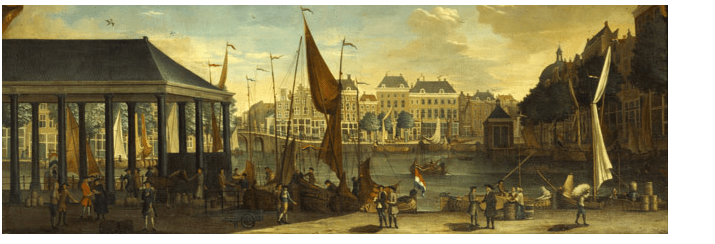
ISECS Congress 2015 | Opening Markets: Trade and Commerce in the Age of Enlightenment
Rotterdam, 26–31 July 2015
◊ ◊ ◊ ◊ ◊
The International Congress on the Enlightenment is the largest event in the field, and takes place every four years. Recent meetings have been held in Dublin (1999), Los Angeles (2003), Montpellier (2007) and Graz (2011). The 14th Congress will take place from 26 to 31 July 2015 in Rotterdam, the Netherlands. Congress facilities will be provided by Erasmus University Rotterdam, with tours and displays on local heritage coordinated by members of the Dutch-Belgian Society for Eighteenth-Century Studies.
The Congress is organized by the Organizing Committee of Dutch-Belgian Society of Eighteenth-Century Studies and is hosted by the Erasmus University Rotterdam. The Congress is preceded by an ordinary meeting of the ISECS General Assembly. Opening Markets includes theme-related sessions as well as plenary sessions featuring invited speakers. The Congress is organized into parallel sessions and round tables with keynotes elaborating on the subtopics. The Congress facilitates poster presentations. Preceding the Congress the organizers host an ISECS International Seminar for junior Eighteenth-Century scholars.
The scientific program is coordinated by an International Steering Committee made up of members of the Organizing Committee and eminent scholars from scientific institutes and universities in the world. A professional Congress Organizing Office is in charge of the practical aspects concerning the preparation, registration, communication and organization of the Congress, the accomodations for participants and the excursions and (partner)tours during and after the Congress.
The Scientific Steering Committee invites the submission of abstracts for oral and poster presentations at the Congress from January 2014. Abstracts must be submitted online by 31 December 2014. An individual may submit more than one abstract. Abstracts must not exceed 250 words. Presenters must be registered participants at the Congress. Accepted abstracts will be presented at the Congress and published in the Congress proceedings.
Additional information is available at the conference website. Also consult the first announcement of the preliminary programme, available for download as a PDF file here»
Call for Papers | Prime Minister & Patron: Heinrich Count von Brühl
From the Call for Papers posted at the Bibliotheca Hertziana:
Prime Minister and Patron: Heinrich Count von Brühl (1700–1763)
Dresden and Rome, March 2014
Proposals due by 15 October 2013

◊ ◊ ◊ ◊ ◊
After attaining the Polish Crown, the Wettin Elector pursued the expansion of Dresden in order to transform it into a prestigious residence. Dresden evolved in the 18th century as a cultural centre of the Reich with outstanding art collections and a particular concentration of artists, architects, composers and singers.
The Saxon Prime Minister Heinrich Count von Brühl (1700–1763) was a key figure in this development: he has been responsible for the art collections, including the purchase of works of art, as well as the Court Theatre, the Court Opera and of the Meissen porcelain factory. He was also a close advisor of the Elector and King – and thus as “the second man in the state” – responsible for all domestic, foreign and financial matters at the Dresden court. Using the nearly unrestricted freedom of choice associated with this position for his own gain, he also built up a considerable personal fortune, which was made up of capital, farms, factories, works of art and luxury goods. (more…)
Call for Panels | College Art Association 2015, New York
I’m posting this particular call for panel proposals while wearing my hat as vice-president of the Historians of British Art. The announcement also serves as a general reminder, however, that all session ideas (in addition to those from affiliates) are due to CAA by 3 September 2013. HBA’s internal due date is Monday, 26 August. -CH
◊ ◊ ◊ ◊ ◊
HBA Session Proposals for the 2015 College Art Association Conference
New York, 11–14 February 2015
Proposals due by 26 August 2013
The Historians of British Art, an affiliate society of the College Art Association, welcomes proposals from members for its main session at the annual CAA conference in 2015 (February 11–14). Ideally, the session will accommodate a range of interests and multiple periods within the larger field of British art. Once HBA’s selection committee decides on a proposal, the individual(s) proposing the topic will need to follow the regular CAA procedures for panel submissions. Feel free to contact Craig Hanson with any questions, CraigAshleyHanson@gmail.com.
Call for Papers | Symbolic Visual Cultures of Jacobitism, 1688–1800
From Fairfax House:
Symbolic Visual Cultures of Jacobitism, 1688–1800
Fairfax House and The Hilton Hotel, York, 15 November 2013
Proposals due by 30 September 2013
 Jacobitism remains among the most evocative of British historical movements, associated with powerful currents of romanticism and nostalgia. It owes this place in the historical imagination not least to the richness of the symbolism to which this essentially covert political movement gave rise. The symbols of Jacobitism – the rose and rosebud, white ribbons and cockades, the butterfly, the sunflower, oak trees and oak leaves – have great historical and emotional significance and act as a potent focus of sentiment.
The symbolic language of the Jacobite cause is at the heart of the most significant public display of Jacobite material culture to take place for many years: the exhibition In the Name of the Rose: The Jacobite Rebellions, Symbolism & Allegiance, to be held at Fairfax House between August and December 2013. In association with this exhibition, Fairfax House will be hosting a one-day colloquium exploring the symbolic cultures of Jacobitism on Friday November 15, 2013.
The aim of this colloquium is to bring together interested parties from academic institutions, museums, libraries and other backgrounds who share an interest in the symbols associated with the Jacobite movement from its origins in the late seventeenth century to the end of the eighteenth century. Relevant topics may include (but would certainly not be limited to) the culture of Jacobite objects and images; the iconography of Jacobite symbols and emblems; the role of specific categories of material culture such as jewellery, glassware, clothing, architecture or weaponry in conveying Jacobite messages, either overt or covert; Jacobite symbols in art, music or literature. Established authorities on Jacobitism will be participating in the colloquium.
This full-day colloquium will be followed by a special guest lecture by Prof. Murray Pittock and launch of his new book at an evening reception at Fairfax House including the opportunity to see the exhibition, In the Name of the Rose.
Contributions are invited from scholars, graduate students, museum and library professionals and others, for papers not to exceed 20 minutes in length that explore any topic relevant to the field of Jacobite visual symbolism from the late seventeenth century to the end of the eighteenth century. Please submit proposals for papers (synopsis not to exceed 200 words) to: jacobitecolloquium@fairfaxhouse.co.uk
Call for Papers | HBA Young Scholar Session at CAA, 2014
Historians of British Art Young Scholar Session
College Art Association, Chicago, 12–15 February 2014
Proposals due by 15 August 2013
The Historians of British Art, a CAA-affiliated society, seeks papers for an upcoming mini-session of work by emerging scholars to be held during the HBA Business Meeting at CAA in Chicago (February 12–15, 2014). Current or recent graduate students are invited to submit proposals (if a Ph.D. recipient, the degree must have been earned within the past three years). Papers may address any topic related to British art, architecture, and visual culture and should be limited to fifteen minutes. This is an opportunity for informal presentations of new or ongoing research followed by open discussion.
To submit a paper for consideration, please send the following items to Jongwoo Jeremy Kim, HBA 2nd Vice President, at jongwoo.kim@louisville.edu: (1) a one page abstract; (2) a C.V. (limited to two pages).; and (3) a brief cover letter explaining interest in the field. The deadline for submission is August 15, 2013. Upon selection, each presenter will be requested to join HBA if not already a member.
Call for Papers | Museum Metaphors
From the conference website:
Museum Metaphors
University of Nottingham, 20 November 2013
Proposals due by 9 September 2013
Organised by Lucy Bradnock and Briley Rasmussen
Throughout the relatively short history of the art museum, metaphorical constructs have often been used to explain the museum’s social and cultural role, as well as to define its various protagonists. Through the metaphorical language of the museum as, for example, temple (Duncan), tomb (Adorno), laboratory (Barr), or supermarket (Warhol), artists, curators, critics, philosophers and historians have sought to read the institution of the museum as symbolic of particular cultural and social ideologies.
Against the backdrop of a growing current interest in institutional and exhibition histories, this symposium will consider the many metaphors that have been used to describe, define and theorise museums. We will also address how changes in the metaphorical language of the museum might indicate broader discursive shifts. In addition, it will ask what metaphorical constructs shape our conception of museums today. We seek proposals that address examples of museum metaphors from a range of historical, geographic, and theoretical perspective. Topics might include, but are not limited to:
• The museum metaphor in museological discourse
• The museum as metaphor in artistic practice
• Metaphor, behaviour and the museum’s publics
• Museum metaphor, modernism and postmodernism
• Metaphor and museum architecture and/or design
• Social and spatial metaphors in the museum context
• Museum metaphors in film, literature and popular culture
Please submit proposals of up to 250 words to Lucy Bradnock (lucy.bradnock@nottingham.ac.uk).
Call for Papers | ASECS 2014 in Williamsburg
2014 American Society for Eighteenth-Century Studies Conference
Williamsburg, 20–22 March 2014
Proposals due by 15 September 2013
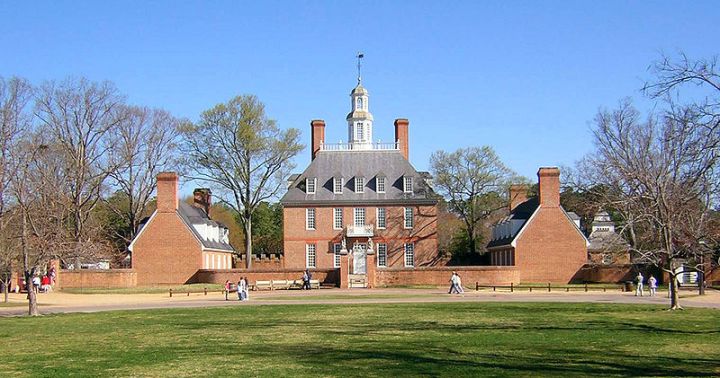
Governor’s Palace in Williamsburg, Virginia. The original structure was built between
1710 and 1722, with further additions made in the 1750s. Fire destroyed the
main house in 1781. The present building was constructed in the early 1930s.
Photo by Larry Pieniazek, 2006, from Wikimedia Commons.
◊ ◊ ◊ ◊ ◊
The 2014 ASECS conference takes place in Williamsburg, 20–22 March. Along with our annual luncheon and business meeting, HECAA will be represented by two panels chaired by Denise Baxter and Amy Freund and Jessica Fripp. In addition to these, a wide selection of sessions that might be relevant for HECAA members are also included below. A full list of panels (68 pages’ worth!) is available as a PDF file here.
◊ ◊ ◊ ◊ ◊
Anne Schroder New Scholar’s Session (Historians of Eighteenth-Century Art and Architecture)
Denise Amy Baxter, 1304 Edgewood Court, Carrollton, TX 75007; denise.baxter@unt.edu
Named in honor of the late Anne Schroder, this seminar will feature outstanding new research by emerging scholars.
◊ ◊ ◊ ◊ ◊
Selfhood and Visual Representation in the Eighteenth Century (Historians of Eighteenth-Century Art and Architecture)
Amy Freund, Texas Christian U. and Jessica Fripp, Parsons The New School for Design; a.freund@tcu.edu and frippj@newschool.edu
This panel will consider the relationship between the visual arts and new ideas of selfhood in the eighteenth century. Enlightenment-era debates about the nature of the self had profound effects on how people imagined the individual’s place in society, how gender, age, and racial difference were framed, how science and medicine conceived of the mind and body, and how emotions such as love and friendship were understood and expressed. Some scholars have approached the question of the eighteenth-century self in terms of the rise of possessive individualism, of secularization, and of consumer culture; others have pointed to the persistence and transformation of traditional hierarchies, of collective identities, and of mysticism and the irrational. We are seeking papers that examine the visual representation of the eighteenth-century self, both in portraiture and in other genres and modes, including (but not limited to) genre and history painting, architecture and the decorative arts, dress, and material culture. We encourage proposals that deal with the eighteenth-century self in Asia, Africa, and the Americas, and with the transformation (or inapplicability) of Enlightenment ideas outside of Europe. (more…)
Call for Papers | James Logan and the Networks of the Atlantic
James Logan and the Networks of Atlantic Culture and Politics, 1699–1751
Philadelphia, 18–20 September 2014
Proposals due by 30 September 2013

The home of James Logan, Stenton was built between 1723 and 1730 in the (then) countryside near Philadelphia.
The McNeil Center for Early American Studies, The Library Company of Philadelphia, The Historical Society of Pennsylvania, and Stenton Museum invite proposals for an international interdisciplinary conference in Philadelphia reconsidering early Pennsylvania culture in an Atlantic World context. James Logan (1674–1751), Provincial Secretary to the Penn family, and his vast political, trade and knowledge networks provide a lens for examination of the Atlantic World in the first half of the eighteenth century. This conference is an effort to consider Logan’s milieu in the widest possible way. James Logan studied the sexuality of plants, mentored Benjamin Franklin and John Bartram, served as Mayor of Philadelphia and Chief Justice of Pennsylvania, shaped his province’s relationships with Native Americans, traded furs, owned slaves, was a gentleman-merchant, book collector, and scholar. His nearly 3,000-volume library remains intact at the Library Company of Philadelphia. The Historical Society of Pennsylvania archives include numerous papers collections related to his activities, and The National Society of The Colonial Dames in America in the Commonwealth of Pennsylvania preserves his house, Stenton.
Committed participants include Anthony Grafton of Princeton University, Bernard Herman of the University of North Carolina, Chapel Hill, and Gary B. Nash of the University of California, Los Angeles. Among possible themes for paper proposals are intellectual history, knowledge networks, natural and moral philosophy; books, poetry and literature, collecting, and botany; religion, in particular Quakerism; material culture, archeology, architecture, houses, foodways, landscapes, land acquisition and urban development; economics, industry, commerce; gender, servitude, enslavement and social structure; and politics, imperialism, and European-Native American interactions.
This conference aims to engage an interdisciplinary dialog. Proposals are encouraged from literary scholars, historians, archeologists, material culture studies, and other disciplines. The organizers will consider both individual papers and panel submissions. Papers for many of the panels will be pre-circulated. PowerPoint presentations, especially those relating to visual and material culture, may also be pre-circulated. Non-traditional panels and presentations (such as tours, workshops, brief papers or demonstrations) will be considered.
Please submit 250-word proposals and a one-page c.v. via e-mail no later than 30 September 2013; proposals should be headed with the title of the paper and the presenter’s name, affiliation, and contact information. Submissions and queries may be directed to mceas@ccat.sas.upenn.edu.
Call for Papers | The Early Modern Villa: The Senses vs. Materiality
From the Call for papers:
The Early Modern Villa: The Senses and Perceptions versus Materiality, 1450–1800
Wilanów Palace, Warsaw, 15–17 October 2014
Proposals due by 30 October 2013
Convenors: Barbara Arciszewska (Warsaw University) and Paweł Jaskanis (Wilanów Palace Museum)
Enhanced interest in sensual perception was one of the mainstays of early modern culture. The development of new visual conventions (most notably the linear perspective) and ‘ocularcentric’ character of early modern science has long focused scholarly attention on the contemporary obsession with sight and with optical illusion. Yet sight, although privileged as a nucleus of artistic theory and analytical instrument in natural philosophy, was but one of the senses which were to be attracted, and then gratified by the display of early modern art and architecture. The complex discourse of sensual perception and gratification embraced all senses, although their role depended on the comparative value assigned to the senses themselves, on their abilities to provoke desire, provide delight, and grant access to knowledge. The diversity of sensual stimuli was perhaps most evident in the villa estate – its architecture and landscape design. The role of the senses and sensual perception in the planning, design, as well as functioning and reception of the villa (c. 1450-1800), will be the focus of this conference, set against the essential materiality of architecture and nature, understood as the framework of reference for the sensual experience rooted in pre-modern concepts of the corporeal sensorium. (more…)










leave a comment