Call for Papers | Questioning the Masterpiece?
Questioning the Masterpiece?
Sainsbury Centre for Visual Arts, University of East Anglia, Norwich, 20–22 February 2014
Proposals due by 25 November 2013
On the occasion of a major exhibition, Masterpiece: Art and East Anglia, held to celebrate the 50th anniversary of the University of East Anglia, this conference will interrogate notions of artistic value by focusing on the very concept of the ‘masterpiece’. The exhibition is itself ambitious and wide-ranging, takes a broad view of what constitutes a masterpiece, albeit in terms of a single region. For the conference we wish to tackle the concept in terms of its implications for considering works of art from different parts of the world.
The term ‘Masterpiece’ has moved between being a valuable term for marking out artworks which display exceptional skill and virtuosity, to one which signals an overwhelming aesthetic response in the viewer. The production of a masterpiece may be a primary goal for an artist who may decide upon his or her own criteria for judgement. To others it is a social construct used to further the interests of cultural elites. In the definition of a ‘masterpiece’, what is the relative importance of the character of the work itself – including the techniques and materials used – and the political, economic and social factors shaping its production and display?
In the past, especially within the Western art canon, the term, having had its origins in craft practice, has tended to refer only to a limited category of artworks – mostly sculpture and painting. We would like to raise questions about the universality of its application. For instance, what are the implications of an artefact having been disregarded in its own time and place, being reassessed and elevated to masterpiece status by a subsequent critic or culture? Is this likely to amount to culturally imperialistic value judgement or de-contextualisation? Or is it redressing a systemic bias, usefully widening and democratising a concept, to include what might previously have been overlooked? How important is consensus in the definition of a masterpiece and to what extent is its existence determined by the economics of the market, its reputation enhanced by competition among collectors and museums? Is the masterpiece a sign of luxury, or can it be applied to the most humble artefact? Does the concept lose all analytic utility when confronted with the conceptual art of the twentieth century?
Papers are welcome from a range of disciplinary backgrounds – including art history, archaeology, anthropology and art practice – which critically engage with the idea of the ‘masterpiece’ and will normally be 30 minutes long within a 40 minute slot, allowing for discussion. We regret that we cannot offer a speaker fee, however conference attendance fees will be waived (Normal fees: £100 / £75 concessions; UEA students free). There may be some assistance with expenses available. Please enquire if you need help.
Please submit a title and an abstract of 200 words and brief cv. by 25 November, to worldart@uea.ac.uk with the subject heading Masterpieces conference. For any further enquiries in the meantime contact reddish.jenny@gmail.com, conference assistant.
Call for Papers | The Production of Ornament: Reassessing the Decorative
From H-ArtHist:
The Production of Ornament: Reassessing the Decorative in History and Practice
University of Leeds, 21–22 March 2014
Proposals due by 13 December 2013
Keynote speakers
· Susanne Kuechler, Professor of Material Culture in the Department of Anthropology, UCL
· Alina Payne, Professor of the History of Art and Architecture, Harvard
The descriptive terms ‘decorative’ and ‘ornamental’ are in many ways synonymous with superfluity and excess; they refer to things or modalities that are ‘supplementary’ or ‘marginal’ by their very nature. In the West, such qualitative associations in made objects intersect with long-standing and inter-related philosophical oppositions between ‘form’ and ‘matter’, ‘body’ and ‘surface’, the ‘proper’ and the ‘cosmetic’. Accordingly, this has weighed both on determinations of value in artistic media, and on the inflexions of related histories – particularly histories of ‘non-Western’ art, design and culture, where a wide range of decorative traditions are deemed unworthy of critical attention.
Yet such frameworks are no more historically stable than they are culturally universal. To take one very clear and ‘central’ counter-example, decoration in some strands of Renaissance architectural theory (Filarete, Alberti) emerged as a rigorous codification of meaning, as an essentially functional (political) language. In many ways the history of ornament may itself be seen as a process of marginalisation of such ways of thinking, and the separation of ornament from any form of social practice.
This two-day conference seeks to explore the various ways in which ornament might be regarded as itself productive of its objects and sites. How might the technologies, techniques, and materials of ornament be related to the conception and transformation of modes of object-making? How might ornament be understood to inform its objects, disrupting the spatial categories of ‘surface’ and ‘structure’, and the temporal models in which ornament ‘follows’ making? What are the relations between ornament and representation, and what is at stake in the conventional oppositions between these categories? What are the roles of ornament in larger dynamics of copying, hybridisation and appropriation between things? In what ways have practices and thinking on ornament staged cultural encounters, and engendered larger epistemological and social models?
The conference will explore the production of ornament across a broad range of historical and geographical contexts. We invite proposals from researchers and postgraduates working in any discipline, as well as practitioners, conservators and curators. Proposals of no more than 300 words, along with a CV, should be sent to Dr Richard Checketts and Dr Lara Eggleton at production.of.ornament@gmail.com by Friday the 13th of December 2013.
Call for Papers | Colonial Spaces: Female Responses to Empire
From the Call for Papers:
Visualising and Materialising Colonial Spaces: Female Responses to Empire
University of Warwick, 11 January 2014
Proposals due by 31 October 2013
Proposals are invited for 20-minute papers for Visualising and Materialising Colonial Spaces: Female Responses to Empire, a conference organized by Dr. Rosie Dias (Art History, University of Warwick) and Dr. Kate Smith (History, University College London) and funded by The Paul Mellon Centre for Studies in British Art. Confirmed keynote speakers include David Arnold, Emeritus Professor, Department of History, University of Warwick and Caroline Jordan, Honorary Associate in the Humanities and Social Sciences, La Trobe University Melbourne.
In recent years scholars working in the field of British art history have increasingly broadened their approach to include transnational and imperial topics. Despite such interest, however, little attention has been paid to the gendered nature of such artistic productions. The majority of research on Anglo-Indian visual culture for example, has focused upon work created by men and as yet little research has considered the role of women in the creation and dissemination of visual and material culture. Visualising and Materialising Colonial Spaces: Female Responses to Empire demonstrates the significance of women’s cultural productions upon ideas of empire at home and abroad by examining the rich visual and archival sources created by British women in imperial spaces. It examines the paintings, sketches, writings, collections, and objects that women created to capture and record their experiences of empire. In doing so it questions the role women played in constructing particular understandings of and narratives about imperial experiences in the eighteenth, nineteenth and twentieth centuries.
Please send a 250-word abstract and a brief biographical note to visualisingcolonialspaces@gmail.com by October 31, 2013.
Call for Papers | AAH 2014
In April of 2014 the Royal College of Art in London will host the 40th annual meeting of the Association of Art Historians (AAH). Panels will address a wide variety of themes. Here’s one example, the Museums & Exhibitions Group Annual Session (a full list is available here).
AAH Annual Conference | Challenging Conventions: Exploring Hierarchies
within the Historiography of the Fine and Decorative Arts
Royal College of Art, London, 10–12 April 2014
Proposals due by 11 November 2013
 This session explores hierarchies within the discipline of art history, tracing the separation of the ‘fine’ and ‘decorative/applied’ arts and examining the impact of this division on the research, display and use of art objects within academic and museum contexts. Even before Kant subdivided the arts into ‘mechanical’ and ‘aesthetic’ groupings, the ‘decorative’ arts were somehow deemed lesser due to their inherent functionality, allied to base manual labour and divorced from the purity and higher appeal/role of the ‘fine’ arts. This approach was perpetuated throughout the 18th and 19th centuries, and continues to influence modes
of practice to the present day.
Within this session questions may include, but are not limited to, exploring how these historiographies affect perceptions within the study of art history and the presentation of objects within museums. Have they actively shaped the way we research, collect and display objects? Have these exclusions/inclusions limited or facilitated ways of working within the discipline generally, or affected the way specific fields have been shaped more particularly? And what impact has this legacy had on contemporary practice, in modes of working, forms of display or the evolution of funding streams?
The Museums & Exhibitions Group represents a wide range of practitioners, including art historians, curators and artists/makers, from all eras and cultures, and invites a similarly wide range of responses. Papers may examine specific areas within this topic, examples of interdisciplinarity or case studies within museum/gallery or academic contexts.
Please send proposals (maximum 250 words) to the session convenors Dr Marika Leino, Oxford Brookes University mleino@brookes.ac.uk and Marie-Therese Mayne, Laing Art Gallery, Tyne & Wear Archives & Museums marie-therese.mayne@twmuseums.org.uk by 11th November 2013.
Call for Papers | Eighteenth-Century Hospitalities
From IU:
Eighteenth-Century Hospitalities | The Bloomington Eighteenth-Century Studies Workshop
The Center for Eighteenth-Century Studies at Indiana University, Bloomington, 14–16 May 2014
Proposals due by 13 January 2014
An enduring controversy in eighteenth-century studies—how to interpret the death of Captain Cook—turns on questions of stranger and self, hostility and hospitality. Canonical eighteenth-century European texts defined hospitality as something individuals, states, and institutions extended to strangers. (“Hospitality,” wrote Kant, “means the right of a stranger not to be treated as an enemy when he arrives in the land of another.”) Other cultures understood the workings of hospitality, hostility, and the stranger in different fashions, however. Natives of North America, for instance, organized their worlds in terms of kinship, fictive and otherwise, which structured lines of peace and conflict. If for Kant, hospitality was a technique for managing hostility (for preventing strangers from becoming enemies), this was not always the case. When incommensurable hospitalities clashed, hostility could easily arise.
We invite scholars to reflect on the ways that hospitality and self-stranger relations were thought, negotiated, represented, imagined, and lived across the eighteenth century. Questions to be addressed might include everything from how and why different categorizations of stranger-ness arose to daily practices of hospitable interaction. What conceptual, social, legal, etc. arrangements regulated the ways that those seen as socially distinct (the strangers) inhabited one’s own or an alien space?
We welcome papers on topics ranging from forced confinement (e.g., captivity, quarantine, servitude, ghettoization) and the eighteenth-century hospitality industry (coffee shops, restaurants, hospitals, etc.) to ideas and models of refuge, asylum, sanctuary, and contact. Evidence might be found in ethnographies and travelogues (fictional or factual, pictorial or textual) but also in novels, private correspondence, international treaties, etiquette manuals, or works of architecture. Cross- or interdisciplinary approaches are especially welcome.
During the Workshop, we will discuss 4–6 pre-circulated papers each day and have an occasional lecture. Expanded abstracts of papers will be published in the Center’s The Workshop, along with discussion transcripts.
The application deadline is January 13, 2014. Please send a paper proposal (1–2 pages) and current brief CV (3 pages, max) to Dr. Barbara Truesdell, Weatherly Hall North, room 122, Bloomington, IN 47405; 812–855–2856, voltaire@indiana.edu. We will acknowledge all submissions within a fortnight: if you do not receive an acknowledgment by January 27, 2014, please contact Barbara Truesdell or the Center’s Director, Professor Rebecca L. Spang (rlspang@indiana.edu).
Call for Articles | Constructions of the Exotic
Constructions of the Exotic in Europe and North America, 18th–21st Centuries
Special Issue of Material Culture Review
Manuscripts due by 15 December 2013
Material Culture Review solicits articles for a special issue on the theme of constructing the exotic. We are looking for articles that examine the question of how a person, an object or a work of art comes to be seen as exotic. How is ‘foreignness’ constructed? How is one culture appropriated and domesticated by another?
The goal here is not to show the constructed nature of the concept of the exotic. Rather, papers should emphasize the processes by which something is made exotic, including the stories that surround an object, the ways in which an object is exhibited, and how the representation of an object affects whether or not it is perceived as foreign. We invite papers that examine exoticization and domestication in relation to territory and place, agency and identity – papers that examine not only what is exoticized but also who does the exoticizing and how they do it. We are particularly interested in analyses of the exotic in Europe and North America that are grounded in social and political contexts.
Proposed Research Topics
1. Representation
The first topic has to do with representations that blur the border between documentation and fiction, realism and exoticism. How do certain items construct certain identities? For example, how do Indian clothing, Chinese dishes, and tobacco accessories contribute to the identity of those who wear or use them? How are these objects used in the art world, in the theatre, or in people’s homes? How do 18th-century engravings used to illustrate stories of voyages, as well as more ‘scientific’ representations (photographs, museums, etc.) produced at the beginning of the 19th century, construct the exotic? Papers on this topic will look at what actually makes something appear exotic, what increases or decreases the ‘foreign’ quality in the eyes of the maker and consumer.
2. Display
The second topic pays attention to the material culture, words, and gestures surrounding objects – to displays that make them look exotic or, on the contrary, domestic. Here, it is important to examine how the objects are displayed in their place of purchase, in people’s homes, and in museums. How are they exhibited? What physical context (furniture, frames, light) is used to present them? What words are used to describe them? Do these things qualify the objects as exotic or, rather, do they underemphasize their ‘foreign’ quality?
3. Materiality
Once the things are acquired, how are they repaired, reformed, or recomposed? What kind of material trans-formations do these imported, re-territorialized objects undergo? It may be through a process of hybridization with other artifacts. Exoticization can also happen through a process of integration: a fragment inserted into a piece of furniture can alter the entire object. However, exoticism is reinforced, for example, in the bronze or silver rings on an Asian vase. We encourage papers that study the process of fragmentation, extension, and the use of specific materials (precious and tropical wood, stone, metal, etc.) in the creation of ‘exotic’ objects.
Articles should be 20–30 double-spaced pages, including endnotes. In addition, we encourage the submission of
· research reports (10–20 pages, including endnotes)
· exhibition reviews (10–15 pages, including endnotes)
· research notes (5–10 pages)
· book reviews (notes and comments less than 5 pages) on this theme
Articles are expected in English or French. Please submit manuscripts by December 15, 2013 to Noémie Etienne at ne477@nyu.edu.
Call for Papers | Collecting Prints & Drawings
Collecting Prints & Drawings
Kloster Irsee, 13–15 June 2014
Proposals due by 30 November 2013
Organized by Andrea M. Gáldy, Sylvia Heudecker, and Angela M. Opel
Cabinets of prints and drawings belong to the earliest art collections of Early Modern Europe. From the sixteenth century onwards some of them acquired considerable fame which necessitated an ordered and scientific display. This interdisciplinary conference brings together art historians, historians, curators and collectors and explores topics such as: when, how and why did cabinets of prints and drawings become a specialised part of princely and private collections? How important were collections of prints and drawings for the self-representation of a prince or connoisseur among specialists and social peers? Is the presentation of a picture hang in a gallery, for example by Charles Eisen for the Royal Galleries at Dresden, to be treated as documentary evidence? In how far do we find art historical approaches of systematisation or aesthetic concepts realised within the collections? Are there notable differences in the approach to collecting, presentation and preservation of prints and drawings in diverse parts of the world? What was the afterlife of such collections? What is the interest of institutions in pursuing the activities of art collecting and sponsorship today (banks, industry, foundations, universities)?
Please send your 250-word proposal on these and related themes together with a one-paragraph bio to the organisers at collecting_display@hotmail.com by 30 November 2013.
Call for Proposals | ISECS Seminar for Early Career Scholars
From the call for proposals (which includes the French text, too) . . .
2014 ISECS International Seminar for Early Career Eighteenth-Century Scholars
Arts of Communication: In Manuscript, in Print, in the Arts, and in Person
Manchester, 8-12 September 2014
Proposals due by 14 March 2014
The International Society for Eighteenth-Century Studies (ISECS) invites applications from scholars in all fields of eighteenth-century studies within the context of a one-week International Seminar for Early Career Eighteenth-Century Scholars.
This annual event now has an established reputation for promoting intellectual and social engagement between scholars from many countries. In 2014, the meeting will take place in Manchester, UK, and will be co-sponsored by the British Society for Eighteenth-Century Studies (BSECS) and the University of Manchester with its John Rylands Library, a Victorian masterpiece which will provide the Seminar venue. Other scholarly bodies in Manchester which may provide support include the People’s History Museum; the Museum of Science & Industry; Chetham’s Library; the Portico Library; and the Whitworth Art Gallery. The programme will include a reception, a dinner, a guided tour of Manchester and a visit to Quarry Bank Mill, ‘one of Britain’s greatest industrial heritage sites’.
The International Seminar will be held from Monday 8 September to Friday 12 September 2014 in Manchester, UK, directed by Prof. Jeremy Gregory (President BSECS: University of Manchester) and Prof. Penelope J. Corfield (Vice-President ISECS: Royal Holloway, University of London). This year, the theme of the International Seminar will be: C18 Arts of Communication: in manuscript, in print, in the arts, and in person.
◊ ◊ ◊ ◊ ◊
Dear Sir, If you think the word ‘Sir’ at present necessary, then I cannot object to it … – but it appears cold and & seems to place one at an uncomfortable distance. [letter to tradesman father from medical student son, Edinburgh, Sept. 1781]
It has long been known that the formal advice manuals and etiquette books published in such numbers in the eighteenth century were not taken literally by all readers. Instead, a dynamic and fluid art of inter-personal communication was evolving. Literacy levels were rising and access to all forms of media were spreading (just as today new social media are dramatically extending and changing forms of participation). The result was a simmering tension between formal/ informal styles; between public/ private modes; and, as a result, scope for innovation.
This International Seminar will address questions relating to the evolution of the art of communication, both following conventions and yet also breaking them. The focus falls especially upon contemporary awareness and innovations in the style and purpose of communication in different media – and the shared role of recipients, whether reading letters and books, viewing art, hearing music, or greeting/ talking in person. Was there a clear trend for change? If so, how should scholars characterise it? It is not enough to refer loosely to the advent of ‘Modernity’ (a slippery term with too many meanings). But if not that, then what?
1. Manuscript communication, including letters: Discussions here can draw upon recent studies of the spread of intimate letter-writing among all classes of society. In literature, there are also famous novels narrated via the medium of epistolary communication. Among European scientists/intellectuals, letters formed a key means of establishing informal networks, fostering a context favourable to scientific and technical innovation. In all these contexts, changing styles of greeting (as in the quotation above) offer one relevant theme to consider as well as other authorial choices in modes of communication.
2. Printed communication, in newspapers, broadsheets, books: In recent years, there has been a huge growth of scholarly interest in the history of book-publishing and book-selling. With that, there is scope for more focus upon new styles in print communication, such as specialisation for different markets (eg. the recently-studied children’s literature). Readers’ responses are relevant here, as shown in the history of reading newspapers; as are authorial appeals to implied readers, demonstrated in the history of literary erotica.
3. Communication by sound and sight in the arts: Tensions between traditional formulas and innovation, which often recur in the arts, merit fresh attention in the C18 context. In music, there was a gamut of evolving styles from formal compositions to popular songs (and the overlap between them). In the visual arts, there was a similar range from ‘high art’ to casual sketches and to illustrated manuscripts, as evidenced by William Blake.
4. Communication in person, including the arts of greeting: Alongside formal encounters, there was a negotiated intimacy, seen in this period by, for example, the rise of the egalitarian handshake. Themes of interpersonal communication have relevance for C21 film and TV representations of eighteenth-century social encounters – which tend to reproduce courtly manners, underestimating more casual semi-public/domestic styles.
Submission of proposals. The seminar is limited to 15 participants. The proposals (approx. 1.5 pages long, single-spaced) should be based on an original research project (e.g. a doctoral dissertation or post-doctoral project) that deals with one of the aspects mentioned above. The format of the seminar gives each participant a solo-session, with a 40-minute presentation followed by a further 20 minutes of questions/discussion directed at the paper.
Preference will be given to scholars who are at the beginning of their academic career (PhD or equivalent in or after 2009). The official languages are French and English.
Applications should include the following information:
* short curriculum vitae with date of PhD (or equivalent)
* list of principal publications and scholarly presentations
* brief description of the proposed paper (approx. 1.5 pages long, single-spaced)
* ONE letter of recommendation
Lodging and travel: Accommodation will be provided free on site, with free breakfast, lunch, and evening meals, including Conference dinner. Travel costs will also be met, if participants are unable to obtain travel funding from their home institutions. PLEASE NOTE: The organisers will book both travel tickets and accommodation.
Publication: The Seminar papers are usually published by Honoré Champion Éditeur (Paris) in the series ‘Lumières internationales’. In addition, any later studies based upon the John Rylands Library Special Collections can be considered for publication in Bulletin of the John Rylands Library: for full information see http://www.library.manchester.ac.uk/rylands/.
Deadlines: The deadline for submission of proposals is Friday 14 March 2014. Applications should be sent preferably by email, with details in file attachments, or by post (if email unavailable) to Prof. Jeremy Gregory, for consideration by himself and Prof. Corfield:
Prof. Jeremy GREGORY, Head of Arts, Languages & Cultures, University of Manchester, Manchester, M13 9PL. Tel: [44] 0161 306 1242. Email : jeremy.gregory@manchester.ac.uk.
Call for Papers | Political Portraiture in the United States and France
Political Portraiture in the United States and France
during the Revolutionary and Federal Eras, ca. 1776–1814
National Portrait Gallery, Washington, D.C., 25–26 September 2014
Proposals due by 15 November 2013
Organized by Todd Larkin and Brandon Brame Fortune
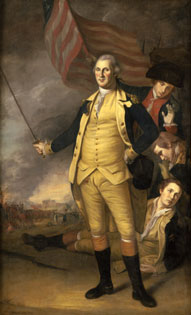
Charles Wilson Peale, Washington at the Battle of Princeton (Princeton)
In August 1814 British troops under General Robert Ross sacked Washington, D.C., and burned the Capitol, together with some splendid state portraits of Louis XVI and Marie-Antoinette, the French monarchy’s gift to the American Congress some thirty years earlier. The approaching bicentennial of this event will provide scholars of the United States and France a rare occasion to meet and share expertise on aspects of late eighteenth- to early nineteenth-century portraiture.
The premise of this conference is that in the period between the War of Independence and the War of 1812 the United States maintained a complicated political alliance with France, which had an impact on patterns of cultural representation and consumption on both sides of the Atlantic. The transition from monarchical to republican forms of government was accompanied by a shift from aristocrats to citizens as the primary patrons, subjects, and viewers of portraits. Yet portraits of American and French heads of state, delegates, and families often reveal an uneasy integration of traditional aristocratic forms and new republican values.
The first half of the conference, titled “Dialect[ic]s of Diplomacy,” will treat with single-person portraits (and portrait pairs) that suggest an individual invested with high status, extraordinary power, martial strength, or diplomatic duty on behalf of the nation; the second half of the conference, “Representative Bodies,” will examine group portraits that suggest a shared commitment to collective governance, family harmony, or equitable representation within the nation. How effective were state portraits in promoting the authority of a hereditary monarch, group portraits in promoting the authority of an elected assembly? To what extent did American artists reference or adapt the paintings and prints of French artists, and vice versa? What formal arrangements and symbolic repertories were invented to invest politicians, merchants, and workers with ideals of “patriotism” and “republicanism”?
This line of inquiry is meant to challenge or complicate persistent claims that the United States remained culturally dependent on Great Britain throughout the period, that its portraits reflect a kind of “Anglo-American synthesis.” Although the British flooded North America with royal paintings and celebrity prints in the general expectation that these would encourage fidelity to the Crown and taste for English goods, the French deployed images of sovereigns, ministers, and generals more precisely to seal diplomatic agreements, to celebrate military victories, and to rally public support. Indeed, so appealing were French productions that American artists freely borrowed from them to commemorate the first Presidents of the United States.
There will be six sessions, each lasting approximately two hours and consisting of three to four participants. (more…)
Call for Papers | ASECS 2014 in Williamsburg
Reminder: the due date is 15 September!
2014 American Society for Eighteenth-Century Studies Conference
Williamsburg, 20–22 March 2014
Proposals due by 15 September 2013
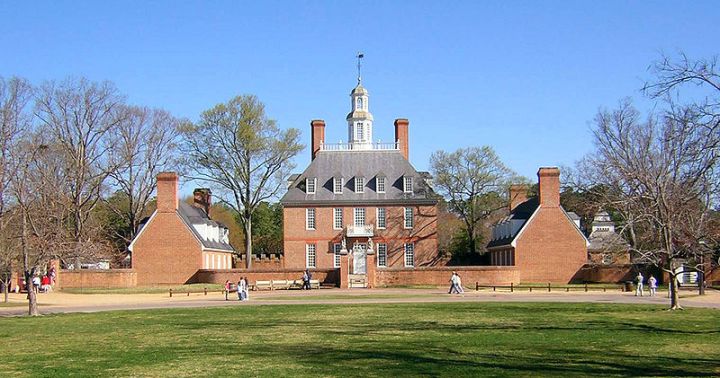
Governor’s Palace in Williamsburg, Virginia. The original structure was built between
1710 and 1722, with further additions made in the 1750s. Fire destroyed the
main house in 1781. The present building was constructed in the early 1930s.
Photo by Larry Pieniazek, 2006, from Wikimedia Commons.
◊ ◊ ◊ ◊ ◊
The 2014 ASECS conference takes place in Williamsburg, 20–22 March. Along with our annual luncheon and business meeting, HECAA will be represented by two panels chaired by Denise Baxter and Amy Freund and Jessica Fripp. In addition to these, a wide selection of sessions that might be relevant for HECAA members are also included below. A full list of panels (68 pages’ worth!) is available as a PDF file here.
◊ ◊ ◊ ◊ ◊
Anne Schroder New Scholar’s Session (Historians of Eighteenth-Century Art and Architecture)
Denise Amy Baxter, 1304 Edgewood Court, Carrollton, TX 75007; denise.baxter@unt.edu
Named in honor of the late Anne Schroder, this seminar will feature outstanding new research by emerging scholars.
◊ ◊ ◊ ◊ ◊
Selfhood and Visual Representation in the Eighteenth Century (Historians of Eighteenth-Century Art and Architecture)
Amy Freund, Texas Christian U. and Jessica Fripp, Parsons The New School for Design; a.freund@tcu.edu and frippj@newschool.edu
This panel will consider the relationship between the visual arts and new ideas of selfhood in the eighteenth century. Enlightenment-era debates about the nature of the self had profound effects on how people imagined the individual’s place in society, how gender, age, and racial difference were framed, how science and medicine conceived of the mind and body, and how emotions such as love and friendship were understood and expressed. Some scholars have approached the question of the eighteenth-century self in terms of the rise of possessive individualism, of secularization, and of consumer culture; others have pointed to the persistence and transformation of traditional hierarchies, of collective identities, and of mysticism and the irrational. We are seeking papers that examine the visual representation of the eighteenth-century self, both in portraiture and in other genres and modes, including (but not limited to) genre and history painting, architecture and the decorative arts, dress, and material culture. We encourage proposals that deal with the eighteenth-century self in Asia, Africa, and the Americas, and with the transformation (or inapplicability) of Enlightenment ideas outside of Europe.
A larger list of potentially relevant sessions is available here»










leave a comment