Call for Papers: Rethinking Allegory
From the INHA site:
Pouvoirs visionnaires de l’allégorie: arts, théâtre et littérature
Journée d’études organisée par l’Université de Haute-Alsace et les Musées de Belfort, 30 September 2010
Proposals due by 15 May 2010
L’allégorie est fondamentalement inactuelle.
-Walter Benjamin
Allégorie réelle déterminant une phase de 7 années de ma vie artistique. Le sous-titre du célèbre tableau de Gustave Courbet L’atelier du peintre n’a pas fini de nous interroger en ce qu’il fixe étrangement le rapport de l’iconologie à la parole, de l’image à la rhétorique et à la répartition des rôles. Une telle assertion est à l’aune de cette journée d’études qui entend réunir des chercheurs pour éprouver les enjeux de ce titre en forme d’énigme.
L’allégorie change selon ses modes de représentation, elle est une « métafigure » pour reprendre l’expression de Pascal Maillard. L’allégorie n’est pas seulement un ornement rhétorique mais une forme d’imagination expressive qui contient et véhicule une vision du monde fondée sur un principe d’analogie (comme dans la gravure de Dürer, Melancholia) et qui conditionne une modalité particulière des rapports humains. Forme d’investigation et d’interprétation dont les modalités évoluent selon les périodes, les arts et les supports, l’allégorie est « un compromis fragile ». Rationnelle autant que conflictuelle, « elle rassemble pour mieux séparer. « Alchimie d’un invisible, poursuit Françoise Divorne dans Le sens voilé, elle se masque sur le mode d’un conflit puisqu’elle implique deux significations rivales voire contradictoires ». L’allégorie fait un double usage du détournement et des voiles – objets de théâtre et attributs de l’histoire de l’art propices aux changements et aux ruses de l’identité comme des personnes. Paradoxe donc de l’allégorie dont les artifices ne se dissimulent pas : le contraire du mensonge serait donc moins la vérité que le dévoilement du secret qu’il entend recouvrir ?
À quoi se reconnaît l’allégorie en littérature, au théâtre et en art ? Quelles sont les procédures opératoires que l’allégorie emprunte et les stratégies interprétatives qu’elle nécessite, sont-elles dépendantes d’une période ou d’un mode d’expression ? Un genre littéraire, théâtral et artistique est-il particulièrement apte à produire ses propres systèmes allégoriques ? Comment comprendre l’allégorie aujourd’hui après le structuralisme et dans la pensée post-moderne ? A-t-elle dans son inactualité fondamentale que remarquait Walter Benjamin les moyens de se renouveler ? Que ce soit en peinture, en sculpture, en poésie ou au théâtre, l’allégorie repose sur des principes de mise en scène et de dramaturgie qui donnent lieu à une distribution imaginaire des rôles.
Sans se restreindre ou se limiter à une période précise, on se demandera dans quelle mesure les éléments dramatiques de l’allégorie vont de pair avec un mouvement de pensée dont on essaiera de mettre en évidence la portée et les spécificités dans des périodes volontairement diversifiées.
La journée aura lieu au musée d’Histoire de Belfort à la Citadelle et donnera lieu à une présentation des collections du Musée des Beaux-Arts dont le parcours thématique s’ouvre sur une salle consacrée à l’allégorie.
Merci d’adresser vos propositions à Frédérique Toudoire-Surlapierre (frederique.toudoire@uha.fr) et Nicolas Surlapierre (nsurlapierre@mairie-belfort.fr) avant le 15 mai 2010.
Call for Papers: Recycling Luxury
I just stumbled across this CFP this morning; unfortunately, the deadline for submissions is today. [Note: the due date has been extended to 12 April]
Recycling Luxury and Waste in the Long 18th Century: The ‘Afterlife of Used Things’ in Britain and France
Université Paris Diderot, 22-23 June 2010
Proposals due by 12 April 2010
The 2010 conference on the afterlife of used things in the long 18th century will expand on the 2009 ‘cycles of novelty’ symposium, which had explored some of the many aspects of recycling in particular in relation to art and literature. This year’s conference will focus on recycling in relation to social, economic and material practices in the long 18th century and will broaden its geographical boundaries to include France.
We invite participants to study the versatile practices of recycling and refashioning that shaped the eighteenth-century world of goods with particular emphasis on the double question of waste and luxury. Thus the refashioning of old objects into new desirable ones, the thriving second-hand market often fuelled by the luxury trades and the problem of “waste management” in societies characterized by increased opulence are among the questions that the conference will seek to explore. The management of resources (both natural and man-made), their scarcity and their uses will also be central to the conference and we welcome papers exploring the topography or geographical circulation of goods and resources involved by practices of recycling. We also hope to somewhat chart the processes of valuation/devaluation and re-evaluation through which both fashionable luxury objects and discarded material went through and invite contributors to submit papers focusing on the cultural uses and values of objects/materials along the various stages of this process.
Conference papers can be in English or in French. We are in contact with several publishers to get a selection of papers from this year’s and last year’s conferences published. This publication will be in English. Please send your proposals (max 300 words) to the organisers by 12th April 2010 at the following addresses:
ariane.fennetaux@univ-paris-diderot.fr
amelie.junqua@u-picardie.fr
Organisers:
Ariane Fennetaux, Université Paris-Diderot, Paris 7
Amélie Junqua, Université de Picardie Jules Verne
Sophie Vasset, Université Paris-Diderot, Paris 7
Call for Papers: Travel Writing
History in Travel Narrative, 1589-1826
Paris, Sorbonne nouvelle, 11-12 December 2010
Proposals due by 15 June 2010
Joint conference organised by PRISMES (CREA XVIII, Epistémè), Sorbonne nouvelle, and CIERL, Québec
This conference will examine the representation of history in travel narrative. A European’s perception of countries and peoples with no ‘history’ is not the same as that of ‘civilised’ nations. What model of historical change do travel narratives project—history as a decline from some mythical or mythicised origin, cyclical history, history as the unfolding of a providential design, as progress? The evolution of those categories over the period considered will be investigated; this period stretches from 1589, which saw the publication of Richard Hakluyt’s Principal Navigations, to 1826, when William Ellis’s Narrative of a Tour through Hawaii came out.
What is the influence of historiography at any given time on the representation of history as experience in travel literature? How does travel narrative validate its status as historiography? From a more anthropological viewpoint, does the discovery of new or different spaces or places shape the perception and construction of time? Is there any interaction between the conception of space and that of time, between the depiction of spaces and that of time, especially of the time needed for the evolution of manners, customs and institutions which differ from those familiar to the traveller? Does this entail a relativisation of time? How does a European (or Europeanised) nation’s past constrain the analysis of the fabric and customs of the areas visited? Is the historicisation of lived experience limited? What is the impact of measuring instruments on this experience and the account thereof. Those are some of the questions which will be addressed in this conference. Voyages from and to Great Britain will be of particular, but not exclusive, interest.
Please send proposals—200-250 words—for papers not exceeding 30 minutes before 15 June 2010 to Isabelle Bour (Isabelle.Bour@univ-paris3.fr), Line Cottegnies (Line.Cottegnies@univ-paris3.fr) and Thierry Belleguic (Thierry.Belleguic@lit.ulaval.ca).
Call for Articles: British Queer History
Call for Papers: Special Issue of The Journal of British Studies on Queer History
Articles for Consideration Due by 1 November 2010
The Journal of British Studies is calling for papers on all aspects of British queer history. Articles can be from the medieval period to the present day. This is for a special issue to be published in late 2011 or early 2012, to be guest edited by Brian Lewis (McGill University). Articles should be 10,000-12,000 words long, follow the JBS format, and be submitted by November 1, 2010. For more information, see the journal’s website or contact the editors at jbs.history@mcgill.ca or Brian Lewis at brian.lewis@mcgill.ca.
Call for Papers: Circulation of Knowledge
France, Great Britain, Ireland:
Cultural Transfers & the Circulation of Knowledge in the Age of Enlightenment
University of Limerick, 25-26 June 2010
Proposals due by 29 March 2010
In 2008 the Eighteenth-Century Ireland Society, the British Society for Eighteenth Century Studies, and La Société Française d’Étude du Dix-Huitième siècle launched a joint research programme on cultural transfers between their three countries in the Enlightenment period. This initiative has resulted in conferences at L’Université Paris Diderot – Paris VII (in 2008) and the University of York (in 2009).
The third of these conferences will be hosted by the Eighteenth-Century Ireland Society and will take place at the University of Limerick, Ireland, from 25 to 26 June 2010. The conference will run in parallel with the Eighteenth-Century Ireland Society’s annual conference. Proposals for twenty-minute papers are invited for papers (in Irish, English or French) on the theme of the conference, but particularly on
- the individuals and groups involved in transfers, who could be called the ‘importers’ or ‘purveyors’ of foreign ideas and who acted as cultural intermediaries; these may include politicians, diplomats, travellers, savants, authors, artists, booksellers
- the transfer of cultural items – books, newspapers, works of art, and other objects – and their impact
- the transfer of literary, philosophical, political or aesthetic models in processes of cultural legitimisation
- transfer processes through imitation, translation or adaptation
- the effect of such transfers on the construction of national identities throughout the century: the invention of a past, a language, or a national history; it could be interesting to examine transfers in relation to mutual power play, wars and imperialist ambitions.
Postgraduate students are particularly encouraged to offer papers. Proposals should be submitted (preferably by email) to the conference organiser (david.fleming@ul.ie) before Friday, 29 March 2010. Proposals should include the title of the paper and a 250-word abstract. Prospective speakers will be notified of a decision by 30 April 2010.
Call for Papers: Nervous Aesthetics
The Stimulated Body and the Arts:
The Nervous System and Nervousness in the History of Aesthetics
Centre for the History of Medicine and Disease, Durham University, 17-18 February 2011
Proposals due by 31 July 2010
This conference will discuss the history of the relationship between aesthetics and medical understandings of the body. Today’s vogue for neurological accounts of artistic emotions has a long pedigree. Since G.S. Rousseau’s pioneering work underlined the importance of models of the nervous system in eighteenth-century aesthetics, the examination of physiological explanations in aesthetics has become a highly productive field of interdisciplinary research. Drawing on this background, the conference aims to illuminate the influence that different medical models of physiology and the nervous system have had on theories of aesthetic experience. How have aesthetic concepts (for instance, imagination or genius) be grounded medically? What effect did the shift from animal spirits to modern neurophysiology have on aesthetics?
The medical effects of culture were not always regarded as positive. The second focus of the conference will be the supposed ability of excessive reading, music and so on to ‘over-stimulate’ nerves and cause nervousness, mental and physical illness, homosexuality and even death. It will consider questions regarding the effects of various theories of neuropathology and psychopathology on the concept of pathological culture. What kinds of culture could lead to such over-stimulation? How was this medical critique of culture related to moral objections and changes in gender relations, politics and society? How was it linked to medical concern about lack of attention and willpower?
This interdisciplinary conference brings together scholars working in a wide range of fields, including not only the history of medicine but also in subjects such as art history, languages and musicology. Abstracts for 20-minute papers (maximum 250 words) should be submitted electronically to the organisers by 31 July 2010 at the following address: James.kennaway@durham.ac.uk
Organisers: Dr James Kennaway, Professor Holger Maehle, Dr Lutz Sauerteig.
Call for Papers: Watteau and the ‘Character’ of Dance
An interesting-looking conference that comes on the heels of the Met’s exhibition, Watteau, Music, and Theater — as listed at Fabula: la recherche en littérature:
Watteau au confluent des arts: Caractères de la danse
Université de Valenciennes, 9-10 December 2010
Proposals due by 15 April 2010
Le dessin – aujourd’hui disparu, mais connu par de bonnes reproductions – du compositeur Jean-Féry Rebel (1666-1747) par Antoine Watteau montre un artiste sûr de son art et des principes qui le gouvernent. L’homme était petit mais trapu et doté, si l’on en croit le dessin (la gravure qu’en a tirée Moyreau gomme quelque peu cet aspect), d’une énergie et d’une détermination peu communes. Le regard dominateur tourné vers le spectateur, il compose : la main gauche posée sur les touches du clavecin, la main droite, qui, dirait-on, connaît peu l’hésitation, en train de noter sa composition. En 1715, au moment où Watteau a pu lui être présenté, Rebel publie les Caractères de la Danse, tentative de distillation et de codification de ce qui, dans la musique de chacune des danses les plus répandues de son temps, en constitue l’élément le plus déterminant. La polysémie du terme saute aux yeux : les ” caractères “, c’est à la fois les notes mêmes, compris dans le sens typographique que leur attribuait encore Rousseau dans le Dictionnaire de musique ; la quintessence sonore, les caractéristiques rythmiques des différentes danses ; et les caractérisations psychologiques et typologiques qui s’en dégagent, et qui font qu’une danse a entre autres vocations celle de proposer le portrait d’un être ou d’un sentiment. La création de cette oeuvre, dont le succès fut grand et durable, coincide avec la maturité artistique de Watteau et avec l’élaboration de l’esthétique qui anime ses fêtes galantes. On y danse souvent, et la danse y est encore présente quand on ne fait que marcher, bouger, avancer, se mouvoir : on ne cesse d’évoluer sur scène. Il est vrai qu’on ignore le plus souvent le sens exact de ces mouvements chez Watteau, qui refuse de les inscrire dans une narration intelligible ou du moins vérifiable. Mais si leur signification demeure vague, leur caractère ne l’est pas. Rebel ne procède pas autrement. Il entreprend la séparation de la danse d’avec les chorégraphies qui la liaient au théâtre, et qui la faisaient dépendre des histoires présentées dans les comédies-ballets, les opéras-ballets et les tragédies en musique. Là où Lully, Molière et Quinault avaient poussé la danse à s’intégrer dans des actions où elle était à la fois indispensable et secondaire, Rebel lui rend sa primauté en la rendant abstraite. Il est possible que le même phénomène se produise, en ce qui concerne un mouvement qui tend sans cesse vers la danse, dans les fêtes galantes de Watteau, ces jouissances d’autant plus jouées et irréelles qu’elles sont, à leur tour, abstraites, et déliées des attaches de la linéarité. (more…)
Call for Papers: Midwest Conference on British Studies
Midwest Conference on British Studies 56th Annual Meeting
Cleveland, OH, 8-10 October 2010
Proposals due by 15 April 2010
The Midwest Conference on British Studies is proud to announce that its fifty-sixth annual meeting will be hosted by Baldwin-Wallace College at the Renaissance Cleveland Hotel. The MWCBS seeks papers from scholars in all fields of British Studies, broadly defined to include those who study England, Scotland, Wales, Ireland, and Britain’s empire. We welcome scholars from the broad spectrum of disciplines, including but not limited to history, literature, political science, gender studies and art history. Proposals for complete sessions are preferred, although proposals for individual papers will be considered. Especially welcome are roundtables and panels that:
- offer cross-disciplinary perspectives on topics in British Studies
- discuss collaborative or innovative learning techniques in the British Studies classroom
- situate the arts, letters, and sciences in a British cultural context
- examine representations of British and imperial/Commonwealth national identities
- consider Anglo-American relations, past and present
- examine new trends in British Studies
- assess a major work or body of work by a scholar
The MWCBS welcomes papers presented by advanced graduate students and will award the Walter L. Arnstein Prize at its plenary luncheon for the best graduate student paper(s) given at the conference. Proposals should include a 200-word abstract for each paper and a brief, 1-page c.v. for each participant, including chairs and commentators. For full panels, please include a brief 200-word preview of the panel as a whole. In addition, please place the panel proposal, and its accompanying paper proposals and vitas in one file. Please make certain that all contact information, particularly email addresses are correct and current. All proposals should be submitted online by April 15, 2010, to the Program Committee Chair, Rick Incorvati, at rincorvati@wittenberg.edu.
Call for Papers: British Books and Print Culture
Print Networks Conference 2010: The Book Trade in Early Modern Britain
Shakespeare Institute, Stratford-upon-Avon, 6-7 July 2010
Proposals due by 28 February 2010
Guest speakers: Bernard Capp (Professor of History, University of Warwick) and Giles Mandelbrote (Curator, British Collections 1501-1800, The British Library)
The conference theme is broadly defined and papers are invited on any aspect of the production, distribution and reception of print and manuscript in late medieval and early modern Britain, up to c.1750, and on aspects of book-trade relations within the Anglophone world. Papers should be of up to 30 minutes’ duration. A brief CV (c. 50 words) and an abstract (of c.300 words) should be submitted by 28 February 2010 to John Hinks: jh241@le.ac.uk. Selected papers will be published as part of the Print Networks series, edited by John Hinks and Matthew Day, published by Oak Knoll Press and the British Library.
We can offer up to two Conference Fellowships to postgraduate students who wish to present a paper. Fellowships cover the cost of attending the conference and assistance towards costs of travel. An outline of the research being undertaken, together with a letter of recommendation from a tutor or supervisor, should be sent by 28 February 2010 to John Hinks: jh241@le.ac.uk. For the latest information on the conference visit the British Book Trade Index website.
The conference (earlier in July than usual) will be held over two full days. We shall meet in the attractive surroundings of the Shakespeare Institute, Stratford-upon-Avon. Delegates will need to book their own overnight accommodation, of which there is a wide choice in Stratford.
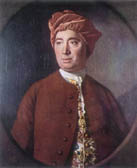
Call for Papers: David Hume Conference in 2011
38th International Hume Society Conference: Hume after 300 Years
The Old College, Edinburgh, 18-23 July 2011
 Proposals due by 31 October 2010
Keynote speakers include Annette Baier, David Fergusson, Don Garrett, John Pocock, and Amartya Sen. Papers are invited on any aspect of Hume studies. Papers should be prepared for blind review and sent to: submissions@humesociety.org.
This year’s conference will be held in Antwerp, 6-10 July 2010. See the Hume Society webpage for more information.










leave a comment